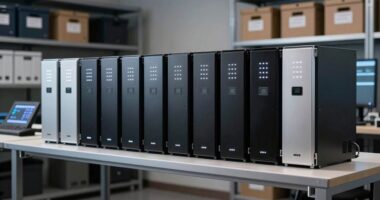
For small ceramic pieces, I would start with the EQCOTWEA if your studio can support its 220 V, 4 kW electrical demand: its 0.95 cu ft chamber and 1280°C maximum make it the most ceramic-focused option here. The VEVOR 1500W is the stronger choice for controlled, repeatable ramp schedules, while the microwave kiln is the smallest and simplest for tiny experiments and fused glass. Those picks serve very different workspaces. Chamber volume, firing temperature, programmable control, and available power determine which is practical; “tabletop” alone does not mean every unit fits an ordinary household circuit or suits every clay body.

Prime made for students and young adults
- Fast, free delivery for dorm and study essentials
- Prime Video and Amazon Music included
- Member-only deals
Key Takeaways
- EQCOTWEA offers the largest stated chamber and highest listed maximum, but its 220 V, 4 kW requirements call for a suitable dedicated circuit.
- VEVOR is the only listed model with up to nine programmable ramp stages, useful when a project depends on a managed heat schedule.
- PeiXWming reaches 1150°C in a compact chamber, but the listing cautions that actual temperature may differ from the digital setting.
- 1500W kiln with 6 × 6 × 8 in chamber has clear dimensions and four-sided heating, yet its 800°C ceiling rules out many higher-temperature ceramic firings.
- Microwave kiln takes up the least space and is described for ceramics and glass, but its φ75 × 90 mm interior limits work to very small pieces.
| EQCOTWEA Hexagonal Electric Ceramic Kiln, 0.95 cu ft, 1280°C, 220V, 4 kW |  | Best Overall for Serious Small Ceramic Batches | Chamber capacity: 0.95 cu ft | Interior diameter: 12.0 in (30.5 cm) | Interior depth: 13.6 in (34.5 cm) | VIEW ON AMAZON | See Our Full Breakdown |
| VEVOR 1500W Programmable Electric Kiln, 2192°F |  | Best for Programmable Firing Schedules | Power: 1500 W | Maximum temperature: 2192°F (1200°C) | Controller: Programmable PID | VIEW ON AMAZON | See Our Full Breakdown |
| PeiXWming 2000W Electric Kiln for Jewelry Making |  | Best Compact Mixed-Craft Kiln | Power: 2000 W | Temperature range: 0–2102°F (0–1150°C) | Chamber size: 16 × 16 × 13.8 cm | VIEW ON AMAZON | See Our Full Breakdown |
| 1500W Programmable Electric Kiln with 6 × 6 × 8 in Chamber |  | Best for Clearly Sized Low-Temperature Projects | Power: 1500 W | Maximum temperature: 800°C (1472°F) | Controller: Digital PID | VIEW ON AMAZON | See Our Full Breakdown |
| Microwave Kiln for Ceramics and Fused Glass, 120 × 130 mm |  | Best for Tiny Experiments and Shared Workspaces | External dimensions: 120 × 130 mm | Internal dimensions: φ75 × 90 mm | Maximum temperature: 1200°C | VIEW ON AMAZON | See Our Full Breakdown |
| tabletop kiln for small ceramic piece | Maximum temperature | Power |
|---|---|---|
| EQCOTWEA Hexagonal Electric Ce | 1280°C | 4 kW |
| VEVOR 1500W Programmable Elect | 2192°F (1200°C) | 1500 W |
| PeiXWming 2000W Electric Kiln | — | 2000 W |
| 1500W Programmable Electric Ki | 800°C (1472°F) | 1500 W |
| Microwave Kiln for Ceramics an | 1200°C | — |
More Details on Our Top Picks
EQCOTWEA Hexagonal Electric Ceramic Kiln, 0.95 cu ft, 1280°C, 220V, 4 kW
The EQCOTWEA is the most directly aligned with small ceramic production in this group: it has a stated 0.95 cu ft chamber, a 30.5 cm interior diameter, and a 34.5 cm interior depth. That gives more room for grouped small pieces, glaze tests, or classroom work than the microwave kiln or the jewelry-focused PeiXWming. Its listed 1280°C maximum also leaves more headroom for ceramic firing than the 800°C model and the PeiXWming’s 1150°C ceiling.
The main catch is the electrical setup. At 4 kW and 220 V, with a recommended 2P40A breaker and cable of at least 4 mm², this is not an easy plug-in option for every home studio. I would choose it when the firing range and chamber size are useful enough to justify checking the installation first. Compared with the programmable VEVOR, the EQCOTWEA supplies clearer ceramic-focused capacity and temperature figures, while the VEVOR provides more specific ramp-stage control and a lower listed power draw. The EQCOTWEA listing describes user-friendly controls but does not provide comparable programming detail.
Its 0.95 cu ft capacity remains modest beside a full-size production kiln, so larger ware or frequent high-volume batches are outside its lane. I would also verify that the kiln’s rated operating temperature and firing schedule suit the specific clay and glaze before buying. For small work that needs a higher firing range, this is the clearest fit here; for occasional low-temperature tests in a shared room, it may be too demanding an installation.
Pros:- Largest stated chamber in this comparison at 0.95 cu ft
- 1280°C maximum provides more ceramic firing headroom than the other listed electric models
- Interior diameter and depth are specified for planning small batches
- Designed for small ceramics, glaze tests, and classroom projects
Cons:- Requires 220 V, 4 kW service and substantial circuit and cable capacity
- Still limited to small batches compared with full-size studio kilns
- Control programming detail is not provided
Best for: Ceramic makers, teachers, or small studios firing batches of small pieces and glaze tests who have suitable 220 V electrical service.
Not ideal for: Buyers who need a simple standard-outlet kiln, a larger production chamber, or detailed programmable ramp controls confirmed in the listing.
- Chamber capacity:0.95 cu ft
- Interior diameter:12.0 in (30.5 cm)
- Interior depth:13.6 in (34.5 cm)
- Maximum temperature:1280°C
- Conventional operating temperature:1220°C
- Power:4 kW
- Electrical supply:220 V, single phase, 18.2 A
- Recommended electrical setup:At least 2P40A breaker and 4 mm² cable
Our verdict“I rank the EQCOTWEA first for small ceramic work because it combines the most clearly stated ceramic chamber capacity with the highest listed maximum temperature, provided the electrical setup is suitable.”
VEVOR 1500W Programmable Electric Kiln, 2192°F
If a project depends on managing how quickly the kiln heats, the VEVOR’s programmable PID controller is its defining advantage. Up to nine temperature ramp stages give makers more schedule control than the EQCOTWEA listing describes, and more than the simple adjustable temperature controls specified for the PeiXWming. That can matter for repeatable craft processes, though the listing does not provide a chamber size or explain a ceramic firing schedule.
The stated 2192°F (1200°C) maximum sits between the PeiXWming and the EQCOTWEA by the listed figures. It is described for pottery firing as well as metal clay, lost-wax casting, metal melting, and tempering, giving it a broad workshop role. But the missing cavity dimensions make it harder to judge whether a particular small bowl, tile, or group of pieces will fit. The description calls its cavity enlarged, which is not enough information for me to compare usable loading space with the EQCOTWEA’s specified chamber or the 6 × 6 × 8 in model.
Ventilation is included in the design for wax escape and heat dissipation, a useful feature for the mixed craft uses named in the listing. The stated melting time of 34–38 minutes may vary by material and conditions, so I would not treat it as a guaranteed firing duration. This is the best match here for a maker who values staged control across different small craft processes; ceramic buyers who need known chamber dimensions should favor a model with a published interior size.
Pros:- PID controller supports up to nine temperature ramp stages
- Listed maximum is 1200°C
- Named for pottery firing as well as metal clay and casting work
- Ventilation is designed to support wax escape and heat dissipation
Cons:- The listing gives no chamber dimensions or capacity
- Melting time can vary with material and conditions
- Broad craft use does not by itself establish a suitable firing schedule for a given ceramic body
Best for: Makers working across pottery and other crafts who want a programmable controller with multiple temperature ramp stages.
Not ideal for: Ceramic buyers who need verified chamber dimensions before purchase or a clearly documented firing profile for a particular clay body.
- Power:1500 W
- Maximum temperature:2192°F (1200°C)
- Controller:Programmable PID
- Temperature ramp stages:Up to 9
- Listed melting time:34–38 minutes
- Applications:Lost-wax casting, metal clay, pottery firing, metal tempering
Our verdict“I put the VEVOR second because its staged control is unusually useful for varied craft work, while its undisclosed cavity size leaves a major fit question for ceramic buyers.”
PeiXWming 2000W Electric Kiln for Jewelry Making
The PeiXWming brings a compact, measured chamber and broad heating design to a lineup where the VEVOR leaves its interior size unspecified. Its 16 × 16 × 13.8 cm space is intended for jewelry, small metal casting, and ceramic firing. That is a practical scale for tiny forms and individual pieces, but it offers less room than the EQCOTWEA’s 0.95 cu ft chamber. The listing says the chamber can hold multiple molds; that is more relevant to jewelry casting than to loading a shelf of ceramic work.
Its 0–1150°F? is not the temperature range: the stated range is 0–2102°F, or 0–1150°C, which gives it a higher ceiling than the 800°C model but less than the EQCOTWEA and VEVOR. The 2000W rating and omnidirectional heating are presented as support for evenly distributed heat. The listing also cautions that actual temperature may differ slightly from the set temperature. I would treat the digital setting as a control reference and look for appropriate kiln measurement practices when firing work that depends on a specific heatwork result.
Compared with the four-sided-heating kiln, the PeiXWming offers a higher stated maximum and a smaller footprint, but its chamber dimensions are also small and its display accuracy is not specified. Gloves and high-temperature tongs are included, and a one-year warranty is listed. I would choose it for compact jewelry and occasional tiny ceramic pieces, not as a substitute for a ceramic-focused kiln with more documented chamber volume and operating details.
Pros:- Defined 16 × 16 × 13.8 cm chamber helps buyers estimate fit
- 1150°C listed maximum exceeds the 800°C model
- Omnidirectional heating is intended to distribute heat around the chamber
- Includes heat-resistant gloves and high-temperature tongs
Cons:- Chamber is small beside the EQCOTWEA’s stated capacity
- Listing warns actual temperature may differ from the set temperature
- Maximum is below the EQCOTWEA and VEVOR figures
Best for: Jewelry makers and mixed-craft hobbyists who also fire very small ceramic pieces and want included handling tools.
Not ideal for: Makers firing larger small-batch loads, work requiring temperatures above 1150°C, or projects needing a specified display accuracy.
- Power:2000 W
- Temperature range:0–2102°F (0–1150°C)
- Chamber size:16 × 16 × 13.8 cm
- Heating:Omnidirectional
- Model:SMHEW01
- Warranty:1 year
- Included accessories:Heat-resistant gloves and high-temperature tongs
Our verdict“I recommend the PeiXWming for compact mixed-craft use when its small chamber and 1150°C limit match the work, rather than for regular ceramic batches.”
1500W Programmable Electric Kiln with 6 × 6 × 8 in Chamber
Among the listed products, this kiln makes chamber fit unusually easy to picture: the interior is 15 × 15 × 20 cm, about 6 × 6 × 8 in. That clarity is helpful for arranging tiny pieces and comparing the space with the PeiXWming’s smaller stated chamber. Four-sided heating is intended to provide even firing, and the digital PID controller has a stated display accuracy of ±1°C. Its 800°C maximum, however, is the tightest limit in the lineup.
That ceiling is a serious constraint for ceramic work. A small chamber does not automatically mean a low-temperature firing is appropriate; the target temperature must match the clay, glaze, and intended result. This model is described for ceramics, glass, metal clay, and jewelry casting, but its maximum excludes projects requiring higher firing temperatures. In contrast, the EQCOTWEA lists 1280°C, while the VEVOR lists 1200°C and staged ramp programming. The 6 × 6 × 8 in unit has a more fully stated interior than VEVOR, yet less headroom and less described schedule flexibility.
The claimed time to reach 800°C is under 40 minutes, and the package includes heat-resistant gloves. Its 15.2 kg weight and external dimensions of 33 × 34 × 40 cm help buyers plan a bench location. I would choose it only after confirming that 800°C is sufficient for the exact work. It serves small, lower-temperature projects with clear fit information, but its temperature limit makes it a poor general ceramic kiln.
Pros:- Interior dimensions are clearly stated at 15 × 15 × 20 cm
- Digital PID controller has a stated ±1°C display accuracy
- Four-sided heating is intended to support even firing
- External dimensions, weight, and gloves are specified
Cons:- 800°C maximum rules out many higher-temperature ceramic firings
- Small chamber limits batch size
- Listed fast heat-up claim does not describe a full firing cycle
Best for: Makers whose small ceramic, glass, or metal clay projects are confirmed to stay within an 800°C maximum and who value known chamber dimensions.
Not ideal for: Buyers firing clay or glaze that requires temperatures above 800°C, or anyone seeking a broadly capable ceramic kiln.
- Power:1500 W
- Maximum temperature:800°C (1472°F)
- Controller:Digital PID
- Display accuracy:±1°C, as stated
- Heating:Four-sided
- Chamber dimensions:15 × 15 × 20 cm (approximately 6 × 6 × 8 in)
- External dimensions:33 × 34 × 40 cm
- Weight:15.2 kg
Our verdict“This is a clearly specified compact kiln for work that fits its chamber and temperature ceiling, but I rank it below the higher-temperature options for ceramic versatility.”
Microwave Kiln for Ceramics and Fused Glass, 120 × 130 mm
This microwave kiln is the most compact option in the roundup, with external dimensions of 120 × 130 mm and a very small φ75 × 90 mm interior. That makes it a different sort of purchase from the electric chamber kilns: it is described as a ceramic-fiber accessory used in a microwave for small ceramics and fused glass. It is an appealing fit for tiny tests or glass pieces where storing a dedicated electric kiln is impractical, but its interior sharply limits ceramic piece size and batch count.
The listed temperature range is 800–1200°C, and the description claims glass can melt in 6–8 minutes and ceramics can sinter in about 15 minutes. Those short times should be read as product claims, not a complete, controlled firing schedule; the provided information does not specify a programmable controller or detailed process control. Compared with VEVOR’s nine-stage PID control and the EQCOTWEA’s larger ceramic chamber, the microwave kiln gives up capacity and schedule flexibility for portability and a simple setup.
Its dual ceramics-and-glass purpose is the key differentiator. The 800°C lower end is not a promise that every clay body can be fired successfully, and the maximum alone does not establish suitability for a particular ceramic process. I would verify the microwave and kiln instructions, the fit of the work, and the firing method before relying on it. For someone trying occasional miniature projects, its size can be an advantage. For recurring ceramic work, the space and limited process information make one of the electric kilns a more practical choice.
Pros:- Smallest external footprint in the comparison
- Described for both ceramics and fused glass
- Listed range reaches up to 1200°C
- Description claims short processing times for small glass and ceramic work
Cons:- φ75 × 90 mm interior is extremely limited
- No programmable temperature controller or detailed firing schedule is specified
- Claimed process times do not establish suitability for a particular clay body
Best for: People making very small ceramic experiments or fused-glass pieces who have a compatible microwave and prioritize minimal storage space.
Not ideal for: Makers seeking a known programmable firing schedule, room for multiple or larger ceramic pieces, or a dedicated kiln for regular studio production.
- External dimensions:120 × 130 mm
- Internal dimensions:φ75 × 90 mm
- Maximum temperature:1200°C
- Temperature range:800–1200°C
- Material:Ceramic fiber
- Glass melting time:6–8 minutes, as claimed
- Ceramic sintering time:About 15 minutes, as claimed
- Intended use:Ceramics firing and fused glass
Our verdict“I would pick this only for tiny experiments and fused glass where compact storage matters more than chamber capacity or controlled firing schedules.”

How We Picked
I ranked these five options around the needs implied by small ceramic pieces: whether the listed chamber can accommodate the work, whether the stated maximum temperature fits the intended firing, and how much control the product description gives the maker. I also weighed practical setup details, including the EQCOTWEA’s high-voltage power requirements and the missing cavity dimensions for the VEVOR. A higher maximum temperature or more programmable settings can expand options, but neither makes a kiln suitable without checking the clay body, firing schedule, kiln furniture, and electrical installation.
The lineup includes products with quite different intended uses. The microwave kiln is a small ceramic-fiber unit also described for glass fusing; two electric kilns emphasize jewelry and mixed craft work; the VEVOR lists metalworking and lost-wax casting alongside pottery; and the EQCOTWEA is explicitly sized and rated for ceramic batches. I treated claims such as rapid heating, even firing, and display accuracy as product specifications rather than independently verified results. I did not use customer ratings or review counts to order the picks. The ranking favors usefulness for small ceramic work, clarity of the available specifications, and the tradeoff each buyer accepts.
Factors to Consider When Choosing Tabletop Kiln For Small Ceramic Pieces
I would choose a tabletop kiln by matching the actual work and firing process to the chamber, temperature capability, controller, and electrical setup. A compact body is useful only when the pieces fit and the kiln can support the intended firing.Match the temperature to your clay and glaze
The listed maximum is a starting point, not a firing recommendation. The 800°C kiln is the most restricted of these picks, while the PeiXWming lists 1150°C, VEVOR 1200°C, and EQCOTWEA 1280°C. The microwave kiln also lists up to 1200°C, but it has a different form and sparse process detail. Check the clay and glaze manufacturer’s firing range and the kiln’s instructions before deciding that a temperature figure makes a model suitable.
Check usable chamber size
Compare the interior dimensions with the pieces, supports, and spacing needed for firing. The EQCOTWEA provides the largest stated capacity at 0.95 cu ft; the 6 × 6 × 8 in kiln and PeiXWming publish smaller chamber measurements, and the microwave kiln has only a φ75 × 90 mm interior. The VEVOR’s cavity dimensions are absent from the provided listing, so I would seek that measurement before buying for a particular form. Remember that the usable load may be smaller than the bare chamber once shelves and clearance are accounted for.
Decide how much schedule control you need
The VEVOR’s up to nine ramp stages give it the clearest specified programmable control here. The other electric models describe PID or digital temperature controls, but do not provide the same ramp-stage detail. The microwave kiln listing offers no programmable controller information. If the work needs a gradual ramp or hold, match the controller’s actual functions to that process; a digital display alone does not tell you what firing schedules are available.
Plan for electrical service and placement
Power requirements affect whether a kiln can be installed where you want to work. The EQCOTWEA is listed at 220 V and 4 kW, with a recommendation for a 2P40A breaker and at least 4 mm² cable, so buyers should confirm the installation with a qualified electrician. The other products also need appropriate power and safe placement; their provided descriptions do not specify every electrical or ventilation detail. Exterior dimensions and weight matter too: the 6 × 6 × 8 in kiln is listed at 15.2 kg, while the microwave kiln occupies far less storage space.
Treat speed and accuracy claims as bounded specifications
Heating time is not the same as a complete firing cycle, and it does not prove that every piece will reach the desired result. The microwave kiln’s claimed 6–8 minute glass melt and about 15 minute ceramic sintering time, and the 6 × 6 × 8 in unit’s claim of reaching 800°C in under 40 minutes, describe limited parts of the process. The PeiXWming itself notes possible differences between set and actual temperature. Confirm the operating guidance and measurement method that apply to your work.
Frequently Asked Questions
Which of these is the best tabletop kiln for small ceramic pieces?
For buyers with suitable electrical service, I rank the EQCOTWEA first because it lists a 0.95 cu ft chamber and a 1280°C maximum, making its ceramic capacity clearer than the VEVOR’s unspecified cavity. The right choice still depends on the clay and glaze: a higher maximum does not mean every firing should use it. For tiny occasional experiments, the microwave kiln takes less storage space, though its chamber is very small.
Can I use the 800°C kiln for any kind of ceramic firing?
No. The 800°C figure is the listed maximum for the 6 × 6 × 8 in model, and some clay bodies or glazes call for higher firing temperatures. Check the manufacturer’s firing range and the kiln’s operating instructions before purchase. If your planned work exceeds that limit, compare the higher listed maximums of the EQCOTWEA, VEVOR, PeiXWming, or microwave kiln, while also checking that the chamber and process suit the work.
Is the microwave kiln a substitute for a small electric ceramic kiln?
It may suit tiny experiments and fused glass, but its φ75 × 90 mm interior and lack of specified programmable control make it quite different from the electric kilns. The described short process times do not establish a complete firing schedule for every clay body. I would see it as a compact option for very small work rather than a direct replacement for a chamber kiln used for regular ceramic batches.
What should I check before buying the EQCOTWEA kiln?
First check whether the installation can support its listed 220 V, 4 kW supply and the recommended breaker and cable. The stated chamber is 0.95 cu ft, with a 30.5 cm interior diameter and 34.5 cm depth, so measure the pieces and kiln furniture you intend to load. Then compare the kiln’s operating guidance with the firing range for your clay and glaze. The electrical requirements make installation a key part of the purchase decision.
Does a faster listed heat-up mean a shorter ceramic firing?
Not necessarily. A claim about reaching a temperature or melting material describes only part of a firing process; the schedule may also include ramps, holds, and cooling time. The products list different speed claims, but those figures are not a consistent comparison of complete ceramic firings. I would prioritize a schedule appropriate to the material and confirm which control functions the kiln supports.
Conclusion
For regular small ceramic batches, I would choose the EQCOTWEA if the 220 V installation is available and its chamber suits the work. For a maker who wants more specified schedule control across pottery and other crafts, the VEVOR’s nine ramp stages make it the stronger alternative, though I would confirm the cavity size first. Jewelry makers who occasionally fire tiny ceramics may prefer the PeiXWming’s compact chamber and included tools. Choose the 6 × 6 × 8 in kiln only when its 800°C ceiling matches the material, and reserve the microwave kiln for very small experiments or fused glass where minimal storage space is the priority.
Fall Picks
fall essentials
As an affiliate, we earn on qualifying purchases.