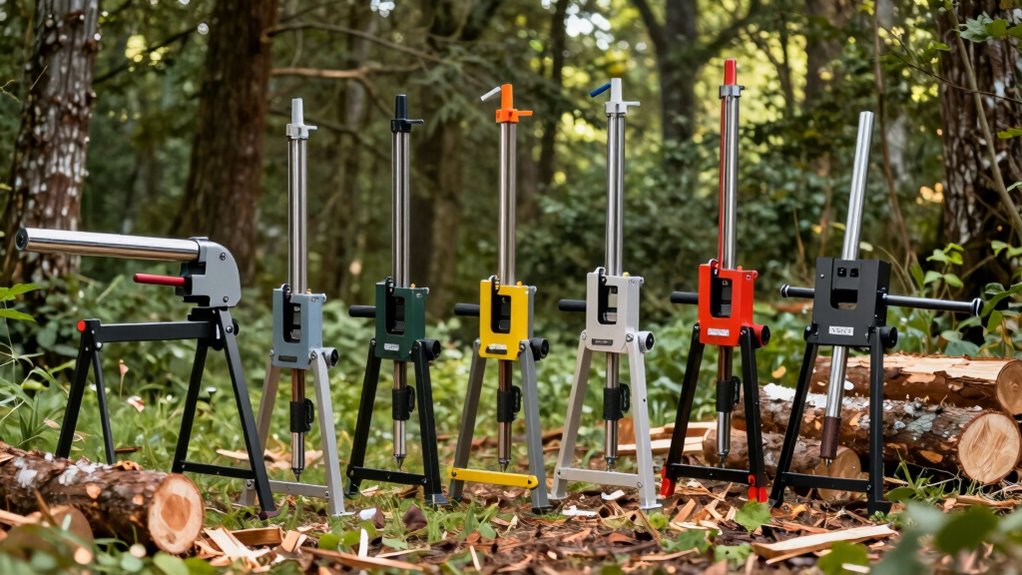

A log splitter is one of those tools where picking wrong gets expensive fast: too little tonnage and gnarly knotted rounds stall the ram, too much machine and you’ve paid for power you’ll never use. For most homeowners burning a few cords a year, the Evernexta 7 Ton Electric Hydraulic Log Splitter stands out as the best overall pick — it splits cleanly on household power, runs quietly, and asks almost nothing of you in maintenance. If you heat with wood seriously, the 35 Ton 306cc Gas Log Splitter with Hydraulic Log Lift brings vertical splitting and multi-way wedges that turn big logs into a one-pass job, while the Bilt Hard 27-Ton Towable hits a sweet spot of power and price for homestead-scale cutting. The core tradeoff in this category is electric convenience versus gas-powered muscle, with manual splitters as a budget third path. Read on for the full breakdown of all 14 models.

Prime made for students and young adults
- Fast, free delivery for dorm and study essentials
- Prime Video and Amazon Music included
- Member-only deals
Key Takeaways
- Tonnage is the single biggest divider in this lineup: sub-10-ton electric units handle straight-grained softwood, but 25+ ton gas models are what actually crack elm, oak crotches, and knotty hardwood rounds.
- Three of the 14 picks aren’t powered splitters at all — manual and cast-iron kindling splitters cost a fraction of the price and win for campfire, kindling, and occasional small-log use.
- Vertical splitting capability, found on the 35-ton and SuperHandy 25-ton gas models, is the feature that matters most once logs exceed roughly 50 pounds — horizontal-only designs force you to lift what the machine should be lifting.
- The 7-ton electric tier (Evernexta, YARDMAX YS0650, and the foot-pedal model) is crowded and highly overlapping; differences come down to cycle ergonomics, wedge configuration, and stand height rather than splitting power.
- Towability with DOT tires and a 2-inch coupler, standard on the Bilt Hard 27-ton, adds real value if you split at multiple properties or need to move the machine across uneven ground.
| Evernexta 7 Ton Electric Hydraulic Log Splitter with 15A Motor |  | Best for Cleaner Home Firewood Prep | Splitting Force: 7 tons | Hydraulic Pressure: 2900 PSI | Motor: 15A electric | VIEW ON AMAZON | See Our Full Breakdown |
| 33 Ton Log Splitter with 223cc Full Bore OHV Engine |  | Best for High-Force Splitting | Splitting Force: 33 tons | Engine Displacement: 223cc | Engine Type: Full Bore OHV | VIEW ON AMAZON | See Our Full Breakdown |
| 35 Ton 306cc Gas Log Splitter with 4-Way & 6-Way Wedges, Hydraulic Log Lift |  | Best for High-Volume, Ergonomic Work | Splitting Force: 35 tons | Engine Displacement: 306cc | Wedge Options: 2-way, 4-way, and 6-way; tool-less switching | VIEW ON AMAZON | See Our Full Breakdown |
| Bilt Hard 27-Ton Towable Gas-Powered Log Splitter with 209cc OHV Engine, 2-Stage Pump, 16″ DOT Tires and 2″ Ball Coupler |  | Best for Towable, Versatile Work | Splitting Force: 27 tons | Engine: 7 HP, 209cc OHV | Torque: 9.14 ft-lb | VIEW ON AMAZON | See Our Full Breakdown |
| BILT HARD 6.5 Ton Log Splitter – Portable Wood Splitting Machine |  | Best Compact Electric-Style Home Pick | Splitting Force: 6.5 tons | Maximum Log Length: 20.5 inches | Maximum Log Diameter: 9.8 inches | VIEW ON AMAZON | See Our Full Breakdown |
| Kindling Cracker King XL Cast Iron Kindling Splitter (9-inch opening) |  | Best Manual Kindling Splitter for Large Logs | Material: Australian cast iron | Safety Ring Diameter: 9 inches | Overall Height: 17 inches | VIEW ON AMAZON | See Our Full Breakdown |
| Kindling Cracker Original Firewood Kindling Splitter (6.5 in Opening) |  | Best Budget-Friendly Safety Pick | Material: Australian cast iron, single seamless piece | Opening Size: 6.5 inches | Mounting Options: Bolt holes for permanent mounting or freestanding base | VIEW ON AMAZON | See Our Full Breakdown |
| KABIN Kindle Quick Compact Log Splitter – Manual Splitting Tool |  | Best Portable Manual Splitter | Material: Cast steel with all-weather coating | Package Dimensions: 11.89 x 8.27 x 7.6 inches | Item Weight: 6.03 pounds | VIEW ON AMAZON | See Our Full Breakdown |
| 12 Ton Manual Hydraulic Log Splitter, 18.7 in Capacity, 2-Speed Pump |  | Best Off-Grid Value | Hydraulic Force: 12 tons | Maximum Log Length: 18.7 inches | Maximum Log Diameter: 8 inches | VIEW ON AMAZON | See Our Full Breakdown |
| SuperHandy Portable 25 Ton Gas Log Splitter with 7HP Engine and Horizontal/Vertical Steel Wedge |  | Best Premium Power Pick | Splitting Force: 25 tons | Engine: 7HP AlphaWorks gas | Pump: 2-Stage Bucher hydraulic gear pump | VIEW ON AMAZON | See Our Full Breakdown |
| 7-Ton Electric Log Splitter with Ergonomic Foot Pedal and 4-Way Cross Wedge |  | Best Ergonomic Electric Splitter | Splitting Force: 7 Tons | Motor Power: 3 HP | Hydraulic Pressure: 28 MPa (4000+ PSI) | VIEW ON AMAZON | See Our Full Breakdown |
| Cast Iron Kindling Splitter with 3 lb Sledge Hammer – Medium Sized |  | Best Budget Kindling Tool | Construction: One-piece cast iron | Included Hammer: 3 lb sledge | Height: 9.8 inches | VIEW ON AMAZON | See Our Full Breakdown |
| YARDMAX YS0650 6.5 Ton Electric Log Splitter |  | Best Workhorse Electric for Large Logs | Model: YS0650 | Splitting Force: 6.5 Ton | Max Log Length: 20.5 inches | VIEW ON AMAZON | See Our Full Breakdown |
| BILT HARD 18-Ton 7HP 209cc Portable Gas Log Splitter |  | Best Gas Power Under 20 Tons | Splitting Force: 18 Tons | Engine: 7HP 209cc OHV | Torque: 9.6 ft.-lb. | VIEW ON AMAZON | See Our Full Breakdown |
More Details on Our Top Picks
Evernexta 7 Ton Electric Hydraulic Log Splitter with 15A Motor
The Evernexta 7 Ton suits homeowners who want powered splitting without a gas engine, fuel handling, or exhaust at the work area. Its 17-second cycle and automatic ram return keep a steady rhythm for routine firewood batches, while the two-hand control adds a safety measure during each split. It accepts logs up to 20.5 inches long, matching the compact BILT HARD 6.5 Ton on length while offering slightly more stated force. Compared with the 33 Ton Log Splitter, though, this is a residential tool for smaller workloads, not a choice for large, stubborn rounds. The 97-pound weight also makes its wheels useful rather than optional in practice, and operation depends on access to an electrical outlet.
Pros:- Electric motor avoids gasoline, fuel mixing, and exhaust fumes.
- 17-second cycle with automatic ram return supports a consistent work rhythm.
- Handles logs up to 20.5 inches long.
- Transport wheels and minimal assembly simplify setup and repositioning.
Cons:- Requires an electrical outlet, limiting use away from power.
- At 97 pounds, it is cumbersome to lift or carry.
- Its 7-ton force is modest beside the 27- and 33-ton gas models in this roundup.
Best for: Homeowners preparing regular firewood near an accessible electrical outlet who want to avoid gasoline and exhaust.
Not ideal for: Rural users splitting far from power, or anyone routinely processing oversized, knotty rounds that call for a high-force gas splitter.
- Splitting Force:7 tons
- Hydraulic Pressure:2900 PSI
- Motor:15A electric
- Cycle Time:17 seconds
- Maximum Log Length:20.5 inches
- Maximum Log Diameter:10 inches
- Weight:97 pounds
- Warranty:2 years, with a 1-year extension available with registration
Our verdict“Choose the Evernexta for routine home firewood near an outlet; choose a higher-force gas model for larger or tougher logs.”
33 Ton Log Splitter with 223cc Full Bore OHV Engine
For buyers whose regular workload includes large or stubborn rounds, the 33-ton force is the defining reason to choose this splitter. Its 14.3-second cycle is quick for a machine in this high-force class, and the auto-return valve with adjustable detent can reduce repetitive lever work between splits. The H-beam frame and internally mounted hydraulic filter speak to a build intended for demanding use; placing the filter inside the reservoir also helps shield it from falling logs. Compared with the Evernexta 7 Ton, this model is far better suited to heavy rounds, but it brings a gas engine and a more transport-intensive design. It also offers less stated versatility than the 35 Ton model, which adds interchangeable wedges and a hydraulic log lift.
Pros:- 33 tons of force for demanding logs.
- 14.3-second cycle time supports faster batch work.
- Adjustable auto-return detent can reduce repeated manual control.
- Internal hydraulic filter is protected from falling logs.
Cons:- Heavy-duty construction can make transport difficult.
- Gas engine brings noise, emissions, and fuel handling.
- Availability is limited to 49 states.
Best for: Firewood operators who regularly split large, dense rounds and need substantially more force than a residential electric model provides.
Not ideal for: Occasional users with small logs, limited storage, or a preference for quiet, exhaust-free operation.
- Splitting Force:33 tons
- Engine Displacement:223cc
- Engine Type:Full Bore OHV
- Cycle Time:14.3 seconds
- Frame Design:Heavy-duty H-beam
- Hydraulic Filter Location:Inside reservoir
Our verdict“Pick this model for high-force work without the 35 Ton splitter’s added lift and wedge features, provided transport and gas operation suit your setup.”
35 Ton 306cc Gas Log Splitter with 4-Way & 6-Way Wedges, Hydraulic Log Lift
This is the most feature-rich option here for buyers who split large batches and want to reduce both handling effort and repeat passes. Its 700-pound hydraulic log lift raises rounds to the work area and doubles as a table, a meaningful advantage over the 33 Ton Log Splitter, which offers high force but no listed lift. Tool-less changes among 2-way, 4-way, and 6-way wedges let operators adapt the split pattern to the wood and workflow, while hydraulic wedge adjustment helps keep splits centered across different log sizes. That versatility comes with a substantial machine: the BOX-beam frame and 306cc gas engine suit a dedicated work area more than casual weekend use. Buyers with smaller batches may get more machine than their workload needs.
Pros:- Hydraulic lift handles logs up to 700 pounds and serves as a work table.
- Tool-less 2-way, 4-way, and 6-way wedge changes support different workloads.
- Hydraulic wedge adjustment offers up to 3.55 inches of travel.
- BOX-beam design provides a stable heavy-duty structure.
Cons:- Large size and weight make storage and transport challenging.
- Gas engine requires fuel and adds noise and emissions.
- Hydraulic system needs regular maintenance and fluid checks.
Best for: High-volume firewood processors who handle heavy rounds and want a powered lift plus multiple splitting configurations.
Not ideal for: Occasional home users with limited storage, smaller logs, or no appetite for gas-engine and hydraulic maintenance.
- Splitting Force:35 tons
- Engine Displacement:306cc
- Wedge Options:2-way, 4-way, and 6-way; tool-less switching
- Hydraulic Wedge Adjustment:Up to 3.55 inches
- Log Lift Capacity:700 pounds
- Frame Design:BOX-beam
Our verdict“Choose this 35-ton model when heavy rounds, high volume, and reduced lifting effort justify its size and upkeep.”
Bilt Hard 27-Ton Towable Gas-Powered Log Splitter with 209cc OHV Engine, 2-Stage Pump, 16″ DOT Tires and 2″ Ball Coupler
The Bilt Hard 27-Ton makes sense for buyers who need to move a splitter between wood piles and work with rounds that are awkward to lift. Its towable frame, 2-inch ball coupler, and DOT-approved tires support transport, while horizontal and vertical operation lets users split heavy rounds at ground level. The 13-second cycle is the quickest stated here, though the 33 Ton model trades some speed for greater splitting force, and the 35 Ton model adds a hydraulic lift and multi-way wedges. At 27 tons, this Bilt Hard sits between residential electric machines and those heavier options. Its 24-inch log capacity is generous, but the gas engine, bulk, and towing setup can be excessive for occasional small-scale firewood preparation.
Pros:- Towable design includes a 2-inch ball coupler and 16-inch DOT-approved tires.
- Horizontal and vertical positions reduce the need to lift heavy rounds onto the beam.
- 13-second cycle time is the shortest listed among these five products.
- Handles logs up to 24 inches long.
Cons:- Gas engine adds noise, emissions, and fuel handling.
- Heavy, bulky design needs room for storage and maneuvering.
- Its capacity may exceed the needs of occasional small-log users.
Best for: Property owners who need to tow a splitter between work areas and split logs up to 24 inches, including rounds best handled vertically.
Not ideal for: Small-scale users with limited storage or anyone seeking quiet, exhaust-free operation without fuel handling.
- Splitting Force:27 tons
- Engine:7 HP, 209cc OHV
- Torque:9.14 ft-lb
- Hydraulic Pump:2-stage, 11 GPM
- Maximum Log Length:24 inches
- Cycle Time:13 seconds
- Tires:16-inch DOT-approved
- Ball Coupler:2-inch hitch
Our verdict“Choose it for mobile firewood work and ground-level splitting; choose the 35 Ton model if a built-in log lift and more force matter more.”
BILT HARD 6.5 Ton Log Splitter – Portable Wood Splitting Machine
The BILT HARD 6.5 Ton is aimed at homeowners who want a compact powered splitter for routine firewood, with storage and movement built into the design. Its integrated handle, rear wheels, and upright storage position make it easier to tuck away than the towable Bilt Hard 27-Ton, which is designed for larger jobs and more space. The 6.5-ton force and 20.5-inch length limit place it closer to the Evernexta 7 Ton than to the gas models, though the Evernexta specifies a 17-second cycle and electric motor while this listing does not provide cycle time or power source. This BILT HARD handles logs up to 9.8 inches in diameter, but buyers tackling very tough rounds should step up to a higher-force machine.
Pros:- 6.5 tons of force for home firewood preparation.
- Integrated handle and rear wheels aid movement.
- Upright storage design saves floor space.
- Full-beam steel frame provides a sturdy structure.
Cons:- Less splitting force than the Evernexta 7 Ton and far less than the gas models.
- Maximum log diameter is limited to 9.8 inches.
- The supplied product data does not specify cycle time or power source.
Best for: Homeowners with modest firewood needs who want a wheeled splitter that stores upright between seasonal sessions.
Not ideal for: Users processing large, dense rounds or anyone needing documented cycle time and power-source details before choosing.
- Splitting Force:6.5 tons
- Maximum Log Length:20.5 inches
- Maximum Log Diameter:9.8 inches
- Rear Wheel Size:5.7 inches
- Frame Material:Full-beam steel
- Portability Features:Integrated handle, 5.7-inch rear wheels, upright storage
Our verdict“Pick this BILT HARD for compact, seasonal home splitting and upright storage, but choose a higher-force model for demanding rounds.”
Kindling Cracker King XL Cast Iron Kindling Splitter (9-inch opening)
This option stands out for buyers who want to graduate from the original Kindling Cracker to something that swallows noticeably bigger rounds. The 9-inch safety ring accommodates logs up to 40% larger than the 6.5-inch original, which means fewer pre-splits with an axe before your kindling work begins. Like its smaller sibling, it relies on a fixed wedge and a mallet strike rather than a swinging blade, keeping hands clear of the cutting edge entirely. Compared with the KABIN Kindle Quick, its one-piece Australian cast iron build has zero moving parts and shrugs off extreme cold down to -94°F, making it the more durable long-term choice for outdoor benches. The tradeoff: it is genuinely heavy, and the mallet strike is still an extra step a hydraulic unit like the 12-ton Takywep eliminates entirely.
Pros:- 9-inch opening handles logs up to 40% larger than the original model
- Safety ring keeps hands completely away from the wedge
- One-piece cast iron with no moving parts or maintenance
- Operates in extreme cold down to -94°F
Cons:- Requires a separate mallet or hammer strike, adding a step to every split
- Heavy solid cast iron is awkward to move or store between seasons
Best for: Homeowners with wood stoves or fire pits who split kindling regularly and want a safe, no-power tool that handles wider rounds
Not ideal for: Anyone splitting full-size firewood rounds — this is a kindling tool, not a substitute for a hydraulic splitter
- Material:Australian cast iron
- Safety Ring Diameter:9 inches
- Overall Height:17 inches
- Operating Temperature Range:-94°F to room temperature
- Design:One solid piece, no moving parts or blades
- Splitting Method:Mallet strike on fixed wedge
Our verdict“Buy this if you already know you love the Kindling Cracker design but keep running into logs too fat for the 6.5-inch original.”
Kindling Cracker Original Firewood Kindling Splitter (6.5 in Opening)
The original Kindling Cracker remains the simplest way to make kindling without an axe anywhere near your fingers. Its 6.5-inch safety ring covers the majority of kindling-sized pieces, and the mounting flexibility — bolt it down permanently or run it freestanding — is something the King XL handles less gracefully at nearly twice the weight. Compared with the KABIN Kindle Quick, this model trades the carrying handle for a more proven, patented design with a genuinely fun origin story from a teen inventor. Compared with powered options like the Evernexta electric splitter, it costs nothing to run and never needs a cord, but it will never process volume — it is strictly a kindling tool. The 6.5-inch opening is the real limitation; anything thicker needs the King XL or pre-splitting.
Pros:- Patented safety ring eliminates hand-injury risk entirely
- Far less force required than swinging an axe, usable by all ages
- Bolt holes for permanent mounting or stable freestanding use
- Maintenance-free single-piece cast iron built to last generations
Cons:- 6.5-inch opening limits log size; larger rounds require the King XL
- Still requires a mallet strike for every piece
Best for: Campers, cabin owners, and fireplace households who need safe, low-effort kindling in small quantities
Not ideal for: Buyers working with thick or knotty rounds — the 6.5-inch opening rejects anything oversized
- Material:Australian cast iron, single seamless piece
- Opening Size:6.5 inches
- Mounting Options:Bolt holes for permanent mounting or freestanding base
- Included Components:Funnel
- Design:Fixed wedge with protective safety ring
- Operating Temperature:Down to -94°F (-70°C)
Our verdict“This pick makes the most sense for anyone who wants the safest possible kindling tool at the lowest complexity — just mind the opening size.”
KABIN Kindle Quick Compact Log Splitter – Manual Splitting Tool
At just over 6 pounds, the Kindle Quick solves the one problem the cast-iron Kindling Cracker line never addressed: portability. The built-in handle doubles as a carrying crate, so you can haul it to the woodpile, split, and carry your kindling back in one trip. Its wide mouth and slanted alternating teeth grip and split longer, thicker logs than you might expect from something this size, and the cast-steel construction with an all-weather coating holds up outdoors. It is not as indestructible as the one-piece Kindling Cracker Original, and the teeth demand more technique than a simple fixed wedge, but for campers and cabin trips where weight matters, it is the clear choice. Anyone planning serious firewood volume should skip straight to the 12-ton Takywep instead.
Pros:- Lightweight at 6 pounds with a handle that doubles as a kindling crate
- Wide mouth and tall base accommodate long, thick logs
- Cast steel with rust-resistant all-weather coating
- Anchor bolt holes add stability during aggressive splitting
Cons:- Manual operation is tiring on larger or harder logs
- Alternating teeth require more technique than a simple fixed wedge
Best for: Campers, van-lifers, and small-property owners who need a splitter they can actually carry to the woodpile
Not ideal for: Anyone processing large or very hard logs regularly — manual teeth demand real physical effort
- Material:Cast steel with all-weather coating
- Package Dimensions:11.89 x 8.27 x 7.6 inches
- Item Weight:6.03 pounds
- Splitting Design:Slanted alternating teeth, wide mouth
- Stability:Anchor bolt holes for fixed mounting
- Transport:Built-in handle doubles as carrying crate
- Manufacturer:KABIN
Our verdict“Choose this if portability is your top priority and your splitting needs stay in the kindling-to-small-log range.”
12 Ton Manual Hydraulic Log Splitter, 18.7 in Capacity, 2-Speed Pump
This Takywep model occupies a smart middle ground in this lineup: real hydraulic splitting force without gas or electricity. The two-speed pump lets you move the ram quickly through easy wood, then shift down for stubborn knotty rounds — a flexibility the manual Kindling Cracker tools cannot touch. With a 12-ton rating and an 18.7-inch log capacity, it handles genuine firewood duty, unlike the kindling-only KABIN Kindle Quick, while staying quieter and cheaper to run than the gas-powered SuperHandy 25-ton. The tradeoffs are real: at 97 pounds it is a two-person lift despite its wheels, and every split depends on your own arm on the pump handle. For off-grid cabins and campsites where fuel and power are unavailable, though, this design makes the most sense.
Pros:- 12 tons of force handles large, seasoned firewood
- Two-speed pump adapts to both easy and tough splits
- Built-in wheels and spring-loaded return knob smooth the workflow
- No gas, electricity, or oil required — quiet and fully off-grid capable
Cons:- 97-pound unit is difficult to load into a trailer or move into storage
- Manual pumping is slow compared with powered splitters
Best for: Off-grid cabin owners and campers who need real firewood-splitting power without gasoline or electricity
Not ideal for: High-volume users or anyone with physical limitations — every split requires sustained manual pumping
- Hydraulic Force:12 tons
- Maximum Log Length:18.7 inches
- Maximum Log Diameter:8 inches
- Pump:Two-speed manual hydraulic
- Construction:Laser-cut steel
- Product Dimensions:42.13 x 7.09 x 9.84 inches
- Item Weight:97.4 pounds
- Power Source:Manual (no gas or electricity)
Our verdict“This pick makes the most sense for buyers who need hydraulic-level splitting where power simply is not available.”
SuperHandy Portable 25 Ton Gas Log Splitter with 7HP Engine and Horizontal/Vertical Steel Wedge
When the job is cordwood, not kindling, this 25-ton gas splitter is in a different league from everything else in this batch. The 7HP AlphaWorks engine and 2-stage Bucher pump chew through logs up to 24 inches in diameter, and the 12-second cycle time means a full afternoon of splitting instead of a full weekend. The horizontal-and-vertical capability is the standout feature the 12-ton Takywep lacks — flip the beam upright and roll massive rounds into place rather than lifting them. Compared with the 33- and 35-ton towable units elsewhere in this roundup, it is more compact and easier to store, but it gives up raw capacity for that footprint. Note that hydraulic fluid ships separately, so budget for it and gear up with proper protection before first use.
Pros:- 25 tons of force splits logs up to 24 inches in diameter
- Fast 12-second cycle time keeps throughput high
- Horizontal and vertical splitting for handling heavy rounds safely
- 10-inch polyurethane wheels and folding handle aid transport
Cons:- Hydraulic fluid not included — an added purchase before first use
- Gas engine requires fuel, maintenance, hearing and eye protection, and storage ventilation
Best for: Rural homeowners heating with wood who process several cords a season and need speed plus big-round capability
Not ideal for: Suburban backyard users splitting occasional firewood — the gas engine, noise, and maintenance are overkill
- Splitting Force:25 tons
- Engine:7HP AlphaWorks gas
- Pump:2-Stage Bucher hydraulic gear pump
- Max Log Length:20 inches
- Max Log Diameter:24 inches
- Cycle Time:12 seconds
- Splitting Orientation:Horizontal and vertical
- Item Weight:90 pounds
- Recommended Fluid:AW32 Hydraulic Fluid (not included)
Our verdict“Buy this if firewood is a yearly necessity rather than an occasional chore and you want pro-level speed in a storable footprint.”
7-Ton Electric Log Splitter with Ergonomic Foot Pedal and 4-Way Cross Wedge
This model stands out for a feature almost no splitter in this lineup offers: an ergonomic foot pedal that lets you run the ram hands-free and cuts down on the bending that makes firewood day a backache. Compared with the YARDMAX YS0650, the 22-inch bed here gives you more room per log, and the bundled 4-way cross wedge turns kindling production into a one-pass job rather than repeated single splits. The 18-second cycle time is respectable for an electric unit, though not in the same league as the gas-powered BILT HARD 18-Ton and its 7.5-second cycle. The tradeoff is the same one all corded electrics carry: 7 tons of force handles seasoned hardwood well but stalls on gnarly, knotty rounds, and you’re tethered to an outlet.
Pros:- Foot pedal enables hands-free, low-strain operation rare among electric splitters
- Bonus 4-way cross wedge produces kindling in a fraction of the usual time
- 22-inch bed handles longer logs than most compact electric rivals
- Automatic ram return and fast 18-second cycle keep throughput respectable
Cons:- 7 tons of electric force can bog down on knotty or unseasoned hardwood
- Corded power requirement rules out off-grid and remote splitting sites
Best for: Suburban homeowners with access to power who split regularly and want kindling plus firewood without wrecking their back
Not ideal for: Anyone processing dense green hardwood or working on remote acreage far from an outlet
- Splitting Force:7 Tons
- Motor Power:3 HP
- Hydraulic Pressure:28 MPa (4000+ PSI)
- Max Log Length:22 inches
- Cycle Time:18 seconds
- Included Accessories:Standard Wedge, 4-Way Cross Wedge
- Chassis Material:Reinforced Steel
Our verdict“The smart pick for outlet-accessible homeowners who value ergonomic design and kindling output over maximum splitting force.”
Cast Iron Kindling Splitter with 3 lb Sledge Hammer – Medium Sized
Not everyone needs a hydraulic ram. This cast-iron stationary splitter takes the opposite approach from everything else here: you mount it to a stump, set a dry log on the blade, and swing the included 3 lb sledge. Compared with the Kindling Cracker Original, the axe-shaped cutting edge on this one bites into wood more aggressively than a flat blade, which means fewer stuck pieces on dry rounds. It’s also a fraction of the cost and complexity of an electric unit like the 7-Ton Foot Pedal model, with nothing to plug in and nothing to maintain. The limits are real, though — it simply won’t split wet wood, and at over 10 pounds it’s heavier to toss in a truck than smaller manual splitters like the KABIN Kindle Quick.
Pros:- One-piece cast iron construction resists rust and won’t crack at the weld points
- Axe-shaped edge splits dry wood more cleanly than flat-blade competitors
- Bundled 3 lb sledge and mounting screws mean it works out of the box
- Rubber-sleeved blade keeps hands away from the cutting surface
Cons:- Completely ineffective on wet or unseasoned wood
- Over 10 pounds, making it less portable than compact manual alternatives
Best for: Campers, cabin owners, and backyard fire-pit users who mainly need kindling from dry, smaller pieces
Not ideal for: Anyone splitting green wood or full-size firewood rounds — this is a kindling tool, not a log splitter
- Construction:One-piece cast iron
- Included Hammer:3 lb sledge
- Height:9.8 inches
- Weight:Approximately 10.36 pounds
- Mounting:Screw holes for wood or stump attachment
- Included Hardware:4 installation screws
Our verdict“A simple, affordable choice for turning dry wood into kindling — as long as you accept it can’t touch real firewood rounds.”
YARDMAX YS0650 6.5 Ton Electric Log Splitter
The YARDMAX YS0650 is the straightforward choice when you want dependable electric splitting of full-size logs without any gimmicks. Its 20.5-inch length and 10-inch diameter capacity put it ahead of the similarly rated BILT HARD 6.5 Ton for handling bigger rounds, and unlike gas machines such as the BILT HARD 18-Ton, there’s no fuel mixing, oil changes, or engine winterization — just plug in and split. That simplicity is the whole appeal. What you give up is mobility and muscle: this unit is heavy and bulky to reposition around a property, and 6.5 tons means the toughest knotted oak will occasionally win. For seasoned cordwood on a residential lot, though, it does the job cleanly and quietly.
Pros:- 6.5-ton ram force splits seasoned logs quickly for an electric unit
- Handles logs up to 20.5 inches long and 10 inches in diameter
- No gasoline, oil, or engine maintenance required
- Quieter, cleaner operation than comparable gas splitters
Cons:- Heavy and bulky, making it awkward to move around the yard
- 6.5 tons can stall on knotty or unseasoned hardwood
Best for: Homeowners with a power supply who split seasoned cordwood in quantity and want low-maintenance electric operation
Not ideal for: Properties without outlet access, or users regularly tackling dense green hardwoods
- Model:YS0650
- Splitting Force:6.5 Ton
- Max Log Length:20.5 inches
- Max Log Diameter:10 inches
- Power Type:Electric
- Operation:Horizontal
Our verdict“A no-nonsense electric workhorse for buyers who value plug-in simplicity over portability and brute force.”
BILT HARD 18-Ton 7HP 209cc Portable Gas Log Splitter
When electric units run out of muscle, this is the logical next step. The BILT HARD 18-Ton pairs a 7HP 209cc OHV engine with a 7.5-second cycle time — more than twice as fast as the 7-Ton Foot Pedal electric — and its 16-inch diameter capacity swallows rounds that would stop the YARDMAX YS0650 cold. It also undercuts the bigger gas machines in this roundup, like the SuperHandy 25 Ton and Bilt Hard 27-Ton towable, in price and footprint while still handling the vast majority of residential hardwood. Two things to know before buying: it ships without hydraulic fluid or engine oil, so it’s not ready to run on delivery, and at 146 pounds you’ll want a second person or a ramp for loading. The 10-inch tires handle lawn terrain but aren’t road-towable.
Pros:- 18 tons of force handles knotty and green hardwood that defeats electric rivals
- Fast 7.5-second cycle time roughly doubles throughput of electric models
- Operates anywhere with no outlet dependency
- 10-inch heavy-duty tires roll over rough ground for repositioning
Cons:- Ships dry — hydraulic fluid and engine oil must be purchased separately
- 146-pound weight makes loading and transport a two-person job
Best for: Rural property owners and frequent burners who need serious splitting force anywhere on their land, without a power outlet
Not ideal for: Suburban users with light seasonal needs — the maintenance, noise, and 146-pound weight outweigh the power benefit
- Splitting Force:18 Tons
- Engine:7HP 209cc OHV
- Torque:9.6 ft.-lb.
- Hydraulic Flow:10.5 GPM
- Cycle Time:7.5 seconds
- Max Log Length:20 inches
- Max Log Diameter:16 inches
- Wedge Type:Full Beam Steel
- Weight:146 pounds
Our verdict“The right-sized gas splitter for buyers who need real power and off-grid capability but don’t want a full tow-behind machine.”

How We Picked
I ranked these splitters by matching machine capability to realistic workload rather than raw specs. That meant judging tonnage against typical wood types (softwood rounds behave very differently than twisted hardwood), evaluating cycle time and ram travel as they affect throughput on an actual woodpile afternoon, and weighing how each design treats the operator — auto-return valves, foot pedals, log lifts, and work-table height all change fatigue levels over a full session. For gas models, I also compared engine displacement, two-stage pump behavior, and whether the machine can switch between horizontal and vertical operation.
Build quality and total cost of ownership separated the top tier from the rest: cast-iron wedges, steel-frame construction, accessible hydraulic filters, and DOT-rated tires for towable units carried more weight than convenience add-ons. Manual and kindling splitters were judged on a different curve — safety design, effort required per split, and whether they genuinely replace a powered machine or merely supplement one. The ranking order reflects a simple principle: the best splitter is the one whose power, size, and duty cycle match the wood you actually split, without paying for capacity that will sit idle.
Factors to Consider When Choosing Log Splitter
Before matching a model to your woodpile, it helps to understand what actually drives splitter performance and where buyers most often miscalculate. These are the factors I weighed across all 14 products — and the ones most likely to make or break your purchase.Tonnage: Match It to Your Wood, Not Your Ambitions
Tonnage ratings measure the ram’s pushing force, and the gap between a 7-ton electric and a 35-ton gas model is enormous — roughly the difference between splitting clean pine and busting through twisted oak crotches. A common mistake is buying a splitter for the wood you have today rather than the wood you’ll get next season; free hardwood from a neighbor’s fallen tree has a way of finding underpowered owners. As a working rule, straight-grained softwood under 20 inches in diameter is comfortable territory below 10 tons, mixed hardwood wants 20–27 tons, and gnarly, knotted, or green hardwood justifies 30 tons and up. Also know that green wood splits easier than dried wood in many species, but some — like elm and sycamore — fight you either way. Buying one tier above your current need usually costs less than trading up later.
Electric vs. Gas: The Convenience-versus-Power Tradeoff
Electric splitters run on a standard 15A outlet, need no fuel or oil changes, start with a switch, and are quiet enough for suburban neighborhoods with noise ordinances. Their ceiling is roughly 10 tons, they’re limited by cord length, and sustained sessions can trip breakers on older panels. Gas splitters trade that convenience for two to five times the splitting force, full independence from outlets, and faster cycle times via two-stage pumps — but they demand winterization, oil changes, spark plug service, and sheltered storage. A useful self-check: if you can carry every log you split to the machine easily and finish in an hour, electric is likely enough. If you’re splitting more than two cords a season or processing logs too heavy to lift, gas pays for itself in saved weekends.
Horizontal vs. Vertical Operation
This is the most underrated decision in the category. Horizontal-only splitters require you to lift every log onto the beam — fine for rounds under 40 pounds, punishing beyond that. Horizontal/vertical converters, featured on the 35-ton and SuperHandy 25-ton models here, let you rotate the beam and roll big logs onto the ground-level wedge instead of hoisting them. If your supply includes trunk sections too heavy for one person to lift, vertical capability isn’t a luxury; it’s the difference between a productive afternoon and a sore back. The tradeoff is added mechanical complexity, extra weight, and typically a higher price point. Buyers processing mostly pre-cut, splitter-length rounds can safely skip it and save.
Cycle Time and Throughput
Cycle time — how long the ram takes to extend and retract — determines how many splits you complete per hour, and it matters more than most buyers expect. A splitter averaging 12–14 seconds per cycle processes noticeably more wood over a full day than one at 20+ seconds, even if both have identical tonnage. Two-stage pumps, found on the stronger gas models in this lineup, move the ram quickly under low resistance and shift to high pressure only when the wood pushes back, which keeps average cycle times short. Auto-return valves that send the ram back without holding a lever also reduce hand fatigue across hundreds of cycles. If you split a few loads a year, ignore this spec; if you process multiple cords annually, it should be near the top of your list.
Portability, Storage, and Transport
Think honestly about where the splitter will live and how it will move. Electric and manual units are light enough for one person to wheel into a shed, which is exactly why they suit occasional users. Towable gas splitters with DOT-rated tires and a 2-inch ball coupler can travel behind a truck or ATV between properties, but they’re heavy, take up garage space, and need the coupler height matched to your hitch. A frequent regret among buyers is owning a powerful splitter that lives too far from the woodpile to get used — the machine that wins is the one you’ll actually drag out on a cold Saturday. Measure your storage space, including beam length, before committing to any full-size unit.
When a Manual Splitter Is the Smarter Buy
Not everyone needs hydraulics. Cast-iron kindling splitters and manual foot or two-speed pump units cost a fraction of powered machines, have almost nothing to break, and are silent enough for any setting. They shine for campfire wood, kindling production, small-diameter softwood, and households burning less than half a cord a season. The honest limitation is throughput and effort: a manual unit will tire you out on a serious woodpile and will simply refuse some knotty hardwood rounds. Many experienced wood burners actually own both — a powered splitter for the bulk work and a Kindling Cracker-style tool at the hearth for making starter pieces. If your needs are small, starting manual and upgrading later costs less than overbuying now.
Frequently Asked Questions
Is a 7-ton electric log splitter enough for hardwood?
For seasoned, straight-grained hardwood rounds under about 16 inches in diameter, a 7-ton unit will usually get the job done — slowly. The trouble starts with green hardwood, knots, branch crotches, and stringy species like elm, where the ram can stall before the wood gives. If your supply includes those, or if you’re splitting more than a cord or two per season, a 20+ ton gas model will save hours of frustration. A practical middle path is splitting hardwood soon after felling while the moisture is still high and the grain hasn’t tightened, which is when smaller machines perform their best.
Can I run an electric log splitter on an extension cord?
Yes, but cord gauge and length matter more than most buyers realize. On a long, thin extension cord, voltage drops under the motor’s 15A draw, which reduces splitting force and overheats both the cord and motor. Use a 12-gauge cord at minimum, keep the run under 25 feet where possible, and plug into an outlet that isn’t sharing a circuit with other heavy loads — older homes with 15A circuits shared across rooms are a common source of nuisance breaker trips. Avoid connecting multiple cords together, and never operate an electric splitter in wet conditions, even though the machine itself handles weather better than the connections do.
How many tons do I actually need for my woodpile?
A workable formula: softwoods like pine, fir, and poplar split comfortably at 6–10 tons; common hardwoods such as maple, birch, and ash want 15–25 tons when seasoned; and the difficult customers — oak crotches, elm, locust, and large knotted rounds — reward 27 tons and up. Factor in diameter too, since a splitter’s capacity rating typically assumes logs near its maximum opening. If you buy firewood by the mixed truckload and can’t control the species, err one tier higher than the average wood you receive. Under-buying is the most common and most expensive mistake in this category, because it turns splitting into a twice-per-log chore with an axe as backup.
Are manual log splitters safe compared to hydraulic ones?
Manual splitters — especially cast-iron kindling crackers where the wood sits stationary and you strike it from above — are among the safest ways to split wood, because your hands never travel toward a moving blade. Two-speed hydraulic manual units are similarly safe, with your effort going into a pump handle rather than a swinging axe. Powered hydraulic splitters are also quite safe when used correctly, provided you never position a hand between the log and the ram and keep bystanders clear of the pinch points. The real hazard difference isn’t the machine class but operator habits: reading the wedge path, wearing eye protection, and refusing to steady a slipping log mid-cycle matter far more than whether the power comes from electricity, gas, or your own arms.
Do I need a towable splitter or is a stationary one fine?
Towability matters only if the machine will genuinely travel — to a second property, a friend’s woodlot, or a rental situation. If the splitter will live beside your woodpile year-round, paying for DOT tires, a coupler, lights, and the extra frame reinforcement is money spent on capability you’ll never exercise. The reverse is also true: non-towable gas splitters are heavy enough that moving them across a yard requires planning, and buyers sometimes underestimate this until the first move. Ask yourself how often the splitter would leave your property over five years; anything less than a few times a year, and a stationary unit with the same tonnage typically costs meaningfully less or includes better components for the same money.
Conclusion
The right pick here depends less on which splitter is objectively strongest and more on the size of your woodpile and the species in it. For most homeowners, the Evernexta 7 Ton Electric is the best overall choice — it covers the typical suburban firewood workload with minimal noise, zero fuss, and indoor-friendly storage. The Bilt Hard 27-Ton Towable earns best value among gas models, pairing real splitting force with 2-stage pump speed and road-ready transport, while the 35 Ton with hydraulic log lift and 6-way wedge stands as the premium pick for serious wood burners processing gnarly hardwood by the truckload.
Beginners and light users should start with the YARDMAX YS0650 or the foot-pedal 7-ton model — simple, safe, and plenty for a firepit lifestyle — or go even lighter with the Kindling Cracker Original if kindling is the whole job. For specific needs: the Kindling Cracker King XL handles hearth-side kindling at a larger scale, the 12-ton two-speed manual unit suits off-grid properties without power, the SuperHandy 25-ton fits buyers who need horizontal/vertical flexibility without 35-ton pricing, and the BILT HARD 6.5-ton and 18-ton models round out the value end of electric and gas respectively. Whatever you choose, buy for the wood you’ll actually be splitting three seasons from now — not just the easy pile in front of you today.
Columbus Day / Indigenous Peoples' Day Picks
long weekend sales
As an affiliate, we earn on qualifying purchases.