
For most students, I’d start with the National Geographic Glow-in-the-Dark Solar System Model Kit as the best overall pick for combining a build activity with a display that can keep teaching after assembly. The Smartivity DIY Solar System Kit stands out for students who learn by seeing planets move, while the 4M Solar System Planetarium is a stronger match for a glow-in-the-dark display. The main tradeoff is between guided, interactive features and simpler craft kits that leave more room for customization but require more hands-on work. I compare all 15 options by learning value, build demands, and classroom or home-project suitability below.

Prime made for students and young adults
- Fast, free delivery for dorm and study essentials
- Prime Video and Amazon Music included
- Member-only deals
Key Takeaways
- The National Geographic and 4M kits stand apart from basic foam-ball projects by adding glow-in-the-dark display value, making them stronger choices when the finished model should remain useful after a school assignment.
- Smartivity’s gear-driven design prioritizes motion, which can help explain planetary movement, while static foam models are generally better suited to students who need a straightforward, customizable display.
- Several Pllieay and generic foam-ball kits serve similar project needs; the practical differences are the included craft supplies, piece count, and whether a display box is part of the kit.
- Talking and moving features are not automatically best for every student: they can add engagement, but a simpler craft may suit a student who needs to focus on labeling, painting, or presenting the planets.
- Age, adult help, and project requirements matter as much as the model itself; students with a short deadline may benefit from a guided kit, while open-ended projects allow more freedom with a basic craft set.
| Science Can Talking Solar System Model Kit for Kids |  | Best for Audio-Visual Learning | Brand: Science Can | Model number: 1204732021es0001 | Planets: 8 | VIEW LATEST PRICE | See Our Full Breakdown |
| Smartivity DIY Solar System Kit, Gear-Driven Planet Model for Kids Ages 8–14 |  | Best for Learning How Orbits Move | Brand: Smartivity | Age range: 8 years and up | Educational objective: STEM | VIEW LATEST PRICE | See Our Full Breakdown |
| Solar System Foam Model Craft Kit, 51 Pieces |  | Best for Older Students’ Custom Displays | Brand: PPXMEEUDC | Piece count: 51 | Foam balls: 22 in multiple sizes | VIEW LATEST PRICE | See Our Full Breakdown |
| Nine Planets DIY Solar System Model Kit for Kids |  | Best for Structured Classroom Projects | Brand: Little Jupiter | Model: LJ-036 | Recommended age: 8–12 years | VIEW LATEST PRICE | See Our Full Breakdown |
| 4M Solar System Planetarium Glow-in-the-Dark Model Kit |  | Best for a Hanging Glow-in-the-Dark Display | Brand: 4M | Model: 3427 | Recommended age: 8 years and up | VIEW LATEST PRICE | See Our Full Breakdown |
| Pllieay 63-Piece Solar System Foam Ball Kit |  | Best for Flexible Classroom Crafting | Brand: Pllieay | Set size: 63 pieces | Age range: 8–17 years | VIEW LATEST PRICE | See Our Full Breakdown |
| National Geographic Glow-in-the-Dark Solar System Model Kit |  | Best for a Moving Display | Brand: Blue Marble | Age range: 8 years and up | Theme: Astronomy | VIEW LATEST PRICE | See Our Full Breakdown |
| Solar System Model Foam Ball Kit with Paints and Craft Supplies |  | Best for Straightforward, Glue-Free Assembly | Brand: Ourtroness | Material: Polystyrene foam | Foam balls: 12 balls in 10 sizes | VIEW LATEST PRICE | See Our Full Breakdown |
| Solar System Model Kit with Foam Balls and Craft Supplies |  | Best for Older Students’ Decorated Projects | Brand: PPXMEEUDC | Piece count: 37 | Recommended age: 16 years and up | VIEW LATEST PRICE | See Our Full Breakdown |
| Pllieay 3D Solar System Model Craft Kit with Display Box |  | Best for a Ready-to-Showcase School Project | Brand: Pllieay | Model: T-044F | Age range: Over 8 years | VIEW LATEST PRICE | See Our Full Breakdown |
| Wookidel Solar System Project Kit for Kids |  | Best for Movable Planet Displays | Brand: Wookidel | Model number: WK0033 | Recommended age: 6 years and up | VIEW LATEST PRICE | See Our Full Breakdown |
| 64-Piece Solar System Project Kit for Kids |  | Best Value for Classroom Crafting | Brand: wookidel | Model: WK0017 | Piece count: 64 | VIEW LATEST PRICE | See Our Full Breakdown |
| Pllieay Solar System Model Kit for Kids |  | Best for Older Students and Wall Displays | Brand: Pllieay | Model: CR-001FO | Age range: 8–17 years | VIEW LATEST PRICE | See Our Full Breakdown |
| 35-Piece Solar System Model Kit |  | Best for Adding Character to a School Display | Brand: PPXMEEUDC | Pieces: 35 | Age guidance: Recommended for ages 8–10; listed as 96 months and up | VIEW LATEST PRICE | See Our Full Breakdown |
| Pllieay 3D Solar System Model Kit with Display Box |  | Best for Compact, Protected Display | Brand: Pllieay | Model number: SC-008KI | Recommended age: Over 8 years | VIEW LATEST PRICE | See Our Full Breakdown |
| solar system model kits for student | Brand |
|---|---|
| Science Can Talking Solar Syst | Science Can |
| Smartivity DIY Solar System Ki | Smartivity |
| Solar System Foam Model Craft | PPXMEEUDC |
| Nine Planets DIY Solar System | Little Jupiter |
| 4M Solar System Planetarium Gl | 4M |
| Pllieay 63-Piece Solar System | Pllieay |
| National Geographic Glow-in-th | Blue Marble |
| Solar System Model Foam Ball K | Ourtroness |
| Solar System Model Kit with Fo | PPXMEEUDC |
| Pllieay 3D Solar System Model | Pllieay |
| Wookidel Solar System Project | Wookidel |
| 64-Piece Solar System Project | wookidel |
| Pllieay Solar System Model Kit | Pllieay |
| 35-Piece Solar System Model Ki | PPXMEEUDC |
| Pllieay 3D Solar System Model | Pllieay |
More Details on Our Top Picks
Science Can Talking Solar System Model Kit for Kids
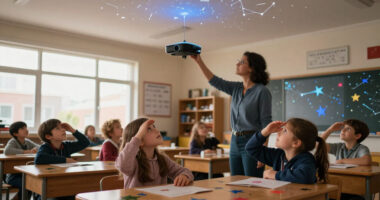
Projection and bilingual astronomy facts make this a different kind of student kit: rather than building a display, children can view planets and space images on a wall or ceiling while hearing information in English or Spanish. Its eight-planet coverage and 24 space images offer more varied viewing than the paint-and-assemble approach of the Little Jupiter Nine Planets DIY Solar System Model Kit. The projector also doubles as an LED night light or flashlight, which may make it useful beyond a science lesson. The tradeoff is that it produces less of a hands-on construction project than the Smartivity gear-driven model, and the listed components do not describe a physical display model. It needs three AA batteries, which are not included, so plan for a separate power purchase.
Pros:- Projects eight planets and 24 full-color space images
- Shares astronomy facts in English and Spanish
- Can also function as an LED night light or flashlight
- Designed for simple assembly
Cons:- Requires three AA batteries, which are not included
- Provides less construction activity than the Smartivity rotating model
- Projection is less suited to creating a persistent classroom display
Best for: Students who learn well from visual demonstrations, including English- and Spanish-speaking households seeking astronomy facts in both languages.
Not ideal for: Students who need a buildable model for a science-fair display or want to practice assembling planetary mechanisms.
- Brand:Science Can
- Model number:1204732021es0001
- Planets:8
- Projection slides:24
- Languages:English and Spanish
- Power:3 AA batteries (not included)
- Recommended age:36 months to 12 years
- Included components:Manual, 8 planet axes, planet stickers, projector, 3 slides
Our verdict“Choose this projector for students who benefit from bilingual, visual astronomy lessons more than from building a physical model.”
Smartivity DIY Solar System Kit, Gear-Driven Planet Model for Kids Ages 8–14
Moving planets are the main reason to choose this kit: building the gear-driven model gives students a tangible way to explore planetary motion and orbits, rather than only memorizing planet names. That makes it more mechanics-focused than the 4M Solar System Planetarium Glow-in-the-Dark Model Kit, which centers on painting and hanging a mobile. Its hands-on construction also distinguishes it from the Science Can projector, which delivers visual and spoken information without the same model-building emphasis. Smartivity is designed for ages eight and up, so younger children may need a different activity. The product data lists MDF construction and a box as the included component, but does not detail additional classroom materials or a fact chart; students seeking a guided reference alongside the build may prefer the Little Jupiter kit with its fact cards.
Pros:- Builds a rotating solar system model
- Connects construction with learning about planets and orbits
- Combines hands-on building with creative activity
- Made from MDF described as eco-friendly and child-safe
Cons:- Designed for ages eight and up, limiting suitability for younger students
- The supplied product details do not list a fact chart or other learning materials
- Requires building, unlike a ready-to-use projection activity
Best for: Students ages eight and up who enjoy construction and want to see planetary movement represented with a gear-driven model.
Not ideal for: Younger children or students who need a ready-to-use display, extensive printed astronomy references, or a low-assembly activity.
- Brand:Smartivity
- Age range:8 years and up
- Educational objective:STEM
- Model number:SMRT1313
- Manufacturer part number:SMRT1303
- Material:MDF
- Dimensions:12.91 x 11.61 x 1.97 inches
- Weight:650 g
- Included components:Box
Our verdict“Pick Smartivity when learning how a model moves matters more than painting, projection, or a reference-heavy project.”
Solar System Foam Model Craft Kit, 51 Pieces
Painting and decorating freedom define this kit. It supplies foam balls in multiple sizes, pigments, brushes, sticks, flags, and glitter, so older students can shape a project around their own presentation rather than follow the more structured paint-and-puzzle format of the Little Jupiter Nine Planets DIY Solar System Model Kit. A base plate and display box also give the finished work a presentation route, unlike the hanging 4M planetarium mobile. This makes it a strong fit for an older student who wants a craft-led display, but its recommended age of 16 and up puts it outside the stated age range of several other kits here. The 51-piece assortment offers variety, though the supplied description does not list fact cards or a lesson guide, so students may need to research the astronomy content separately.
Pros:- Includes 22 foam balls in multiple sizes
- Supplies 12 color pigments and two paint brushes for customization
- Includes a base plate and display box for presenting the finished model
- Provides sticks, flags, and glitter for varied project details
Cons:- Recommended for ages 16 and up, making it unsuitable for many younger students
- The listed components do not include fact cards or a learning guide
- Painting and decorating demand more independent project planning than the 4M mobile
Best for: Students aged 16 and up who want to paint and customize a solar system display for a class project or personal study.
Not ideal for: Younger students or anyone who wants a guided astronomy lesson, included fact cards, or a simpler assembly activity.
- Brand:PPXMEEUDC
- Piece count:51
- Foam balls:22 in multiple sizes
- Paint brushes:2
- Color pigments:12
- Bamboo sticks:50
- Toothpick flags:30
- Glitter powders:5
- Recommended age:16 years and up
Our verdict“Choose this craft kit for an older student who wants a customizable display and can supply the astronomy research independently.”
Nine Planets DIY Solar System Model Kit for Kids
A build, paint, and puzzle sequence gives this Little Jupiter kit a more guided project shape than the open-ended Solar System Foam Model Craft Kit, which provides many decorating materials but is recommended for ages 16 and up. Here, the fact cards and included paint supplies give students ages 8–12 several ways to engage with the planets, while the wooden model can become a classroom or science-fair display. Compared with the 4M Solar System Planetarium mobile, this is a tabletop construction project rather than a hanging glow-in-the-dark activity. The main cost in effort is time: assembly is estimated at one to two hours, and painting adds another step. It suits students who want a substantial project, but is less fitting when a short, low-mess lesson is the priority.
Pros:- Combines a wooden model, painting, and a puzzle
- Includes fact cards about the Sun and planets
- Paint and brushes are supplied for decorating
- Designed for classroom, science-fair, or display use
Cons:- Assembly takes approximately one to two hours
- The age recommendation starts at eight, so it may not fit younger students
- The multi-step build and painting take more time than the Science Can projector
Best for: Students ages 8–12 who need a structured science-class or science-fair project with building, painting, puzzle work, and fact cards.
Not ideal for: Families seeking a quick activity or students who would rather observe a projection than spend one to two hours assembling and painting.
- Brand:Little Jupiter
- Model:LJ-036
- Recommended age:8–12 years
- Materials:Paper and wood
- Dimensions:12.6 x 2.2 x 6.5 inches
- Weight:1.1 pounds
- Assembly time:Approximately 1–2 hours
- Included components:Wood model, puzzle, fact cards, paint, brushes, Styrofoam balls
- Warranty:30 days
Our verdict“Choose Little Jupiter for an ages 8–12 student who benefits from a guided, multi-part project and has time to finish it.”
4M Solar System Planetarium Glow-in-the-Dark Model Kit
Glow-in-the-dark planets and a hanging mobile give the 4M kit a distinctive display-focused role among these student projects. It combines painting and assembly with a wall chart and quiz questions, so students get more astronomy reference material than the Smartivity gear-driven kit lists, while the finished model works overhead rather than sitting on a tabletop like the Little Jupiter project. No batteries are required, which keeps the activity independent of a power supply. The tradeoff is that students must paint and assemble the planets, and the kit excludes Pluto. Its 16.5-inch mobile also needs space to hang, making it less convenient than the Science Can projector for a temporary viewing activity or a room without a suitable display spot.
Pros:- Creates a glow-in-the-dark solar system mobile
- Includes a wall chart and quiz questions for astronomy learning
- Requires no batteries
- Includes rods, string, stencils, glow paint, and assembly instructions
Cons:- Requires painting and assembly
- Pluto is not included
- The 16.5-inch mobile needs a suitable place to hang
Best for: Students aged eight and up who want to build a hanging solar system display and use a wall chart and quiz questions to reinforce learning.
Not ideal for: Students who need Pluto represented, prefer a tabletop model, or lack space to hang a mobile.
- Brand:4M
- Model:3427
- Recommended age:8 years and up
- Mobile size:16.5 x 16.5 inches
- Planets included:8; Pluto not included
- Power:No batteries required
- Included components:Planets, stencils, glow paint pen, rods, string, wall chart, quiz questions, assembly instructions
- Warranty:1-year replacement
Our verdict“Pick the 4M mobile for a student who wants an interactive craft that becomes a glow-in-the-dark hanging display.”
Pllieay 63-Piece Solar System Foam Ball Kit
I’d choose this kit for students whose assignment calls for a painted, freestanding planet model rather than a ready-made display. Its 26 assorted foam balls and planetary distribution map give students material to work with and a guide for placing the planets; the paints, sticks, flags, and palette keep the basic craft supplies together. Compared with the National Geographic Glow-in-the-Dark Solar System Model Kit, this one offers more scope for students to shape and paint their own project, while the National Geographic option has movable arms and a glow-in-the-dark finish for a more display-oriented result. The tradeoff is that students must do the painting and assembly, and some balls arrive as half spheres, which may take extra care to join or position. I’d favor it for guided projects, not students needing a quick, polished model.
Pros:- Includes foam balls, paint, brushes, sticks, flags, and a map for a complete craft activity.
- Assorted ball sizes give students a way to show differences between planets.
- Flags and the distribution map support labeling and placement during a school project.
- Painting and assembly give students room to personalize the finished model.
Cons:- Students must paint and assemble the model, so it takes more time than a mostly display-focused kit.
- Some foam balls are supplied as half spheres, which may complicate assembly or presentation.
Best for: Students aged 8 and up completing a classroom project that benefits from painting, labels, and hands-on assembly.
Not ideal for: Students who need a quick, ready-to-display model or who may struggle to position and work with half-sphere pieces.
- Brand:Pllieay
- Set size:63 pieces
- Age range:8–17 years
- Materials:Polystyrene foam, bamboo, and acrylic paint
- Foam balls:26
- Included paint:12 color pigments
- Other components:12 bamboo sticks, 10 toothpick flags, 2 paintbrushes, 1 palette, and 1 planetary distribution map
- Package measurements:17.5 cm wide × 28.5 cm long
Our verdict“Choose this kit when students need a well-supplied, customizable foam-ball project and have time to paint and assemble it.”
National Geographic Glow-in-the-Dark Solar System Model Kit
I’d put this kit ahead of loose-ball craft sets when a student wants a model that can be adjusted after assembly. Its movable arms let students change the planets’ positions, and glow-in-the-dark accent paint adds a display feature that the Pllieay 63-Piece Solar System Foam Ball Kit does not offer. The kit covers the Sun and all eight planets, with paints, decals, and a fact poster to connect building with basic astronomy learning. That makes it a stronger choice for a classroom presentation or bedroom display than a project focused mainly on customizing foam spheres. The tradeoff is less freedom to invent the structure: students follow a plastic model format, and painting and assembly still take time. I’d skip it if the assignment calls for a highly individualized craft build or extensive materials for experimenting with planet sizes.
Pros:- Includes the Sun and all eight planets in one 3D model.
- Movable arms let students adjust the display rather than fixing every planet in one position.
- Glow-in-the-dark accent paint gives the finished model a distinctive display feature.
- Fact poster, decals, and painting supplies add learning and decorating activities.
Cons:- Assembly and painting require time and hands-on effort.
- The plastic, arm-based format offers less freedom to build a custom structure than foam-ball kits.
Best for: Students aged 8 and up who want an adjustable, painted solar system model for a presentation or display.
Not ideal for: Students seeking a free-form craft project with many loose materials or a model focused on comparing foam-ball sizes.
- Brand:Blue Marble
- Age range:8 years and up
- Theme:Astronomy
- Material:Plastic
- Planets:All 8 planets and the Sun
- Features:Glow-in-the-dark finish and movable arms
- Included components:6 vibrant paint colors, glow-in-the-dark accent paint, brush, palette, decals, and fact poster
- Item dimensions:7.09 × 2.36 × 12.01 inches
Our verdict“Pick this model for students who value an adjustable, glow-accented display more than an open-ended foam craft.”
Solar System Model Foam Ball Kit with Paints and Craft Supplies
This kit makes sense for students who want to build and paint a foam model without adding glue to the project. It includes 12 balls in 10 sizes, two rings, bamboo sticks, flags, and paints, giving students a practical way to make planet sizes and labels part of the assignment. Compared with the Pllieay 63-Piece Solar System Foam Ball Kit, it has fewer balls but explicitly includes Saturn-style rings and states that assembly needs no glue; that can make setup simpler, though it also leaves less material for experimentation. The age information needs attention: the listing gives a recommended age of 0–8 while also warning that the kit is unsuitable for children under 4, and its sticks and flags are small, sharp parts. I’d choose it for supervised school crafting, not for unsupervised young children.
Pros:- Twelve foam balls in 10 sizes help students compare relative planet sizes.
- Includes two foam rings for adding a Saturn-like detail to the model.
- No glue is required for assembly.
- Paints, brushes, sticks, flags, and a palette support a complete school craft activity.
Cons:- Small, sharp sticks and flags call for adult supervision.
- The listed age range conflicts with the warning that the kit is unsuitable for children under 4.
- Twelve balls provide less spare material for experimentation than the 26-ball Pllieay 63-Piece kit.
Best for: Students working with an adult or teacher who want a foam-ball model with planet-size variety, rings, and no-glue assembly.
Not ideal for: Unsupervised young children, especially those under 4, or buyers who need clear, consistent age guidance.
- Brand:Ourtroness
- Material:Polystyrene foam
- Foam balls:12 balls in 10 sizes
- Foam rings:2
- Bamboo sticks:15, 7.8 in (20 cm) long
- Paint:12 colors, 5 ml each
- Other components:15 toothpick flags, 2 paintbrushes, and 1 paint palette
- Assembly:No glue required
- Age information:Recommended age listed as 0–8 years; warning says unsuitable for children under 4
Our verdict“Choose this for a supervised, glue-free foam model with varied ball sizes, but check the age and small-parts warnings before buying.”
Solar System Model Kit with Foam Balls and Craft Supplies
I’d reserve this kit for older students who want decoration to be part of the assignment, not just a way to color the planets. Alongside 20 foam balls and 50 bamboo sticks, it supplies 30 flags and five glitter powders, so students have plenty of materials for a personalized classroom display. Compared with the Ourtroness kit, which specifies a no-glue build and includes foam rings, this set puts more emphasis on decorating and supplies substantially more sticks and flags; it is less clearly aimed at younger children. Its recommended age is 16 years and up, making it a poor match for many elementary-school projects despite the child-oriented wording in the description. The listing also does not specify ball sizes or give assembly instructions in the provided details. I’d pick it for an older student’s custom project, not a simple or tightly guided model.
Pros:- Includes 20 foam balls for building a multi-planet display.
- Fifty bamboo sticks and 30 flags provide many assembly and labeling pieces.
- Five glitter powders give older students extra decoration options.
- Includes brushes, 12 color pigments, and a palette for painting.
Cons:- Recommended age of 16 years and up excludes many students shopping for a children’s school project.
- The supplied details do not state foam-ball sizes or describe an assembly method.
- Painting and assembly are left to the student.
Best for: Students aged 16 and up who want abundant sticks, flags, and glitter for a customized solar system display.
Not ideal for: Elementary-age students, or anyone who needs clear assembly guidance and a kit explicitly suited to younger learners.
- Brand:PPXMEEUDC
- Piece count:37
- Recommended age:16 years and up
- Foam balls:20 in multiple sizes
- Bamboo sticks:50
- Color pigments:12
- Other components:2 paintbrushes, 30 toothpick flags, 5 glitter powders, and 1 palette
Our verdict“Choose this for an older student who wants a highly decorated project and can manage a largely self-directed build.”
Pllieay 3D Solar System Model Craft Kit with Display Box
I’d choose this kit when the finished project needs its own presentation space. The starry-sky display box gives students a defined scene for their planets and foam stars, unlike the freestanding builds in the Pllieay 63-Piece Solar System Foam Ball Kit or the Ourtroness foam-ball set. Its screws, adhesive dots, stickers, and instruction manual point toward a more structured build, while the paints and brushes still leave room for personal choices. The tradeoff is scale and flexibility: it has 13 foam balls and three bamboo sticks, so it offers less loose material for a large or highly customized model than the 63-piece Pllieay kit. Students also need to paint and assemble everything themselves. I’d favor it for a contained display project, not for a class wanting lots of spare craft materials.
Pros:- Starry-sky display box provides a dedicated setting for the finished model.
- Includes foam planets and stars for a scene-style presentation.
- Paints, brushes, labels, screws, adhesive dots, and a manual support assembly and decorating.
- The contained format suits projects that need a defined display area.
Cons:- Students must paint and assemble the model before it is ready to display.
- Thirteen foam balls and three bamboo sticks provide less material for experimentation than the Pllieay 63-Piece kit.
- The display box limits the finished model to a fixed presentation format.
Best for: Students over 8 who need a contained, display-ready solar system project for a classroom presentation or shelf.
Not ideal for: Students who want a large freestanding model, extensive spare materials, or a project with minimal painting and assembly.
- Brand:Pllieay
- Model:T-044F
- Age range:Over 8 years
- Material:Foam
- Dimensions:13.12 × 6.69 × 4.72 inches
- Display components:1 display box, 13 foam balls, and 4 foam stars
- Painting supplies:12 color pigments, 2 paintbrushes, and 1 palette
- Assembly components:2 adhesive dots, 2 label stickers, 1 string, 10 plastic screws, 3 bamboo sticks, and 1 instruction manual
Our verdict“Pick this kit when a student’s priority is a contained solar system scene with its own display box, rather than a larger open-ended build.”
Wookidel Solar System Project Kit for Kids
I’d choose this kit when the goal is a solar system project children can keep rearranging after the painting is done. Its felt board and movable planets support demonstrations of planetary order and paths, unlike the Wookidel 64-Piece Solar System Project Kit, which uses sticks and flags for a more conventional assembled model. The wall-display format also gives the finished project a second use as room decoration. With 12 colors of silicone paste, brushes, palettes, labels, and foam pieces included, there’s plenty for a guided art-and-science session. The tradeoff is the time involved: children need to paint and assemble the pieces, so younger students may need an adult nearby. I’d also choose a different kit for a rigid tabletop model; this one is built around a felt-backed display.
Pros:- Felt board and movable planets support hands-on demonstrations of planetary arrangement.
- Includes 12 foam hemispheres, paints, brushes, palettes, and labels for a complete craft activity.
- Finished board can serve as both a learning aid and a wall decoration.
- Adhesive hooks and hook-side tape support hanging the display.
Cons:- Painting and assembly require a longer activity session than a ready-made display.
- Younger children may need supervision while handling small craft components and completing the build.
Best for: Families or teachers who want students to paint planets and then reposition them on a wall-mounted felt board.
Not ideal for: Students who need a ready-to-display rigid model or a quick project with little adult involvement; painting and assembly take time.
- Brand:Wookidel
- Model number:WK0033
- Recommended age:6 years and up
- Subject:Solar System
- Planet pieces:12 foam hemispheres
- Board:Planet felt board
- Paint colors:12 colors of silicone paste
- Other included items:4 foam stars, brushes, palettes, adhesive hooks, hook-side tape, adhesive dots, label stickers, and instruction booklet
Our verdict“Choose this Wookidel kit for a paint-and-rearrange wall lesson, but pick a stick-mounted model if you want a more conventional freestanding display.”
64-Piece Solar System Project Kit for Kids
For a class or family activity where children will build a model from separate parts, I’d favor this kit’s 64-piece assortment. It includes foam discs and balls, stars, bamboo sticks, toothpick flags, paints, and instructions, giving students more kinds of components to assemble than the Pllieay Solar System Model Kit for Kids, which centers on a felt-backed wall display. The sticks and flags suit a project where students want to label or position planets as part of a tabletop presentation. Its age guidance of 6–12 years makes it a flexible choice for mixed-age groups, though the smaller pieces call for supervision with younger children. The tradeoff is that this kit doesn’t list a felt display board or box, so it offers less built-in support for hanging or storing the finished model.
Pros:- 64-piece set combines foam shapes, sticks, flags, paints, and instructions.
- Bamboo sticks and toothpick flags give students components for a labeled tabletop project.
- Age guidance spans 6–12 years, suiting a range of elementary-age learners.
- Designed for hands-on use at home or in a classroom.
Cons:- Painting and assembly take time and may need adult help.
- Toothpick flags and other small components can require supervision for younger children.
- No felt board or display box is listed for hanging or enclosing the finished project.
Best for: Teachers and caregivers planning a group craft lesson for children ages 6–12 who want varied pieces for assembling and labeling a model.
Not ideal for: Buyers who want a wall-hanging felt display or enclosed showcase; the listed components focus on a stick-and-foam build.
- Brand:wookidel
- Model:WK0017
- Piece count:64
- Material:Foam
- Age range:6–12 years (manufacturer-recommended)
- Dimensions:10.24 × 8.66 × 3.62 inches
- Paints and tools:12 acrylic paints, 2 brushes, and a palette
- Other included components:Foam discs, sun, foam balls, foam stars, bamboo sticks, toothpick flags, and instructions
Our verdict“Pick this 64-piece set for a varied classroom build with sticks and flags, rather than a finished wall display.”
Pllieay Solar System Model Kit for Kids
This Pllieay kit is a sensible match for students who want a structured craft project that ends as a hangable felt display. Its illustrated instructions introduce planetary positions, while the foam hemispheres, pigments, and label sticker give students an active role in building the presentation. Compared with the Wookidel Solar System Project Kit for Kids, it has a stated 8–17 age range and a 63-piece set, making it a better fit for older students seeking a more independent project, though the supplied details don’t establish that it is harder to assemble. The wall-hanging format keeps the finished work visible without needing a separate display box like the Pllieay 3D Solar System Model Kit with Display Box. The main compromise is that students must paint and assemble it, and the felt format is less suited to a freestanding model.
Pros:- Felt background plate and hooks support a wall-hung finished project.
- Illustrated manual supports learning about planetary positions.
- Includes 12 pigments, 2 brushes, a palette, and foam components for painting and assembly.
- Stated age range extends from 8 to 17 years.
Cons:- Students must paint and assemble the model rather than display it straight from the box.
- Felt-backed construction is a different fit from a freestanding or enclosed model.
- The listed set has 9 foam hemispheres, so buyers should check that this format matches their project needs.
Best for: Students ages 8–17 who want an illustrated, paintable solar system project that can be hung for classroom or bedroom display.
Not ideal for: Younger children seeking a low-preparation activity, or buyers who prefer an enclosed tabletop display instead of a felt wall piece.
- Brand:Pllieay
- Model:CR-001FO
- Age range:8–17 years
- Set size:63 pieces
- Materials:Foam and felt
- Dimensions:12.99 × 8.46 × 3.34 inches
- Weight:0.4 kg
- Included components:Felt background plate, 9 foam hemispheres, 4 foam stars, hooks, adhesive dots, label sticker, 12 pigments, 2 paintbrushes, palette, and instruction manual
Our verdict“Choose this Pllieay kit for older students making a paintable wall display, and choose the display-box version if containment matters more.”
35-Piece Solar System Model Kit
I’d put this kit on the shortlist when a student wants a solar system display with a little more visual character than a standard set of painted planets. Its three astronaut ornaments distinguish it from the Pllieay Solar System Model Kit for Kids, which emphasizes a felt board and movable-style wall presentation rather than astronaut decoration. A felt background plate, adhesive hooks, and illustrated instructions support a compact wall display, while 14 foam balls and four stars provide the main craft pieces. The age guidance points to 8–10 years, so this is a more focused choice for upper-elementary projects than the Wookidel 64-Piece Solar System Project Kit, whose stated range extends from 6 to 12. Students still need to paint and assemble it, and buyers should not treat the astronauts as a substitute for planet labels or a more detailed astronomy guide.
Pros:- Includes three astronaut ornaments alongside foam planets and stars.
- Felt background plate and self-adhesive hooks support wall display.
- Comes with 12 pigments, brushes, palette, labels, and an instruction manual.
- Stated age guidance is specific to children ages 8–10.
Cons:- Painting and assembly require time and adult support may be needed.
- The recommended age range may not suit younger students.
- The listed educational objective is exploratory skills, with no detailed astronomy content specified.
Best for: Students ages 8–10 who want a painted solar system wall project with astronaut ornaments for added visual interest.
Not ideal for: Younger children who need a simpler activity, or students whose project requires a freestanding model or extensive astronomy instruction.
- Brand:PPXMEEUDC
- Pieces:35
- Age guidance:Recommended for ages 8–10; listed as 96 months and up
- Foam components:14 foam balls and 4 foam stars
- Paints:12 color pigments
- Display components:Felt background plate, adhesive dot, label sticker, and 4 self-adhesive hooks
- Decorative pieces:3 astronaut ornaments
- Other included items:2 paint brushes, palette, and instruction manual
Our verdict“Choose this kit for an ages 8–10 wall project that benefits from astronaut decorations, not for a detailed or freestanding model.”
Pllieay 3D Solar System Model Kit with Display Box
The clearest reason to choose this Pllieay kit over the other craft sets here is its starry display box: students can paint and assemble the model, then keep it showcased in a compact enclosure rather than hanging a felt board. Compared with the Pllieay Solar System Model Kit for Kids, which includes a felt background plate and hooks, this version favors a contained presentation that can sit on a shelf. Its 17 foam balls, 12 paints, and illustrated guide support a hands-on STEM activity for children over 8. The box also makes the finished project easier to present as a single unit, though the supplied description doesn’t specify how securely it protects the foam. Like the 35-Piece Solar System Model Kit, it still requires painting and assembly; students seeking a quick, ready-made teaching model should skip both.
Pros:- Starry display box gives the finished project a compact showcase.
- Includes 17 foam balls, 12 paints, brushes, stickers, and an illustrated guide.
- Designed for hands-on STEM learning about planetary positions and characteristics.
- Listed dimensions make the overall kit size clear for storage planning.
Cons:- Foam construction is less substantial than a model made from solid materials.
- Students must paint and assemble the pieces before display.
- The box format does not provide the movable felt-board setup found in some other kits.
Best for: Students over 8 and families who want a paint-and-build project that can be showcased in a compact display box.
Not ideal for: Buyers who want a movable felt-board lesson, a freestanding planetary model, or an activity with little painting and assembly.
- Brand:Pllieay
- Model number:SC-008KI
- Recommended age:Over 8 years
- Material:Foam balls
- Foam ball count:17
- Paints:12
- Dimensions:11.81 × 7.87 × 2.56 inches
- Weight:0.33 kg
- Other included items:Brushes, palette, dot sticker, label sticker, display box, and illustrated guide
Our verdict“Choose this Pllieay set if a compact enclosed showcase matters more than a movable wall display or a ready-to-use model.”

How We Picked
I ranked these solar system model kits for students by how well their format supports a real learning or school-project goal. I compared the types of hands-on activity, whether the finished model offers a useful display or interactive element, and how much room each option leaves for student-led painting, assembly, and explanation. I also weighed the demands a kit may place on a student, including the need for adult assistance, extra materials, or time for decorating.
The ranking favors kits with a clear educational role and a distinctive benefit, rather than treating a higher piece count as proof of better value. That puts adaptable, engaging options ahead of basic craft sets for general use, while simpler foam-ball kits still rank well for students who need an affordable-feeling, customizable project format. Similar kits are separated by practical differences such as included supplies and display features; product titles alone do not establish exact contents, so buyers should check the current package details before choosing.
Factors to Consider When Choosing Solar System Model Kits For Students
I’d choose a kit by starting with the assignment, not the planet count. A model meant to explain motion has different needs from a painted display due the next morning, and a student working independently may need a less demanding build than one with an adult helper.
Match the Model to the Learning Goal
Decide what the student must demonstrate: planet order, relative positions, movement, or simply a labeled display. A static craft can work well for naming and arranging planets, but it cannot show movement as clearly as a mechanism designed to rotate. Students sometimes choose an elaborate model before checking the assignment rubric, then discover that the required labels or explanations are missing. I’d write down the assignment’s must-haves first and treat special features as a bonus. If the project includes an oral presentation, favor a model the student can explain without relying on a feature they cannot describe.
Check Assembly Time and Adult Help
Kit difficulty is about more than age labels: painting, drying, attaching parts, and arranging a display can stretch a project over several sessions. A student working alone may do better with a guided activity than with a craft set that expects them to plan each step. Before buying, check whether the work needs tools, glue, batteries, or drying time, and whether those items are supplied. A common mistake is to count only the assembly time and forget that painted components may need to dry before the model can be finished. For a deadline-driven assignment, a simpler build can leave more time for research and a clear presentation.
Choose Between Structure and Customization
Some students benefit from a defined build with a clear sequence; others want to paint, label, and arrange the planets in their own style. Foam-ball kits tend to leave more creative choices to the student, but that freedom also means more planning and a greater chance of an uneven result. Guided or mechanical designs can offer a more directed activity, though they may limit how much the finished model can be changed. Ask whether the assignment rewards neatness, originality, or scientific explanation before choosing. If the grading criteria are open-ended, a basic craft kit plus a student-made plan may offer more flexibility than a feature-heavy model.
Look Beyond the Piece Count
A long parts list does not tell you whether a kit includes the supplies that matter for the project. Compare whether paint, brushes, string, labels, connectors, or a display box are included, and check if any materials must be sourced separately. More pieces can mean extra options, but they can also add sorting and assembly work without improving the lesson. I’d compare kits by the completed project the student can make, not by the number printed in the title. This is especially useful when looking at the several foam-ball sets in this roundup, where included craft supplies and display arrangements are more meaningful differences than a small count gap.
Plan for Display, Storage, and Reuse
Think about where the completed model will go after grading. A display box or compact design may protect the work and make it easier to carry, while a larger project can be more visible but harder to store. Glow-in-the-dark details can add an engaging display feature, though they do not replace accurate labels or a strong explanation of the solar system. If the model will be used for later study, choose a layout that keeps planet names and positions easy to see. For a one-time assignment, spending effort on a durable display may matter less than getting the build completed on schedule.
Treat Planet Scale as a Teaching Choice
Most classroom models simplify the solar system, so students should not assume that the planets or distances are shown to true scale. A model that makes planets easy to see may exaggerate their sizes, and a compact display cannot show the vast distances between them proportionally. That simplification is useful for learning order and identifying planets, but it can create misconceptions if the student presents it as an accurate scale model. Encourage the student to add a short note explaining what the model represents and what it simplifies. This small step can make even a basic craft kit support a more thoughtful science project.
Frequently Asked Questions
Which type of solar system kit is best for a student who has a short project deadline?
I’d prioritize a kit with a clear assembly path and limited extra decorating, rather than choosing by how many pieces it includes. Check for paint or glue that needs drying, since those steps can add a day even when the assembly itself is quick. A simple foam-ball project may be manageable if the student already has the required supplies, while a guided kit can help when the student needs more direction. Set aside time for labels and a short explanation, not just construction. The best choice is the one that fits the assignment and the remaining time.
Should I choose a moving model or a static craft for a science assignment?
Choose a moving design when the student needs to explain planetary motion or show how parts relate dynamically. A static craft is often easier to customize and can be a better fit when the assignment focuses on planet names, order, or a decorated display. Motion can make a demonstration more engaging, but it does not automatically show accurate scale or orbital behavior. Ask the teacher whether the project is graded on movement, appearance, or scientific explanation. If movement is optional, a well-labeled static model may give the student more time to prepare the science content.
Are glow-in-the-dark details useful for learning, or mostly for display?
Glow features can make a finished model more appealing to display and may help a student stay interested in the project. They do not, by themselves, teach planet order, scale, or orbital motion. I’d treat them as an added presentation feature rather than the main educational benefit. Before choosing a glow-in-the-dark kit, check whether it also supports the student’s assignment with a suitable layout or activity. If the project is judged mainly on labels and research, a simpler model may serve just as well.
How do I decide between the similar foam-ball kits?
Compare what comes in the box and how the student is expected to display the finished work. Paints and other craft supplies can reduce extra shopping, while a display box may help protect the project and make it easier to present. A larger piece count is only useful if those parts support the student’s design or assignment. Check whether the student is expected to provide glue, string, labels, or tools, since these omissions can affect both timing and effort. If two kits seem alike, choose the one that better fits the project format and the student’s available supplies.
Can a solar system model kit teach accurate planet sizes and distances?
A classroom model can help students understand planet order and relationships, but compact kits usually cannot represent both planet sizes and distances at true scale. A display that makes planets large enough to see may exaggerate their relative sizes, while a true-distance layout would be far too large for most desks. This does not make the model unsuitable; it means the student should explain what has been simplified. For a scale-focused assignment, check the teacher’s requirements and consider adding a diagram or written comparison. That extra explanation can prevent a useful craft model from being mistaken for a precise scale representation.
Conclusion
For a broad mix of student needs, I’d choose the National Geographic Glow-in-the-Dark Solar System Model Kit as my best overall recommendation, with the Smartivity DIY Solar System Kit as the stronger pick when movement is the main lesson. For a premium-style display, I’d favor the 4M Solar System Planetarium for its glow-in-the-dark focus; for beginners, a guided kit such as the Nine Planets DIY Solar System Model Kit may feel more approachable than an open-ended craft set. Students seeking value and customization should compare the Pllieay and other foam-ball kits by included supplies and display format rather than piece count alone. For a project that needs a contained presentation, look at the Pllieay 3D kits with display boxes; whichever route you choose, match the model to the assignment, the student’s available time, and the help they can get.