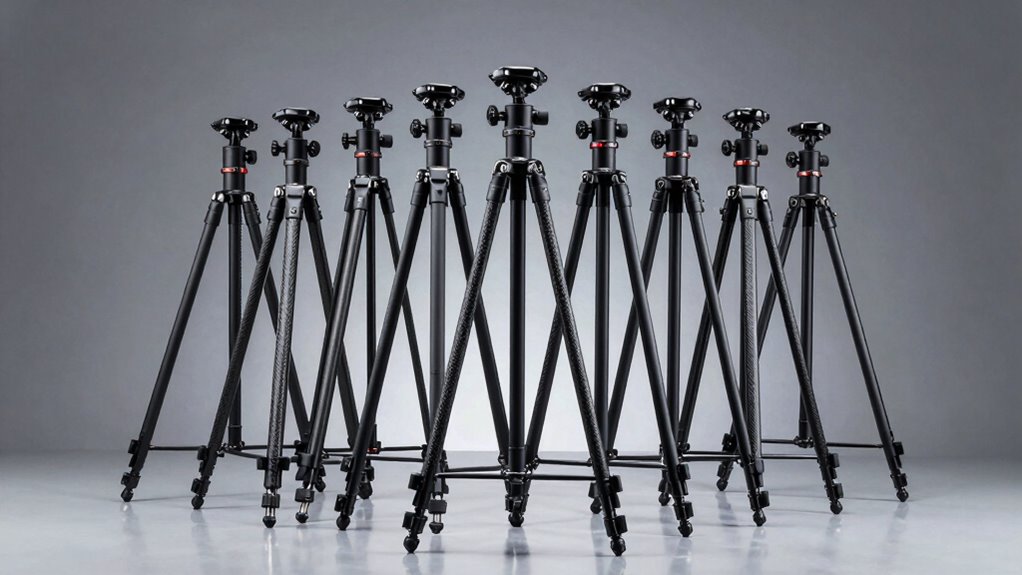

A carbon fiber video tripod with bowl head is the go-to setup for filmmakers who need fast, level shooting on uneven ground — the 75mm bowl lets you level the head independently of the legs, which flat-plate photo tripods simply can’t do. In this comparison, the SmallRig AD-100 FreeBlazer stands out as my best overall pick thanks to its tall working height, heavy payload, and genuinely usable fluid head at a mid-range price. If budget matters most, the NEEWER LL37 delivers surprising damping performance for the money, while the iFootage TC7 with FastBowl wins for run-and-gun shooters who change setups constantly. The main tradeoffs in this category come down to weight versus payload, true fluid damping versus friction-only heads, and whether you get a real 75mm bowl or a compromised adapter. Read on for the full breakdown of all 14 options and who each one suits best.

Prime made for students and young adults
- Fast, free delivery for dorm and study essentials
- Prime Video and Amazon Music included
- Member-only deals
Key Takeaways
- True 75mm bowl systems like the SmallRig AD-100, SIRUI SQ75, and Benro Mammoth TMTH44C outperform flat-plate tripods with bolted fluid heads when it comes to fast leveling and smoother pans — the bowl design alone is worth paying for if you shoot video professionally.
- Several budget options (COMAN T1S, INNOREL RT80C) advertise video capability but use ball heads or basic bowl adapters rather than genuine fluid heads — fine for static shots, but disappointing for cinematic movement.
- Payload ratings diverge wildly: the INNOREL RT90C handles 40kg while the travel-focused SmallRig 63-inch model is rated for far lighter rigs — always match capacity to your heaviest camera-plus-lens-plus-monitor combination, not your everyday setup.
- Carbon fiber weight savings matter most on the travel models (SmallRig 63-inch, AD-50); on heavy-duty legs the material choice is more about vibration damping and rigidity than portability.
- Counterbalance is the hidden differentiator at the top end — the SmallRig 200.5cm model with 7-step counterbalance keeps tilted shots locked far better than fixed-spring heads on cheaper kits.


| carbon fiber video tripod with bowl head | Material | Folded Length | Max Load | Weight |
|---|---|---|---|---|
| NEEWER LL37 78" Carbon Fiber V | Carbon fiber | 38" / 98.5 cm | 22 lb / 10 kg | — |
| SmallRig AD-50 Carbon Fiber Vi | Carbon fiber | 31.1 in | 13.2 lbs | 6.2 lbs |
| SmallRig 63-Inch Carbon Fiber | Carbon fiber | 41 cm | 4 kg / 8.82 lbs | 1.37 kg / 3 lbs |
| INNOREL RT80C Carbon Fiber Tri | Carbon fiber | 22 in / 56 cm | 44 lb / 20 kg | 3.97 lb / 1.8 kg |
| COMAN T1S Carbon Fiber Tripod | 3K twill carbon fiber and aluminum alloy | — | 20 kg / 44 lbs | — |
| Benro Mammoth TMTH44C 4-Sectio | Carbon fiber legs with magnesium castings | 22.8 in | 55 lb / 25 kg | — |
| SmallRig AP255Pro 63" Carbon F | Carbon fiber | 20.5 in / 52 cm | — | 3.3 lb / 1.5 kg |
| SIRUI SQ75+VHS10 Carbon Fiber | Carbon fiber | — | — | — |
| INNOREL RT90C Carbon Fiber Bow | 10-layer carbon fiber | 23 in / 59 cm | 88 lb / 40 kg | 6 lb / 2.72 kg |
| SMALLRIG 73"/185cm Carbon Fibe | Carbon fiber legs, aluminum fluid head | 34 in / 87 cm | 22 lb / 10 kg | 6 lb / 2.7 kg |
| SmallRig Carbon Fiber Video Tr | Carbon fiber | — | — | 14.7 lb |
| INNOREL NT364C Professional Ca | 8-layer carbon fiber | 22.8 in / 58 cm | 55 lb / 25 kg | — |
| SmallRig AD-100 FreeBlazer Hea | Carbon fiber | 39 in / 99 cm | 22 lbs / 10 kg | 11 lbs / 5 kg |
| iFootage TC7 Carbon Fiber Vide | Carbon fiber | 26.3 inches | — | 4.1 lbs |
More Details on Our Top Picks
NEEWER LL37 78″ Carbon Fiber Video Tripod with Damping Adjustable Fluid Head
Complete bowl-and-fluid-head package at full working height is the story here, and it’s why this option leads the lineup. The NEEWER LL37 reaches 78 inches — taller than the SmallRig AD-50 or COMAN T1S — which matters for eye-level interviews and overhead product work. The adjustable damping fluid head lets you tune pan and tilt resistance to your camera weight, something the T1S’s fixed ±7° bowl can’t do without adding a separate head. The one-step quick release is also genuinely useful for gimbal shooters running DJI RS-series stabilizers, letting you swap between handheld and tripod in about a second. The tradeoffs: 22 lb of capacity is respectable but shy of the INNOREL RT80C’s 44 lb, and the 38-inch folded length makes it a poor travel companion compared with compact models.
Pros:- Adjustable fluid damping for tuned, smooth pan and tilt under different camera loads
- One-step quick release plate is directly compatible with DJI RS-series gimbals
- 78-inch maximum height covers eye-level and overhead shooting without a column
- Complete kit includes mid-level spreader, bubble level, telescopic handle, and carrying bag
Cons:- 38-inch folded length is bulky for airline travel and compact car kits
- 75mm bowl may not accept all third-party heads without an adapter
- 22 lb payload limits heavy cine rigs compared with bowl-only competitors
Best for: Solo video creators and run-and-gun shooters who want a ready-to-shoot 75mm bowl system with a fluid head included and enough height for standing interviews
Not ideal for: Travel-heavy filmmakers — at 38 inches folded it won’t fit most carry-on luggage, and cine builders needing more than 22 lb of payload
- Material:Carbon fiber
- Max Height:78″ / 198 cm
- Min Height:37″ / 94.6 cm
- Folded Length:38″ / 98.5 cm
- Max Load:22 lb / 10 kg
- Bowl Size:75mm
- Pan / Tilt Range:360° pan; +90° to -75° tilt
- Head Type:Fluid head with adjustable damping
- Gimbal Compatibility:DJI RS4, RS4 Pro, RS2, RS3
Our verdict“If you want one tripod that works out of the box for gimbal hybrid and traditional video work at full height, this is the most complete package in the roundup.”
SmallRig AD-50 Carbon Fiber Video Tripod with Fluid Head, 64.1 in
This model earns the value slot by delivering the essentials — a step-less damping fluid head, mid-level spreader, and 13.2 lb capacity — at a working weight of just 6.2 lbs. Compared with the NEEWER LL37, the AD-50 trades 14 inches of maximum height for a shorter 31.1-inch folded length, making it far easier to sling over a shoulder for documentary or event work. The step-less damping means resistance adjusts continuously rather than in clicks, which suits shooters making frequent framing changes. Note the 65mm bowl is a non-standard size — smaller than the 75mm bowls on the LL37 and INNOREL RT80C — so if you plan to upgrade to a higher-end fluid head later, compatibility options are narrower. Retractable spikes and the included smartphone holder are practical touches rather than gimmicks.
Pros:- Step-less damping fluid head with counterbalance for smooth moves at any resistance setting
- Folds to 31.1 inches, far more portable than taller 75mm bowl systems
- Retractable spikes and mid-level spreader add stability on uneven ground
- Ships with smartphone holder, Allen wrench, and storage bag
Cons:- Non-standard 65mm bowl limits future head upgrades compared with 75mm systems
- 13.2 lb load capacity is modest for cine builds with monitors and follow focus
- Maximum height of 64.1 inches is short for standing interviews
Best for: Budget-conscious content creators and small production teams who need a full fluid-head kit for mirrorless or light cinema camera work without paying flagship prices
Not ideal for: Tall shooters and heavy-rig operators — 64 inches maxes out below comfortable eye level, and 13.2 lbs limits built-out cinema setups
- Material:Carbon fiber
- Weight:6.2 lbs
- Max Load:13.2 lbs
- Height Range:28.7–64.1 in
- Folded Length:31.1 in
- Bowl Base:65mm
- Head Movement:360° pan; +90°/-50° tilt
Our verdict“The smart pick for shooters who want a complete, portable fluid-head kit and don’t need 75mm-bowl upgrade paths or extreme payloads.”
SmallRig 63-Inch Carbon Fiber Video Travel Tripod (Model 4221)
At 3 lbs with a 41 cm folded length, this is the tripod in the roundup that actually fits in a backpack — the SmallRig AD-50 folds nearly twice as long, and the NEEWER LL37 is almost double the packed size. The ±10° leveling base is a thoughtful inclusion for a travel kit, letting you level the head quickly on slopes without fiddling with individual legs, which is exactly the scenario travel shooters face most. The detachable monopod leg adds real versatility for crowded events where a tripod won’t fit. The honest tradeoff is capacity: at 8.82 lbs, this is a mirrorless-and-small-lens system, not a cine rig. Long telephoto shooters will also want a mount ring or bracket for proper balance, since the short platform doesn’t cradle big glass well.
Pros:- Folds to just 41 cm — the most packable option in this lineup
- ±10° leveling base speeds up setup on uneven terrain
- Detachable monopod leg doubles your shooting options in tight spaces
- Three leg-angle positions plus reversible column enable genuine low-angle work
Cons:- 8.82 lb maximum load limits camera and lens combinations
- Telephoto lenses need a separate mount ring for proper balance
- 160 cm maximum height is short for full-frame standing interviews
Best for: Travel videographers and vloggers working with mirrorless cameras who prioritize packed size and weight over payload and maximum height
Not ideal for: Cinema camera operators and long-telephoto shooters — the 8.82 lb capacity and compact head can’t handle heavy rigs without balance issues
- Material:Carbon fiber
- Max Height:160 cm / 63 in
- Folded Length:41 cm
- Weight:1.37 kg / 3 lbs
- Max Load:4 kg / 8.82 lbs
- Leg Sections:4
- Head:Fluid video head with ±10° leveling base
Our verdict“Buy this if packed size is your number-one constraint and your kit is mirrorlass-light; skip it for anything heavier.”
INNOREL RT80C Carbon Fiber Tripod with 75mm Bowl Adapter
This pick makes the most sense for a specific buyer: someone who already owns a quality fluid head and needs legs that won’t be the weak link. The 32mm maximum leg tubes are thicker than anything else here, and the 44 lb rating doubles the NEEWER LL37’s capacity while weighing under 4 lbs — a strength-to-weight ratio the taller LL37 can’t match. The included 75mm bowl adapter drops straight into standard video heads, putting it ahead of the COMAN T1S if head choice matters to you. The obvious tradeoff: there’s no head in the box, so the total system cost climbs once you add a fluid head, and the 63-inch maximum height sits below the LL37’s 78 inches. Twist locks save weight but take longer to deploy than flip locks when you’re moving fast between setups.
Pros:- 44 lb / 20 kg load capacity handles heavy telephoto and cine setups
- Just 3.97 lbs despite 32mm leg tubes — exceptional stiffness-to-weight
- Includes 75mm bowl adapter plus interchangeable rubber and stainless steel spikes
- Independently adjustable legs with 4.72-inch minimum height for ground-level work
Cons:- Legs only — you must supply your own head
- Twist locks are slower to set up than flip locks for fast-moving shoots
- 63-inch maximum height falls short of taller options like the NEEWER LL37
Best for: Wildlife and sports videographers, or birdwatchers with spotting scopes, who already own a fluid head and need maximum load capacity at minimum weight
Not ideal for: First-time video buyers expecting a ready-to-shoot kit — no head is included, so you’ll need to budget for one separately
- Material:Carbon fiber
- Max Load:44 lb / 20 kg
- Max Leg Tube Diameter:32 mm
- Height Range:4.72–63 in
- Folded Length:22 in / 56 cm
- Weight:3.97 lb / 1.8 kg
- Bowl Adapter:75mm included
- Lock Type:Twist locks, 4 sections
Our verdict“The strongest foundation in the roundup for heavy glass, provided you bring your own fluid head to mount on that 75mm bowl.”
COMAN T1S Carbon Fiber Tripod with Ball Bowl Head
The T1S is built around a different philosophy than the NEEWER LL37: instead of a full fluid head, it pairs 44 lb capacity with a leveling ball bowl offering ±7° of tilt — enough to level the camera, but not enough for cinematic pan-and-tilt moves. What you get in exchange is rig flexibility the others lack: an ARRI-positioned 1/4-inch accessory interface for bolting on monitors, lights, or arms, plus a quick-release center column and three low-angle positions for dramatic ground-level framing. The 3K twill carbon fiber build keeps weight down despite the 20 kg rating. Compared with the INNOREL RT80C, the T1S includes its bowl head out of the box, but serious video shooters will likely bolt on a dedicated fluid head anyway — at which point the RT80C’s simpler, stiffer platform may serve you better.
Pros:- 20 kg / 44 lb load capacity supports fully built-out camera rigs
- ARRI-positioned 1/4-inch mounts accept monitors, lights, and accessories directly on the tripod
- One-snap height locks and quick-release column enable fast, tool-free repositioning
- Three low-angle positions (21°, 54°, 79°) with terrain-adaptive spiked feet
Cons:- Bowl head tilt is limited to ±7°, so a fluid head is needed for actual camera movement
- Carbon fiber construction carries a premium over comparable aluminum systems
- 605mm folded length is longer than dedicated travel tripods
Best for: Studio and hybrid shooters running accessory-laden rigs with monitors and lights who need 44 lb capacity and fast tool-free height changes
Not ideal for: Videographers who need smooth pan and tilt moves from the included head — the ±7° bowl tilt is for leveling only, so a separate fluid head is required
- Material:3K twill carbon fiber and aluminum alloy
- Max Height:1645 mm
- Min Height:169 mm
- Folded Height:605 mm / 23.8 in
- Max Load:20 kg / 44 lbs
- Leg Sections:4
- Bowl Head Tilt:±7°
- Accessory Mount:1/4-inch with ARRI positioning
Our verdict“A high-capacity platform for accessory-heavy hybrid shooting — just plan on adding your own fluid head for true video moves.”
Benro Mammoth TMTH44C 4-Section Carbon Fiber Tripod with 75mm Bowl
This option stands out as a pure support platform rather than a complete kit — there’s no head included, and that’s exactly the point. The 55 lb load rating paired with magnesium castings makes this a serious foundation for cinema cameras with big glass, and the integrated 75mm bowl lets you mount whatever fluid head matches your workload. Compared with the INNOREL RT90C, which trades ultimate capacity for a lower price, the Benro wins on rigidity thanks to its cast metal yoke and four-section design that still folds to a manageable 22.8 inches. The tradeoff: by the time you add a quality 75mm fluid head, the total investment climbs well past all-in-one kits like the SIRUI SQ75+VHS10. Buyers who already own a favorite head get a bargain; buyers starting from zero don’t.
Pros:- 55 lb capacity handles fully built cinema rigs with large lenses
- Magnesium castings add rigidity where carbon tripods usually flex
- Integrated 75mm bowl speeds up leveling on uneven ground
- Folds to 22.8 inches despite the heavy-duty build
Cons:- No head included, so the total cost of a working kit rises quickly
- Heavier and bulkier than travel-focused options like the SmallRig AP255Pro
Best for: Owner-operators who already own a 75mm fluid head and need bomb-proof legs under a fully built cinema camera
Not ideal for: First-time buyers with a mirrorless kit — buying legs and head separately costs more and complicates the decision
- Material:Carbon fiber legs with magnesium castings
- Max Load:55 lb / 25 kg
- Max Height:59.4 in
- Folded Length:22.8 in
- Bowl Size:75 mm
- Leg Sections:4
- Warranty:3 years standard, 5 with registration
Our verdict“Buy this only if you already have a 75mm fluid head worth pairing with — otherwise a complete kit serves you better.”
SmallRig AP255Pro 63″ Carbon Fiber Video Tripod with Fluid Head
At 3.3 lbs and 20.5 inches folded, this is the tripod in the lineup that actually fits in a carry-on — and that changes how you shoot. Compared with the SmallRig AD-14, which folds to a far less travel-friendly 34 inches, the AP255Pro sacrifices rigidity and head capacity to earn its portability. The 75mm-style bowl base keeps leveling fast despite the compact size, and the 180° reversible center column opens up ground-level macro angles that none of the dedicated video sticks here can reach. The honest tradeoff is the fluid head’s 6.6 lb limit — fine for a mirrorless camera and a phone, restrictive for anything with a cage or cine lens. The five-section legs also flex more under load than the SIRUI SQ75’s chunkier tubes, so this pick makes the most sense for weight-conscious shooters, not studio work.
Pros:- 3.3 lb weight and 20.5-inch folded size fit airline carry-ons
- Bowl base enables quick leveling without fussing with legs
- Reversible center column enables true ground-level shots
- Versatile 3/8″-16 mounting works with ball heads and stabilizers
Cons:- Fluid head caps at 6.6 lbs, limiting it to lightweight kits
- Five-section legs are less rigid than the three- and four-section designs elsewhere in this list
Best for: Travel and run-and-gun videographers using mirrorless cameras or phones who fly frequently
Not ideal for: Operators with caged cinema cameras — the 6.6 lb head rating rules out heavier rigs entirely
- Material:Carbon fiber
- Max Height:63 in / 160 cm
- Folded Length:20.5 in / 52 cm
- Weight:3.3 lb / 1.5 kg
- Head Max Load:6.6 lb / 3 kg
- Leg Max Load:17.6 lb / 8 kg
- Leg Sections:5
- Center Column:180° reversible
Our verdict“The pick for videographers who prioritize packability over payload — leave the big rigs at home.”
SIRUI SQ75+VHS10 Carbon Fiber Video Tripod with Fluid Head
This model is better suited to anyone who wants a complete, professional video package without mixing and matching components. The VHS10 head’s 7-step counterbalance up to 22 lbs and 4-step pan/tilt damping put genuinely controllable movement in reach — something the SmallRig AD-14’s simpler drag system approaches but doesn’t match in granularity. One-step flip-lock twin legs mean you can go from bag to shooting in seconds, a real advantage over the INNOREL RT90C’s twist locks when you’re repositioning constantly. The 75mm half ball and included ground spreader deliver a stable, level platform for multi-angle work. Where it falls short: the counterbalance ceiling of 22 lbs rules out large cinema builds, and the ground spreader takes more setup time than mid-level spreader designs — a minor annoyance on smooth floors, more of one on rough terrain.
Pros:- 7-step counterbalance and 4-step damping give precise control over camera movement
- One-step flip-lock legs make setup and height changes very fast
- 75mm half ball with ground spreader delivers a stable, level platform
- Complete package includes dual handles, strap, and built-in Allen key
Cons:- Counterbalance tops out at 22 lbs, excluding heavy cinema builds
- Ground spreader adds setup steps versus mid-level spreader tripods
Best for: Working videographers with rigged mirrorless or small cinema cameras who need precise, repeatable camera movement
Not ideal for: Operators of heavy cinema rigs — the 22 lb counterbalance ceiling is lower than the Benro Mammoth or INNOREL RT90C legs can handle
- Max Height:71.7 in
- Material:Carbon fiber
- Max Load (Head):22 lb / 10 kg
- Max Load (Tripod):18 kg
- Counterbalance:7-step, 0–10 kg
- Bowl:75 mm half ball
- Tilt Range:+90° to -60°
- Includes:Ground spreader, dual handles, carry strap
Our verdict“The most complete blend of head performance, speed, and stability in this batch — the default choice unless you need more payload or less weight.”
INNOREL RT90C Carbon Fiber Bowl Tripod with 75mm Bowl Adapter, 63 inch, 40kg Load
Nothing else in this batch comes close to the RT90C’s 88 lb load rating, built on chunky 40mm ten-layer carbon tubes. Where the Benro Mammoth tops out at 55 lbs, this platform keeps going — jibs, heavy cine rigs, long lenses, it shrugs them off. The included 75mm bowl adapter (with 100mm compatibility) means it plays nicely with pro fluid heads, and the interchangeable rubber/steel spikes plus three leg angles make it the strongest choice here for genuinely rough terrain. Compared with the SIRUI SQ75, you give up the bundled head and gain 27 lbs of extra capacity plus a lower buy-in. The compromises are real, though: twist locks are slower than flip locks when you’re adjusting height repeatedly, and at 6 lbs with no head included, it’s neither the lightest nor the cheapest complete setup.
Pros:- 88 lb / 40 kg capacity dwarfs every other option in this lineup
- 40mm ten-layer carbon tubes provide exceptional stiffness for long lenses
- Accepts both 75mm and 100mm bowls for pro head flexibility
- Rubber and stainless spikes with three leg angles handle uneven terrain
Cons:- Twist locks are slower to adjust than the SIRUI’s flip locks
- No head included, so complete-kit cost and weight climb
- 6 lb bare weight is heavier than travel-focused picks like the AP255Pro
Best for: Wildlife and video shooters running very heavy long lenses or cinema rigs who need capacity headroom over convenience
Not ideal for: Event and run-and-gun videographers who change height constantly — twist locks and a separate head purchase slow you down
- Material:10-layer carbon fiber
- Max Load:88 lb / 40 kg
- Max Height:63 in / 160 cm
- Folded Length:23 in / 59 cm
- Weight:6 lb / 2.72 kg
- Max Leg Tube Diameter:40 mm
- Bowl Compatibility:75 mm / 100 mm
- Leg Sections:4
Our verdict“The capacity king for heavy-lens and heavy-rig shooters who value payload over all-in-one convenience.”
SMALLRIG 73″/185cm Carbon Fiber Heavy Duty Video Tripod with Fluid Head (AD-14)
This pick makes the most sense for buyers who want a full tripod-plus-fluid-head package with pro-level tilt range at a mid-tier price. The infinite tilt drag and generous +85° to -78° range out-flex the SmallRig AP255Pro’s more limited head, and the 22 lb load rating with a 6 lb total weight matches the SIRUI SQ75’s head capacity for less outlay. The 65mm bowl still delivers quick leveling, and the kit arrives complete with case, phone clamp, and wrench — nothing else to buy. Two honest limitations hold it back from top honors: the 34-inch folded length is awkward compared with the AP255Pro’s carry-on-friendly 20.5 inches, and the aluminum head, while smooth, doesn’t offer the SIRUI’s stepped counterbalance precision for heavier balanced rigs. Carbon fiber construction also carries a premium over aluminum rivals.
Pros:- Complete kit includes fluid head, case, phone clamp, and wrench
- 22 lb load capacity with only 6 lb total weight
- Infinite tilt drag with an unusually wide +85° to -78° tilt range
- 501PL plate compatibility matches a huge ecosystem of accessories
Cons:- 34-inch folded length is far less travel-friendly than compact rivals
- No stepped counterbalance, so heavier rigs demand more manual effort than on the SIRUI SQ75
Best for: Budget-conscious content creators who want a complete, travel-capable video kit without buying legs and head separately
Not ideal for: Frequent flyers and backpackers — the 34-inch folded length defeats carry-on packing, and tall operators may find 73 inches short
- Material:Carbon fiber legs, aluminum fluid head
- Max Load:22 lb / 10 kg
- Weight:6 lb / 2.7 kg
- Max Height:73 in / 185 cm
- Folded Length:34 in / 87 cm
- Bowl Mount:65 mm
- Tilt Range:+85° to -78°
- Plate Compatibility:501PL (Manfrotto)
- Warranty:2 years
Our verdict“The smartest complete-package buy for creators who want head, legs, and accessories in one box without SIRUI-level pricing.”
SmallRig Carbon Fiber Video Tripod FSD18, 79 in / 200.5 cm, with 7-Step Counterbalance
This option stands out for its 100mm bowl fluid head with 7-step dynamic counterbalance, which is a genuine step up from the 75mm bowls on the SmallRig AD-100 FreeBlazer and iFootage TC7. For anyone matching lens weight to counterbalance steps, that granularity translates directly into smoother tilt starts and stops without the camera drift you get on simpler damping systems. The 35–79 inch height range covers everything from seated interviews to overhead crowd work, and the 37.5 lb maximum load leaves headroom for cinema builds. The tradeoff is weight: at 14.7 lb it is the heaviest pick in this lineup, and the gap between the stated safe load (33 lb) and maximum load (37.5 lb) means cautious operators should treat 33 lb as the real ceiling. Compared with the INNOREL NT364C, you get a far more capable head but a heavier, shorter system overall.
Pros:- 100mm bowl head with 7-step dynamic counterbalance for precise camera matching
- 4+4 damping levels on tilt and pan deliver controlled, repeatable movement
- Wide 35–79 inch working height range
- High safe load of 33 lb for professional camera builds
Cons:- Weighs 14.7 lb, by far the heaviest in this batch
- Safe load (33 lb) and maximum load (37.5 lb) specs diverge, so heavy rigs sit close to the comfort zone
Best for: Operators running cinema cameras or heavy ENG rigs who need true counterbalance control for buttery pan and tilt moves
Not ideal for: Run-and-gun shooters or solo travelers — 14.7 lb is a serious payload to haul between locations
- Material:Carbon fiber
- Head:100 mm bowl head
- Working height:35–79 in (89–200.5 cm)
- Weight:14.7 lb
- Counterbalance range:9–22 lb (7-step)
- Safe load:33 lb
- Head movement:360° pan; 90°/-60° tilt
- Damping levels:4 tilt, 4 horizontal
Our verdict“Buy this if head quality matters more than portability — it is the fluid-head flagship of the group.”
INNOREL NT364C Professional Carbon Fiber Tripod with 75mm Bowl Adapter
Where the SmallRig FSD18 leads with its head, the NT364C wins on raw structural capacity. With 36mm maximum leg tubes in 8-layer carbon fiber and a 55 lb load rating, this model handles long telephoto setups and professional rigs that would push the iFootage TC7 (19.8 lb) past its limit. The 5.3 inch minimum height opens up ground-level wildlife and macro angles most video tripods cannot reach, and interchangeable rubber and stainless steel spikes make it the surest footing choice on mud, sand, or ice. Note the key distinction though: this ships as legs plus a 75mm bowl adapter, not a complete system — the fluid head is your separate purchase, same as the TC7. Twist locks save packed length but slow you down compared with the AD-100 FreeBlazer’s one-step fast locks.
Pros:- 55 lb / 25 kg load capacity is the highest in this lineup
- 8-layer carbon fiber with 36mm leg tubes for serious torsional rigidity
- Drops to 5.3 inches for extreme low-angle work
- Interchangeable rubber and steel spike feet for soft or slick terrain
Cons:- No fluid head included — the 75mm bowl adapter is only a mounting platform
- Twist locks are slower to deploy than flip or one-step fast locks
Best for: Wildlife and sports shooters with heavy telephoto rigs who need maximum load capacity and low ground-level angles
Not ideal for: Buyers wanting an all-in-one video kit — no fluid head is included, so the total cost and setup effort climb
- Material:8-layer carbon fiber
- Max load:55 lb / 25 kg
- Max leg tube diameter:36 mm
- Height range:5.3–63 in (13.5–160 cm)
- Folded length:22.8 in / 58 cm
- Net weight:4.67 lb / 2.12 kg
- Bowl adapter:75 mm
- Lock type:Twist locks, 4 sections
Our verdict“This is the legs-first choice for heavy rigs, provided you already own or plan to buy a quality fluid head.”
SmallRig AD-100 FreeBlazer Heavy-Duty Carbon Fiber Tripod System, 78″ Tall
This pick makes the most sense for buyers who want a complete, ready-to-shoot system without paying FSD18 money or sourcing a separate head like the NT364C and TC7 require. The damping-adjustable fluid head handles 360° pan and +90°/-60° tilt, and the dual-mode snap-on quick-release plate works directly with DJI RS stabilizers and MFT plates — a genuine workflow shortcut the iFootage cannot match. The one-step fast locking legs deploy noticeably quicker than the INNOREL’s twist locks, which matters for event shooters repositioning constantly. At 78 inches it reaches the same working heights as the FSD18 with 3.7 lb less weight. The compromises: 22 lb capacity is half the NT364C’s rating, the 39-inch folded length will not fit smaller carry cases, and carbon pricing puts it above aluminum rivals.
Pros:- Complete system with fluid head, no separate purchases needed
- Dual-mode quick release compatible with DJI RS stabilizers and MFT plates
- One-step fast leg locks for quick repositioning
- Tall 78-inch max height with only 11 lb total weight
Cons:- 39-inch folded length is awkward for travel and compact storage
- 22 lb load limit is modest for heavier cinema builds
- Carbon fiber pricing exceeds comparable aluminum systems
Best for: Event and hybrid shooters who want a full tripod-plus-head system with gimbal-friendly quick release right out of the box
Not ideal for: Budget-conscious buyers or those with cinema rigs — 22 lb capacity and carbon pricing rule out both groups
- Material:Carbon fiber
- Bowl size:75 mm detachable
- Height range:37–78 in (94–197 cm)
- Folded length:39 in / 99 cm
- Weight:11 lbs / 5 kg
- Max load:22 lbs / 10 kg
- Pan / tilt range:360° pan; +90°/-60° tilt
- Quick release:Dual-mode snap-on, DJI RS and MFT compatible
Our verdict“The strongest value play here for shooters who value an integrated, gimbal-compatible kit over maximum load or minimum weight.”
iFootage TC7 Carbon Fiber Video Tripod with FastBowl Quick Release
At 4.1 lb with a 19.8 lb load rating, the TC7 carries roughly three times its own weight while folding to a travel-friendly 26.3 inches — shorter than the AD-100 FreeBlazer’s 39 inches and lighter than even the leg-only INNOREL NT364C. Its signature feature is the FastBowl one-turn release, which lets you pop the bowl on and off for fast leveling or camera swaps, a genuine speed advantage when you are moving between setups all day. Three-position leg angles (22°, 50°, 77°) drop it to 7 inches for low-angle b-roll that the taller FSD18 cannot reach. The honest tradeoff: like the NT364C, this is legs and bowl only — the fluid head is sold separately — and the 61-inch max height leaves taller operators shooting stooped. Three leg sections also mean a thicker folded profile than 4-section rivals.
Pros:- Featherweight 4.1 lb build that still carries 19.8 lb rigs
- FastBowl one-turn quick release for fast leveling and camera swaps
- Three leg angles down to 7 inches for low-angle shots
- Compact 26.3-inch folded length with included carry bag
Cons:- Fluid head sold separately, adding cost and a purchasing decision
- 61-inch maximum height is limiting for eye-level work with tall users
- 3-section legs fold thicker than 4-section competitors
Best for: Traveling documentarians and solo shooters who prioritize packability and already own or will choose their own fluid head
Not ideal for: Tall operators or anyone wanting a one-box solution — 61 inches is short, and there is no head included
- Material:Carbon fiber
- Weight:4.1 lbs
- Max load capacity:19.8 lbs
- Height range:7–61 inches
- Folded length:26.3 inches
- Bowl base:75 mm
- Quick release:FastBowl, one-turn release
- Leg sections / angles:3 sections; 22°, 50°, 77°
Our verdict“The pick for shooters who count every ounce and want head-agnostic legs — just budget for a fluid head and accept the shorter stance.”

How We Picked
I evaluated each tripod against five criteria that directly affect how it performs on a video shoot. Bowl design and leveling came first: a genuine 75mm half bowl with a wide leveling range beats an adapter or a fixed flat plate every time, because it determines how quickly you can get level on sloped terrain. Fluid head quality was next — I looked for adjustable drag on pan and tilt, usable counterbalance steps, and smooth movement across the full range, since a rigid set of legs is wasted under a jerky head. Payload and stability were judged against realistic cinema rigs, not just the manufacturer’s headline number, and height range mattered both for tall working positions and how low the legs can splay.
Finally, I weighed portability, folded length, and value — carbon fiber only justifies its cost if the weight savings or vibration damping are real, and some budget models undercut aluminum kits while others don’t. Products are ranked so that complete systems (bowl legs plus proper fluid head) sit above hybrids and adapters, and within each tier, better damping, higher payload, and smarter quick-release design push a model higher. The result is a lineup ordered by who each tripod genuinely serves rather than by price alone.
Factors to Consider When Choosing Carbon Fiber Video Tripod With Bowl Head
Before committing to a specific model, it helps to understand what actually separates a great video tripod from an adequate one — and where buyers most often get it wrong. These are the factors I’d weigh before spending anything in this category.True Bowl Versus Bowl Adapter
The single biggest source of disappointment in this category is buying a “bowl” tripod that turns out to be a flat-plate system with a bolt-on adapter. A genuine 75mm half bowl is machined into the spider of the tripod, which means the leveling range is wide, the connection is rigid, and the head can’t work loose mid-shoot. Adapters add height, weight, and a potential wobble point, and they often restrict leveling range to a few degrees. If smooth pans matter to your work, prioritize a native bowl — models like the Benro Mammoth and iFootage TC7 are built this way from the ground up. A common mistake is assuming all 75mm claims are equal; check whether the listing says “integrated bowl” or “bowl adapter” before ordering, because the shooting experience differs enormously even when the spec sheet looks similar.
Fluid Head Quality: Drag and Counterbalance
Many inexpensive kits ship with heads marketed as “fluid” that actually use friction plates — they resist movement but don’t damp it, which produces jerky starts and stops that ruin a pan. A proper fluid head has adjustable drag on both axes so you can tune resistance to your rig’s weight and your movement speed. Counterbalance is equally important: it’s the spring system that holds a tilted camera in place, and without it, your camera nose-dives every time you let go of the pan handle. Multi-step counterbalance (like the 7-step system on the larger SmallRig kits) lets you match the head to different camera loads accurately. If you shoot mostly locked-off interview frames, a basic head may be tolerable — but any camera movement at all justifies spending more here, because no tripod upgrade fixes a bad head later without replacing the whole thing.
Payload: Buy for Your Heaviest Rig, Not Your Average One
Manufacturer payload numbers are best treated as a ceiling, not a target — a head loaded near its maximum loses smoothness and the counterbalance stops working properly. The right approach is to add up your heaviest realistic configuration: camera body, largest lens, matte box, follow focus, monitor, microphone, and batteries, then look for a tripod rated at roughly double that figure. Birdwatchers and long-lens photographers using the INNOREL models need this headroom even more, since a 600mm lens on an extended center column acts like a lever amplifying every wobble. Under-speccing here is the most common and most expensive mistake in this category, because an overloaded tripod doesn’t fail dramatically — it just delivers subtly bad footage you’ll blame on everything else.
Height: Maximum, Minimum, and Eye Line
Maximum height is the spec everyone checks, but two others matter just as much. First, the height without the center column extended — extending a column on a video tripod kills rigidity, so treat column height as emergency range only. Second, the minimum height, which determines low-angle capability; spread the legs wide and check whether the head still clears the ground. Tall shooters over six feet should look at the 78-inch models (NEEWER LL37, SmallRig AD-100) to avoid stooping all day, while solo content creators shooting at a desk or seated interviews can save money and weight with a shorter kit. A useful rule: your tripod’s column-free maximum should reach your eye level, with the bowl and head adding the final few inches.
Carbon fiber costs meaningfully more than aluminum, and it pays off in two specific ways: weight reduction of roughly 25–30% and better vibration damping, which matters for long lenses and timelapse work. Where it doesn’t help is stiffness at equal size — aluminum legs of the same diameter are comparably rigid — so don’t pay the carbon premium for a tripod that will live in a studio and never travel. The calculation is most compelling for travel and run-and-gun kits like the SmallRig 63-inch travel model, where every pound removed matters daily, and least compelling for heavy-duty legs like the RT90C that live near a vehicle anyway. Also note carbon doesn’t rust and handles temperature extremes better, which matters for outdoor shooters in cold climates where aluminum legs become unpleasant to carry bare-handed.
Quick Release Systems and Workflow Speed
The plate system is a small detail with an outsized effect on how fast you work. Standard Manfrotto-compatible sliding plates are fine, but proprietary systems like the iFootage FastBowl or ARRI-style dovetails on higher-end kits let you swap between tripod, slider, and gimbal without re-mounting anything. The bowl release mechanism itself varies too — some require spinning a long handle, while faster designs let you pop the head off in seconds for rapid repositioning. If you shoot solo documentary or event work, these seconds compound across a day. My advice: pick a plate ecosystem now and stick with it across all your support gear, because a drawer full of incompatible plates is one of the most quietly frustrating outcomes of buying tripods one at a time.
Frequently Asked Questions
Do I really need a 75mm bowl, or is a flat-plate video tripod good enough?
If you ever shoot on uneven ground — hills, stairs, rocky terrain, event floors — a bowl saves you several minutes per setup because you level the head directly rather than adjusting three leg sections. Flat-plate tripods can absolutely produce professional footage when the ground is level and the tripod stays put, which is why studio and product shooters often skip the bowl. But the moment you relocate frequently or work outdoors, the bowl becomes one of those features you can’t go back from. Within this lineup, the native-bowl models (Benro Mammoth, SIRUI SQ75, iFootage TC7) all level noticeably faster and more precisely than the adapter-based options. If your budget forces a choice, I’d take a basic fluid head on a real bowl over a better head on a flat plate for any location work.
What’s the minimum payload I should accept for a cinema camera rig?
Add up your heaviest possible configuration, not your typical one — camera, biggest lens, matte box, monitor, wireless video, batteries, and anything else mounted — then buy a tripod rated for at least double that total. A mirrorless body with a 24-70mm might only weigh 2.5kg, but the same body with a cine zoom, follow focus, and monitor can hit 8kg fast. Heads loaded near their limit exhibit sagging tilt, weak counterbalance, and stiction at the start of moves, all of which ruin otherwise good takes. In this roundup, the INNOREL RT90C (40kg) and SmallRig AD-100 are built for exactly those heavy builds, while the travel-oriented kits suit mirrorless and lightweight cine rigs. Under-buying payload is the most common regret I see in this category, because the symptoms look like operator error rather than equipment limits.
Are the budget carbon fiber tripods under $200 actually usable for video?
Some are, but only for specific shooting styles. The NEEWER LL37 and COMAN T1S prove that carbon legs and a functional bowl-and-head package can come cheap, and for locked-off interview setups, product shots, or static livestreams, they do the job. The compromise shows up in movement: drag adjustment is coarse or absent, counterbalance is fixed or missing, and pans tend to stick at the start of a move. That makes them poor choices for documentary or cinematic work but perfectly sensible for content creators who mostly frame, focus, and record. Read the head specs more carefully than the leg specs at this price — the carbon fiber is usually fine, and the head is where the savings come from.
Should I buy a tripod and head as a kit or separately?
Kits make sense when you’re starting out or matching a light-to-medium rig, because the manufacturer has already paired a head with sensible payload and the combined price beats buying separately. The SmallRig and iFootage kits in this lineup are genuinely well-matched, which isn’t always true of budget bundles. Buying separately becomes the smarter move when your rig is heavy or unusual — a serious cine build deserves a dedicated fluid head chosen for its counterbalance range, and no kit head will match a standalone pro head for drag quality. The other reason to buy legs alone is upgradeability: good bowl legs outlast several heads, so spending on the legs first and improving the head later spreads the cost. If you go the kit route, confirm the head’s payload and counterbalance match your camera before committing, not after.
Is 63 inches tall enough, or should I pay more for a 78-inch tripod?
It depends on your eye line and shooting style. A 63-inch tripod puts the camera at roughly chin height for a standing adult, which is fine for seated interviews, tabletop work, and most online content framed at chest level or below. Where it falls short is standing interviews, event coverage where you’re shooting over crowds, or any shot needing a slightly high angle on a standing subject — that’s when the 78-inch models (NEEWER LL37, SmallRig AD-100, the 200.5cm SmallRig) earn their price and weight. Taller tripods also flex more at full extension, so a cheap tall tripod can be less stable than a good short one; the premium tall kits manage this with thicker leg sections. If you’ll mostly shoot solo content at a desk or seated subjects, save the money and the back strain — shorter tripods are lighter, more stable, and cheaper.
Conclusion
After comparing all 14 options, the right choice comes down to what you mount on top and where you shoot it. For most buyers, the SmallRig AD-100 FreeBlazer is my best overall pick — it combines a tall working height, heavy payload capacity, and a properly matched fluid head at a price that undercuts the premium tier while outperforming everything cheaper. If value is your priority, the NEEWER LL37 gets you a genuine damping-adjustable head and 78-inch height for a budget outlay, making it the smartest entry point for content creators who mostly need static and slow-movement shots.
For beginners, the SmallRig AD-50 is the gentlest on-ramp: simpler to set up, lighter to carry, and forgiving of the trial-and-error that comes with learning camera movement. At the premium end, the SIRUI SQ75+VHS10 and Benro Mammoth TMTH44C deliver the drag control and build rigidity that professional work demands, and the SmallRig 200.5cm kit with 7-step counterbalance is the pick if you run a heavy cine rig and need precise balance across different setups. For specific needs: choose the iFootage TC7 if you reposition constantly and value the FastBowl quick release, the SmallRig 63-inch travel model if packed size rules your decisions, and the INNOREL RT90C or NT364C if you’re mounting enormous telephoto glass or a full cinema build. Match the tripod to your heaviest realistic rig rather than your average one, and whichever you choose from this list will hold its end of the bargain.
Halloween Picks
halloween
As an affiliate, we earn on qualifying purchases.