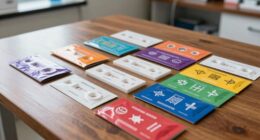
Interactive language learning devices range from simple word-play tools for toddlers to a wearable translator with language practice. My best overall pick is the hahaland 5-Language Learning Tablet Toy for its broad language coverage in a child-friendly format. For a focused Spanish-English starter, the MAYAPHILOS Talking Flash Cards stand out for their larger 510-word set, while the Smart Wearable Translator suits adults seeking real-time translation alongside practice. The main tradeoffs are language breadth versus depth, playful interaction versus structured learning, and child-focused simplicity versus adult utility. Read on for the full breakdown of how these options differ and which type of learner each one fits.

Prime made for students and young adults
- Fast, free delivery for dorm and study essentials
- Prime Video and Amazon Music included
- Member-only deals
Key Takeaways
- The hahaland tablet is the broadest kid-focused language option in this lineup, with five languages; it suits families who value exposure across several languages more than a large single-language word set.
- MAYAPHILOS favors focused Spanish-English vocabulary with 510 words, while the Aullsaty and Airbition cards each offer 224 English words and a simpler starting point.
- The two Dex cameras share the same core learning format, so choosing between red and yellow is mainly a color preference rather than a meaningful difference in language-learning function.
- The Smart Wearable Translator serves a different buyer from the children’s toys: it combines real-time translation with practice, but it is not a direct substitute for a structured kids’ vocabulary device.
- More words or languages do not automatically mean better learning; age fit, repeatable interaction, and whether the device supports the learner’s actual goal matter more than headline counts.
| Peacurh Trilingual Learning Tablet Toy with Music and Sounds |  | Best for Early Multilingual Exposure | Languages: English, Spanish, French | Touch icons: 39 | Play modes: Learning, quiz, music, pretend play | VIEW LATEST PRICE | See Our Full Breakdown |
| Aullsaty Talking Flash Cards for Toddlers, 224 Words, Blue |  | Best Screen-Free Starter | Word count: 224 words, as described | Cards: 112 double-sided cards, as described | Themes: 12 everyday themes | VIEW LATEST PRICE | See Our Full Breakdown |
| Smart Wearable Translator with Real-Time AI Translation and Language Practice |  | Best for Adult Conversation Practice | Supported languages: 133 | Connectivity: Bluetooth 5.4 | Features: Real-time voice translation; English conversation practice; pronunciation and vocabulary feedback | VIEW LATEST PRICE | See Our Full Breakdown |
| MAYAPHILOS Spanish-English Talking Flash Cards for Kids, 510 Words |  | Best for Spanish-English Vocabulary | Languages: Spanish and English | Word count: 510 | Cards: 255 double-sided cards, as described; listing also mentions 31 themed cards | VIEW LATEST PRICE | See Our Full Breakdown |
| Dex Language Learning Camera for Kids, Ages 3–8, Red |  | Best Interactive Premium Pick | Age range: 3–8 years | Languages: 16 | Dialects: More than 30 | VIEW LATEST PRICE | See Our Full Breakdown |
| hahaland 5-Language Learning Tablet Toy for Toddlers |  | Best for First Language Exposure | Recommended age: 12 months–3 years | Languages: English, French, Spanish, German, Italian (listing also contains a conflicting three-language count) | Learning activities: 90+ | VIEW LATEST PRICE | See Our Full Breakdown |
| Dex Language Learning Camera for Kids Ages 3–8, Yellow |  | Best for Active, Multilingual Practice | Age range: 3–8 years | Languages: 16 | Dialects: 30+ | VIEW LATEST PRICE | See Our Full Breakdown |
| Airbition Talking Flash Cards for Toddlers, 224 English Words, Blue |  | Best for Simple Screen-Free Vocabulary | Language: English | Word count: 224 | Recommended age: 12 months–6 years | VIEW LATEST PRICE | See Our Full Breakdown |
| interactive language learning device | Languages | Recommended age |
|---|---|---|
| Peacurh Trilingual Learning Ta | English, Spanish, French | 12 months–8 years |
| Aullsaty Talking Flash Cards f | — | — |
| Smart Wearable Translator with | — | — |
| MAYAPHILOS Spanish-English Tal | Spanish and English | 3 years and up |
| Dex Language Learning Camera f | 16 | — |
| hahaland 5-Language Learning T | English, French, Spanish, German, Italian (listing also contains a conflicting three-language count) | 12 months–3 years |
| Dex Language Learning Camera f | 16 | — |
| Airbition Talking Flash Cards | — | 12 months–6 years |
More Details on Our Top Picks
Peacurh Trilingual Learning Tablet Toy with Music and Sounds
The Peacurh gives young children an easy way to hear beginner vocabulary in English, Spanish, and French without handling separate card sets. Its 39 touch icons cover familiar topics, while learning, quiz, music, and pretend-play modes offer more variety than a basic word-list device. Compared with the Aullsaty Talking Flash Cards, it is simpler to pick up and use because children tap the topic directly rather than insert cards; the Aullsaty, by contrast, offers a larger stated word count and a screen-free card routine. The tablet’s lightweight build and rounded edges suit small hands and travel. Its limits are breadth and setup detail: the listing gives no dimensions or battery requirements, and pretend play stays within the tablet-style icons rather than open-ended role-play.
Pros:- Introduces vocabulary and topics in English, Spanish, and French.
- Four modes mix word learning with quizzes, music, and simple pretend play.
- Large touch icons and a lightweight design suit small hands and travel.
- BPA-free plastic with smooth, rounded edges.
Cons:- Dimensions and battery requirements are not specified in the product information.
- Pretend-play activities are limited to the tablet-style icons.
- The listing does not state a total vocabulary count.
Best for: Caregivers of toddlers who want one lightweight device for hearing introductory words in three languages across several familiar topics.
Not ideal for: Families seeking a clearly documented word count, detailed battery information, or hands-on card-based practice should compare it with the Aullsaty or MAYAPHILOS sets.
- Languages:English, Spanish, French
- Touch icons:39
- Play modes:Learning, quiz, music, pretend play
- Material:BPA-free plastic
- Recommended age:12 months–8 years
- Model:35847M
Our verdict“Choose the Peacurh for simple, tap-to-hear exposure to three languages; pick a flash-card reader if a defined vocabulary count and card handling matter more.”
Aullsaty Talking Flash Cards for Toddlers, 224 Words, Blue
The Aullsaty is the most clearly screen-free, listen-and-repeat option here: children choose illustrated cards, hear spoken words, and can use a repeat function to practice again. Its 12 everyday themes and stated 224-word set make it more vocabulary-focused than the Peacurh tablet, which spreads interaction across three languages and music or quiz modes. The reader is USB rechargeable, and the coated, rounded cards are designed for small hands, making this a practical fit for preschool routines and outings. That format does mean adults need to keep track of the cards, and the product information is inconsistent: it describes 112 double-sided cards but also provides conflicting count and age details. Compared with MAYAPHILOS, it also lists songs and sound effects, but does not offer a stated bilingual mode.
Pros:- Screen-free cards pair illustrations with spoken-word audio and a repeat function.
- Covers 12 everyday themes with 224 words as described.
- USB-rechargeable reader is portable.
- Coated cards with rounded edges are designed for small hands.
Cons:- The card and word counts conflict across the product information.
- The title and product details give different age ranges.
- Card-based play requires keeping the reader and cards together.
Best for: Caregivers of toddlers who want screen-free English word practice with repeatable audio and physical picture cards.
Not ideal for: Buyers who need a reliably stated card count, a clearly consistent age recommendation, or explicit bilingual instruction should check the listing details or choose another format.
- Word count:224 words, as described
- Cards:112 double-sided cards, as described
- Themes:12 everyday themes
- Songs:3 English nursery rhymes
- Power:USB rechargeable
- Included components:Card reader, cards, USB cable, user guide, dinosaur bag
- Color:Blue
Our verdict“Pick the Aullsaty for repeatable, screen-free English vocabulary practice, provided you are comfortable with the listing’s inconsistent count and age details.”
Smart Wearable Translator with Real-Time AI Translation and Language Practice
This wearable translator serves a different learner from the children’s devices: it pairs real-time voice translation in 133 languages with spoken English practice and feedback on pronunciation and vocabulary. That makes it better suited to adults who want support during travel or everyday conversations, while the Peacurh and MAYAPHILOS products teach children through touch icons or picture cards. Scenario-based exercises for work, travel, shopping, and daily conversation add a practice structure beyond translation alone. The main limitation is that the learning feedback is described as English-focused, even though translation spans many languages; it is not a general-purpose course for practicing every supported language. Product details also omit battery life and compatible devices, so buyers cannot gauge how well it fits long days away from a charger or their existing setup.
Pros:- Supports real-time voice translation in 133 languages.
- Provides spoken-English feedback on pronunciation and vocabulary.
- Scenario-based practice covers work, travel, shopping, and daily conversation.
- Bluetooth 5.4 supports wireless audio connectivity.
Cons:- Described learning feedback is focused on spoken English.
- Battery life is not specified.
- Supported devices are not specified.
Best for: Adults who need multilingual voice translation and want guided spoken-English practice for travel, work, or daily conversations.
Not ideal for: Parents shopping for a child-focused learning toy, or learners seeking pronunciation coaching in languages other than English, should choose a more targeted device.
- Supported languages:133
- Connectivity:Bluetooth 5.4
- Features:Real-time voice translation; English conversation practice; pronunciation and vocabulary feedback
- Practice scenarios:Work, travel, daily conversations, shopping
- Brand:Generic
- Model:Generic525325
- Color:White
Our verdict“Choose this wearable for translation plus spoken-English practice; it is not a substitute for a child-oriented vocabulary device or a broader language course.”
MAYAPHILOS Spanish-English Talking Flash Cards for Kids, 510 Words
MAYAPHILOS is the most focused choice in this group for children building Spanish-English vocabulary. Its stated 510 words span themes from letters and numbers to food, animals, and vehicles, and the reader can switch between bilingual Spanish-English and English-only modes. That gives it more explicit language-pair practice than the Aullsaty, whose description centers on English audio, while the Peacurh offers three languages but does not state a comparable word total. This is a screen-free card system, so children handle each card rather than tapping a tablet or photographing objects with the Dex camera. The tradeoff is that audio depends on inserting cards, and the listing conflicts on card count, mentioning both 31 themed cards and 255 double-sided cards. Paper cards may also be less durable than coated options.
Pros:- Offers Spanish-English and English-only reader modes.
- Covers a broad range of everyday vocabulary themes.
- Screen-free format encourages children to handle and select cards.
- Includes spoken-word playback through the card reader.
Cons:- Product information conflicts on the number of cards.
- Words play only when a card is inserted into the reader.
- Paper cards may be less resistant to wear than coated cards.
Best for: Preschool families seeking structured Spanish-English word practice with an English-only mode and broad everyday themes.
Not ideal for: Buyers who want spontaneous object recognition, a tablet-style interface, or a clear and consistent card-count listing should compare it with Dex or Peacurh.
- Languages:Spanish and English
- Word count:510
- Cards:255 double-sided cards, as described; listing also mentions 31 themed cards
- Reader modes:Bilingual Spanish-English; English-only
- Recommended age:3 years and up
- Material:Paper
- Weight:16 ounces
- Included components:Flash cards and card reader
Our verdict“Choose MAYAPHILOS for structured Spanish-English vocabulary practice, but verify the card contents if the listed set size is a deciding factor.”
Dex Language Learning Camera for Kids, Ages 3–8, Red
Dex offers the broadest hands-on interaction for children old enough to explore with a camera: it identifies objects and turns them into words, sentences, and stories across 16 languages and more than 30 dialects. Three learning levels and interactive activities give it more room to grow than the Peacurh’s fixed touch icons or either flash-card reader, where practice depends on selecting a supplied card. Parent-created activities can add variety, and the product lists no ads, social media, or open internet, alongside content filters and a statement that photos and voice recordings are not retained. Those capabilities come with connectivity dependencies: LTE after the seven-day preview requires an optional plan, and custom content also requires the optional Dex plan. Some dialects remain in beta, so buyers should check whether their target variety is supported as expected.
Pros:- Teaches words, sentences, and stories across three learning levels.
- Supports 16 languages and more than 30 dialects.
- Interactive activities and parent-created content can vary practice.
- Lists child-focused protections, including no ads, social media, or open internet.
Cons:- LTE use beyond the included seven-day preview requires an optional plan.
- Creating custom content requires the optional Dex plan.
- Some dialects are still in beta.
Best for: Families with children ages 3–8 who want a camera-based vocabulary and story device with multiple learning levels and optional on-the-go connectivity.
Not ideal for: Buyers who want a device that works without connectivity plans, prefer a simple card reader, or need every dialect to be fully supported should skip it.
- Age range:3–8 years
- Languages:16
- Dialects:More than 30
- Camera resolution:13 MP
- Screen size:2.1 inches
- Connectivity:Wi-Fi, LTE (eSIM), Bluetooth
- Charging:USB-C fast charging
- Weight:7.2 ounces
- Safety features:No ads, social media, or open internet; built-in content filters; does not retain photos or voice recordings
Our verdict“Choose Dex for a camera-led, multi-level learning experience with broad language coverage, if optional connectivity and content plans fit your needs.”
hahaland 5-Language Learning Tablet Toy for Toddlers
For toddlers just beginning to connect sounds with words, the hahaland learning tablet offers more variety than a single-topic toy: its 90+ activities cover early concepts such as animals, colors, numbers, and vehicles. Four modes—learning, quiz, music, and pretend play—give little learners different ways to revisit the same material, while the screen-free touch controls keep the activity hands-on. It lists English, French, Spanish, German, and Italian, making it a broader early-language sampler than the English-only Airbition Talking Flash Cards. The tradeoff is that this is introductory listening and vocabulary play, not a device for building sentences or tracking progress. Product details also conflict about whether it supports five languages or only three, so buyers should verify the language set before choosing it. Its age range is limited to 12 months through 3 years.
Pros:- Offers 90+ activities across common early-learning topics.
- Includes four modes for varied listening and play.
- Provides multilingual audio practice in a screen-free format.
- Lightweight BPA-free ABS construction is suited to portable play.
Cons:- Designed for a narrow age range ending at 3 years.
- Product information conflicts on whether three or five languages are included.
- Focuses on introductory vocabulary rather than sentence-building or progress tracking.
Best for: Parents of children aged 12 months to 3 years who want screen-free exposure to several languages alongside basic early-learning topics.
Not ideal for: Families seeking structured sentence practice, older-child content, or a clearly documented language list.
- Recommended age:12 months–3 years
- Languages:English, French, Spanish, German, Italian (listing also contains a conflicting three-language count)
- Learning activities:90+
- Interactive icons:39
- Play modes:Learning, quiz, music, pretend play
- Display:Screen-free
- Material:BPA-free ABS plastic
- Players:1
Our verdict“Choose this for a toddler’s broad, screen-free first exposure to languages, but confirm the language count before buying.”
Dex Language Learning Camera for Kids Ages 3–8, Yellow
The Dex Language Learning Camera turns familiar objects and camera activities into prompts for words and sentences, giving children a more active learning format than the hahaland tablet’s touch-and-listen lessons. Its 16 languages and 30+ dialects, three learning levels, stories, and games make it the most varied option here for children ready to move beyond basic vocabulary. Wi-Fi supports use without a mobile plan; built-in LTE adds learning away from home, though ongoing service requires an optional plan after the seven-day preview. The parent app can track learning and create custom activities, but custom content also requires an optional plan. Content filters and the stated policy of not storing children’s photos or voice recordings address common parent concerns. It is less suited to very young toddlers, and the camera is not water resistant.
Pros:- Connects camera activities with vocabulary, sentences, stories, and games.
- Supports 16 languages and more than 30 dialects.
- Three learning levels can suit a range of abilities within its age group.
- Includes content filters and states that children’s photos and voice recordings are not stored.
Cons:- LTE service after the seven-day preview requires an optional plan.
- Custom activity creation requires an optional Dex plan, and some dialects are in beta.
- Not water resistant.
Best for: Families with children aged 3–8 who want camera-based vocabulary and sentence practice across multiple languages, at home or on the go.
Not ideal for: Parents of toddlers under 3, buyers who want a fully offline device, or families unwilling to pay for optional LTE or custom-content plans.
- Age range:3–8 years
- Languages:16
- Dialects:30+
- Camera:13 MP
- Display:2.1-inch touchscreen
- Connectivity:Wi-Fi, built-in LTE (eSIM), USB-C, Bluetooth headphones
- LTE preview:7 days
- Weight:7.2 ounces
- Water resistance:Not water resistant
Our verdict“Pick Dex for school-age children who will benefit from active multilingual practice and can make use of its app and connectivity features.”
Airbition Talking Flash Cards for Toddlers, 224 English Words, Blue
The Airbition Talking Flash Cards keep language practice focused: a child inserts an illustrated card, then hears its English word and, for animal cards, real animal sounds. This straightforward match-and-listen routine is easier to grasp than the Dex camera’s more layered stories, games, and language options, while its 224 words offer a wider vocabulary set than a small starter deck. A repeat button and five volume levels help children replay words and make listening more comfortable in different rooms. The tradeoff is that every lesson depends on handling and inserting individual cards, so practice is less fluid than using the hahaland tablet’s touch icons. It teaches English only and does not list sentence practice or multiple learning levels. Battery life is up to four hours per charge, which may require regular recharging during frequent use.
Pros:- Includes 224 illustrated words across everyday categories.
- Pairs spoken vocabulary with real animal sounds.
- Repeat control and five volume settings support flexible listening.
- USB-rechargeable reader has automatic shutoff.
Cons:- Children must insert cards individually to hear each word.
- English-only content does not support multilingual practice.
- Battery life is listed as up to four hours per charge.
Best for: Caregivers who want a simple, screen-free English vocabulary activity for toddlers and young children, with clear audio and reusable listening practice.
Not ideal for: Families looking for multilingual content, sentence-level instruction, or an activity that does not require managing individual cards.
- Language:English
- Word count:224
- Recommended age:12 months–6 years
- Volume settings:5
- Battery life:Up to 4 hours per charge
- Charging:USB
- Included components:Flash cards, card reader, USB cable
- Dimensions:4 x 4 x 0.1 inches
Our verdict“Choose Airbition for uncomplicated, screen-free English word practice, but opt for hahaland or Dex if multiple languages are the priority.”
How We Picked
I compared these eight devices by how directly their interaction supports language learning: whether learners hear words, repeat or revisit them, connect them with pictures or objects, and can use the format without much adult setup. I also weighed language coverage, stated vocabulary breadth, age fit, ease of use, and the likely role of each device in a learning routine. Because these products span toddler toys, flash cards, cameras, and a wearable translator, I judged each against its intended learner rather than treating them as interchangeable.
The ranking gives more weight to useful language-learning scope and a clear fit for the intended audience than to novelty alone. That puts the hahaland tablet first for families seeking multiple languages, followed by the focused MAYAPHILOS cards and the wearable translator for its distinct adult use case. The smaller flash-card sets and the Peacurh tablet remain sensible entry points, while the two Dex cameras are separated only by their color variant; product details supplied for them do not establish a functional difference. I did not treat word counts or language counts as proof of teaching quality.
Factors to Consider When Choosing Interactive Language Learning Devices
Choosing among interactive language learning devices starts with the learner’s goal, not the feature list. These options range from playful early exposure to practical translation support, and a device that works well for one purpose may frustrate a different learner.
Match the Device to the Learner’s Age and Independence
Young children usually benefit from controls they can understand without reading instructions or navigating menus. A talking card or toy tablet can keep interaction concrete, while a wearable translator is designed around a different level of independence and purpose. Check the maker’s stated age range and think about whether an adult will guide each session or the child will use it alone. A common mistake is buying the most feature-rich option for a toddler, only to find that the extra complexity gets in the way of play. For older learners, a toy-like format may feel repetitive if it offers little beyond listening to vocabulary.
Choose Vocabulary Breadth for a Real Learning Goal
A larger word set can offer more variety, but it does not automatically provide a learning path or help a beginner remember words. Decide whether the learner needs a small set of familiar nouns for early practice, a wider themed vocabulary, or support across more than one language. The 224-word cards in this roundup may be easier to approach than a larger set, while the 510-word MAYAPHILOS option provides more Spanish-English vocabulary in one device. Count languages separately from depth: a device with several languages may provide broad exposure without the same focus as a two-language tool. Avoid choosing by the biggest number alone; relevance and repetition matter more.
Separate Practice from Translation
Translation tools and learning tools solve related but different problems. Real-time translation can help someone understand or communicate in the moment, while practice features may support ongoing language exposure. A traveler who needs help during conversations may value the wearable device’s practical function more than a child’s word cards. A learner building basic vocabulary may get less value from translation if it does not prompt consistent recall or structured practice. Before buying, ask whether the main job is communicating across a language barrier, learning new words, or doing both. That answer narrows the category quickly.
Consider How the Interaction Builds Recall
Hearing a word is useful exposure, but active recall generally asks more of the learner than listening alone. Look for a format that invites repeated use, lets the learner connect words to images or objects, and is easy to bring back into short sessions. A camera-based device may appeal to children who enjoy associating objects with vocabulary, while flash cards offer a direct, repeatable routine. A playful sound or music feature can make a device approachable, but it should not be mistaken for a complete language curriculum. If the product’s interaction is unclear from its description, plan to treat it as a supplemental activity rather than the only learning resource.
Check Practical Fit Before Paying for More Features
Think about where the device will be used, who will handle it, and how often it needs to be ready. For a young child, simple operation and a comfortable format can matter more than adding several modes or languages. For a traveler, portability and the specific translation function deserve closer attention than toy-style interaction. Compare product details for power requirements, durability information, included materials, and any language or connectivity limitations before deciding. Do not assume two color variants differ in function, or that a broad feature list means less setup. A device that fits daily routines is more likely to be used consistently.
Frequently Asked Questions
Which device makes the most sense for a child learning more than one language?
The hahaland 5-Language Learning Tablet Toy is the clearest fit in this group for introducing several languages through one child-focused device. Its breadth may suit families who want exploratory exposure, but it does not automatically provide deeper instruction in each language. If the child’s goal is specifically Spanish-English vocabulary, the MAYAPHILOS cards offer a more focused alternative with a larger stated word set. Choose based on the languages the family will actually use together. Regular adult conversation can add context that a device alone cannot supply.
Are talking flash cards a better first device than a learning tablet?
Flash cards can be a good first step when a child benefits from a direct listen-and-repeat routine and a limited set of words. A tablet toy may feel more engaging for a child who responds to multiple sounds or wants a broader play format, though extra interaction can also distract from vocabulary practice. In this lineup, Aullsaty and Airbition share a 224-English-word focus, while Peacurh and hahaland use tablet-style formats. The better choice depends on whether simplicity or a more toy-like experience is likely to hold the child’s attention. Check that an adult can easily demonstrate the activity before expecting independent use.
Should I buy the Dex camera in red or yellow?
The available product details identify both as Dex Language Learning Cameras for children ages 3–8, with color as the visible difference. They do not establish a distinct language-learning feature or performance advantage between the red and yellow versions. I would choose based on the child’s color preference and verify the listing details for any package or accessory differences before ordering. If the camera format itself is not appealing to the child, neither color is likely to change that. Compare its object-based interaction with flash cards before deciding that a camera is the right learning format.
Is a wearable translator a good replacement for a language-learning toy?
No, the wearable translator and children’s learning toys address different needs. The wearable option combines real-time AI translation with language practice, which may help an adult communicate while also engaging with another language. The child-focused devices center on early vocabulary exposure and playful interaction rather than live communication support. A traveler who mainly needs help understanding conversations should prioritize translation capability, while a parent seeking everyday word practice should look at the cards, tablets, or camera. If both needs matter, treat the wearable as a separate tool rather than assuming it replaces a child’s learning device.
Does a higher word count mean a device will teach more effectively?
Not by itself. A larger vocabulary set can offer more material, but learners also need a way to revisit words and connect them to meaning. The 510-word MAYAPHILOS set has a broader stated Spanish-English vocabulary than the 224-word Aullsaty and Airbition cards, but that difference alone cannot establish which child will learn more. Age, attention span, language goals, and adult support all shape how useful the content becomes. For a beginner, a smaller set used repeatedly may be easier to absorb than a large set used only occasionally.
Conclusion
For the best overall choice, I would start with the hahaland 5-Language Learning Tablet Toy if the goal is playful exposure to several languages. For best value in a focused vocabulary format, the Aullsaty or Airbition 224-word cards offer a straightforward starting point, while the MAYAPHILOS cards are the better fit for families who want a larger Spanish-English word set. For beginners, simple flash cards are likely to be easier to introduce than a device with a broader or less familiar format. For a premium-style, adult use case, the Smart Wearable Translator stands apart because it pairs translation with practice. For children drawn to object-based interaction, choose either Dex camera color; for music-and-sound play with language exposure, consider Peacurh. The best match is the one that supports the learner’s actual routine, not simply the one with the longest feature list.
Evergreen bestsellers Picks

De'Longhi All-in-One Espresso and Coffee Maker with 10-Cup Pot and Milk Frother

Ninja Luxe Café Mini Espresso and Drip Coffee Machine, Stainless Steel, ES301

Hisense 75U6SF Pro 75-Inch U6 Pro Mini-LED 4K UHD Smart Fire TV
As an affiliate, we earn on qualifying purchases.