For most families, the Airbition Bilingual Talking Flash Cards, English and Spanish, 512 Words are the best overall pick: they pair a large everyday vocabulary with spoken audio in two languages. The ANhovno Spanish and English Talking Flash Cards offer a similar high-word-count format, while French Flash Cards for Kids suit families who want a focused first-word deck with online audio. The main choice is between audio-enabled cards for independent listening and traditional decks that encourage conversation without a device. Language coverage, word count, image style, and the child’s age all affect which format will get used. Read on for the full breakdown and a guide to choosing the right deck for your learner.

Prime made for students and young adults
- Fast, free delivery for dorm and study essentials
- Prime Video and Amazon Music included
- Member-only deals
Key Takeaways
- Audio and breadth set the bilingual talking cards apart: the Airbition English-Spanish 512-word and ANhovno 510-word decks offer far more terms than the 224-word Airbition English set, but their larger vocabularies may suit children ready for longer practice sessions.
- The two Airbition English-Spanish options are close competitors: both list 512 words, so the choice is less about vocabulary size and more about the specific product format and whether its bilingual audio fits your child’s routine.
- Traditional decks fill a different role from talking cards: the 50 Noun photo cards and Key Education photo cards can prompt naming, sorting, and caregiver-led conversation without an electronic voice feature.
- Language choice matters as much as card format: this lineup includes Spanish, French, Korean, and ASL options, but only some decks pair two spoken languages or provide online audio.
- Not every large deck is designed around young children: the 500+ Spanish vocabulary cards are labeled for adults and teens, so parents should check vocabulary level and presentation before choosing them for a child.
| Airbition Talking Flash Cards for Toddlers, 224 Words, English, Blue |  | Best for First Words | Brand: Airbition | Vocabulary: 224 words | Language: English | VIEW LATEST PRICE | See Our Full Breakdown |
| ANhovno Spanish and English Talking Flash Cards for Toddlers, 510 Words |  | Best for Flexible Bilingual Practice | Brand: ANhovno | Languages: English and Spanish | Vocabulary: 510 words | VIEW LATEST PRICE | See Our Full Breakdown |
| Airbition Bilingual Talking Flash Cards, English and Spanish, 512 Words |  | Best for Themed Bilingual Vocabulary | Brand: Airbition | Languages: English and Spanish | Vocabulary: 512 words | VIEW LATEST PRICE | See Our Full Breakdown |
| Airbition Talking Flash Cards for Toddlers, 510 English Words, Blue |  | Best for Broad English Vocabulary | Brand: Airbition | Vocabulary: 510 words | Language: English | VIEW LATEST PRICE | See Our Full Breakdown |
| Carson Dellosa American Sign Language Flash Cards – Double-Sided, 122 ASL Signs with Illustrations and Word Associations |  | Best for ASL and Device-Free Practice | Brand: Carson Dellosa Education | Language: American Sign Language | Age range: 4 years and up | VIEW LATEST PRICE | See Our Full Breakdown |
| 50 Noun Flashcards with Real-Life Photos and Words for Language Learning |  | Best for Real-Object Vocabulary Practice | Card count: 50 | Card format: Double-sided; photo on one side and word on the other | Card size: 4 x 5.8 inches | VIEW LATEST PRICE | See Our Full Breakdown |
| French Flash Cards for Kids: 100 First French Words with Online Audio |  | Best for Beginner French | Card count: 100 | Age range: 3–10 years | Languages: French and English | VIEW LATEST PRICE | See Our Full Breakdown |
| 300 Bilingual Spanish Vocabulary Flash Cards for Kids and Adults |  | Best for Older Learners and Broad Spanish Review | Card count: 300 | Languages: English and Spanish | Topics: Body parts, fruits, animals, transportation, foods and spices, and vegetables | VIEW LATEST PRICE | See Our Full Breakdown |
| Spanish Flash Cards for Kids: 100 First Words with Online Audio |  | Best for First Spanish Words | Card count: 100 | Languages: Spanish and English | Audio: Online pronunciation audio | VIEW LATEST PRICE | See Our Full Breakdown |
| Key Education Early Learning Language Library Photo Flash Cards |  | Best for Classroom and Guided Language Practice | Card count: 160 | Age range: 36 months to 6 years | Topics: Food, colors, actions, emotions, animals, transportation, and school activities | VIEW LATEST PRICE | See Our Full Breakdown |
| ASL Flash Cards for Beginners, Kids, Teens, and Adults |  | Best for Broad ASL Vocabulary | Brand: YIYDONG | Card count: 500 double-sided cards | Packs: 10 packs, 50 cards per pack | VIEW LATEST PRICE | See Our Full Breakdown |
| MAYAPHILOS English and Korean Talking Flash Cards, 510 Words |  | Best for Screen-Free Bilingual Listening | Brand: MAYAPHILOS | Word count: 510 | Languages: English and Korean | VIEW LATEST PRICE | See Our Full Breakdown |
| 500+ Spanish Vocabulary Flash Cards for Adults and Teens |  | Best for Older Spanish Learners | Brand: Study Key | Card count: 500+ | Contents: 150 regular verbs, 100 irregular verbs, 50 reflexive verbs, 100 house items and common nouns, 50 adjectives, 50 phrases, and practice cards | VIEW LATEST PRICE | See Our Full Breakdown |
| language learning flashcards for kid | Brand | Included components | Age range | Card count |
|---|---|---|---|---|
| Airbition Talking Flash Cards | Airbition | Flash cards, reader, USB cable | 12 months–6 years | — |
| ANhovno Spanish and English Ta | ANhovno | Talking flash card reader, USB cable, instruction manual, 255 cards | 36 months–12 years | — |
| Airbition Bilingual Talking Fl | Airbition | Flash cards | — | — |
| Airbition Talking Flash Cards | Airbition | — | 12 months–3 years | — |
| Carson Dellosa American Sign L | Carson Dellosa Education | 122 signs on 105 double-sided cards and resource card | 4 years and up | 105 double-sided cards |
| 50 Noun Flashcards with Real-L | SpriteGru | — | — | 50 |
| French Flash Cards for Kids: 1 | — | Flash cards | 3–10 years | 100 |
| 300 Bilingual Spanish Vocabula | Study Key | Flash cards and workbook | — | 300 |
| Spanish Flash Cards for Kids: | — | — | 36 months to 10 years | 100 |
| Key Education Early Learning L | — | 160 cards and resource guide | 36 months to 6 years | 160 |
| ASL Flash Cards for Beginners | YIYDONG | 10 binder rings and storage box | — | 500 double-sided cards |
| MAYAPHILOS English and Korean | MAYAPHILOS | Flash cards and card reader | 3 years and up | — |
| 500+ Spanish Vocabulary Flash | Study Key | Flash cards, rings, workbook, ebook, grammar rule sheets, and master sheet | — | 500+ |
More Details on Our Top Picks
Airbition Talking Flash Cards for Toddlers, 224 Words, English, Blue
For a young child just starting to connect spoken words with pictures, this set keeps the learning task simple: 224 illustrated English words, a card reader, and audio that includes real animal sounds. The repeat button gives a child another chance to hear a word without needing an adult to restart a lesson, while five volume levels help adapt it to different rooms. Compared with Airbition’s 510-word English set, this one offers a smaller vocabulary, which can make it a more manageable starting point but gives older children less room to progress. The reader is rechargeable, though its stated battery life is up to four hours per charge. I’d choose it for early, screen-free practice, not for children ready for broader vocabulary or bilingual lessons.
Pros:- Pairs illustrated cards with spoken words for screen-free practice.
- Real animal sounds add audio variety to animal vocabulary.
- Repeat button lets children hear words again at their own pace.
- Five volume levels and a rechargeable reader support flexible use.
Cons:- Up to four hours of battery life per charge may require frequent recharging with regular use.
- The 224-word English-only set offers less vocabulary breadth than Airbition’s 510-word options.
Best for: Families introducing spoken English vocabulary to toddlers who benefit from simple picture-and-audio practice.
Not ideal for: Older children or families seeking bilingual practice or a large vocabulary set; the 224-word English scope may be limiting.
- Brand:Airbition
- Vocabulary:224 words
- Language:English
- Age range:12 months–6 years
- Volume levels:5
- Battery life:Up to 4 hours per charge
- Material:Plastic
- Dimensions:4 × 4 × 0.1 inches
- Included components:Flash cards, reader, USB cable
Our verdict“Choose this set for an early English-speaking learner who needs a straightforward audio-and-picture introduction rather than a broad or bilingual curriculum.”
ANhovno Spanish and English Talking Flash Cards for Toddlers, 510 Words
The standout here is not just the 510 English and Spanish words, but the ability to choose bilingual, English-only, or Spanish-only playback. That makes this set more adaptable to a household deciding whether to practice both languages together or focus on one at a time. Its 255 double-sided cards cover everyday themes, and repeat and adjustable-volume functions let children revisit words at their own pace. Compared with the Airbition 512-word bilingual set, ANhovno spells out three playback modes in the provided details, while Airbition lists 31 themes. The main drawback is the age guidance: the recommended range begins at 36 months, despite toddler-focused marketing. Children also need to insert each card into the reader, so this is a hands-on activity rather than a passive audio tool.
Pros:- Three language modes allow bilingual, English-only, or Spanish-only listening.
- Includes 510 words on 255 double-sided cards.
- Repeat and adjustable-volume functions support self-paced practice.
- Operates without apps or Wi-Fi, making it practical for travel and outings.
Cons:- Manufacturer-recommended age begins at 36 months, which may not suit younger toddlers.
- Children must insert physical cards into the reader to hear the words.
Best for: Families with preschool-age children who want control over whether English and Spanish are practiced together or separately.
Not ideal for: Buyers seeking a set specifically recommended for children under three, or children who may struggle with inserting cards into a reader.
- Brand:ANhovno
- Languages:English and Spanish
- Vocabulary:510 words
- Cards:255 double-sided cards
- Language modes:Bilingual, English-only, Spanish-only
- Age range:36 months–12 years
- Connectivity:No apps or Wi-Fi required
- Included components:Talking flash card reader, USB cable, instruction manual, 255 cards
- Warranty:1 year against manufacturer defects
Our verdict“Pick ANhovno for preschoolers whose family wants flexible English-and-Spanish playback modes and is comfortable with card-by-card operation.”
Airbition Bilingual Talking Flash Cards, English and Spanish, 512 Words
With 512 English and Spanish words across 31 themes, this Airbition set suits families who want more topic variety than the 224-word English-only Airbition starter set. Categories such as numbers, colors, animals, and transportation can help parents connect vocabulary practice to subjects a child already encounters. The reader uses a clear American-accent voice, and the cards are described for independent use as well as learning with a parent. Compared with the ANhovno 510-word bilingual set, the clearest distinction in the supplied details is Airbition’s stated 31-theme structure; ANhovno, by contrast, specifies three language modes. Age guidance is inconsistent: the title and description mention age two, while the manufacturer recommendation starts at three. Parent participation is also encouraged, so I wouldn’t treat it as a fully independent learning program.
Pros:- Presents 512 words in English and Spanish.
- Organizes vocabulary across 31 themes, including numbers, colors, and transportation.
- Clear American-accent audio supports listening and pronunciation practice.
- Can be used for independent practice or with a parent.
Cons:- Age information conflicts: the title and description mention age two, but the recommendation begins at three.
- Parents are strongly encouraged to participate, limiting its fit as a hands-off learning tool.
Best for: Families of preschoolers who want themed English-Spanish vocabulary cards to use together or for supervised independent practice.
Not ideal for: Buyers who need a clearly age-two recommendation, detailed playback-mode choices, or a set intended to replace parent-guided learning.
- Brand:Airbition
- Languages:English and Spanish
- Vocabulary:512 words
- Themes:31
- Recommended age:3 years and up
- Voice:Clear American accent
- Model number:X2
- Included components:Flash cards
Our verdict“Choose this Airbition set for parent-supported bilingual learning organized around many everyday themes, provided the child meets the stated age recommendation.”
Airbition Talking Flash Cards for Toddlers, 510 English Words, Blue
This is the more expansive English-only choice in Airbition’s lineup: 510 words across 31 everyday themes, compared with 224 words in the brand’s smaller talking-card set. That wider range gives families more topics to revisit as a young learner’s vocabulary grows, including animals, food, colors, numbers, and transportation. The reader’s standard American-accent speech supports listening practice, and the product is described as suitable for independent use. Its limits are equally relevant: there is no second language, and the cards depend on the reader to provide their audio, unlike traditional cards that can be used without a device. The age details also vary between the title and product information. I’d favor this over the 224-word set for broader English coverage, but not for bilingual learning or older children needing advanced material.
Pros:- Covers 510 English words across 31 everyday themes.
- Standard American-accent audio supports listening and word recognition.
- Designed for independent vocabulary practice.
- Includes a reusable storage box.
Cons:- English-only content does not support bilingual practice.
- Cards require a reader for the spoken-word function.
- Age guidance varies between the title and product details.
Best for: Families seeking a broad, English-only vocabulary set for young children who can use a card reader independently or with help.
Not ideal for: Bilingual households seeking two-language audio, or buyers who want cards that work without a reader; age guidance should also be checked.
- Brand:Airbition
- Vocabulary:510 words
- Language:English
- Themes:31
- Age range:12 months–3 years
- Color:Blue
- Material:Plastic
- Dimensions:4 × 4 × 0.1 inches
- Model number:X2
Our verdict“Choose this over Airbition’s 224-word set when broad English vocabulary matters more than bilingual content or device-free card use.”
Carson Dellosa American Sign Language Flash Cards – Double-Sided, 122 ASL Signs with Illustrations and Word Associations
This is the only option in this group focused on American Sign Language, so it serves a different learning goal from Airbition’s spoken English and Spanish readers. The set presents illustrations on one side and corresponding words on the other, with signs covering the alphabet, numbers, animals, feelings, and everyday objects. That double-sided format works well for an adult-led prompt-and-recall activity and needs no reader or audio device. A resource card adds activity ideas for parents and teachers. The tradeoff is scope: these are introductory signs, not an advanced ASL course, and learners need to see and practice the hand shapes rather than hear pronunciations from a device. Compared with the talking-card sets, it is a more direct fit for visual sign learning, but less suited to spoken-word listening practice.
Pros:- Introduces ASL through illustrations paired with corresponding words.
- Covers several beginner-friendly topics, including alphabet, numbers, animals, and feelings.
- Double-sided cards support prompt-and-recall activities without a reader.
- Includes a resource card with activity ideas for adults.
Cons:- Limited to basic vocabulary and does not provide advanced signs.
- No audio pronunciation or talking-reader feature for spoken-language practice.
Best for: Parents and educators introducing basic ASL signs to children ages four and up through visual, hands-on activities.
Not ideal for: Families seeking spoken-language pronunciation audio, bilingual English-Spanish vocabulary, or advanced ASL instruction.
- Brand:Carson Dellosa Education
- Language:American Sign Language
- Age range:4 years and up
- Sign count:122 signs
- Card count:105 double-sided cards
- Card dimensions:3 × 5.9 inches
- Model number:3927
- Included components:122 signs on 105 double-sided cards and resource card
Our verdict“Choose this set for introductory, screen-free ASL practice; pick one of the Airbition talking sets instead for spoken English or Spanish audio.”
50 Noun Flashcards with Real-Life Photos and Words for Language Learning
Real-life photos make this set a strong fit for young learners who benefit from connecting a word to a recognizable object. Its 50 double-sided cards show a photo on one side and the matching word on the other, so an adult can adapt practice from picture naming to matching or simple sentence building. Compared with Key Education Early Learning Language Library Photo Flash Cards, this set is smaller and focused on nouns, while Key Education adds guided questions, bilingual Spanish text, and a resource guide. That narrower scope can make practice easier to manage, but it also limits variety: there are no stated verbs, emotions, or other language categories. The large 4 x 5.8-inch format helps with shared viewing at home or in a therapy setting; I’d skip it if you need a broad bilingual curriculum or a portable case.
Pros:- Real-life photos connect vocabulary to familiar objects.
- Large 4 x 5.8-inch cards are easy to view together.
- Double-sided format supports picture-to-word matching.
- Works for matching games and early sentence-building activities.
Cons:- Vocabulary is limited to nouns.
- No storage or carrying case is listed.
Best for: Caregivers, preschool teachers, and speech therapists seeking large photo-based noun cards for naming, matching, and early sentence activities.
Not ideal for: Families seeking a wide range of parts of speech, built-in pronunciation audio, or a stated storage and carrying case.
- Card count:50
- Card format:Double-sided; photo on one side and word on the other
- Card size:4 x 5.8 inches
- Recommended age:3 years and up
- Set name:Noun Flashcards Set 1
- Educational objective:Language skills
- Brand:SpriteGru
Our verdict“Choose this set for large, photo-led noun practice, but pick Key Education’s 160-card set for broader topics and guided questions.”
French Flash Cards for Kids: 100 First French Words with Online Audio
Beginner French is the clear focus here: 100 illustrated cards cover everyday subjects such as colors, numbers, animals, clothing, food, and family. Online audio supplies French and English pronunciation, while example sentences and suggested activities give adults ways to move beyond naming pictures. Compared with Spanish Flash Cards for Kids: 100 First Words with Online Audio, this set offers a similar beginner structure in a different target language, so the choice mainly comes down to which language your child is learning. Its age range of 3–10 makes it a better fit for young beginners than Study Key’s 300-card Spanish set, which is listed for ages 12 and up. The tradeoff is reliance on an internet-connected device for audio; children who need independent, screen-free pronunciation support may find that inconvenient.
Pros:- 100 illustrated cards cover useful everyday beginner topics.
- Online audio includes French and English pronunciation.
- Example sentences add context beyond isolated word practice.
- Playful activity ideas support interactive practice.
Cons:- Audio requires an internet-connected device.
- The age range is aimed at children rather than older learners.
Best for: Families and early-years educators introducing French vocabulary to children ages 3–10 who can use an internet-connected device for audio.
Not ideal for: Learners who need offline pronunciation support, or families looking for Spanish rather than French cards.
- Card count:100
- Age range:3–10 years
- Languages:French and English
- Audio:Online French and English pronunciation
- Topics:Colors, shapes, numbers 1–10, animals, body parts, clothing, family, fruit, snacks, and toys
- Dimensions:5.83 x 4.29 x 1.63 inches
- Included components:Flash cards
Our verdict“Pick this set for a child’s first French vocabulary routine, and compare it with the Spanish 100-word set if the target language is still undecided.”
300 Bilingual Spanish Vocabulary Flash Cards for Kids and Adults
300 vocabulary cards give this Spanish-English set the broadest study volume in this group, with topics ranging from body parts and fruit to transportation, foods, spices, and vegetables. Images, pronunciation, example sentences, and grammatical gender make it more reference-oriented than Spanish Flash Cards for Kids: 100 First Words with Online Audio, which targets younger beginners and provides online pronunciation. Key rings support portable practice and group activities, while the workbook adds another study component, although its contents are not specified. The main limitation for a kids-focused purchase is the age guidance: product details say 12+, while the title also refers to ages 8–12+. That makes this a better match for older children and teens than preschoolers. I’d choose it for substantial Spanish vocabulary review, not a first, picture-led introduction for a young child.
Pros:- 300 cards cover six practical vocabulary topics.
- Cards include images, pronunciation, example sentences, and grammatical gender.
- Key rings make selected cards easier to carry.
- Workbook and cards support individual or group practice.
Cons:- Age guidance is inconsistent: the title mentions ages 8–12+, while details list 12+.
- The workbook’s contents are not described.
- Its scale and detail may be too much for young beginners.
Best for: Older children, teens, and adults who want a portable English-Spanish vocabulary set with more detailed word information across six topics.
Not ideal for: Preschool and early-elementary learners who need age-specific scaffolding, or buyers who require clear age guidance and defined workbook contents.
- Card count:300
- Languages:English and Spanish
- Topics:Body parts, fruits, animals, transportation, foods and spices, and vegetables
- Card features:Images, pronunciation, example sentences, and grammatical gender
- Included components:Flash cards and workbook
- Portability:Key rings
- Recommended age:12+ in product details; title also refers to ages 8–12+
- Brand:Study Key
Our verdict“Choose this for older learners who want portable, detailed Spanish vocabulary practice; choose the 100-word Spanish set for a younger child’s first steps.”
Spanish Flash Cards for Kids: 100 First Words with Online Audio
100 first words and an age range from 36 months to 10 years make this a more focused Spanish introduction than Study Key’s 300-card set. Each illustrated card pairs a Spanish word with an example sentence and English translation, and online audio provides pronunciation in both languages. That combination gives caregivers several ways to prompt practice without requiring a separate workbook. The small 2.3 x 1.69-inch card dimensions are a meaningful tradeoff: they make the set compact, but the pictures and text may be harder for a group or a child who benefits from large visual materials. Unlike Key Education Early Learning Language Library Photo Flash Cards, this set is centered on Spanish-English vocabulary and audio rather than broader guided language activities. Audio also depends on an internet-connected device.
Pros:- 100 cards cover familiar beginner topics such as animals, food, family, and toys.
- Spanish and English online audio supports pronunciation practice.
- Example sentences with English translations add context.
- Illustrations and suggested games encourage interactive learning.
Cons:- Online audio requires an internet-connected device.
- Cards are small at 2.3 x 1.69 inches.
- The set is intended for beginner vocabulary rather than extensive study.
Best for: Parents and early-years teachers introducing Spanish words to preschool, kindergarten, and early-elementary children who can access online audio.
Not ideal for: Children who need large cards for shared viewing, or families seeking offline audio or a wider range of guided language activities.
- Card count:100
- Languages:Spanish and English
- Audio:Online pronunciation audio
- Age range:36 months to 10 years
- Recommended use:Preschool, kindergarten, and early elementary
- Material:Paper
- Card dimensions:2.3 x 1.69 inches
Our verdict“Pick this for compact, audio-supported first Spanish words, but choose Key Education’s photo cards if larger visuals and guided prompts matter more.”
Key Education Early Learning Language Library Photo Flash Cards
160 photographic cards give this set a broader early-learning role than SpriteGru’s 50-card noun set. Alongside everyday categories such as food, animals, transportation, and school activities, it includes actions and emotions, bilingual Spanish text, and guided questions. The resource guide adds vocabulary lists and game ideas, giving an adult more structure for group practice or lessons with special learners. That makes it a strong classroom-oriented choice, while Language Together’s 100 First French Words is more tightly focused on one language’s beginner vocabulary and online pronunciation. Key Education’s tradeoff is its early-childhood range: ages 36 months to 6 years, so older children may outgrow the material. The product data lists a weight of 1.35 kg, which may also make it less convenient to carry than a smaller card set.
Pros:- 160 photographic cards span a broad range of everyday topics.
- Actions and emotions extend practice beyond object naming.
- Bilingual Spanish text offers additional language exposure.
- Guided questions and a resource guide support adult-led activities.
Cons:- The stated age range ends at 6 years, limiting its fit for older children.
- Listed weight of 1.35 kg may make transport less convenient.
- No online pronunciation audio is listed.
Best for: Preschool and kindergarten teachers, caregivers, and educators working with special learners who want photo cards with prompts and activity guidance.
Not ideal for: Older children seeking age-appropriate vocabulary challenges, or families prioritizing a lightweight set with online pronunciation audio.
- Card count:160
- Age range:36 months to 6 years
- Topics:Food, colors, actions, emotions, animals, transportation, and school activities
- Features:Photographic images, guided questions, and bilingual Spanish text
- Included components:160 cards and resource guide
- School type:Preschool
- Educational objective:Hands-on learning
- Item weight:1.35 kg
Our verdict“Choose this for structured preschool or kindergarten language activities, while SpriteGru’s set is the simpler option for focused noun practice.”
ASL Flash Cards for Beginners, Kids, Teens, and Adults
For families looking for sign language practice beyond a small starter set, these 500 double-sided ASL cards span 10 themed packs, from letters and numbers to food, animals, emotions, and everyday words. Color coding and binder rings make it easier to separate topics or carry a smaller group of cards, while the reverse sides support self-checking. Compared with Carson Dellosa American Sign Language Flash Cards, which focuses on 122 signs, this set offers substantially more vocabulary for ongoing practice. That breadth comes with a tradeoff: it is a heavier, larger collection, and the product gives conflicting age guidance—3+ in one place and 12 months and up in another. I would not rely on the lower age listing without checking suitability for the child.
Pros:- 500 cards cover 10 practical vocabulary themes
- Double-sided format supports self-checking
- Color-coded packs and binder rings help organize smaller study groups
- Laminated cardstock is described as waterproof and tear-resistant
Cons:- Age guidance conflicts between 3+ and 12 months and up
- At 3.7 pounds, the full set is less convenient to carry than a smaller ASL deck
- The large vocabulary range may need adult guidance for young beginners
Best for: Families and educators who want a large, organized ASL vocabulary set for guided practice across multiple themes.
Not ideal for: Parents seeking a compact first set for a toddler, or buyers who need consistent age guidance before choosing materials.
- Brand:YIYDONG
- Card count:500 double-sided cards
- Packs:10 packs, 50 cards per pack
- Card dimensions:4.3 x 2.8 inches
- Material:350 gsm laminated cardstock
- Included components:10 binder rings and storage box
- Item weight:3.7 pounds
- Age guidance:Conflicting listings: 3+ and 12 months and up
Our verdict“Choose this set for broad, organized ASL practice, but check the age guidance and expect a heavier collection than a compact starter deck.”
MAYAPHILOS English and Korean Talking Flash Cards, 510 Words
This set pairs 510 English and Korean words with a card reader, making it a distinctive choice for preschoolers who benefit from hearing vocabulary rather than relying only on printed cards. Its 31 themes cover familiar subjects such as animals, fruit, numbers, and vehicles, and the reader also plays some animal and vehicle sounds. Unlike the Study Key Spanish Vocabulary Flash Cards, which are built around printed grammar details and independent study, this set puts spoken pronunciation and parent-child practice at the center. It is a better fit for younger learners than that teen-and-adult-oriented option, but the paper cards may call for careful handling, and the listing does not explain the reader’s battery or power needs. Buyers should also confirm that English and Korean match their learning goals.
Pros:- 510 words across 31 themes
- Reader plays English and Korean word pronunciations
- Animal and vehicle sounds add an audio cue for related vocabulary
- Screen-free format can support parent-child practice
Cons:- Paper cards may be less suited to rough handling than laminated cards
- Battery or other power requirements are not specified
- Recommended for ages 3 and up, so it is not listed for younger toddlers
Best for: Parents of preschoolers who want screen-free English and Korean word practice with audio support and familiar themes.
Not ideal for: Families seeking ASL, Spanish, or French vocabulary, or buyers who want clearly stated reader power requirements before purchase.
- Brand:MAYAPHILOS
- Word count:510
- Languages:English and Korean
- Themes:31
- Age range:3 years and up
- Recommended use:Preschool language learning
- Included components:Flash cards and card reader
- Material:Paper
- Dimensions:5 x 1 x 0.1 inches
Our verdict“Pick this for preschool English–Korean listening practice without a screen, provided the unspecified reader power needs are acceptable.”
500+ Spanish Vocabulary Flash Cards for Adults and Teens
Despite the roundup’s focus on children, this set has a narrower role: it suits older teens ready for structured Spanish study, not young kids learning first words. The 500+ cards cover nouns, adjectives, phrases, and several verb types, with pronunciation guides, gender markers, conjugations, and example sentences. That makes it more grammar-focused than Spanish Flash Cards for Kids: 100 First Words with Online Audio, which is aimed at a simpler early vocabulary stage. A workbook, grammar sheets, practice cards, and a portable ring add study formats, though the listing gives little detail about the workbook or ebook. The stated age information also conflicts, with a 15+ title and a manufacturer listing of 0 months and up; I would treat the more specific 15+ guidance as the relevant one.
Pros:- Covers regular, irregular, and reflexive verbs alongside nouns, adjectives, and phrases
- Pronunciation guides, gender indicators, conjugations, and examples add useful study context
- Includes practice cards, workbook, ebook, grammar sheets, and master sheet
- Keychain ring makes a selection of cards easier to carry
Cons:- Content and stated age guidance are better suited to older learners than children
- Age information conflicts between 15+ and 0 months and up
- The listing does not explain the workbook or ebook format in detail
Best for: Older teens studying Spanish who want vocabulary practice paired with verb forms, gender cues, examples, and supplementary study materials.
Not ideal for: Young children and beginners who need large visuals, audio-led first words, or age guidance that is clear and consistent.
- Brand:Study Key
- Card count:500+
- Contents:150 regular verbs, 100 irregular verbs, 50 reflexive verbs, 100 house items and common nouns, 50 adjectives, 50 phrases, and practice cards
- Card dimensions:3.5 x 2.1 inches
- Material:Cardstock
- Included components:Flash cards, rings, workbook, ebook, grammar rule sheets, and master sheet
- Age guidance:Title says 15+; manufacturer listing says 0 months and up
Our verdict“Choose this for a Spanish-speaking teen who wants grammar-rich vocabulary practice, not for a young child starting with basic words.”

How We Picked
I compared these 13 options by how directly they support a child’s language practice: language coverage, vocabulary scope, audio or pronunciation support, visual clarity, and suitability for shared or independent use. I also looked at whether the cards encourage recall and conversation, rather than relying only on a large word count. Product details identify different formats—including talking devices, paper decks, photo cards, and online audio—so I treated those as different learning approaches instead of assuming one format fits every child.
The ranking favors accessible, kid-oriented options that combine useful vocabulary with support for hearing or discussing words. The Airbition bilingual 512-word deck leads for its balance of two-language coverage and audio; ANhovno is a close alternative, while smaller or single-language sets rank better for narrower goals. ASL decks and the adult-and-teen Spanish set remain valuable for specific learners, but their distinct audience or learning purpose makes them less universal picks for children starting a spoken language.
Factors to Consider When Choosing Language Learning Flashcards For Kids
Before choosing a deck, match its learning format to how your child will practice. A bigger stack is not automatically more useful: the best fit depends on the language goal, the child’s attention span, and whether an adult can join in.
Choose the language goal before the card count
Decide whether your child needs a first introduction, practice in a language already heard at home, or vocabulary for a specific subject. A broad bilingual deck can support everyday word exposure, while a focused French or ASL deck addresses a more specific learning path. Avoid buying a high-count deck just because it appears to offer more material; unfamiliar words can make practice feel like a test instead of a game. Check whether the product teaches one language, pairs two spoken languages, or introduces signs. If the goal is family conversation, a deck aligned with the language caregivers can use may see more repeat practice.
Match the format to your child’s attention and support
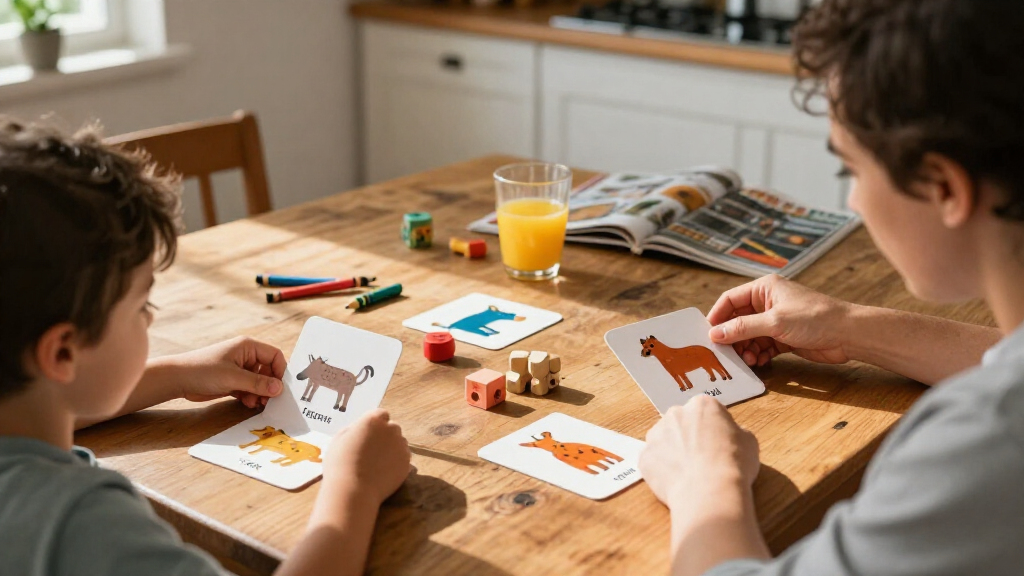
Talking cards can let a child hear words without needing an adult to pronounce every item, which can help during short independent sessions. Paper cards give caregivers more room to ask questions, group words, or pause for a conversation. Neither approach replaces interaction: children benefit when someone connects a card to an object, action, or familiar routine. Younger learners may do better with a handful of cards at a time than with a large stack presented all at once. Consider whether the child can manage the device or cards safely and whether an adult will be nearby for practice.
Treat audio as support, not a pronunciation guarantee
Audio can make a new word easier to hear and repeat, but product descriptions may not answer every question about speaker voice, accent, or playback controls. For online audio, check what access requires and whether a phone, computer, or internet connection will be available during practice. If pronunciation accuracy matters for a language your family does not speak, compare the audio support with a trusted teacher or language resource. A printed deck without audio can still work well when an adult or fluent speaker can model the words. The practical choice is the format your family can use consistently, not the one with the most technology.
Look beyond word count to image and vocabulary fit
Photo cards may help children connect a word to a recognizable object, while illustrated cards can make abstract signs or actions easier to explain. Check whether the images are clear at a glance and whether the vocabulary reflects a child’s everyday world. A 50-card noun set can be easier to revisit than a much larger collection, even if it covers fewer categories. On the other hand, a child who already knows basic words may need broader vocabulary to stay engaged. Parents should also distinguish a deck’s stated audience from its subject: adult-and-teen vocabulary may not be presented at a level that suits younger children.
Plan for repetition and flexible practice
Flashcards work best as a repeatable activity, so choose a deck that can be used in short sessions and revisited without a complicated setup. Sort cards into small groups, revisit words that are hard to recall, and use familiar objects around the home to extend practice. A large deck can provide variety over time, but it may be harder to store and manage with a young child. A smaller deck is easier to carry and finish in one sitting, though it may need additional materials once the child learns the words. Think about where practice will happen and how the cards will be kept together before choosing a format.
Frequently Asked Questions
Are talking flashcards a better choice than paper cards for a young child?
They serve different needs rather than making one format right for every child. Talking cards provide spoken prompts that can support listening and repetition, while paper cards make it easier for a caregiver to lead questions and adapt the activity. A child who enjoys pressing buttons may engage with audio, but a child who gets distracted by devices may focus better on a small paper deck. Adult participation still matters for connecting a word to meaning and encouraging use beyond the card. Choose based on how your child responds to audio and how much support you can provide.
Should I choose a 500-word deck or start with a smaller set?
Start with the size your child can practice without losing interest, not the largest number listed. A smaller deck can make it easier to repeat words and notice progress, while a larger set offers more variety for a child who already enjoys flashcard sessions. You can also use only a small group from a large deck at first, if the cards are easy to sort and manage. Vocabulary count does not tell you whether the words are age-appropriate or useful for your family’s goals. Check the language coverage and intended audience before treating a high count as an advantage.
Do online-audio cards work if I do not speak the target language?
They can provide a way to hear vocabulary when a caregiver cannot model it, but the convenience depends on how audio access works. Check whether the audio is available through a link or another method, and whether your child will need a device or internet connection. Online playback may be less convenient for spontaneous practice than audio built into a talking-card device. It also does not answer every question about accent or pronunciation quality. If accurate speech is a priority, pair the cards with a reliable language-learning resource or input from a fluent speaker.
Can ASL flashcards teach a child sign language on their own?
Cards can introduce signs and give families a prompt for practice, but they are only one part of learning a visual language. A child may need to see movement and use signs in context, so static illustrations can leave questions about how a sign is formed. Practice with a fluent signer, instructor, or reputable video resource can add that missing context. Choose an ASL deck if the goal is sign vocabulary rather than spoken-language translation. For children learning with Deaf family or community members, the cards are best used as a supplement to interaction.
How can I tell whether a deck is suitable for a child rather than an adult?
Look at the stated audience, vocabulary level, visual presentation, and whether the cards invite short, manageable practice. A product labeled for adults and teens may still contain useful words, but its sequence or presentation may not be designed for a young learner. Younger children often benefit from concrete, familiar terms and images they can identify quickly. A caregiver can adapt a more advanced deck by selecting only suitable cards, though that takes extra effort. If the product’s intended age range or vocabulary is unclear, a clearly child-focused set is the simpler starting point.
Conclusion
For a broad first choice, I recommend the Airbition Bilingual Talking Flash Cards, English and Spanish, 512 Words as the best overall option, with the ANhovno Spanish and English Talking Flash Cards close behind for families comparing large bilingual audio decks. The best value by learning flexibility is the 50 Noun Flashcards with Real-Life Photos, especially for caregiver-led naming and conversation without a talking device. For a premium-style feature set, choose a talking deck such as the MAYAPHILOS English and Korean option if Korean-English audio is the specific goal; its value is language fit, not universal coverage. Beginners who want a focused spoken-language set can start with the French Flash Cards for Kids or Spanish Flash Cards for Kids, both built around first words and online audio. For specific needs, pick the Carson Dellosa ASL cards for illustrated sign vocabulary, the Key Education photo cards for early language activities, or the adult-and-teen Spanish deck only when its audience and vocabulary suit your child. Choose the deck that matches the language your family will practice and the format your child will return to.