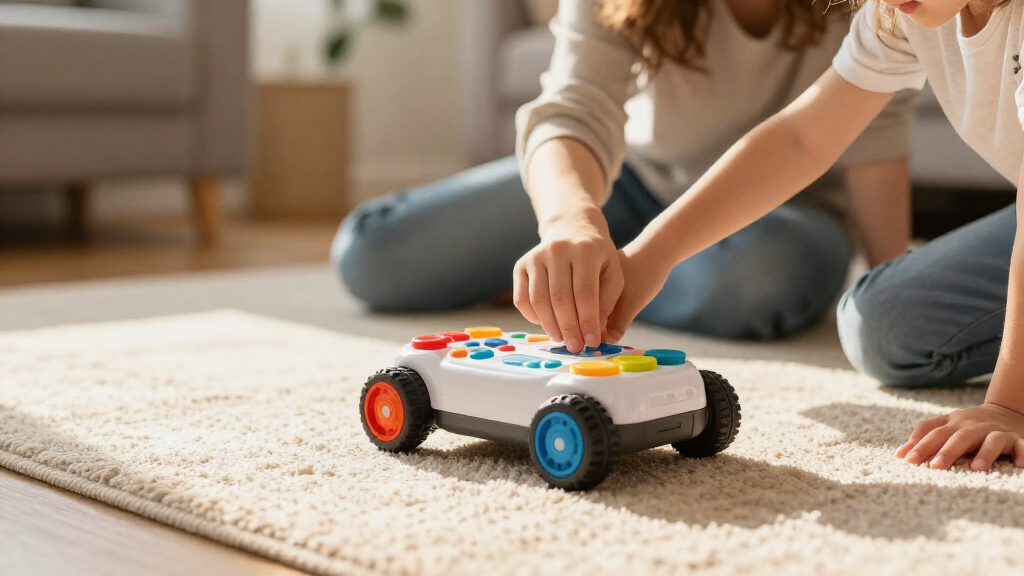
Educational coding toys for kids range from screen-free robots that teach sequencing to build kits that introduce programmable hardware. I’d put the Wonder Workshop Dash first for its approachable coding activities and room to grow, while Botley 2.0 stands out for screen-free play and the Apitor 6-in-1 for kids who learn by building. The main tradeoff is between a quick, guided start and a more involved kit with greater building and programming demands. Age labels matter, but a child’s patience for assembly and comfort with apps matter just as much. Read on for the full breakdown and help matching a toy to the learner.

Prime made for students and young adults
- Fast, free delivery for dorm and study essentials
- Prime Video and Amazon Music included
- Member-only deals
Key Takeaways
- Dash is the most balanced pick in this lineup: it offers app-based coding activities without making construction the main hurdle.
- Botley models and Code & Go Mouse suit screen-free learning, but their guided movement challenges offer less room for open-ended programming than app-connected robots.
- Apitor and the two mBot kits emphasize building alongside coding; they fit children who want to make and modify a robot, though assembly and setup ask more of them.
- The ELEGOO UNO R3 and Arduino mBot point toward hardware-focused learning, which can be rewarding for older or more technically curious kids but less immediate for beginners.
- Several products serve overlapping beginner needs: Botley, Botley 2.0, and the 77-piece Botley set call for comparing included activities and accessories, not assuming the same kit name means the same experience.
| ELEGOO UNO R3 Smart Robot Car Kit V4 with Camera |  | Best for Teen Builders | Brand: ELEGOO | Model: US-EL-KIT-012 | Controller: UNO R3 | VIEW LATEST PRICE | See Our Full Breakdown |
| Learning Resources Code & Go Robot Mouse Activity Set |  | Best for Early Beginners | Recommended age: 4+ | Maze board size: 20 x 20 inches | Maze grids: 16 | VIEW LATEST PRICE | See Our Full Breakdown |
| Learning Resources Botley 2.0 Coding Robot Activity Set |  | Best Screen-Free Progression | Pieces: 78 | Included: Coding robot, remote programmer, 40 coding cards, 6 double-sided boards, and stackable obstacle pieces | Coding features: Multi-step coding and 45-degree turns | VIEW LATEST PRICE | See Our Full Breakdown |
| Learning Resources Botley the Coding Robot Activity Set, 77 Pieces | 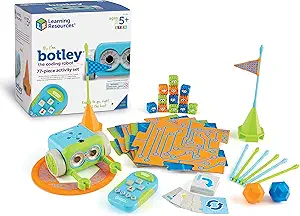 | Best for Loops and Path-Following | Recommended age: 5 years and up | Pieces: 77 | Power: 5 AAA batteries required, not included | VIEW LATEST PRICE | See Our Full Breakdown |
| Wonder Workshop Dash Coding Robot for Kids Ages 6+ |  | Best App-Guided Robot | Brand: Wonder Workshop | Recommended age: 6 years and up | Included components: Dash Robot, two building brick connectors, and USB charging cable | VIEW LATEST PRICE | See Our Full Breakdown |
| Playz Coding Learning Kit for Kids Ages 8–12 |  | Best for Screen-Free Computer Science | Brand: Playz | Recommended age: 8–12 years; listing also mentions 6–12+ years | Included items: 30+ tools, ingredients, and parts | VIEW LATEST PRICE | See Our Full Breakdown |
| Apitor 6-in-1 STEM Coding Robot Building Kit, 480 Pieces |  | Best for Rebuildable Robot Projects | Recommended age: 7–12 years | Building pieces: 480 colorful blocks | Models: 6 | VIEW LATEST PRICE | See Our Full Breakdown |
| Thames & Kosmos My Robotic Pet: Coding Chameleon STEM Kit |  | Best Screen-Free Coding Robot | Recommended age: 8+ with adult help; 12+ for independent play | Length: 15 inches | Play modes: Coding, Wild, and Pet | VIEW LATEST PRICE | See Our Full Breakdown |
| Makeblock mBot STEM Coding Robot Kit for Kids Ages 8–12 | 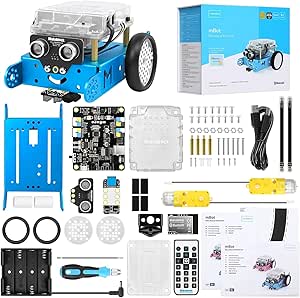 | Best for a Coding-to-Robotics Path | Brand: Makeblock | Model: 90053 | Recommended age: 8 years and up | VIEW LATEST PRICE | See Our Full Breakdown |
| Educational Insights PYXEL Coding Robot |  | Best for Blockly-to-Python Learning | Recommended age: 8 years and up | Coding languages: Blockly and Python | Connectivity: Password-protected Wi-Fi; internet connection not required | VIEW LATEST PRICE | See Our Full Breakdown |
| Teach Tech Mech-5 STEM Coding Robot Building Kit for Ages 10+ |  | Best for Mechanical Engineering | Brand: Teach Tech | Model: Mech-5 | Age range: 10+ | VIEW LATEST PRICE | See Our Full Breakdown |
| Makeblock mBot Arduino Robot Kit with Scratch Coding Box for Kids Ages 8–12 |  | Best for a Coding Progression | Recommended age: 8–12 years | Projects: 4 guided coding projects | Assembly time: About 15 minutes | VIEW LATEST PRICE | See Our Full Breakdown |
| Learning Resources Botley the Coding Robot |  | Best Screen-Free Beginner Pick | Recommended age: 5+ | Programming capacity: Up to 80 steps | Programming method: Remote programmer | VIEW LATEST PRICE | See Our Full Breakdown |
| educational coding toys for kid | Recommended age |
|---|---|
| ELEGOO UNO R3 Smart Robot Car | 12 years and up |
| Learning Resources Code & Go R | 4+ |
| Learning Resources Botley 2.0 | — |
| Learning Resources Botley the | 5 years and up |
| Wonder Workshop Dash Coding Ro | 6 years and up |
| Playz Coding Learning Kit for | 8–12 years; listing also mentions 6–12+ years |
| Apitor 6-in-1 STEM Coding Robo | 7–12 years |
| Thames & Kosmos My Robotic Pet | 8+ with adult help; 12+ for independent play |
| Makeblock mBot STEM Coding Rob | 8 years and up |
| Educational Insights PYXEL Cod | 8 years and up |
| Teach Tech Mech-5 STEM Coding | — |
| Makeblock mBot Arduino Robot K | 8–12 years |
| Learning Resources Botley the | 5+ |
More Details on Our Top Picks
ELEGOO UNO R3 Smart Robot Car Kit V4 with Camera
The ELEGOO UNO R3 Smart Robot Car Kit V4 is the most hands-on pick here for older kids who want to build a robot and program its behavior. Its Arduino IDE compatibility, line tracking, and ultrasonic obstacle sensing let learners connect code to what the car does in a room. The ESP32-based camera module adds live FPV video, a feature the screen-free Botley 2.0 and Robot Mouse do not offer. That broader project scope comes with more setup: assembly and programming can be a stretch for a first-time builder without adult guidance. The rechargeable battery and app or IR remote control make it a more complete robotics project, while Dash is easier to start using because it needs no assembly. I’d choose ELEGOO for a teen ready to work through both hardware and code.
Pros:- Combines Arduino programming with a physical robot car project
- Camera module supports live FPV video
- Line tracking and ultrasonic sensing create varied coding challenges
- Rechargeable battery and app or IR remote control are included
Cons:- Assembly and coding may require adult guidance for first-time builders
- The camera and Arduino features make it more involved than Botley 2.0 or Robot Mouse
Best for: Teens 12 and older who want to assemble an Arduino-based robot and explore sensors, movement, and camera feedback with adult guidance available.
Not ideal for: Younger children or families seeking a ready-to-play, screen-free introduction, since this kit requires assembly and programming.
- Brand:ELEGOO
- Model:US-EL-KIT-012
- Controller:UNO R3
- Camera and Wi-Fi module:ESP32-WROVER-based
- Sensors:Line-tracking and ultrasonic
- Battery:2000 mAh rechargeable lithium-ion
- Control methods:ELEGOO app and IR remote
- Recommended age:12 years and up
- Warranty:Half year
Our verdict“Choose ELEGOO for a teen who wants a build-first coding project with camera feedback and room to explore robotics.”
Learning Resources Code & Go Robot Mouse Activity Set
The Code & Go Robot Mouse Activity Set makes an early coding lesson concrete: children arrange a maze, press directional buttons, and see whether Colby reaches the cheese. Its 16-grid board and double-sided cards offer a clear starting point for sequencing and debugging without an app or reading-heavy interface. Compared with Botley 2.0, this set has fewer listed robot behaviors, but the maze format gives young beginners a focused way to practice planning a route. It suits preschool and early elementary play better than the ELEGOO car kit, which expects assembly and programming experience. The tradeoffs are a defined maze-based style of play and the need to supply three AAA batteries. I’d pick Robot Mouse for a first screen-free coding toy built around short, visible challenges.
Pros:- Screen-free button coding makes sequencing visible and approachable
- Maze pieces and cards support repeatable route challenges
- Two speeds, lights, and sounds add feedback during play
- Activity guide provides structured starting activities
Cons:- Requires three AAA batteries, which are not included
- Maze-based play is more focused than Botley 2.0’s boards, obstacles, and multi-step activities
Best for: Families and early-learning classrooms introducing children ages 4 and up to sequencing through guided, screen-free maze activities.
Not ideal for: Older children seeking programmable sensors, open-ended robot projects, or activities that do not center on maze routes.
- Recommended age:4+
- Maze board size:20 x 20 inches
- Maze grids:16
- Maze walls:22
- Tunnels:3
- Coding cards:30 double-sided
- Activity cards:10 double-sided
- Robot features:Lights, sounds, and two speeds
- Battery requirement:3 AAA batteries, not included
Our verdict“Choose Robot Mouse for a young beginner who will learn best by planning simple routes through a physical maze.”
Learning Resources Botley 2.0 Coding Robot Activity Set
Botley 2.0 is a strong fit for children ready to move beyond single-route exercises while keeping screens out of the lesson. Its remote programmer, 40 coding cards, six double-sided boards, and stackable obstacles support challenges that can grow from basic movement to multi-step sequences. Object sensing, 45-degree turns, and secret code combinations add variety beyond the more tightly maze-centered Robot Mouse. Compared with the original Botley set, this version lists music and 16 secret code combinations, though the original explicitly includes black-line following and looping commands. The set’s breadth needs floor or table space, and the provided description gives no age range, so caregivers must judge fit themselves. I’d favor it when a child wants screen-free experimentation with more challenge options than a starter maze set.
Pros:- Supports multi-step coding and 45-degree turns
- Includes boards, cards, and stackable obstacles for varied challenges
- Object sensing, lights, sounds, and music provide interactive feedback
- Works without an app or electronic device
Cons:- Arranging boards and obstacles takes dedicated play space
- The provided product data does not specify a recommended age range
Best for: Caregivers seeking a screen-free coding set with room to build progressively harder routes and obstacle challenges.
Not ideal for: Families with limited play space or buyers who need a stated age recommendation to guide selection.
- Pieces:78
- Included:Coding robot, remote programmer, 40 coding cards, 6 double-sided boards, and stackable obstacle pieces
- Coding features:Multi-step coding and 45-degree turns
- Sensing:Object sensing
- Robot feedback:Lights, sounds, and music
- Secret code combinations:16
- App or device required:No
Our verdict“Choose Botley 2.0 for screen-free coding practice that can expand beyond the simpler maze activities of Robot Mouse.”
Learning Resources Botley the Coding Robot Activity Set, 77 Pieces
The original Botley Coding Robot Activity Set gives children ages 5 and up a screen-free way to see how commands, loops, and sensors shape a robot’s movement. Its black-line following and object avoidance distinguish it from Robot Mouse, whose activities are built around guiding a mouse through a maze. The 40 coding cards, tiles, and 27 obstacle pieces let children set up paths and test what happens when they change commands. Botley 2.0 offers a larger listed piece count and adds 45-degree turns, music, and secret code combinations; this original set instead specifically lists looping commands and black-line following. It needs five AAA batteries, which are not included, and the play pieces need room to spread out. I’d choose this version for children most interested in loops and sensor-driven path challenges.
Pros:- Screen-free remote programmer keeps the focus on command sequences
- Looping commands introduce a useful coding concept
- Black-line following and object avoidance connect coding to sensors
- Includes coding cards, tiles, obstacle pieces, and detachable arms
Cons:- Requires five AAA batteries, which are not included
- Building obstacle courses and paths takes room to play
Best for: Families with children ages 5 and up who want screen-free practice with loops, obstacle courses, and black-line paths.
Not ideal for: Buyers who want a battery-ready kit, a compact activity, or the extra features listed for Botley 2.0.
- Recommended age:5 years and up
- Pieces:77
- Power:5 AAA batteries required, not included
- Coding method:Screen-free remote programmer
- Features:Object detection and avoidance, looping commands, and black-line following
- Included components:Remote programmer, detachable robot arms, 40 coding cards, 6 double-sided tiles, 27 obstacle pieces, and starter guide
Our verdict“Choose the original Botley for a young learner who wants to explore loops and sensor-based paths without using an app.”
Wonder Workshop Dash Coding Robot for Kids Ages 6+
Dash is the app-connected choice for children who learn through guided activities and immediate robot responses. It can sing, dance, avoid obstacles, and respond to voice commands, while five compatible apps provide different paths into coding concepts. Unlike Botley 2.0 and the original Botley, Dash depends on a compatible device for its app-based activities; in return, it offers interactive guidance and avoids the assembly work required by the ELEGOO car kit. Its up to five hours of active play per charge also removes the need to keep spare AAA batteries on hand, though play still depends on charging and device access. Dash’s listed package is simpler than Botley’s activity sets, with just two building brick connectors and a USB cable alongside the robot. I’d choose it for a child ready to learn coding through app-led play.
Pros:- Five compatible apps offer guided coding activities
- Responds to voice commands and can sing, dance, and avoid obstacles
- Requires no assembly before play
- Recharge supports up to five hours of active play
Cons:- App-based activities require a compatible device
- Offers less included physical course-building material than the Botley activity sets
Best for: Families with a child age 6 or older who has access to a compatible device and wants guided, interactive coding activities.
Not ideal for: Screen-free households or families without a compatible Apple iOS, Android, or Fire OS device.
- Brand:Wonder Workshop
- Recommended age:6 years and up
- Included components:Dash Robot, two building brick connectors, and USB charging cable
- Battery life:Up to 5 hours of active play
- Connectivity:Five apps for Apple iOS, Android, and Fire OS
- Camera:None
- Warranty:1 year against manufacturer defects
Our verdict“Choose Dash for a child who wants responsive, app-guided coding play and already has access to a compatible device.”
Playz Coding Learning Kit for Kids Ages 8–12
The Playz Coding Learning Kit teaches computer science through puzzles and crafts instead of a programmable robot. Children can make binary necklaces, explore encryption, and tackle mazes and sorting challenges, connecting abstract ideas to activities they can handle and discuss. Its 30+ tools, ingredients, and parts give families or classrooms several ways to explore the concepts, while the illustrated guide supports independent steps. Compared with Thames & Kosmos My Robotic Pet: Coding Chameleon, Playz offers a broader mix of unplugged computer science activities; the Chameleon provides a more focused build-and-program experience with sensors and movement. Playz is a good fit when screen-free variety matters most, but it lacks a programmable robot and the listing gives mixed age guidance, citing both 8–12 and 6–12+ years.
Pros:- Introduces binary, encryption, sorting, and maze-solving through hands-on activities
- Includes more than 30 tools, ingredients, and parts
- Illustrated guide supports self-guided learning
- Can be used at home or in a classroom
Cons:- Does not include a programmable robot or app-based coding
- Age guidance varies in the product listing
Best for: Parents and educators seeking varied, screen-free computer science activities for children around ages 8–12
Not ideal for: Kids who want to build, code, and control a moving robot as the main activity
- Brand:Playz
- Recommended age:8–12 years; listing also mentions 6–12+ years
- Included items:30+ tools, ingredients, and parts
- Activities:Binary necklaces, encryption devices, sorting races, mystery mazes, and pixelated pictures
- Guide:Illustrated instruction and information book
- Format:Hands-on computer science activities
Our verdict“Choose Playz for a varied, unplugged introduction to computer science, especially when robot building is not the priority.”
Apitor 6-in-1 STEM Coding Robot Building Kit, 480 Pieces
The Apitor 6-in-1 gives kids a substantial building project: its 480 snap-together blocks can form six robot models, and Bluetooth controls let them try different ways to make each one move. Dual-motor, single-motor, gyro, and path modes offer distinct starting points for exploring how instructions affect behavior. Compared with the Makeblock mBot, Apitor puts more emphasis on rebuilding the robot into different forms, while mBot offers a route into Scratch, Arduino, and a wider add-on system. That makes Apitor appealing to children who enjoy construction and model changes, though its coding activities depend on a compatible device and the app. The control module also needs three AA batteries, which are not included, so families should plan for that before starting.
Pros:- 480 snap-together blocks support six robot models
- Four control modes give children different ways to direct movement
- Bluetooth app activities introduce coding alongside building
- Assembly needs no screws or tools
Cons:- Requires a compatible device to use the app
- Three AA batteries are required and sold separately
Best for: Ages 7–12 who enjoy assembling different robot designs and have a compatible device for app control
Not ideal for: Families seeking screen-free coding or a kit with batteries included
- Recommended age:7–12 years
- Building pieces:480 colorful blocks
- Models:6
- Control module:1 with 2 high-speed motors
- Lights:2 multicolor LED lights
- Control modes:Dual-motor, single-motor, gyro, and path
- Connectivity:Bluetooth
- Battery requirement:3 AA batteries, not included
Our verdict“Pick Apitor for children who want to rebuild and recode several robot forms, provided a compatible device and batteries are available.”
Thames & Kosmos My Robotic Pet: Coding Chameleon STEM Kit
The Coding Chameleon makes its screen-free approach tangible: children build a 15-inch robotic pet, then use physical action cards to program responses. Touch and gesture reactions, color changes, and tongue movement make the results visible, while the color and infrared sensors offer a starting point for asking how a robot detects its surroundings. Compared with the Playz Coding Learning Kit, the Chameleon centers on one sensor-equipped build rather than a range of unplugged puzzles and crafts. It also offers Coding, Wild, and Pet modes, giving play beyond sequencing instructions. The 48-page guide helps explain assembly and robotics, but younger builders may need adult help, and independent play is recommended from age 12. Choose it for a tactile robot project, not a quick or purely puzzle-based introduction.
Pros:- Physical action cards enable coding without a screen or software
- Touch and gesture responses make programmed behavior visible
- Color and infrared sensors introduce how robots detect inputs
- Three play modes extend use beyond coding
Cons:- Assembly may require adult help for children ages 8 and up
- The kit centers on one robotic chameleon rather than several builds
Best for: Families who want a screen-free robot build that teaches sequencing and introduces sensors through interactive play
Not ideal for: Younger children expected to assemble and use the kit independently, or buyers seeking multiple separate projects
- Recommended age:8+ with adult help; 12+ for independent play
- Length:15 inches
- Play modes:Coding, Wild, and Pet
- Sensors:Color sensor and infrared sensor
- Lighting:RGB LEDs
- Coding method:Physical action cards
- Manual:48 pages
- Screen or software:Not required
Our verdict“Choose the Chameleon for a guided, screen-free robot project, with adult help available during assembly.”
Makeblock mBot STEM Coding Robot Kit for Kids Ages 8–12
The Makeblock mBot suits families looking for a robot that can start with guided play and grow into programming projects. Assembly takes about 15 minutes, then children can try remote control, line following, and obstacle avoidance before moving into Scratch, Arduino, or mBlock. Its compatibility with more than 100 electronic modules and 500 Makeblock parts, plus LEGO parts, gives curious builders room to expand. Compared with the Apitor 6-in-1, mBot offers a clearer bridge from basic robot behavior to named programming platforms and add-ons; Apitor gives more ready-made model variations. The tradeoff is that mBot is centered on a single robot kit, and its robot and remote both need batteries that are not included. It makes the most sense for children who want to progress from controlling a robot toward writing code.
Pros:- Supports Scratch, Arduino, and mBlock programming
- Combines electronics and robotics with hands-on building
- Remote control, line following, and obstacle avoidance provide varied activities
- Compatible with many Makeblock modules and parts, as well as LEGO parts
Cons:- Four AA batteries for the robot and a CR2025 remote battery are not included
- The kit is built around one robot rather than multiple model designs
Best for: Children ages 8 and up who want a buildable robot with a path from basic control to Scratch or Arduino projects
Not ideal for: Buyers who want multiple distinct robot builds in one kit or need a battery-ready setup
- Brand:Makeblock
- Model:90053
- Recommended age:8 years and up
- Assembly time:About 15 minutes
- Programming platforms:Scratch, Arduino, and mBlock
- Functions:Remote control, line following, and obstacle avoidance
- Robot batteries:4 AA batteries, not included
- Remote battery:1 CR2025 battery, not included
- Compatibility:100+ electronic modules, 500+ Makeblock parts, and LEGO parts
Our verdict“Pick mBot for a child ready to move from controlling a robot into Scratch or Arduino, with batteries and expansion choices handled separately.”
Educational Insights PYXEL Coding Robot
PYXEL is the most direct choice here for children ready to learn programming languages: built-in tutorials introduce Blockly and Python, and the robot responds to code with lights, sounds, and colors. It connects over password-protected Wi-Fi to a compatible tablet or computer, but does not need an app or internet connection. That setup contrasts with the Makeblock mBot, which adds electronics, assembly, and physical navigation modes alongside programming; PYXEL keeps the focus on writing instructions and seeing how they run. The built-in rechargeable battery also avoids the separate AA and remote batteries listed for mBot. The main limitation is that PYXEL is not self-contained: a Wi-Fi-enabled tablet or computer is required, so it is a weaker fit for families seeking a fully standalone or screen-free coding toy.
Pros:- Built-in tutorials cover both Blockly and Python
- Does not require an app or internet connection
- Lights, sounds, and colors show program responses
- Built-in rechargeable battery avoids separate replaceable robot batteries
Cons:- Requires a Wi-Fi-enabled tablet or computer
- Does not offer the screen-free programming approach of physical coding cards
Best for: Children ages 8 and up who have a Wi-Fi-enabled tablet or computer and want tutorials that progress from Blockly to Python
Not ideal for: Families without a compatible device or those seeking screen-free, physical-card coding
- Recommended age:8 years and up
- Coding languages:Blockly and Python
- Connectivity:Password-protected Wi-Fi; internet connection not required
- App required:No
- Battery:Built-in rechargeable battery
- Included accessories:USB-C cord, Code Activator, and guide
- Program feedback:Lights, sounds, and colors
Our verdict“Choose PYXEL for guided Blockly and Python learning if your child has a compatible tablet or computer.”
Teach Tech Mech-5 STEM Coding Robot Building Kit for Ages 10+
Mech-5 is my pick for older kids who want to see how a robot’s body and its instructions work together. Children assemble the mechanism, then snap coding buttons onto a wheel to control actions such as rotating, lifting, kicking, and drawing. That hands-on link between mechanical parts and programmed movement gives it a different emphasis from the Makeblock mBot, which moves quickly into guided Scratch projects and Arduino. Mech-5’s range of physical actions can make experimenting feel tangible, and it needs no batteries. The tradeoff is the build: assembly can take multiple hours, so it suits patient builders more than children eager to start coding right away. Its 10+ age guidance also makes it a less suitable first coding toy for younger children.
Pros:- Connects hands-on mechanical construction with basic coding concepts.
- Programs several distinct actions, including lifting, kicking, and drawing.
- Does not require batteries.
- Step-by-step instructions support the assembly process.
Cons:- Assembly can take multiple hours before play begins.
- Designed for ages 10 and up, limiting its fit for younger beginners.
Best for: Families with patient builders aged 10 or older who want coding activities tied closely to mechanical engineering.
Not ideal for: Younger children or kids who want a robot ready for guided coding projects soon after opening the box; the build takes multiple hours.
- Brand:Teach Tech
- Model:Mech-5
- Age range:10+
- Programming method:Coding buttons on a mechanical coding wheel
- Robot actions:Move forward and backward, rotate 360 degrees, throw, lift, kick, and draw
- Educational skills:Coding, problem solving, programming, and STEM
- Assembly:Hands-on kit with step-by-step instructions
- Power:No batteries required
Our verdict“Choose Mech-5 for an older child who enjoys building mechanisms as much as programming their movements.”
Makeblock mBot Arduino Robot Kit with Scratch Coding Box for Kids Ages 8–12
The Makeblock mBot makes sense for families who want a guided path from visual coding toward text-based programming. Its four projects introduce tasks such as following a line and avoiding obstacles, while Scratch gives children an approachable way to create instructions before moving on to Arduino. Compared with the Teach Tech Mech-5, this kit is geared more toward software progression and getting started quickly: assembly takes about 15 minutes rather than multiple hours. That shorter setup can leave more time for the coding activities, though the projects may offer less of the mechanical building challenge Mech-5 provides. The listed details also leave some practical questions unanswered, including what accessories are included. Its 8–12 age range is a narrower fit than screen-free options aimed at younger children.
Pros:- Four guided projects provide concrete starting points for coding.
- Scratch and Arduino support progression from block-based to text-based coding.
- About 15 minutes of assembly lets children get to project work quickly.
- Visual instructions and troubleshooting tips support setup and learning.
Cons:- Recommended for ages 8–12, so it may not suit younger children.
- Available product details do not specify included accessories or technical features.
Best for: Families with children aged 8–12 who want guided Scratch activities with a route toward Arduino coding.
Not ideal for: Buyers seeking a detailed mechanical construction project or clear information about included accessories and technical details.
- Recommended age:8–12 years
- Projects:4 guided coding projects
- Assembly time:About 15 minutes
- Coding platforms:Scratch and Arduino
- Project types:Line following, obstacle avoidance, and remote control
- Learning areas:Robotics, electronics, problem solving, and logical thinking
Our verdict“Pick the Makeblock mBot for an 8–12-year-old ready to progress from guided Scratch projects toward Arduino.”
Learning Resources Botley the Coding Robot
Botley is the most approachable choice here for younger children learning to plan instructions one step at a time. The remote programmer, coding cards, tiles, and obstacles let kids build a route, try a sequence, and see where it goes wrong without needing a screen. Its stated lessons include sequencing, loops, and if/then logic, giving play a broader coding focus than simply steering a robot. Compared with the Makeblock mBot, Botley is aimed at younger learners and avoids a Scratch or Arduino setup; compared with Mech-5, it trades mechanical construction for immediate path-based activities. The kit can handle up to 80 steps, though the listed age guidance starts at 5+, so it may not hold the attention of older children looking for electronics or robot building.
Pros:- Screen-free activities make basic coding accessible to young beginners.
- Coding cards, tiles, and obstacles support varied path challenges.
- Introduces sequencing, loops, and if/then logic.
- Programming capacity of up to 80 steps allows longer instruction sequences.
Cons:- Recommended for ages 5+, which may make it less engaging for older learners.
- Its path-based play offers less mechanical construction than Mech-5.
Best for: Parents and teachers introducing children aged 5 or older to coding concepts through screen-free path challenges.
Not ideal for: Older children seeking a mechanical build, electronics projects, or a progression into Scratch and Arduino programming.
- Recommended age:5+
- Programming capacity:Up to 80 steps
- Programming method:Remote programmer
- Included components:Botley robot, remote programmer, detachable arms, 40 coding cards, tiles, and obstacles
- Learning features:Sequencing, loops, and if/then logic
- Play format:Screen-free, hands-on coding activities
Our verdict“Choose Botley for a young learner who is ready to explore coding through screen-free sequences and path challenges.”
How We Picked
I ranked these toys by how clearly they connect play to coding skills, how easy it is for a child to start, and how much room each offers to advance. I also weighed build demands, the role of screens or apps, activity variety, and whether the toy supports experimenting beyond a fixed sequence of challenges. Those factors matter because a toy that is engaging on day one may not hold a learner who is ready to modify programs or build new projects.
The ordering favors approachable, reusable learning experiences before kits that require more setup or adult help. Dash leads as a balanced option; screen-free sets rank well for younger starters, while construction and electronics kits rise for children who want more technical control. I treat the three Botley entries as distinct choices, but buyers should check each listing’s included pieces and activities because similar names do not guarantee matching bundles.
Factors to Consider When Choosing Educational Coding Toys For Kids
Choose around the kind of learning your child will repeat willingly: directing a robot, building one, or changing how its code behaves. The best fit depends on more than age, so I’d check the following before choosing.
Match the First Challenge to the Child
An age recommendation is a starting point, not a measure of coding readiness. Think about whether the child can follow multi-step directions, tolerate a mistake, and try a different sequence when the robot does not behave as expected. A screen-free activity set can lower the barrier for a young beginner, while app-based coding may suit a child who already enjoys tablets and puzzles. A common mistake is buying for the skill you hope the child will develop instead of the task they will enjoy doing today. If the first activity needs substantial adult setup, plan to join in until the routine feels familiar.
Choose Between Screen-Free and App-Based Coding
Screen-free toys make commands visible through buttons, cards, or physical routes, which can help children focus on sequence and cause-and-effect. Apps can make it easier to edit, repeat, and extend programs, but they add device compatibility and screen-time preferences to the decision. Some families value a toy that works away from a tablet; others want a path into block-based programming on a device. Check whether the app is required for core activities or only adds optional features. Avoid treating screen-free as automatically simpler or app-based as automatically more advanced: the quality and flexibility of the challenges matter more.
Decide How Much Building Belongs in the Lesson
Robot kits teach a second skill alongside coding: assembling a physical machine and understanding how its parts work together. That can make programming feel concrete, but it also means the child may spend early sessions sorting pieces, following diagrams, and troubleshooting construction. For a child eager to make a robot move right away, a ready-to-use model may sustain interest better. For a patient builder, assembly can be part of the reward rather than a hurdle. Check whether the kit supports rebuilding or changing the design; otherwise, a large piece count may add effort without much new coding practice.
Look for a Path Beyond the Starter Activity
A toy has more staying power when its challenges progress from basic commands to loops, conditions, or custom projects. A set of preset routes can teach sequencing well, but children may outgrow it once they have solved the included puzzles. Before buying, look for examples of later activities and ask whether they require extra materials, an account, or a compatible device. Open-ended programming helps curious learners keep experimenting, while a clearly guided activity sequence can be more inviting for a first introduction. The right balance depends on whether the child prefers a clear goal or inventing their own.
Check the Support the Child Will Need
Some coding toys are designed for independent play; others become much easier with an adult nearby to help with assembly, app setup, or debugging. Consider who will be available during the first few sessions, especially for electronics-focused kits. Also check the practical details in the specific product listing: required batteries or devices, included components, and any setup steps can vary by model or bundle. A mismatch here can leave a promising toy waiting for missing supplies or adult time. If independent use is a priority, favor clear starter activities and a quick route from opening the box to the first successful program.
Frequently Asked Questions
Should I choose a screen-free coding toy or one that uses an app?
Choose screen-free if you want a child to practice sequencing through physical commands or routes without needing a device. An app-based robot can offer easier editing and a broader path into block coding, which may suit a child ready to change programs repeatedly. Neither format guarantees deeper learning; the range and progression of activities matter more. Check whether the app is needed for basic play and whether it works with the devices you already have. The child’s comfort with the interface should guide the choice.
Is a robot building kit a good first coding toy?
It can be, if the child enjoys construction and can stay engaged while following assembly steps. Building adds a useful connection between code and the machine’s parts, but it can delay the first programming success. For a child who wants immediate cause-and-effect play, a ready-to-use robot may be a smoother start. Look for a kit with clear instructions and activities that begin simply, then expand. Adult help may be needed during setup even when the coding activities are child-directed.
Are the three Botley products interchangeable?
No: the lineup includes Botley, Botley 2.0, and a 77-piece Botley activity set, and their names alone do not establish identical contents or capabilities. Compare the exact listing for included accessories, activity cards, and stated functions before choosing. A larger activity bundle may offer more materials for guided play, while a different model may have features that matter more to your child. Make the decision based on the activities you expect to use, not just the shared Botley name. If a listing is unclear, check its product details before ordering.
When does it make sense to choose an electronics-focused kit?
An electronics-focused kit makes sense when a child is curious about how sensors, motors, and programmable components work together. These kits can offer more technical depth than a maze or activity robot, but setup and troubleshooting are part of the experience. They may be frustrating as a first toy for a child who wants quick, guided play. Consider whether the child already likes building projects or following technical instructions, and whether an adult can help when needed. A simpler robot can establish coding confidence before moving to hardware.
How can I tell if a coding toy will hold a child’s interest?
Look for a sequence of activities that changes the challenge after the child masters the basics. A toy that only repeats one kind of puzzle may lose appeal, even if the first activity is engaging. Building options, editable programs, or room to invent new challenges can give a curious child more ways to return to it. At the same time, too many open-ended choices can overwhelm a beginner who prefers clear instructions. Match the activity style to whether the child tends to follow a goal or make up their own projects.
Conclusion
For the best overall balance, choose Wonder Workshop Dash if you want an approachable robot with app-based coding activities. For a beginner who should stay screen-free, choose Botley 2.0; the Code & Go Mouse is another fit when simple route-planning activities are the priority. For value through build variety, consider Apitor’s 6-in-1 kit if the child enjoys assembling models as much as programming them. For a more technical or premium learning path, look at the Makeblock mBot or ELEGOO UNO R3, keeping their greater setup demands in mind. If your child’s specific interest is a coding chameleon or a mechanical build, the Thames & Kosmos pet kit and Teach Tech Mech-5 offer more focused alternatives. Choose by the kind of challenge the child will want to repeat.
Fall Picks
fall essentials
As an affiliate, we earn on qualifying purchases.