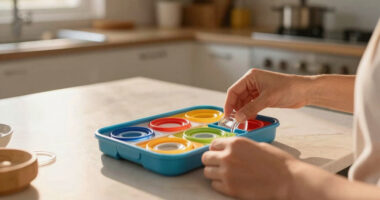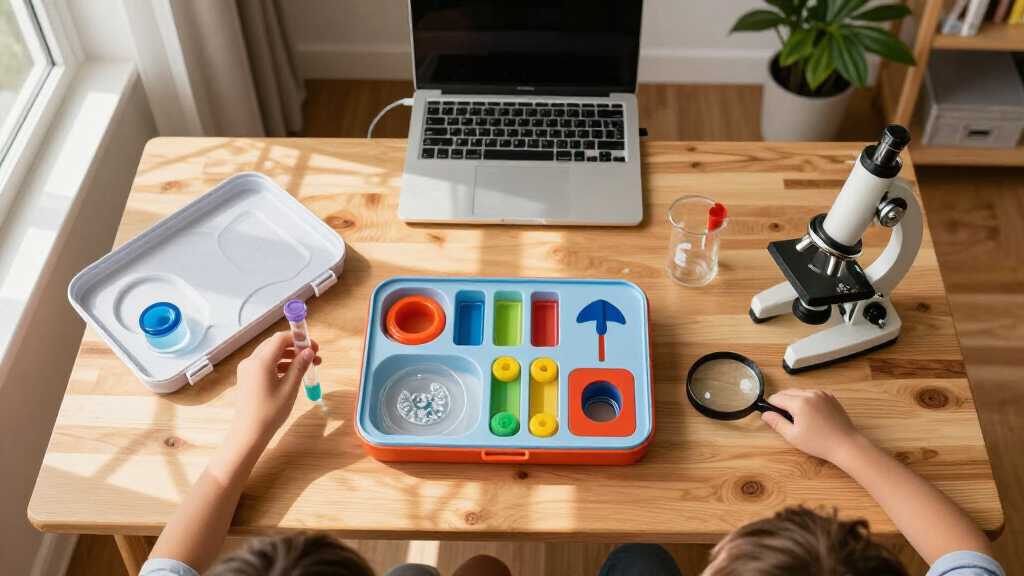

The best educational science kit for most students is the National Geographic Earth Science Kit, which packs over 100 activities into one box with enough variety to keep a curious 8-to-12-year-old engaged for months. If chemistry is the goal, the UNGILINGA 150 Experiments Kit delivers the most experiments per dollar, while the EUDAX Electricity and Magnetism Kit is the strongest option for high school students who need real circuit work rather than toy-level demonstrations. The main tradeoff in this category is breadth versus depth: big multi-activity kits excite younger students but treat each topic lightly, while single-subject kits teach more rigorously but risk losing shorter attention spans. Price does not always predict quality here — a $20 kit with clear instructions often outperforms pricier sets with vague manuals. Keep reading for the full breakdown, including who each kit suits and which ones to skip.

Prime made for students and young adults
- Fast, free delivery for dorm and study essentials
- Prime Video and Amazon Music included
- Member-only deals
Key Takeaways
- Variety won for younger students: the National Geographic Earth Science Kit earned Best Overall because its 100+ activities cover geology, weather, and chemistry, while single-topic kits like the Volcano Kit work better as gifts than as long-term learning tools.
- Experiment count is a marketing number, not a quality signal — the UNGILINGA 150-experiment kit and the 80-experiment role play kit overlap heavily, with many ‘experiments’ being color variations of the same reaction.
- The biggest gap in this category is for older students: only the EUDAX physics kit treats its subject at high school depth, making it the clear pick for teens while most others max out around age 12.
- Instructions quality separated winners from losers more than components did — kits with illustrated, step-by-step manuals plus explanations of the science behind each activity kept students working independently.
- The 58-Piece Microscope Kit was the only tool-based pick rather than activity-based, which makes it better for students who already show sustained interest in science instead of those needing an entry point.
| Science Kit for Kids – 80 Science Lab Experiments with Scientist Role Play |  | Best for Young Beginners | Number of Experiments: 80 | Age Range: 6+ years | Focus: Chemistry-style beginner experiments | VIEW LATEST PRICE | See Our Full Breakdown |
| 4M Clean Water Science – Climate Change, Global Warming Lab – STEM Educational Toy |  | Best Focused Lesson Pick | Experiment Type: Water desalination / purification | Recommended Age: 8 years and up | Includes: Plastic filter system, active carbon, sand, rock, filter paper, instructions | VIEW LATEST PRICE | See Our Full Breakdown |
| National Geographic Earth Science Kit with 100+ Activities for Kids 8-12 | 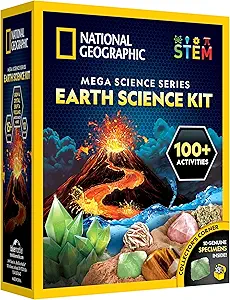 | Best Overall | Brand: Blue Marble / National Geographic | Age Range: 8 years and up | Number of Activities: 100+ | VIEW LATEST PRICE | See Our Full Breakdown |
| Structural Engineering: Bridges & Skyscrapers Science & Engineering Kit |  | Best for Engineering-Minded Builders | Number of Models: 20 | Building Pieces: 285+ | Manual Pages: 36 | VIEW LATEST PRICE | See Our Full Breakdown |
| UNGILINGA 150 Experiments Science Kits for Kids – Chemistry Lab & STEM Toys |  | Best Value for Experiment Count | Number of Experiments: 150 | Age Range: 8 years and up | Focus: Chemistry, physics, earth science, surface tension | VIEW LATEST PRICE | See Our Full Breakdown |
| National Geographic Gross Science Kit with 45 Experiments for Kids 8-12 |  | Best for Reluctant Scientists | Brand: Blue Marble (National Geographic) | Age Range: 8 years and up | Educational Objective: STEM | VIEW LATEST PRICE | See Our Full Breakdown |
| EUDAX School Physics Labs Basic Electricity Discovery Circuit and Magnetism Experiment Kits for High School Students |  | Best for High School Physics | Electricity Components: 56 items | Magnetism Components: 21 items | Repair Tools: 2 pcs | VIEW LATEST PRICE | See Our Full Breakdown |
| STEM Electric Circuit Kit for Kids Ages 8-15 |  | Best Beginner Circuit Kit | Age Range: 8-15 years | Number of Experiments: 7 (7-in-1 design) | Included Components: Manual, storage box | VIEW LATEST PRICE | See Our Full Breakdown |
| 58-Piece Kids Microscope Kit – 100X-1200X Magnification, Metal Body, LED Light, Carrying Box |  | Best Biology Tool | Magnification: 100X-1200X | Pieces: 58 | Body Material: Metal | VIEW LATEST PRICE | See Our Full Breakdown |
| National Geographic Ultimate Volcano Science Kit for Kids Ages 8-12 |  | Best Science Fair Pick | Brand: Blue Marble (National Geographic) | Age Range: 8 years and up | Educational Objective: STEM / Geology | VIEW LATEST PRICE | See Our Full Breakdown |
| Thames & Kosmos Simple Machines Science Experiment & Model Building Kit |  | Best for Mechanical Physics | Number of Models: 26 | Machines Covered: Wheels and axles, levers, pulleys, inclined planes, screws, wedges | Manual Pages: 32 | VIEW LATEST PRICE | See Our Full Breakdown |
| Carson Dellosa STEM Challenges, Hands-On Science Kits |  | Best for Classroom Teachers | Number of Cards: 30 | Card Dimensions: 7¾ x 5½ inches | Recommended Grades: 2-5 | VIEW LATEST PRICE | See Our Full Breakdown |
| educational science kits for student | Age Range |
|---|---|
| Science Kit for Kids | 6+ years |
| 4M Clean Water Science | — |
| National Geographic Earth Scie | 8 years and up |
| Structural Engineering: Bridge | — |
| UNGILINGA 150 Experiments Scie | 8 years and up |
| National Geographic Gross Scie | 8 years and up |
| EUDAX School Physics Labs Basi | — |
| STEM Electric Circuit Kit for | 8-15 years |
| 58-Piece Kids Microscope Kit | — |
| National Geographic Ultimate V | 8 years and up |
| Thames & Kosmos Simple Machine | — |
| Carson Dellosa STEM Challenges | — |
More Details on Our Top Picks
Science Kit for Kids – 80 Science Lab Experiments with Scientist Role Play
Most chemistry-style kits aim at ages 8 and up, but this one opens the door for six-year-olds by pairing simple experiments with a scientist role-play costume that makes the science feel like play rather than homework. Compared with the UNGILINGA 150 Experiments kit, the experiment count is roughly half, but the tradeoff is accessibility: instructions and materials here skew toward younger attention spans. The included goggles, gloves, and test tubes give kids the full lab experience, and classics like rainbow rain and erupting volcanoes land well at this age. The catch is supervision — chemical supplies are limited and small parts demand a watchful adult. If your student is older or already confident with experiments, this kit will feel too basic.
Pros:- Age-appropriate entry point starting at 6 years old
- Includes real safety gear like goggles and gloves
- Role-play costume makes science feel like imaginative play
- 80 experiments provide plenty of variety for the price
Cons:- Small parts pose a choking hazard for younger siblings
- Chemical supplies are limited and run out quickly
- Constant adult supervision is required
Best for: Parents of curious 6-8 year olds who want a gentle, costume-driven introduction to hands-on science
Not ideal for: Families with children under 6 or unsupervised play sessions — small parts and chemicals make it a poor fit
- Number of Experiments:80
- Age Range:6+ years
- Focus:Chemistry-style beginner experiments
- Includes:Goggles, chemical materials, petri dishes, test tubes, gloves, droppers, balloons, role-play costume
- Supervision:Adult supervision required
- Best Setting:Home learning and guided play
Our verdict“A strong first science kit for early-elementary kids, as long as a parent is willing to run the experiments alongside them.”
4M Clean Water Science – Climate Change, Global Warming Lab – STEM Educational Toy
Where the National Geographic Earth Science Kit spreads itself across 100+ activities, this 4M kit does exactly one thing — a hands-on desalination experiment that shows how salt is extracted from seawater. That narrow focus is the whole point: it’s a single, digestible lesson on water scarcity and climate science rather than a toy box of unrelated demos. For a school project, Earth Day activity, or a unit on environmental science, one well-executed experiment often teaches more than a dozen quick eruptions. The tradeoff is obvious — it’s finished in an afternoon, and you’ll need to supply your own water glass. Younger kids will need help assembling the filter system. Buyers wanting replay value should look at the bigger multi-experiment kits instead.
Pros:- Teaches water purification and desalination clearly and tangibly
- Connects directly to climate change and environmental curriculum
- Compact, inexpensive, and easy to store
- Complete filter materials and instructions included
Cons:- Only demonstrates one basic concept
- Requires an additional water glass not included
- Younger children need adult help with assembly
Best for: Teachers and parents looking for a single focused environmental science lesson or school project for ages 8+
Not ideal for: Kids who want repeated entertainment — one experiment means very limited replay value
- Experiment Type:Water desalination / purification
- Recommended Age:8 years and up
- Includes:Plastic filter system, active carbon, sand, rock, filter paper, instructions
- Additional Items Needed:Water glass
- Educational Focus:Environmental science, climate change
- Brand:4M
Our verdict“A one-lesson kit that earns its place through depth on a single environmental topic rather than breadth of experiments.”
National Geographic Earth Science Kit with 100+ Activities for Kids 8-12
This is the pick I’d point most families toward first. With over 100 activities spanning volcano eruptions, crystal growing, and geologic digs, it covers more ground than the UNGILINGA 150 Experiments kit does in chemistry alone — and it comes from a brand with an award-winning track record and a detailed learning guide that connects each activity to real Earth science. The breadth matters for students: one afternoon it’s minerals, the next it’s erupting geology, which keeps curiosity alive across a whole school year. Compared with the single-experiment 4M Clean Water Science kit, this costs more upfront but delivers vastly more mileage. The honest tradeoff: some activities need adult supervision, the sheer number of pieces makes durability a question over time, and a few experiments consume their materials in one go.
Pros:- 100+ activities provide exceptional variety and sharing potential for siblings or classrooms
- Detailed learning guide ties experiments to real Earth science concepts
- Reputable, award-winning brand with strong customer service backing
- Mixes instant-gratification experiments with multi-day projects like crystal growing
Cons:- Some experiments require adult supervision and setup
- Durability of included tools and materials is inconsistent
- Certain activities consume materials permanently on first use
Best for: Families of 8-12 year olds who want a long-lasting, all-around Earth science kit with genuine educational depth
Not ideal for: Parents wanting a chemistry-focused kit or a single quick afternoon activity — this is built for extended use, not one-shot fun
- Brand:Blue Marble / National Geographic
- Age Range:8 years and up
- Number of Activities:100+
- Focus:Earth science and STEM
- Included Components:100+ science experiments and activities with learning guide
- Model Number:NGMEGAEARTH
- Warranty:Backed by manufacturer quality standards and customer service
Our verdict“The most well-rounded choice for students who want a science kit that keeps teaching month after month.”
Structural Engineering: Bridges & Skyscrapers Science & Engineering Kit
Every other kit in this lineup is about observing or mixing; this one is about building and understanding why structures stand up. With 285+ interchangeable pieces and 20 models, it teaches tension, compression, and shear through construction rather than chemical reactions — a fundamentally different learning style. Compared with the Thames & Kosmos Simple Machines kit, this option skews toward structural principles and suits students who like seeing physics in a finished bridge they built themselves. The 36-page manual and Parents’ Choice Gold Award speak to real instructional quality. The tradeoff is the skill floor: it’s rated intermediate, so younger or impatient kids will hit friction fast, and assembly demands patience and occasional adult help. It also offers no chemistry or earth science at all, so it’s a complement, not a replacement, for broader kits.
Pros:- Teaches genuine structural engineering concepts like tension and shear
- 285+ reusable pieces allow rebuilding and custom designs
- 20 models give a clear progression of difficulty
- Parents’ Choice Gold Award-winning manual with step-by-step guidance
Cons:- Intermediate skill level is too demanding for beginners
- Assembly is time-consuming and needs supervision for younger kids
- No chemistry or life science content for variety-seekers
Best for: Logic-driven students around 10 and up who love construction toys and are ready for real engineering principles
Not ideal for: Beginners and younger children — the intermediate difficulty and careful assembly will frustrate rather than teach
- Number of Models:20
- Building Pieces:285+
- Manual Pages:36
- Skill Level:Intermediate
- Awards:Parents’ Choice Gold Award
- Focus:Structural engineering – bridges and skyscrapers
- Supervision:Recommended for younger children
Our verdict“The clear choice for builder-brained students, provided they have the patience for intermediate-level assembly.”
UNGILINGA 150 Experiments Science Kits for Kids – Chemistry Lab & STEM Toys
If the yardstick is experiments per dollar, this kit wins the roundup: 150 activities covering chemistry, physics, earth science, and surface tension, which is 50% more than the National Geographic Earth Science Kit and nearly double the 6+ role-play kit. That breadth makes it a smart pick for families with multiple kids or long school breaks — there’s always another experiment waiting. The illustrated step-by-step manual is what keeps this volume usable rather than overwhelming, and the tools are genuinely kid-friendly. The compromises are familiar ones in this price bracket: some experiments lean on household items you must supply yourself, so the real count of ‘everything included’ activities is smaller than the headline number, and younger users will still need an adult for certain tools.
Pros:- Largest experiment count in the roundup at 150 activities
- Spans multiple disciplines – chemistry, physics, and earth science
- Illustrated step-by-step manual keeps the volume manageable
- Quality kid-friendly tools and materials for the price
Cons:- Some experiments require household items not included
- Certain tools need adult supervision for younger children
- Breadth over depth – individual experiments are relatively simple
Best for: Budget-conscious families and multi-kid households that want maximum experiment variety for the money
Not ideal for: Buyers expecting all 150 experiments fully stocked — many require household items, which can cause frustration if you’re caught unprepared
- Number of Experiments:150
- Age Range:8 years and up
- Focus:Chemistry, physics, earth science, surface tension
- Includes:Science tools and materials, illustrated manual
- Additional Items Needed:Some household items
- Best Setting:Home learning, gifts, school breaks
Our verdict“The most experiments per dollar here, ideal for households that value variety and don’t mind supplementing with pantry supplies.”
National Geographic Gross Science Kit with 45 Experiments for Kids 8-12
Not every student warms to science through clean, quiet experiments — and that’s exactly the gap this kit fills. Where the National Geographic Earth Science Kit covers broad ground, this one bets everything on gross-out appeal: boiling boogers, glowing worms, and 43 other reactions engineered to make kids lean in rather than tune out. The payoff is sustained engagement, which matters more than topic coverage for kids who claim to hate science. Instructions are illustrated clearly enough for independent work by age 8 or 9, and many experiments use household items, stretching the kit beyond its packaged supplies. The tradeoff is real: this is the messiest pick in the lineup, and the humor-first framing means the actual chemistry concepts are thinner than what the EUDAX physics kit offers older students.
Pros:- 45 experiments provide weeks of varied activities
- Humor-driven theme reaches kids who resist traditional science
- Illustrated instructions allow independent use by ages 8+
- Many experiments use common household items, extending the kit’s life
Cons:- Experiments are messy and require supervision
- Science content is lighter than more academic kits
- Not suitable for children under 8
Best for: Parents and teachers trying to hook kids aged 8-12 who normally avoid science activities
Not ideal for: Tidy households or younger siblings — the experiments are genuinely messy and need adult supervision
- Brand:Blue Marble (National Geographic)
- Age Range:8 years and up
- Educational Objective:STEM
- Number of Experiments:45
- Model Number:NGMEGAGRS
Our verdict“Buy this if your goal is converting a science skeptic into a curious kid; skip it if you want rigorous academic depth.”
EUDAX School Physics Labs Basic Electricity Discovery Circuit and Magnetism Experiment Kits for High School Students
Most kits in this roundup stop at middle school, but this one is built for students who need actual circuit theory. With 56 electrical components and 21 magnetism items, it lets high schoolers build working circuits, electromagnets, and hand-crank generators — the kind of labs that map directly onto physics coursework. Compared with the STEM Electric Circuit Kit for Kids Ages 8-15, the EUDAX set is a clear step up in scope and seriousness, covering magnetism that the 7-in-1 kit ignores entirely. The full-color manual and storage bag make it practical for repeated classroom or co-op use. Tradeoffs exist: it demands assembly patience that younger kids lack, and the batteries aren’t included, so factor in a pack of AAs before the first lesson.
Pros:- 77 total components covering both electricity and magnetism
- Directly supports high school physics curriculum topics
- Color manual and storage bag suit repeated classroom use
- Supports advanced builds like electromagnets and generators
Cons:- Batteries not included (requires 3 AA)
- Meaningful setup and assembly required before each experiment
Best for: High school students and homeschool families needing lab work that matches a formal physics curriculum
Not ideal for: Elementary and middle school kids — the assembly and concept level will frustrate them
- Electricity Components:56 items
- Magnetism Components:21 items
- Repair Tools:2 pcs
- Manual:Full-color page manual
- Batteries:Not included (3 AA required)
- Storage:Included storage bag
Our verdict“This is the pick when worksheets aren’t enough and a student needs real, curriculum-aligned electricity and magnetism labs.”
STEM Electric Circuit Kit for Kids Ages 8-15
Think of this as the on-ramp to the EUDAX set. Seven guided experiments — circuit building, conductivity testing, energy conversion — introduce core electricity concepts without overwhelming a first-time learner. Compared with the EUDAX physics kit, this one trades breadth for accessibility: fewer parts, simpler builds, and a step-by-step manual written for ages 8-15 rather than high schoolers. What justifies its place is durability and reusability — components and a storage box are designed for repeated classroom cycles, which the one-and-done Gross Science Kit can’t match. The honest limitation is scope: seven experiments run out fast for an eager student, and it doesn’t touch magnetism at all. Younger kids in the range will also need a parent nearby for assembly.
Pros:- Step-by-step manual supports independent study
- Durable, reusable components suit classroom and home reuse
- Wide 8-15 age range fits siblings and multi-year use
- Compact storage box keeps pieces organized between sessions
Cons:- Only 7 experiments — limited long-term value
- Batteries not included (2 AA required)
- Assembly can be challenging for younger children
Best for: Upper elementary and middle school students doing their first structured electricity experiments
Not ideal for: Students who already understand basic circuits — the content is entry-level and finite
- Age Range:8-15 years
- Number of Experiments:7 (7-in-1 design)
- Included Components:Manual, storage box
- Batteries:Not included (2 AA required)
- Use Case:Classroom and home science education
Our verdict“A sensible first circuit kit for ages 8-12 that students will outgrow within a semester or two.”
58-Piece Kids Microscope Kit – 100X-1200X Magnification, Metal Body, LED Light, Carrying Box
Every other kit here is consumable — once the eruption powder or experiment chemicals run out, the learning stops. This microscope is the opposite: a durable instrument that keeps working as long as curiosity does. With 58 pieces including prepared specimens, blank slides, and lab tools, it turns biology from an abstraction into something a student can hold and examine. The 100X-1200X magnification range is genuinely functional for viewing cells and insect parts, and the metal body plus carrying box make it classroom-tough in a way plastic kits like the Ultimate Volcano Kit never are. The catch: prepared slides only last so long, and ambitious students will eventually hit the ceiling of a beginner-grade optical system — this won’t rival a lab microscope for serious high school work.
Pros:- 58 pieces include prepared specimens, slides, and tools for immediate use
- Reusable instrument provides years of value unlike consumable kits
- Metal body and carrying box survive classroom handling
- LED lighting makes specimens easy to view clearly
Cons:- Requires 2 AA batteries (not included)
- Magnification range is limited for advanced study
- Specimen collection runs out and must be supplemented
Best for: Students curious about biology who want a reusable science tool rather than one-off experiments
Not ideal for: Advanced students needing research-grade optics — magnification and resolution top out at hobbyist level
- Magnification:100X-1200X
- Pieces:58
- Body Material:Metal
- Light Source:LED
- Dimensions:4.6″L x 2.75″W x 8.15″H
- Batteries:2 AA required (not included)
Our verdict“The only pick here that grows with the student — buy it for a kid whose curiosity is about the living world, not chemical reactions.”
National Geographic Ultimate Volcano Science Kit for Kids Ages 8-12
The classic volcano demo, done properly. Unlike generalist sets such as the UNGILINGA 150 Experiments kit, this one goes deep on a single project: plaster and mold construction, painting, eruption chemistry, and — the differentiator — real volcanic rocks with a full-color geology guide that turns a spectacle into an actual lesson. The reusable mold means the eruption can be repeated for science fairs, classroom demos, or sibling turns, which gives it more life than a single-use kit. The tradeoff is narrowness: this is one project, not a program of study. Younger kids need adult help since plaster assembly involves fragile parts, and the geology payoff depends on the child actually reading the guide rather than just watching the lava flow.
Pros:- Real volcanic rocks and learning guide add genuine geology education
- Reusable mold supports repeated eruptions and demos
- Extra eruption powder and pop crystals make dramatic presentations
- Painting step adds creativity to the science build
Cons:- Single-project focus limits long-term use
- Adult supervision needed; plaster parts can be fragile during assembly
Best for: Parents and teachers preparing a hands-on science fair project or geology lesson for ages 8-12
Not ideal for: Families wanting variety — one volcano project won’t sustain weeks of engagement
- Brand:Blue Marble (National Geographic)
- Age Range:8 years and up
- Educational Objective:STEM / Geology
- Included Components:Volcano plaster, mold, paints, brush, full-color learning guide
- Model Number:NGVOLCANOULT
- Warranty:Backed by manufacturer service
Our verdict“The strongest choice in this lineup for a science fair or geology unit — as long as one great project is all you need.”
Thames & Kosmos Simple Machines Science Experiment & Model Building Kit
Most kits in this roundup lean on chemistry or geology — think the UNGILINGA 150 Experiments kit or the National Geographic Volcano Kit — but this one carves out a different niche: classical mechanics. With 26 buildable models covering all six simple machines, it teaches physics principles through construction rather than observation. The standout differentiator is the included spring scale, which lets students actually measure force instead of just reading about it — a rare quantitative element that turns play into real experimentation. Compared with the Structural Engineering Bridges & Skyscrapers Kit, this option covers a broader mechanical range but with simpler individual builds. The tradeoff: younger builders will need adult help with the more complex assemblies, and the 32-page manual, while clear, is thinner than the encyclopedic guides in the National Geographic kits.
Pros:- 26 models covering all six classic simple machines
- Spring scale enables real quantitative force measurement
- Clear, illustrated manual pairs builds with scientific explanations
- Modular pieces are compatible with other Thames & Kosmos construction kits
Cons:- Requires adult supervision for younger children
- Some models are too complex for beginners and may cause frustration
- Fewer experiments than chemistry-focused rivals like the UNGILINGA 150-kit
Best for: Students ages 8-12 who learn best by building and who are ready to connect hands-on construction with measurable physics concepts.
Not ideal for: Families seeking low-effort, mess-free fun — this kit requires assembly patience and adult supervision for younger children, unlike open-and-go experiment kits.
- Number of Models:26
- Machines Covered:Wheels and axles, levers, pulleys, inclined planes, screws, wedges
- Manual Pages:32
- Measurement Tool:Spring scale for force measurement
- Compatibility:Other Thames & Kosmos construction kits
- Focus Area:Mechanical physics
- Supervision:Adult supervision recommended for younger children
Our verdict“Choose this if you want a build-first physics education rather than another baking-soda volcano — ideal for mechanically curious kids who like measuring what they make.”
Carson Dellosa STEM Challenges, Hands-On Science Kits
This isn’t a kit in the traditional sense — it’s a structured curriculum tool, and that’s exactly its value. Where the National Geographic Earth Science Kit supplies materials for one child at home, this set of 30 full-color challenge cards is built for classrooms, learning centers, and homeschool co-ops where a teacher needs repeatable, organized activities across physical, life, earth, and space science. Each card includes a challenge, materials list, hints, and explanations, so lesson planning is nearly done for you — a genuine advantage over kits like the EUDAX Electricity Kit, which is deep but narrow in scope. The obvious tradeoff: no materials are included. You’ll be sourcing everyday items yourself, and the science breadth is fixed at what the 30 cards cover. For educators, though, that flexibility beats a boxed kit every time.
Pros:- 30 challenge cards spanning physical, life, earth, and space science
- Each card includes materials list, hints, and explanations for low-prep teaching
- Includes a divider for organized card storage between lessons
- Large 7¾ x 5½ inch cards are easy to read in group settings
Cons:- All activity materials must be sourced separately from household supplies
- Content is capped at the 30 card topics with no room to expand
- Younger students in the grade range may need supervision for some challenges
Best for: Elementary teachers and homeschool parents of grades 2-5 who want ready-made, standards-friendly STEM challenges for groups.
Not ideal for: Parents wanting an all-in-one gift box — no experiment materials are included, so it demands extra prep and household sourcing.
- Number of Cards:30
- Card Dimensions:7¾ x 5½ inches
- Recommended Grades:2-5
- Science Topics:Physical, life, earth, and space science
- Storage Divider:Included
- Materials Included:No — requires common household materials
- Settings:Classroom, centers, and homeschool
Our verdict“A smart buy for educators who value curriculum structure and repeatability over unboxing excitement — skip it if you want materials included in the box.”
How We Picked
I evaluated each kit on four factors that directly affect whether a student actually learns from it: instruction quality (are the steps clear, and does the manual explain the science, not just the steps?), age-appropriate depth (does the content match the labeled age range, or is it watered down or overcomplicated?), replay value (can the kit be used more than once, or is it a single afternoon of fun?), and component quality versus price. Kits that included real lab equipment — metal tools, proper circuit components, glass-free but sturdy vessels — ranked above those relying on cardboard and plastic trinkets.
The ranking also reflects a deliberate spread across age groups and subjects. A chemistry kit for a 7-year-old and a physics set for a 15-year-old cannot be judged on the same scale, so I ordered the lineup to give each buyer type a clear match rather than stacking similar kits at the top. Where two kits overlapped heavily, the one with better documentation, safer materials, or lower refill costs placed higher.
Factors to Consider When Choosing Educational Science Kits For Students
Before picking a kit, it helps to understand how this category actually works. Most educational science kits are designed around one of three learning styles — guided experiments, open-ended building, or tool-based exploration — and choosing the wrong style is the most common reason a kit ends up unused on a shelf.
Match the Kit to the Student’s Age and School Level
Age labels on science kits are often optimistic, especially on imported sets where the printed range of 8-15 covers wildly different abilities. A better approach is to match the kit to what the student is currently studying: elementary students do best with visual, reaction-based experiments; middle schoolers can handle multi-step builds; high schoolers need kits with real formulas and measurements, not just color changes. The EUDAX electricity kit is a good example of honest age labeling — its circuit work assumes classroom physics exposure. Buying ‘above level’ rarely pays off; a frustrated student abandons the kit, while one pitched slightly below level builds confidence and gets finished. If you are unsure, choose the simpler kit, because an engaged student will exhaust it and ask for more.
Breadth Versus Depth: What Multi-Activity Kits Trade Away
Kits advertising 100 or 150 experiments almost always count variations as separate experiments — three colors of the same slime recipe may count as three entries. That is not necessarily bad: variety keeps younger students coming back, and the National Geographic Earth Science Kit uses its breadth well. The tradeoff is that no single topic gets covered deeply enough to support real understanding. Single-subject kits like the Structural Engineering bridges set or the Simple Machines kit teach fewer concepts but teach them properly, with progressive lessons that build on each other. If the student has a specific interest, choose depth. If you are trying to spark interest in the first place, choose breadth.
Consumables and Refill Costs
Many kits in this price range are partly single-use: powders, dyes, and reaction tablets run out, and the kit becomes a box of empty containers. Check whether the manufacturer sells refills or whether the experiments use common household items as substitutes — this is where cheaper kits sometimes beat expensive ones on long-term value. The Clean Water Science kit, for example, leans on filter materials that deplete quickly, while microscope and circuit kits are essentially permanent purchases with no consumables at all. A $25 kit that lasts two years of repeated use is a better buy than a $40 kit that lasts two weekends. Factor refill availability into the real cost before comparing prices.
Instruction Manual Quality Matters More Than Box Size
The manual is the single biggest predictor of whether a student learns independently or abandons the kit in confusion. Strong manuals — the National Geographic kits are consistent standouts here — include photos for each step, a short explanation of the underlying science, and troubleshooting tips. Weak manuals are thin, translation-heavy booklets that list steps without explaining why anything happens, which turns the experience into following a recipe. Before buying, look for downloadable manual previews on the manufacturer’s site if available. For younger students, also check whether the adult-supervision level is stated honestly; kits that quietly require an adult for every experiment are poor choices for independent play.
Safety and Supervision Requirements
Legitimate chemistry kits for students avoid genuinely dangerous chemicals, but ‘safe’ is relative: fizzing reactions can still sting eyes, and heat-based experiments like the volcano kit require an adult nearby. Look for kits that state required supervision explicitly and include basic safety gear, even if it is just goggles. The bigger hidden issue is small-part and magnet safety for households with younger siblings — magnetism kits in particular need to stay away from toddlers. For classroom or group use, choose kits with individually portioned materials so several students can work in parallel without conflicts.
Tools Versus Activities: A Different Kind of Purchase
Most kits here are activity-based — a fixed set of experiments that eventually end. Tool-based purchases like the 58-piece microscope kit work differently: the equipment itself is the product, and the student generates their own experiments indefinitely. Tool kits cost more upfront but have no natural endpoint, making them better for students with demonstrated interest. For a student who has not yet shown sustained curiosity, an activity kit is the safer first purchase; if it lands well, a microscope or circuit kit makes an excellent follow-up gift later. Buying the tool first is a common and expensive mistake.
Frequently Asked Questions
Are big experiment-count kits like 150-experiment sets actually worth it?
Partly. The raw number is inflated by counting variations of the same experiment separately, so a 150-experiment kit might contain 40 genuinely distinct activities. That said, variety has real value for younger students — repeating a familiar reaction with a twist builds confidence and independence in a way a strict lesson sequence does not. The UNGILINGA kit holds up well here because its instructions are clear even when experiments overlap. The kits to be wary of are those with huge experiment counts and thin manuals, because the redundancy becomes obvious to the student quickly. If the manual explains the science behind each variation, the count inflation is forgivable; if it does not, the kit is a novelty.
Which kit should I buy for a high school student who says science kits are for little kids?
The EUDAX Electricity and Magnetism kit is the strongest answer because it uses actual circuit components, real schematics, and concepts that map onto classroom physics curricula — resistors, series versus parallel circuits, electromagnetic induction. It reads as lab equipment rather than a toy, which matters for teenagers sensitive to being handed something juvenile. The Structural Engineering bridges and skyscrapers kit is a second option for students leaning toward engineering, since it involves load calculations and structural failure testing. Avoid the role-play and gross-science style kits for this age group entirely; they will go unused. The honest limit is that no kit in this price range replaces an actual school lab, but these two come closest to legitimate coursework.
Do any of these kits work for classroom or homeschool co-op use?
Yes, but choose ones with either individually portioned materials or permanent components. The Carson Dellosa STEM Challenges set is explicitly designed for classroom-style activity rotation, which is why it made the lineup despite being less flashy than the experiment kits. Circuit kits like the EUDAX and the STEM Electric Circuit Kit also work well in groups because the components are reusable and students can take turns building. Consumable-heavy kits are the worst group choice — one classroom session can exhaust a month of materials. For homeschool co-ops, budget one consumable kit per three to four students and lean on the tool-based and building kits for repeat sessions.
Is a microscope kit a good first science kit for a curious 8-year-old?
Usually not, and this was one of the clearest patterns in the comparison. The 58-piece microscope kit is an excellent purchase for a student who already peers at leaves and insects on their own, but as a first kit it often sits unused because it requires the student to generate their own curiosity. Activity-based kits like the Earth Science Kit or the 80-experiment role play set supply the questions and the payoff, which is what a beginner needs. A reasonable sequence is one activity kit first, then the microscope as a second gift once you see sustained interest. One practical note: sub-$50 microscopes, including this one, perform best at their lower magnification ranges, so set expectations accordingly.
What should I do when the experiments run out — are these kits disposable?
It depends on the kit type. Consumable-based chemistry kits effectively end when the powders and tablets do, though many experiments can be extended with baking soda, vinegar, and food coloring from a grocery store — worth checking the manual for substitution notes before assuming the kit is dead. Building kits like the Simple Machines and Structural Engineering sets are fully reusable, and the best students disassemble and redesign rather than following instructions once. Circuit and microscope kits have no natural end point at all. When comparing prices, divide the cost by realistic months of use rather than sticker price; a $35 reusable building kit frequently beats a $25 consumable set on that math. If a student loved a consumable kit, replacements exist and usually cost far less than the original purchase.
Conclusion
For most buyers, the National Geographic Earth Science Kit is the best overall choice — its combination of variety, excellent instructions, and age-appropriate depth makes it the safest pick for the 8-to-12 range that dominates this category. The UNGILINGA 150 Experiments Kit is the best value for budget-conscious buyers who want maximum chemistry content per dollar, while the Thames & Kosmos Simple Machines Kit is the best premium pick thanks to its durable components and genuinely progressive lessons. For beginners and younger students, the 80-experiment role play kit lowers the entry barrier by making science feel like play before it feels like work. High school students should go straight to the EUDAX electricity and magnetism kit, and the 58-piece microscope kit is the right specific-need purchase for a student with already-demonstrated scientific curiosity. Whatever you choose, weigh instruction quality and replay value over experiment counts — those two factors separated the best kits in this lineup more than anything else.
Fall Picks
fall essentials
As an affiliate, we earn on qualifying purchases.