This guide helps parents and caregivers choose a science experiment kit for a child, set up the activity, and complete one experiment safely. It is for adults with no special science background; plan for 30–60 minutes, depending on the experiment and cleanup.

Prime made for students and young adults
- Fast, free delivery for dorm and study essentials
- Prime Video and Amazon Music included
- Member-only deals
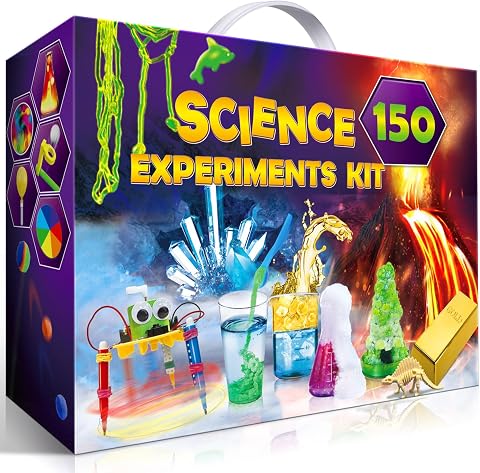
UNGLINGA 150-Experiment Science Kit for Kids
- ✔ Brand: UNGLINGA
- ✔ Experiment count: 150
- ✔ Recommended age: 8 years and up
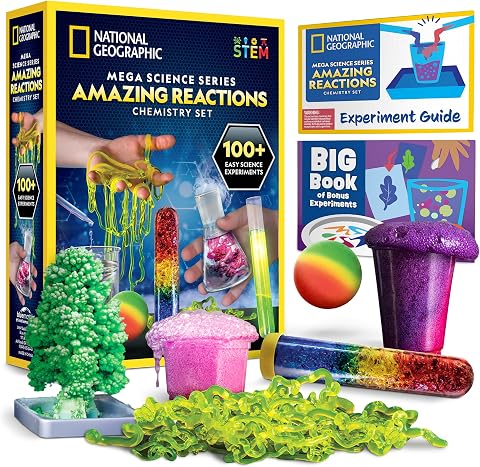
National Geographic Amazing Chemistry Set with 100+ Experiments for Ages 8+
- ✔ Brand: Blue Marble
- ✔ Sub-brand: National Geographic
- ✔ Experiment count: 100+ (15 with included materials; 85 bonus activities)

National Geographic Science Magic Kit for Kids, 100+ Experiments
- ✔ Brand: Blue Marble
- ✔ Sub-brand: National Geographic
- ✔ Experiment count: 100+
Difficulty: Beginner | Time: 30–60 minutes
What You’ll Need
Tools & Materials:
- A science kit labeled for the child’s age
- The kit’s instruction booklet and listed components
- A clear, washable work surface
- Safety glasses if the instructions call for them
- Paper towels and a waste container
- An adult to supervise
Knowledge:
- Basic ability to read and follow the kit instructions
- Willingness to supervise the child throughout the activity
Check the kit’s age rating, warnings, and contents before buying or opening it. Some kits need household items such as water, vinegar, or measuring spoons. Gather only the items named in the instructions; do not substitute chemicals or mix materials from different experiments.
UNGLINGA 150-Experiment Science Kit for Kids
When a child wants to explore more than one branch of science, UNGLINGA offers the widest stated range in this lineup. Its 150 activities touch chemistry, physics, Earth science, and surface tension, giving families more ways to follow a new interest than the chemistry-centered National Geographic Amazing Chemistry Set. The illustrated, step-by-step manual also gives this kit a clear path into each activity, a useful feature when kids want to follow instructions themselves.The tradeoff is that the experiment count does not mean every activity can begin with what is in the box. Some projects need common household items, so an adult may need to check the instructions and gather supplies before a session. That is a different kind of preparation from the Amazing Chemistry Set, whose supplied materials are specified for 15 experiments, and from the Science Magic Kit, which supplies materials for 20. UNGLINGA is our strongest general-purpose choice for an eager, varied learner, but families wanting a chemistry-only kit or a set of fully supplied activities should weigh those limits.
Pros:
- The 150-activity range covers several science topics.
- Illustrated, step-by-step instructions support independent participation.
- Includes kid-friendly tools and materials, including goggles.
- Offers more subject variety than either National Geographic kit in this comparison.
Cons:
- Some activities require household items that are not included.
- Its broad topic mix may be less appealing than a focused chemistry or magic theme.
Best for: Kids aged eight and up who enjoy switching between chemistry, physics, and other science topics, with an adult available to help source household items.
Not ideal for: Families who want every listed experiment to have its materials included, or children looking specifically for chemistry demonstrations or magic tricks.
Bottom line: For a child whose interests span several areas of science, UNGLINGA is the most versatile starting point, provided your household can supply a few extra items.
“For a child whose interests span several areas of science, UNGLINGA is the most versatile starting point, provided your household can supply a few extra items.”
National Geographic Amazing Chemistry Set with 100+ Experiments for Ages 8+
For kids who want to mix, observe, and handle recognizable lab equipment, the Amazing Chemistry Set keeps the subject focused. Test tubes, beakers, and pipettes make the activities feel like hands-on chemistry, while the described projects include crystal growing and color-changing reactions. Compared with UNGLINGA, it gives up breadth in favor of a more direct chemistry identity; compared with the Science Magic Kit, it puts the experiments themselves ahead of performance.Buyers should read the 100-plus count with its materials breakdown in mind. The box includes materials for 15 experiments; the guide points to 85 additional activities using common household items. That makes the kit potentially useful beyond its supplied projects, but it also means the headline total is not a count of fully provisioned experiments. For a first chemistry set, its tools and range of reaction-based activities are a coherent fit. Skip it if your priority is extensive included consumables or a mix of science disciplines.
Pros:
- Includes test tubes, beakers, and pipettes for lab-style activities.
- Supplies materials for 15 experiments and suggests 85 more household-item activities.
- Activities include crystal growing and color-changing reactions.
- Its focused chemistry theme makes the learning direction easy to understand.
Cons:
- Materials are supplied for 15 experiments, not the full 100-plus activity count.
- The additional activities use common household items that families must source.
- Its chemistry focus offers less subject variety than UNGLINGA.
Best for: Ages eight and up, especially children curious about chemistry who would enjoy using test tubes, beakers, and pipettes.
Not ideal for: Families seeking materials for all advertised activities or a kit that covers physics and Earth science as well as chemistry.
Bottom line: This is the clearest pick for a budding chemist who values familiar lab tools and accepts gathering supplies for many of the bonus activities.
“This is the clearest pick for a budding chemist who values familiar lab tools and accepts gathering supplies for many of the bonus activities.”
National Geographic Science Magic Kit for Kids, 100+ Experiments
The Science Magic Kit is for children who like the reveal as much as the explanation. It combines magic tricks, chemistry activities, and STEM projects, so an experiment can double as something to demonstrate to family or friends. That playful framing gives it a more theatrical role than the Amazing Chemistry Set, whose test tubes and pipettes foreground lab-style work, and a more specialized scope than UNGLINGA’s multi-topic collection.Its materials are specified for 20 magic experiments, with a bonus booklet listing more than 85 additional experiments. As with the chemistry kit, the large total includes activities beyond those with supplied materials, so families should expect to use common household items for some projects. The recommended age is eight and up, just like the other two picks; it is not an option for substantially younger children simply because the activities are presented as magic. Choose it when an entertaining demonstration is likely to motivate a child. Choose UNGLINGA for broader subject coverage or the Amazing Chemistry Set for a more straightforward chemistry introduction.
Pros:
- Blends magic tricks with chemistry and hands-on STEM activities.
- Includes materials for 20 experiments.
- Adds a booklet with more than 85 additional experiment ideas.
- The performance angle can make demonstrations appealing to kids who enjoy showing what they learn.
Cons:
- Many additional activities may require common household supplies.
- Its magic theme is more specialized than UNGLINGA’s broad science coverage.
- Recommended for ages eight and up, so it may not suit younger children.
Best for: Kids aged eight and up who enjoy magic tricks, surprising demonstrations, and sharing science activities with others.
Not ideal for: Children looking for a broad set of science disciplines, or families expecting included materials for all 100-plus activities.
Bottom line: Choose this kit when the magic-show format is the hook that will get a child experimenting, and look elsewhere for broader coverage or a more traditional chemistry set.
“Choose this kit when the magic-show format is the hook that will get a child experimenting, and look elsewhere for broader coverage or a more traditional chemistry set.”
As an Amazon Associate we earn from qualifying purchases.
Before You Start
Read the full instructions and safety information before inviting the child to begin. Check for allergies or sensitivities related to listed materials, and keep food, drinks, pets, and younger children away from the work area. Do not use a kit with damaged, leaking, or unlabeled containers. Follow the kit’s disposal directions and local rules; never pour materials down a drain unless the instructions say that is safe.
Step-by-Step Instructions
Step 1: Choose a kit that fits the child
Pick a kit whose stated age range includes the child’s age. Match the activity to an interest, such as plants, magnets, rocks, or simple reactions. Read the product description to see whether the kit contains everything needed or requires household supplies, and check how many experiments it supports.
Tip: For a first activity, favor a kit with clear, illustrated instructions and a short experiment. Age ratings are a starting point; an adult should judge whether the reading, measuring, and handling suit the child.
Check: The kit fits the child’s age and interests, and you know which extra supplies, if any, are required.
Step 2: Inspect the kit and instructions
Open the kit with an adult present and compare its contents with the included list. Read the safety notes and the full instructions for one experiment, including preparation, waiting time, and disposal. Set aside any materials the experiment does not use.
Tip: If a required part is missing or a container is damaged, stop and contact the seller or manufacturer. Do not guess what a material is or replace it with another substance.
Check: All required parts are present, containers are intact, and you understand the experiment from setup through cleanup.
Step 3: Prepare the workspace
Choose a stable, well-lit surface that can get wet or be covered with a washable mat. Move away snacks, drinks, electronics, and unrelated items. Put the instructions, required supplies, paper towels, and waste container within reach. Have the child wash their hands and put on any protective gear the instructions specify.
Tip: Keep the experiment on the work surface. Do not let the child handle materials near their face or taste anything, even if it looks familiar.
Check: The surface is clear, needed items are ready, and the child has the required protective gear.
Step 4: Set a question and make a prediction
Ask the child what the experiment is meant to find out. Help them state a simple prediction, such as what they think will happen or which object will move farther. Write or draw the prediction on paper before starting.
Tip: Accept a guess without marking it right or wrong. The point is to compare the prediction with what the experiment shows.
Check: The child can describe what they expect to happen, and the prediction is recorded.
Step 5: Run the experiment in order
Guide the child through one instruction at a time. Let them do age-appropriate tasks, such as counting, pouring a safe amount, or observing, while you handle any task the label reserves for adults. Measure as directed, follow the stated order, and wait for the specified time before moving to the next step.
Tip: Do not combine steps or add extra ingredients to make a result happen faster. If the experiment uses small parts, keep them away from younger children and pets.
Check: The experiment follows the printed sequence, with quantities and waiting times observed.
Step 6: Observe and record the result
Ask the child to describe what changed using things they can see, count, or measure. Record the result with words, a drawing, or a number, as the activity allows. Compare it with the prediction and ask what evidence supports the observation.
Tip: A result that differs from the prediction can still be useful. Record what happened rather than changing the observation to match the guess.
Check: You have a simple record of the result, and the child can point to what they observed.
Step 7: Clean up and store the kit
Follow the experiment’s disposal directions, then wipe the work surface and wash reusable tools as instructed. Put kit components back in their labeled containers only if the instructions say they can be reused. Have the child wash their hands, and store the kit closed and out of reach of younger children.
Tip: Do not save mixed materials unless the instructions explicitly say to. Keep the booklet with the kit so safety notes are available next time.
Check: Waste has been handled as directed, the surface is clean, hands are washed, and the kit is stored safely.
Common Mistakes to Avoid
- Choosing a kit based only on its pictures or title. — Check the age label, safety notes, required household supplies, and whether an adult must perform any steps before buying.
- Skipping ahead, changing quantities, or mixing materials from separate activities. — Follow one experiment’s instructions in order and measure the amounts shown. Keep unused kit materials aside.
- Expecting a dramatic result and calling a small change a failure. — Read the expected result in the instructions, allow the full waiting time, and record subtle changes such as a color shift or movement.
- Leaving materials or small parts within reach after the experiment. — Supervise through cleanup, follow disposal directions, and store the closed kit where younger children and pets cannot reach it.
Troubleshooting
Problem: A required item is missing or damaged.
Solution: Pause the activity and check the contents list again. Contact the seller or manufacturer for a replacement; do not improvise with an unknown or unapproved substitute.
Problem: The expected change does not appear.
Solution: Check that you used the correct amounts and order, then confirm the waiting time and conditions in the instructions. If the directions allow another attempt, repeat with fresh materials and careful measurements.
Problem: The child spills a material or gets it on their skin.
Solution: Stop the experiment and follow the kit’s first-aid and cleanup directions. Rinse skin with water if the label instructs you to do so. For eye exposure, ingestion, or a reaction, use the product’s emergency guidance and contact local poison control or emergency services.
Problem: The instructions are unclear about a step or disposal.
Solution: Do not proceed with that step or discard the material. Check the manufacturer’s instructions or support information for the exact kit and experiment.
What Success Looks Like
The task is complete when the kit was appropriate for the child, the experiment followed its instructions and safety directions, and the child recorded or described an observation. The activity does not need to produce a dramatic result: a clear observation and safe cleanup count as a successful session.
Next Steps
Keep the child’s observation with the kit or in a notebook. Ask what they would change in another trial, then repeat only if the instructions allow it and provide enough materials. Before starting a new activity, review its directions and safety notes again. Replace missing components through the manufacturer or seller, and discard expired or damaged materials according to the label.
Frequently Asked Questions
How do I choose a science kit for a young child?
Start with the age range on the package, then check whether the activity requires reading, measuring, or handling that suits the child. Choose a kit with clear directions and plan to supervise closely.
Do I need to buy extra materials?
Some kits require household items. Read the product details and instructions before beginning, and gather only the listed supplies. Do not substitute materials unless the manufacturer says a substitute is suitable.
What should I do if the experiment does not work?
Check the amounts, sequence, and waiting time against the instructions. Record what happened. Repeat only if the kit permits another trial and you have fresh materials; contact the manufacturer if a supplied component may be faulty.
Can children do science kit experiments without an adult?
Follow the age rating and supervision notes on the kit. An adult should review the instructions, prepare the workspace, and stay present, especially when the activity includes liquids, small parts, heat, or any materials labeled for adult use.
How should I store a kit after using it?
Clean and store components as directed, keep the booklet with them, and close the kit before putting it away. Store it somewhere dry and out of reach of younger children and pets.