For families choosing educational coding toys for kids, the best overall fit is the Wonder Workshop Dash, which combines hands-on robot play with room to build coding skills. The Learning Resources Code & Go Robot Mouse Activity Set stands out for younger beginners who benefit from screen-free, step-by-step play, while the Makeblock mBot is a stronger match for older kids ready to build and program. The main tradeoff is between simple, guided activities and toys with more setup that can support deeper experimentation. Age, screen use, building interest, and the kind of coding progression your child wants all matter. Read on for the full breakdown and help matching each option to its best-fit learner.

Prime made for students and young adults
- Fast, free delivery for dorm and study essentials
- Prime Video and Amazon Music included
- Member-only deals
Key Takeaways
- Dash is the strongest all-around choice for families seeking a programmable robot with room to grow, while Mouse and Botley options put screen-free, physical sequencing first.
- Age and independence change the best fit. Younger children may get more from guided, tangible tasks; older kids ready to build can make better use of mBot or Mech-5.
- “Coding toy” covers different learning goals. Snap Circuits and Playz introduce electronics or computer science concepts, while programmable robots make commands and movement more visible.
- Activity bundles change the play experience. The Mouse Activity Set and Space Rover set include structured challenges, while standalone robots may need extra ideas or materials to sustain play.
- More features can mean more setup. Building kits and app-connected robots may offer wider experimentation, but a simple screen-free toy can be the easier choice for independent starts.
| Thames & Kosmos My Robotic Pet: Coding Chameleon Robotics Kit |  | Best for Screen-Free Robot Building | Brand: Thames & Kosmos | Model: My Robotic Pet: Coding Chameleon | Product type: Robotics kit | VIEW LATEST PRICE | See Our Full Breakdown |
| Snap Circuits Explorer SC-100 Electronics Kit, 100+ Projects, Ages 8+ |  | Best for Learning Circuit Logic | Model: SC-100 | Recommended age: 8 years and up | Projects: 100+ | VIEW LATEST PRICE | See Our Full Breakdown |
| Educational Insights PYXEL Coding Robot |  | Best for Blockly-to-Python Learning | Brand: Educational Insights | Model: 1130 | Age range: 8–14 years | VIEW LATEST PRICE | See Our Full Breakdown |
| Learning Resources Code & Go Robot Mouse Activity Set | 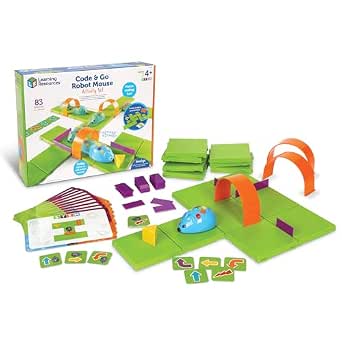 | Best for First Coding Challenges | Brand: Learning Resources | Model: LER2831 | Recommended age: 4 years and up | VIEW LATEST PRICE | See Our Full Breakdown |
| Learning Resources Code & Go Robot Mouse |  | Best Compact Screen-Free Starter | Brand: Learning Resources | Model number: LER2841 | Recommended age: 4–7 years | VIEW LATEST PRICE | See Our Full Breakdown |
| Makeblock mBot Coding Robot Kit for Kids Ages 8+ | 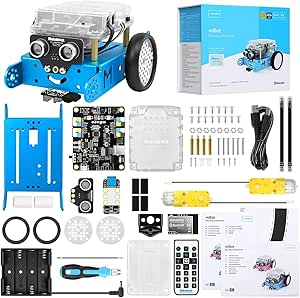 | Best for Growing Into Real Robotics | Brand: Makeblock | Model: 90053 | Recommended age: 8 years and up | VIEW LATEST PRICE | See Our Full Breakdown |
| Wonder Workshop Dash Coding Robot for Kids Ages 6 and Up |  | Best App-Guided Robot | Brand: Wonder Workshop | Recommended age: 6 years and up | Included components: Dash robot, two building brick connectors, USB charging cable | VIEW LATEST PRICE | See Our Full Breakdown |
| Learning Resources Space Rover Coding Activity Set |  | Best Screen-Free Starter | Brand: Learning Resources | Recommended age: 4–10 years | Educational focus: Coding skills, sequencing, logic, and problem-solving | VIEW LATEST PRICE | See Our Full Breakdown |
| Learning Resources Switcheroo Coding Crew |  | Best for Themed Mission Play | Brand: Learning Resources | Age range: 4–6 years | Robot modes: Code Mode and Play Mode | VIEW LATEST PRICE | See Our Full Breakdown |
| Teach Tech Mech-5 STEM Coding Robot Building Kit for Ages 10+ |  | Best for Mechanical Building | Brand: Teach Tech | Model: TTC-895 | Age range: 10 years and up | VIEW LATEST PRICE | See Our Full Breakdown |
| Learning Resources Botley 2.0 Coding Robot Activity Set |  | Best for Hands-On Route Challenges | VIEW LATEST PRICE | See Our Full Breakdown | |||
| Learning Resources Botley the Coding Robot |  | Best for Learning Coding Logic | VIEW LATEST PRICE | See Our Full Breakdown | |||
| Playz My First Coding and Computer Science Kit for Kids |  | Best for Offline Coding Concepts | VIEW LATEST PRICE | See Our Full Breakdown | |||
| Sphero Mini Green Coding Robot Ball |  | Best for App-Based Coding Progression | VIEW LATEST PRICE | See Our Full Breakdown |
| educational coding toys for kid | Brand | Recommended age |
|---|---|---|
| Thames & Kosmos My Robotic Pet | Thames & Kosmos | 8–12 years |
| Snap Circuits Explorer SC-100 | — | 8 years and up |
| Educational Insights PYXEL Cod | Educational Insights | — |
| Learning Resources Code & Go R | Learning Resources | 4 years and up |
| Learning Resources Code & Go R | Learning Resources | 4–7 years |
| Makeblock mBot Coding Robot Ki | Makeblock | 8 years and up |
| Wonder Workshop Dash Coding Ro | Wonder Workshop | 6 years and up |
| Learning Resources Space Rover | Learning Resources | 4–10 years |
| Learning Resources Switcheroo | Learning Resources | — |
| Teach Tech Mech-5 STEM Coding | Teach Tech | — |
| Learning Resources Botley 2.0 | — | — |
| Learning Resources Botley the | — | — |
| Playz My First Coding and Comp | — | — |
| Sphero Mini Green Coding Robot | — | — |
More Details on Our Top Picks
Thames & Kosmos My Robotic Pet: Coding Chameleon Robotics Kit
The Coding Chameleon combines a build project with physical-card programming, so children can explore how a robot is assembled before directing its actions. Its three modes add variety: Coding Mode uses action cards, while Wild and Pet modes invite color responses and interaction. Compared with the Code & Go Robot Mouse Activity Set, this kit offers more emphasis on sensors, color changes, and building; the mouse set is a simpler starting point for sequencing through mazes. The chameleon’s 15-inch size and 48-page manual make it a more involved project, which suits patient builders but may call for adult support. It avoids screens and software, though batteries are not listed as included, so families should check power needs before starting.
Pros:- Physical action cards introduce programming without a screen, device, or software.
- Color and infrared sensors support responsive play across three modes.
- RGB LEDs and color-changing responses make robot feedback visible.
- The 48-page manual covers assembly, robotics, and biomimicry.
Cons:- Assembly may require adult help, particularly for younger builders.
- Batteries are recommended but are not listed among the included components.
Best for: Children ages 8–12 who enjoy building a larger robot and exploring screen-free, card-based coding with sensor-driven responses.
Not ideal for: Young children seeking a quick, simple first coding activity, or families who want a kit with batteries clearly included.
- Brand:Thames & Kosmos
- Model:My Robotic Pet: Coding Chameleon
- Product type:Robotics kit
- Length:15 inches
- Play modes:Coding, Wild, Pet
- Sensors:Color sensor and infrared sensor
- Programming method:Physical colored action cards
- Recommended age:8–12 years
- Manual:48 pages
Our verdict“Choose the Coding Chameleon for an older child who wants to build and program a screen-free robot rather than start with a simple maze toy.”
Snap Circuits Explorer SC-100 Electronics Kit, 100+ Projects, Ages 8+
The Snap Circuits Explorer SC-100 is the lineup’s strongest fit for children curious about the electrical systems behind technology, rather than robot movement or command sequencing. Its numbered, color-coded components snap onto a grid, letting kids build projects without soldering or extra tools. That makes the hands-on process more approachable than the assembly-heavy Coding Chameleon, but it teaches circuit construction rather than coding a robot’s behavior. The illustrated manual’s 100+ projects offers room to keep experimenting after the first build. Families should know that batteries are required, and the product information gives inconsistent component counts, so I would not rely on a specific parts total when comparing kits. Choose it for circuit exploration; pick the Code & Go Robot Mouse Activity Set for direct practice with coding sequences.
Pros:- Snap-together parts let children build circuits without soldering or extra tools.
- Numbered, color-coded components are easier to identify during projects.
- An illustrated manual guides more than 100 project possibilities.
- The plastic grid provides a structured surface for assembling circuits.
Cons:- Batteries are required and are not specified as included.
- Product information lists different component counts, making the exact parts total unclear.
Best for: Families with children ages 8 and up who want guided, hands-on electronics projects and a foundation in how circuits work.
Not ideal for: Buyers specifically seeking a programmable robot, coding-language lessons, or a kit that avoids batteries.
- Model:SC-100
- Recommended age:8 years and up
- Projects:100+
- Components:28 electrical components listed in the product description; 29 parts listed in raw content
- Included:Plastic snap-grid, electrical components, and project manual
- Assembly:Snap-together; no soldering required
- Batteries:Required
Our verdict“Choose the SC-100 when the learning goal is circuit logic and electronics, not robot coding or screen-free command sequencing.”
Educational Insights PYXEL Coding Robot
PYXEL is the best match here for kids ready to move from visual coding toward a text-based language: it offers tutorials in both Blockly and Python. Its actions, lights, colors, and sounds give commands a visible result, while the built-in tutorials support guided learning. Compared with the screen-free Coding Chameleon and Code & Go Robot Mouse, PYXEL connects coding to a tablet or computer, making it a more direct route into digital programming. That flexibility comes with a dependency: children need a Wi-Fi-enabled device, even though an internet connection and app are not required. The rechargeable battery avoids the disposable AAA requirement of the mouse, but this is a less suitable pick for families who want coding play entirely off-screen.
Pros:- Supports both visual Blockly and text-based Python.
- Built-in tutorials offer guidance for independent learning.
- Robot actions, lights, colors, and sounds make coding feedback tangible.
- Does not require internet access or a separate app.
Cons:- A Wi-Fi-enabled tablet or computer is required for connection.
- Its screen-based programming is less suitable for families seeking entirely physical, screen-free play.
Best for: Children ages 8–14 with access to a Wi-Fi-enabled tablet or computer who want to learn Blockly and progress to Python.
Not ideal for: Families who want a fully screen-free coding toy or children without access to a compatible Wi-Fi-enabled device.
- Brand:Educational Insights
- Model:1130
- Age range:8–14 years
- Coding languages:Blockly and Python
- Connectivity:Password-protected Wi-Fi
- Internet or app requirement:No internet connection or app required
- Battery:Built-in rechargeable battery
- Included:USB-C cord, Code Activator, and guide
Our verdict“Choose PYXEL for a child ready to learn Blockly and Python on a device, rather than a screen-free coding toy.”
Learning Resources Code & Go Robot Mouse Activity Set
The Code & Go Robot Mouse Activity Set makes early coding visible: children lay out a maze, plan a route with cards, and enter commands using simple buttons. Its 83 pieces, including maze grids, walls, tunnels, and activity cards, give families or classrooms materials for repeated path-planning challenges. Compared with the standalone Code & Go Robot Mouse, this set supplies the maze-building components rather than relying on the mouse and coding cards alone. That makes it a more complete starter activity, though it also takes more space to set up and store. For children ages 4 and up, the hands-on sequence practice is more accessible than PYXEL’s device-based Blockly and Python lessons. The main practical catch is that Colby needs three AAA batteries, not included.
Pros:- Screen-free, button-controlled play connects commands to the mouse’s movement.
- Maze grids, walls, tunnels, and cards support varied route-building activities.
- Two speeds, lights, and sounds give children feedback during play.
- Activity materials suit repeated use at home or in classrooms.
Cons:- Colby requires three AAA batteries, which are not included.
- The maze pieces require more setup and storage space than the standalone Code & Go Robot Mouse.
Best for: Parents and educators introducing children ages 4 and up to sequencing through physical maze challenges at home or in a classroom.
Not ideal for: Families short on play and storage space, or buyers who want coding-language instruction instead of basic command sequencing.
- Brand:Learning Resources
- Model:LER2831
- Recommended age:4 years and up
- Pieces:83
- Maze grids:16; builds a 20 × 20 inch board
- Maze pieces:22 walls and 3 tunnels
- Cards:30 double-sided coding cards and 10 double-sided activity cards
- Robot features:Lights, sounds, and two speeds
- Battery requirement:3 AAA batteries, not included
Our verdict“Choose this set for young beginners who benefit from building and coding physical mazes, especially in a home or classroom activity area.”
Learning Resources Code & Go Robot Mouse
The Code & Go Robot Mouse pares early coding down to a mouse, push-button commands, 30 double-sided coding cards, and an activity guide. That simpler setup suits a young child who wants to practice planning a sequence without assembling a maze first. Compared with the Code & Go Robot Mouse Activity Set, this version is more compact and focused, but it does not include the larger set’s maze grids, walls, tunnels, or activity cards. Children can use the cards to plan commands and watch the mouse respond through movement, lights, and sounds; two speeds add another simple adjustment. It offers a gentler starting point than PYXEL, which teaches Blockly and Python but requires a connected device. The tradeoff is limited included scenery, and the mouse needs three AAA batteries that are not included.
Pros:- Push-button commands introduce sequencing without screens or software.
- Thirty double-sided coding cards support planning before entering commands.
- Lights, sounds, and two speeds give children simple feedback.
- A focused, compact alternative to the larger Robot Mouse Activity Set.
Cons:- Three AAA batteries are required and not included.
- Maze pieces and expanded activity materials are not included.
Best for: Families and early-years educators seeking a compact, screen-free way for children ages 4–7 to practice command sequencing.
Not ideal for: Buyers who want a complete maze-building activity set or lessons in Blockly, Python, or other coding languages.
- Brand:Learning Resources
- Model number:LER2841
- Recommended age:4–7 years
- Mouse length:4 inches
- Controls:Push-button commands
- Speeds:2
- Included components:Programmable robot mouse, 30 double-sided coding cards, and activity guide
- Power:3 AAA batteries, not included
Our verdict“Choose the standalone Robot Mouse for a young beginner who wants simple, compact sequencing play rather than a full maze-building set.”
Makeblock mBot Coding Robot Kit for Kids Ages 8+
The mBot suits kids ready to connect coding with how a robot is built and moves. Its roughly 15-minute assembly gets the learner to a working project quickly, while Scratch and Arduino offer a path from visual programming toward text-based coding. Line following, obstacle avoidance, and remote control give programs visible results; compared with Dash, mBot puts more emphasis on electronics and the robot’s construction than on app-led activities and voice responses. Its compatibility with Makeblock add-ons and LEGO parts also leaves room to expand. The tradeoff is that batteries are not included, and the Arduino side may be more useful to older or more motivated learners than to a child seeking simple screen-free play. I’d choose it for a curious builder, not a no-setup first coding toy.
Pros:- Connects hands-on robot construction with Scratch and Arduino programming.
- Line following, obstacle avoidance, and remote control make code effects easy to observe.
- About 15 minutes of assembly offers a quick start for a buildable robot.
- Compatible with Makeblock modules, parts, and LEGO parts for expansion.
Cons:- Four AA batteries and one CR2025 battery are not included.
- The 8-and-up age guidance makes it less suited to preschool coding beginners.
- More advanced programming options may be unnecessary for children seeking short, guided activities.
Best for: Families with children 8 and older who want a buildable robot that can grow from Scratch projects toward Arduino and add-on modules.
Not ideal for: Young beginners or families seeking a ready-to-play, screen-free toy; it requires batteries and uses app or software-based programming.
- Brand:Makeblock
- Model:90053
- Recommended age:8 years and up
- Programming platforms:Scratch and Arduino
- Functions:Remote control, line following, obstacle avoidance
- Assembly time:About 15 minutes
- Robot batteries:4 AA batteries, not included
- Remote controller battery:1 CR2025 battery, not included
Our verdict“Choose mBot for an older child who wants to build a robot and progress from Scratch toward Arduino, rather than a ready-made app-led companion like Dash.”
Wonder Workshop Dash Coding Robot for Kids Ages 6 and Up
Dash is the strongest fit here for children who learn by giving a robot commands and watching an immediate response. Five apps introduce sequencing, loops, algorithms, and variables through activities, while singing, dancing, obstacle navigation, and voice response give kids several ways to interact. Compared with the screen-free Space Rover, Dash offers a broader app-based coding experience, but it depends on a compatible device and is intended for indoor use. It arrives assembled and includes a rechargeable battery, so there’s no build stage or disposable battery shopping before play. That convenience comes with less focus on electronics construction than the mBot, and its coding activities may not suit families trying to limit screens. I’d favor Dash when guided digital activities matter more than a physical build or screen-free play.
Pros:- Five apps teach coding concepts including sequencing, loops, algorithms, and variables.
- Voice responses, movement, singing, and dancing make commands engaging and observable.
- Rechargeable battery supports up to five hours of active play per charge.
- No assembly is required, and two building brick connectors are included.
Cons:- Coding activities rely on a compatible Apple iOS, Android, or Fire OS device.
- Designed for indoor use rather than outdoor robot play.
- Does not offer the hands-on electronics build or Arduino pathway found with mBot.
Best for: Families with children around 6–11 who have a compatible device and want app-guided coding activities paired with an interactive robot.
Not ideal for: Screen-free households, outdoor play, or children who want to assemble and study the electronics of a robot.
- Brand:Wonder Workshop
- Recommended age:6 years and up
- Included components:Dash robot, two building brick connectors, USB charging cable
- Battery:Rechargeable lithium-ion battery, included
- Battery life:Up to 5 hours of active play
- Apps and compatibility:Five apps for Apple iOS, Android OS, and Fire OS
- Voice activated:Yes
- Indoor/outdoor use:Indoor
Our verdict“Pick Dash for a child who wants a ready-to-use, app-guided coding companion; choose Space Rover instead for screen-free beginner practice.”
Learning Resources Space Rover Coding Activity Set
The Space Rover Coding Activity Set makes early coding tangible without asking a young child to use an app. Kids enter push-button commands and guide a rover through guided missions or their own mazes, practicing sequencing, logic, and problem-solving through trial and correction. The coding cards, activity guide, astronaut, and magnetic space rock add structure and play themes that a bare-bones command toy would lack. Compared with Learning Resources Switcheroo Coding Crew, Space Rover focuses on a single rover and space-themed routes rather than vehicle changes and rescue missions. That simplicity suits first practice, but can leave older children wanting more challenge; Dash offers a wider range of app-based concepts for kids ready to move beyond basic commands. Three AAA batteries are also needed and not included. This is a focused first step, not a long-term advanced coding platform.
Pros:- Push-button commands introduce coding without requiring a screen.
- Guided missions and custom mazes support both structured and open-ended practice.
- Twenty coding cards and an activity guide give adults ready-to-use activities.
- The astronaut and magnetic space rock add hands-on pieces to the rover play.
Cons:- Three AAA batteries are not included.
- Beginner command-based activities may offer limited challenge to older children.
- Has a narrower programming path than app-based robots such as Dash.
Best for: Parents and educators seeking a screen-free first coding activity for children ages 4–10, especially those who benefit from guided missions and physical coding cards.
Not ideal for: Older or experienced children seeking deeper programming concepts, app-based projects, or a toy with substantial room to advance.
- Brand:Learning Resources
- Recommended age:4–10 years
- Educational focus:Coding skills, sequencing, logic, and problem-solving
- Included components:Coding rover, astronaut, magnetic space rock, 20 coding cards, full-color activity guide
- Power:3 AAA batteries, not included
- Language:English
- Model number:LER3115
Our verdict“Choose Space Rover for screen-free, guided coding practice with a young beginner, rather than Dash’s app-based range or Switcheroo’s rescue-town play.”
Learning Resources Switcheroo Coding Crew
Switcheroo Coding Crew gives young beginners a concrete reason to plan a route: program a robot through a town map on rescue missions. Its push-button controls introduce sequencing and logic without a screen, while three vehicle shells change the character of the play. The nine-piece map and 15 challenge cards offer a more mission-led setup than Space Rover’s guided and custom mazes; Space Rover is the simpler choice for a child who wants straightforward rover routes, while Switcheroo adds vehicle variety and puzzle-town framing. Its age range is 4–6, so the activities are aimed at early learners rather than children ready for app-based concepts like Dash’s loops and variables. Batteries are not included, and the challenge set may have a short runway as a child’s coding skills grow. I’d pick it for a preschooler drawn to rescue stories and tactile puzzles.
Pros:- Screen-free push-button programming introduces sequencing and basic logic.
- Three vehicle shells add variety to the rescue-mission play.
- Puzzle town map and challenge cards provide guided routes and activities.
- Code Mode and Play Mode support both command practice and free play.
Cons:- AAA batteries are not included.
- The 4–6 age range and beginner missions may limit its usefulness as a child grows.
- Offers less programming depth than app-based robots such as Dash.
Best for: Families with children ages 4–6 who enjoy rescue vehicles and benefit from screen-free, card-led coding missions.
Not ideal for: Older children or beginners seeking a longer progression into advanced concepts; its activities target a narrow early-childhood range.
- Brand:Learning Resources
- Age range:4–6 years
- Robot modes:Code Mode and Play Mode
- Vehicle shells:3
- Puzzle town map:9 pieces
- Coding challenge cards:15
- Battery requirement:AAA batteries, not included
- Model number:LER3108
Our verdict“Choose Switcheroo for a younger child who will engage with rescue missions and changing vehicle shells; choose Space Rover for more direct maze-focused practice.”
Teach Tech Mech-5 STEM Coding Robot Building Kit for Ages 10+
Mech-5 stands apart from the app-controlled robots in this roundup by making the build and programming mechanism the main lesson. Children assemble the robot, then use a mechanical coding wheel and snap-on buttons to set movements and actions such as lifting, kicking, throwing, and drawing. That tangible approach can help a mechanically minded child see how a sequence becomes motion, without a screen or batteries. Compared with mBot, Mech-5 emphasizes mechanical construction and physical commands rather than Scratch, Arduino, or electronic add-ons; it also takes much longer to assemble than mBot’s roughly 15-minute build. Multiple hours of careful work make it a substantial project, not an instant-play toy, and the programming method is less flexible than app-based coding. I’d choose it for a patient builder aged 10 or older who values making the mechanism as much as coding it.
Pros:- Assembly makes mechanical engineering part of the coding activity.
- Coding wheel and snap-on buttons program several visible movements and actions.
- Can move, rotate, throw, lift, kick, and draw.
- Requires no batteries.
Cons:- Assembly takes multiple hours and calls for careful, step-by-step construction.
- Mechanical button programming is less flexible than Scratch or Arduino on mBot.
- The 10-and-up age guidance and build demands make it a poor fit for younger beginners.
Best for: Families with a patient child aged 10 or older who enjoys detailed construction and wants to program physical actions without screens or batteries.
Not ideal for: Younger children, families wanting a quick setup, or learners seeking Scratch, Arduino, or app-based programming.
- Brand:Teach Tech
- Model:TTC-895
- Age range:10 years and up
- Programming method:Snap-on coding buttons and mechanical coding wheel
- Actions:Move forward and backward, rotate 360 degrees, throw, lift, kick, draw
- Included components:Assembly parts and English instruction manual
- Power:No batteries required
- Warranty:1 year against manufacturer defects
Our verdict“Choose Mech-5 for an older child who wants a lengthy mechanical build and physical coding controls, rather than mBot’s quicker assembly and software-based programming.”
Learning Resources Botley 2.0 Coding Robot Activity Set
Botley 2.0 is a strong fit for children who learn coding concepts by arranging, testing, and changing physical routes. Its 78-piece set gives kids boards, cards, and obstacles to plan multi-step paths without a screen, while object sensing and 45-degree turns add challenges beyond basic forward-and-turn sequences. Compared with the original Botley the Coding Robot, this version adds lights, sounds, music, and extra turn options, making play feel more varied; the original, however, supports programs up to 80 steps and explicitly introduces loops and if/then logic. The tradeoff is that Botley 2.0 relies on its included remote programmer, so it is less suited to children looking for app-based coding. Its age range also makes it a better match for younger learners than older kids ready for text-based programming.
Pros:- Screen-free coding uses cards and a remote rather than requiring a device
- Boards and stackable obstacles make route planning tangible
- 45-degree turns and object sensing add variety to path challenges
- Lights, sounds, music, and secret code combinations add interactive play options
Cons:- The included remote programmer is required for control
- The 5–10 age range may not offer enough challenge for older coding learners
- The supplied information lists no warranty
Best for: Families with children ages 5–10 who want screen-free, physical coding challenges that can be rearranged as skills grow
Not ideal for: Older children seeking JavaScript or app-based programming, or families who want a robot that can be controlled without its dedicated remote
Our verdict“Choose Botley 2.0 for a screen-free route-building set with more physical challenge variety than the original Botley.”
Learning Resources Botley the Coding Robot
Botley the Coding Robot earns its place for children ready to move from simple sequencing into more structured logic. The ability to program up to 80 steps, with loops and if/then logic, gives kids room to build longer instructions and see how a program responds to conditions. Its black-line paths and obstacle courses keep the work physical and screen-free. Compared with Botley 2.0, this model makes its advanced logic concepts and long program capacity more explicit, while Botley 2.0 offers 45-degree turns, object sensing, and added lights and sounds. That makes the original a better pick for logic practice, but a less feature-rich choice for varied sensory play. Children also need the remote programmer to create programs, and younger users may need adult help to get started.
Pros:- Programs can contain up to 80 steps
- Loops and if/then logic introduce more than basic sequencing
- Black-line paths and obstacle courses offer varied hands-on challenges
- Screen-free operation avoids the need for an app or device
Cons:- The remote programmer is required to create programs
- Children at the younger end of the recommended age range may need help
- Compared with Botley 2.0, it lacks the listed 45-degree turns and added lights, sounds, and music
Best for: Children ages 5–8 who are ready to practice longer sequences, loops, and if/then logic without using a screen
Not ideal for: Families seeking app-based coding, or children who want the extra lights, sounds, and turn options of Botley 2.0
Our verdict“Pick the original Botley when coding logic and longer programs matter more than extra sensory features.”
Playz My First Coding and Computer Science Kit for Kids
The Playz My First Coding and Computer Science Kit takes a different route from robot-led picks such as Botley 2.0: children explore coding ideas through activities rather than programming a moving machine. Binary necklaces, encryption, sorting challenges, mystery mazes, and pixel art help connect abstract concepts to things kids can make and solve. With 30+ tools and parts and an illustrated guide, it can suit a family or classroom that wants several kinds of offline activity in one kit. The tradeoff is that it does not offer the immediate feedback of sending a robot through a route, and its activities may need an adult to help explain the underlying concepts. It is aimed at ages 6 and up, so it is not the best match for preschoolers or children seeking app-based coding practice.
Pros:- Activities cover binary, encryption, sorting, mazes, and pixel art
- More than 30 tools and parts support hands-on projects
- Illustrated instructions guide children through the activities
- Can be used at home or in a classroom
Cons:- Does not include a programmable robot for visible movement-based feedback
- Children may need adult support to connect activities to coding concepts
- The listed minimum age is 6 years
Best for: Parents and educators looking for varied, screen-free coding and computer science activities for children ages 6 and up
Not ideal for: Children who want to program a robot’s movement, or younger learners who need a simpler, more guided starting point
Our verdict“Choose Playz for a broad set of offline coding concepts, rather than a robot-centered programming experience like Botley 2.0.”
Sphero Mini Green Coding Robot Ball
Sphero Mini is the most digitally flexible choice in this group: children can start with drawing-based commands, move to drag-and-drop blocks, and later try JavaScript through the Sphero Edu app. That progression gives it more room for older learners than the screen-free Botley 2.0, which centers on cards, routes, and a dedicated remote. The compact ball shape, LEDs, cones, and bowling pins also suit tabletop challenges and portable play. Its main compromise is the app requirement: coding and app-based play call for a compatible mobile device, unlike Botley or the offline activities in the Playz kit. A charge provides up to one hour of play, so extended sessions may need a recharge. This pick makes the most sense for families comfortable with device-based play.
Pros:- Offers drawing, drag-and-drop blocks, and JavaScript coding
- Compact size suits tabletop challenges and travel
- Included cones and bowling pins support obstacle-course play
- Can also be driven and used for arcade-style games through the apps
Cons:- Coding and app-based play require a compatible mobile device
- Play time is limited to up to one hour per charge
- Unlike Botley 2.0, it is not a screen-free coding toy
Best for: Families with children ages 8 and up who have a compatible mobile device and want a path from beginner coding to JavaScript
Not ideal for: Screen-free households, or children who need long play sessions without charging breaks
Our verdict“Choose Sphero Mini if app-based play and a route toward JavaScript matter more than screen-free use or longer sessions.”
How We Picked
I compared these 14 toys by how clearly they teach a coding idea through play, how well their activities match their stated age range, and whether children can progress beyond a single demonstration. I also weighed setup demands, the need for a screen or adult help, build-and-play balance, and the variety of challenges included. A toy that makes commands visible and gives kids a useful next step ranks ahead of one that offers novelty without much opportunity to practice or adapt.
The ranking reflects different kinds of learning rather than treating every product as a direct substitute. Programmable robots with room to develop earn higher placement for families seeking ongoing coding practice; guided screen-free sets rank well for approachable first steps. Electronics kits, activity books, and robot-building projects remain strong for specific interests, but they sit lower when coding is only one part of the experience or when setup and adult support may limit independent play.
| educational coding toys for kid | Brand |
|---|---|
| Thames & Kosmos My Robotic Pet | Thames & Kosmos |
| Snap Circuits Explorer SC-100 | — |
| Educational Insights PYXEL Cod | Educational Insights |
| Learning Resources Code & Go R | Learning Resources |
| Learning Resources Code & Go R | Learning Resources |
| Makeblock mBot Coding Robot Ki | Makeblock |
| Wonder Workshop Dash Coding Ro | Wonder Workshop |
| Learning Resources Space Rover | Learning Resources |
| Learning Resources Switcheroo | Learning Resources |
| Teach Tech Mech-5 STEM Coding | Teach Tech |
| Learning Resources Botley 2.0 | — |
| Learning Resources Botley the | — |
| Playz My First Coding and Comp | — |
| Sphero Mini Green Coding Robot | — |
Factors to Consider When Choosing Educational Coding Toys For Kids
Before choosing, match the toy to the way your child likes to learn—not just the age printed on the box. These products range from direct, screen-free command play to app-based programming, electronics projects, and robot construction. The right choice should make a first success achievable while leaving a path to harder challenges.
Match the Coding Style to Your Child
Some children learn best by physically placing commands and watching a robot follow them; others enjoy building, experimenting, or working through a screen. Screen-free toys can make the link between command and result easy to see, but they may offer less flexibility than a programmable robot. App-based options can expand the range of commands and projects, though a device adds setup and may become a distraction. Building kits suit children who want to understand how a machine is assembled as well as programmed. A common mismatch is buying the most advanced-looking option for a child who mainly wants quick, independent play. Choose the interaction style your child is most likely to return to.
Treat Age Labels as a Starting Point
Age guidance can help flag small parts, reading demands, and expected motor skills, but it does not measure coding readiness. A child who can follow multi-step directions may enjoy a more challenging toy earlier, while another may prefer repeated, guided tasks beyond the listed starting age. Check whether the instructions rely on reading, an app, or adult assembly. For siblings, a toy with adjustable challenge levels may serve more than one child, but only if its simplest activities remain satisfying for the younger learner. Avoid choosing by age alone; consider patience, independence, and experience following sequences. The best starting level lets a child make progress without an adult taking over every turn.
Decide How Much Adult Setup Is Welcome
Robots that require charging, pairing, app installation, or assembly can offer rich play, but those steps may make spontaneous use harder. A physical activity set may be easier to start and reset, especially for short play sessions. Before buying, check what is included and whether batteries, a compatible device, or extra materials are needed. Adult involvement is not automatically a drawback: building together can be part of the activity. The problem is a mismatch between the toy’s demands and the amount of help available. If independent play matters, favor clear instructions, simple startup, and activities a child can repeat without constant troubleshooting.
Look for a Learning Path, Not Just a First Demo
A toy can teach a basic sequence quickly, but lasting value depends on what the child can do next. Look for activities that progress from simple commands to longer sequences, debugging, or changing a program to reach a new goal. Reusable challenges encourage children to test ideas instead of copying one solution. A large project count is less meaningful if the tasks feel repetitive or do not build on one another. Conversely, a compact set can be useful if it invites open-ended experimentation. Ask whether your child can invent a new challenge after finishing the included ones. That question often separates a brief novelty from a toy that supports continued practice.
Choose the Right Balance of Coding and STEM
Not every toy with a technology theme teaches the same skill. A programmable robot makes coding commands and outcomes central; an electronics or construction kit may focus more on circuits, mechanics, or problem-solving. Those related skills can be valuable, but they are not interchangeable. If your main goal is practicing sequencing and programming, check how often the child actually writes or arranges instructions. For a child who enjoys taking things apart or building, a kit that combines coding with hardware may be more engaging than a software-first toy. Avoid assuming that a robot automatically provides deep coding instruction. Pick the balance that fits the learning goal you want to support.
Plan for Shared Play and Long-Term Use
Some coding toys are easiest as solo activities; others lend themselves to siblings or an adult taking turns setting challenges. Shared play can help children explain their reasoning, but it can also create friction if only one person controls the robot or device. Consider whether the activities support collaboration, multiple difficulty levels, or quick turn-taking. Storage and reset time matter too: a set with many pieces may offer variety but take longer to pack away and restart. Think about where the toy will live and how often your family can make room for it. A toy that fits your routines is more likely to be used than one that requires a special setup each time.
Frequently Asked Questions
Should I choose a screen-free coding toy or one that uses an app?
Choose screen-free play if you want children to focus on physical sequencing and see commands produce movement without using a device. An app-connected robot may provide more ways to create, edit, and extend programs, which can suit a child ready for that added flexibility. The tradeoff is device access, setup, and the possibility that screen time becomes part of the activity. Consider how independently your child can use the app and whether you are comfortable with its requirements. If you are unsure, start with the format your child can use most often, rather than assuming one approach is universally better.
Are electronics kits like Snap Circuits coding toys?
They can support related STEM learning, but an electronics kit and a programmable robot do not teach the same thing. Circuit activities emphasize how components connect and how electrical systems work; coding toys focus more directly on giving instructions and refining them to change an outcome. Some families will value both, especially if a child enjoys hands-on experimentation. If your goal is specifically to practice programming, check that coding is a central activity rather than a small part of a broader kit. Choosing by the actual skill practiced can prevent disappointment with a toy that is educational but not focused on coding.
How can I tell if a coding toy will hold a child’s interest?
Look for more than the number of included activities: check whether challenges change meaningfully and invite the child to try their own solutions. A toy that offers a clear next step after the first success may suit a learner who likes mastering skills over time. Children who prefer quick, varied tasks may be happier with a guided activity set. Consider your child’s usual play patterns—whether they like building, repetition, open-ended exploration, or clear goals. A realistic match between the toy’s play style and the child’s interests is a better sign of lasting use than a long feature list.
Can one coding toy work for siblings at different ages?
It can, if the toy offers genuinely different challenge levels and the older child has room to experiment beyond the beginner activities. A shared robot may work well when younger children can try simple commands while older siblings create longer sequences or invent challenges. However, small parts, reading requirements, and device controls can make some kits less suitable for a wide age range. Check whether activities can be adapted without an adult rebuilding the set each time. If the children need very different levels of support, two simpler options may get more use than one toy that compromises for both.
When is it worth choosing a building kit over a ready-to-play robot?
A building kit makes more sense when your child enjoys assembly and wants to explore how a robot’s parts work, not just tell it what to do. It can connect mechanical problem-solving with coding, but the build phase may take time and adult help. A ready-to-play robot is often a better fit for children who want to start programming sooner or prefer short, repeatable activities. Think about whether construction is part of the appeal or an obstacle to getting started. The best choice depends on whether your child values making the machine, programming it, or doing both.
Conclusion
For the best overall balance, choose Wonder Workshop Dash if you want a programmable robot with room for continued exploration. For beginners and screen-free play, the Code & Go Robot Mouse Activity Set offers a guided way to practice sequencing. For a build-focused learner, Makeblock mBot is a better fit than a simple ready-to-play robot, while for a more focused electronics interest, Snap Circuits brings circuits to the foreground rather than treating coding as the main activity. Families seeking an approachable value-oriented starting point can compare the standalone Code & Go Robot Mouse and Botley options against the bundled sets, since their best fit depends on how much structure and activity material they want. Pick the toy that matches your child’s preferred way to play and the level of adult setup your household can support.