
Choosing science experiments for kids often comes down to a practical tradeoff: spend less and gather supplies at home, or pay more for a boxed kit that organizes activities around a theme. DIY Home Science Experiments can be a better fit for families who enjoy improvising and already have basic household materials. Premium Boxed Science Experiment Kits suit families who want a defined set of projects, included equipment, and instructions in one package.

Prime made for students and young adults
- Fast, free delivery for dorm and study essentials
- Prime Video and Amazon Music included
- Member-only deals
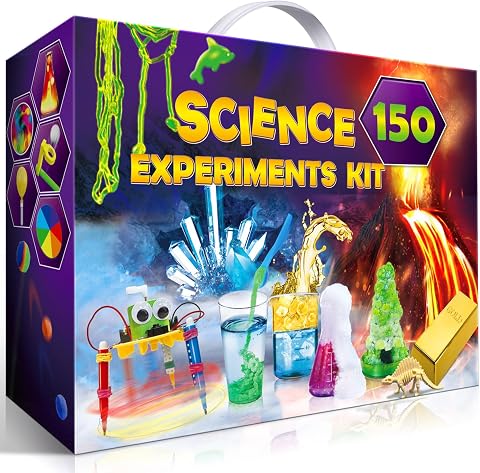
UNGLINGA 150-Experiment Science Kit for Kids
- ✔ Brand: UNGLINGA
- ✔ Experiment count: 150
- ✔ Recommended age: 8 years and up
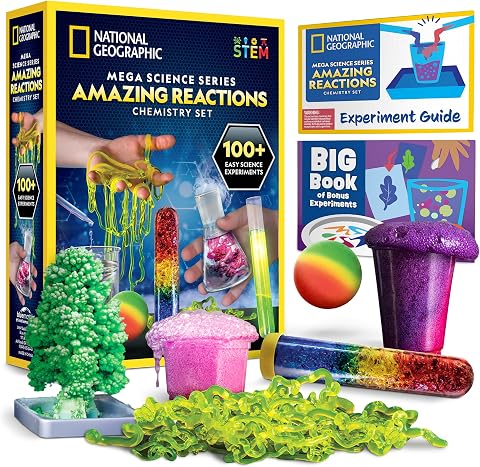
National Geographic Amazing Chemistry Set with 100+ Experiments for Ages 8+
- ✔ Brand: Blue Marble
- ✔ Sub-brand: National Geographic
- ✔ Experiment count: 100+ (15 with included materials; 85+ household-item activities)

National Geographic Science Magic Kit for Kids, 100+ Experiments
- ✔ Brand: Blue Marble
- ✔ Sub-brand: National Geographic
- ✔ Experiment count: 100+
The difference matters most when a child wants to start right away or needs more guidance. Home experiments can be engaging, but the adult may need to find a suitable activity, check its instructions, and prepare materials. Boxed kits reduce that planning, though they cost more and may include components used only for a limited set of projects. The comparisons below focus on cost, preparation, variety, guidance, engagement, age fit, and repeat use. Because products vary, check the specific kit’s age range, contents, and safety instructions before buying.
At a Glance
| Criteria | DIY Home Science Experiments | Premium Boxed Science Experiment Kits | Winner |
|---|---|---|---|
| Cost | Usually low cost; uses household supplies, though specialty ingredients may add expense. | Higher upfront cost for a curated package of materials and activities. | A |
| Preparation | Requires an adult to select activities and gather materials. | Usually lower initial setup when the kit includes what each activity needs. | B |
| Activity variety | Can cover many everyday science topics, depending on planning and available supplies. | Focused on the kit’s theme and included components; extra projects may require another purchase. | Depends |
| Instructions and learning structure | Quality and clarity depend on the chosen activity source and adult support. | Typically provides sequenced instructions and a defined activity path; quality varies by kit. | B |
| Hands-on engagement | Can make ordinary materials feel relevant and encourage experimentation. | Purpose-built tools can make demonstrations feel distinctive and easier to repeat. | Depends |
| Age and supervision fit | Flexible, but suitability and supervision depend on the activity and child. | Age guidance can help with selection, but adult supervision may still be needed. | B |
| Repeat use | High when supplies are replenished and activities are varied; some experiments use consumables. | Reusable equipment supports repeat sessions, while consumables may run out. | Depends |
UNGLINGA 150-Experiment Science Kit for Kids
For families who want one kit to open several doors into science, UNGLINGA is the most varied option here. Its 150 experiments cover chemistry, physics, Earth science, and surface tension, a broader stated scope than either National Geographic set. That matters when a child is still figuring out what holds their interest: they can move between types of questions instead of staying with chemistry or demonstrations.The kit includes kid-friendly tools and materials, goggles, and an illustrated step-by-step manual. Those features can make it easier to get started and follow a project in sequence. Compared with the Amazing Chemistry Set, it is less tightly centered on test tubes, beakers, and pipettes; compared with the Science Magic Kit, it puts the emphasis on subject breadth rather than performance. The main catch is that some projects need household items, and the description does not specify how many of the 150 are fully supplied. We would check the manual and gather extras before setting aside time for an experiment.Its 8-and-up guidance is the same as the other two picks. We see it as the most flexible starting point for a curious child, but families seeking a chemistry-only kit with a clearly stated number of supplied experiments may prefer the Amazing Chemistry Set.
Pros:
- Covers chemistry, physics, Earth science, and surface tension.
- Includes an illustrated, step-by-step manual.
- Supplies kid-friendly lab tools and materials, including goggles.
- Offers the highest stated activity count in this comparison.
Cons:
- Some activities require household items that are not included.
- The supplied details do not state how many experiments have all materials in the kit.
- Recommended for ages 8 and up, so younger children may need a different set.
Best for: Children ages 8 and up who want to explore multiple science topics in one kit.
Not ideal for: Buyers who want every activity to use only materials supplied in the box, or who want a focused chemistry set with a specified count of included-material experiments.
Bottom line: We recommend UNGLINGA for families who value broad science exploration and can plan around occasional household supplies.
“We recommend UNGLINGA for families who value broad science exploration and can plan around occasional household supplies.”
National Geographic Amazing Chemistry Set with 100+ Experiments for Ages 8+
The Amazing Chemistry Set is the most straightforward choice when a child specifically wants to mix, observe, and investigate reactions. Its test tubes, beakers, and pipettes give the activities a recognizable lab feel, while crystal growing and color-changing reactions provide varied ways to see chemistry in action. That focus makes it easier to choose than UNGLINGA for a chemistry-minded child, though it offers less subject range overall.We would pay attention to the split behind the 100-plus activity count: materials are included for 15 experiments, and the guide provides 85 additional activities using common household items. This is a useful distinction for planning. The supplied experiments are the clearest ready-to-start portion; the bonus activities extend the kit but may require checking cupboards first. UNGLINGA has more stated experiments and wider topics, while the Science Magic Kit brings a performance hook. This set sits between them as the more focused option for children who want chemistry tools and demonstrations.The age recommendation is 8 and up, just like its companions. Its compact listed dimensions may suit a shelf or gift box, but the product details do not describe storage organization. Choose it for chemistry and lab equipment; skip it if your priority is broad science coverage or if you expect every listed activity to come with its own materials.
Pros:
- Includes materials for 15 experiments.
- Adds 85-plus household-item activities in the guide.
- Supplies test tubes, beakers, and pipettes.
- Features activities such as crystal growing and color-changing reactions.
Cons:
- Most of the 100-plus activities rely on common household items.
- Its focus is chemistry rather than the broader range offered by UNGLINGA.
- Recommended for ages 8 and up.
Best for: Children ages 8 and up who are especially interested in reactions, crystal growing, and using lab-style tools.
Not ideal for: Families looking for multiple science disciplines or a kit with materials supplied for most of its advertised activities.
Bottom line: We would choose this set for a chemistry-focused child who will enjoy lab tools and does not mind sourcing supplies for bonus activities.
“We would choose this set for a chemistry-focused child who will enjoy lab tools and does not mind sourcing supplies for bonus activities.”
National Geographic Science Magic Kit for Kids, 100+ Experiments
The Science Magic Kit gives science an audience. Its mix of magic tricks, chemistry activities, and STEM projects makes it the most presentation-oriented pick, which may help keep a child engaged if they enjoy showing a result to family or friends. Materials are included for 20 magic experiments, with a bonus booklet listing more than 85 additional experiments.That format distinguishes it from the Amazing Chemistry Set: both connect to chemistry, but the Amazing set foregrounds lab tools and reactions, while this one uses tricks as its hook. UNGLINGA is the stronger fit for children who want to explore different science disciplines. Here, the appeal is a more playful, performative route into experiments. The product details do not say how many of the bonus activities have materials supplied, so we would not assume the entire 100-plus count is ready to perform from the box alone.As with the other kits, the recommended age begins at 8. That makes it a better match for children able to follow activity instructions than for younger siblings looking for simple, independent play. Choose it when the magic angle is likely to draw a child in; for a child who wants a conventional lab experience, the chemistry set offers clearer tool detail.
Pros:
- Combines magic tricks, chemistry activities, and STEM projects.
- Includes materials for 20 magic experiments.
- Adds a booklet with more than 85 additional experiments.
- Offers a presentation-oriented alternative to the chemistry set’s lab-tool focus.
Cons:
- The supplied details do not clarify material coverage for the 85-plus bonus activities.
- The magic theme may be less appealing to children seeking a broad science survey.
- Recommended for ages 8 and up.
Best for: Children ages 8 and up who like magic tricks, demonstrations, and sharing science activities with an audience.
Not ideal for: Children who prefer broad subject exploration or buyers who want a clearly specified number of fully supplied conventional experiments.
Bottom line: We would pick this kit for a child motivated by tricks and demonstrations, while checking the booklet for extra-supply needs.
“We would pick this kit for a child motivated by tricks and demonstrations, while checking the booklet for extra-supply needs.”
As an Amazon Associate we earn from qualifying purchases.
Key Differences
The clearest difference is who does the planning. With DIY experiments, an adult often chooses the activity and checks that the supplies, steps, and safety precautions suit the child. That flexibility can be rewarding for families who like learning together, but it takes time. A boxed kit does more of that organizing in advance. Its instructions and included tools can help a child follow a project with less improvisation, although an adult may still need to supervise or explain what is happening.
Cost and variety pull in opposite directions. Household activities can be inexpensive and adaptable, particularly when supplies are already on hand. A kit asks for more money upfront but bundles materials and a coherent theme. It may be the better value for a child who will complete several included experiments; it is less compelling if interest fades after one session or if many components are single-use. Families should compare the actual contents and number of usable activities rather than assume every kit provides the same amount of play.
Neither format guarantees a better learning experience. A simple kitchen experiment can prompt careful observation and questions, while a well-designed kit can make unfamiliar ideas tangible. The better choice depends on how much structure the child wants, how much preparation the adult can take on, and whether the family values open-ended variety or a ready-made sequence.
Detailed Comparison
Cost (DIY Home Science Experiments wins — moderate)
DIY Home Science Experiments wins on initial cost, a moderate gap for families with common supplies already available. A boxed kit charges for curated components and packaging, but that spending can make sense when several activities use the contents. Check whether consumables need replacing before treating the kit’s purchase price as the full cost.
Premium Boxed Science Experiment Kits usually win, by a moderate practical margin, because materials and steps are often grouped together. DIY activities shift the work to the adult, who must find a suitable project and assemble supplies. A kit still needs setup and supervision, so it reduces preparation rather than eliminating it.
Activity variety (moderate difference)
This depends on the household. DIY experiments can span more topics when an adult is willing to search and adapt activities, a moderate advantage in flexibility. A boxed kit offers a more reliable set of projects around its theme, but its scope is limited by the included materials. Choose based on whether you value open-ended options or a ready-made collection.
Premium kits usually win by a moderate margin because they are designed to guide users through specific activities. That can help children follow steps and notice results without the adult creating a lesson from scratch. DIY instructions can be just as useful when selected carefully, but their clarity and fit vary from one source to another.
Hands-on engagement (minor difference)
Neither format has a consistent edge. A kit’s dedicated tools may make an activity feel special; a household experiment can be compelling when a child sees familiar materials behave in an unexpected way. The difference is minor compared with the child’s interests and the adult’s support. Look for activities that invite predictions, observation, and a discussion of results.
Boxed kits have a moderate advantage when their age guidance matches the child’s abilities, since the suggested range offers a useful starting point. It is not a guarantee that a child can work independently. DIY experiments can suit a wide range of ages, but the adult must judge the materials, steps, and supervision needs for each activity.
Repeat use (moderate difference)
Neither format wins in every case. Household activities can be repeated or varied if supplies are easy to replace, while kit equipment may support multiple sessions but consumables can run out. This is a moderate difference for a child who returns to projects often. Read the package contents and consider which parts are reusable before deciding.
DIY Home Science Experiments: Pros and Cons
Pros:
- Low-cost starting point when common supplies are available.
- Flexible across topics and easy to adapt to a child’s questions.
- Can connect science ideas to familiar materials and everyday life.
Cons:
- An adult must find activities, gather materials, and check instructions.
- Quality, difficulty, and safety guidance vary by activity source.
- Some projects need specialty supplies or more supervision than expected.
Pros:
- Curated materials and instructions can reduce planning time.
- A defined theme gives children a clear path through related activities.
- Age guidance and included tools can make selection and setup more straightforward.
Cons:
- Higher upfront cost than using household materials.
- The activity range is limited to the kit’s design and contents.
- Consumable materials may run out, and some tools may see little use afterward.
Who Should Choose What
Choose DIY Home Science Experiments if:
- You want an inexpensive way to try science activities before committing to a kit.
- You enjoy finding projects and can gather materials or adapt activities for your child.
- Your child’s interests change often, making flexibility more useful than a fixed theme.
Choose Premium Boxed Science Experiment Kits if:
- You want several related activities packaged with instructions and materials.
- Limited preparation time makes a ready-made activity path worth paying for.
- Your child prefers guided steps or a kit’s theme matches a strong current interest.
Skip both if: Skip both if your child is not interested in hands-on projects right now, or if the available activities do not match their age, interests, or supervision needs. Start with a library activity, a museum session, or a single experiment before buying a larger set.
Value for Money
DIY Home Science Experiments are usually the better value when you have common supplies, enjoy preparing activities, and want freedom to change topics. Their low starting cost does depend on the projects you choose; specialty materials can narrow the savings. A premium kit is worth paying more for when its included activities will be used and the saved planning time matters to your household. Compare the number of activities, reusable tools, and replacement materials in the specific box. A kit that a child completes and revisits may justify its price; one bought for a single experiment may not.
Final Verdict
For families comfortable planning activities, DIY Home Science Experiments are the stronger starting choice: they cost less, adapt to changing interests, and make everyday materials useful. Choose Premium Boxed Science Experiment Kits when convenience, structured instructions, and purpose-built tools matter enough to justify a higher upfront cost. The deciding factor is how much preparation you want to take on. If you have little time and a child already drawn to the kit’s theme, buy the kit after checking its contents and age guidance. If you are still testing their interest, begin with a household activity and spend more only when a curated set solves a real need.
Frequently Asked Questions
Are boxed science kits worth the higher price?
They can be if your child will use several activities and you value having materials and instructions gathered in one package. Check the number of projects, reusable equipment, and consumables before deciding. If you need only one activity or already have the supplies, a household experiment may be better value.
Which is better for a child doing experiments without much adult help?
A well-matched boxed kit may offer clearer steps and age guidance, which can make independent work easier. That does not mean every kit is suitable for unsupervised use. Follow its directions and supervision advice, and judge each activity against the child’s abilities.
Do DIY experiments offer enough variety?
They can, especially when an adult is willing to find and prepare activities across different topics. The tradeoff is that variety takes planning. A themed kit offers less breadth but gives you a prepared set of related projects.
How should I choose a kit for my child’s age?
Use the manufacturer’s age range as a starting point, then check the actual steps, materials, and supervision guidance. Children of the same age can have different interests and abilities, so the listed range alone cannot determine fit.