
The Bringing Them Home report highlights the devastating impact of government policies that forcibly removed Indigenous children, causing lasting cultural disconnection and trauma. It emphasizes the need for policy reforms, cultural restoration, and the inclusion of Indigenous voices to foster reconciliation. The report urges society to confront these painful truths to promote healing and justice. Continue exploring to understand how these findings can shape a more respectful future for Indigenous communities.
Key Takeaways
- The report exposes the forced removal of Indigenous children, highlighting long-term cultural disconnection and emotional trauma.
- It reveals government policies like the Stolen Generations aimed at cultural assimilation and erasure.
- Recommendations include policy reforms, cultural reconnection programs, and support services for survivors.
- It emphasizes the importance of Indigenous perspectives and sovereignty in shaping future policies.
- The report advocates for societal acknowledgment of past injustices to promote healing, reconciliation, and respect for Indigenous rights.
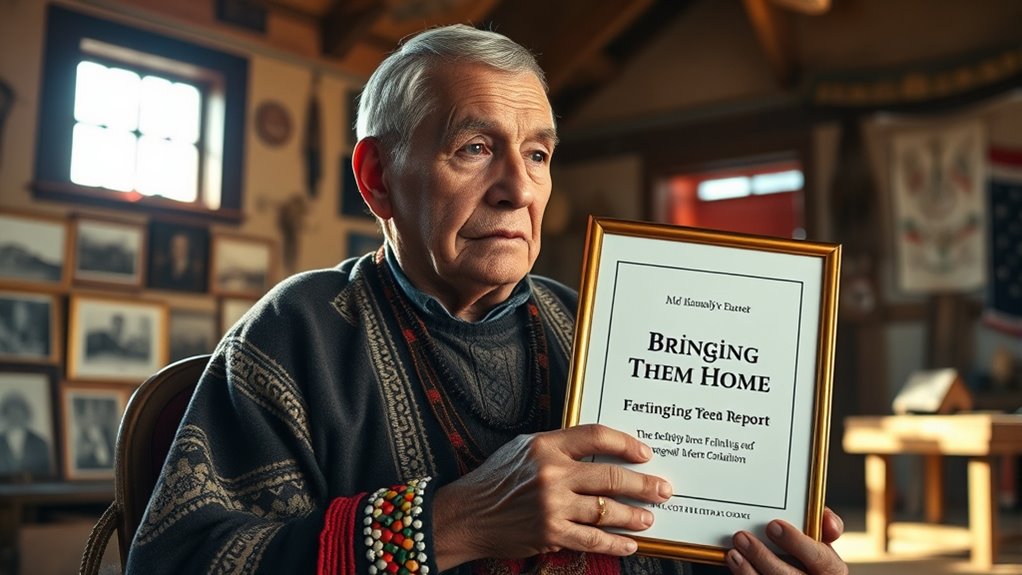
The Bringing Them Home Report shines a pivotal light on the forced removal of Indigenous children from their families and communities, exposing the profound impacts of government policies like the Stolen Generations. This report dives deep into the dark chapters of Indigenous history, revealing how these policies aimed to assimilate Indigenous peoples by tearing children from their homes, cultures, and identities. As you explore the findings, you’ll see that the report doesn’t just recount past injustices; it calls for meaningful policy reforms to address the ongoing trauma and to promote reconciliation. The report emphasizes that understanding the roots of these policies is essential to grasping their devastating effects—policies driven by a misguided belief that Indigenous cultures needed to be erased or replaced.
The report exposes the lasting harm of policies like the Stolen Generations aimed at erasing Indigenous identities.
The report highlights that the legacy of these policies continues to shape Indigenous communities today. Many survivors recount experiences of loss, cultural disconnection, and emotional pain that persist across generations. Recognizing this, the report advocates for extensive policy reforms that acknowledge historical wrongs and prioritize healing, cultural restoration, and justice. These reforms include providing support services for survivors and funding cultural programs that help reconnect Indigenous children and their families with their heritage. You’re encouraged to see that these changes are not just about acknowledging the past but actively working to repair the damage inflicted by decades of discriminatory policies. Additionally, the report underscores the importance of self-awareness within government institutions to prevent future injustices.
Furthermore, the report underscores the importance of integrating Indigenous perspectives into policy-making processes. It stresses that genuine reconciliation depends on respecting Indigenous sovereignty and ensuring their voices are central in shaping future policies. This approach aims to prevent the recurrence of similar injustices and foster a society that values Indigenous history and culture. As you consider these recommendations, it becomes clear that policy reforms need to be holistic—addressing legal, social, and cultural dimensions to create lasting change.
The Bringing Them Home Report serves as an essential tool in understanding the true impact of government policies on Indigenous communities. It urges policymakers, communities, and individuals to confront uncomfortable truths and work together toward healing and justice. Your role, whether as an advocate, learner, or ally, is indispensable in supporting these reforms. By acknowledging Indigenous history and promoting policy reforms rooted in respect and understanding, society can take meaningful steps toward reconciliation. The report’s findings remind us that addressing past wrongs is fundamental to building a future where Indigenous peoples are respected, their cultures celebrated, and their rights upheld.
Indigenous cultural restoration books
As an affiliate, we earn on qualifying purchases.
As an affiliate, we earn on qualifying purchases.
Frequently Asked Questions
What Long-Term Impacts Did the Report Identify on Indigenous Communities?
You see that the report highlights long-term impacts like intergenerational trauma, which continues to affect Indigenous communities. It also underscores the significance of cultural revival, as efforts to reconnect with traditions and languages help heal wounds. These impacts shape community well-being, fostering resilience and hope. Addressing intergenerational trauma and supporting cultural revival are vital steps toward reconciliation and strengthening Indigenous identities for future generations.
How Has Government Policy Changed Since the Report’s Publication?
You’ve probably noticed that government policy shifts and legislative changes have been nothing short of revolutionary since the report. These changes aim to acknowledge past wrongs and promote reconciliation. Laws have been introduced to recognize Indigenous rights, improve support services, and foster healing. While progress might seem slow, these policy shifts signal a genuine commitment to addressing the legacy of trauma and ensuring a better future for Indigenous communities.
Were Any Compensation Measures Implemented Following the Report’s Recommendations?
Yes, after the report’s release, the government implemented compensation measures to address past injustices. These measures include financial reparations and support programs for Indigenous communities affected by policies like the Stolen Generations. Policy changes were also made to improve Indigenous rights and reconciliation efforts. You’re encouraged to stay informed about ongoing updates, as these initiatives aim to acknowledge past wrongs and promote healing within affected communities.
What Challenges Were Faced in the Report’s Implementation?
You face significant report challenges during implementation, such as systemic barriers and limited resources. These implementation barriers make it hard to put recommendations into action effectively. You might also encounter resistance from communities or institutions hesitant to change longstanding practices. Addressing these report challenges requires persistent effort, collaboration, and overcoming bureaucratic hurdles to guarantee meaningful progress and respect for the report’s objectives.
How Do Indigenous Communities View the Report’s Findings Today?
You realize Indigenous communities see the report’s findings as a monumental step toward truth reconciliation and community healing, but also acknowledge it’s just the beginning. They often feel the truth has been exposed yet not fully embraced or addressed. Many believe the report’s revelations are a powerful catalyst, yet they still yearn for genuine acknowledgment, ongoing justice, and meaningful actions to mend wounds and foster true reconciliation across communities.
support services for Indigenous trauma survivors
As an affiliate, we earn on qualifying purchases.
As an affiliate, we earn on qualifying purchases.
Conclusion
You see, the Bringing Them Home report highlights the importance of Indigenous families reconnecting with their loved ones. Imagine a child like Sarah, who was taken from her community and later found her way back home through these efforts. This report shows that with proper support, healing, and reconciliation, we can restore these essential connections. Your awareness and action can help guarantee more children like Sarah reunite with their families and communities.

Indigenous Data Sovereignty and Policy (Routledge Studies in Indigenous Peoples and Policy)
As an affiliate, we earn on qualifying purchases.
As an affiliate, we earn on qualifying purchases.
cultural reconnection programs for Indigenous communities
As an affiliate, we earn on qualifying purchases.
As an affiliate, we earn on qualifying purchases.