

For effective community meetings, you need reliable simultaneous interpretation to include everyone, regardless of language. Choose user-friendly, high-quality equipment with clear audio and multiple channels for different languages. Prepare your speakers with guidelines on speaking clearly and avoiding jargon. Set up your space with good acoustics and the right technology, then troubleshoot tech issues quickly. Keep learning how to create a truly inclusive environment—this guide helps you master it step by step.

Prime made for students and young adults
- Fast, free delivery for dorm and study essentials
- Prime Video and Amazon Music included
- Member-only deals
Key Takeaways
- Select reliable wireless interpretation equipment with clear audio, multiple channels, and user-friendly controls for seamless multilingual communication.
- Prepare the physical space with sound-absorbing materials, proper equipment setup, and participant comfort considerations to enhance acoustics and engagement.
- Train interpreters on cultural sensitivity, standardized terminology, and meeting protocols to ensure accurate, respectful translations.
- Share agendas, key vocabulary, and meeting guidelines with participants to promote clarity and active participation across languages.
- Gather feedback post-meetings to assess interpretation effectiveness, cultural inclusivity, and areas for continuous improvement.
As an affiliate, we earn on qualifying purchases.
Why Community Meetings Need Simultaneous Interpretation
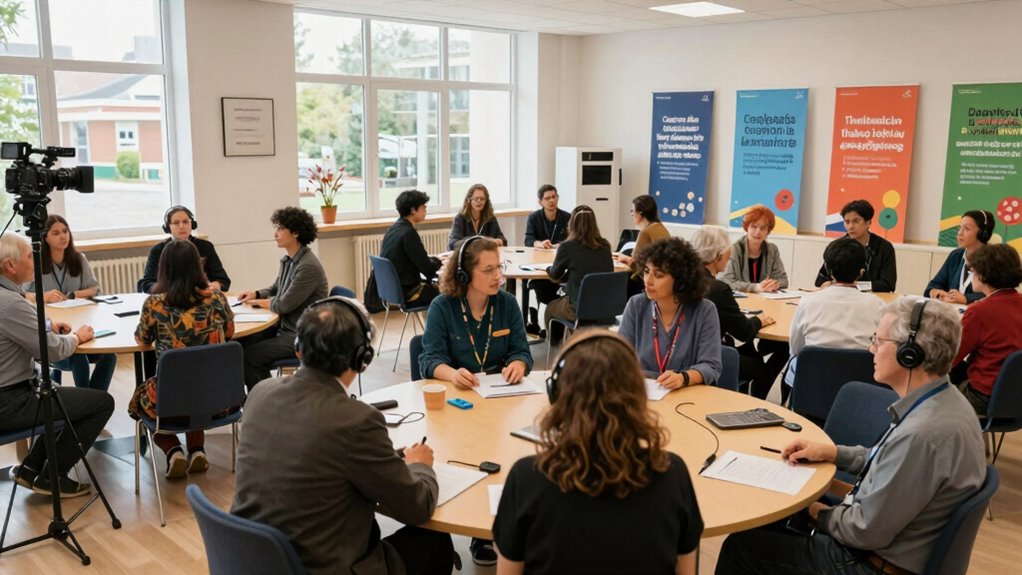
Community meetings serve diverse populations, and language barriers can prevent many residents from fully participating. When residents can’t understand or be understood, essential voices are left out of discussions that affect their community. That’s where simultaneous interpretation becomes indispensable. It helps bridge language gaps quickly, guaranteeing everyone stays informed and engaged. Additionally, cultural sensitivity plays a fundamental role; interpreters need to understand cultural nuances to convey messages accurately and respectfully. Proper interpreter training ensures that messages are delivered accurately and culturally appropriately. Without proper interpretation, miscommunication may occur, leading to misunderstandings or mistrust. Offering real-time interpretation fosters inclusivity, making residents feel valued and heard. This cultural awareness is crucial for ensuring respectful and effective communication during multilingual community engagements. This not only enhances transparency but also strengthens community bonds. Furthermore, effective audio clarity is essential for ensuring that messages are conveyed accurately and comprehensively during live interpretation. Proper communication techniques are also vital for adapting messages to diverse audiences and ensuring clarity. Ultimately, simultaneous interpretation ensures that language differences don’t hinder civic participation or the collective decision-making process.
How to Choose the Right Interpretation Equipment
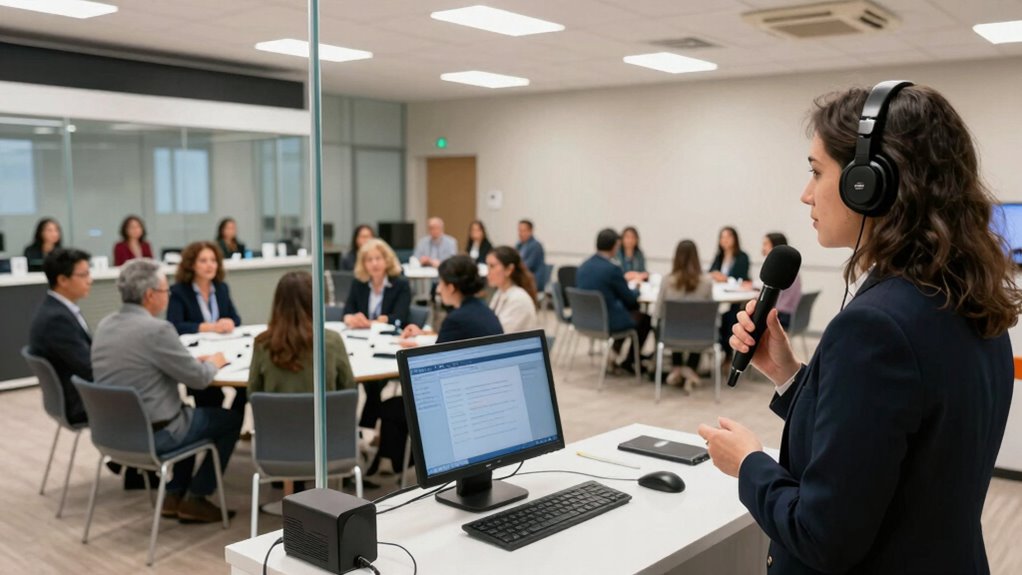
Selecting the right interpretation equipment is crucial to guarantee smooth and accurate communication during community meetings. You should consider wireless options to reduce clutter and allow speakers and interpreters mobility. Wireless headsets are convenient, but ensure they offer good headset comfort for prolonged use, so interpreters stay focused without discomfort. Look for equipment that provides clear audio quality and reliable signal strength to prevent disruptions. Compatibility with your existing technology and ease of setup are also key factors. If your meeting involves multiple languages, choose equipment supporting multiple channels. Additionally, investing in high-quality, user-friendly gear will facilitate seamless interpretation, making your community meeting more inclusive and effective. Properly training interpreters on the equipment can significantly enhance the quality of interpretation and reduce technical issues. Furthermore, incorporating modern wall art trends such as digital frames or interactive murals can create an engaging environment that promotes inclusivity and cultural expression in your community spaces. Ensuring the use of reliable interpretation equipment can also help prevent technical failures that might hinder communication. Considering technological compatibility can simplify integration with existing systems and improve overall efficiency. Additionally, staying updated on latest interpretation technology can offer new features that further enhance communication quality and reliability.
Preparing Speakers and Participants for Smooth Interpretation
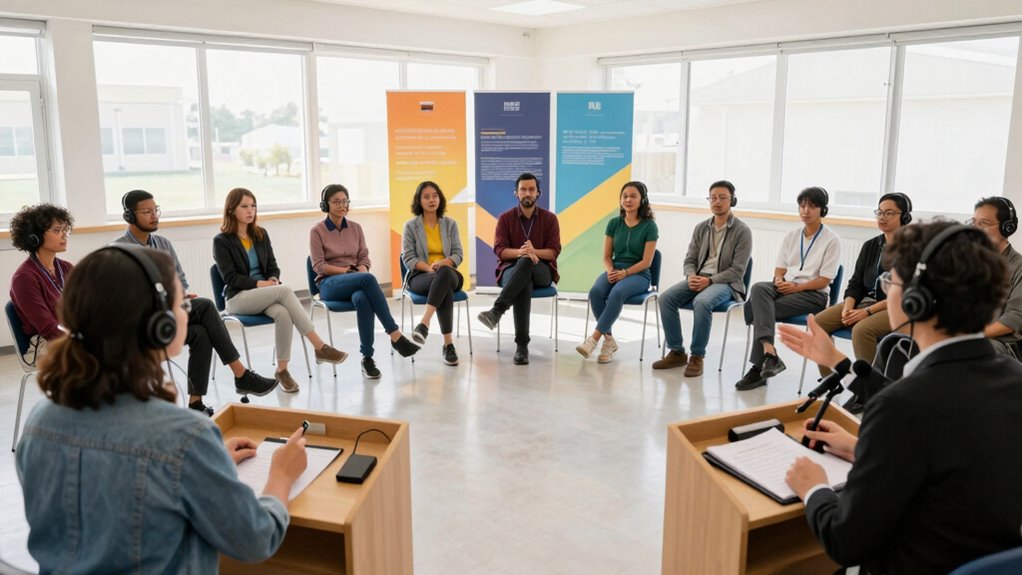
To guarantee smooth interpretation during your meeting, it’s vital to prepare speakers and participants in advance. Clear speaker preparation boosts translation accuracy and assures messages are conveyed accurately. Help speakers understand the importance of speaking clearly, at a moderate pace, and avoiding jargon or idioms that may confuse interpreters. Encourage participants to familiarize themselves with key terms and meeting agenda beforehand to facilitate better understanding. Consider these tips:
Effective preparation ensures accurate interpretation and clear communication for all participants.
- Provide speakers with guidelines on effective communication for interpretation
- Share key vocabulary or concepts in advance
- Remind speakers to pause between ideas for easier translation
- Encourage participants to ask questions or clarify points during breaks
- Emphasize the benefits of using standardized language to enhance interpretation quality
- Educate everyone about media literacy to recognize potential misunderstandings and improve overall communication during multilingual meetings
- Promote awareness of cross-cultural communication to prevent misinterpretations and foster respectful dialogue
- Additionally, offering training sessions on interpretation techniques can further improve overall meeting effectiveness.
Setting Up Your Interpretation Space for Success
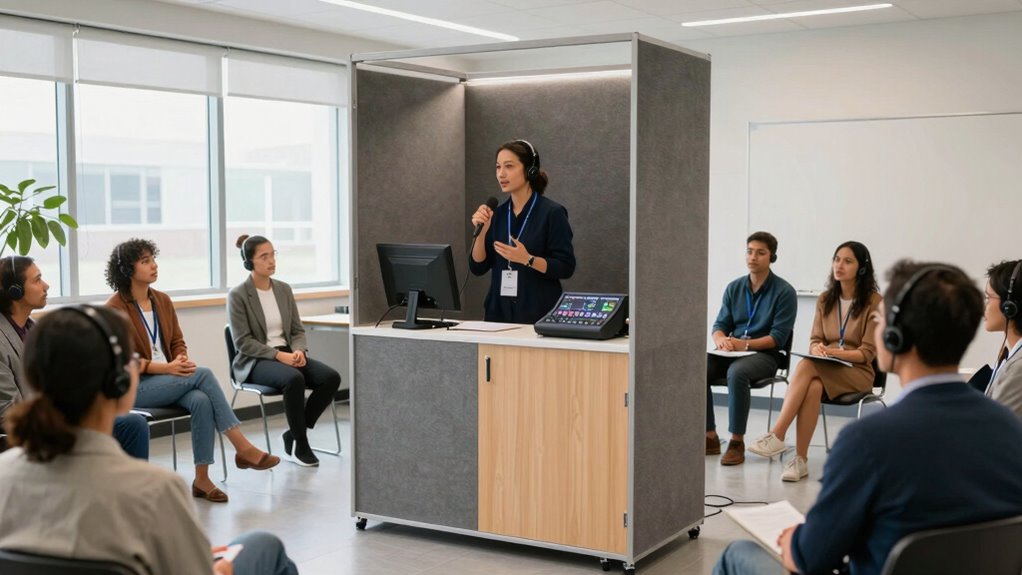
To guarantee clear interpretation, you need to optimize the room acoustics so sound isn’t distorted or echoing. Setting up your equipment properly, including microphones and headsets, is vital for smooth communication. Paying attention to these essentials helps create an environment where interpreters can perform at their best. Ensuring a safe environment includes considering home safety tips, especially when setting up for community meetings. Additionally, using anti-fatigue mats can help interpreters stay comfortable during long sessions, enhancing their focus and performance. Understanding Rhythm Failure can also inspire the selection of appropriate background music to create a calming atmosphere for interpreters and attendees. Being aware of ethical considerations in interpretation can further support maintaining professionalism and impartiality during community discussions. Incorporating proper ergonomic setup can also reduce fatigue and prevent discomfort during extended interpretation sessions.
Room Acoustics Optimization
Effective room acoustics are essential for successful simultaneous interpretation during community meetings. Good acoustics reduce background noise and improve sound clarity, helping interpreters hear and convey messages accurately. To optimize your space, consider these steps:
- Use sound-absorbing materials like carpets, curtains, or acoustic panels to minimize echo.
- Choose a room with natural sound insulation, away from busy areas.
- Arrange seating to avoid sound reflections and ensure clear sightlines.
- Limit background noise sources, such as HVAC systems or external sounds, during meetings.
- Be mindful of indoor air quality factors, since poor air quality can affect both speaker comfort and overall concentration.
- Additionally, maintaining proper room ventilation can help sustain a comfortable environment for all participants.
Equipment Setup Essentials
Setting up your interpretation space properly guarantees smooth communication during community meetings. Start by positioning high-quality interpretation microphones close to speakers and interpreters to ensure clear audio capture. Use audio mixers to balance sound levels between microphones, preventing feedback or volume issues. Test all equipment beforehand to confirm proper functioning. Ensure interpretation microphones are connected securely and labeled clearly for easy identification. Place audio mixers in accessible locations so technicians can quickly make adjustments if needed. Keep cables organized to avoid tripping hazards. Regularly check the audio levels during the event to maintain clarity. Properly configuring interpretation microphones and audio mixers creates a seamless experience, allowing interpreters to deliver accurate translations without technical disruptions. Additionally, understanding the benefits of high-pressure equipment can help optimize sound quality and reduce technical issues during the event. Recognizing the importance of equipment setup ensures a more efficient and trouble-free interpretation process. Paying attention to sound quality standards is essential for achieving optimal communication in community settings.
Troubleshooting Common Interpretation Tech Issues
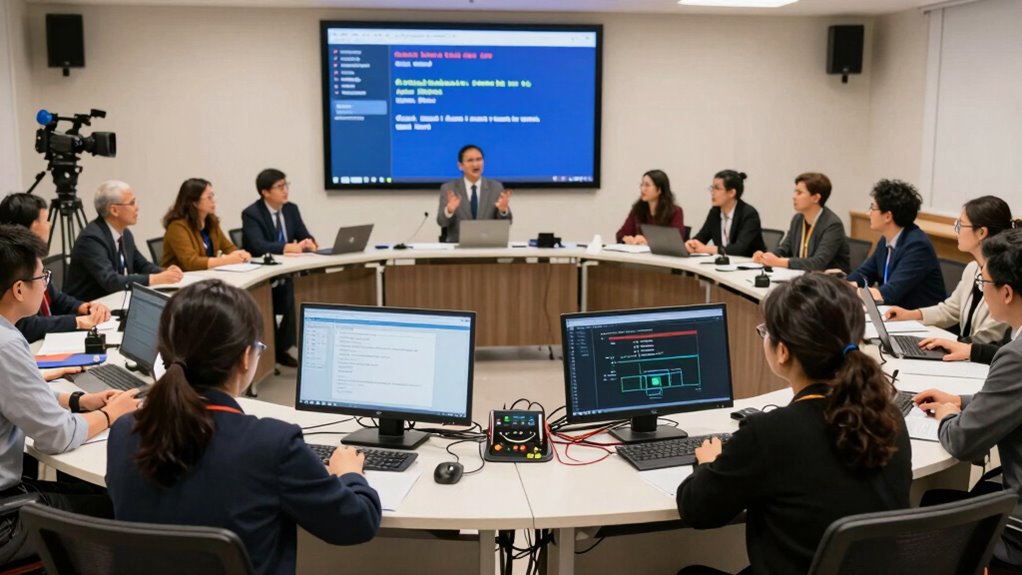
When technical issues arise during interpretation sessions, quick and confident troubleshooting can keep the meeting on track. If your interpretation software isn’t working properly, stay calm and check common problems. Start by verifying all connections are secure, reboot the device if needed, and confirm software settings are correct. Make sure your audio channels are open and unmuted. If issues persist, consider these steps:
- Restart the interpretation software
- Test audio input/output devices
- Check internet connection stability
- Consult the user manual or support team
Being familiar with basic tech troubleshooting guarantees you can quickly identify problems and restore smooth interpretation. Your ability to troubleshoot confidently minimizes delays and keeps everyone focused on the community meeting’s goals.
Measuring Success and Ensuring Everyone Is Included

To guarantee your community meetings are successful, you need clear communication metrics that show how well everyone understands the interpretation. You should also adopt inclusive participation strategies that encourage diverse voices. Finally, continuous improvement plans help you refine your approach and make sure no one is left out.
Clear Communication Metrics
Effective communication in community meetings hinges on establishing clear metrics to measure success and guarantee everyone feels included. To do this, you should track specific indicators such as participant engagement, clarity of messages, and feedback from diverse language backgrounds. When addressing language barriers, assess whether interpreters effectively convey messages across different languages. Cultural awareness also plays a crucial role—monitor if cultural nuances are respected and understood. Use these metrics to identify areas for improvement and ensure all voices are heard. Consider these key points:
- Level of participant participation from diverse groups
- Clarity of translated messages during interpretations
- Feedback on cultural sensitivity and understanding
- Effectiveness of interpreter communication in overcoming language barriers
Regularly reviewing these metrics helps you maintain inclusive, clear communication in your community meetings.
Inclusive Participation Strategies
Measuring the success of inclusive participation strategies is essential to ensuring everyone feels valued and heard during community meetings. To do this, you should assess how well your interpretation and communication efforts address language barriers, making sure non-native speakers can fully engage. Pay attention to cultural sensitivity by observing whether participants feel comfortable sharing their perspectives and whether their cultural backgrounds are respected. Use feedback forms or informal check-ins to gather insights on inclusivity, and track participation levels across different language groups. If some groups are underrepresented or silent, adjust your approach accordingly. Effective measurement helps you identify gaps, refine strategies, and create an environment where everyone’s voice can be heard, fostering genuine community engagement.
Continuous Improvement Plans
Continuous improvement plans are essential for maintaining and enhancing inclusive participation in community meetings. To measure success, regularly gather feedback from participants about language barriers and cultural sensitivity. This helps identify areas where interpretation may fall short or where inclusivity can improve. Focus on creating a welcoming environment by adjusting strategies based on insights received.
You can do this by:
- Conducting post-meeting surveys to assess clarity and comfort
- Monitoring participation levels across different language groups
- Training interpreters on cultural sensitivity and local customs
- Adjusting interpretation methods to better address language barriers
Frequently Asked Questions
How Much Does Professional Community Interpretation Typically Cost?
The cost estimate for professional community interpretation usually ranges from $50 to $150 per hour, depending on various pricing factors. Factors like the language pair, meeting length, location, and whether you need on-site or remote services influence the price. You might also pay a flat fee for a full event. To get an accurate quote, consider these factors and contact interpretation providers directly.
Can Interpretation Be Provided for Virtual or Hybrid Community Meetings?
Yes, you can provide interpretation for virtual or hybrid community meetings. While virtual platform challenges like audio quality and connectivity issues may arise, using reliable technology and clear audio equipment helps guarantee smooth communication. Interpretation services improve accessibility by reaching wider audiences, including those with hearing impairments. Incorporating features like live captions and multiple language channels further enhances inclusivity, making your meetings more effective and engaging for all participants.
What Languages Are Most Commonly Supported in Community Interpretation?
You’ll find that Spanish, Mandarin, and Arabic are most commonly supported in community interpretation, making language access feel like a breeze. These languages cover a huge portion of diverse communities, ensuring broader inclusion. Prioritizing these supports enhances cultural competence, helping everyone feel heard and understood. By offering interpretation in these key languages, you bridge gaps and create truly accessible, welcoming spaces for all community members.
How Long Does It Take to Train Interpreters for Community Events?
Training duration for community interpreters varies, but it typically takes several months to a year, depending on their existing qualifications. You should focus on meeting interpreter qualifications like language fluency, cultural competency, and interpretation skills. Intensive courses usually last a few weeks to months, with ongoing practice and certification. This guarantees they’re well-prepared to handle real-time interpretation confidently at community events.
Are There Any Legal or Ethical Considerations in Community Interpretation?
Yes, there are legal and ethical considerations you must keep in mind. You need to handle confidentiality concerns carefully, ensuring that sensitive information remains private. Additionally, cultural sensitivity is vital; you should respect participants’ backgrounds and avoid misinterpretations that could cause misunderstandings or offend. By maintaining professionalism and awareness of these issues, you help create a trustworthy environment where everyone feels respected and understood.
Conclusion
Don’t let language barriers hold your community back. With the right equipment and preparation, simultaneous interpretation guarantees everyone can participate fully. Some might worry it’s too complicated or costly, but the truth is, the impact on inclusivity is worth it. By following this playbook, you’ll create a welcoming space where diverse voices are heard and valued. Start today—making your meetings accessible benefits everyone, and the effort is well worth the payoff.
Halloween Picks
halloween
As an affiliate, we earn on qualifying purchases.