TL;DR
Thanksgiving science kits are themed collections of hands-on activities about ideas such as density, color mixing, capillary action, and chemical reactions. Before choosing one, check the age guidance, required household supplies, adult supervision, experiment time, cleanup, and whether food materials are clearly marked as not for eating.
Check the age guidance, supervision notes, materials list, and food safety directions before starting.
Choose an activity with a clear question, such as whether cranberries float or how colored water moves through celery.
Budget for setup, waiting time, and cleanup; some activities need a later check to show a change.
Treat every experiment ingredient as inedible, and check allergies before using food materials.
A boxed kit, printable guide, or household activity can all work if the instructions explain what to observe.

Prime made for students and young adults
- Fast, free delivery for dorm and study essentials
- Prime Video and Amazon Music included
- Member-only deals
What a Thanksgiving Science Kit Can Actually Teach
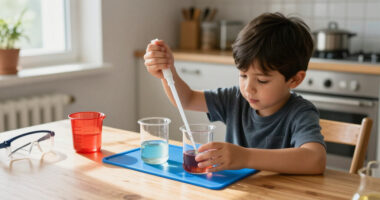
A Thanksgiving science kit is a set of seasonal activities that uses holiday-linked materials to teach a clear idea, such as density, capillary action, color mixing, or a chemical reaction. It may be a boxed set, a bundle of activities, or a printable guide; the holiday theme works best when each activity still asks a question you can observe and discuss.Try the cranberry question: Will a cranberry sink or float in a bowl of water? Your child can make a prediction, drop one in, and record what happens. That small moment introduces observation and testing: the child makes a guess, checks it against what the cranberry does, and can repeat the test with another fruit or liquid if the instructions allow. The prediction matters because it gives children something to compare with the result. If the cranberry behaves differently than expected, that is useful information, not a failed experiment; it can lead to a new question about whether size, ripeness, or the liquid changes what happens.
Other common activities use celery or a white flower in colored water to show capillary action, the movement of water through narrow spaces in a plant. A child who checks the celery later may spot color traveling into its stalk or leaves. The wait is part of the lesson: some changes take time, so children can compare what they see at the start with what appears later. A baking soda and vinegar activity produces bubbles that can prompt questions about chemical reactions. Specific results depend on the materials and setup, so instructions should tell you what to look for. Asking children to describe what changed helps them distinguish an observation, such as bubbles forming, from an explanation of why it happened.
The seasonal wrapper can make science feel at home beside the pumpkin pie, but decoration alone is not a learning goal. Look for an activity that names the idea in plain language and gives your child something to compare, measure, or describe. If a kit promises an experiment involving cranberries, for instance, its instructions should say what to test and how to interpret what you see—not just tell you to arrange berries into a turkey shape. Clear questions make the activity easier to repeat and help children see that the same way of thinking applies beyond the holiday.
Popular right now

Dyson V15 Detect Cordless Vacuum

Dyson V8 Cyclone Cordless Vacuum

Ninja Foodi DZ201 8-Quart DualZone 6-in-1 Air Fryer
As an affiliate, we earn on qualifying purchases.
Check These Details Before You Buy or Print
A good Thanksgiving science kit tells you who the activity is for, what you need, how long it takes, and where an adult should step in. Read the materials list before buying or printing: some kits supply the experiment components, while others expect you to provide items such as vinegar, baking soda, food coloring, water, or measuring tools. This distinction affects more than the price. A kit with everything packed can save preparation time, while a guide using household supplies may be easier to adapt or repeat, but only if you already have what it calls for.Imagine planning a quick activity before guests arrive, only to find that the instructions call for a supply you don’t have. A two-minute materials check can prevent that scramble. Look for clear directions about setup, repeat attempts, indoor use, and cleanup, too. Knowing the likely mess and waiting time helps you choose an activity that fits the moment: a fast observation before dinner may be more practical than one that needs a protected spot for several hours. A project with household materials may be inexpensive to repeat, though it still needs understandable instructions and a meaningful question.
- Match the age guidance to your child’s ability to follow directions. Treat the age label as a guide, not a substitute for supervision.
- Check what is included and list any household supplies you’ll need to provide.
- Read the safety notes for hot water, sharp tools, small parts, food allergies, or food preparation.
- Estimate the full time: include setup, waiting for an observation, and cleanup.
- Look for the learning question. Your child should have something to predict, compare, or explain.
For example, a celery activity may take only a few minutes to set up but require time before a color change becomes easy to see. That can work well if you start it early and return to it later. A kit’s label won’t tell you whether that timing suits your afternoon; the directions can. If there is no convenient time to check back, a shorter activity may offer a better experience, even if it seems less elaborate.
Match the Experiment to Your Child’s Age and Supervision Needs
Thanksgiving science activities suit different ages when an adult adjusts the materials, the instructions, and the job each child does. A young child can make a prediction or choose a color, while an older child can measure, write observations, and compare results. Adult supervision matters whenever an activity involves hot water, sharp tools, small parts, or food preparation.Consider a family testing celery in colored water. A preschooler might help choose the food coloring and notice whether the stalk changes color; an older sibling might measure equal amounts of water into two cups and compare colored and plain samples. The same activity offers a different level of challenge without requiring two separate kits.
Use the age range as a starting point, then check whether your child can manage each step safely. If an instruction asks children to cut a vegetable, an adult can handle the knife and let the child place the prepared pieces in a container. If a kit includes small parts, keep them away from children who may put objects in their mouths. Give each child a role that fits their skills—pouring, watching, timing, drawing, or asking the next question.
Accessibility can shape the activity, too. If gripping a dropper is difficult, an adult can add the drops while the child predicts the color or describes the change. If a child doesn’t want to touch wet ingredients, set the cups on a tray and let them observe from a comfortable distance. A flexible activity lets children take part in the science without requiring every child to do every step the same way.
Try Three Holiday Activities With a Clear Science Question
You can turn common holiday items into three short experiments by pairing each one with a question and a careful observation. Before you start, gather the supplies listed in your chosen instructions, protect the work surface, and explain that experiment materials are for testing—not eating. Giving children time to say what they think will happen makes the activity more than a demonstration: it lets them compare their idea with the evidence afterward.For a cranberry test, ask, “Does this cranberry float or sink?” Put water in a clear bowl, predict what will happen, then add a cranberry and watch. You can compare several berries, but don’t assume every setup will produce the same result. The activity teaches children to notice what happens and compare it with a prediction. If berries differ, invite them to describe the differences before guessing why; that models how observations can guide a follow-up test.
For a celery color test, place a celery stalk in colored water and check it again later. Ask where the color appears first and whether a second stalk in plain water looks different. The idea is capillary action: water travels through small pathways in the plant. Depending on the setup, the color may take time to show, so this works well as an activity children revisit rather than rush through. Looking at the plain-water stalk gives a comparison, helping children notice which changes may be linked to the colored water.
For a bubbling reaction, follow the kit’s directions to combine baking soda and vinegar in a suitable container. Ask your child to watch for bubbles and describe how the mixture changes. Avoid sealing the reaction in a container, and keep it away from eyes and mouths. These examples are broad activity ideas, not guaranteed recipes; the amounts, timing, and results depend on the instructions and materials you use. Describing the visible change is a solid starting point; any explanation should follow the kit’s guidance and the child’s age.
Give each experiment a simple record: a drawing, a spoken prediction, or a line in a notebook. That small step helps a child remember not only the fun part—the fizz, the floating berry, the streak of color—but also the question that made the observation useful. Comparing the record with what actually happened gives you a natural way to talk about what the experiment showed and what you might test next.
Plan for Time, Mess, Allergies, and Food Safety
A seasonal experiment is easier to enjoy when you know the setup, waiting time, and cleanup before you begin. Some activities create quick observations; others need time before a change becomes visible. Household-material experiments can be easy to repeat, but “simple supplies” does not automatically mean “no mess” or “safe to eat.” Planning around these practical details helps you choose an activity that suits the setting, rather than discovering its demands after children are already gathered around the table.Before guests arrive, set out a washable tray, paper towels, and the supplies named in the directions. A vinegar and baking soda activity may fizz over if the container is too small, so choose a work surface that is easy to wipe and use the quantities in your instructions. A celery activity may be tidier but needs a place to sit while you wait for the plant to take up colored water. The tradeoff is simple: a quick, messy activity gives an immediate result, while a slower one may fit better when children can return to it later.
Check for food allergies when an activity uses cranberries, candy, gelatin, corn, or other ingredients. Tell children clearly that materials used for experiments must not be eaten, even if they normally belong in a recipe. Keeping experimental items separate from meal ingredients reduces the chance of confusion, and washing hands and surfaces afterward helps maintain that boundary. If an ingredient raises an allergy concern, choose a different activity rather than relying on children to avoid contact.
When you compare activities, think about who can help with cleanup as well as who can do the experiment. A child can carry a dry paper towel or describe the results while an adult handles hot water or sharp tools. If time is tight, pick an activity with a short setup and an observation you can check later; if your group enjoys longer projects, a waiting activity can give children something to revisit between dinner and dessert. Matching the activity to the schedule and cleanup help available makes it more likely that the science stays enjoyable for everyone.
Choose a Boxed Kit, a Printable Guide, or Supplies at Home
You can run Thanksgiving-themed science activities with a boxed kit, a printable guide, or household supplies; the best fit depends on how much preparation and structure you want. Boxed kits may gather materials in one place, while guides and home activities can make it easier to adapt to a budget, an allergy, or whatever you already have in the pantry. The useful comparison is not just what each option costs: it is how much planning it shifts to you, and how easily you can adapt the activity to your child or setting.A parent preparing for a classroom group may value a kit with materials packed for each child, since ready portions can simplify distribution. At home, a family may prefer a printable activity that uses vinegar and baking soda they already own, especially if they want to try it again. Neither format guarantees a better experiment: check the learning question, supply list, age guidance, and safety directions before choosing. A packaged set can save gathering time but may still need household supplies; a free guide can cost less but require more preparation and checking.
| Option | What may suit you | What to check |
|---|---|---|
| Boxed kit | Grouped materials and packaged instructions | Which supplies are included, age guidance, and whether you need extra household items |
| Printable guide | Activities you can read before you gather supplies | Whether instructions name amounts, timing, cleanup, and safety steps |
| At-home activity | Using familiar materials you already have | That you have a clear question, suitable supervision, and a safe setup |
Some holiday activity collections are published online as printable guides or classroom resources as well as sold in boxes. Current products, prices, and availability change, so check a retailer or manufacturer directly before buying. You do not need a specialty kit for every experiment, but a thoughtfully written guide can save you time and help children connect what they see to a scientific idea. Choose the format that leaves enough time and attention for the part that matters most: making observations together.
Make the Holiday Theme More Than a Decoration
A Thanksgiving theme adds value when it gives children a familiar object to investigate, not just a seasonal picture to color. Harvest foods, fall leaves, pumpkins, corn, and cranberries can all prompt questions about plants, color, materials, or how things behave in water. The familiar object is a useful starting point because children already have ideas about it; testing those ideas gives the holiday connection a purpose beyond decoration.At a classroom table, a teacher might set out cranberries and ask each group to predict whether one will float. Children can draw a quick guess, place a berry in water, and tell a partner what happened. A holiday centerpiece becomes a shared investigation: each group sees the same question, but children can explain their observations in their own words. Comparing those explanations can reveal that one result is open to different interpretations, giving the teacher a chance to ask what additional evidence would help.
At home, you can connect a celery color activity to the green vegetables on a dinner plate. Ask your child how the colored water could travel from the cup into the stalk, then check the result later. The plant is a small visible map of water moving through narrow pathways. That makes the holiday ingredient part of the lesson instead of a costume wrapped around it. Returning to the celery also makes waiting productive: children can compare what they thought would happen with the change they can now see.
Seasonal wording alone doesn’t tell you whether an activity teaches science. Look for a prompt such as “Which liquid is denser?” or “Where does the color appear?” If the instructions offer only a craft outcome, you can still add a question: ask what changed, what stayed the same, or what your child would test next. A good experiment leaves room for curiosity after the first result appears. That follow-up question is what turns a one-time holiday activity into a way of thinking children can use with other familiar objects.