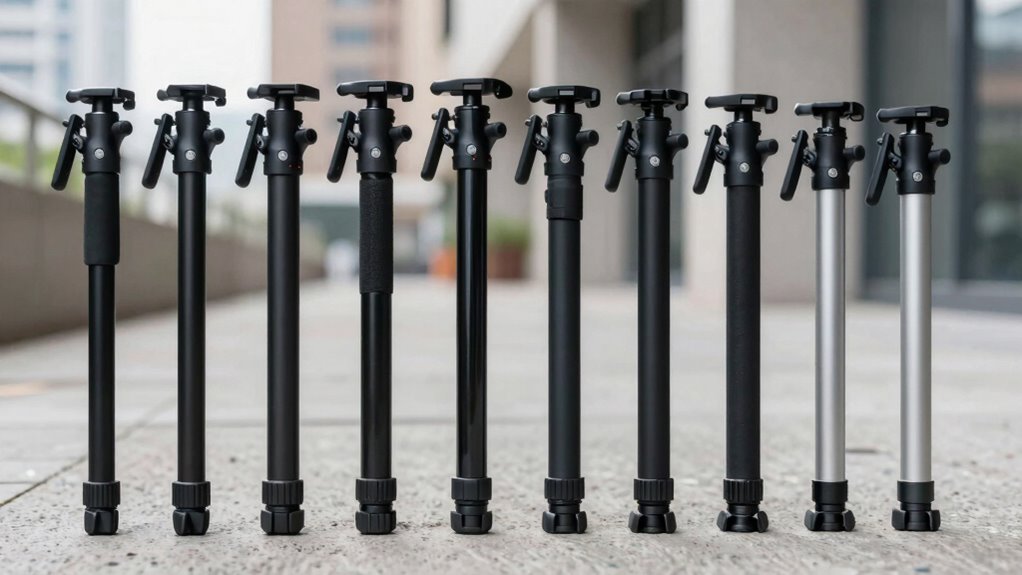
Documentary shooting rarely gives you time to set up, so the right monopod needs to deploy in seconds, support a loaded rig steadily, and move with you without slowing the story down. My top pick is the Manfrotto XPRO+ Video Monopod with Fluid Video Head, because its integrated fluid head and folding tripod base deliver broadcast-grade pans at exactly the speed documentary work demands. If you want similar performance in carbon fiber, the YC Onion Pineta Pro with FH60S Fluid Head is the strongest challenger, while the NEEWER TP71 proves you don’t need to spend heavily to get a stable self-standing platform. The main tradeoff in this category is weight and cost versus stability and head quality: carbon models save your shoulders on long shoot days, but the fluid head you choose matters more for how your footage actually looks. Read on for the full breakdown of all nine.

Prime made for students and young adults
- Fast, free delivery for dorm and study essentials
- Prime Video and Amazon Music included
- Member-only deals
Key Takeaways
- The fluid or hydraulic head matters more than the legs: every top-ranked model (Manfrotto XPRO+, YC Onion Pineta Pro FH60S, COMAN M1Pro) earned its place through smooth, controlled pans, not raw payload specs.
- Self-standing feet or a pedal base separated genuinely fast shooters from monopods that force you to lay the rig down between setups — a real difference on documentary days with constant repositioning.
- Carbon fiber paid off most in the mid-range; the YC Onion and COMAN carbon models matched aluminum stability at noticeably lower carry weight, while the aluminum Manfrotto XPRO and SIRUI trades weight savings for a lower price.
- The COMAN M1mini and SIRUI SVM-165 are specialist picks, not all-rounders: they suit travel documentary and hybrid photo/video work but lack the head quality for interview-style pans.
- Buying a monopod without a head only makes sense if you already own a video head — bundled kits in this lineup consistently cost less than buying legs and head separately.
| Manfrotto XPRO+ Video Monopod with Fluid Video Head |  | Best Overall | Material: Aluminum | Sections: 4 | Base: FLUIDTECH fluid base with retractable feet | VIEW ON AMAZON | See Our Full Breakdown |
| YC Onion Pineta Pro Carbon Fiber Monopod with Pedal Base |  | Best Lightweight Travel Pick | Material: Carbon fiber | Model: Pineta Pro V2 | Tube diameter: 39 mm | VIEW ON AMAZON | See Our Full Breakdown |
| YC Onion Pineta Pro Carbon Fiber Monopod with FH60S Fluid Head and Pedal Base |  | Best Complete Kit | Material: Carbon fiber | Tube diameter: 39 mm | Included head: FH60S Fluid Head | VIEW ON AMAZON | See Our Full Breakdown |
| COMAN M1Pro V5 Carbon Fiber Camera Monopod with Hydraulic Head and Feet |  | Best for Gimbal Workflows | Material: B-2 carbon fiber with UV-resistant coating | Sections: 4 | Maximum height: 1750 mm | VIEW ON AMAZON | See Our Full Breakdown |
| NEEWER 71.6″ Pro Carbon Fiber Camera Monopod with Feet (TP71) |  | Best Value Pick | Material: Carbon fiber | Sections: 4 | Max height: 182 cm / 71.6 in | VIEW ON AMAZON | See Our Full Breakdown |
| Manfrotto XPRO Aluminum 4-Section Monopod |  | Best for Rapid Run-and-Gun Setup | Material: Aluminum | Sections: 4 | Locking system: Quick Power Lock | VIEW ON AMAZON | See Our Full Breakdown |
| COMAN M1mini Carbon Fiber Camera Monopod with A32 Ball Head |  | Best Compact Travel Pick | Material: Carbon fiber | Sections: 4 | Max height: 159cm / 62.6 inches | VIEW ON AMAZON | See Our Full Breakdown |
| SIRUI SVM-165 65″ Carbon Fiber Camera Monopod with One-Step Height Adjustment |  | Best Load Capacity-to-Weight Ratio | Material: Carbon fiber | Sections: 3 | Max tube diameter: 1.4″ / 36mm | VIEW ON AMAZON | See Our Full Breakdown |
| SIRUI 74.8-Inch Aluminum Camera Monopod with Feet and Removable Base |  | Best for Tall Shooters and Standing Interviews | Maximum height: 74.8 in / 189 cm | Material: Aluminum alloy | Load capacity: 26.4 lb / 12 kg | VIEW ON AMAZON | See Our Full Breakdown |
| professional monopod for quick documentary shooting | Material | Sections |
|---|---|---|
| Manfrotto XPRO+ Video Monopod | Aluminum | 4 |
| YC Onion Pineta Pro Carbon Fib | Carbon fiber | — |
| YC Onion Pineta Pro Carbon Fib | Carbon fiber | — |
| COMAN M1Pro V5 Carbon Fiber Ca | B-2 carbon fiber with UV-resistant coating | 4 |
| NEEWER 71.6" Pro Carbon Fiber | Carbon fiber | 4 |
| Manfrotto XPRO Aluminum 4-Sect | Aluminum | 4 |
| COMAN M1mini Carbon Fiber Came | Carbon fiber | 4 |
| SIRUI SVM-165 65" Carbon Fiber | Carbon fiber | 3 |
| SIRUI 74.8-Inch Aluminum Camer | Aluminum alloy | — |
More Details on Our Top Picks
Manfrotto XPRO+ Video Monopod with Fluid Video Head
For documentary shooters who need to move fast and shoot smooth, this Manfrotto stands out for its FLUIDTECH base, which delivers genuine pan, tilt, and swivel motion rather than the wobble you get from fixed-base sticks. Compared with the NEEWER TP71, the XPRO+ offers more refined three-axis movement at the base, which matters when you’re following a subject through a crowded room. The D-shaped tubes and Power Quick Lock system resist rotation, so the legs don’t slowly twist loose mid-interview — a real problem on cheaper round-tube designs. The tradeoff is weight: aluminum makes it sturdier but heavier than the carbon fiber YC Onion Pineta Pro, so it’s less appealing for all-day run-and-gun work on foot.
Pros:- FLUIDTECH base enables true 3D movement for smooth pans, tilts, and swivels
- Retractable feet keep it compact when folded
- D-shaped tubes resist twisting under load
- Power Quick Lock prevents unwanted drift during interviews
Cons:- Aluminum construction is heavier than carbon fiber alternatives
- Premium build comes at a higher price point than budget rivals
Best for: Documentary videographers who need broadcast-grade smooth movement and don’t mind carrying aluminum weight
Not ideal for: Solo travelers covering long distances on foot — the aluminum build is noticeably heavier than carbon rivals
- Material:Aluminum
- Sections:4
- Base:FLUIDTECH fluid base with retractable feet
- Locking system:Power Quick Lock
- Tube shape:D-shaped anti-rotation
- Movement:Pan, tilt, and swivel
Our verdict“This is the pick for working documentary shooters who prioritize movement quality and stability over portability.”
YC Onion Pineta Pro Carbon Fiber Monopod with Pedal Base
This option makes the most sense for shooters who cover stories on foot and count every gram. Carbon fiber construction puts it well below the Manfrotto XPRO+ in carry weight, while the pedal base with adjustable support legs still gives you a stable platform on uneven ground. Compared with the COMAN M1Pro V5, the Pineta Pro’s reversible 1/4-inch and 3/8-inch screw makes head swapping more flexible — you’re not locked into a proprietary system. The quick-release plate with safety lock prevents accidental camera drops when you’re switching angles quickly. The main limitation is capacity: at 5 kg with a gimbal, heavier cinema rigs are off the table, and it lacks the integrated fluid head of the FH60S version.
Pros:- Carbon fiber construction keeps travel weight low
- Adjustable support legs adapt to narrow spaces and uneven terrain
- Push-button quick-release plate includes a safety lock
- Reversible 1/4-inch and 3/8-inch screw fits a wide range of heads
Cons:- Maximum payload of 5 kg with a gimbal limits heavier setups
- No head included, adding cost if you need a fluid head
Best for: Run-and-gun documentary shooters pairing a mirrorless camera or small gimbal who travel light
Not ideal for: Operators with heavy cinema builds — the 5 kg gimbal payload ceiling is restrictive
- Material:Carbon fiber
- Model:Pineta Pro V2
- Tube diameter:39 mm
- Maximum payload with gimbal:5 kg (11 lb)
- Support leg length:212 mm
- Mounting screw:1/4-inch and 3/8-inch reversible
- Quick-release:Push-button plate with safety lock
Our verdict“A strong choice for lightweight documentary travel kits, provided your rig stays under 5 kg.”
YC Onion Pineta Pro Carbon Fiber Monopod with FH60S Fluid Head and Pedal Base
Where the standard Pineta Pro ships as a bare stick, this bundle adds the FH60S fluid head, making it the most ready-to-shoot package here — unbox, mount, and roll. That gives it an edge over the NEEWER TP71 for buyers who don’t already own a head, since you get matched damping and balance out of the box. The one-click safety lock on the quick release is genuinely useful when you’re handing the rig between angles during an interview, and the 212mm support legs with two angle settings handle sand, mud, and gravel better than fixed bases. The catch is ecosystem lock-in: the FH60S is built for the Pineta Pro, so it won’t migrate to other sticks, and the 5 kg payload ceiling mirrors its sibling’s limit.
Pros:- FH60S fluid head included for smooth movement out of the box
- One-click safety lock prevents accidental plate pop-ups
- Extended 212mm legs with two angle settings handle difficult terrain
- Full carbon fiber build keeps the kit travel-friendly
Cons:- Fluid head is proprietary to the Pineta Pro, limiting future compatibility
- 5 kg max payload restricts heavier camera and lens combinations
Best for: Documentary shooters who want a matched monopod-plus-fluid-head kit without shopping separately
Not ideal for: Builders who like to mix and match components — the FH60S head only fits the Pineta Pro system
- Material:Carbon fiber
- Tube diameter:39 mm
- Included head:FH60S Fluid Head
- Max payload with gimbal:5 kg
- Support leg length:212 mm
- Quick release plate:Yes, with one-click safety lock
- Compatible brands:Sony, Canon, Nikon
Our verdict“The most convenient one-purchase option for mobile documentary work, as long as you accept its closed ecosystem.”
COMAN M1Pro V5 Carbon Fiber Camera Monopod with Hydraulic Head and Feet
If your documentary kit is built around a DJI RS-series gimbal, this model is better suited to you than anything else in the lineup. Its quick-release modules are compatible with DJI RS2/RS3/RS4 and Manfrotto 501 plates, so you can move the camera between gimbal and monopod without changing plates — something neither the Manfrotto XPRO+ nor the YC Onion Pineta Pro offers natively. The one-click height adjustment across four sections is faster than twisting individual leg locks when you’re chasing a changing scene, and the 10 kg load rating doubles the Pineta Pro’s ceiling, accommodating heavier rigs. The tradeoff is portability: at 765 mm folded, it’s bulkier than most carbon rivals, and the UV-resistant coating, while durable, doesn’t offset the packed size.
Pros:- Native quick-release compatibility with DJI RS2/RS3/RS4 and Manfrotto 501 plates
- One-click adjustment across all four sections speeds up repositioning
- 10 kg maximum load supports heavier cinema-style rigs
- Hydraulic head delivers smooth 360° panning and ±90° tilt
Cons:- Folded height of 765 mm is bulky for travel
- Package may be missing the EX300 folding board
Best for: Gimbal-based documentary shooters running DJI RS-series stabilizers with heavier camera rigs
Not ideal for: Minimalist travel kits — the 765 mm folded length is awkward in small bags
- Material:B-2 carbon fiber with UV-resistant coating
- Sections:4
- Maximum height:1750 mm
- Folded height:765 mm
- Maximum load:22 lbs (10 kg)
- Maximum tube diameter:36 mm
- Head movement:360° panning, ±90° tilt
- Quick-release compatibility:DJI RS2/RS3/RS4 and Manfrotto 501
Our verdict“The strongest choice for gimbal-centric documentary workflows that demand fast plate swaps and high payload.”
NEEWER 71.6″ Pro Carbon Fiber Camera Monopod with Feet (TP71)
This model delivers the most features per dollar in the roundup: a fluid video head with damping, a removable base that doubles as a table tripod, and DJI RS gimbal compatibility — a combination that would cost considerably more if assembled from the Manfrotto XPRO+ plus a separate head. Its top-loading quick release is fast enough for genuine run-and-gun documentary work, and the 13.2 lb load rating sits comfortably between the Pineta Pro’s 5 kg and the COMAN’s 10 kg limits, suiting mid-weight mirrorless rigs. The compromises are real, though: the base tilts only 45 degrees, restricting extreme low-angle moves, and the fluid head may need separately purchased accessories for full functionality. The bundled carry bag, lanyard, and magnetic Allen key round out a sensible starter kit.
Pros:- Removable base doubles as a table tripod for low-angle shooting
- Top-loading quick release compatible with DJI RS gimbals and 501PL plates
- 13.2 lb load capacity handles mid-weight documentary rigs
- Folds compactly and includes carry bag, lanyard, and Allen key
Cons:- Base only tilts 45 degrees, limiting extreme-angle positioning
- Fluid head may require separate accessory purchases
Best for: Emerging documentary filmmakers who want a full-featured carbon kit on a tighter budget
Not ideal for: Shooters who rely on extreme low or high camera angles — the 45-degree base tilt is limiting
- Material:Carbon fiber
- Sections:4
- Max height:182 cm / 71.6 in
- Folded height:72 cm / 28.3 in
- Max load:13.2 lb / 6 kg
- Rotation:360° pan, -70°/+90° tilt
- Base tilt:45°
- Compatibility:DJI RS2/RS3/RS3 Pro gimbals, 501PL quick release plates
Our verdict“A smart value buy for budget-conscious documentary creators who need gimbal compatibility and solid load capacity without premium pricing.”
Manfrotto XPRO Aluminum 4-Section Monopod
For documentary shooters who live and die by setup speed, this option stands out for its Quick Power Lock system, which lets you collapse or extend all four sections in seconds without the fiddly quarter-turns that twist-lock designs demand. The D-shaped aluminum tubes resist the twisting and flex that round tubes can develop under a loaded rig, giving handheld footage a steadier baseline. Compared with the SIRUI SVM-165, which is lighter and more modular, the XPRO trades portability for outright rigidity — a fair exchange if your camera package includes a zoom lens and accessory lights. Compatibility with Manfrotto’s FLUIDTECH base means you can add smooth panning later rather than paying for it upfront. The tradeoff is weight: aluminum here is heavier than the carbon fiber rivals in this lineup, and no head or feet are included at this price point.
Pros:- Quick Power Lock levers enable genuinely fast one-handed setup and breakdown
- D-shaped tubes resist torsional flex for steadier footage under load
- FLUIDTECH base compatibility lets you add fluid motion without replacing the monopod
- Rubber leg warmer provides secure grip when repositioning quickly on location
Cons:- Aluminum construction is heavier than comparable carbon fiber options
- No head, base, or feet included — those cost extra
Best for: Documentary videographers running heavier rigs who need to deploy and reposition a monopod in seconds between scenes
Not ideal for: Travel shooters and hikers — the aluminum build is noticeably heavier than carbon alternatives like the COMAN M1mini
- Material:Aluminum
- Sections:4
- Locking system:Quick Power Lock
- Tube shape:D-shaped
- Compatibility:Manfrotto FLUIDTECH base
- Grip:Rubber leg warmer
Our verdict“This pick makes the most sense for run-and-gun documentarians who prioritize deployment speed and rig stiffness over carry weight.”
COMAN M1mini Carbon Fiber Camera Monopod with A32 Ball Head
When a documentary assignment means flying with carry-on limits or trekking to a location, folded height becomes the spec that matters most, and this model’s 66cm collapse puts it ahead of everything else here. The one-button lifting system is the standout: rather than locking each section separately, a single control adjusts height, which is faster in practice than the twist locks on the Manfrotto XPRO. The included A32 ball head with Arca-compatible plate also means you’re shooting the moment it arrives, unlike the Manfrotto, which needs a head purchased separately. Its 3-in-1 base converts to a low-angle desktop stand — handy for interviews at a table. The tradeoffs are real, though: the tripod base is small and can feel twitchy in wind with a heavy rig, and there’s no carrying case included, which matters for a monopod marketed at travelers.
Pros:- One-button lifting system adjusts height faster than individual section locks
- Folds to just 66cm, the most packable design in this lineup
- Detachable A32 ball head with Arca-compatible plate included out of the box
- 3-in-1 design covers monopod, extension pole, and low-angle desktop stand
Cons:- No carrying case included despite the travel-focused design
- Small tripod base is less stable in wind with heavier camera setups
Best for: Solo documentary filmmakers and travel shooters who need a full monopod-plus-head kit that fits in a backpack or carry-on
Not ideal for: Run-and-gun shooters with heavy cinema rigs — the compact base offers less planted stability than larger-footed options like the SIRUI 74.8-inch model
- Material:Carbon fiber
- Sections:4
- Max height:159cm / 62.6 inches
- Folded height:66cm / 26 inches
- Max tube diameter:32.5mm
- Ball head:32mm A32 metal ball head, 360° rotation
- Quick release:Arca-compatible, 1/4″ screw with safety latch
- Foot support:600g steel, 190mm length, 45° tilt / 360° rotation
Our verdict“The strongest choice for mobile documentarians who value packed size and a complete kit over maximum standing stability.”
SIRUI SVM-165 65″ Carbon Fiber Camera Monopod with One-Step Height Adjustment
This model earns its place on pure efficiency: 3.4 lbs of carbon fiber carrying a 22 lb load rating is a ratio few monopods in this price class match, and it matters when you’re shouldering a camera, lens, and audio kit all day. The one-step twist-lock extends the full pod at once, a meaningfully different workflow from the COMAN M1mini’s button system — slightly less instantaneous, but the three-section design means fewer joints and a stiffer overall column. Its modular build mirrors the COMAN M1Pro V5‘s flexibility (monopod, extension rod, low-angle base) while the 36° tilting, 360° panning base gives smooth moves without a dedicated fluid head. The honest drawback is the 32.3-inch folded length: it will not fit in most carry-on luggage, so compared with the M1mini you’re trading packability for stiffness and capacity. A six-year limited warranty adds long-term confidence.
Pros:- Excellent strength-to-weight ratio: 22 lb capacity at just 3.4 lbs
- One-step twist lock extends the full monopod in a single motion
- Modular 3-in-1 design with quick-release head for fast camera swaps
- Tilting and panning base delivers smooth moves without a separate head
Cons:- Folded length of 32.3 inches limits travel and packing options
- Three sections mean a longer minimum working height of 32.3 inches
Best for: Documentary shooters with mirrorless or DSLR rigs up to 22 lbs who want carbon stiffness and all-day carry comfort
Not ideal for: Airline-bound travelers — the 32.3-inch folded length exceeds most carry-on dimensions
- Material:Carbon fiber
- Sections:3
- Max tube diameter:1.4″ / 36mm
- Height range:32.3″–65″ (82–165cm)
- Folded length:32.3″ / 82cm
- Weight:3.4 lbs / 1.52 kg
- Max load:22 lbs / 10 kg
- Included:Monopod, tripod base
- Warranty:6-year limited warranty (per listing)
Our verdict“The best balance of stiffness, capacity, and carry weight here — as long as you’re not trying to stuff it in a carry-on.”
SIRUI 74.8-Inch Aluminum Camera Monopod with Feet and Removable Base
At 74.8 inches of maximum height, this monopod reaches higher than anything else in this batch, which matters more than most specs if you’re filming standing interviews or events where you’re eye-level with subjects for long stretches. Unlike the Manfrotto XPRO, it includes a detachable tripod base with 360° panning built in, so you get smooth swivel moves without buying a fluid head — a genuine cost saving over the Manfrotto-plus-FLUIDTECH route. The reversible 1/4″ and 3/8″ screws mean it plays nicely with heads, plates, and cages you already own. Aluminum keeps the price accessible but adds weight versus the SIRUI SVM-165, and one design quirk stands out: you must remove the tripod base entirely to use it as an extension rod, which interrupts fast reconfiguration mid-shoot. Extended feet up to 15cm give a more planted stance than smaller bases.
Pros:- Class-leading 74.8-inch maximum height for standing and eye-level work
- 360° panning built into the base — no separate head required
- Reversible 1/4″ and 3/8″ mounting screws fit a wide range of gear
- Detachable base with extended feet offers three shooting configurations
Cons:- Tripod base must be removed for extension-rod use, slowing reconfiguration
- Aluminum build is heavier than carbon rivals like the SVM-165
Best for: Taller documentary shooters and event videographers who need eye-level framing and built-in panning without buying a head
Not ideal for: Weight-conscious travelers and run-and-gun shooters who reconfigure frequently — aluminum is heavier and the base must be unscrewed for rod mode
- Maximum height:74.8 in / 189 cm
- Material:Aluminum alloy
- Load capacity:26.4 lb / 12 kg
- Mounting threads:1/4″ and 3/8″ reversible
- Panning:360°
- Tripod foot length:Up to 15 cm
- Configurations:Monopod with feet, extension rod, low-angle tripod
Our verdict“The go-to pick for shooters who need serious working height and integrated panning at a lower cost than a fluid-head setup.”

How We Picked
I judged every monopod against the realities of documentary production: speed of deployment, pan quality under a loaded rig, carry weight for long days, and stability between shots. A monopod that takes thirty seconds to unlock and level is worse than handheld for fast-moving subjects, so one-step or lever-based height adjustment earned real credit. Likewise, models with folding feet, a pedal base, or a removable tripod base scored higher because they let you frame an interview and step back without the camera toppling.
Head quality acted as the primary ranking filter, since a great set of legs under a sticky or bouncy head produces unusable footage. I then weighed build materials, payload headroom, maximum and minimum height range, and bundled value. Carbon fiber models ranked above aluminum equivalents when the weight savings were meaningful and the price gap was reasonable. Finally, I favored models that suit run-and-gun solo shooting — one operator, one camera, no assistant — which is how most documentary work actually gets done.
| professional monopod for quick documentary shooting | Material |
|---|---|
| Manfrotto XPRO+ Video Monopod | Aluminum |
| YC Onion Pineta Pro Carbon Fib | Carbon fiber |
| YC Onion Pineta Pro Carbon Fib | Carbon fiber |
| COMAN M1Pro V5 Carbon Fiber Ca | B-2 carbon fiber with UV-resistant coating |
| NEEWER 71.6" Pro Carbon Fiber | Carbon fiber |
| Manfrotto XPRO Aluminum 4-Sect | Aluminum |
| COMAN M1mini Carbon Fiber Came | Carbon fiber |
| SIRUI SVM-165 65" Carbon Fiber | Carbon fiber |
| SIRUI 74.8-Inch Aluminum Camer | Aluminum alloy |
Factors to Consider When Choosing Professional Monopod For Quick Documentary Shooting
Choosing a documentary monopod is less about specs on paper and more about matching the tool to how you actually shoot. These are the factors that separate a monopod you’ll reach for daily from one that stays in the car.The Head Decides Your Footage Quality
The most common mistake buyers make is obsessing over leg specs while treating the head as an afterthought. On documentary shoots, most of your usable movement — slow push-ins, pans following a subject, tilts during interviews — comes from the head, and a cheap head produces visible stutter that no editing fixes. A true fluid head with adjustable drag gives you resistance you can tune to your lens length; hydraulic heads like the COMAN M1Pro’s offer a similar effect at lower cost but usually less control. If you already own a quality video head, buying legs-only saves money — but check the mounting thread compatibility first, because mismatched threads send buyers back to the store. Budget roughly as much attention (and budget) to the head as to the legs themselves.
Self-Standing Bases and Why They Change How You Work
A monopod with folding feet, a pedal base, or a removable tripod base is a genuinely different tool from a plain stick. Between setups, you can let go of the rig completely to adjust audio, check a shot on a monitor, or grab a battery — small moments that add up to real time saved across a shoot day. The tradeoff is weight and folded length: bases add bulk that matters if you fly with kit or hike to locations. Removable bases, like the SIRUI’s, offer a middle path — attach the feet when you need them, strip them for travel. If you shoot solo without an assistant, a self-standing base is closer to a requirement than a luxury.
Carbon Fiber vs. Aluminum: When the Upgrade Pays
Carbon fiber monopods cost more but cut carry weight by 20–30% and dampen vibration better, which shows up as steadier long-lens footage. For documentary shooters carrying kit all day across locations, that weight difference is worth paying for — your shoulders and back are part of your equipment. Aluminum’s advantage is stiffness per dollar and better tolerance to rough handling, which matters if your kit gets checked into airline holds or thrown in a van daily. A sensible rule: if you walk more than you drive on shoots, go carbon; if your monopod lives mostly in one location or a vehicle, aluminum serves you fine. Also note that a heavier aluminum monopod can actually feel more stable for static interview work, since mass resists accidental nudges.
Height Range and Section Count
Check the maximum working height against your own eye level with the camera attached, not just the number on the box — a head adds 4 to 6 inches, but you also need room for tall interviewees or high angles over crowds. More sections mean a shorter folded length for travel, but each extra joint slightly reduces rigidity and adds another lock that can slip or jam with dust. Four sections is the sweet spot for most documentary work; three is stiffer but longer when folded; five or more suits travel specialists. Minimum height matters too if you shoot seated interviews or low-angle environmental footage. Flip-lock versus twist-lock is largely preference, though flip locks are easier to operate with cold or gloved hands on outdoor shoots.
Payload Headroom and Rig Realism
manufacturers’ payload ratings assume static loads, and a documentary rig is rarely static — you’re panning, tilting, and occasionally catching a fall. I’d treat any monopod’s rated payload as a ceiling to stay at least 30% below once you tally camera, lens, microphone, light, and batteries. A cinema body with a zoom lens can exceed 8 pounds fast, which rules out compact travel models regardless of how convenient they look. Underspecifying payload doesn’t cause dramatic failure; it causes sagging, sticky drag, and gradual loosening that ruins takes. Buy for the heaviest rig you’ll realistically mount, not the one you own today.
Speed Features That Actually Matter in the Field
Manufacturers advertise many ‘quick’ features, but only a few hold up on a real shoot. One-step height adjustment, like the SIRUI SVM-165’s, is genuinely faster than unlocking individual sections when you reframe constantly. Pedal bases let you plant and pivot the camera using your foot, which keeps both hands on the rig during fast following shots. Conversely, avoid monopods with slow twist-locks that require multiple rotations per section — over a full day, those seconds multiply into lost moments. The honest test for any speed feature: would you use it while a subject is already talking? If the answer is no, it’s marketing, not a workflow advantage.
Frequently Asked Questions
Can a monopod really replace a tripod for documentary interviews?
For many sit-down interviews, yes — provided the monopod has a self-standing base and a quality fluid head. The Manfrotto XPRO+ and COMAN M1Pro hold a framed interview shot steadily for long takes, and they let you reframe quickly when your subject shifts. Where a monopod falls short is perfectly locked static shots over very long durations, where even slight operator contact introduces micro-movements. If your interviews involve heavy telephoto lenses or long unattended recordings, a tripod remains the safer choice. For everything else in documentary work, the monopod’s speed advantage outweighs the stability compromise.
Is it better to buy a monopod kit with a head or buy the legs separately?
If you already own a video head you like, buying legs-only is the economical route — but verify the thread size (usually 3/8″-16) matches before ordering. For everyone else, bundled kits like the YC Onion Pineta Pro FH60S or COMAN M1Pro typically deliver a matched head and legs for less than buying separately, and the manufacturer has tuned the head’s payload to the legs’ capacity. The risk with bundles is being locked into a mediocre head on otherwise good legs, which is why I checked head quality before recommending any kit. If possible, choose a bundle where the head is removable, so you can upgrade later without replacing the whole system.
How much weight can I realistically put on a documentary monopod?
Stay at least 25–30% below the manufacturer’s rated payload once you’ve added up your full rig — camera body, lens, microphone, top light, and batteries. A mirrorless body with a 24-70mm stays comfortably under most ratings, but add a cinema camera and a 70-200mm and you can exceed 8 pounds quickly. Overloading rarely breaks a monopod outright; instead you get sagging, uneven drag, and locks that creep mid-shot, which are worse problems because they sneak into your footage. Also remember that payload applies to the head as much as the legs, and the head is usually the weaker link in budget kits.
Are the folding feet on monopods sturdy enough to trust?
Modern folding bases from Manfrotto, YC Onion, and COMAN are genuinely stable on flat ground with rigs up to their rated load, and they’ve become standard on documentary monopods for good reason. They are not, however, tripods: on uneven terrain, in wind, or with a tall fully-extended column, a bumped monopod will still tip. Treat the feet as a way to hold a framed shot hands-free for a moment, not as permission to walk away from the camera on sloped or soft ground. The removable bases, like the SIRUI’s, are the least stable option and best viewed as occasional conveniences. On smooth indoor floors, a pedal base like the YC Onion’s also doubles as a pivot for smooth swiveling moves.
Is carbon fiber worth the extra cost for documentary work?
If your shoots involve walking, hiking, or carrying kit through airports, carbon fiber earns its price through sheer fatigue reduction — a 20–30% weight cut matters at hour eight of a shoot day. Carbon also dampens micro-vibrations better, which shows up as steadier footage on longer lenses and when shooting near traffic or machinery. If your work is mostly vehicle-based or confined to one location, a good aluminum monopod like the Manfrotto XPRO Aluminum delivers nearly the same performance for less money, and its extra mass can even help stability for static shots. The upgrade makes the most sense in the mid-range, where carbon models from YC Onion and COMAN are priced close to premium aluminum. Skip carbon only if weight genuinely never factors into your workflow.
Conclusion
For most documentary shooters, the Manfrotto XPRO+ Video Monopod with Fluid Head is the best overall choice: it balances deployment speed, pan quality, and build durability in a way no other model here matches across the board. The COMAN M1Pro V5 takes the best value slot, delivering a hydraulic head and self-standing feet at a price that undercuts the premium brands while staying usable for professional work. On the premium end, the YC Onion Pineta Pro with FH60S Fluid Head is the pick when budget isn’t the constraint — carbon legs, a pedal base, and a serious fluid head make it the most complete kit in the lineup.
Beginners and content creators stepping up from handheld should start with the NEEWER TP71, which teaches good monopod habits without a painful investment. For specific needs: the SIRUI SVM-165 suits travel and run-and-gun shooters who prioritize one-step speed, the COMAN M1mini fits ultralight and vlogging-style documentary work, the Manfrotto XPRO Aluminum serves budget-conscious operators who need tank-like reliability, and the SIRUI Aluminum with Removable Base works for hybrid shooters who want flexibility between configurations. Match the pick to your rig weight and how fast you actually move on a shoot, and you won’t go wrong.
Columbus Day / Indigenous Peoples' Day Picks
long weekend sales
As an affiliate, we earn on qualifying purchases.