
The best historical board games for families pair a clear connection to the past with rules that suit the people around your table. I’d choose Chronology as the best overall pick for approachable timeline trivia, while HISTORY Channel Through the Years and That’s a Fun Fact stands out for families who want two trivia formats in one box, and Senet offers a more hands-on link to ancient history. The main tradeoff is between easy-to-learn quizzes and deeper strategy games that may ask more of younger players. Theme, reading demands, and comfort with bluffing or conflict also shape who will enjoy each game. Read on for the full breakdown and help matching a game to your family.

Prime made for students and young adults
- Fast, free delivery for dorm and study essentials
- Prime Video and Amazon Music included
- Member-only deals
Key Takeaways
- Chronology leads for families seeking a shared history challenge: its timeline format rewards reasoning about when events happened, not just memorized facts.
- HISTORY Channel Through the Years and That’s a Fun Fact offers two trivia modes, making it a flexible pick for groups who want variety without moving into heavier strategy.
- The lineup’s historical themes do not all teach in the same way: Senet evokes an ancient game tradition, while trivia titles test recall and timeline titles focus on sequencing.
- Notre Dame, Fief England, and Revolution of 1828 suit players looking for more strategic decisions, but their added complexity can make them harder to bring to a mixed-age table.
- Several titles use history as a setting for bluffing, conflict, or familiar board-game play; families should check those mechanics and subject matter, not just the historical label.
| HISTORY Channel Through the Years and That’s a Fun Fact 2-in-1 Trivia Card Game |  | Best for Two Ways to Play | Players: 2 or more | Recommended age: 14+ | Cards: 450 | VIEW LATEST PRICE | See Our Full Breakdown |
| WE Games Senet Egyptian Board Game |  | Best Ancient-World Keepsake | Players: 2 | Material: Wood | Recommended age: 15+ | VIEW LATEST PRICE | See Our Full Breakdown |
| Notre Dame Strategy Board Game |  | Best for Strategic Family Groups | Players: 2–5 | Genre: Family | Historical setting: 14th-century Paris | VIEW LATEST PRICE | See Our Full Breakdown |
| HISTORY Channel Trivia Game Deluxe |  | Best for Large Trivia Mixes | Players: 2 or more | Recommended age: 14+ | Number of questions: 2,400 | VIEW LATEST PRICE | See Our Full Breakdown |
| Secret Hitler | 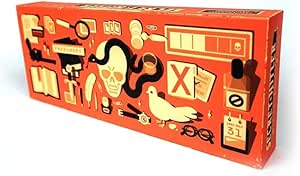 | Best for Adult Social Deduction Groups | Players: 5–10 | Recommended age: 17+ | Genre: Hidden identity, social deduction | VIEW LATEST PRICE | See Our Full Breakdown |
| Pressman The Oregon Trail: Journey to Willamette Valley Board Game |  | Best for Cooperative-Feeling Survival Decisions | Players: 2–4 | Recommended age: 14 years and up | Setting: 1844 journey from Independence, Missouri, to Willamette Valley | VIEW LATEST PRICE | See Our Full Breakdown |
| Buffalo Games Chronology: Historical Timeline Trivia Game |  | Best for History Trivia Groups | Players: 2–8 | Recommended age: 14 years and up | Historical events: 858 | VIEW LATEST PRICE | See Our Full Breakdown |
| Monopoly World War II: We Are All in This Together |  | Best for Younger History-Themed Game Nights | Players: 2–6 | Recommended age: 8 and up; listing also reports conflicting age information | Historical theme: World War II, including Pearl Harbor, D-Day Normandy, and the Battle of the Bulge | VIEW LATEST PRICE | See Our Full Breakdown |
| Fief England Medieval Strategy Board Game |  | Best for Experienced Strategy Families | Players: 2–4 | Recommended age: 15 years and up | Playing time: 1–2 hours | VIEW LATEST PRICE | See Our Full Breakdown |
| Revolution of 1828 Board Game |  | Best Two-Player History Match | Players: 2 | Recommended age: 12 years and up | Playing time: 30–60 minutes | VIEW LATEST PRICE | See Our Full Breakdown |
| Facade Games Salem 1692 Social Deduction Board Game |  | Best for Large, Lively Groups | Players: 4–12 | Recommended age: 14 years and up | Playing time: 20–40 minutes | VIEW LATEST PRICE | See Our Full Breakdown |
| Winning Moves Kings and Queens of Britain Monopoly Board Game |  | Best for Royal-History Fans | Brand: Winning Moves | Players: 2–6 | Recommended age: 8 years and up | VIEW LATEST PRICE | See Our Full Breakdown |
| HISTORY Channel Trivia Game |  | Best for Broad Trivia Coverage | Players: 2+ | Recommended age: 14 years and up | Questions: 2,000+ | VIEW LATEST PRICE | See Our Full Breakdown |
| historical board games for familie | Players | Recommended age |
|---|---|---|
| HISTORY Channel Through the Ye | 2 or more | 14+ |
| WE Games Senet Egyptian Board | 2 | 15+ |
| Notre Dame Strategy Board Game | 2–5 | 12–16 years |
| HISTORY Channel Trivia Game De | 2 or more | 14+ |
| Secret Hitler | 5–10 | 17+ |
| Pressman The Oregon Trail: Jou | 2–4 | 14 years and up |
| Buffalo Games Chronology: Hist | 2–8 | 14 years and up |
| Monopoly World War II: We Are | 2–6 | 8 and up; listing also reports conflicting age information |
| Fief England Medieval Strategy | 2–4 | 15 years and up |
| Revolution of 1828 Board Game | 2 | 12 years and up |
| Facade Games Salem 1692 Social | 4–12 | 14 years and up |
| Winning Moves Kings and Queens | 2–6 | 8 years and up |
| HISTORY Channel Trivia Game | 2+ | 14 years and up |
More Details on Our Top Picks
HISTORY Channel Through the Years and That’s a Fun Fact 2-in-1 Trivia Card Game
Two trivia formats in one box give this HISTORY Channel game more variety than a single-format quiz: players can put years or numeric facts in the right order, using memory, deduction, or a mix of both. Its 450 cards offer plenty of prompts for repeat group play, and cooperative or competitive rules let a family choose whether to work together or score against one another. Compared with the broader-category questions in HISTORY Channel Trivia Game Deluxe, this edition focuses more tightly on ordering facts, which may suit players who prefer reasoning over recalling exact answers. The tradeoff is its 14+ age recommendation and reliance on historical and general knowledge; younger children may be left out, and unfamiliar facts can make rounds feel more like guessing than learning. It is a compact choice for older family groups, not a mixed-age children’s game.
Pros:- Two distinct fact-ordering games add variety within one set
- 450 cards provide a broad pool of prompts
- Supports cooperative or competitive play
- Works for groups of two or more
Cons:- The 14+ recommendation limits use with younger family members
- Players need historical or general knowledge, or comfort making educated guesses
Best for: Families with teens and adults who want a compact trivia game with cooperative and competitive options.
Not ideal for: Families with younger children or players who prefer board movement and hands-on strategy over knowledge-based questions.
- Players:2 or more
- Recommended age:14+
- Cards:450
- Play time:30–45 minutes
- Included components:Cards and rules
- Material:Cardstock
- Dimensions:7.5 × 4 in
- Edition:2-in-1
Our verdict“Choose this for teen-and-adult family groups who want two knowledge-driven formats, and choose a broader trivia game if varied question categories matter more.”
WE Games Senet Egyptian Board Game
Senet offers a direct link to ancient Egypt through a two-player game built around a solid wood board, carved pieces, and dice sticks. That tactile presentation gives it a different family-night appeal from the card-driven HISTORY Channel Through the Years and That’s a Fun Fact 2-in-1 Trivia Card Game: this is about moving pieces and weighing choices, not answering history questions. The mix of strategy and chance can make turns approachable while still leaving room for decisions. Its main limit is also clear: two players only, so it cannot carry a larger family gathering the way Notre Dame can with its 2–5 player range. The 15+ recommendation further narrows the audience, and the provided details do not specify play time or historical guidance. I’d pick it for a pair who values an ancient-game theme and a wooden presentation over broad group flexibility.
Pros:- Solid wood board and carved playing pieces create a tactile presentation
- Combines strategic choices with chance
- Centers play on an ancient Egyptian game
- Includes dice sticks as well as a standard die
Cons:- Designed for exactly two players
- Recommended for ages 15 and up
- The supplied details do not state play time or include historical context materials
Best for: Two older players who enjoy ancient Egyptian themes, tactile wooden components, and a strategy-and-chance mix.
Not ideal for: Families wanting one game for a group, or children looking for a clearly age-accessible introduction to history.
- Players:2
- Material:Wood
- Recommended age:15+
- Included components:Game board, 5 green silos, 5 wood cones, 5 dice sticks, 1 standard die
- Edition:Classic Edition
- Warranty:60 days against manufacturer defects
Our verdict“Pick Senet for a two-player ancient-Egypt-themed experience with wooden components, but skip it if you need a flexible game for a whole family.”
Notre Dame Strategy Board Game
Notre Dame turns 14th-century Paris into a strategic setting, asking players to build their family’s influence while tending to the needs of their borough. That civic-care tension gives decisions consequences beyond simply accumulating power, making it a more substantial history-themed game than the quick fact ordering in HISTORY Channel Through the Years and That’s a Fun Fact 2-in-1 Trivia Card Game. With 2–5 players and multiple paths to victory, it suits families who enjoy planning and replaying a game to explore different approaches. It is a sharper fit for thoughtful groups than for casual gatherings: neglecting citizens can bring penalties, and the listed recommended age range is 12–16 rather than a clear all-ages guide. Compared with two-player WE Games Senet, it accommodates more of the family, but its strategic demands may be less welcoming to newcomers.
Pros:- Supports 2–5 players, more than the two-player Senet
- Offers multiple paths to victory
- Rewards strategic planning and repeat play
- Places player decisions in a 14th-century Paris setting
Cons:- Neglecting citizen welfare can result in penalties that add another layer to manage
- The 12–16 recommended age range may not suit younger family members
- Strategic play may be a harder entry point than the lineup’s trivia games
Best for: Families with older children or teens who enjoy planning, competing over several routes to victory, and revisiting a game.
Not ideal for: Younger children, casual players who want simple turns, or households seeking a game that teaches history through detailed background material.
- Players:2–5
- Genre:Family
- Historical setting:14th-century Paris
- Recommended age:12–16 years
- Edition:Standard Edition
- Language:English
- Brand:Rio Grande Games
- Model number:RGG315
Our verdict“Choose Notre Dame when your family wants a replayable historical strategy game and is ready for more involved decisions than trivia requires.”
HISTORY Channel Trivia Game Deluxe
2,400 questions across multiple categories make this the broadest trivia option in this group, spanning history alongside culture, science, sports, geography, and events. That range makes it a better fit for families with different knowledge interests than the more focused year-and-number ordering in HISTORY Channel Through the Years and That’s a Fun Fact 2-in-1 Trivia Card Game. Bonus 1980s and 1990s questions also give older relatives a chance to contribute knowledge beyond ancient and political history. The board adds a party-game structure, though the core experience still depends on answering questions, so it may not appeal to players who want tactical choices like those in Notre Dame. Its 14+ recommendation can exclude younger children, and a large question count does not by itself make the subject matter easier for mixed-knowledge groups. Choose it for varied trivia, not for a strategy-first history lesson.
Pros:- 2,400 questions span history and several other subject areas
- Bonus 1980s and 1990s trivia can engage multiple generations
- Board, cards, and rules provide a structured party-game format
- Supports groups of two or more
Cons:- Recommended for ages 14 and up
- Knowledge-based play may favor players with broader trivia familiarity
- Less suited to families seeking strategic decisions like those in Notre Dame
Best for: Families with teens and adults who want broad trivia categories and a question pool suited to gatherings.
Not ideal for: Families with younger children or players who prefer strategy, historical storytelling, or hands-on movement over quiz questions.
- Players:2 or more
- Recommended age:14+
- Number of questions:2,400
- Categories:Arts & Culture, Sports & Recreation, Science & Technology, Geography & Landmarks, People & Events
- Playing time:30–45 minutes
- Included components:Cards, board, rules
- Edition:Deluxe
- Dimensions:10 × 2 in
Our verdict“Choose the Deluxe edition for a wide-ranging trivia night with older players, rather than for younger children or families seeking a strategy game.”
Secret Hitler
Secret Hitler is the most socially confrontational pick here: players use hidden roles, discussion, and deception to pursue competing political aims. Its historical framing makes it distinct from the factual quiz approach of HISTORY Channel Trivia Game Deluxe, but the emphasis is on reading people and making arguments, not learning history through questions. The five-to-ten-player range gives it a strong group-game role, while wooden components, boards with foil inlay, and secret envelopes support the concealed-role format. The tradeoffs are substantial for family use: it is recommended for ages 17 and up, requires at least five players, and its theme and bluffing may not suit every household. Unlike Notre Dame, which centers on strategic city management, this game depends on social deduction and table conversation. I’d reserve it for adult groups comfortable with its subject matter.
Pros:- Supports groups of five to ten players
- Hidden roles and discussion create a distinct social-deduction experience
- Includes wooden components, foil-inlay boards, and secret envelopes
- Encourages critical thinking and strategic planning
Cons:- Recommended for ages 17 and up, making it unsuitable for many family groups
- Requires at least five players
- Deception and political subject matter may not suit every household
Best for: Adult groups of five to ten who enjoy bluffing, political themes, and discussion-driven social deduction.
Not ideal for: Families with children or teens under 17, groups smaller than five, or players who want a lighter history game focused on facts or strategy.
- Players:5–10
- Recommended age:17+
- Genre:Hidden identity, social deduction
- Components:Cards, wooden components, game boards, secret envelopes
- Material:Wood
- Language:English
- Package dimensions:6.5 × 4.33 × 0.71 in
- Item weight:1.07 kg
Our verdict“Choose Secret Hitler for an adult group seeking political bluffing and social deduction, not for a mixed-age family game night.”
Pressman The Oregon Trail: Journey to Willamette Valley Board Game
A changing trail and shared hardships give this game a more narrative, survival-focused feel than the other picks here. Players place tiles to reveal the route west, then manage supplies, hunt for food, and respond to hazards on an 1844 wagon journey. That mix gives history-minded families more than event trivia, though the subject matter can include disease, drowning, and starvation.
Compared with Chronology, which tests knowledge of when events happened, The Oregon Trail asks players to make decisions amid uncertainty. Its age recommendation of 14 and up makes it a poor fit for younger family members, and its difficult hazards may not suit players who want a light historical theme. With room for four, it works best for older families who enjoy a tense journey rather than a quick quiz.
Pros:- Tile placement reveals a changing route with trails, rivers, forts, and towns.
- Supply management and hazards create consequential decisions.
- Supports up to four players and includes player-specific wagons, mats, and family members.
- Its westward-journey setting gives history a clear role in play.
Cons:- The 14-and-up age recommendation rules out many family groups with younger children.
- Disease, drowning, and starvation may feel too grim for a light family game.
- Hazard-driven survival play may be less appealing to players seeking direct history trivia.
Best for: Families with teenagers who want a changing route, supply decisions, and historical survival challenges for two to four players.
Not ideal for: Families with younger children or players who want gentle, low-stakes history; the game is recommended for ages 14 and up and includes serious hazards such as disease and starvation.
- Players:2–4
- Recommended age:14 years and up
- Setting:1844 journey from Independence, Missouri, to Willamette Valley
- Components:Trail tiles, cards, supply cubes, dice, player wagons, player mats, family members, and instructions
- Language:English
- Brand:Pressman
- Model year:2018
Our verdict“Choose this for an older family that wants a tense westward journey with survival choices, not a child-friendly history quiz.”
Buffalo Games Chronology: Historical Timeline Trivia Game
Chronology turns historical dates into a shared guessing game: players try to place each event correctly in a growing timeline, keeping the card when they succeed. Its 858 events give repeat plays plenty of subject matter, and support for two to eight players makes it the most flexible group option in this batch.
Unlike The Oregon Trail, Chronology does not build a journey or ask players to manage resources; the central challenge is judging when events occurred. That makes it easier to bring to a game night, but less suited to families looking for a historical setting expressed through a broader strategy game. The 14-and-up recommendation also limits its appeal to families with younger children. I’d choose it for a history-loving group that enjoys friendly recall and debate, not for players who prefer tactical board play.
Pros:- 858 historical events provide a wide pool for varied games.
- The timeline format makes historical dates the core of play.
- Supports groups of two to eight, more than any other game in this batch.
- A clear objective—collecting 10 correctly placed cards—keeps the rules focused.
Cons:- Recommended for ages 14 and up, limiting use with younger children.
- Play centers on date estimation, so it offers less strategic variety than The Oregon Trail or Fief England.
- Players who lack background knowledge may find the guessing format less satisfying.
Best for: History-minded families or mixed-age groups of teens and adults who want a simple timeline challenge for up to eight players.
Not ideal for: Families with children under 14 or players who want map-building, resource management, or a strong historical story rather than event-based trivia.
- Players:2–8
- Recommended age:14 years and up
- Historical events:858
- Winning objective:Collect 10 cards by placing events correctly in a timeline
- Brand:Buffalo Games
- Warranty:90 days against manufacturer defects
Our verdict“Pick Chronology for a large history-loving group that wants quick timeline guesses rather than a strategy-heavy historical setting.”
Monopoly World War II: We Are All in This Together
A familiar Monopoly framework makes this the most accessible age fit in this group: it is intended for ages 8 and up and supports two to six players. World War II landmarks and six custom tokens—including a B-17 Bomber and Sherman Tank—give the theme an immediate presence, while Camps and Headquarters adapt the property-building structure.
That familiarity is also the tradeoff. Compared with Revolution of 1828, which focuses its play on a specific election, this title uses a broad war theme within a recognizable Monopoly-style format; it may offer less of a focused historical learning experience than Chronology’s event timeline. The listing describes its genre as a wargame but also names Monopoly-style building mechanics, so buyers should not assume a dedicated military simulation. It is a better family entry point than the 14-and-up titles, though small parts and conflicting age information call for care.
Pros:- Intended for ages 8 and up, making it a more accessible age fit than the 14-and-up games in this batch.
- Six custom tokens connect play to World War II imagery.
- Supports up to six players for a family or group game night.
- Familiar property-building mechanics can make the theme easier to approach for existing Monopoly players.
Cons:- The listing has conflicting age information, so age suitability is not fully clear.
- Small parts present a choking hazard.
- Its Monopoly-style structure may offer less focused historical learning than Chronology’s event timeline.
Best for: Families with children aged 8 and up who already enjoy Monopoly-style play and want a World War II theme for two to six players.
Not ideal for: Buyers seeking a detailed military simulation, a focused history quiz, or clear age guidance; the listing has conflicting age information and warns about small parts.
- Players:2–6
- Recommended age:8 and up; listing also reports conflicting age information
- Historical theme:World War II, including Pearl Harbor, D-Day Normandy, and the Battle of the Bulge
- Included tokens:B-17 Bomber, Boot, Cathedral Radio, LCVP, Sherman Tank, and American Helmet
- Game mechanics:Area control; Camps and Headquarters
- Dimensions:19.7 x 9.8 x 1.4 inches
- Item weight:2.2 pounds
- Material:Cardboard
- Rulebook:Printed, included
Our verdict“Choose this for a younger family that wants recognizable Monopoly-style play with World War II theming, while checking the age guidance and small-parts warning.”
Fief England Medieval Strategy Board Game
Fief England is the most layered power struggle in this batch, asking players to build holdings and an economy while pursuing influence through noble and church titles, diplomacy, alliances, intrigue, and warfare. Plagues, storms, and famines bring historical pressures into that contest. Compared with Monopoly World War II, which uses a familiar property-building structure, Fief England offers more routes to power and a more involved medieval setting.
That depth comes with a narrower audience: it supports only two to four players, recommends age 15 and up, and can run for one to two hours. Those demands make it a poor fit for a casual family night or a table with younger children. For families already comfortable with strategic games, its mix of diplomacy and area control offers richer decisions than Chronology’s trivia format; for everyone else, its length and complexity may outweigh the historical theme.
Pros:- Offers several paths to power through diplomacy, military strength, and church influence.
- Combines area control with medieval English political and economic themes.
- Historical events such as plagues, storms, and famines shape the setting.
- The included board, tiles, cards, and dice support a varied strategy experience.
Cons:- A playing time of one to two hours is a substantial commitment for a family game night.
- The 15-and-up recommendation makes it unsuitable for many families with children.
- The two-to-four-player limit excludes larger groups.
Best for: Families with older teens and adults who enjoy negotiation, area control, and long strategy games for two to four players.
Not ideal for: Families with younger children, groups larger than four, or players seeking a short and easy-to-teach historical game.
- Players:2–4
- Recommended age:15 years and up
- Playing time:1–2 hours
- Included components:Dice, game board, game tiles, and cards
- Language:English
- Materials:Cardboard, cardstock, and plastic
- Item dimensions:11.81 x 11.81 x 2.83 inches
- Item weight:5.8 pounds
- Manufacturer:Academy Games
Our verdict“Choose Fief England for an older, strategy-minded family that values negotiation and several paths to power over short play and broad age access.”
Revolution of 1828 Board Game
Revolution of 1828 is the only option here built specifically for two players, making it a natural choice for a parent and teen or two history-minded adults. Its campaign centers on the contest between John Quincy Adams and Andrew Jackson: players collect election tiles and use campaign actions, including smear campaigns, to gain votes. The result is a focused political contest rather than a broad survey of historical events.
Compared with Chronology, which accommodates up to eight players and tests event dates, this game narrows its scope to one presidential election and strategic competition between opponents. Its 30–60 minute playing time is also a more contained commitment than Fief England’s one-to-two-hour sessions. The clear limitation is its fixed two-player count; families looking for a group game should choose Chronology or Monopoly World War II instead. The age recommendation of 12 and up also rules out younger players.
Pros:- Designed specifically for two players, giving the matchup a focused competitive structure.
- Centers play on the historical 1828 presidential election between Adams and Jackson.
- Campaign actions and election tiles give players strategic choices.
- A 30–60 minute playing time is shorter than Fief England’s one-to-two-hour range.
Cons:- Limited to two players, making it unsuitable for most family groups.
- Recommended for ages 12 and up, excluding younger children.
- Its narrow focus on one election offers less historical breadth than Chronology’s 858 events.
Best for: Two players aged 12 and up—such as a parent and teenager—who want a focused U.S. election theme with tactical choices.
Not ideal for: Families who need a game for three or more players or want a broad historical timeline instead of a single-election contest.
- Players:2
- Recommended age:12 years and up
- Playing time:30–60 minutes
- Historical subject:1828 U.S. presidential election between John Quincy Adams and Andrew Jackson
- Core objective:Gain votes through election tiles and campaign actions
- Dimensions:8 x 8 x 2 inches
- Item weight:1.85 pounds
- Manufacturer:Renegade Game Studios
- Release date:May 29, 2019
Our verdict“Pick Revolution of 1828 for a two-player history-minded pair that wants a compact election strategy game, not a group family activity.”
Facade Games Salem 1692 Social Deduction Board Game
Salem 1692 turns the witch trials into a group bluffing game, making its history a setting for accusations and shifting trust rather than a lesson in chronology. Its 4–12 player range gives it an advantage over the HISTORY Channel Trivia Game for bigger gatherings, while the 20–40-minute playtime keeps a round shorter than a full-length property game. Illustrated characters and biographies add historical context, but the core appeal is reading other players and defending your own claims. That social format is also the tradeoff: the game needs at least four people, and its 14-and-up guidance makes it a poor fit for younger family groups. The compact faux-book box is easy to store, though the card-driven experience will suit families who enjoy bluffing more than straightforward quiz questions.
Pros:- Accommodates groups of 4–12 players.
- Blends strategy, bluffing, and social deduction around a historical setting.
- Illustrated characters and biographies add context to the Salem theme.
- Magnetic faux-book box is compact and easy to store.
Cons:- Cannot be played with fewer than four people.
- Recommended for ages 14 and up, limiting its fit for families with younger children.
- The emphasis on deception and accusations may not suit players seeking a history-focused quiz.
Best for: Families with teens and a regular group of at least four players who enjoy bluffing, accusations, and social deduction.
Not ideal for: Families with younger children, small households, or players who prefer cooperative play and factual history questions.
- Players:4–12
- Recommended age:14 years and up
- Playing time:20–40 minutes
- Contents:128 cards, wooden gavel token, 30-second sand hourglass, magnetic faux book box, rulebook
- Material:Cardboard
- Language:English
- Item weight:390 g
- Dimensions:12 × 4 × 21 cm
Our verdict“Choose Salem 1692 for a teen-friendly gathering where bluffing and group interaction matter more than a detailed history lesson.”
Winning Moves Kings and Queens of Britain Monopoly Board Game
Kings and Queens of Britain Monopoly gives families a familiar property-trading structure with British rulers and historical properties as its theme. That familiarity can make it easier to bring to the table than Salem 1692, which depends on players enjoying bluffing and group accusations. Its ages 8 and up guidance also makes it the more accessible choice for families with younger school-age players, though the listed 60-minute playtime asks for a longer session. The historical hook comes through named monarchs such as Alfred the Great, Henry VIII, Victoria, and Elizabeth II, but the game still centers on buying, trading, and building rather than teaching history in depth. The listing has conflicting age guidance, so I would check the product packaging before choosing it for a child near the stated age range.
Pros:- Features recognizable British monarchs, including Alfred the Great, Henry VIII, Victoria, and Elizabeth II.
- Familiar property-trading rules can be approachable for families already acquainted with Monopoly.
- Includes six metal tokens.
- Supports up to six players.
Cons:- The listed 60-minute playing time calls for a longer game-night slot.
- Historical content is wrapped around property trading rather than presented as a substantial history lesson.
- Conflicting age guidance in the listing makes age suitability less clear.
Best for: Families with school-age children who already enjoy Monopoly-style property trading and want British monarchs as the theme.
Not ideal for: Buyers seeking a historically detailed strategy game, a short session, or clear age guidance before purchase.
- Brand:Winning Moves
- Players:2–6
- Recommended age:8 years and up
- Playing time:60 minutes
- Edition:Standard Edition
- Included components:Board, tokens, money, instructions, homes and hotels, property cards, chance and community cards, dice
- Model number:122639
Our verdict“Pick this edition for families who want familiar Monopoly play with a British royal theme and can set aside a longer session.”
HISTORY Channel Trivia Game
HISTORY Channel Trivia Game is the clearest fit here for families who want questions and answers to lead the history-themed play. Its 2,000+ questions span five categories, including arts and culture, science and technology, geography, and notable people and events, so the content reaches beyond historical dates alone. Compared with Kings and Queens of Britain Monopoly, it makes knowledge the main activity rather than a theme around property trading; compared with Salem 1692, it avoids bluffing and hidden roles. That wider scope can keep mixed-interest groups involved, but it also means a round may cover subjects beyond history. The 14-and-up recommendation narrows its family audience, and the game needs at least two players. Its 30–45-minute format offers a mid-length alternative to the longer Monopoly session.
Pros:- Includes more than 2,000 questions across five categories.
- Covers history-related people and events alongside arts, sports, science, and geography.
- Can be played by two or more people.
- Includes cards, a board, and rules for a structured group game.
Cons:- Recommended for ages 14 and up, so it is less suitable for younger family members.
- The category mix means not every question is specifically about history.
- Requires at least two players.
Best for: Families with teens and adults who enjoy quiz games and want varied subjects alongside people and events from history.
Not ideal for: Families with children under 14, solo players, or groups looking for a history-only game with strategic board play.
- Players:2+
- Recommended age:14 years and up
- Questions:2,000+
- Categories:Arts & Culture, Sports & Recreation, Science & Technology, Geography & Landmarks, People & Events
- Included components:Cards, board, rules
- Playing time:30–45 minutes
- Material:Cardstock
- Dimensions:10 × 10 × 2 inches
- Weight:0.73 kg
Our verdict“Choose the HISTORY Channel Trivia Game for teen-and-adult groups who want a broad quiz night rather than themed trading or bluffing.”

How We Picked
I compared these games by how well their historical subject supports a family game night, rather than treating a period name or famous event as enough on its own. I looked at the kind of play each offers—trivia, timeline deduction, strategy, race, or social deduction—and how easily a mixed-age group might understand and enjoy that format. I also considered whether the historical theme gives players something to learn or discuss, and whether the game’s subject matter and interaction style are a fit for the intended family.
The ranking favors options with a clear route to broad family use: approachable rules, engaging play across different levels of prior history knowledge, and a strong connection between theme and activity. More specialized or demanding games rank lower for general family recommendations, even when they may be excellent for the right group. I also treated age suitability as a family-specific choice: a game that works for older teens and adults may be a poor match for younger children.
Factors to Consider When Choosing Historical Board Games For Families
Before choosing, decide what you want history to do at the table. It can provide quiz questions, shape strategic choices, set a social-deduction scenario, or simply give a familiar game a period theme. That difference matters more than choosing a title because its subject sounds appealing.
Choose the kind of historical learning your family enjoys
Trivia games reward knowing facts, while timeline games let players reason from clues and approximate dates. Strategy titles may teach a setting more indirectly, through decisions about power, resources, or alliances. A common mistake is assuming every historical game functions like a lesson or teaches reliable detail at the same depth. If your family likes asking follow-up questions, pick a format that leaves room for discussion rather than only rewarding fast recall. For younger players or relatives with uneven history knowledge, shared deduction can feel fairer than a quiz based on facts one person already knows. Choose the learning style that makes people want another round.
Match the rules and game length to your youngest regular player
Family age ranges can hide big differences in reading ability, attention span, and comfort with multi-step rules. Check the publisher’s recommended age and playtime, then think about how your group actually plays: a child may manage a long game if turns are engaging, but struggle with lengthy downtime. Ask whether one player will need to explain cards or manage scoring throughout. If that job falls to an adult every round, the game may feel less accessible than its theme suggests. Avoid choosing solely by the youngest child’s age; older siblings and adults also need enough decisions to stay involved. A shorter, simpler game can be a better starting point before adding heavier strategy.
Check whether the history is a theme, a quiz subject, or a setting
A historical title can promise very different things: accurate facts, an era-inspired atmosphere, or familiar mechanics wrapped in a historical setting. Read the game description with that distinction in mind, especially if someone at the table expects a learning tool. When factual accuracy matters, look for clear information about the topics covered and consider checking the rules or sample cards before buying. A game centered on a narrow event or period may prompt richer conversation, but it can also leave players without that background at a disadvantage. Broader trivia usually offers more variety, though it may feel less focused. Let your family’s expectations decide which tradeoff is acceptable.
Consider how much competition your group enjoys
Some history games ask players to recall facts together or individually; others involve alliances, bluffing, conflict, or direct competition. Those mechanics shape the mood just as much as the period setting. A social-deduction game may be lively for older players who enjoy suspicion, but frustrating for children who dislike being accused or misled. Strategy games can reward planning while also creating a longer path to a winner, which may not suit every family gathering. Talk through the interaction style before buying, particularly when younger players or sensitive competitors will join. A theme alone does not tell you whether the table experience will feel friendly or confrontational.
Decide whether you want replay variety or a focused experience
Multiple modes, broad question pools, and changing decisions can help a game stay interesting across repeat sessions. A tightly focused historical setting may be more memorable, but it can have a narrower audience or lose appeal once players know the material. Consider who will play most often and whether the group will change from one gathering to the next. If relatives have different interests, a flexible format may be more useful than a game built around one period. On the other hand, a focused theme can be a good choice for a family already fascinated by that era. Look for variety that changes the decisions, not just a new label on the same activity.
Frequently Asked Questions
Which historical board game is easiest to introduce to a family with mixed history knowledge?
A timeline or broad trivia format can work well because players do not all need specialist knowledge to take part. Games such as Chronology let people reason about relative dates, while general history trivia favors families who enjoy recalling facts. Before choosing, check whether the rules allow hints, team play, or discussion, since those options can soften knowledge gaps. If one person is an avid history fan and others are not, avoid a format where obscure recall is the only route to success. A quick explanation and a sample turn can reveal whether the table finds the challenge fun or frustrating.
Are these games suitable for younger children?
Suitability depends on more than the historical topic: reading load, rules complexity, game length, and themes all matter. The trivia and timeline options are often easier to explain than heavier strategy or social-deduction games, but younger players may still need help with dates and vocabulary. Check the publisher’s age guidance and read the description for conflict, bluffing, or other content that may not suit your household. Team play or adult assistance can make a difficult game more welcoming, though it may change how competitive the game feels. If children are the main players, prioritize understandable turns over historical depth.
Do historical board games teach accurate history?
Some games use factual questions or dates as their central activity; others use a period mainly as a setting for strategy or social play. That means a historical theme does not automatically make a game a dependable teaching resource. If accuracy is a priority, check the publisher’s description, sample materials, and the historical scope before buying. It can also help to treat a game as a conversation starter and look up surprising answers together afterward. For a family activity, shared curiosity may matter more than a full lesson, but those are different goals.
Should I choose a trivia game or a strategy game for family game night?
Choose trivia if your group prefers direct questions, quick turns, and a clear test of knowledge; choose strategy if players enjoy planning and can give the game more time. Trivia is often easier to teach, but it can favor relatives who already know the subject. Strategy spreads the challenge across decisions, though more rules and longer play can make it a harder fit for occasional players. Consider whether your family likes to compete through recall or through choices, and how patient everyone is with a rules explanation. If the group is split, a lighter game is usually a safer first purchase than a demanding strategy title.
Are games about war, political power, or social deduction a good fit for families?
They can be a fit for some households, especially those with older children and adults who enjoy historical conflict or bluffing. The subject and mechanics should be checked separately: a game might have a serious political setting, direct player conflict, hidden roles, or accusations that change the mood at the table. Consider whether younger players can distinguish game behavior from personal behavior and whether anyone dislikes deception or elimination. Read the product details and rules summary before buying instead of relying on the word “family” in a listing. If you are unsure, start with trivia or timeline play, which generally puts less pressure on social dynamics.
Conclusion
For most families, I’d start with Chronology as the best overall pick: its timeline challenge makes history approachable without requiring every player to arrive with the same facts. For best value in variety, the two-format HISTORY Channel Through the Years and That’s a Fun Fact is the more flexible choice; families new to the category can begin with accessible trivia before trying a different mode. For a best premium-style strategy experience, look at Fief England if your group wants a deeper medieval setting and is ready for more involved play. Senet is the best fit for a family drawn to ancient history and a distinctive board-game tradition. If your household has a specific interest—timeline quizzes, political strategy, or social deduction—choose the matching format from the full list, and check age guidance and subject matter before deciding.
Halloween Picks

15-Foot Halloween Pumpkin Inflatable with LED Lights and Air Blower

HOPOCO Halloween Pumpkin Fog Machine with 12 LED Colors and 4 Light Modes

Halloween Inflatable Haunted House Maze – 20×20 ft with Removable Roof and Blower
As an affiliate, we earn on qualifying purchases.