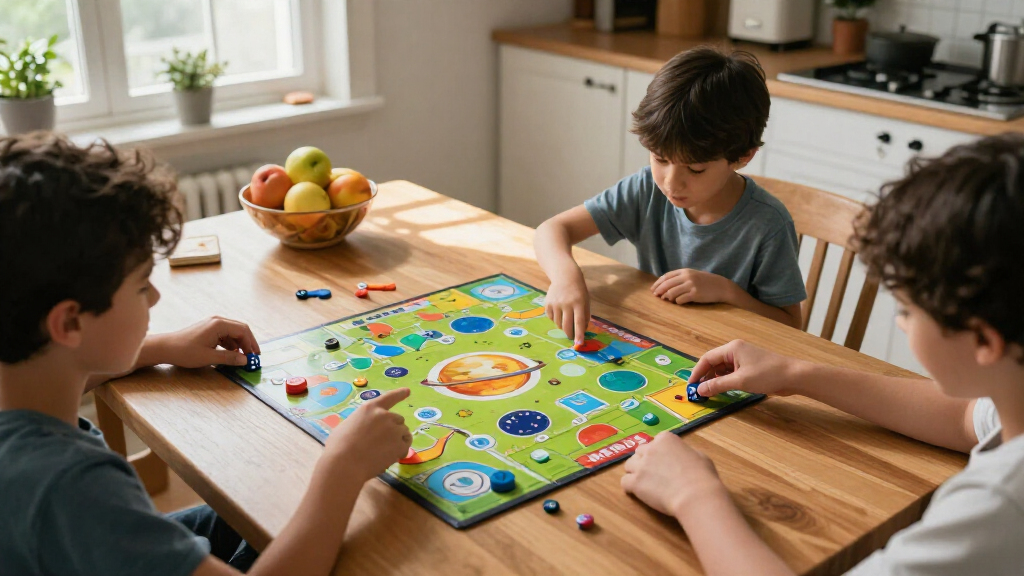
For families seeking educational board games, Hasbro Gaming Trivial Pursuit Family Edition is my best overall pick for mixing broad trivia with a shared family format. Scholastic Race Across the USA stands out for geography practice, while Bananagrams Classic makes word-building quick and easy to fit into a busy evening. The main tradeoff is choosing between focused learning, such as math or spelling, and broader skills like recall, vocabulary, and reasoning. Age range, reading confidence, and how much downtime players will tolerate also shape the right choice. Read on for how all eight games compare and which one best fits your family.

Prime made for students and young adults
- Fast, free delivery for dorm and study essentials
- Prime Video and Amazon Music included
- Member-only deals
Key Takeaways
- Trivial Pursuit Family Edition offers the broadest trivia-based family play, while its question-and-answer format suits households comfortable with general knowledge.
- Race Across the USA gives geography a clear focus; it is a more direct choice for map and state learning than the lineup’s word and trivia games.
- Scrabble Junior and Number Hunter target foundational skills, making them more age-appropriate starting points than games centered on adult-style trivia.
- Bananagrams and Tapple favor fast word play, but their pace can put pressure on players who need more thinking time.
- Hedbanz and I Should Have Known That! lean on guessing or recall rather than structured subject practice, so their educational appeal depends more on conversation and general knowledge.
| I Should Have Known That! Trivia Game |  | Best for Older Trivia Fans | Brand: Hygge Games | Model: 21026 | Questions: Over 400 | VIEW LATEST PRICE | See Our Full Breakdown |
| Bananagrams Classic Word Game with 144 Tiles and Banana Pouch |  | Best for Spelling Practice | Players: 1–8 | Recommended age: 7 years and up | Tiles: 144 letter tiles | VIEW LATEST PRICE | See Our Full Breakdown |
| Tapple: The Original Fast-Paced Family Word Game |  | Best for Quick Word Association | Brand: USAOPOLY | Players: 2–8 | Recommended age: 8 years and up | VIEW LATEST PRICE | See Our Full Breakdown |
| Scholastic Race Across the USA Geography Board Game for Kids, Ages 8+ |  | Best for U.S. Geography | Brand: University Games | Players: 2–4 | Recommended age: 8 years and up | VIEW LATEST PRICE | See Our Full Breakdown |
| Spin Master Games Hedbanz Classic Edition Picture Guessing Game |  | Best for Younger Family Players | Brand: Spin Master Games | Model name: Hedbanz Classic Edition | Players: 2–6 | VIEW LATEST PRICE | See Our Full Breakdown |
| Hasbro Gaming Trivial Pursuit Family Edition Board Game | 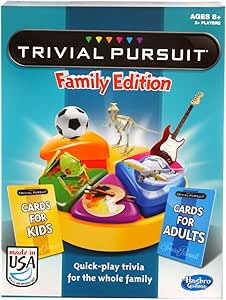 | Best for Mixed-Age Trivia Teams | Players: 2 or more | Recommended age: 8 years and up | Question set: 1,200 questions across 6 categories | VIEW LATEST PRICE | See Our Full Breakdown |
| Number Hunter Math Board Game for Kids |  | Best for Early Math Practice | Players: 2 or more | Recommended age: 5 years and up | Math focus: Addition, subtraction, and even and odd numbers | VIEW LATEST PRICE | See Our Full Breakdown |
| Hasbro Gaming Scrabble Junior Board Game, Ages 5+ |  | Best for Growing Spelling Skills | Players: 2–4 | Recommended age: 5 years and up | Game type: Word-building | VIEW LATEST PRICE | See Our Full Breakdown |
| educational board games for familie | Players | Recommended age | Included components | Language |
|---|---|---|---|---|
| I Should Have Known That! Triv | More than 2 | 14 years and up | — | English |
| Bananagrams Classic Word Game | 1–8 | 7 years and up | Letter tiles and banana-shaped pouch | — |
| Tapple: The Original Fast-Pace | 2–8 | 8 years and up | Portable Tapple wheel with built-in timer, 36 cards, instructions | English |
| Scholastic Race Across the USA | 2–4 | 8 years and up | Game board, cards, airplane pawns | English |
| Spin Master Games Hedbanz Clas | 2–6 | — | 6 headbands, 6 headplates, 16 scoring badges, 1 timer, 69 picture cards, 3 sample question cards, instructions | — |
| Hasbro Gaming Trivial Pursuit | 2 or more | 8 years and up | Gameboard, 2 cardholders, 6 scoring tokens, 36 scoring wedges, die, and instructions | English |
| Number Hunter Math Board Game | 2 or more | 5 years and up | Game board, 5 game pieces, 2 number dice, 1 operation die, 50 challenge cards, and game rules | English |
| Hasbro Gaming Scrabble Junior | 2–4 | 5 years and up | 1 double-sided gameboard, 4 tokens, 105 letter tiles, and game guide | English |
More Details on Our Top Picks
I Should Have Known That! Trivia Game
Everyday-fact trivia gives this game a different family-learning angle from the geography focus of Scholastic Race Across the USA. Its more than 400 questions cover familiar topics, so players can test what they know without needing a specialist subject background. The unusual scoring subtracts points for wrong answers, which makes confident guesses risky and can turn missed facts into part of the fun. That format suits families with teens and adults who enjoy quick, lively group play, but it is less welcoming to younger children or anyone who finds mistakes discouraging. Compared with the word-building practice in Bananagrams, this offers broader general-knowledge prompts but less active spelling practice. Its age recommendation of 14 and up is the main limit for households hoping to include younger kids.
Pros:- More than 400 questions provide varied prompts across everyday topics.
- Point deductions make guessing strategy part of the game.
- Designed for group play with more than two players.
- Paper cards keep the game manual and straightforward to set up.
Cons:- The 14-and-up age recommendation excludes many younger family members.
- Losing points for wrong answers may frustrate cautious or less confident players.
- Trivia answers offer less hands-on learning practice than word-building games such as Bananagrams.
Best for: Families with teenagers and adults who enjoy general-knowledge questions and playful competition.
Not ideal for: Families with children under 14 or players who dislike losing points for incorrect answers.
- Brand:Hygge Games
- Model:21026
- Questions:Over 400
- Cards:110
- Players:More than 2
- Recommended age:14 years and up
- Material:Paper
- Language:English
Our verdict“Choose it for teen-and-adult family groups that want broad trivia and can enjoy the sting of a wrong answer.”
Bananagrams Classic Word Game with 144 Tiles and Banana Pouch
Active word building is the reason to choose Bananagrams over a question-and-answer game such as I Should Have Known That!: every player forms a crossword-style grid from letter tiles, practicing spelling and vocabulary as play unfolds. With up to eight players working at once, nobody has to wait through a long turn cycle, which helps keep family game time moving. The 144 tiles and portable pouch also make it easy to bring along, and no board, pencils, or paper are needed. The tradeoff is that the race format rewards quick word recognition; children who are still building spelling confidence may find the pace discouraging. Unlike Tapple, it gives players room to rearrange a grid rather than requiring a word under a short timer, but it still depends on comfort with letters and spelling.
Pros:- Building crossword grids gives spelling practice an active, hands-on form.
- Supports solo play and groups of up to eight.
- All players work at once, reducing downtime between turns.
- The banana-shaped pouch makes the tiles convenient to carry and store.
Cons:- The race format can put pressure on children who need extra time with spelling.
- Small tiles are not suitable for children under 3.
- It focuses on word skills rather than broader subjects such as geography or general knowledge.
Best for: Families with children ages 7 and up who want portable spelling and vocabulary practice with simultaneous play.
Not ideal for: Families with children under 3, or players who find fast-paced spelling races stressful.
- Players:1–8
- Recommended age:7 years and up
- Tiles:144 letter tiles
- Included components:Letter tiles and banana-shaped pouch
- Game type:Word, spelling, and anagram game
- Model number:1295
- Material:Rubber, wood
Our verdict“Pick Bananagrams for families seeking portable, simultaneous spelling practice rather than trivia or subject-based questions.”
Tapple: The Original Fast-Paced Family Word Game
Fast word recall is Tapple’s educational hook: players name a word that fits a category and starts with an available letter before the 10-second timer runs out. That makes it more about vocabulary retrieval and association than the spelling construction in Bananagrams, where players can build and rearrange words on the table. The portable wheel stores its 36 cards and 144 categories, so setup and packing are simple for family nights or travel. A short stated playing time of 15 minutes suits groups looking for a brisk round, while support for two to eight players makes it flexible for different gatherings. The catch is the timer: children or adults who need more thinking time may feel rushed, making this a weaker fit than Hedbanz for families who prefer questions and clues at a gentler pace.
Pros:- 144 categories give the group a broad range of word-association prompts.
- The built-in timer creates brisk rounds without requiring a separate timing device.
- The wheel stores the cards for easier carrying and storage.
- Accommodates two to eight players.
Cons:- The 10-second limit can disadvantage players who need more time to think.
- The pressure to answer aloud may not suit every child or family group.
- Its vocabulary focus offers less spelling construction than Bananagrams.
Best for: Families with players ages 8 and up who enjoy quick vocabulary challenges and can handle timed responses.
Not ideal for: Families with players who need extra time to find words or dislike performing under a countdown.
- Brand:USAOPOLY
- Players:2–8
- Recommended age:8 years and up
- Playing time:15 minutes
- Categories:144 across 36 cards
- Included components:Portable Tapple wheel with built-in timer, 36 cards, instructions
- Educational objective:Vocabulary and word association
- Language:English
Our verdict“Choose Tapple for families who want short, energetic vocabulary rounds and are comfortable with a countdown.”
Scholastic Race Across the USA Geography Board Game for Kids, Ages 8+
Grade-level geography questions give this game a clear family advantage when children in different school grades play together: the questions are tailored to each player’s grade rather than relying on one shared level. Players race across the United States, visit six states, and answer questions on the route back home, linking geography prompts to a concrete journey. Compared with I Should Have Known That!, which draws on everyday trivia and is recommended for older players, this is more focused and more accessible to children from age eight. Its roughly 20-minute play time also gives it a structured board-game format, unlike the rapid word rounds of Tapple. The main limitation is its narrow subject: families seeking spelling, vocabulary, or geography beyond the United States will need another game. Play is limited to two to four, so larger households may need to split into groups.
Pros:- Grade-level question tailoring helps children in different grades play together.
- The route and state-visiting goal connect questions to an interactive journey.
- A stated 20-minute playing time suits a planned family game session.
- Board, cards, and airplane pawns provide a complete tabletop format.
Cons:- The two-to-four-player limit can leave larger groups needing to take turns.
- The subject is focused on U.S. geography.
- Its question-and-race format offers less open-ended word practice than Tapple or Bananagrams.
Best for: Families with children in different grades who want a guided introduction to U.S. geography for two to four players.
Not ideal for: Larger families or buyers seeking broad geography, world studies, or word-based learning.
- Brand:University Games
- Players:2–4
- Recommended age:8 years and up
- Estimated playing time:20 minutes
- Game type:Educational board game
- Included components:Game board, cards, airplane pawns
- Edition:Standard Edition
- Language:English
Our verdict“Pick this game for mixed-grade families who want a focused, board-based way to practice U.S. geography.”
Spin Master Games Hedbanz Classic Edition Picture Guessing Game
Yes-or-no questioning makes Hedbanz a more approachable learning game for younger children than the timed word retrieval in Tapple. Players wear a card on a headband and ask questions to work out what picture they have, practicing deduction and clear verbal clues along the way. Its recommended age starts at six, and the included six headbands and 69 picture cards make it a ready-to-play option for groups of two to six. Compared with Scholastic Race Across the USA, it is less tied to a school subject and more centered on reasoning and conversation, so it can suit a wider range of ages and interests. The tradeoff is that learning depends on players asking and answering aloud; quiet play is not the point. The six-player cap also limits its use for larger family gatherings.
Pros:- Simple yes-or-no questions make the core deduction task accessible to younger players.
- Encourages reasoning through clues and follow-up questions.
- Includes six headbands and 69 picture cards for group play.
- Supports two to six players and is recommended from age six.
Cons:- Players need to ask and answer questions aloud.
- The six-player maximum may not suit larger family gatherings.
- Its picture-guessing format offers less direct subject practice than the geography questions in Race Across the USA.
Best for: Families with children ages 6 and up who want an accessible game for practicing deduction and asking clear questions.
Not ideal for: Large family groups or players who are uncomfortable speaking and answering questions aloud.
- Brand:Spin Master Games
- Model name:Hedbanz Classic Edition
- Players:2–6
- Age range:6 years and up
- Included components:6 headbands, 6 headplates, 16 scoring badges, 1 timer, 69 picture cards, 3 sample question cards, instructions
- Edition:2029 Edition
- Model year:2023
- UPC:778988463406
Our verdict“Choose Hedbanz for younger families who want conversational deduction rather than timed vocabulary or subject quizzes.”
Hasbro Gaming Trivial Pursuit Family Edition Board Game
Separate adult and kids’ question decks give this family trivia game a practical way to bring different ages to the same table: younger players get their own questions, while adults can still face a challenge. With 1,200 questions across six categories, it offers broad general-knowledge practice, and players can compete individually or in teams. Compared with I Should Have Known That! Trivia Game, its kid-specific cards and wedge-collecting board give it a clearer family format; it is less suited to players seeking spelling practice like Scrabble Junior. The tradeoff is that progress depends on knowing answers, which can leave less confident players behind even with separate decks. Colored spaces allow quicker play, but this remains a sit-down, indoor trivia game rather than an active learning activity.
Pros:- Separate adult and kids’ decks help make mixed-age rounds more approachable.
- Six categories and 1,200 questions provide variety across repeat games.
- Individual and team formats let families adjust how competitive play feels.
- Colored spaces support a quicker version of the board game.
Cons:- Players need trivia knowledge to advance, which can favor adults or confident readers.
- Indoor board play offers less movement than active or route-based learning games.
- The broad trivia format does not focus on a single academic skill.
Best for: Families with school-age children and adults who want team or individual trivia play with age-separated questions.
Not ideal for: Families seeking hands-on practice in a specific school subject, or children who may feel discouraged when trivia answers determine progress.
- Players:2 or more
- Recommended age:8 years and up
- Question set:1,200 questions across 6 categories
- Question decks:100 blue adult cards and 100 yellow kids’ cards
- Play formats:Individual or team play
- Included components:Gameboard, 2 cardholders, 6 scoring tokens, 36 scoring wedges, die, and instructions
- Language:English
- Dimensions:10.51 x 7.87 x 2.24 inches
Our verdict“Choose this for mixed-age families who enjoy general-knowledge challenges and can use teams to balance different ages.”
Number Hunter Math Board Game for Kids
Number Hunter makes math the point of play, asking children to work with addition, subtraction, and even and odd numbers as they roll dice and tackle challenge cards. Its 20-minute estimated playing time suits families looking for a focused activity, and the board, number dice, operation die, and 50 cards give the practice more variety than a worksheet-style drill. Compared with Scholastic Race Across the USA, which centers on geography, this game targets foundational number skills; it also asks for more direct calculation than the picture-and-letter matching side of Scrabble Junior. That focus is its main tradeoff: children need to be ready for the math tasks, and at least two players are required. It is a better fit for guided practice than for families wanting broad trivia or language learning.
Pros:- Practices addition, subtraction, and even and odd number recognition.
- Fifty challenge cards add variety beyond rolling and moving around the board.
- A 20-minute estimated playtime fits shorter family or classroom sessions.
- Designed for screen-free play at home or in a classroom.
Cons:- Requires at least two players, so it cannot serve as a solo math activity.
- Its arithmetic focus may not suit children who need a gentler introduction to numbers.
- The subject-specific format offers less variety than a broad trivia game.
Best for: Families with children aged five and up who want a short, screen-free way to practice basic arithmetic together.
Not ideal for: Households with only one available player, or children not yet comfortable with the addition and subtraction activities.
- Players:2 or more
- Recommended age:5 years and up
- Math focus:Addition, subtraction, and even and odd numbers
- Estimated playing time:20 minutes
- Included components:Game board, 5 game pieces, 2 number dice, 1 operation die, 50 challenge cards, and game rules
- Edition:Addition and subtraction
- Language:English
- Materials:Non-toxic, child-safe materials
Our verdict“Pick Number Hunter when a child is ready to practice basic arithmetic through short, shared play rather than general knowledge or word-building.”
Hasbro Gaming Scrabble Junior Board Game, Ages 5+
A two-sided board gives Scrabble Junior a built-in learning step: children can begin by matching letters to a picture-supported layout, then try making their own words on the advanced side. That makes it a more gradual spelling choice than Bananagrams Classic Word Game, which centers on forming words from tiles without this picture-matching stage. Its 15-minute playing time and support for two to four players suit a quick family game, while 105 letter tiles offer plenty of pieces for both board sides. The tradeoff is that the advanced side may be a stretch for younger or early-reading children, and the game is limited to spelling and vocabulary rather than the broader subjects covered by Trivial Pursuit Family Edition. Families should also expect indoor, table-based play.
Pros:- Picture-and-letter matching offers an accessible starting point for early learners.
- The advanced board side adds a next step in independent word-building.
- Supports two to four players, making it suitable for small family groups.
- A 15-minute playing time works well for shorter game sessions.
Cons:- The word-building side may be challenging for children still developing reading skills.
- Spelling and vocabulary are its main learning focus, with little subject variety.
- Indoor board play requires a table or other flat playing surface.
Best for: Families with children aged five and up who are learning letter recognition and spelling and want a path toward forming words independently.
Not ideal for: Families seeking a broad academic game, or younger children who are not ready to create words without picture prompts.
- Players:2–4
- Recommended age:5 years and up
- Game type:Word-building
- Gameboard:Double-sided: picture-and-letter matching and advanced word-building
- Playing time:15 minutes
- Included components:1 double-sided gameboard, 4 tokens, 105 letter tiles, and game guide
- Educational objectives:Spelling and vocabulary
- Language:English
Our verdict“Choose Scrabble Junior for young learners who benefit from picture-supported letter practice before moving on to making their own words.”
How We Picked
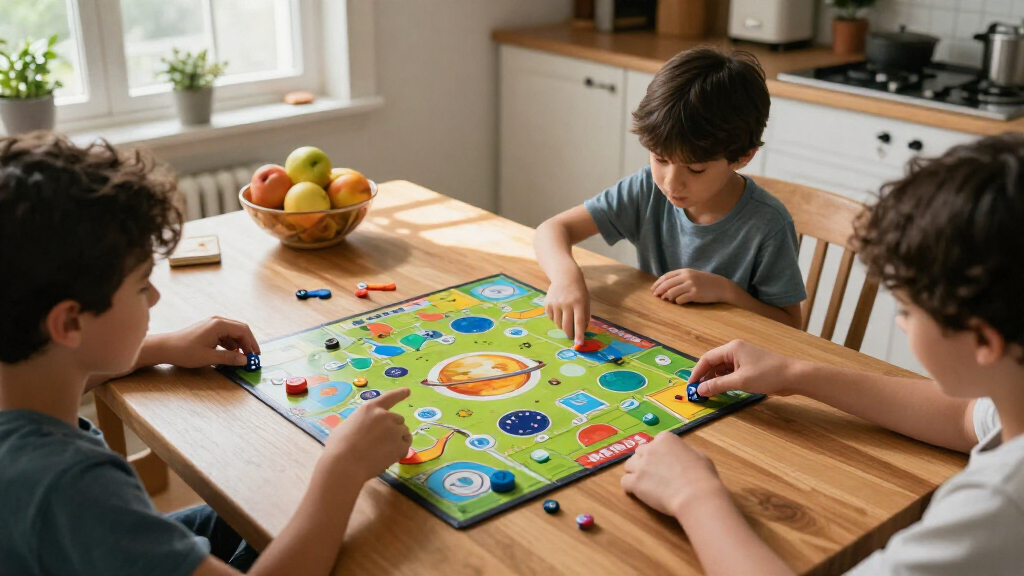
I compared these eight games through a family-use lens: what players practice, whether children and adults can take part together, how much reading or prior knowledge a game asks of players, and whether its pace works for mixed ages. I also considered the likely learning payoff: some games focus on a subject such as geography or math, while others build vocabulary, recall, or verbal reasoning through play.
The ranking favors games with a clear educational angle and a format that can serve a range of family situations. Trivial Pursuit Family Edition leads for its broad trivia focus and family framing; Race Across the USA ranks strongly for targeted geography learning. More specialized or speed-driven options remain useful picks, but they rank lower for households that want accessible play across varied ages and skill levels. I treat each game’s intended age and format as part of its value, not as proof that every family will find it equally easy to play.
| educational board games for familie | Brand |
|---|---|
| I Should Have Known That! Triv | Hygge Games |
| Bananagrams Classic Word Game | — |
| Tapple: The Original Fast-Pace | USAOPOLY |
| Scholastic Race Across the USA | University Games |
| Spin Master Games Hedbanz Clas | Spin Master Games |
| Hasbro Gaming Trivial Pursuit | — |
| Number Hunter Math Board Game | — |
| Hasbro Gaming Scrabble Junior | — |
Factors to Consider When Choosing Educational Board Games For Families
Choosing among educational family games starts with the experience you want around the table, not just the subject printed on the box. These factors can help match a game to your players’ ages, attention spans, and learning goals.
Choose a Learning Goal You Can Actually Use
Start by deciding whether you want practice in a specific subject or a game that encourages broad thinking and conversation. A geography-focused game can support map knowledge, while word games offer repeated exposure to spelling and vocabulary; trivia is broader but may reward existing knowledge as much as new learning. A common mistake is choosing a title because it sounds educational without asking what players will do repeatedly during play. Think about a current interest or school topic that could make the game feel relevant. If your aim is family discussion rather than curriculum practice, a general-knowledge or guessing format may be a better fit. The best match is the one your household will bring back to the table.
Match the Rules to the Youngest Regular Player
Check more than the age label: consider reading level, number sense, attention span, and how independently a child can follow turns. A game can be suitable for a child’s age yet still leave them relying on an adult to interpret every question or instruction. That may be fine if family members enjoy coaching, but it can slow play for a group seeking equal participation. Look for ways the game accommodates different abilities, such as shared teams, simpler prompts, or a junior mode. Avoid buying for the oldest player alone if younger children will join most sessions. A little adult support can enrich play, but too much can make the child feel like a spectator.
Balance Speed Against Thinking Time
Timed and rapid-response games can bring energy to a family gathering, yet speed changes what a game rewards. Players who need extra time to read, recall, or form an answer may contribute less even when they understand the material. Before choosing a fast format, ask whether your group enjoys friendly pressure or prefers turns with room to think. You can sometimes soften the pace by playing cooperatively, removing a timer, or agreeing that everyone gets a chance to answer. Those adjustments may alter the intended challenge, so check that they still feel fun. For mixed ages or learning needs, flexible pacing often matters more than a lively setup.
Look for Replayability That Fits Your Routine
Replay value depends on how quickly players learn the content and whether each session feels different. Trivia can become familiar if the same questions return, while open-ended word play can vary with every round. Consider how long your family typically has for a game night and whether a title can be played in shorter sessions. A game that takes too long to set up or finish may stay on the shelf, even if its learning goal is appealing. Also think about who will want to play again: children may enjoy repetition for practice, while adults may want fresh challenges. Pick for your real schedule, not an idealized weekly game night.
Decide Whether Adults Should Compete or Coach
Family games can bring people together while still creating uneven advantages: adults may have larger vocabularies, more geography knowledge, or stronger recall. That gap is not automatically a problem, but it can shape whether children feel challenged or outmatched. Team play, handicaps, or letting younger players ask for hints can make participation fairer without removing the learning. Before buying, consider whether the game’s structure lets adults support children while still enjoying a meaningful role. Avoid assuming that a shared table means a shared difficulty level. The right balance lets everyone contribute, even if players bring different strengths.
Pay for a Better Fit, Not a Bigger Feature List
When comparing options, focus on what would change your family’s play: clearer age progression, a subject you actively want to practice, or a format that can include several generations. Extra components matter less if the game’s pace or reading demands do not suit your group. A lower-complexity word or guessing game may be the better household choice than a more involved trivia format if you need quick sessions. On the other hand, paying more can make sense when a game provides a strong shared experience or serves a specific learning goal your family values. Think about storage and setup too, especially if games need to be easy for children to get out and put away. A good purchase fits both your learning aims and your everyday routine.
Frequently Asked Questions
Which game is the best starting point for a family with children at different ages?
Trivial Pursuit Family Edition is my broadest starting point when the goal is a shared trivia experience, but age gaps still matter because players may have different knowledge bases. If younger children are just developing basic skills, a junior-focused option such as Scrabble Junior may give them a more approachable role. For a group with mixed reading confidence, consider whether adults are happy to help or whether children need to play independently. Teaming younger and older players can reduce the gap without making the game feel like a lesson. Choose based on who will join most often, not just the oldest child’s ability.
Which of these games is best for practicing a specific school subject?
For a focused subject, Race Across the USA is the clearest fit for geography, while Number Hunter is the dedicated math-oriented option. Word titles such as Scrabble Junior and Bananagrams support spelling and vocabulary through play rather than following a formal lesson sequence. General trivia can cover many topics, but its educational value depends on the questions and what players already know. If you have a particular skill in mind, choose the game that repeatedly asks children to use it. A broad game is a better match when variety matters more than targeted practice.
Are fast word games a good choice for children who are still learning to spell?
They can be, but the game’s pace may matter as much as its vocabulary challenge. Bananagrams and Tapple can encourage quick word retrieval, yet a child who needs more time may feel rushed rather than supported. You can slow a round, allow hints, or pair a child with an adult, though these changes may make competition less central. For children who benefit from more structure, Scrabble Junior may offer a gentler entry into word play. Match the format to whether your child enjoys timed challenges or needs space to work through words.
Should I choose a game that teaches one subject or one that covers several skills?
A focused game makes sense when your family has a clear learning goal, such as geography or math practice. A broader option can work better when you want variety, conversation, or a game that different players can enjoy for different reasons. The tradeoff is that general trivia may test knowledge more than teach unfamiliar material, while a focused game can feel repetitive if the subject is not a family interest. Think about whether your child would welcome repeated practice or prefers changing topics. A useful compromise is to choose one focused game for learning and one lighter word or guessing game for casual play.
How can I keep adults from dominating a family educational game?
Set the rules around participation before the first round: use mixed-age teams, let younger players request clues, or give everyone a moment to answer before the quickest player speaks. In trivia games, adults may have an advantage from accumulated knowledge, while word games can favor players who respond quickly. You can make the goal cooperative by having the group solve prompts together rather than keeping an individual score. If children still feel overshadowed, choose a game with age-targeted content or a junior format for regular play. The aim is not to remove challenge, but to give each player a meaningful way to contribute.
Conclusion
For the broadest family trivia experience, I recommend Hasbro Gaming Trivial Pursuit Family Edition as the best overall choice. Families focused on geography should choose Scholastic Race Across the USA, while Scrabble Junior is my pick for beginners building early word skills. For quick, flexible word play, Bananagrams Classic offers a distinct alternative; choose it over a structured trivia game when short rounds matter more than subject coverage. Number Hunter is the specific-needs choice for math practice, and buyers seeking a premium-style family game should prioritize the option whose format best suits their group rather than paying for features they will not use. Before deciding, match the game’s pace and reading demands to the youngest regular player.