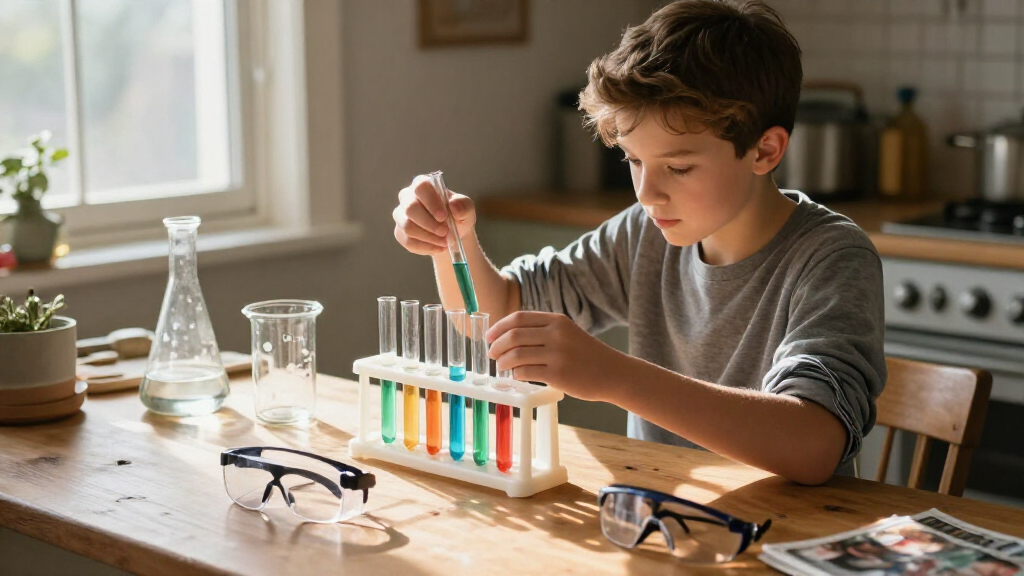
For most teenagers, I’d choose the Thames & Kosmos CHEM C2000 as the best overall chemistry set, balancing a substantial experiment program with a more advanced focus than beginner kits. The CHEM C3000 stands out for teens who want the broadest experiment selection, while the CHEM C1000 is a more approachable starting point. The main tradeoff is between depth and guidance: a larger experiment count can offer more to explore, but it may also call for greater patience and adult support. Smaller sets can be easier to start and store, though they may offer less room to progress. Read on for the full comparison and help matching a set to a teenager’s interests and experience.

Prime made for students and young adults
- Fast, free delivery for dorm and study essentials
- Prime Video and Amazon Music included
- Member-only deals
Key Takeaways
- The C2000 is the strongest all-round fit: it sits between the more introductory C1000 kits and the more demanding C3000 in the Thames & Kosmos lineup.
- The C3000 is the range leader, not the easiest entry point: its 333+ experiments and 103 pieces suit a teen who wants sustained exploration and can manage a more involved kit.
- The C1000 and C1000 V2.1 target similar buyers: both list 125 experiments, so compare their included materials and instructions rather than choosing by the experiment count alone.
- National Geographic kits offer several experiment-count tiers: the 45- and 50-experiment options suit shorter introductions, while the 100+ set offers more activities without matching the C3000’s stated scale.
- Compact and themed kits fill different gaps: the C500’s 28 experiments and Ooze Labs Chemistry Station may suit space-limited or activity-led use better than a larger curriculum-style set.
| Thames & Kosmos CHEM C2000 Intermediate Chemistry Set, Version 2.0 |  | Best Overall for Teenagers Ready to Progress | Experiments: 250 | Manual: 128-page, full-color manual | Chapters: 18 | VIEW LATEST PRICE | See Our Full Breakdown |
| National Geographic Junior Chemistry Set with 50 Experiments |  | Best for Younger Beginners | Experiments: 50 | Lab tools: More than 20 | Recommended age: 4 years and up | VIEW LATEST PRICE | See Our Full Breakdown |
| Thames & Kosmos CHEM C1000 Chemistry Set, 125 Experiments, Ages 10+ |  | Best for Teenagers Starting with Lab Skills | Experiments: 125 | Manual: 80-page, full-color illustrated manual | Chapters: 10 themed chapters | VIEW LATEST PRICE | See Our Full Breakdown |
| Thames & Kosmos CHEM C3000 Chemistry Set, 333+ Experiments, 103 Pieces, Ages 12+ |  | Best Advanced Set | Experiments: More than 333 | Chapters: 27 | Pieces: 103 | VIEW LATEST PRICE | See Our Full Breakdown |
| National Geographic Chemistry Set for Kids, 45 Experiments |  | Best for Spectacle-Focused Experiments | Experiments: 45, according to the title and description | Recommended age: 8 years and up | Notable activities: Volcano, geyser, rocket, and chemical reactions | VIEW LATEST PRICE | See Our Full Breakdown |
| Ooze Labs Chemistry Station Experiment Set |  | Best for Organized, Low-Mess Exploration | Brand: Thames & Kosmos | Age range: 6 years and up | Pieces: 57 | VIEW LATEST PRICE | See Our Full Breakdown |
| Thames & Kosmos Chem C1000 V2.1 Beginner Chemistry Set, 125 Experiments |  | Best for Broad Chemistry Practice | Brand: Thames & Kosmos | Model: Chem C1000 V2.1 | Recommended age: 10 years and up | VIEW LATEST PRICE | See Our Full Breakdown |
| Thames & Kosmos Chemistry C500 Science Kit, 28 Experiments |  | Best for a Focused First Chemistry Set | Brand: Thames & Kosmos | Model: Chemistry C500 (665012) | Recommended age: 10–15 years | VIEW LATEST PRICE | See Our Full Breakdown |
| National Geographic Amazing Chemistry Set with 100+ Experiments |  | Best for Household-Item Variety | Brand: Blue Marble | Sub-brand: National Geographic | Age range: 8 years and up | VIEW LATEST PRICE | See Our Full Breakdown |
| chemistry sets for teenager | Experiments | Recommended age | Manual |
|---|---|---|---|
| Thames & Kosmos CHEM C2000 Int | 250 | 11+ | 128-page, full-color manual |
| National Geographic Junior Che | 50 | 4 years and up | — |
| Thames & Kosmos CHEM C1000 Che | 125 | 10+ | 80-page, full-color illustrated manual |
| Thames & Kosmos CHEM C3000 Che | More than 333 | 12+ | 192-page, full-color illustrated manual |
| National Geographic Chemistry | 45, according to the title and description | 8 years and up | — |
| Ooze Labs Chemistry Station Ex | — | — | 16-page, full-color |
| Thames & Kosmos Chem C1000 V2. | 125 | 10 years and up | 80-page, full-color |
| Thames & Kosmos Chemistry C500 | 28 | 10–15 years | 48-page, full-color guide |
| National Geographic Amazing Ch | 15 with kit materials, plus 85 household-item activities | — | — |
More Details on Our Top Picks
Thames & Kosmos CHEM C2000 Intermediate Chemistry Set, Version 2.0
I’d put the CHEM C2000 first for teenagers who want more than introductory demonstrations but aren’t ready for the C3000’s larger, more advanced program. Its 250 experiments across 18 chapters cover acids and bases, gases, chromatography, electrochemistry, and food chemistry, giving a teen several directions to explore rather than one narrow theme. The included alcohol burner and lab equipment also make heat-based activities possible, though they raise the supervision demands: an adult needs to be present and attentive. Compared with the CHEM C1000, the C2000 offers more experiments, additional chemicals, and a broader equipment selection; compared with the C3000, it is the less expansive choice. I’d skip it for teens who need a no-heat kit or want to work independently.
Pros:- 250 experiments span 18 themed chapters and several chemistry topics.
- Thirteen chemicals and varied lab equipment support hands-on investigations.
- Alcohol burner assembly allows heat-based experiments.
- Manual includes safety, first-aid, hazard-labeling, and disposal guidance.
Cons:- Adult supervision is required, particularly for activities involving heat.
- The alcohol burner adds handling and safety demands beyond a beginner kit.
Best for: Teenagers aged 11 and up who want a substantial, varied home chemistry program and have an adult available to supervise experiments.
Not ideal for: Teens seeking independent, low-supervision activities or families uncomfortable with an alcohol burner and heat-based experiments.
- Experiments:250
- Manual:128-page, full-color manual
- Chapters:18
- Chemicals:13
- Recommended age:11+
- Notable equipment:Alcohol burner assembly, glass test tubes, graduated beakers, carbon electrode, immersion heater, and safety goggles
- Supervision:Adult supervision required
- Safety standard:EN 71-4
- Country of manufacture:Germany
Our verdict“Choose the C2000 for a supervised teenager who wants broader, more demanding experiments than the C1000 without stepping up to the C3000.”
National Geographic Junior Chemistry Set with 50 Experiments
The National Geographic Junior Chemistry Set is the gentlest entry point here, with illustrated steps and more than 20 child-safe tools intended for young experimenters. Many activities use household ingredients such as baking soda and vinegar, which can make it easier for a parent to get started without relying only on supplied chemicals. That simplicity is also its limit for teenagers: its stated age range begins at four, and its 50 activities are less suited to someone seeking the lab techniques and subject depth of the CHEM C1000 or C2000. I’d choose this for a younger sibling or a teen helping a child, not as a teenager’s main chemistry set. Some household materials are also needed separately.
Pros:- Includes 50 hands-on activities with illustrated, step-by-step instructions.
- More than 20 tools, including test tubes and goggles, give beginners basic lab props.
- Many experiments use familiar household ingredients.
- No batteries are required.
Cons:- Its age positioning and introductory activities may feel too young for many teenagers.
- Some experiments require household items that are not included.
Best for: Families introducing a younger child to supervised, simple chemistry activities, especially when a teenager will be helping.
Not ideal for: Teenagers looking for age-targeted lab practice, more advanced chemistry topics, or a substantial step up from household-ingredient experiments.
- Experiments:50
- Lab tools:More than 20
- Recommended age:4 years and up
- Included components:Test tubes, goggles, and other lab tools
- Instruction style:Illustrated, step-by-step instructions
- Item dimensions:11 x 4.22 x 9.64 inches
- Item weight:0.72 kg
- Batteries:Not required
Our verdict“Pick this for a young beginner or shared family activity, but choose the CHEM C1000 for a teenager seeking more formal chemistry practice.”
Thames & Kosmos CHEM C1000 Chemistry Set, 125 Experiments, Ages 10+
For a teenager new to chemistry, I’d favor the CHEM C1000 over a more ambitious set like the C2000. Its 125 experiments in 10 chapters introduce practical techniques including chromatography, electrolysis, indicators, and crystal growing, while the included glassware and seven chemicals give the activities a more laboratory-oriented feel than the National Geographic Junior kit. The 80-page illustrated manual makes the program more approachable than the C3000’s 192-page, 333-plus-experiment offering. The tradeoff is that it has fewer chemicals, chapters, and experiments than the C2000, and adult supervision remains necessary. I’d choose it as a first serious set, not for a teen already eager for an extensive advanced program.
Pros:- 125 experiments introduce a range of chemistry concepts and practical methods.
- Real glass lab equipment supports hands-on work beyond simple demonstrations.
- Illustrated manual organizes activities into 10 themed chapters.
- Includes safety, first-aid, hazard-labeling, and disposal guidance.
Cons:- Adult supervision is required for the experiments.
- Chemicals require careful handling and disposal.
- Its seven chemicals and 125 activities offer less range than the C2000.
Best for: Teenagers aged 10 and up who want to learn basic laboratory methods with real equipment and a guided, manageable set of experiments.
Not ideal for: Teens who have already outgrown beginner activities or want the broader topics, larger experiment count, and equipment range of the C2000 or C3000.
- Experiments:125
- Manual:80-page, full-color illustrated manual
- Chapters:10 themed chapters
- Chemicals:7
- Recommended age:10+
- Equipment:Glass test tubes, graduated beakers, funnel, dropper pipettes, copper wire, rubber stoppers, and 9-volt battery clip
- Safety:Adult supervision required
- Safety standard:EN 71-4
Our verdict“Choose the C1000 for a teenager’s first structured lab kit; move to the C2000 if they want more experiments and a wider equipment selection.”
Thames & Kosmos CHEM C3000 Chemistry Set, 333+ Experiments, 103 Pieces, Ages 12+
The CHEM C3000 is the strongest fit for a teenager who wants an ongoing chemistry program rather than a sampler. Its 333-plus experiments, 27 chapters, and 16-plus chemicals cover inorganic, organic, and electrochemistry, while 103 pieces of equipment and a 192-page illustrated manual support a broad range of activities. Compared with the C2000, it offers a much larger experiment library and wider stated subject coverage; compared with the C1000, it asks more of both the teen and supervising adult. That scale is its main drawback: it may be excessive for a beginner, adult oversight is required, and some activities call for extra household materials. I’d reserve this for a motivated teen with a dedicated adult supervisor.
Pros:- More than 333 experiments provide the largest stated program among these Thames & Kosmos sets.
- Covers inorganic, organic, and electrochemistry topics.
- Includes 103 pieces of equipment and more than 16 chemicals.
- 192-page illustrated manual supplies procedures, explanations, and safety guidance.
Cons:- Adult supervision is required throughout the program.
- Some experiments need additional household materials.
- The breadth and scale may overwhelm a beginner compared with the C1000.
Best for: A motivated teenager aged 12 or older who wants extensive coverage across several chemistry fields and has consistent adult supervision.
Not ideal for: Beginners, families without an adult available during experiments, or teens who want a compact and simple set to use occasionally.
- Experiments:More than 333
- Chapters:27
- Pieces:103
- Chemicals:16+
- Manual:192-page, full-color illustrated manual
- Recommended age:12+
- Subjects:Inorganic chemistry, organic chemistry, and electrochemistry
- Notable equipment:Glassware, tripod stand, alcohol burner, evaporating dish, pipettes, carbon electrode, circuit components, and safety goggles
- Supervision and safety:Adult supervision required; EN 71-4
Our verdict“Choose the C3000 for a committed teen ready for a broad, long-running chemistry program, not for a first or casual introduction.”
National Geographic Chemistry Set for Kids, 45 Experiments
This National Geographic kit is the pick for teens who are drawn to visible, dramatic activities such as a volcano, geyser, or launched rocket. Its 45 experiments and illustrated, kid-friendly guide introduce chemical reactions and the scientific process in a more accessible format than the Thames & Kosmos C1000. That makes it approachable for a teen who wants quick, concrete demonstrations, but less compelling for someone seeking glassware-based lab practice, named chemistry techniques, or a deep sequence of topics. The product data also gives mixed signals: the title and description list 45 experiments, while the included-components field refers to a “100 Plus Easy Experiments” kit. I’d choose it for activity-led exploration, not for a structured teen chemistry course.
Pros:- Activities include a volcano, geyser, and rocket alongside chemical reactions.
- Illustrated instructions guide users through each experiment.
- Introduces chemistry concepts, the scientific process, and safe experiment practices.
- No batteries are required.
Cons:- Its kid-focused activities may feel basic to older teens seeking deeper chemistry.
- The product information conflicts on experiment count, listing 45 in the title and description but “100 Plus” in one component field.
- The supplied information does not detail laboratory equipment or included chemicals.
Best for: A younger teenager or hands-on learner who prefers vivid demonstrations and approachable instructions over detailed lab technique.
Not ideal for: Teenagers seeking real laboratory equipment, a clearly specified long-form curriculum, or the broader chemical topics in the CHEM C1000 and C2000.
- Experiments:45, according to the title and description
- Recommended age:8 years and up
- Notable activities:Volcano, geyser, rocket, and chemical reactions
- Guide:Illustrated, kid-friendly instructions
- Educational focus:Chemistry fundamentals, scientific process, and safe experiment practices
- Dimensions:8.78 x 3.19 x 11.93 inches
- Weight:2.9 pounds
- Batteries:Not required
Our verdict“Pick this for a teen who values lively demonstrations, but choose a Thames & Kosmos set for clearer lab-equipment detail and more structured chemistry study.”
Ooze Labs Chemistry Station Experiment Set
The built-in chemistry station gives this kit a different appeal from the larger, manual-led Thames & Kosmos Chem C1000 V2.1: experiment cards clip onto the station, keeping instructions close while a teen works through projects. Its roughly 20 activities include slime, fizzing reactions, chromatography, and an underwater volcano, so it favors colorful, approachable demonstrations over the C1000’s much broader chemistry syllabus. The equipment range and non-hazardous, borax-free chemicals suit younger beginners or families who want a contained first setup. The tradeoff is limited scope: experiments depend on the included materials, and a teenager seeking sustained challenge may outgrow it sooner than the 125-experiment C1000. Its listed age range starts at six, so older teens may find the activities geared toward younger learners.
Pros:- Station and clip-on experiment cards keep the work area and instructions together.
- About 20 activities span slime, fizzing reactions, chromatography, and other demonstrations.
- Includes multiple tools and vessels for hands-on work.
- Chemicals are described as non-hazardous and do not contain borax.
Cons:- The activity range is much narrower than the 125 experiments in the Thames & Kosmos Chem C1000 V2.1.
- Many experiments rely on the kit’s supplied chemicals and equipment, limiting reuse with other activities.
- The listed age range begins at six, which may make the projects feel young for some teenagers.
Best for: Families introducing younger teens to hands-on chemistry who want a dedicated station, visible instructions, and approachable experiments.
Not ideal for: Older teens seeking more advanced concepts or a large sequence of progressively challenging experiments; the set has about 20 activities and a younger listed age range.
- Brand:Thames & Kosmos
- Age range:6 years and up
- Pieces:57
- Approximate experiments:20
- Manual:16-page, full-color
- Included equipment:Plastic chemistry station, vessels, syringe, measuring cup, pipette, spatula, tube, petri dish, and funnel
- Chemical safety:Non-hazardous chemicals; does not contain borax
- Model number:642105
Our verdict“Choose this for an organized, approachable first chemistry setup, but pick the Chem C1000 V2.1 for a teen ready for broader study.”
Thames & Kosmos Chem C1000 V2.1 Beginner Chemistry Set, 125 Experiments
For a teenager who wants more than a handful of visual demonstrations, the 125-experiment program makes the Chem C1000 V2.1 the broadest learning-focused choice in this batch. Its topics range from indicators and chromatography to electrochemical reactions and electrolysis, while the 80-page manual pairs step-by-step directions with safety guidance and explanations. Compared with the Ooze Labs Chemistry Station, this set is aimed at older learners and offers more scope for continued practice, but it gives up the station’s clipped-card convenience and particularly approachable, contained setup. Thirty tools, selected chemicals, and goggles make it feel like a more involved lab kit; that also means handling equipment and chemicals calls for careful attention. Its beginner label should not be mistaken for a fit for every age or experience level.
Pros:- Offers 125 experiments across a wide range of chemistry topics.
- Includes 30 lab tools, selected chemicals, and safety goggles.
- The 80-page manual provides procedures, safety guidance, and scientific explanations.
- Covers topics such as indicators, chromatography, electrochemical reactions, and electrolysis.
Cons:- The breadth and equipment use call for careful supervision and attention to handling instructions.
- Its age recommendation of 10 and up makes it a poor match for younger beginners.
- Compared with the Ooze Labs station, it lacks a dedicated work surface with cards kept in easy view.
Best for: Teens aged 10 and up who want a substantial guided introduction spanning several chemistry topics, with a manual that explains the science as well as the steps.
Not ideal for: Younger children or families seeking a small, simple set of colorful demonstrations with minimal equipment handling.
- Brand:Thames & Kosmos
- Model:Chem C1000 V2.1
- Recommended age:10 years and up
- Experiments:125
- Lab tools:30
- Manual:80-page, full-color
- Included components:Chemicals and chemistry lab equipment
- Educational focus:STEM and chemistry
Our verdict“Pick the Chem C1000 V2.1 for a teen ready to work through a broad, guided chemistry curriculum and follow lab safety directions.”
Thames & Kosmos Chemistry C500 Science Kit, 28 Experiments
The Chemistry C500 is a compact, guided introduction for teens who want clear experiments without committing to the C1000 V2.1’s 125-activity program. Its 28 projects cover acids and bases, reactions among solids, liquids, and gases, and invisible ink, with a 48-page illustrated manual explaining both setup and science. That makes it a more structured choice than the National Geographic Amazing Chemistry Set: the latter advertises many extra activities, but 85 rely on common household items rather than supplied kit materials. The C500’s beakers, test tubes, pipettes, and chemicals provide a more defined starting set, though its 28 experiments offer less runway than the C1000. It is listed for indoor use, and the product data mentions a battery requirement without specifying the type, an uncertainty worth checking before purchase.
Pros:- Twenty-eight guided experiments introduce acids and bases, reactions, and invisible ink.
- The 48-page, full-color manual includes setup instructions and explanations.
- Includes beakers, test tubes, chemicals, stoppers, and pipettes.
- Its defined activity count and included materials make the scope clearer than National Geographic’s household-item bonus activities.
Cons:- The 28 experiments provide less activity breadth than the Chem C1000 V2.1’s 125.
- Designed for indoor use, so it is not the pick for families seeking outdoor experiments.
- The listing mentions a battery requirement but does not identify the battery type.
Best for: Ages 10–15 who want a manageable, manual-led introduction with core chemistry topics and supplied lab-style tools.
Not ideal for: Teens seeking a long sequence of advanced experiments, outdoor projects, or a set with clearly specified power requirements.
- Brand:Thames & Kosmos
- Model:Chemistry C500 (665012)
- Recommended age:10–15 years
- Experiments:28
- Manual:48-page, full-color guide
- Included components:Beakers, test tubes, chemicals, stoppers, pipettes, and manual
- Usage:Indoor
- Dimensions:13.1 x 2.6 x 8.9 inches
- Warranty:1 year against manufacturer defects
Our verdict“Choose the C500 for a focused, guided first set with supplied tools; move up to the C1000 V2.1 if broader chemistry coverage matters more.”
National Geographic Amazing Chemistry Set with 100+ Experiments
This National Geographic set’s headline count needs context: it includes materials for 15 experiments, while the other 85 are guide activities that use common household items. That format can stretch a family’s activity list without requiring every experiment to come from the box, but it is less self-contained than the Thames & Kosmos Chemistry C500, which supplies materials for its 28 guided experiments. The kit projects—such as a crystal tree, color-changing solutions, and a bouncy ball—offer varied, visual results, and test tubes, beakers, and pipettes introduce familiar lab tools. Its age range starts at eight, making it accessible to younger teens, though older teens may want the C1000 V2.1’s wider chemistry curriculum. Buyers should treat the bonus count as instructions, not as 85 additional sets of materials.
Pros:- Includes materials for 15 experiments plus a guide to 85 household-item activities.
- Projects include crystal growing, color-changing solutions, and making a bouncy ball.
- Test tubes, beakers, and pipettes offer introductory lab-tool practice.
- The age range of eight and up suits younger teenagers as well as children.
Cons:- Only 15 experiments have materials supplied in the kit; the additional activities need household items.
- Its activity guide is less self-contained than the Chemistry C500’s supplied materials for 28 experiments.
- Older teens seeking broader or more advanced chemistry topics may prefer the Chem C1000 V2.1.
Best for: Families with younger teens who enjoy varied, hands-on projects and are happy to gather household supplies for activities beyond the 15 kit-material experiments.
Not ideal for: Teens who want a self-contained set with materials for every listed activity or a more systematic, advanced chemistry curriculum.
- Brand:Blue Marble
- Sub-brand:National Geographic
- Age range:8 years and up
- Experiments:15 with kit materials, plus 85 household-item activities
- Included tools:Test tubes, beakers, and pipettes
- Educational objective:STEM
- Dimensions:8.78 x 3.19 x 11.93 inches
- Item weight:1.8 pounds
- Model number:NGMEGACHEMAR
Our verdict“Pick this for younger teens and flexible household-supply projects, but choose the Chemistry C500 if you want more experiments supplied in the box.”
How We Picked
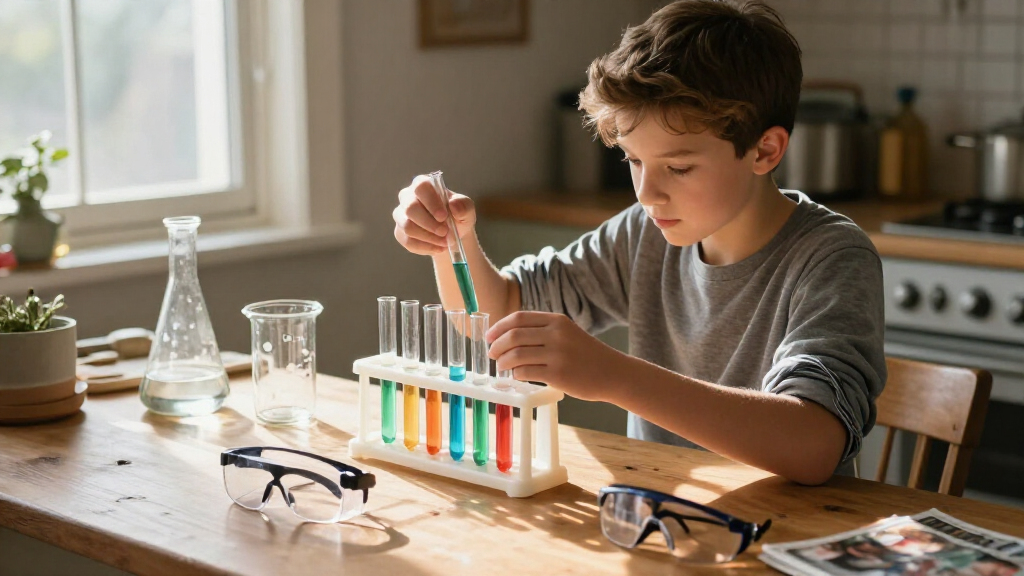
I ranked these chemistry sets for teenagers by how well their stated experiment range, audience, and kit format align with teen-level learning. I gave more weight to options that appear to balance room for progression with a manageable starting point, rather than treating the largest activity count as an automatic win. I also compared beginner-oriented sets, compact kits, and broader experiment collections so the ranking reflects different household needs.
The C2000 leads as a middle-ground choice; the C3000 ranks higher for depth but lower for accessibility. The two C1000 versions and National Geographic sets offer alternatives for easier entry, while the C500 and Ooze Labs set have narrower roles. Product names and supplied details do not establish every difference in safety guidance, chemical replenishment, or adult supervision, so I treat those as points buyers should verify before choosing.
Factors to Consider When Choosing Chemistry Sets For Teenagers
Experiment counts and age labels are useful starting points, but they do not tell you whether a kit fits a particular teen’s confidence, workspace, or appetite for independent learning. I’d use the following factors to judge the real fit before buying.
Match the challenge to the teenager, not just their age
A teen who already enjoys following lab procedures may prefer a set with room to build skills, while a first-time experimenter may get more from clear, shorter activities. Age guidance is a broad signal, not a measure of prior experience or readiness to work independently. Check whether the kit is framed as a junior introduction, a beginner set, or an intermediate set, then compare that positioning with the teen’s actual interests. A common mistake is choosing the most advanced-looking kit as a way to encourage learning; a poor fit can leave it unused. When in doubt, prioritize confidence and clear instructions over maximum scope.
Look beyond the experiment count
A high activity count can mean more variety, but it does not reveal how much each activity teaches or whether experiments build on one another. A set with fewer, well-explained activities may be a better match for a teen who likes to repeat a procedure, record results, and understand what changed. Check whether the listed count refers to distinct experiments or variations on similar activities, if the manufacturer explains that distinction. Also look for a clear contents list so you can tell whether the activities rely on a broad range of supplied equipment. Choose breadth for an enthusiastic explorer and a guided learning sequence for someone who wants structure.
Check what is included and what needs replenishing
Before choosing a kit, review its current contents list and instructions for any household supplies or additional materials required. A set can appear ready to use while still depending on common items that need to be gathered separately. Ask whether consumable materials run out quickly and whether compatible replacements are easy to find, since this affects how often the teen can return to the experiments. Do not assume that two kits with similar experiment counts include comparable tools or supplies. A slightly smaller kit with the needed equipment may deliver a smoother first session than a larger collection with gaps.
Plan for supervision, safety, and cleanup
Teenagers vary widely in how much adult support they need, and a kit’s age label cannot answer every safety question. Read the supplied safety notes before purchase, and check what protective equipment, workspace rules, and disposal guidance the instructions call for. Think about where experiments will happen: a stable, easy-to-clean surface is usually more practical than a shared dining table that must be cleared after every activity. Avoid assuming that a chemistry kit is suitable for unsupervised use solely because it is marketed to children or teens. If the guidance is unclear, contact the maker or choose a kit with more explicit instructions.
Balance room to grow against storage and setup
Larger experiment collections can sustain interest, but they also need a place to store components and a routine for keeping pieces organized. A compact kit may be easier to bring out regularly, especially in a small home or for a teen who prefers short sessions. Consider whether the teen will set up experiments independently or needs an adult nearby; complex preparation can become a barrier even when the activity itself is engaging. Before buying, think about where the kit will live between uses and whether its parts can be packed away safely. Pay for extra scope only when the teen is likely to use it.
Choose a learning style that will hold attention
Some teens enjoy a structured progression through concepts, while others are drawn to colorful demonstrations and quick, visible results. A broad chemistry set may suit a teen who wants to investigate many topics, whereas a themed station can appeal to someone who prefers a distinct activity format. Try to identify whether the recipient likes reading detailed instructions, working through a sequence, or picking an activity at random. Buying a kit based only on its subject can miss the more important question of how the teen likes to learn. If motivation is the main concern, a format that encourages frequent use may beat a larger kit that feels like coursework.
Frequently Asked Questions
Is the CHEM C3000 a good first chemistry set for a teenager?
It may suit a motivated teen who already follows detailed instructions comfortably, but its 333+ experiments and 103 pieces make it a broader commitment than a small introductory kit. For a first chemistry set, I’d compare it with the C1000 options and the National Geographic sets, which present more approachable entry points. The C2000 is another middle ground if the teen wants more scope than a beginner kit without starting with the largest listed collection. Check the instructions and supervision guidance for the specific version before deciding. A teen’s patience and interest matter more than choosing the biggest set.
What is the difference between the CHEM C1000 and CHEM C1000 V2.1?
Both listings identify 125 experiments and position the kit as a beginner option, so the headline count alone does not settle the choice. Compare the current contents list, instruction format, included materials, and any version-specific changes shown by the seller or manufacturer. A version number may signal an updated edition, but it does not by itself confirm which components or activities changed. If the details are not clear, use the manufacturer’s documentation rather than guessing from the product title. Choose the one whose stated contents best match the teen’s needs and your plans for adult support.
Should I choose a kit with more experiments or one that is easier to use?
Choose based on the teen’s likely follow-through, not the largest number on the box. More experiments can provide variety and longer-term use, but only if the teen is willing to sort materials, follow instructions, and return to the kit. A smaller or more guided set may lead to more successful sessions for a beginner or someone with limited time. Consider whether activities progress in difficulty and whether the kit supplies what they need to start. If you are unsure, a manageable first experience is often a better foundation than a collection that feels demanding.
Can a teenager use these chemistry sets without an adult?
Do not assume independent use from the word “teenager” or an age label alone. The level of adult involvement depends on the specific experiments, the teen’s experience, and the safety instructions supplied with that version of the kit. Read those instructions before purchase, including notes about protective equipment, workspace, and disposal. For a first-time user, plan to review the procedures together and provide supervision where the directions call for it. If the product information does not make supervision needs clear, ask the manufacturer before buying.
Which option makes sense if space is limited or the teen may lose interest?
The CHEM C500, with 28 listed experiments, is the most compact-sounding route in this lineup, while Ooze Labs offers a distinct chemistry-station format. National Geographic’s 45- and 50-experiment kits also provide smaller activity counts than the 100+ set or the Thames & Kosmos C3000. Check the physical dimensions and storage requirements, since an experiment count does not reveal how much shelf space a kit needs. If interest is uncertain, favor an easy-to-store set with activities the teen can begin without a large setup. That choice may get used more often than a much larger collection.
Conclusion
For most teenagers, I recommend the CHEM C2000 as the best overall balance of depth and approachability. The CHEM C1000 or C1000 V2.1 is my best beginner choice for a teen starting with structured chemistry activities, while the National Geographic Junior Chemistry Set or 45-experiment set may suit families seeking a smaller introduction. For the broadest stated experiment range, choose the CHEM C3000 as the best premium-style pick, provided the teen is ready for a larger, more involved kit. The CHEM C500 is a sensible specific-needs choice for limited space or a shorter activity list, and Ooze Labs suits shoppers drawn to a dedicated station format. Before ordering any set, verify its current contents, safety guidance, and supply requirements so the kit matches the teen who will use it.