Interactive science learning kits turn abstract concepts into hands-on discovery, but the category splits sharply between chemistry experiment sets, electronics and engineering builds, and tech-enabled tools like talking microscopes and VR kits. The National Geographic Amazing Chemistry Set with 100+ Experiments stands out as the best overall pick for its sheer experiment count, clear instruction manual, and consistent results across a wide 8-12 age range. For younger siblings, the Melican 60+ Science Experiment Kit offers a gentler entry point, while the Bill Nye’s VR Science Kit earns the premium slot by blending physical experiments with immersive virtual reality lessons. The main tradeoff you’ll face: breadth of experiments versus depth of learning — big-count kits sometimes feel repetitive, while focused kits teach fewer topics more thoroughly. Read on for the full breakdown of all 15 kits.

Prime made for students and young adults
- Fast, free delivery for dorm and study essentials
- Prime Video and Amazon Music included
- Member-only deals
Key Takeaways
- National Geographic dominates the lineup with five different kits, and its 100+ Experiment Amazing Chemistry Set earned the top spot because its instructions and experiment success rate beat cheaper high-count rivals like the UNGILINGA 150 Experiments kit.
- Experiment count is a misleading metric: kits advertising 100+ activities often count variations of the same reaction, so focused kits like the Smartivity Human Body Model or the STEM Electric Circuit Kit delivered more genuine learning per dollar.
- Age labels matter more than usual in this category — kits for ages 4-8 (Melican, Butterfly EduFields) rely heavily on parent involvement, while 8+ kits assume independent reading and fine motor skills.
- The two tech-enhanced picks (GeoSafari Talking Microscope and Bill Nye VR Science Kit) cost roughly double the average but solve the ‘kid does it alone’ problem better than any manual-based kit.
- Physics and electronics are underrepresented compared to chemistry: if you want circuitry or engineering, only two kits in this roundup cover it seriously, which makes the STEM Electric Circuit Kit a niche but easy recommendation.
| National Geographic Magic Chemistry Set with 10 Tricks for Kids Ages 8-12 |  | Best Starter Magic-Science Kit | Ages: 8-12 | Number of Tricks: 10 | Includes: Tools, magic wand, white gloves, experiment guide | VIEW LATEST PRICE | See Our Full Breakdown |
| Melican 60+ Science Experiment Kit for Kids Ages 4-8+ |  | Best for Early Learners | Brand: Melican | Age Range: 4 years and up | Number of Experiments: 60+ | VIEW LATEST PRICE | See Our Full Breakdown |
| Educational Insights GeoSafari Talking Microscope | 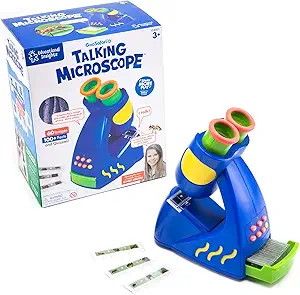 | Best for Preschool Independence | Number of Slides: 20 | Images per Slide: 3 | Total Images: 60 | VIEW LATEST PRICE | See Our Full Breakdown |
| National Geographic Amazing Chemistry Set with 100+ Experiments for Ages 8-12 |  | Best Overall | Brand: Blue Marble (National Geographic) | Age Range: 8 years and up | Number of Experiments: 100+ | VIEW LATEST PRICE | See Our Full Breakdown |
| National Geographic Science Magic Kit with 100+ Experiments for Kids 8-12 |  | Best Blend of Magic and Volume | Brand: Blue Marble (National Geographic) | Age Range: 8 years and up | Number of Experiments: 100+ (20 boxed, 85+ in bonus booklet) | VIEW LATEST PRICE | See Our Full Breakdown |
| Smartivity DIY Interactive Human Body Model for Kids 8-14 Years |  | Best for Anatomy-Focused Learning | Brand: Smartivity | Age Range: 8 years and up | Focus: Human anatomy and mechanics | VIEW LATEST PRICE | See Our Full Breakdown |
| UNGLINGA 150 Experiments Science Kit for Kids – Chemistry, Physics, Earth Science | 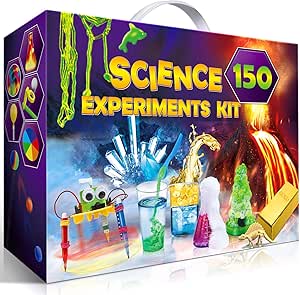 | Best Experiment Variety | Brand: UNGLINGA | Age Range: 8 years and up | Number of Experiments: 150 | VIEW LATEST PRICE | See Our Full Breakdown |
| Butterfly EduFields Science Kits for Kids Ages 5-7 & 6-8 | 100+ Experiments |  | Best for Younger Scientists | Brand: Butterfly EduFields | Age Range: 4 years & up | Number of Experiments: 100+ | VIEW LATEST PRICE | See Our Full Breakdown |
| UNGLINGA 70 Lab Experiments Science Kits for Kids Chemistry Set Toys |  | Best Value Chemistry Set | Brand: UNGLINGA | Number of Experiments: 70 | Recommended Age: 8 years and up | VIEW LATEST PRICE | See Our Full Breakdown |
| Science Kit for Kids – 80 Experiments with Scientist Role Play |  | Best Role Play Experience | Number of Experiments: 80 | Age Range: 6+ years | Key Components: Goggles, gloves, test tubes, petri dishes, droppers, measuring cups and spoons, chemical materials, balloons, guidance cards | VIEW LATEST PRICE | See Our Full Breakdown |
| Doctor Jupiter Ultimate Science Experiments Kit for Kids Ages 8+ |  | Best Volume Pick | Number of Experiments: 135+ | Bonus Experiments: 90+ with household items | Age Range: 8+ years | VIEW LATEST PRICE | See Our Full Breakdown |
| STEM Electric Circuit Kit for Kids and Teens – Science Projects and Experiments |  | Best for Physics and Electronics | Brand: GadgetGlee | Age Range: 8-14 years | Number of Experiments: 8 | VIEW LATEST PRICE | See Our Full Breakdown |
| Bill Nye’s VR Science Kit – Kids STEM Set, Ages 8-12 |  | Best Premium Tech Experience | Number of Pieces: 50 reusable pieces | VR Goggles Included: Yes | Compatible Devices: iOS and Android smartphones (no tablet support) | VIEW LATEST PRICE | See Our Full Breakdown |
| National Geographic Earth Science Kit with 100+ Activities for Kids 8-12 | 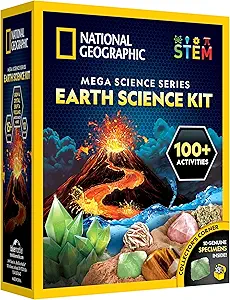 | Best Overall | Brand: Blue Marble (National Geographic) | Age Range: 8 years and up | Number of Activities: 100+ | VIEW LATEST PRICE | See Our Full Breakdown |
| National Geographic Junior Chemistry Set with 50 Experiments for Kids |  | Best for Preschoolers | Brand: Blue Marble (National Geographic) | Age Range: 4 years and up | Number of Experiments: 50 | VIEW LATEST PRICE | See Our Full Breakdown |
| interactive science learning kit | Age Range | Brand | Number of Experiments | Model Number |
|---|---|---|---|---|
| National Geographic Magic Chem | — | — | — | — |
| Melican 60+ Science Experiment | 4 years and up | Melican | 60+ | SYTZ2 |
| Educational Insights GeoSafari | — | — | — | — |
| National Geographic Amazing Ch | 8 years and up | Blue Marble (National Geographic) | 100+ | NGMEGACHEMAR |
| National Geographic Science Ma | 8 years and up | Blue Marble (National Geographic) | 100+ (20 boxed, 85+ in bonus booklet) | NGMEGAMAGIC |
| Smartivity DIY Interactive Hum | 8 years and up | Smartivity | — | SMRT1334 |
| UNGLINGA 150 Experiments Scien | 8 years and up | UNGLINGA | 150 | — |
| Butterfly EduFields Science Ki | 4 years & up | Butterfly EduFields | 100+ | 516 |
| UNGLINGA 70 Lab Experiments Sc | — | UNGLINGA | 70 | — |
| Science Kit for Kids | 6+ years | — | 80 | — |
| Doctor Jupiter Ultimate Scienc | 8+ years | — | 135+ | — |
| STEM Electric Circuit Kit for | 8-14 years | GadgetGlee | 8 | DP501 |
| Bill Nye’s VR Science Kit | 8-12 years | — | — | — |
| National Geographic Earth Scie | 8 years and up | Blue Marble (National Geographic) | — | NGMEGAEARTH |
| National Geographic Junior Che | 4 years and up | Blue Marble (National Geographic) | 50 | NGJRCHEMT |
More Details on Our Top Picks
National Geographic Magic Chemistry Set with 10 Tricks for Kids Ages 8-12
This kit takes a narrow, polished approach: just ten tricks, but each one is designed to feel like a real performance. Compared with the National Geographic Science Magic Kit, which stacks 100+ experiments into a bigger box, this version trades volume for stage-readiness — the included magic wand and white gloves mean a child can actually put on a show, not just run a reaction and move on. The illustrated guide explains the science behind each trick, which keeps it from being pure novelty. The tradeoff is straightforward: a motivated eight-year-old will finish these ten experiments quickly, and there’s little replay value once the wow factor fades. Adult supervision is needed for some activities. This pick makes the most sense for performance-minded kids who want an audience, not just a lab bench.
Pros:- Performance accessories (wand, gloves) turn experiments into a genuine magic show
- All tools included, so no scavenging for household items before starting
- Illustrated guide explains the science behind each trick, not just the steps
- Low commitment — a manageable first step into chemistry-themed play
Cons:- Only ten tricks, so replay value is limited compared with 100+ experiment kits
- Tight 8-12 age range with no room to grow for younger or older siblings
Best for: Kids ages 8-12 who love performing for family and want a small, polished set of demo-worthy tricks
Not ideal for: Parents seeking long-term value or depth — ten tricks will be exhausted within a few sessions
- Ages:8-12
- Number of Tricks:10
- Includes:Tools, magic wand, white gloves, experiment guide
- Format:Magic-themed chemistry experiments
- Instruction Style:Kid-friendly illustrated guide with scientific insights
- Supervision:Adult supervision recommended for some experiments
Our verdict“A great gateway kit for the young showman who wants science that looks like magic, as long as you accept its short lifespan.”
Melican 60+ Science Experiment Kit for Kids Ages 4-8+
Most big experiment kits start at age eight, which leaves younger kids watching from the sidelines. This set closes that gap with 60+ age-appropriate experiments — volcanoes, fizzing dinosaur eggs, simple chemical reactions — pitched at the 4-8 range. Compared with the UNGLINGA 70 Lab Experiments kit, which targets slightly older chemists, the Melican leans on spectacle and sensory play rather than procedural rigor, and it includes safety goggles and all materials, so setup is genuinely parent-friendly. The honest tradeoff: at this age, a grown-up will be doing much of the hands-on work, and the components are built for delight rather than durability. For families whose four-to-six-year-olds want to do what the big kids are doing, this stands out as the most accessible entry point — just don’t expect independent lab sessions.
Pros:- One of the few large kits genuinely suitable for ages 4 and up
- Safety goggles and all materials included for low-friction setup
- High-visual-payoff experiments (volcanoes, dino eggs) that hold short attention spans
- Introduces STEM vocabulary and curiosity at a genuinely early age
Cons:- Requires near-constant adult supervision and participation
- Materials are not built to survive repeated use across siblings
Best for: Parents of 4-6 year olds who want safe, supervised, high-wow experiments before age-8 chemistry kits are appropriate
Not ideal for: Kids 9 and up — the experiments will feel babyish next to kits like the National Geographic Amazing Chemistry Set
- Brand:Melican
- Age Range:4 years and up
- Number of Experiments:60+
- Included Components:Experiment materials, safety goggles, illustrated manual
- Experiment Types:Volcanoes, dinosaur eggs, chemical reactions
- Model Number:SYTZ2
- UPC:850060965210
Our verdict“The right pick for preschool-through-first-grade scientists who need spectacle and safety over sophistication.”
Educational Insights GeoSafari Talking Microscope
Every other kit in this lineup demands an adult nearby — this one doesn’t. The Talking Microscope is fully self-directed: 20 slides, 60 full-color images, and voice narration by Bindi Irwin that walks preschoolers through plants, animals, and everyday objects in Fact and Quiz modes. Compared with the Melican 60+ kit, which needs a parent pouring vinegar and wiping counters, this is the only option here a three-to-five-year-old can use alone while you make dinner. Four audio languages (English, Spanish, French, German) add real value for bilingual households. The catch is the ceiling: the fixed slide set means no real specimens, no open-ended discovery, and older kids will outgrow it fast. Factor in the batteries-not-included sting. As a first science tool that builds confidence through independent play, though, it’s in a category of one here.
Pros:- Fully independent play — no adult supervision or messy cleanup required
- Voice narration with Fact and Quiz modes builds listening and recall skills
- Four audio languages support bilingual and language-learning families
- Durable, simple design appropriate for preschool hands
Cons:- Limited to a fixed set of 20 slides — no real specimens or open-ended exploration
- Requires 3 AAA batteries that aren’t included
- Content will be outgrown quickly beyond age 5
Best for: Parents of 3-5 year olds, especially bilingual households, who want independent STEM play without supervision
Not ideal for: Kids 6 and up — the fixed slides and quiz format will feel simplistic compared with hands-on experiment kits
- Number of Slides:20
- Images per Slide:3
- Total Images:60
- Modes:Fact Mode, Quiz Mode
- Narration:Bindi Irwin voice audio
- Audio Languages:English, Spanish, French, German
- Batteries:3 AAA required (not included)
Our verdict“The best choice for preschoolers who need a science toy they can operate solo, provided parents accept its short relevance window.”
National Geographic Amazing Chemistry Set with 100+ Experiments for Ages 8-12
This is the pick I’d point most families toward, and the reason is focus. Where the Melican kit spreads thin across ages and themes, this set commits to real chemistry for the 8+ crowd: 100+ experiments built around genuine lab tools — test tubes, beakers, real chemical reactions — plus crystal growing and bonus experiments using household items that extend the kit well past its box. Compared with the smaller National Geographic Magic Chemistry Set, it sacrifices the polished showmanship for roughly ten times the content and far better staying power. It’s also an award-winner with a manufacturer warranty, which matters at this price tier. The tradeoffs are real but manageable: younger kids will need supervision, and some experiments are genuinely messy, so designate a workspace. For a curious eight-to-twelve-year-old, nothing else in this batch balances depth, tools, and value as well.
Pros:- 100+ experiments provide months of use, not an afternoon
- Real scientific tools (test tubes, beakers) rather than toy props
- Bonus household-item experiments extend value beyond the included materials
- Award-winning set with manufacturer warranty
Cons:- Several experiments are messy and need a protected workspace
- Adult supervision required for younger children in the age range
Best for: Families with kids 8-12 who want the deepest, longest-lasting chemistry experience with authentic lab equipment
Not ideal for: Households that can’t tolerate mess or supervise sessions — this kit rewards a dedicated space and some parental involvement
- Brand:Blue Marble (National Geographic)
- Age Range:8 years and up
- Number of Experiments:100+
- Educational Objective:STEM / Chemistry
- Included Components:Chemistry kit with 100+ experiments, crystal growing, reactions, lab tools
- Model Number:NGMEGACHEMAR
- UPC:816448026607
- Warranty:Manufacturer warranty available
Our verdict“The best all-around chemistry investment for elementary and middle-school kids who want real lab work, not just visual gags.”
National Geographic Science Magic Kit with 100+ Experiments for Kids 8-12
Think of this as the big sibling to the ten-trick Magic Chemistry Set: same showmanship-first philosophy, but scaled up with materials for 20 magic experiments plus a bonus booklet of 85+ more using household items. Where the Amazing Chemistry Set prioritizes authentic lab procedure, this kit prioritizes the wow — every activity is framed as something to perform, which matters enormously for kids who need a hook before they’ll care about the science. The tradeoff cuts the other way: a chunk of the advertised 100+ count comes from that booklet rather than boxed materials, so the out-of-box experience is smaller than the headline suggests. You’ll also need counter space, prep time, and occasional adult help. For a child who’s dismissed straight science kits as boring, this framing-first approach is the strongest conversion tool in the lineup.
Pros:- Combines magic-performance appeal with 100+ total experiment ideas
- Bonus booklet extends the kit far beyond the 20 boxed experiments
- Strong gift appeal for kids uninterested in conventional science sets
- Encourages creativity and showmanship alongside STEM learning
Cons:- Boxed materials cover only 20 tricks; the rest depend on household items
- Requires dedicated space, prep time, and some adult involvement
Best for: Kids 8+ who find standard science kits dry and need a performance hook to stay engaged with STEM
Not ideal for: Buyers expecting 100+ fully stocked experiments — a large share comes from a bonus booklet requiring your own household supplies
- Brand:Blue Marble (National Geographic)
- Age Range:8 years and up
- Number of Experiments:100+ (20 boxed, 85+ in bonus booklet)
- Included Components:Materials for 20 magic experiments, bonus booklet with 85+ experiments
- Format:Magic tricks, chemistry activities, STEM projects
- Model Number:NGMEGAMAGIC
- UPC:816448027680
Our verdict“The strongest choice for reluctant scientists who need magic as the bait — just temper expectations about how much is physically in the box.”
Smartivity DIY Interactive Human Body Model for Kids 8-14 Years
Most kits in this roundup chase breadth — dozens or hundreds of quick experiments — while the Smartivity Human Body Model goes deep on a single subject, and that focus is its whole appeal. Kids build an inflatable lung, a mechanical arm, and a hydraulic food pipe, so anatomy becomes something they construct rather than just read about. Compared with the UNGLINGA 150 Experiments kit, this feels less like a party activity and more like a genuine biology lesson, with removable organ labels and a learning booklet reinforcing the concepts. The tradeoff is real: assembly takes far longer than opening a chemistry kit, and once built, it’s an educational model, not a casual toy. Families wanting variety should skip it; families wanting depth will not find that elsewhere in this lineup.
Pros:- Teaches anatomy through building, which sticks better than reading
- Sustainable, non-toxic wood construction feels durable
- Includes organ labels and a booklet that extend learning past the build
- Blends biology with mechanical engineering concepts
Cons:- Assembly can be challenging and time-consuming for younger kids
- It’s an educational model, not a repeat-play toy
- Only one subject — no breadth across chemistry or physics
Best for: Parents who want a focused, curriculum-style anatomy project for a child aged 8-14 rather than a general experiment bundle
Not ideal for: Kids who want quick, repeatable fun — assembly is slow and the finished model has limited play value
- Brand:Smartivity
- Age Range:8 years and up
- Focus:Human anatomy and mechanics
- Key Features:Inflatable lung, mechanical arm, hydraulic food pipe, removable organ labels
- Materials:Durable, non-toxic, sustainable wood
- Model Number:SMRT1334
- Manufacturer:Smartivity Labs Pvt Ltd
- Category:Educational Science Kits
Our verdict“Buy this if your child learns best by building one thing deeply instead of sampling many quick experiments.”
UNGLINGA 150 Experiments Science Kit for Kids – Chemistry, Physics, Earth Science
If sheer volume is what you’re after, 150 experiments is the largest count in this entire roundup — more than the National Geographic Amazing Chemistry Set’s 100+ and more than double the brand’s own 70-experiment kit. Because it spans chemistry, physics, and earth science, it holds attention longer than single-subject sets, and the easy-to-follow instructions let an eight-year-old work semi-independently once an adult sets things up. The catch is common to big kits: supplies for 150 experiments are necessarily small portions, and some activities require household items that aren’t in the box, so a kitchen raid is part of the deal. Compared with the Butterfly EduFields kit below, it skews older and more ambitious, which makes it a stronger pick for an established science fan than a first-timer.
Pros:- Largest experiment count in the roundup at 150 activities
- Covers three science disciplines instead of one
- Kid-friendly tools included so most setups are ready to go
- Instructions are clear enough for guided independent work
Cons:- Some experiments need extra household items
- Requires adult supervision for younger children
- Small supply quantities per experiment given the huge count
Best for: Families with kids 8+ who already love science and want months of varied activities in one purchase
Not ideal for: Parents of younger kids — experiments require supervision, and some demand household items not included
- Brand:UNGLINGA
- Age Range:8 years and up
- Number of Experiments:150
- Subjects:Chemistry, physics, earth science
- Includes:Science tools and materials
- Recommended Use:Educational science projects, gifts, activities
Our verdict“The strongest pick for variety-hungry kids who will actually work through a big backlog of experiments.”
Butterfly EduFields Science Kits for Kids Ages 5-7 & 6-8 | 100+ Experiments
The 4-to-8 age range is where this kit earns its spot, because most options here — the UNGLINGA 150 set, the Smartivity model — start at 8 and assume real reading fluency. Butterfly EduFields pairs 100+ experiments with illustrated instructions, safety goggles, and gloves, so a kindergartner can follow along visually instead of wrestling with dense text. Favorites like the volcano mold and snow powder deliver the big-reaction moments that hook young kids early. The ranking logic here is about readiness, not raw quality: the included tools are clearly built down to a price, and some very small parts mean adult supervision is non-negotiable at the younger end. Compared with the Science Kit with Scientist Role Play, this one is simpler and safer but less immersive for kids old enough to want the full lab fantasy.
Pros:- One of the few quality kits genuinely pitched at ages 4-8
- Illustrated instructions work for pre-readers and early readers
- Includes goggles, gloves, and safe food-grade materials
- Volcano and color-change experiments deliver exciting payoffs
Cons:- Tool durability is questionable for the price
- Small parts pose a choking hazard for the youngest users
- Adult supervision is required for essentially every experiment
Best for: Parents of 4-8 year olds who want a safe, visual introduction to hands-on science before graduating to bigger kits
Not ideal for: Kids over 8 — the experiments and tools will feel basic compared with chemistry sets aimed at their age group
- Brand:Butterfly EduFields
- Age Range:4 years & up
- Number of Experiments:100+
- Set Name:Wow Chemistry Science Kit
- Components:Test tubes, measuring cups, volcano mold, food colors, snow powder, goggles, gloves, instruction manual, bonus booklet
- Educational Objectives:Concept development, critical thinking, STEM skills
- Model Number:516
Our verdict“The best starter kit for early-elementary kids who aren’t ready for 8+ chemistry sets.”
UNGLINGA 70 Lab Experiments Science Kits for Kids Chemistry Set Toys
This is the value play in the roundup. It shares its brand and instruction style with the UNGLINGA 150 Experiments kit but cuts the count to 70 focused chemistry experiments — volcanoes, crystal growing, fruit circuits — at a friendlier price, making it the smarter buy if you’re not sure your kid will actually finish 150 activities. The educational insights alongside each experiment give it more teaching substance than similarly priced novelty sets, and the ingredients are safe and child-friendly. The honest tradeoff: 70 experiments go fast in an enthusiastic household, and some buyers find the manual wordy compared with the picture-heavy Butterfly EduFields booklet. It’s also strictly an 8+ kit, so younger siblings are left out. For a first chemistry set under a budget, though, the balance of price, quality, and genuine learning is hard to beat here.
Pros:- Lower price point than larger experiment kits with solid quality
- Educational explanations accompany each activity
- Safe, child-friendly ingredients throughout
- Classic high-impact experiments like volcanoes and crystal growing
Cons:- 70 experiments can be finished quickly by an eager kid
- Manual is text-heavy compared with illustrated guides
- Strictly limited to ages 8+
Best for: Budget-conscious buyers testing whether an 8+ child’s interest in chemistry justifies a bigger, pricier kit
Not ideal for: Kids under 8, and families who already know the child will burn through 70 experiments quickly
- Brand:UNGLINGA
- Number of Experiments:70
- Recommended Age:8 years and up
- Focus:Chemistry and scientific processes
- Included Components:Science experiments, manual
Our verdict“The smart low-risk entry point for chemistry-curious kids before committing to a 150-experiment set.”
Science Kit for Kids – 80 Experiments with Scientist Role Play
What separates this kit from the UNGLINGA 70 and Butterfly EduFields sets isn’t the experiment count — 80 sits in the middle of the pack — but the full scientist role play package: goggles, gloves, test tubes, petri dishes, droppers, and measuring tools that make a six-year-old feel like a real researcher rather than a kid doing activities. That theatrical immersion matters for sustained engagement; the guidance cards teach principles step-by-step, which suits the younger 6+ starting age better than text-manual kits. The tradeoff is that real chemicals are involved, so this demands more hands-on adult involvement than the Butterfly EduFields set aimed at the same age group — careful handling and supervision are requirements, not suggestions. If your goal is a costume-and-lab fantasy that sneaks in genuine learning, this is the pick; if you want maximum experiments per dollar, the UNGLINGA 150 wins on math alone.
Pros:- Complete role play gear creates immersion and repeat engagement
- Guidance cards break down scientific principles step-by-step
- Lowest supervised age for a chemistry-style kit at 6+
- Genuinely broad tool and material assortment included
Cons:- Requires close adult supervision due to chemical contents
- Some chemicals need careful handling and storage
- Fewer experiments than similarly priced larger kits
Best for: Parents of 6+ year olds who want the dress-up lab experience that builds excitement, not just experiments
Not ideal for: Hands-off households — the chemicals and activities require consistent adult supervision
- Number of Experiments:80
- Age Range:6+ years
- Key Components:Goggles, gloves, test tubes, petri dishes, droppers, measuring cups and spoons, chemical materials, balloons, guidance cards
- Material:Safe, non-toxic materials
- Special Feature:Scientist role play set with step-by-step guidance cards
Our verdict“Choose this when the goal is making a young child feel like a scientist — and accept the supervision that comes with it.”
Doctor Jupiter Ultimate Science Experiments Kit for Kids Ages 8+
Most kits in this roundup top out around 100 activities, but the Doctor Jupiter Ultimate kit stretches to 135+ experiments with 90+ bonus activities using household items, making it the sheer volume leader. Compared with the National Geographic Earth Science Kit, which also crosses the 100-activity mark, this option skews toward chemistry-style spectacle — glowing water, underwater volcanoes, magic potions — rather than geology-focused digs. The leak-proof bottles are a genuine quality touch that cheaper sets like the Melican 60+ kit often skip. The tradeoff is setup friction: chemicals stored separately mean more parent involvement before each session, and supervision is non-negotiable for several experiments. This pick makes the most sense for families who want a kit that lasts months, not a weekend.
Pros:- 135+ experiments plus 90+ bonus activities delivers unmatched value per dollar
- Leak-proof storage bottles reduce spills and keep materials organized
- Instructions are written for parents and kids to follow together, encouraging bonding
- Bonus experiments use household items, extending the kit after supplies run out
Cons:- Chemicals stored separately make quick, spontaneous setup difficult
- Several experiments require adult supervision, limiting independent play
Best for: Families who want maximum longevity and a steady stream of weekend experiments for kids 8 and up
Not ideal for: Parents seeking a self-directed kit a child can use alone — supervision and chemical handling are required
- Number of Experiments:135+
- Bonus Experiments:90+ with household items
- Age Range:8+ years
- Materials Storage:Leak-proof bottles
- Focus:Chemistry-themed experiments
- Supervision:Required for some experiments
Our verdict“Buy this if you want the most experiments per dollar and don’t mind being an active lab partner.”
STEM Electric Circuit Kit for Kids and Teens – Science Projects and Experiments
Where nearly every other kit here — from the Doctor Jupiter Ultimate to the UNGLINGA 150 Experiments set — leans on chemistry reactions and color changes, this GadgetGlee circuit kit is the only one teaching real electrical concepts: series and parallel circuits, fruit batteries, and saltwater power generation. That focus is its entire value proposition, because circuit literacy is a foundation the flashier sets never touch. The included detailed circuit book does the heavy lifting of turning eight projects into actual guided learning rather than one-off tricks. The catch is scope — eight experiments feels thin next to 100+ activity kits, and batteries aren’t included, so factor in that cost. Younger kids near the 8-year floor will likely need an adult for the wiring logic.
Pros:- Only kit in this lineup teaching genuine electrical and circuit concepts
- Detailed circuit book turns projects into structured, repeatable learning
- Projects like fruit batteries and saltwater power feel genuinely novel
- Works equally well for classroom demonstrations and home learning
Cons:- Only 8 experiments, far fewer than chemistry-focused competitors
- AA batteries not included, adding hidden cost and setup friction
- Wiring concepts can frustrate younger children without adult help
Best for: Kids 8-14 showing curiosity about how electronics and electricity actually work
Not ideal for: Families wanting a long-lasting activity kit — eight experiments will be finished quickly compared to 100+ activity sets
- Brand:GadgetGlee
- Age Range:8-14 years
- Number of Experiments:8
- Included Components:Kids circuit kits and detailed circuit book
- Model Number:DP501
- Key Projects:Series/parallel circuits, fruit battery, saltwater power
- Best Sellers Rank:#14,603 in Toys & Games, #136 in Educational Science Kits
Our verdict“This is the pick for sparking an interest in electronics specifically, not general science exposure.”
Bill Nye’s VR Science Kit – Kids STEM Set, Ages 8-12
No other kit in this roundup merges physical and digital learning, and that’s the Bill Nye VR Science Kit’s whole reason for existing. The VR goggles plus 50 reusable pieces format means kids do a real experiment, then watch a virtual walkthrough — an approach that grabs screen-motivated kids in a way the National Geographic Earth Science Kit‘s paper guide simply cannot. Compatibility with most iOS and Android smartphones keeps the barrier low, assuming you have a spare phone to donate. The compromises are real: VR segments run just 2-3 minutes, tablets don’t work, and some experiments still demand household items. Compared with the Doctor Jupiter kit’s 135 experiments, 50 pieces feels modest for the price. This model is better suited to engagement than depth — it’s a hook, not a curriculum.
Pros:- Unique VR layer makes science feel cutting-edge and pulls in reluctant learners
- 50 reusable pieces support repeat experiments rather than single-use fun
- Smartphone-based VR avoids the cost of a dedicated headset
- Meets toy safety standards with a trusted educational brand attached
Cons:- VR sessions last only 2-3 minutes, which can feel underwhelming
- Requires an iOS or Android smartphone — tablets are not supported
- Some experiments depend on gathering additional household items
Best for: Screen-loving kids 8-12 who need a high-tech hook to get excited about hands-on science
Not ideal for: Households without spare smartphones, or buyers seeking the deepest experiment library per dollar
- Number of Pieces:50 reusable pieces
- VR Goggles Included:Yes
- Compatible Devices:iOS and Android smartphones (no tablet support)
- Age Range:8-12 years
- VR Session Length:2-3 minutes
- Safety Standards:Meets toy safety standards
- Included Extras:Activity book
Our verdict“Worth the premium for tech-curious kids; skip it if you want maximum experiments for the money.”
National Geographic Earth Science Kit with 100+ Activities for Kids 8-12
This is the kit I’d point most families toward first, because it balances breadth, brand trust, and educational depth better than anything else here. The 100+ activities span volcano eruptions, crystal growing, and geologic digs — a wider scientific range than the chemistry-only National Geographic Amazing Chemistry Set, and a more grounded curriculum than the Bill Nye VR kit’s brief virtual segments. The detailed instruction guide and award-winning pedigree from National Geographic mean the educational value holds up, not just the wow factor. Drawbacks exist: the listing is vague about exactly which tools are included, which makes planning harder than the Doctor Jupiter kit’s clearly inventoried leak-proof bottles, and a few activities need an adult present. Very young children may find the sheer volume overwhelming.
Pros:- 100+ activities span geology, chemistry, and earth science rather than one niche
- Detailed, easy-to-follow instructions keep the learning rigorous
- Award-winning set from a brand teachers and parents already trust
- Backed by high-quality customer service if anything arrives incomplete
Cons:- Listing gives limited detail on which specific tools and materials are included
- Some experiments require adult supervision
- The huge activity count can overwhelm very young children
Best for: Families wanting a well-rounded, reputable starter science kit covering multiple Earth science disciplines
Not ideal for: Parents of kids under 7 who want independent play — the volume and supervision needs will overwhelm them
- Brand:Blue Marble (National Geographic)
- Age Range:8 years and up
- Number of Activities:100+
- Focus:Earth science: volcanoes, crystals, geologic digs
- Model Number:NGMEGAEARTH
- Objective:STEM learning
- Warranty:Backed by high-quality service
Our verdict“The safest all-around choice for most families — broad, trusted, and built to teach, not just entertain.”
National Geographic Junior Chemistry Set with 50 Experiments for Kids
Almost everything else in this roundup starts at age 8, which leaves younger kids stranded — and that’s exactly the gap this set fills. With an age range starting at 4, 20+ kid-safe lab tools including test tubes and goggles, and experiments built entirely around household items, the Junior Chemistry Set is a genuine first lab, not a watered-down toy. Compared with the Melican 60+ kit for ages 4-8, the National Geographic name and illustrated instruction quality give it an edge in parental confidence. The tradeoffs follow directly from the young audience: adult supervision is mandatory, some experiments need supplies beyond what’s in the box, and a few reviewers note the instructions could be clearer for pre-readers. Where the Earth Science Kit offers depth for older kids, this one offers safe early exposure — and does it well.
Pros:- One of the only genuinely age-appropriate science kits for children as young as 4
- 20+ real lab tools like test tubes and goggles create authentic scientist role-play
- Illustrated instructions work for pre-readers with parental help
- Relies on safe household items rather than harsh chemicals
Cons:- Adult supervision is required for essentially every experiment
- Some experiments need additional supplies beyond the box’s contents
- Instructions may lack the detail very young children need
Best for: Parents of kids ages 4-6 who want a safe, structured introduction to science before age-8 kits become appropriate
Not ideal for: Kids 8 and older, who will find 50 household-item experiments too simple next to 100+ activity kits
- Brand:Blue Marble (National Geographic)
- Age Range:4 years and up
- Number of Experiments:50
- Lab Tools Included:20+ kid-safe tools including test tubes and goggles
- Experiment Materials:Household items
- Model Number:NGJRCHEMT
- Best Sellers Rank:#3,417 in Toys & Games, #33 in Educational Science Kits
Our verdict“The clear choice for preschool-age scientists; anyone older should jump straight to a 100+ experiment kit.”
How We Picked
I evaluated each kit against four buyer-facing criteria. Learning depth came first: does the kit explain why a reaction happens, or just how to perform it? Kits with structured manuals tying experiments to scientific concepts ranked above ones that treated experiments as party tricks. Interactivity and independence came second — how much can a child actually do without adult help, and does the kit invite replay or get discarded after one session? Safety and mess factor mattered too, since most buyers are handing these to kids at home, not in a lab.
Finally, I weighed value per experiment, which is not the same as experiment count. A 150-experiment kit with vague instructions and repeated activities scores lower than a 50-experiment kit with well-designed, varied projects. Rankings favor kits that balance all four criteria for their stated age range, which is why focused single-topic kits sit alongside massive chemistry sets — they serve different buyers, and the roles below make those distinctions explicit.
| interactive science learning kit | Brand |
|---|---|
| National Geographic Magic Chem | — |
| Melican 60+ Science Experiment | Melican |
| Educational Insights GeoSafari | — |
| National Geographic Amazing Ch | Blue Marble (National Geographic) |
| National Geographic Science Ma | Blue Marble (National Geographic) |
| Smartivity DIY Interactive Hum | Smartivity |
| UNGLINGA 150 Experiments Scien | UNGLINGA |
| Butterfly EduFields Science Ki | Butterfly EduFields |
| UNGLINGA 70 Lab Experiments Sc | UNGLINGA |
| Science Kit for Kids | — |
| Doctor Jupiter Ultimate Scienc | — |
| STEM Electric Circuit Kit for | GadgetGlee |
| Bill Nye’s VR Science Kit | — |
| National Geographic Earth Scie | Blue Marble (National Geographic) |
| National Geographic Junior Che | Blue Marble (National Geographic) |
Factors to Consider When Choosing Interactive Science Learning Kits
Before picking a kit, it helps to understand what actually drives satisfaction in this category — and where buyers most often go wrong.Match the Kit to Reading Level, Not Just Age
Age ranges on science kits are notoriously optimistic. A kit labeled for ages 6-8 often assumes a child can read multi-step instructions independently, which many six-year-olds cannot. If your child isn’t a confident reader yet, prioritize kits with picture-based instructions or audio guidance, like the Talking Microscope, and plan to be present for the session. The most common disappointment I see reported in this category isn’t a bad experiment — it’s a child who opened the box, couldn’t follow the manual, and lost interest within twenty minutes. For independent play, ages 8+ chemistry and circuit kits are the safer bet. Buying slightly below your child’s ability level rarely backfires; buying above it frequently does.
Understand What ‘100+ Experiments’ Actually Means
Experiment counts are a marketing construct. Many kits count color variations, repeated trials, or trivial extensions as separate experiments, so a 150-experiment kit might contain twenty genuinely distinct activities. Compare the table of contents across kits before deciding — a 50-experiment kit with fifty unique projects beats a 150-count box of near-duplicates. Also check whether refills are included or sold separately, since vinegar-and-baking-soda-style kits exhaust their consumables quickly. If longevity matters to you, non-consumable kits like circuit sets and model builds offer far more replay value per dollar. Chemistry sets deliver the biggest wow factor but the shortest lifespan.
Decide How Much Screen Time You Want Involved
This category now splits into manual-first kits and tech-enhanced ones, and the choice is genuinely a parenting decision, not a quality one. VR kits and talking microscopes add engagement and independent learning, but they require a compatible device, periodic app updates, and a tolerance for screen-based learning. Manual kits fail gracefully — if the app gets discontinued, a paper-instruction kit still works a decade later. Hybrid families often do best with one tech kit for solo play and one manual kit for parent-child sessions. Also verify device compatibility before buying any VR kit; phone mounting requirements exclude some older or larger devices, which is a frustrating post-purchase surprise.
Budget for the Hidden Costs
The sticker price rarely tells the whole story. Many chemistry kits assume household supplies — dish soap, cooking oil, food coloring, batteries — that aren’t in the box, and a few experiments call for items you may not stock. Circuit kits almost always need batteries not included at retail. VR and electronic kits carry replacement risk if components break, and replacement parts for lesser-known brands can be hard to source. As a rule, expect to add 10-20% to the purchase price in supplies for your first few sessions. Premium brands like National Geographic offset this with better consumable availability and customer support, which partly explains why they dominate this list despite mid-tier pricing.
Chemistry Breadth vs. Single-Topic Depth
General science kits sample everything — a little chemistry, some earth science, a physics demo — which is great for discovering what your child actually loves. But if a kid is already obsessed with one domain, a specialized kit teaches that subject far more thoroughly. The STEM Electric Circuit Kit builds real electronics intuition that no general kit matches, and the Smartivity Human Body Model goes deeper into anatomy than any sampler box. My suggested approach: start broad if you don’t know your child’s interests, then buy deep once a fascination emerges. Skipping the broad phase risks a specialized kit that sits unused; skipping the deep phase means a child outgrows surface-level experiments around age ten.
Safety, Supervision, and Mess Management
Nearly every kit in this category is safe when used as directed, but ‘as directed’ is doing real work in that sentence. Chemistry sets for ages 8+ routinely involve heat, mild acids, and small parts that demand adult oversight — plan for supervised sessions rather than independent play. Younger kits trade chemicals for baking-soda reactions, which are safer but messier; cover your table and keep towels handy. Check whether a kit is safety-certified for your region, since some budget imports skip third-party testing. Finally, look at chemical storage: kits with resealable, labeled containers extend shelf life and reduce accidental mixing, a small design detail that separates the better brands from the budget ones.
Frequently Asked Questions
Which kit is best if my child wants to play independently without adult supervision?
For truly independent play, the GeoSafari Talking Microscope and Bill Nye’s VR Science Kit are the strongest options because audio and VR narration replace the adult explainer entirely. Among manual kits, the National Geographic chemistry sets come closest, since their instruction manuals are written directly to the child with clear step-by-step photos. That said, no chemistry kit for ages 8-12 should be fully unsupervised — most involve heat, glass, or reactions that require an adult nearby. A realistic expectation is independent execution with an adult in the room. If solo engagement is your top priority, the tech-enhanced picks justify their higher price precisely because they solve this problem.
Are the kits with 100+ experiments really worth more than smaller kits?
Not automatically, and this is the biggest misconception in the category. High-count kits often inflate numbers by counting variations, so a 100+ kit may hold thirty distinct experiments. Smaller kits like the Smartivity Human Body Model or the STEM Electric Circuit Kit offer fewer activities but each one takes longer, teaches more, and can be repeated. The value question comes down to your goal: variety and wow-factor favor big chemistry sets, while depth and skill-building favor focused kits. For a first science kit, breadth usually wins because it helps you discover what clicks. For a child with an established interest, the smaller specialized kits deliver more learning per dollar.
What’s the best interactive science kit for a 5 or 6 year old?
For this age, the Melican 60+ kit and Butterfly EduFields set are the safest matches because their experiments rely on safe, tactile reactions rather than precise measurement or independent reading. The Talking Microscope also works well for five-year-olds since it doesn’t require literacy at all. What you should avoid is buying an 8-12 chemistry set early — the fine motor demands and multi-step instructions usually frustrate younger kids rather than challenge them. Plan on co-running every experiment at this age, regardless of kit. The realistic payoff is building curiosity and following-directions skills, not deep scientific understanding, and that’s exactly what these younger kits are designed for.
Do I need a smartphone or tablet for the Bill Nye VR Science Kit?
Yes — the VR component requires a compatible smartphone to slot into the included headset, and you’ll want to verify your phone’s dimensions and OS version before purchasing. Without a device, the kit still functions as a standard experiment set with a physical manual, but you’d be paying a premium for features you can’t use, so a cheaper chemistry kit would make more sense. The app is free to download but depends on the manufacturer keeping it updated, which is a general risk with any app-dependent toy. If your household avoids screens or shares a single phone among several people, this kit creates friction that a manual-based kit never will. It’s best suited to families where each child has regular device access.
Can these kits be reused, or are they one-and-done?
It depends entirely on the kit type. Chemistry sets like the UNGLINGA and National Geographic boxes are consumable — once the powders and reagents run out, you’re done, though many experiments can be repeated with household supplies like vinegar and baking soda. Electronics kits and model builds like the Smartivity Human Body Model are largely non-consumable and can be rebuilt, extended, or passed down to siblings, which makes their higher per-project cost easier to justify. Before buying, check whether the brand sells refill packs; National Geographic does for several sets, while budget brands often don’t. If you have multiple kids, prioritizing reusable kits can cut your long-term spending considerably. If you want a mix, one consumable chemistry set plus one reusable build kit covers both excitement and longevity.
Conclusion
After comparing all fifteen kits, the right choice depends less on which is ‘best’ and more on who’s opening the box. For best overall, the National Geographic Amazing Chemistry Set with 100+ Experiments wins on instruction quality, experiment variety, and reliability — it’s the kit most likely to succeed on the first try. The best value pick is the UNGLINGA 70 Lab Experiments kit, which trades some polish for a genuinely low price per experiment. For beginners and younger kids, the Melican 60+ kit (ages 4-8) and the Butterfly EduFields set offer safe, parent-friendly introductions, with the GeoSafari Talking Microscope as the literacy-free option for the youngest scientists.
On the premium end, Bill Nye’s VR Science Kit earns its price for independent learners in device-equipped households, while the National Geographic Earth Science Kit is the strongest pick for kids who prefer geology and nature over chemistry. For specific needs, the STEM Electric Circuit Kit is the clear choice for a child drawn to electronics and engineering, and the Smartivity Human Body Model suits anatomy-obsessed builders who want a project that lasts. Whatever you choose, match the kit to your child’s reading level and interests first — that single decision predicts satisfaction better than price or experiment count.
Columbus Day / Indigenous Peoples' Day Picks
long weekend sales
As an affiliate, we earn on qualifying purchases.