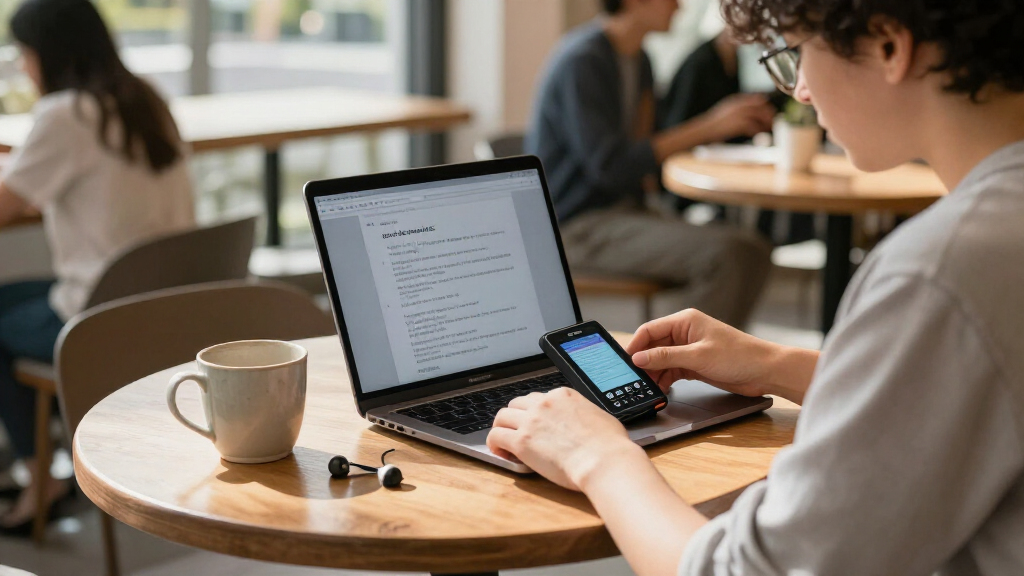

For students who need a dependable English reference, I’d put the Franklin Merriam-Webster Collegiate Speaking Dictionary, 11th Edition (SCD-2100) first for its substantial dictionary content and spoken pronunciations. The Franklin MDE-1200 is a more straightforward dictionary-and-thesaurus choice, while the Franklin BES-2400 suits Spanish learners who want two-way translation and audio. The main tradeoff is between focused English study features, language-learning support, and the portability or simplicity of a smaller device. These dedicated tools can help with quick lookups, but they are not interchangeable with full-featured translation apps or a laptop dictionary. Read on for how all 15 options differ and which student each is best suited to.

Prime made for students and young adults
- Fast, free delivery for dorm and study essentials
- Prime Video and Amazon Music included
- Member-only deals
Key Takeaways
- The SCD-2100 leads for English study: its collegiate dictionary content and speaking function make it a stronger academic reference than the spelling-focused Franklin SA-309 or NCS-100.
- Spanish learners have the clearest specialist choices: the BES-2400 offers two-way talking translation, while the DBE-1200 and BES-1890 are other Spanish-English options with different feature sets.
- Speech is useful for pronunciation practice, not a substitute for lessons: speaking models such as the LM6000B and SCG-1870 add audio support, but students should check the language pair and reference content they need.
- Small spelling devices solve narrower problems: the NCS-100 and SA-309 are easier to approach for spelling help, but they do not serve as broadly as a full dictionary and thesaurus.
- Model and edition details matter: Franklin products span different dictionaries, language combinations, and BOOKMAN compatibility, while the Lexibook D650EN and Collins D850EN offer distinct English-reference alternatives.
| Franklin SA-309 Spelling Ace Thesaurus and Merriam-Webster Puzzle Solver |  | Best for Vocabulary Building and Word Puzzles | Model: SA-309 | Thesaurus: 500,000 synonyms and antonyms | Puzzle word list: Merriam-Webster | VIEW LATEST PRICE | See Our Full Breakdown |
| Franklin BES-1890 Speaking Spanish-English Dictionary |  | Best for Spanish-English Coursework | Model: BES-1890 | Languages: Spanish and English | Translations: Over 5,000,000 | VIEW LATEST PRICE | See Our Full Breakdown |
| Franklin LM6000B Speaking Language Master |  | Best for English Vocabulary and Pronunciation Practice | Model: LM6000B | Dictionary words: 130,000 | Definitions: 300,000 | VIEW LATEST PRICE | See Our Full Breakdown |
| Franklin SCG-1870 Ultimate Portable Reference Suite Speaking Dictionary |  | Best for Students Who Need Broader Reference Material | Model: SCG-1870 | Dictionary: Merriam-Webster’s Collegiate Dictionary, 11th edition | Dictionary entries: Over 200,000 words | VIEW LATEST PRICE | See Our Full Breakdown |
| Franklin BES-2400 Talking English-Spanish and Spanish-English Dictionary |  | Best for Offline Bilingual Practice | Model: BES2400 | Languages: English and Spanish | Operation: Offline | VIEW LATEST PRICE | See Our Full Breakdown |
| Lexibook English Dictionary D650EN |  | Best for Broad English Study | Dictionary: 380,000 words | Synonyms: 78,000 | Verb conjugation: More than 8,000 verbs across four tenses | VIEW LATEST PRICE | See Our Full Breakdown |
| Franklin MDE-1200 Electronic Dictionary and Thesaurus |  | Best for Test-Vocabulary Practice | Dictionary: 80,000 headwords and 250,000 definitions | Thesaurus: 15,000 synonyms and 12,000 antonyms | Test vocabulary: TOEFL, GRE, SAT, GMAT, and TOEIC | VIEW LATEST PRICE | See Our Full Breakdown |
| Franklin Collins English Digital Dictionary Express Edition |  | Best for Thesaurus-Led Writing | Dictionary: Over 118,000 words, definitions, and phrases | Thesaurus: 500,000 synonyms and antonyms | Spelling and usage: Phonetic spell correction and Confusables feature | VIEW LATEST PRICE | See Our Full Breakdown |
| Franklin Webster’s NCS-100 Spelling Corrector |  | Best Compact Spelling Helper | Word database: Over 80,000 words | Spelling tool: Phonetic spell correction | Word-use help: Confusable-word alerts | VIEW LATEST PRICE | See Our Full Breakdown |
| Franklin MES-2400 Digital Talking Dictionary and Multilingual Translator |  | Best for Spoken Multilingual Learning | Languages: English, Spanish, Italian, German, and French | Translation: Offline | Pronunciation: Spoken words and phrases in a native human voice | VIEW LATEST PRICE | See Our Full Breakdown |
| Franklin MWD-1440 Dictionary and Thesaurus with BOOKMAN II Support |  | Best Compact English Reference | Dictionary entries: Over 100,000 definitions | Thesaurus: 500,000 words linked | Display: Five-line display | VIEW LATEST PRICE | See Our Full Breakdown |
| Franklin Merriam-Webster Collegiate Speaking Dictionary, 11th Edition (SCD-2100) |  | Best for Broad Reference and Pronunciation | Dictionary edition: Merriam-Webster’s Collegiate Dictionary, 11th Edition | Definitions: Over 500,000 | Reference tools: Nine, including dictionary, thesaurus, usage guide, and five-language translator | VIEW LATEST PRICE | See Our Full Breakdown |
| Besta BK-50 Korean-English Electronic Dictionary and Voice Translator |  | Best for Korean-English Learners | Languages: Korean-English and English-Korean | Display: 4.3-inch FSTN LCD with backlight | Display resolution: 240 x 160 | VIEW LATEST PRICE | See Our Full Breakdown |
| LEXiBOOK Collins English Dictionary, 13th Edition Electronic Dictionary, Blue/White (D850EN) |  | Best for English Vocabulary and Word Puzzles | Dictionary edition: Collins English Dictionary, 13th Edition | Word entries: 725,000 words, meanings, and phrases | Verb conjugation: More than 7,000 verbs across four tenses | VIEW LATEST PRICE | See Our Full Breakdown |
| Franklin DBE-1200 Spanish-English Electronic Dictionary and Translator |  | Best for Spanish-English Coursework | Languages: English and Spanish | Translations: Over 1,000,000 | Words: Over 150,000 | VIEW LATEST PRICE | See Our Full Breakdown |
| electronic dictionaries for student | Power | Display |
|---|---|---|
| Franklin SA-309 Spelling Ace T | 3 AAA batteries required | — |
| Franklin BES-1890 Speaking Spa | 2 AAA batteries required | — |
| Franklin LM6000B Speaking Lang | 4 AA batteries required | Eight-line LCD with contrast control and adjustable font size |
| Franklin SCG-1870 Ultimate Por | — | — |
| Franklin BES-2400 Talking Engl | Battery or power details not specified | — |
| Lexibook English Dictionary D6 | Battery powered; requires batteries | Three-line screen with magnifying function |
| Franklin MDE-1200 Electronic D | Requires two AA batteries | 3-inch zoomable LCD with adjustable contrast |
| Franklin Collins English Digit | — | 3-inch LCD |
| Franklin Webster’s NCS-100 Spe | — | — |
| Franklin MES-2400 Digital Talk | — | — |
| Franklin MWD-1440 Dictionary a | Two CR123A batteries, included | Five-line display |
| Franklin Merriam-Webster Colle | — | — |
| Besta BK-50 Korean-English Ele | Two AAA batteries | 4.3-inch FSTN LCD with backlight |
| LEXiBOOK Collins English Dicti | — | Four-line display with magnification |
| Franklin DBE-1200 Spanish-Engl | — | 3-inch zoomable LCD |
More Details on Our Top Picks
Franklin SA-309 Spelling Ace Thesaurus and Merriam-Webster Puzzle Solver
The SA-309 suits students who want help finding words, not a broad dictionary for researching definitions. Its 500,000 synonyms and antonyms can support vocabulary exercises, while the word builder and Merriam-Webster-based puzzle solver offer a practical way to explore letter patterns. Compared with the Franklin LM6000B Speaking Language Master, it is more focused on spelling and word formation than definitions, grammar, or pronunciation practice. That narrower purpose is a limitation for students who need a general-purpose reference for class assignments. It also requires three AAA batteries, so students should plan for replaceable power. I would choose this for word-focused study and puzzles, but not as a student’s only electronic dictionary.
Pros:- Thesaurus offers 500,000 synonyms and antonyms for exploring alternative word choices.
- Word builder generates possible words from entered letters.
- Puzzle solver draws on a Merriam-Webster word list.
- Lightweight at 6.7 ounces.
Cons:- Its puzzle-and-thesaurus focus leaves it less suited to general dictionary research than the LM6000B.
- Requires three AAA batteries.
Best for: Students who regularly work on vocabulary, spelling, anagrams, or crossword-style word exercises and want a compact word-finding aid.
Not ideal for: Students who need detailed definitions, spoken pronunciation, or bilingual translation for coursework; this device is centered on thesaurus and puzzle-solving functions.
- Model:SA-309
- Thesaurus:500,000 synonyms and antonyms
- Puzzle word list:Merriam-Webster
- Word tool:Word builder generates possibilities from entered letters
- Power:3 AAA batteries required
- Dimensions:1.87 x 7.38 x 9.75 inches
- Weight:6.7 ounces
Our verdict“Choose the SA-309 for spelling, vocabulary, and word puzzles, but pick a broader reference device if you need definitions or pronunciation support.”
Franklin BES-1890 Speaking Spanish-English Dictionary
For students studying Spanish and English together, the BES-1890 offers more learning support than a simple word-for-word lookup tool. Its more than 5 million translations and 4,800 example phrases give learners context, while recorded human-voice pronunciation can help connect written words with spoken language. Grammar guides, verb conjugations, and phonetic spell correction make it particularly useful when a student is composing or checking work. Compared with the newer Franklin BES-2400, this model lists specific content counts and a 274,000-definition dictionary; the BES-2400, by contrast, describes offline use and adds a medical and drug dictionary. The BES-1890’s tradeoff is a narrower stated feature set and reliance on two AAA batteries, which are not specified as included.
Pros:- More than 5 million Spanish-English translations support broad bilingual lookup.
- Includes 4,800 example phrases with recorded human-voice pronunciation.
- Grammar guides, verb conjugations, and phonetic spell correction assist with writing.
- Portable 5.8-ounce handheld design.
Cons:- Requires two AAA batteries, and the supplied product details do not say they are included.
- Its listed features do not include the medical reference or proficiency tests found on the BES-2400.
Best for: Students taking Spanish classes who need bilingual lookups, example phrases, verb help, and spoken pronunciation in one handheld device.
Not ideal for: Learners seeking a device with a medical reference or proficiency tests; the BES-2400 lists those tools, while this model emphasizes translation and grammar.
- Model:BES-1890
- Languages:Spanish and English
- Translations:Over 5,000,000
- Example phrases:4,800
- Dictionary definitions:274,000
- Pronunciation:Recorded human voice
- Learning tools:Phonetic spell correction, grammar guides, and verb conjugations
- Power:2 AAA batteries required
- Dimensions and weight:6 x 4 x 1 inches; 5.8 ounces
Our verdict“Choose the BES-1890 for Spanish coursework that calls for translation, grammar help, and spoken examples rather than specialized medical or test-prep tools.”
Franklin LM6000B Speaking Language Master
The LM6000B is the strongest fit here for students who need a substantial English-language reference rather than a bilingual translator or puzzle aid. Its 130,000 words, 300,000 definitions, and 500,000 thesaurus entries cover vocabulary lookup and word choice, while a grammar guide adds another layer of study support. The large-format keyboard and adjustable eight-line display aim to make repeated lookups easier to read and enter; ClariSpeech repetition gives students a way to practice pronunciation. Compared with the SA-309, it is much broader for definitions and language study, but it is also heavier at one pound and needs four AA batteries. Students who mainly need Spanish-English translation should choose the BES-1890 instead.
Pros:- Combines 130,000 words, 300,000 definitions, and 500,000 thesaurus entries.
- Grammar guide extends its usefulness beyond basic word lookup.
- Large-format keyboard is designed to make entry easier.
- Adjustable display and ClariSpeech repetition support reading and pronunciation practice.
Cons:- At one pound, it is heavier than the BES-1890 and other compact handheld options.
- Requires four AA batteries.
- The eight-line LCD offers less visible text at once than a larger-screen study device might.
Best for: English-language students who want a broad dictionary, thesaurus, grammar guide, and pronunciation practice in a dedicated handheld device.
Not ideal for: Students focused on Spanish-English translation or a very light pocket reference; this model weighs one pound and does not list bilingual support.
- Model:LM6000B
- Dictionary words:130,000
- Definitions:300,000
- Thesaurus entries:500,000
- Display:Eight-line LCD with contrast control and adjustable font size
- Keyboard:Large-format
- Pronunciation feature:ClariSpeech repetition
- Power:4 AA batteries required
- Dimensions and weight:5 x 2 x 3 inches; 1 pound
Our verdict“Pick the LM6000B for broad English vocabulary and pronunciation study, but choose a lighter bilingual model if translation is the main need.”
Franklin SCG-1870 Ultimate Portable Reference Suite Speaking Dictionary
The SCG-1870 goes beyond dictionary work by pairing Merriam-Webster’s Collegiate Dictionary, 11th edition with a thesaurus, an encyclopedia card, and a collection of American historical documents. That mix gives students a compact source for word research and selected background reading, while spoken pronunciations and spelling help support everyday language work. Compared with the LM6000B, it offers more variety in reference content, but the LM6000B gives clearer scale for definitions and thesaurus entries and includes a grammar guide. The SCG-1870’s book card slot and PC connectivity kit allow expansion, though the kit does not include an AC adapter. Its calculators and converters add convenience, but this broad feature set may be more than students seeking only a straightforward dictionary need.
Pros:- Combines a collegiate dictionary, thesaurus, encyclopedia, and American history documents.
- Spoken pronunciations and spelling help support language study.
- Book card slot and PC connectivity kit provide expansion options.
- Includes a calculator, databank, and metric and currency converters.
Cons:- The included PC connectivity kit does not include an AC adapter.
- The supplied details do not quantify the included encyclopedia or history document content.
- Its extra reference and utility functions may be unnecessary for students who only need dictionary lookups.
Best for: Students who want an English dictionary alongside encyclopedia and American history reference material, plus the option to add compatible book cards.
Not ideal for: Students who mainly need a large, clearly quantified vocabulary and grammar resource; the LM6000B lists detailed word and definition counts and a grammar guide.
- Model:SCG-1870
- Dictionary:Merriam-Webster’s Collegiate Dictionary, 11th edition
- Dictionary entries:Over 200,000 words
- Synonym returns:500,000
- Included expansion cards:Concise Columbia Encyclopedia (ENC-4047) and Great Documents of American History (GDS-2026)
- Reference and study features:Spoken pronunciations, spelling help, built-in Rolodex, databank, calculator, metric and currency converters
- Expansion and connectivity:Book card slot and PC connectivity kit; AC adapter not included
- Dimensions and weight:3.5 x 0.5 x 5.13 inches; 5.3 ounces
Our verdict“Choose the SCG-1870 if you value varied reference material and expansion options more than a focused dictionary with a grammar guide.”
Franklin BES-2400 Talking English-Spanish and Spanish-English Dictionary
The BES-2400 is a practical pick for students who want offline English-Spanish and Spanish-English support with spoken words and phrases. Spelling correction can help when a learner is unsure of a word’s written form, and the phrase book, proficiency tests, and medical and drug dictionary give it a different mix from the BES-1890. That older model is the clearer choice for students who want stated translation and definition counts, along with specified grammar guides and verb conjugations. The BES-2400 instead emphasizes an offline learning interface and adds specialized reference content, but its supplied details do not list word counts or proficiency levels. Battery and power information is also absent, so students cannot judge runtime or plan for replacement batteries from the available specifications.
Pros:- Supports lookup in both English and Spanish while operating offline.
- Native human voice speaks words and phrases.
- Includes spelling correction, a phrase book, and proficiency tests.
- Adds a medical and drug dictionary for specialized vocabulary.
Cons:- No word count or definition count is provided, making its reference coverage hard to compare with the BES-1890.
- The supported proficiency-test levels are not specified.
- Battery or power details are not provided.
Best for: English and Spanish learners who need offline word and phrase lookups, spoken pronunciation, and access to a medical and drug reference.
Not ideal for: Students who need documented vocabulary coverage, specific grammar and conjugation tools, or clear battery information; those details are not provided for this model.
- Model:BES2400
- Languages:English and Spanish
- Operation:Offline
- Voice:Native human voice
- Features:Talking dictionary, phrase book, medical and drug dictionary, spelling correction, proficiency tests
- Dictionary coverage:Word and definition counts not specified
- Power:Battery or power details not specified
- Package dimensions:6.69 x 6.38 x 1.26 inches
- Item weight:10.5 ounces
Our verdict“Choose the BES-2400 for offline bilingual practice and medical vocabulary, but favor the BES-1890 if you need stated content counts and specified grammar tools.”
Lexibook English Dictionary D650EN
The D650EN is the strongest fit here for students who want several English reference tools in one device: its 380,000-word dictionary is paired with 78,000 synonyms, spelling and grammar help, verb conjugation, and crossword solving. That breadth gives it a wider general-study role than the Franklin Webster’s NCS-100, which concentrates on spelling and word puzzles rather than full dictionary lookup. Large buttons and a magnifying function may help younger users, while the calculator and conversions add basic school-day utilities. The tradeoff is its three-line display: it can show only a small amount of information at once, so students may need to move through entries in steps. It also runs on batteries, which need replacing.
Pros:- Large 380,000-word dictionary paired with thesaurus, spelling, and grammar tools
- Verb conjugation and crossword solving support different classroom and study tasks
- Large buttons and screen magnification can make text easier to access
- Calculator, conversion tools, memo list, clock, and word games add useful extras
Cons:- Three-line display limits how much of an entry is visible at once
- Requires replaceable batteries
- Its many functions may be more than students seeking only spelling help need
Best for: Students who want a broad English reference, spelling support, and word games in a simple handheld device
Not ideal for: Students who need a large screen for reading long definitions or prefer a device with rechargeable power
- Dictionary:380,000 words
- Synonyms:78,000
- Verb conjugation:More than 8,000 verbs across four tenses
- Language tools:Dictionary, thesaurus, spellchecker, grammar, and crossword solver
- Display:Three-line screen with magnifying function
- Additional functions:Calculator, memo list, currency and metric conversion, clock, and date
- Power:Battery powered; requires batteries
- Dimensions and weight:4.72 x 0.55 x 2.99 inches; 0.11 kg
Our verdict“Choose the D650EN if you want a broad English study toolkit; skip it if a roomier display matters more than breadth.”
Franklin MDE-1200 Electronic Dictionary and Thesaurus
For students preparing for standardized language exams, the MDE-1200 is the most directly study-focused pick in this group. Its vocabulary banks for TOEFL, GRE, SAT, GMAT, and TOEIC give it a more exam-oriented role than the Lexibook D650EN, whose larger general word count is better suited to broad English reference. The MDE-1200 also combines definitions and thesaurus content with spelling, grammar, crossword and anagram solvers, plus games that can make short practice sessions less repetitive. A zoomable 3-inch LCD with adjustable contrast offers some viewing flexibility, though the screen still limits how much text appears at once. Students should also plan for two AA batteries; the listed details do not say they are included.
Pros:- Includes vocabulary banks for several major academic and language tests
- Combines dictionary, thesaurus, spelling, grammar, and word-solving tools
- Zoomable screen and adjustable contrast offer display customization
- Six educational games provide varied vocabulary practice
Cons:- Three-inch screen restricts the amount of text visible at one time
- Requires two AA batteries, which are not specified as included
- Its exam vocabulary focus may be less useful to students seeking a multilingual translator
Best for: Secondary-school and college students who want built-in vocabulary practice for TOEFL, GRE, SAT, GMAT, or TOEIC study
Not ideal for: Students who need offline translation between languages, a large reading display, or a device that avoids replaceable batteries
- Dictionary:80,000 headwords and 250,000 definitions
- Thesaurus:15,000 synonyms and 12,000 antonyms
- Test vocabulary:TOEFL, GRE, SAT, GMAT, and TOEIC
- Tools:Spell checker, grammar tools, crossword solver, anagram solver, and word builder
- Display:3-inch zoomable LCD with adjustable contrast
- Games:Hangman, Conjumania, Flashcards, Spelling Bee, Word Train, and Synonym Game
- Power:Requires two AA batteries
- Weight:5 ounces
Our verdict“Pick the MDE-1200 for exam-vocabulary practice and English reference in one handheld unit, not for multilingual translation.”
Franklin Collins English Digital Dictionary Express Edition
The DMQ-221 makes the most sense for students who repeatedly need alternatives while drafting essays. Its standout is a 500,000-synonym-and-antonym thesaurus, paired with over 118,000 words, definitions, and phrases. That emphasis gives it a different classroom use from the Franklin MDE-1200, which is the stronger fit for test-preparation vocabulary, and from the Lexibook D650EN, which offers more general study utilities and verb conjugation. A Confusables feature and phonetic spell correction can help catch common word-choice and spelling errors, while custom lists support review. The six games and basic utilities are useful extras, but they do not change the device’s core role as an English writing aid. Its 3-inch LCD remains compact, and it needs a CR2 battery.
Pros:- Extensive thesaurus database supports finding synonyms and antonyms for writing
- Confusables feature and phonetic spell correction target common writing errors
- Custom word lists can help students organize vocabulary for review
- Six games, calculator, converter, and world clock add practice and utility options
Cons:- Three-inch LCD shows a limited amount of text at once
- Requires a CR2 battery, a less common type than AA cells
- English writing tools do not replace a multilingual dictionary or translator
Best for: Students who write essays and want a portable thesaurus, spelling aid, and custom vocabulary lists
Not ideal for: Learners who need translation between languages, test-specific vocabulary banks, or a larger screen
- Dictionary:Over 118,000 words, definitions, and phrases
- Thesaurus:500,000 synonyms and antonyms
- Spelling and usage:Phonetic spell correction and Confusables feature
- Word games:Six games with four difficulty levels
- Display:3-inch LCD
- Additional functions:Custom word lists, calculator, currency and metric converter, and world clock
- Battery:One CR2 battery included
- Weight:180 g
Our verdict“Choose the DMQ-221 when essay writing and word choice matter more than exam banks or translation.”
Franklin Webster’s NCS-100 Spelling Corrector
The NCS-100 is a focused aid for students who can get close to a word’s sound but cannot recall its spelling. Its phonetic spell correction suggests likely matches, while confusable-word alerts address mistakes such as choosing the wrong word form. That narrow purpose distinguishes it from the Lexibook D650EN, which adds full dictionary, grammar, thesaurus, and conjugation tools, and from the Franklin MDE-1200, which is better equipped for broader reference and test vocabulary. The crossword solver and six games make it more useful for short practice breaks, but this is not a full electronic dictionary: the supplied description does not list definitions, translations, or a thesaurus. The lightweight 5-ounce form favors portability, though students need to supply the required battery.
Pros:- Phonetic input can suggest spellings when a student knows how a word sounds
- Database contains more than 80,000 words
- Confusable-word alerts help distinguish commonly mixed-up terms
- Crossword solver and six games add puzzle and vocabulary practice
Cons:- Focused spelling tool rather than a full dictionary with definitions and thesaurus entries
- Requires one A battery; inclusion is not specified
- Offers fewer general study tools than the Lexibook D650EN or Franklin MDE-1200
Best for: Students who often misspell words from memory and want a small spelling aid for writing or puzzle practice
Not ideal for: Students who need definitions, thesaurus entries, grammar support, or language translation in the same device
- Word database:Over 80,000 words
- Spelling tool:Phonetic spell correction
- Word-use help:Confusable-word alerts
- Puzzle tool:Crossword puzzle solver
- Games:Anagrams, Hangman, Jumble, User Anagrams, User Hangman, and Word Builder
- Weight:5 ounces
- Battery:Requires one A battery
- Package dimensions:7.95 x 5.59 x 1.42 inches
Our verdict“Buy the NCS-100 for portable spelling and puzzle help, but choose a broader model for dictionary lookup and grammar study.”
Franklin MES-2400 Digital Talking Dictionary and Multilingual Translator
The MES-2400 serves a different student need from the English-only models: it combines offline translation across five languages with spoken word and phrase pronunciations in a native human voice. That makes it a better match than the Franklin Collins DMQ-221 for learners practicing pronunciation or moving between English, Spanish, Italian, German, and French. Phonetic and typographical spell correction can also help when a learner’s spelling is uncertain, and the tactile keypad suits handheld use. The tradeoff is scope: it covers only the five listed languages, while its product details do not specify battery life or display information. It also does not list the broad English study extras found on the Lexibook D650EN, such as grammar tools, games, or verb conjugation, so students focused on English coursework may prefer that model.
Pros:- Offline translation supports study without an internet connection
- Spoken words and phrases provide pronunciation support
- Covers English, Spanish, Italian, German, and French
- Phonetic and typographical spell correction can help with uncertain spelling
Cons:- Translation is limited to the five listed languages
- Battery life and display details are not specified
- Does not list the broad English-study extras found on the Lexibook D650EN
Best for: Language students who need offline translation and spoken pronunciation practice among English, Spanish, Italian, German, and French
Not ideal for: Students studying languages outside the five listed or seeking a detailed English dictionary with games and grammar tools
- Languages:English, Spanish, Italian, German, and French
- Translation:Offline
- Pronunciation:Spoken words and phrases in a native human voice
- Spelling support:Phonetic and typographical spell correction
- Controls:Tactile keypad
- Package dimensions:6.61 x 6.38 x 1.14 inches
- Weight:10.5 ounces
Our verdict“Choose the MES-2400 for offline, spoken practice across its five languages; choose an English-focused model for broader classroom reference.”
Franklin MWD-1440 Dictionary and Thesaurus with BOOKMAN II Support
For students who want an everyday English reference they can carry between classes, the MWD-1440 combines more than 100,000 definitions with extensive thesaurus links in a device just half an inch thick. Its spelling correction and phonetic spelling support can help when a word’s pronunciation is easier to recall than its spelling. Compared with the larger reference collection in the Franklin SCD-2100, this model is a simpler, more focused choice; its BOOKMAN II card slot offers room to add compatible materials, but the device itself has a five-line display and fewer reference tools. Word games, a calculator, and converters add useful study-break and homework functions. The tradeoff is a small screen for longer entries and a need for two CR123A batteries, so this suits quick lookups better than extended reading.
Pros:- Combines more than 100,000 definitions with 500,000 thesaurus-linked words.
- Spelling correction and phonetic spelling help with uncertain word forms.
- Compact five-ounce body is easy to carry between classes.
- BOOKMAN II card slot supports compatible add-on book cards.
Cons:- Five-line display limits how much text is visible at once.
- Requires two CR123A batteries, a less common format than AA or AAA.
Best for: Students who want a pocketable English dictionary and thesaurus for spelling checks, vocabulary work, and quick lookups.
Not ideal for: Students who need spoken definitions, extensive reference subjects, or a larger screen for reading long entries.
- Dictionary entries:Over 100,000 definitions
- Thesaurus:500,000 words linked
- Display:Five-line display
- Card system:BOOKMAN II card slot
- Study features:Spelling correction, phonetic spelling, SAT word list, and five word games
- Additional tools:Calculator, metric converter, and currency converter
- Dimensions and weight:5.25 x 3.5 x 0.5 inches; 5 ounces
- Power:Two CR123A batteries, included
Our verdict“Choose the MWD-1440 for a compact English lookup tool with thesaurus support, not for speech or long-screen reading.”
Franklin Merriam-Webster Collegiate Speaking Dictionary, 11th Edition (SCD-2100)
The SCD-2100 is the strongest fit here for students who need more than a dictionary: it pairs Merriam-Webster’s Collegiate Dictionary, 11th Edition, with a thesaurus, usage and style guides, quotations, biographical and geographical references, SAT words, and a five-language translator. Its spoken words and definitions offer pronunciation support that the compact Franklin MWD-1440 does not provide. A USB connection also lets students add up to 500 personal dictionary entries, a useful feature for course vocabulary, though that capacity is limited. The folding screen-in-lid design protects the display in a backpack, but the small handheld screen is less comfortable for reading lengthy definitions or reference articles. I’d rank this above simpler lookup devices for breadth and speech, while students focused on Korean-English or Spanish-English study should choose a language-specific model instead.
Pros:- Combines nine reference tools, including a collegiate dictionary, thesaurus, and usage guides.
- Speaks words and definitions to support pronunciation learning.
- USB connection allows up to 500 personal dictionary entries.
- Folding lid helps protect the screen during transport.
Cons:- Personal dictionary capacity is limited to 500 entries.
- Small display is less suited to extended reading.
Best for: Students who need a portable English reference set, spoken pronunciation, and a place to store a modest list of course-specific terms.
Not ideal for: Students who mainly need a dedicated Korean-English or Spanish-English translator, or who plan to read long entries on-screen.
- Dictionary edition:Merriam-Webster’s Collegiate Dictionary, 11th Edition
- Definitions:Over 500,000
- Reference tools:Nine, including dictionary, thesaurus, usage guide, and five-language translator
- Synonyms and antonyms:500,000
- Speech:Speaks words and definitions
- Personal dictionary:Up to 500 entries; USB connection compatible with PC and Mac
- Screen design:Folding screen-in-lid
- Dimensions and weight:4 x 2.75 x 0.63 inches; 4.8 ounces
Our verdict“Pick the SCD-2100 when speech and a wide range of English references matter more than screen size or specialized two-language translation.”
Besta BK-50 Korean-English Electronic Dictionary and Voice Translator
For students working specifically between Korean and English, the Besta BK-50 has a clearer purpose than the general English references in this roundup. It handles translation in both directions and adds a voice function, built-in microphone, and backlit screen—features aimed at pronunciation practice and use in dim settings. Unlike the Franklin DBE-1200, which centers on Spanish-English study and supplies a broad set of grammar and test-prep tools, the BK-50 is a focused Korean-English device. That specialization is its advantage and its limit: the supplied information does not list word counts, grammar references, or study lists, so students seeking a broad classroom toolkit may find it sparse. Its 4.3-inch display is relatively roomy for a handheld unit, though the 240 x 160 resolution and two-AAA power requirement temper the appeal.
Pros:- Supports Korean-to-English and English-to-Korean translation.
- Voice functionality and a built-in microphone support pronunciation use.
- Backlit 4.3-inch display is suited to portable lookups.
- Compact 147-gram design is easy to carry.
Cons:- The listed language support is limited to Korean and English.
- Display resolution is 240 x 160, limiting on-screen detail.
- Requires two AAA batteries.
Best for: Korean-speaking students studying English, or English-speaking students who need portable Korean-English lookups and pronunciation assistance.
Not ideal for: Students who need English-only reference tools, Spanish translation, or documented grammar and test-prep resources.
- Languages:Korean-English and English-Korean
- Display:4.3-inch FSTN LCD with backlight
- Display resolution:240 x 160
- Audio features:Voice function and built-in microphone
- Power:Two AAA batteries
- Power supply:5V / 500mA; listed charging input 100–220V
- Dimensions:120 x 95 x 15 mm
- Weight:147 g
Our verdict“Choose the BK-50 for focused Korean-English lookup and voice support, rather than a broad English study reference.”
LEXiBOOK Collins English Dictionary, 13th Edition Electronic Dictionary, Blue/White (D850EN)
The LEXiBOOK D850EN stands out for students who want a large English word collection paired with practical language tools. Its 725,000 words, meanings, and phrases are joined by a thesaurus, spellchecker, phonetic spell-correction, crossword solver, and conjugation support for more than 7,000 verbs. That makes it a more puzzle- and spelling-oriented choice than the Franklin MWD-1440, while the MWD-1440 offers a BOOKMAN II card slot and a five-line display instead of the D850EN’s four-line screen. Magnification and large buttons may help younger students use it, and the calculator and converters add classroom utility. The main limits are the short display and conjugation coverage across four tenses; students needing spoken definitions or a dedicated language translator should look to another model.
Pros:- Includes 725,000 words, meanings, and phrases from the Collins 13th edition.
- Spellchecker, phonetic spell-correction, thesaurus, and crossword solver support language study.
- Conjugation tools cover more than 7,000 verbs.
- Magnification, large buttons, calculator, and converters add practical classroom functions.
Cons:- Four-line display restricts how much of an entry is visible at once.
- Verb conjugation tools cover four tenses.
Best for: Students aged 10 and up who want extensive English vocabulary, spelling support, verb lookup, and crossword-solving tools.
Not ideal for: Students who need speech, a larger reading display, or translation between English and another language.
- Dictionary edition:Collins English Dictionary, 13th Edition
- Word entries:725,000 words, meanings, and phrases
- Verb conjugation:More than 7,000 verbs across four tenses
- Display:Four-line display with magnification
- Language tools:Thesaurus, spellchecker, phonetic spell-correction, and crossword solver
- Word games:Hangman, Word Jumble, and Anagram
- Additional functions:Calculator, currency and unit converters, and user list
- Recommended age:10 years and up
Our verdict“Choose the D850EN for English vocabulary, spelling, and word puzzles, but not for speech or foreign-language translation.”
Franklin DBE-1200 Spanish-English Electronic Dictionary and Translator
Students taking Spanish or English-language learners who need both languages in one offline device will get the most focused study support from the Franklin DBE-1200. It provides English-Spanish and Spanish-English translation, more than 250,000 definitions, a 7,000-entry phrasebook, and tools for spelling, grammar, and conjugation. Test-prep vocabulary and word games make it more classroom-oriented than the Korean-English Besta BK-50, while the BK-50 adds voice functionality and a larger listed display. The DBE-1200’s offline operation avoids a Wi-Fi requirement, but its 3-inch zoomable LCD is still a small space for reading definitions or phrasebook entries. Its two-AA power requirement is straightforward, though it means keeping spare batteries on hand. This is a language-learning pick, not a general-purpose English reference.
Pros:- Offers offline English-Spanish and Spanish-English translation.
- Includes over one million translations and 250,000 definitions.
- Combines phrasebook, spelling, grammar, conjugation, and test-prep vocabulary.
- Zoomable LCD and full keyboard support handheld lookup.
Cons:- The 3-inch display can feel cramped for extended reading.
- Requires two AA batteries.
- Its Spanish-English focus is less useful for students seeking a general English reference.
Best for: Students in Spanish classes and English learners who need two-way translation, phrase lookup, and grammar support without Wi-Fi.
Not ideal for: Students who need Korean-English translation, spoken pronunciation, or a larger screen for lengthy entries.
- Languages:English and Spanish
- Translations:Over 1,000,000
- Words:Over 150,000
- Definitions:250,000
- Phrasebook:7,000 entries
- Display:3-inch zoomable LCD
- Study tools:Thesaurus, spell checking, grammar and conjugation tools, test-prep vocabulary, and word games
- Connectivity and power:Offline; no Wi-Fi required; two AA batteries
Our verdict“Pick the DBE-1200 for offline Spanish-English coursework and grammar help, not for larger-screen reading or other language pairs.”
How We Picked
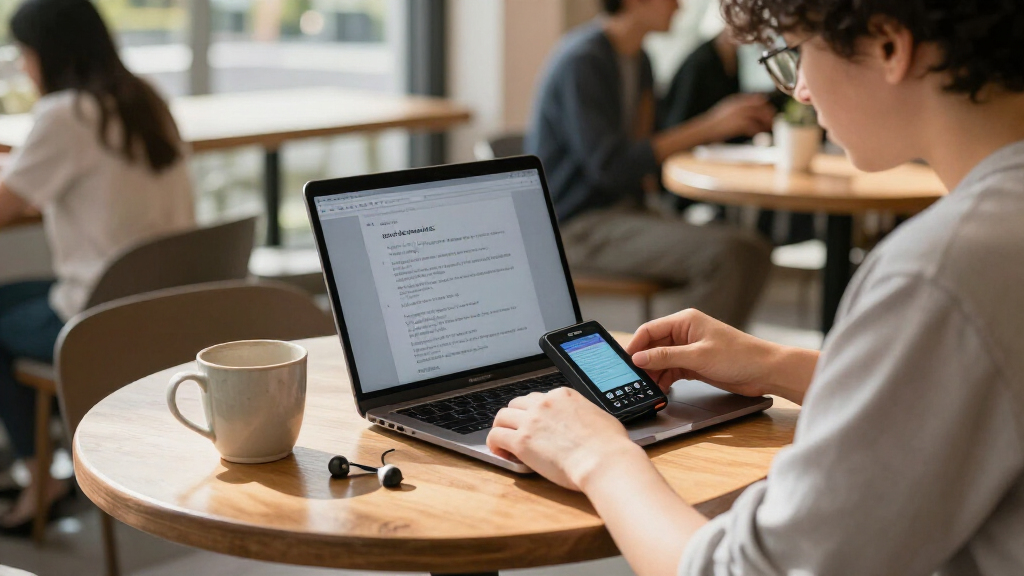
I ranked these devices for student use by how directly they support common study tasks: finding definitions, checking spelling, learning pronunciation, and translating between the languages named for each model. I gave more weight to broad, practical reference coverage and clear learning support than to a single specialist function. Devices with a distinct role still appear in the roundup, but they rank lower for students who need an all-purpose school reference.
I also compared usability and fit: whether a student can get quick value from a focused spelling tool, whether audio or translation helps with a language course, and whether a model depends on a particular platform or edition. Product names alone do not establish compatibility, current availability, or the exact dictionary content included, so buyers should verify those details before choosing. The order favors versatile study aids first, then devices that make more sense for a specific subject, language, or task.
Factors to Consider When Choosing Electronic Dictionaries For Students
Choosing an electronic dictionary is less about picking the device with the longest feature list and more about matching its reference content to a student’s daily work. I’d start with the course language and the tasks that come up most often, then weigh audio, spelling tools, and portability against how much flexibility the student needs.
Match the dictionary to the class, not just the language
A student in literature or history may need reliable definitions, usage guidance, and a substantial English word list more than translation. Someone studying Spanish may benefit more from a bilingual dictionary that handles both directions. Check whether the product name specifies a collegiate, Collins, Merriam-Webster, or other reference source, and confirm the included edition and content before buying. A bilingual label does not tell you how much grammar or usage help the device provides. A common mistake is choosing a translator for a class that grades spelling, word choice, and precise definitions. When school assignments depend on a particular dictionary standard, confirm that the device’s reference matches the teacher’s expectations.
Decide whether audio will change how the student studies
Spoken entries can help a learner connect a written word with its pronunciation, especially when studying a new language independently. They are less useful if the student mainly needs quiet reading or quick spelling checks. Look for clarity about which words or languages receive audio; a device described as speaking does not necessarily speak every entry or provide natural conversational speech. Pronunciation playback also cannot explain stress patterns or correct a student’s speaking by itself. If audio is a priority, compare it with the student’s regular access to a teacher, language app, or classroom recordings. Pay for a speaking model when repeated listening is likely to become part of study, not simply because the feature sounds impressive.
Choose between a focused spelling aid and a wider reference tool
Spelling correctors and puzzle solvers can answer narrow questions quickly, which may suit younger learners or students who routinely struggle to spell. A dictionary-and-thesaurus device covers more tasks, including definitions and alternatives for writing. The tradeoff is that specialized tools may be simpler to use but leave the student reaching for another resource more often. Before selecting a small spelling device, ask whether the student also needs definitions, synonyms, pronunciation, or translation during the school day. A broad reference can be the better long-term school companion even if the student initially uses only its spelling function. Conversely, a specialist tool may be a sensible add-on when the school already provides the main dictionary resource.
Check language direction and translation limits
For bilingual study, verify that the device translates in the direction the student actually needs. A two-way Spanish-English model can support looking up words from either language, while another model may emphasize a specific pair or workflow. Translation can speed up vocabulary checks, but it may not convey idioms, register, or the grammar needed to form a correct sentence. Students should treat suggested translations as a starting point and check unfamiliar results against class materials. Confirm whether the product supports the exact language pair rather than assuming that “multilingual” covers every language a student studies. If a course expects independent writing, a dictionary with clear definitions and examples may be more useful than a translator alone.
Verify compatibility, edition, and long-term usability
Some product names refer to platform support or a specific dictionary edition, details that can affect what content is available and how the device works. The Franklin MWD-1440 name, for example, references BOOKMAN II support, so buyers should check what hardware or software is required rather than assuming standalone operation. Confirm the exact model number, included reference, power requirements, and whether the unit is new or previously owned. Older electronic dictionaries may still perform their core function, but replacement parts, documentation, or support can be harder to find. A low-friction device is more likely to be used: students should be able to enter a word, read the result, and return to their work without a complicated setup. Check school rules too, since some classrooms restrict electronic aids during tests.
Frequently Asked Questions
Which type of electronic dictionary is best for a student who mainly writes essays?
I’d prioritize a substantial English dictionary with useful definitions and, if the student revises word choice, a thesaurus. A spelling corrector can catch a specific error but may not explain whether a word fits the sentence. A bilingual translator is better suited to language study than to general essay editing. Check the reference source and edition, since the depth and style of entries can differ between devices. If the student needs help with grammar, citations, or full sentences, they will still need other study resources.
Should I choose a speaking dictionary or a standard dictionary for language classes?
Choose a speaking model when the student will regularly use audio to learn pronunciation or distinguish unfamiliar words by sound. For a class focused on reading and vocabulary, a standard dictionary may provide more relevant support without adding a feature the student rarely uses. Check which language receives speech and whether audio is available for the entries the student needs. A talking function does not guarantee conversation practice, pronunciation feedback, or complete spoken coverage. The best choice depends on whether listening is a regular study activity or an occasional convenience.
Can a bilingual electronic dictionary replace a translation app?
Not reliably for every task. A dedicated bilingual dictionary can be convenient for looking up individual words and may support offline study, but its translation coverage and sentence handling depend on the model. Translation apps may offer broader tools, though they can require a device, connectivity, or permissions that are not suitable in every classroom. For coursework, students should check translations against lesson materials and learn the word’s meaning and usage rather than copying a result blindly. If the student needs full-sentence translation, verify that capability directly instead of inferring it from a product’s “translator” label.
What should I verify before buying an older or platform-specific model?
Confirm the exact model number, what dictionary content is included, and whether the device works on its own or needs compatible hardware. A reference to BOOKMAN support, for example, is a reason to check the product’s operating requirements rather than assume a standalone unit. Ask about condition, battery or power needs, key function, and whether instructions are available. Older devices can still suit simple lookup tasks, but service and replacement options may be limited. For a student who depends on the device every day, reliability and access to the required content matter more than a long feature list.
Is a small spelling corrector enough for a younger student?
It can be a manageable starting point if the student’s main need is spelling practice and the school supplies dictionaries elsewhere. A focused device may be less distracting than a broader tool, but it will not necessarily provide the definitions, synonyms, or language support needed for later assignments. Consider whether the student is learning to understand word meaning as well as to spell words correctly. If they often ask what a word means or how it is pronounced, a dictionary with broader entries or audio may serve them better. Check school rules before sending any electronic aid to class, especially for assessments.
Conclusion
For the broadest English-study role in this group, I recommend the Franklin Merriam-Webster Collegiate Speaking Dictionary (SCD-2100) as best overall, especially for students who want substantial reference content plus pronunciation audio. The Franklin MDE-1200 is my best-value fit for students who want a more direct dictionary-and-thesaurus tool without prioritizing speech. Beginners who mainly need spelling support can start with the Franklin NCS-100 or SA-309, while recognizing that both cover a narrower set of school tasks. For Spanish learners, I’d look first at the Franklin BES-2400 for two-way talking translation, with the DBE-1200 and BES-1890 as alternatives to compare by their exact features. Students seeking a premium-style, deeper English reference should favor the collegiate SCD-2100; anyone considering the LM6000B, SCG-1870, or BOOKMAN-compatible MWD-1440 should first confirm the language, content, and hardware fit. The right pick is the one that matches the student’s coursework, not simply the one with the most functions.