
Choosing between educational science kits for students means balancing experiment variety, instruction quality, and age fit — and the differences are bigger than the boxes suggest. After comparing 14 kits across chemistry, physics, biology, and earth science, the National Geographic Amazing Chemistry Set earns my best overall spot for its 100+ well-explained experiments and durable components. The UNGLINGA 150 Experiments Science Kit stands out as the value pick with the highest experiment count in the lineup at a mid-range price, while the Evviva Sciences Microbiology Kit serves older students who need lab-grade depth for science fair work. The main tradeoffs come down to breadth versus depth, disposable consumables versus reusable gear, and whether a kit targets curious five-year-olds or high school chemists. Read on for the full breakdown of all 14 picks, who each one suits, and who should skip it.

Get school and study supplies delivered free — and shop member deals
- Fast, free delivery on millions of items
- Access to Prime Big Deal Days deals on October 6–7
- Prime Video, Amazon Music and more included
Key Takeaways
- National Geographic kits took three of the top spots not because of experiment count, but because their manuals explain the science behind each activity — cheaper rivals with similar counts mostly skip the ‘why.’
- The UNGLINGA 150 Experiments kit offers the most activities per dollar in this lineup, though many of those 150 experiments are simple color-mixing variations rather than distinct projects.
- Age targeting is the sharpest dividing line in this roundup: the STEM Toys Pixel Art Kit genuinely works for five-year-olds, while the LINKTOR and ExBEPE molecular model sets only make sense for students already studying organic chemistry.
- Single-subject kits beat general sets for advanced work — the Evviva agar-plate microbiology kit and the 1600X digital microscope deliver real lab depth that no all-in-one box matches.
- Circuit kits cluster at the budget end of the list, and what separates them is component quality: the EUDAX set includes enough parts for a full high school physics unit, while smaller kits like the Sntieecr trade project variety for a lower price.
| STEM Toys Pixel Art Kit for Kids – Educational Science and Arts & Crafts Kit for Ages 5-12 |  | Best for Younger Learners | Type: Pixel Art Kit | Recommended Age: 5-12 years | Number of Patterns: Over 50 | VIEW LATEST PRICE | See Our Full Breakdown |
| EUDAX School Physics Labs Basic Electricity Discovery Circuit and Magnetism Experiment Kits for High School Students |  | Best for High School Physics | Subject Focus: Electricity and magnetism | Electricity Items: 56 | Magnetism Items: 21 | VIEW LATEST PRICE | See Our Full Breakdown |
| UNGILINGA 40+ Experiments Science Kit for Kids Chemistry Set STEM Toy |  | Best Value Pick | Number of Experiments: Over 40 | Educational Focus: STEM, science, chemistry | Instructions: Easy-to-follow, child-friendly | VIEW LATEST PRICE | See Our Full Breakdown |
| STEM Electric Circuit Kits – 8 Experiments in 7 Sets for Students, Science Circuit Kit for Electricity and Engineering Projects |  | Best First Electronics Kit | Brand: Forskere | Age Range: 8-12 years | Experiments: 8 across 7 sets | VIEW LATEST PRICE | See Our Full Breakdown |
| National Geographic Amazing Chemistry Set with 100+ Experiments for Ages 8-12 |  | Best Overall | Brand: Blue Marble (National Geographic) | Age Range: 8-12 years | Experiments: 100+ in-box | VIEW LATEST PRICE | See Our Full Breakdown |
| LINKTOR Chemistry Molecular Model Kit (444 Pieces) |  | Best for Serious Chemistry Students | Piece Count: 444 pieces | Atoms Included: 136 | Bonds Included: 158 | VIEW LATEST PRICE | See Our Full Breakdown |
| Bulk STEM Kits: 8 Electric Light Circuit Science Kits |  | Best for Classrooms and Groups | Kits Included: 8 complete circuit kits | Age Range: 8-12 years | Assembly: Tool-free | VIEW LATEST PRICE | See Our Full Breakdown |
| 1600X Microscope for Kids with 1080P 4.0-Inch Digital Screen |  | Best for Hands-On Exploration | Magnification: 100x to 1600x (digital) | Screen: 4.0-inch HD display | Camera: 48MP, 1080P video | VIEW LATEST PRICE | See Our Full Breakdown |
| Sntieecr Electric Circuit Motor Kit |  | Best Value Circuit Kit | Components: 5 crocodile clip leads, 5 bulbs, 2 motors, switches, propellers, buzzer, holders | Recommended Age: 8+ years | Voltage Range: 1.5V-3V | VIEW LATEST PRICE | See Our Full Breakdown |
| National Geographic Science Magic Kit (100+ Experiments) |  | Best for Reluctant Learners | Experiments: 100+ total | Magic Tricks: 20 tricks with included materials | Bonus Guide: 85+ additional experiments | VIEW LATEST PRICE | See Our Full Breakdown |
| National Geographic Earth Science Kit with 100+ Activities for Kids 8-12 | 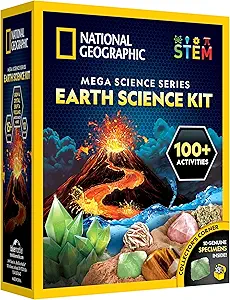 | Best Overall | Brand: Blue Marble (National Geographic licensed) | Age Range: 8-12 years | Educational Objective: STEM / Earth Science | VIEW LATEST PRICE | See Our Full Breakdown |
| ExBEPE Organic Chemistry Molecular Model Kit 206pcs Educational Science Set for Students |  | Best for High School Chemistry | Brand: EXBEPE | Total Pieces: 206 | Atoms: 73 pieces (8 colors, 12 kinds) | VIEW LATEST PRICE | See Our Full Breakdown |
| UNGLINGA 150 Experiments Science Kit for Kids – STEM Chemistry and Physics Lab Toys |  | Best Value Pick | Brand: UNGLINGA | Experiment Count: 150 | Age Range: 6 years and up | VIEW LATEST PRICE | See Our Full Breakdown |
| Evviva Sciences Microbiology Science Project Kit with Pre-Poured Agar Plates |  | Best for Science Fair Projects | Agar Plates: 10 pre-poured, ready to use | Swabs: 10 cotton-tipped sticks | Pipette: 1 included | VIEW LATEST PRICE | See Our Full Breakdown |
| educational science kits for student | Age Range |
|---|---|
| STEM Toys Pixel Art Kit for Ki | — |
| EUDAX School Physics Labs Basi | — |
| UNGILINGA 40+ Experiments Scie | — |
| STEM Electric Circuit Kits | 8-12 years |
| National Geographic Amazing Ch | 8-12 years |
| LINKTOR Chemistry Molecular Mo | — |
| Bulk STEM Kits: 8 Electric Lig | 8-12 years |
| 1600X Microscope for Kids with | 3-14 years |
| Sntieecr Electric Circuit Moto | — |
| National Geographic Science Ma | — |
| National Geographic Earth Scie | 8-12 years |
| ExBEPE Organic Chemistry Molec | 12-20 years (144-240 months) |
| UNGLINGA 150 Experiments Scien | 6 years and up |
| Evviva Sciences Microbiology S | 15 years and up |
More Details on Our Top Picks
STEM Toys Pixel Art Kit for Kids – Educational Science and Arts & Crafts Kit for Ages 5-12
Every other kit in this roundup assumes a child can handle chemicals, wires, or lab glassware. The STEM Toys Pixel Art Kit doesn’t — it opens at age 5, which makes it the natural entry point here. Instead of beakers, it teaches STEM through 50+ patterns across three difficulty levels, building fine motor control, problem-solving, and early coding logic as kids place colored pieces. Compared with the National Geographic chemistry set, there’s no mess, no supervision-heavy reactions, and no reading-dense manual, so a kindergartener can work semi-independently. The limits are honest ones: it’s a single activity type, so a child who tires of pixel art gets no second act, and the science content stays conceptual — patterns and logic, not actual experiments. For families easing a young child into STEM before chemistry kits make sense, this pick makes the most sense.
Pros:- Opens STEM learning at age 5, earlier than any other kit here
- Three difficulty levels let the kit grow with the child
- Non-toxic, durable materials need no special handling
- Works for solo play or classroom group activities
Cons:- Limited to pixel art — no real experiments or lab skills
- Younger children still need some adult supervision
- Kids who outgrow the format have no advanced content to move to
Best for: Families with kids ages 5-8 who want a screen-free STEM introduction without chemicals, mess, or constant adult oversight
Not ideal for: Kids 10+ who want real experiments — the pixel-art-only format will feel limiting next to chemistry or circuit kits
- Type:Pixel Art Kit
- Recommended Age:5-12 years
- Number of Patterns:Over 50
- Difficulty Levels:3
- Materials:Non-toxic, durable
- Play Style:Individual or group
- Use Setting:Home or classroom
Our verdict“The right first STEM kit for ages 5-8, before chemistry and circuit kits become realistic options.”
EUDAX School Physics Labs Basic Electricity Discovery Circuit and Magnetism Experiment Kits for High School Students
Most kits on this list top out around age 12. The EUDAX School Physics Labs kit is the exception, and that alone earns it a place: it’s built for high school students studying electricity and magnetism in earnest. With 56 electricity items and 21 magnetism items, students build working circuits, electromagnets, and even generators — the difference between watching a bulb light up and understanding why it does. Set it against the Forskere circuit kit, which aims at ages 8-12 with guided builds, and the EUDAX clearly plays a level up: more components, genuine physics principles, and a color manual suited to lab-style coursework. The drawbacks are straightforward — it needs 3 AA batteries you supply yourself, some parts are fragile enough that younger siblings should stay clear, and it assumes the maturity to work through experiments methodically. For a teen in a physics class, that’s exactly the right ask.
Pros:- 77 total items across electricity and magnetism, the deepest component count here
- Builds electromagnets and generators, not just basic circuits
- Full-color manual supports self-guided lab learning
- Only kit in the roundup sized for high school physics
Cons:- Batteries not included — 3 AA required before the first experiment
- Some components are fragile around younger children
- Too advanced for the elementary and middle school crowd
Best for: High school students taking physics who need hands-on electricity and magnetism work that matches coursework depth
Not ideal for: Kids under 13 — fragile components and formal experiment structure will frustrate elementary-age users
- Subject Focus:Electricity and magnetism
- Electricity Items:56
- Magnetism Items:21
- Repair Tools:2 included
- Manual:Color page manual
- Batteries:3 AA required (not included)
- Recommended Level:High school students
Our verdict“The kit to buy when a student has outgrown toy circuits and needs real physics-lab material.”
UNGILINGA 40+ Experiments Science Kit for Kids Chemistry Set STEM Toy
The UNGILINGA 40+ Experiments Science Kit is where I’d send a buyer who wants a genuine chemistry experience without committing to a hundred-experiment flagship. Next to the National Geographic Amazing Chemistry Set, you give up roughly 60 experiments and the branded lab-tools feel, but you keep what matters most: hands-on reactions, clear child-friendly instructions, and nearly all materials in the box. For a first chemistry kit, 40 activities is honestly closer to what most kids finish in a year than 100. The downsides mirror its bigger rival — some household items are required, younger children need an adult nearby, and several activities get genuinely messy, so kitchen-table sessions need a wipe-down plan. As a birthday gift or a low-commitment trial of chemistry, this option stands out for delivering the core experience at the friendlier end of the lineup’s range.
Pros:- 40+ experiments give real variety without overwhelming a beginner
- Child-friendly instructions kids can follow with minimal help
- Most materials included in the box
- Gift-ready format for birthdays and holidays
Cons:- Some experiments need household items not included
- Potentially messy activities require cleanup planning
- Adult supervision still required for younger kids
Best for: Parents buying a first chemistry kit or a gift who want solid experiment variety without paying for a 100+ experiment set
Not ideal for: Highly motivated young chemists who will burn through 40 experiments quickly — the National Geographic set offers far more runway
- Number of Experiments:Over 40
- Educational Focus:STEM, science, chemistry
- Instructions:Easy-to-follow, child-friendly
- Included:All materials except household items
- Adult Supervision:Required for younger children
- Best Use:Hands-on learning and gifting
Our verdict“The sensible middle-ground chemistry kit for families who want substance without flagship scale.”
STEM Electric Circuit Kits – 8 Experiments in 7 Sets for Students, Science Circuit Kit for Electricity and Engineering Projects
The Forskere STEM Electric Circuit Kit occupies the middle ground between toy-grade circuit boards and the EUDAX physics lab. Aimed at ages 8-12, it walks students through eight experiments across seven sets — series and parallel circuits, seawater power generation — with step-by-step diagrams detailed enough for a kid to follow alone or a small group to share. That seawater experiment is a genuine differentiator: it pushes past ‘connect wire, light bulb’ into alternative energy sources, which the EUDAX kit, for all its depth, frames more formally for older teens. The suggests the instructions deliver on their promise. Tradeoffs worth knowing: you supply the AA batteries, some builds still want an adult in the room, and the content stays at basic electrical concepts — a student who finishes it hungry for more will graduate to the EUDAX, not back into this box.
Pros:- Seawater power generation experiment goes beyond standard circuit builds
- Step-by-step circuit diagrams support independent work
- Works for solo learners or classroom groups
Cons:- AA batteries not included
- Limited to basic electrical concepts — no advanced path
- Some experiments still need adult supervision
Best for: Kids ages 8-12 showing a first interest in electricity, or classrooms needing small-group circuit activities
Not ideal for: High schoolers or kids who already own a circuit kit — the basic electrical concepts won’t add anything new
- Brand:Forskere
- Age Range:8-12 years
- Experiments:8 across 7 sets
- Topics:Series/parallel circuits, seawater power generation
- Model Number:FK1601
- Batteries:AA required (not included)
- Use Setting:Home or classroom
Our verdict“The right first circuit kit for an 8-12 year old, with a clear upgrade path to the EUDAX later.”
National Geographic Amazing Chemistry Set with 100+ Experiments for Ages 8-12
If I had to point a family toward one box on this list, it would be the National Geographic Amazing Chemistry Set. The 100+ experiments cover crystal growing, color-changing solutions, and chemical reactions, and the included real lab tools — test tubes, beakers, pipettes — make it feel like an actual bench setup rather than a toy. Compared with the UNGILINGA 40+ Experiments kit, which covers similar ground with fewer activities, this one gives a kid far more runway before the box runs dry, and the bonus guide adds 85 household-item experiments once the included chemicals are gone. The tradeoffs are real: adult supervision is non-negotiable, some experiments still ask for pantry items, and the 8-12 age band means younger siblings and teens sit this one out. For the core elementary-to-middle-school window, nothing else here matches its depth.
Pros:- 100+ experiments, the largest activity count in the roundup
- Real scientific tools: test tubes, beakers, and pipettes
- Bonus guide adds 85 experiments using household items
- Strong brand backing from National Geographic
Cons:- Adult supervision required for safe chemical handling
- Some experiments need household items not included
- Age 8-12 focus excludes younger and older students
Best for: Families with kids ages 8-12 who want the deepest, longest-lasting chemistry kit and don’t mind supervising
Not ideal for: Kids outside the 8-12 band — too advanced for under-8s and too basic for teens, who belong with the EUDAX physics kit
- Brand:Blue Marble (National Geographic)
- Age Range:8-12 years
- Experiments:100+ in-box
- Bonus Guide:85 household-item experiments
- Tools Included:Test tubes, beakers, pipettes
- Activities:Crystal growing, color-changing solutions, reactions
- Model Number:NGMEGACHEMAR
- Manufacturer:JMW Sales, Inc.
LINKTOR Chemistry Molecular Model Kit (444 Pieces)
Among the kits in this roundup, the LINKTOR 444-piece molecular model kit plays the longest game: it stays useful from grade 7 through college organic chemistry, while most other picks here are outgrown within a year or two. The 136 atoms and 158 bonds support both ball-and-stick and space-filling models, so abstract ideas like bond angles and stereochemistry become objects a student can rotate in hand — exactly where flat textbook diagrams tend to fail. Compared with the smaller ExBEPE 206-piece set, the extra pieces and 150 fullerene parts mainly pay off in advanced coursework, not casual curiosity. The tradeoff is focus: this kit does nothing outside chemistry, and assembly takes patience, so I’d steer casual experimenters toward the National Geographic sets. For a student actually taking chemistry, this is the one that grows with them.
Pros:- Scales from grade 7 through graduate-level organic chemistry
- Ball-and-stick and space-filling styles make geometry and stereochemistry tangible
- Large 444-piece count includes 150 fullerene parts for advanced builds
- Durable plastic parts disassemble easily for repeated use
Cons:- Strictly chemistry-only, with no crossover into physics or general STEM play
- Assembly is time-consuming and can frustrate students without a textbook or course alongside
- Too complex for young children despite the broad marketing
Best for: Students in grade 7 and up who are enrolled in chemistry, especially those heading toward organic chemistry
Not ideal for: Kids under 12 with no chemistry course to follow — without curriculum context, 444 pieces are just a box of loose parts
- Piece Count:444 pieces
- Atoms Included:136
- Bonds Included:158
- Fullerene Parts:150
- Model Styles:Ball-and-stick and space-filling
- Level:Grade 7 through graduate
- Material:Plastic
Our verdict“Buy this for a student committed to chemistry coursework; skip it for general science play.”
Bulk STEM Kits: 8 Electric Light Circuit Science Kits
The Bulk STEM Kits 8-pack solves a different problem than the rest of this lineup: it’s built for many hands at once. Where the Sntieecr circuit kit gives one child a deeper box of components, this set gives eight kids their own light-circuit build, making it the practical pick for classrooms, birthday parties, and homeschool co-ops. Assembly needs no tools, so eight-year-olds can work independently while adults supervise instead of troubleshooting. The honest tradeoff is depth and polish: a points to inconsistent quality control, and each kit teaches a single circuit concept rather than a sequence of lessons. Priced against buying eight individual kits, the per-student cost is hard to beat — but for one motivated child at home, the Sntieecr set delivers more component variety and far more replay value for similar money.
Pros:- Eight complete kits make group activities genuinely one-per-student
- Tool-free assembly lets 8-year-olds build independently
- Low per-student cost for classrooms and events
- Introduces real circuit basics through hands-on building
Cons:- Each kit covers one narrow activity with little long-term learning depth
- Durability of components is unclear from available product information
Best for: Teachers, co-op leaders, and party hosts who need one affordable, self-contained activity per child for groups of 8-12 year olds
Not ideal for: A single motivated kid at home — one deeper kit like the Sntieecr set offers better replay value for the money
- Kits Included:8 complete circuit kits
- Age Range:8-12 years
- Assembly:Tool-free
- Skill Focus:Construction, problem solving, concentration
- Model Number:BA1017
- Manufacturer:Shantoushiliyuewanjuyouxiangongsi
Our verdict“The right buy for teaching a room of kids at once, not the right buy for one curious child.”
1600X Microscope for Kids with 1080P 4.0-Inch Digital Screen
The 1600X digital microscope is the only true instrument in this batch — everything else here is a consumable kit, while this keeps earning its shelf space long after the experiments run out. The 4-inch HD screen is the real story for families: instead of a child squinting down an eyepiece alone, siblings and parents can crowd around the same image, and the 1080P camera lets kids save photos and video straight into school projects. Handheld and portable modes plus a rechargeable battery mean leaves, coins, and insects get examined where they’re found. One caveat: the headline magnification is digital rather than lab-grade optical, so it won’t stand in for a school microscope on formal slide work. Kids at the young end of the 3-14 range will also need setup help, where a plug-and-play option like the National Geographic magic kit asks far less of parents.
Pros:- 4-inch screen turns solo observation into a shared family activity
- 48MP camera captures 1080P photos and video for projects
- Desktop, handheld, and portable modes with a rechargeable battery
- Adjustable LED lighting handles different specimens and surfaces
Cons:- Magnification is digital, not the optical quality of a true lab microscope
- Battery tops out around 4 hours, limiting long outdoor sessions
- Very young children need adult help with setup and handling
Best for: Curious kids roughly 6-14 whose families want a reusable instrument for nature exploration and school science projects
Not ideal for: Students who need a lab-grade optical microscope for formal slide-based biology coursework
- Magnification:100x to 1600x (digital)
- Screen:4.0-inch HD display
- Camera:48MP, 1080P video
- Battery:Rechargeable, up to 4 hours
- Modes:Desktop, handheld, portable
- Lighting:6 adjustable LED fill lights
- Age Range:3-14 years
Our verdict“Choose this for a kid who loves the outdoors and wants a real instrument that lasts beyond one kit’s experiment list.”
Sntieecr Electric Circuit Motor Kit
The Sntieecr Electric Circuit Motor Kit earns its place as the value pick because it makes electricity visible. Bulbs light, motors spin propellers, a buzzer sounds — cause and effect arrive instantly, which is what keeps an eight-year-old experimenting past the first circuit. Compared with the Bulk STEM Kits 8-pack, this is the smarter buy for a single child: one box, but a wider component variety that supports many different builds instead of the same activity repeated. The EUDAX physics kit goes deeper for high schoolers, but this one costs less and starts younger. The tradeoffs are real: the 1.5V-3V range means short run times at higher voltage, small parts rule out homes with toddlers, and adult supervision isn’t optional. It’s also a parts collection rather than a guided course, so kids who need structured lessons may stall without a parent framing each project.
Pros:- Motors, propellers, and a buzzer make results immediate and exciting
- Component variety supports many different circuit builds from one box
- Low entry price for genuine electricity fundamentals
- Works equally well for home projects and classroom demonstrations
Cons:- Short recommended run times at higher voltages interrupt longer experiments
- Small parts create a choking hazard and demand adult supervision
- No structured curriculum, so learning depends on a parent guiding projects
Best for: Parents of kids 8 and up who want an affordable, component-rich first electricity kit for home science projects
Not ideal for: Households with toddlers, or kids who need step-by-step guided lessons instead of open-ended parts
- Components:5 crocodile clip leads, 5 bulbs, 2 motors, switches, propellers, buzzer, holders
- Recommended Age:8+ years
- Voltage Range:1.5V-3V
- Motors:2 motors with holders and propellers
- Safety:Adult supervision required; not for children under 3
- Use Case:Home and school science projects
Our verdict“The best low-cost way to give one child real, repeatable circuit-building experience.”
National Geographic Science Magic Kit (100+ Experiments)
The National Geographic Science Magic Kit is my pick for the child who has already decided science is boring. By framing experiments as magic tricks — making snow appear, blowing a square bubble — it smuggles real chemistry past kids who would bounce off a straightforward lab set. Materials for 20 tricks come in the box, and a bonus guide adds 85-plus further experiments, so the kit outlasts its novelty phase. Compared with National Geographic’s own Amazing Chemistry Set, this trades some scientific rigor for engagement: the magic wand and white gloves get a skeptic to the table, but the activities hang together less as a curriculum than the chemistry-first kits do. Parents should also know that some experiments call for household items and adult supervision, so it isn’t fully self-contained. For a first science kit, though, that hook matters more than sheer experiment count.
Pros:- Magic framing engages kids who resist traditional science kits
- Materials for 20 tricks included, with 85+ bonus experiments in the guide
- Props like the wand and gloves make it gift-ready out of the box
- Backed by National Geographic’s recognizable educational brand
Cons:- Some experiments require household items not included in the kit
- Adult supervision is needed for parts of the experiment list
- Less structured as a learning sequence than straight chemistry sets
Best for: Reluctant learners and first-time kit buyers who need the magic-trick hook to pull a child into science
Not ideal for: Families wanting a rigorous, self-contained chemistry curriculum — some experiments need extra household supplies and supervision
- Experiments:100+ total
- Magic Tricks:20 tricks with included materials
- Bonus Guide:85+ additional experiments
- Included Props:Magic wand and white gloves
- Supervision:Required for some experiments
- Extras Needed:Some common household items
Our verdict“The right first kit for a kid who needs to be won over before they can be taught.”
National Geographic Earth Science Kit with 100+ Activities for Kids 8-12
Of the fourteen kits in this roundup, the National Geographic Earth Science Kit earns my top spot because it balances variety with genuine teaching. Where the UNGLINGA 150 Experiments kit spreads itself across chemistry, physics, and earth science, this one goes deeper on a single subject — volcano eruptions, crystal growing, and geologic digs — and pairs each activity with a learning guide that explains the science rather than just the steps. That matters for students who need to write up results or connect experiments to classwork. The materials feel durable enough to share between siblings, which the cheaper UNGILINGA 40+ set can’t always claim. The tradeoffs: several experiments demand adult supervision, and kids under eight will struggle. Once the included specimens are dug up and grown, replay value drops unless you buy refills.
Pros:- 15+ hands-on earth science experiments covering volcanoes, crystals, and geologic digs
- Learning guide explains the underlying science, not just the steps
- Durable materials hold up to sharing between multiple kids
- Backed by the National Geographic brand and strong customer service
Cons:- Several experiments require adult supervision, so it isn’t fully independent play
- Too advanced for children younger than the stated 8-12 range
- Specimens are consumable — replaying the digs and grows means buying refills
Best for: Students ages 8-12 who want a well-guided introduction to earth science, and families planning to share one kit between siblings
Not ideal for: Kids under 8 and teens past the basics — the content peaks in elementary and middle school, and older students will outgrow it quickly
- Brand:Blue Marble (National Geographic licensed)
- Age Range:8-12 years
- Educational Objective:STEM / Earth Science
- Included Components:100+ science experiments and activities
- Core Activities:Volcano eruptions, crystal growing, geologic digs
- Model Number:NGMEGAEARTH
- Warranty:Backed by manufacturer customer service
Our verdict“The most balanced pick in this lineup — deep enough to teach real earth science, broad enough to keep an 8-12 year old engaged for months.”
ExBEPE Organic Chemistry Molecular Model Kit 206pcs Educational Science Set for Students
The ExBEPE Organic Chemistry Molecular Model Kit plays a different role from everything else here: it’s not an experiment kit but a 206-piece modeling set, and I’d treat it as a study aid rather than a toy. Building ethanol or benzene by hand turns abstract textbook diagrams into something a student can rotate and inspect, which pays off most in high school and early college organic chemistry. Against the LINKTOR Chemistry Molecular Model Kit, the ExBEPE trades raw piece count (206 versus 444) for a lower price and extras the LINKTOR lacks, like electron cloud pieces and an assembly wrench. The catch is guidance: the instructions assume some chemistry vocabulary, so true beginners may stall without a teacher or textbook alongside. Small parts also rule out younger siblings. For self-directed learners under about age twelve, the National Geographic kits make more sense.
Pros:- 206 pieces: 73 atoms in 12 kinds and 126 bonds in 4 colors
- Electron cloud pieces and assembly wrench included — extras many rivals skip
- Non-toxic materials in a portable plastic storage box
- Builds the spatial reasoning organic chemistry courses demand
Cons:- Instructions assume basic chemistry vocabulary, so beginners can stall
- Fewer pieces than larger rivals like the 444-piece LINKTOR kit
- Small parts make it unsuitable around younger children
Best for: High school and early college students studying organic chemistry who learn spatially and want a portable, affordable modeling set
Not ideal for: Elementary-age kids or families wanting guided experiments — there are no activities here, only models, and the small pieces are a hazard for young children
- Brand:EXBEPE
- Total Pieces:206
- Atoms:73 pieces (8 colors, 12 kinds)
- Bonds:126 pieces (4 colors)
- Extras:6 electron cloud pieces, 1 assembly wrench
- Age Range:12-20 years (144-240 months)
- Storage:Plastic carrying box
- Part Number:J32003
Our verdict“The smartest buy for a high schooler who needs to see molecules in three dimensions without paying for a 400-plus-piece set.”
UNGLINGA 150 Experiments Science Kit for Kids – STEM Chemistry and Physics Lab Toys
If experiment count per dollar drives your decision, the UNGLINGA 150 Experiments Science Kit is where I’d start. Its 150 activities span earth science, chemistry, and physics — roughly triple what the pricier National Geographic Earth Science Kit offers — and the manual is illustrated clearly enough that many kids can follow along with light oversight. The stated age range starts at six, two years below National Geographic’s, so it doubles as a first kit for younger students while still holding an older sibling’s attention. Its #13 ranking in Educational Science Kits suggests plenty of families have made the same call. The compromises show up in polish: several experiments rely on household items you supply yourself, and the tools, while decent, don’t feel as sturdy as National Geographic’s. Younger kids will also need an adult nearby, so budget supervision time, not just money.
Pros:- 150 experiments across earth science, chemistry, and physics
- Well-illustrated manual kids can follow with light oversight
- Serves ages 6 and up — the widest age range in this lineup
Cons:- Some experiments require household items not included in the box
- Younger children need adult supervision throughout
- Tools feel less sturdy than premium rivals like National Geographic
Best for: Budget-conscious families with kids ages 6-10 who want maximum experiment variety and don’t mind supplying common household items
Not ideal for: Parents after a self-contained, premium-feel kit — some experiments need outside supplies, and the materials are serviceable rather than deluxe
- Brand:UNGLINGA
- Experiment Count:150
- Age Range:6 years and up
- Subjects Covered:Earth science, chemistry, physics
- Manual:Illustrated, step-by-step instructions
- Part Number:HZDZKH038
Our verdict“The highest experiment count for the money here — ideal for families who value variety and volume over polish.”
Evviva Sciences Microbiology Science Project Kit with Pre-Poured Agar Plates
The Evviva Sciences Microbiology Kit is the only entry here that teaches actual lab procedure rather than staged demonstrations. Swabbing a doorknob, streaking a plate, and watching colonies grow gives older students data they can photograph and chart — exactly what a science fair project demands. The ten pre-poured agar plates remove the messiest step; melting and pouring agar at home is where most DIY microbiology attempts fall apart. Compared with the National Geographic or UNGLINGA kits, this is narrower and more serious: fewer activities, but each one produces real, measurable results. I’d weigh the limits before buying, though. Ten plates cap how many variables a student can test, agar is perishable and needs a warm spot to incubate, and the 15+ rating firmly excludes the elementary crowd those other kits serve.
Pros:- Ten pre-poured agar plates — no melting or pouring required
- Teaches genuine lab technique: swabbing, streaking, incubating
- Step-by-step manual plus an experiment ebook
- Complete tool set with 10 cotton-tipped swabs, pipette, and vial
Cons:- Only 10 plates, which caps how many variables a student can test
- Agar is perishable and needs a warm spot for incubation
- Strictly ages 15 and up, excluding the younger students other kits serve
Best for: High school students ages 15+ planning a biology or microbiology science fair project who need genuine growing plates, not toy experiments
Not ideal for: Younger kids and casual experimenters — the plates are perishable, the age floor is 15, and once the ten plates are used the kit is finished
- Agar Plates:10 pre-poured, ready to use
- Swabs:10 cotton-tipped sticks
- Pipette:1 included
- Storage Vial:1 plastic vial
- Age Range:15 years and up
- Learning Materials:Instruction manual and experiment ebook
Our verdict“The right pick for a motivated teen building a real microbiology project — everyone younger should choose elsewhere in this list.”

How We Picked
I evaluated each kit against the factors that actually decide whether a student learns from it or abandons it after one afternoon: educational depth (does it teach the science or just demo a trick), instruction quality, age accuracy of the manufacturer’s range, component quality and safety, replay value after the first pass, and price per meaningful experiment. Kits that list activities without explaining the underlying concepts scored lower, even when their experiment counts looked impressive on the box.
The ranking favors kits that grow with a student. The National Geographic sets rise to the top because their manuals connect each activity to real chemistry, geology, and physics concepts, which stretches their useful life across several grade levels. Value picks like the UNGLINGA 150 Experiments kit score high on quantity but lose ground on explanation depth, while specialized tools like the Evviva microbiology kit and the LINKTOR molecular model set rank near the top within their niches despite serving narrower audiences. Budget circuit kits round out the list, separated mainly by how many distinct projects their components support and how well those components hold up over repeat use.
Factors to Consider When Choosing Educational Science Kits For Students
The 14 kits in this roundup span ages five through eighteen, four science disciplines, and prices from under twenty dollars to premium lab-style sets. Before picking one, it helps to understand the tradeoffs that separate a kit a student uses for years from one that gathers dust after a single weekend.
Match the Kit to the Student’s Actual Level, Not the Box Age
Manufacturer age ranges are loose marketing estimates, and the spread in this roundup proves it — one kit here claims ages 3-14, a range no single product can serve well. A better method is matching the kit to what the student is actually studying. Elementary students do best with activities built around immediate visual payoffs like color changes, simple circuits, and growing crystals, because engagement has to come before abstract explanation at that age. Middle schoolers studying physical science get the most from electricity and magnetism sets that mirror their classroom units. High school students need tools rather than toys: molecular model kits and microscopes connect directly to chemistry and biology coursework. Buying above a student’s level is the most common mistake in this category, and it usually ends with the adult doing the experiments while the student watches. When in doubt, choose the kit whose manual the student can read and follow alone.
Experiment Count Is the Most Misleading Spec on the Box
The biggest number on the packaging is usually the least reliable one. Kits advertising 100 or 150 experiments often count minor variations — mixing two colors a slightly different way, or repeating a reaction with a new dye — as separate activities. What matters is how many distinct scientific concepts a kit covers: chemical reactions, polarity, crystallization, current flow, magnetism. A 45-experiment kit spanning ten concepts teaches more than a 150-experiment kit spanning four. The manual amplifies or wastes that content; the stronger kits in this lineup explain why each result happened, while the weaker ones just list steps. Before buying, check the experiment list in the product photos. If it reads like variations of the same trick, the count is padding.
Decide Between a Broad Starter Set and a Single-Subject Kit
Broad starter sets and single-subject kits solve different problems, and confusing them wastes money. A general chemistry or multi-experiment set is the right first purchase because it reveals what actually holds a student’s attention — some kids light up at reactions, others at circuits or geology. Once that interest is known, a single-subject kit delivers far more depth per dollar than a second general set ever will. A student fascinated by the biology activities in a starter kit gets more from a microscope with prepared slides than from another all-purpose box. The same logic applies at science fair season: focused kits like microbiology sets with agar plates produce testable questions, while general sets mostly produce demonstrations. A useful rule of thumb — the first kit buys breadth, and every kit after that should buy depth.
Factor In Consumables, Refills, and Hidden Costs
The sticker price of a science kit is rarely the full cost. Chemistry sets consume their powders and solutions, and many lose most of their value after one pass unless refills exist at a sane price. Microbiology supplies are the extreme case: pre-poured agar plates are single-use and carry a shelf life of a few months, so they should be bought close to when they’ll be used. At the other end, circuit kits, magnets, molecular model sets, and microscopes are almost entirely reusable, which makes a higher upfront cost easier to justify across siblings or school years. Batteries, distilled water, and household supplies like vinegar or baking soda add small recurring costs that manuals rarely mention up front. Before comparing two kits on price, check what gets used up, what refills cost, and whether the manufacturer sells them at all.
Safety, Supervision, and Mess Are Practical Deciding Factors
Safety demands vary more across this category than the packaging suggests. Chemistry sets aimed at the under-ten crowd generally use mild household-style chemicals, but goggles and gloves are still worth having, and some kits include them while others expect you to supply your own. Small components — molecular model atoms, circuit parts, slide coverslips — make many kits poor fits for homes with toddlers, whatever the age range on the box. Microbiology work requires the most discipline: agar plates need clean handling, and grown cultures should stay sealed permanently. Mess is a separate axis entirely, and earth science kits with plaster casting and crystal growing will find every crack in your kitchen table. Honest answers to two questions — how much supervision an adult can genuinely provide, and how much mess the household can absorb — eliminate half the wrong choices immediately.
Classroom and Group Buyers Should Think in Cost Per Student
Buying for a classroom, club, or homeschool co-op changes the math completely. Single kits built for one student become expensive per head, which is why bulk packs exist: they trade manual polish and variety for identical, repeatable projects every student can run at the same time. Consumables dominate the budget at scale — a chemistry set costing thirty dollars for one student may cost that per student in a group, while a bulk circuit pack spreads the same money across eight. Durability matters more too, since components pass through many hands, and flimsy connectors or thin wires fail fast under classroom conditions. Teachers should also check whether instructions can be photocopied or projected, because one glossy booklet does not serve twenty students at once. For groups, cost per completed student project is the number that counts, not the price on the listing.
Frequently Asked Questions
What age should a child start using educational science kits?
Most children can start with simple kits around age five, as long as the activities are visual, quick, and adult-guided — art-science hybrids and magic-style trick kits work well at this stage because they reward curiosity without demanding reading skills. True chemistry and circuit sets land better around age eight, when students can follow a multi-step manual and grasp basic cause and effect. Middle school opens up physics-style labs with real measurement, and high schoolers benefit most from tools like molecular model kits that support actual coursework. The clearest readiness sign is not age but behavior: a student who asks why something happened is ready for a kit that explains it. Starting too advanced is a bigger risk than starting too simple, since frustration tends to end interest in the category altogether.
Are cheaper science kits a false economy?
Sometimes, but not always — it depends on what the low price removed. Budget kits typically cut costs in three places: thinner manuals with little explanation, lower-grade plastics and connectors, and smaller quantities of consumable chemicals. If the goal is testing whether a student even likes a subject, a cheap kit is a rational gamble, because the loss is small if interest fades. Where budget pricing hurts most is durability and instruction: a circuit kit whose wires lose contact after a week teaches frustration instead of electricity, and a chemistry set without explanation becomes a potion-mixing toy. The middle of the market is the sweet spot for most families, where manuals start teaching concepts and components survive repeat use. Pay the rock-bottom price only when the purchase itself is the experiment.
Which type of science kit works best for a science fair project?
General multi-experiment kits rarely produce strong science fair entries, because their activities are demonstrations with known outcomes rather than open questions. Kits that generate testable variables do much better — a microbiology set with agar plates lets a student compare which surface grows the most bacteria, which hand soap works best, or how temperature changes growth rates. Microscopes support observation-based projects, and circuit kits can anchor questions about conductivity or resistance across different materials. The pattern to look for is a kit that supplies lab-style materials and leaves the question to the student, rather than one that scripts every step toward a guaranteed result. Judges reward a genuine hypothesis far more than a flashy reaction, so buy the kit that enables measurement, not the one with the best explosions.
How many times can a science kit be reused before it runs out?
It varies enormously by kit type, and the box rarely makes this clear. Hardware-based kits — circuit sets, magnetism labs, molecular model kits, microscopes — can be reused for years and shared across siblings with little more than occasional battery or slide purchases. Chemistry sets sit in the middle: the equipment lasts, but powders and solutions deplete, and a full second run usually requires refill packs or grocery-store substitutes. Microbiology supplies are the least reusable; pre-poured agar plates are single-use and expire within months even when refrigerated. If long-term value is the priority, weight the reusable-hardware kits higher on your shortlist and treat consumable-heavy kits as one-season experiences. Checking refill availability before buying extends any kit’s working life considerably.
Do educational science kits align with what students learn in school?
Some map closely to classroom curricula, others only loosely. Electricity and magnetism kits align well with middle school physical science units, and molecular model sets directly support high school chemistry topics like bonding and molecular geometry — these are the closest thing to curriculum companions in this category. General chemistry and multi-experiment kits cover real concepts but in a scattered order that follows fun rather than a syllabus, so they work as enrichment rather than study aids. Microscopes and microbiology kits reinforce biology lab skills that many schools touch only briefly because of equipment limits. If school alignment is the goal, ask the student’s teacher which units are coming up, then buy the single-subject kit that matches — that approach beats any general set for reinforcing classroom learning.
Conclusion
After weighing all 14 kits against each other, the decision comes down to who is opening the box. For most families, the National Geographic Amazing Chemistry Set is the best overall choice — its mix of experiment variety, clear explanations, and durable components outperforms every other general kit here. Buyers watching their budget should take the UNGLINGA 150 Experiments Science Kit, which delivers the highest activity count in the lineup at a mid-range price, accepting thinner explanations as the tradeoff. Beginners and reluctant learners belong with the National Geographic Science Magic Kit, whose trick-based format builds confidence before it asks for patience. For a premium pick aimed at serious projects and science fairs, the Evviva Sciences Microbiology Kit offers lab-grade depth no all-in-one set can match. High school chemistry students should go straight to the LINKTOR Molecular Model Kit, households with children under eight will get the most mileage from the STEM Toys Pixel Art Kit, and teachers buying for groups should choose the Bulk STEM Kits circuit pack. Whichever route you take, pick the kit that matches the student’s current level and curiosity — that fit matters more than any feature list.
Fall Picks
fall essentials
As an affiliate, we earn on qualifying purchases.