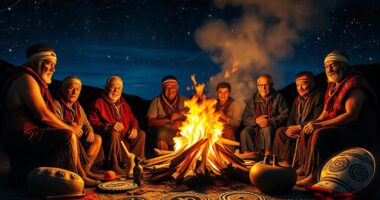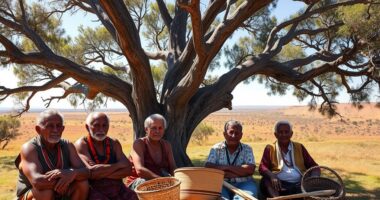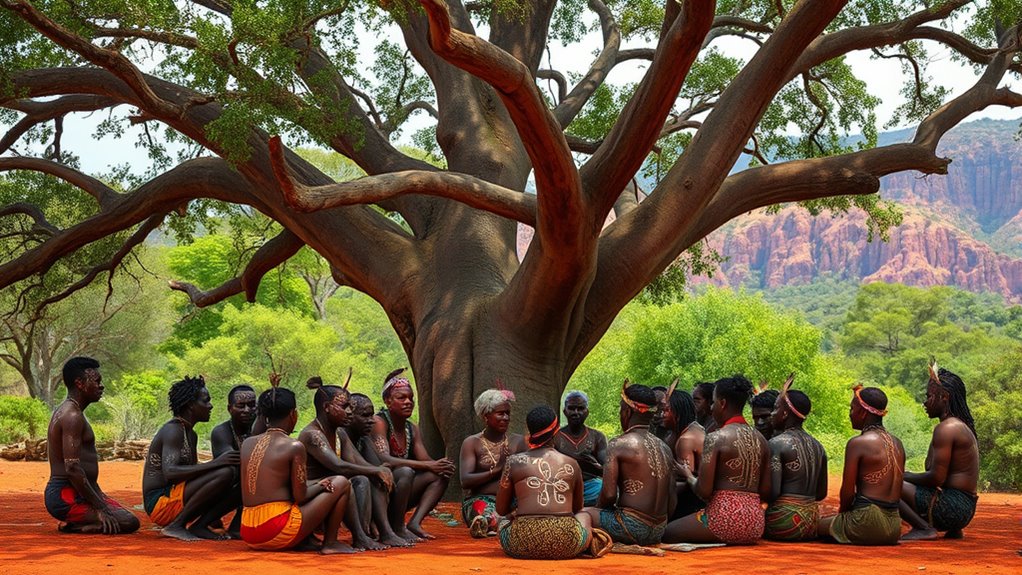
The Yolngu people of northeast Arnhem Land hold a vibrant culture rooted in Dreamtime stories that explain land, animals, and people. Their art, language, and spiritual ties to the land shape daily life and community practices. You’ll find their traditions expressed through paintings, carvings, and storytelling that preserve their history and values. By understanding their deep connection to land and language, you’ll see how they maintain their cultural identity across generations. Keep exploring to discover more about their remarkable way of life.
Key Takeaways
- The Yolngu people are Indigenous Australians from Northeast Arnhem Land, with a rich cultural heritage rooted in Dreamtime stories.
- Their language group, Yolngu Matha, includes several dialects that preserve oral traditions and ancestral knowledge.
- Yolngu culture integrates storytelling, art, and spiritual land connections, shaping community life and ceremonies.
- They view land as sacred, acting as custodians to protect natural sites and maintain ecological balance.
- Cultural practices and language sustain their identity, ensuring traditions are passed across generations and remain vital today.
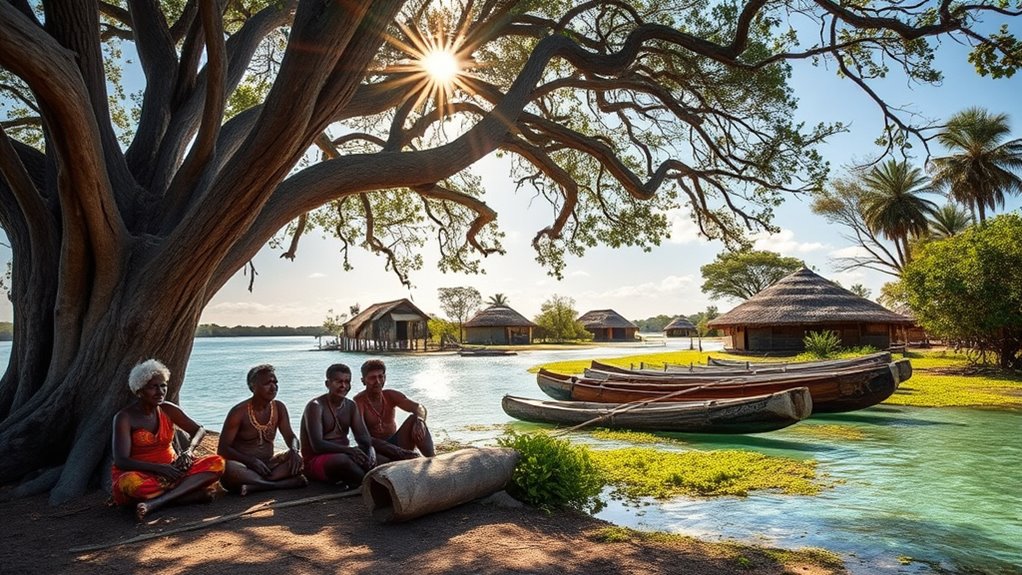
Have you ever wondered what makes the Yolngu people of Northeast Arnhem Land so unique? Their culture is deeply rooted in a rich tapestry of traditions, stories, and practices that have been passed down through countless generations. Central to their identity are Dreamtime stories, which explain the origins of the land, animals, and people. These stories aren’t just myths; they serve as a moral framework and a way to connect with the world around them. As you explore Yolngu culture, you’ll see how these stories influence every aspect of life, from ceremonies to daily routines, ensuring their history remains alive and relevant.
Discover how Dreamtime stories shape Yolngu culture, guiding their traditions, morals, and connection to the land.
Their traditional art offers a vivid expression of these stories and beliefs. When you look at Yolngu art, you’re witnessing more than just beautiful patterns and symbols; you’re seeing visual representations of Dreamtime narratives. Traditional art forms such as bark paintings, carvings, and woven objects serve as a language that communicates important cultural knowledge. These artworks are often created during ceremonies or special occasions, acting as both storytelling devices and spiritual tools. The intricate designs often incorporate symbols representing ancestral beings, natural elements, and sacred sites, making each piece a indispensable link to their spiritual landscape.
Living in harmony with the land is another core aspect of Yolngu culture. They see themselves as custodians of their homeland, which they refer to as “minyma” — a sacred trust. Their connection to the land is not just physical but spiritual, and every place holds significance within their Dreamtime stories. This relationship guides their management of natural resources and ecological practices. When you visit Northeast Arnhem Land, you’ll notice that Yolngu people actively protect their environment, respecting the sacred sites and ensuring the land remains healthy for future generations.
Language plays a paramount role in maintaining their cultural integrity. The Yolngu Matha language group comprises several dialects that are still actively spoken today. By preserving their language, they keep alive the nuances of their stories, songs, and ceremonies. As you learn about their language, you’ll realize how it embodies their worldview, values, and history. For the Yolngu, language isn’t just a means of communication; it is a vessel carrying their ancestral knowledge, connecting past, present, and future.
In essence, the Yolngu people’s identity is a vibrant blend of storytelling, artistic expression, spiritual connection to the land, and linguistic richness. Their culture offers a profound example of how tradition can shape a community’s way of life and sustain its spirit across generations. When you explore their world, you’ll discover a community that honors its past while living meaningfully in the present.

Madayin: Eight Decades of Aboriginal Australian Bark Painting from Yirrkala
As an affiliate, we earn on qualifying purchases.
As an affiliate, we earn on qualifying purchases.
Frequently Asked Questions
How Do Yolngu People Preserve Their Traditional Storytelling Methods?
You can help preserve the Yolngu people’s storytelling traditions by actively sharing and listening to their stories, participating in cultural events, and respecting their practices. They pass down stories through oral tradition, ceremonies, and art, keeping their culture alive. Supporting initiatives that celebrate and teach their storytelling methods guarantees these traditions remain vibrant. Your involvement helps safeguard their cultural preservation for future generations.
What Are the Main Challenges Facing Yolngu Land Rights Today?
Imagine land rights as a fragile web you must protect. Today, you face challenges like uncertain land ownership and ongoing legal disputes, which threaten Yolngu people’s connection to their land. These disputes can feel like storms tearing at the web’s strands, risking loss of cultural identity and access. You need stronger legal recognition and respect for traditional ownership to keep this essential web intact and secure Yolngu land for future generations.
How Does Yolngu Art Influence Contemporary Australian Culture?
You see how Yolngu art influences contemporary Australian culture by showcasing Indigenous symbolism and unique artistic techniques. Their vibrant designs and storytelling inspire modern artists, fostering greater appreciation for Indigenous traditions. When you observe Yolngu art, you recognize its role in promoting cultural understanding and respect. It challenges you to embrace diversity and enriches Australia’s artistic landscape through powerful visual narratives rooted in ancestral knowledge.
What Role Do Women Play in Yolngu Ceremonial Practices?
Women play essential roles in Yolngu ceremonial practices, holding key responsibilities in rituals and celebrations. Your women’s ceremonial roles involve passing down women’s cultural knowledge, ensuring traditions endure through generations. They often lead dance, song, and storytelling, which are crucial to ceremonies. By actively participating, women preserve and transmit cultural values, reinforcing their importance within Yolngu society and maintaining the strength of their cultural identity.
How Is Language Revitalization Being Supported Among Younger Yolngu Generations?
Imagine a vibrant garden where each word is a blooming flower. You support language revitalization by actively engaging youth in language education programs, nurturing their connection to Yolngu language. Through youth engagement initiatives like workshops, storytelling, and cultural events, you help guarantee these linguistic blooms flourish for future generations. Your efforts keep the language alive, vibrant, and woven into the fabric of Yolngu identity, much like a garden that thrives with care.

A Whakapapa of Tradition: One Hundred Years of Ngato Porou Carving, 1830-1930
As an affiliate, we earn on qualifying purchases.
As an affiliate, we earn on qualifying purchases.
Conclusion
Now, imagine uncovering more secrets of the Yolngu people—hidden stories in their songs, sacred sites untouched by time, and traditions that hold the key to their identity. Their land whispers ancient truths that could change how you see the world. Are you ready to explore deeper into their mysterious culture and language? The journey into Yolngu life is just beginning, and what you discover next might leave you forever changed.

Emma (Dreamtime)
As an affiliate, we earn on qualifying purchases.
As an affiliate, we earn on qualifying purchases.

Monem Art Vintage Hand of Fatima Print – Evil Eye Poster – Halloween Art – Gift for Men & Women – Gothic Decor for Office, Living Room or Bedroom – 11×14 UNFRAMED Wall Art
✅UNFRAMED PRINTS: We create all our prints in variation of standard sizes from 8×10 to 24×32 inches. For…
As an affiliate, we earn on qualifying purchases.
As an affiliate, we earn on qualifying purchases.