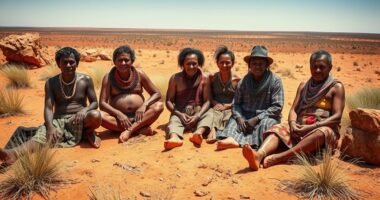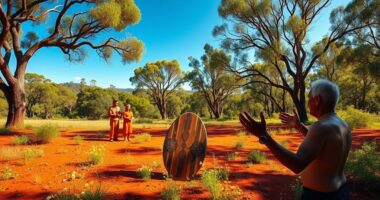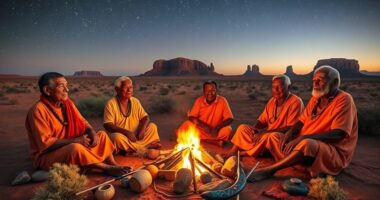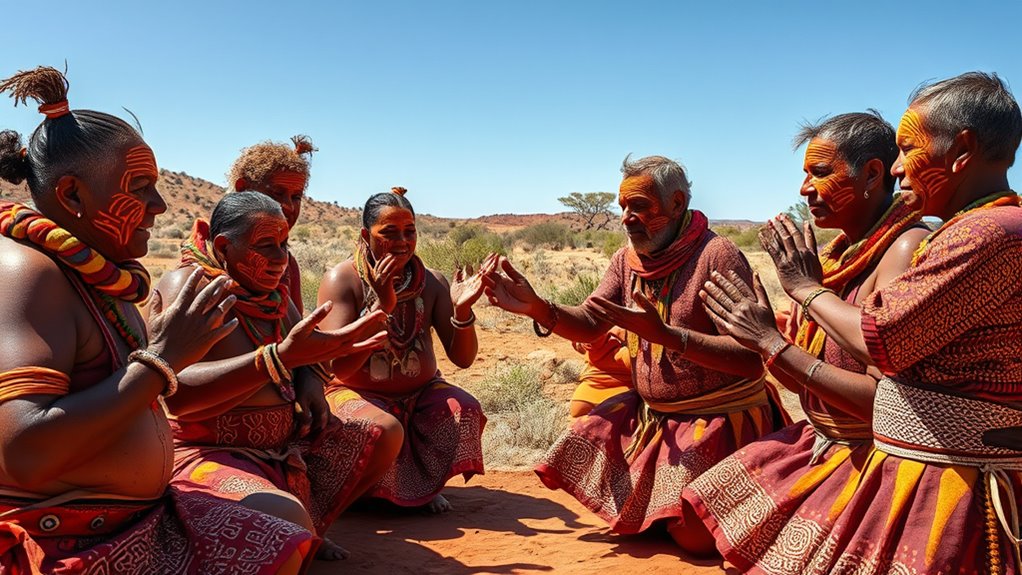

The Warlpiri people express their culture through their language, intricate signs, and elaborate ceremonies. They use their language to pass down stories, laws, and traditions that connect them to land and ancestors. Symbols like body painting and rock art play a crucial role in telling their Dreamtime stories. Their ceremonies involving singing, dancing, and storytelling keep their spirituality and community alive, offering a powerful insight into their world. If you explore further, you’ll discover the depth of their cultural richness and significance.
Key Takeaways
- The Warlpiri language is an Indigenous Australian language deeply connected to their cultural stories and ceremonies.
- Sign language accompanies traditional stories and dances, conveying sacred messages and facilitating communication during ceremonies.
- Ceremonies involve body painting, singing, and dancing that depict Dreamtime stories and ancestral spirits.
- Visual symbols like rock art and body paintings serve as powerful tools for transmitting cultural knowledge and teachings.
- Warlpiri cultural practices integrate language, signs, and ceremonies to preserve their identity and spiritual beliefs.
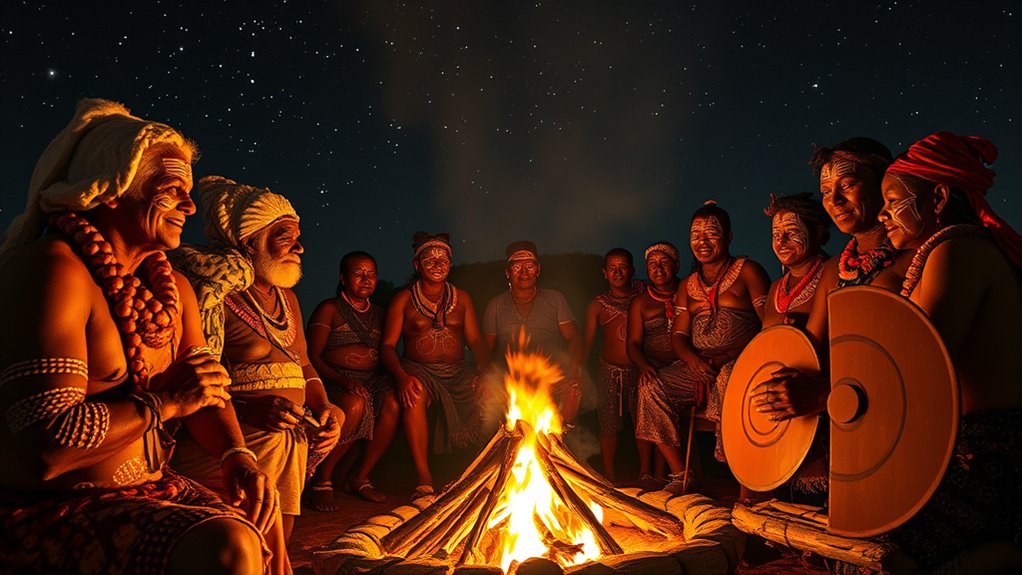
Have you ever wondered who the Warlpiri people are? If so, you’re about to discover a rich culture rooted in stories, ceremonies, and traditions that have been passed down for countless generations. The Warlpiri are an Indigenous group from the Central and Western Desert regions of Australia, and their culture is deeply connected to their Dreamtime stories. These stories serve as the foundation of their spiritual beliefs, explaining how the world was created and how everything in it is interconnected. When you learn about their Dreamtime stories, you’ll see how they use these narratives to pass down knowledge, laws, and morals, keeping their cultural identity alive. These stories aren’t just tales; they are sacred truths that guide daily life, influence their rituals, and shape their understanding of the world. They often involve ancestral beings, whose actions in the Dreamtime set the patterns for land, animals, and humans. The Warlpiri believe that by retelling these stories during cultural ceremonies, they keep the spirits and traditions alive, ensuring the continuity of their heritage. Additionally, the use of visual symbols such as body paintings and rock art plays a significant role in conveying these stories and teachings.
Cultural ceremonies are central to their community life, and you can think of them as living expressions of their identity. During these ceremonies, the Warlpiri gather to sing, dance, and tell stories, reinforcing their connections to the land, ancestors, and each other. These rituals often involve intricate body paintings, songs, and dances that symbolize important Dreamtime stories and ancestral spirits. When you witness a Warlpiri ceremony, you’ll notice how every movement and song carries meaning, acting as a vessel for cultural knowledge. These ceremonies not only honor their ancestors but also serve practical purposes, such as ensuring good rainfall, hunting success, or healing. They are also a way for younger generations to learn their language, stories, and customs through participation.
In essence, the Warlpiri people’s culture is a vibrant tapestry woven from their Dreamtime stories and ceremonies. By maintaining these traditions, they preserve a worldview that emphasizes harmony with the land and respect for their ancestors. If you ever have the chance to observe or learn about their cultural practices, you’ll see firsthand how these stories and ceremonies continue to shape their lives today. They are more than just traditions—they are the living heart of the Warlpiri identity, connecting past, present, and future in a seamless continuum.
Indigenous Australian body paint kit
As an affiliate, we earn on qualifying purchases.
As an affiliate, we earn on qualifying purchases.
Frequently Asked Questions
How Do Warlpiri People Preserve Their Language Today?
You can see how the Warlpiri people preserve their language through active efforts like language revitalization programs and community education. They teach Warlpiri in local schools, hold cultural events, and encourage elders to pass down stories and traditions. These initiatives help keep their language alive, ensuring future generations can speak and celebrate their unique heritage. Your support for such programs makes a meaningful difference in language preservation.
What Are the Main Ceremonies Unique to Warlpiri Culture?
You’ll find that Warlpiri culture’s main ceremonies are deeply rooted in Dreamtime stories and initiation rites, which are the heart and soul of their traditions. These ceremonies connect you to ancestral spirits, passing on sacred knowledge and customs. They often include singing, dancing, and storytelling, keeping their culture alive. It’s a way to honor their ancestors and make certain their traditions endure, demonstrating that actions speak louder than words.
How Does Warlpiri Sign Language Differ From Spoken Language?
You’ll notice that Warlpiri sign language differs from spoken language through gesture communication and visual symbolism. Instead of sounds, you use precise hand movements, facial expressions, and body postures to convey meaning. This visual form of communication allows Warlpiri people to share stories, emotions, and cultural knowledge silently, often during ceremonies or when speech isn’t appropriate, preserving tradition and fostering connection through expressive, visual storytelling.
What Role Do Elders Play in Warlpiri Cultural Practices?
Elders are the guiding stars in Warlpiri cultural practices, lighting the path with their wisdom. You see, through elder storytelling, they weave the fabric of tradition, passing down songs, dances, and beliefs. In leadership during ceremonies, they hold the torch, ensuring each ritual remains true to its roots. Their presence anchors the community, keeping the spirit of Warlpiri life alive and vibrant for generations to come.
How Has Modern Technology Impacted Warlpiri Traditions?
Modern technology has transformed Warlpiri traditions by enabling digital storytelling and increasing social media engagement. You can now share stories and cultural practices more widely, helping to preserve and promote your heritage. While this connectivity offers new opportunities, it also challenges traditional ways, requiring you to balance modern tools with respecting cultural significance. Embracing technology helps keep Warlpiri culture alive and relevant in today’s digital world.

Ultimate Realistic Rock by Carmine Appice | Drum Method Book with Online Audio | Rock Drumming Exercises for Intermediate to Advanced Players | Percussion Instructional Songbook
Instrumentation: Drum
As an affiliate, we earn on qualifying purchases.
As an affiliate, we earn on qualifying purchases.
Conclusion
You see, the Warlpiri people’s language, signs, and ceremonies connect them deeply to their land and history. While their words echo ancient stories, their gestures and rituals breathe life into traditions that remain vibrant today. It’s a powerful reminder that culture isn’t just spoken or seen—it’s felt. In a world racing forward, their enduring practices stand as a affirmation to resilience and identity, proving that some roots run deeper than words alone.

ORIDOOR Sleeveless praise dance costumes girls metal irregular worship Liturgical lyrical dance church Tunic outerwear costumes Sky blue Tag-130
Fabric: high quality polyester, spandex fabric.
As an affiliate, we earn on qualifying purchases.
As an affiliate, we earn on qualifying purchases.

Gadi Mirrabooka: Australian Aboriginal Tales from the Dreaming (World Folklore Series)
As an affiliate, we earn on qualifying purchases.
As an affiliate, we earn on qualifying purchases.