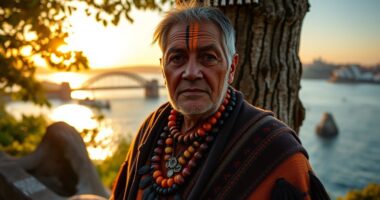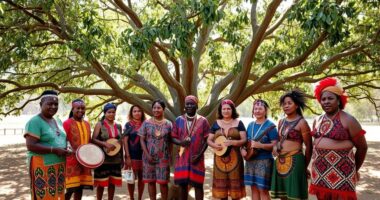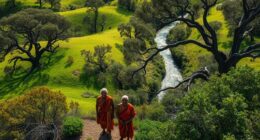

As you explore the culture of the Noongar people in southwestern Australia, you’ll discover a rich heritage deeply connected to the land they have worshipped for thousands of years. Their stories, passed down through generations, reveal their understanding of creation, animals, and landscapes. Crafting plays an essential role, with symbols and traditional techniques used in ceremonies and daily life. To truly appreciate their resilience and artistry, you’ll want to uncover more about their living cultural practices.
Key Takeaways
- The Noongar people’s culture is rooted in thousands of years of history, deeply connected to southwestern Australia’s land and Dreamtime stories.
- Dreamtime stories explain the landscape, animals, and morals, forming the spiritual foundation of Noongar worldview.
- Traditional crafts like weaving, painting, and carving feature symbols from Dreamtime stories and serve cultural and ceremonial purposes.
- Women traditionally create woven baskets and textiles using native materials, reflecting land, ancestors, and cultural identity.
- Cultural preservation occurs through storytelling and craft-making, helping Noongar culture to thrive, adapt, and maintain its living traditions today.
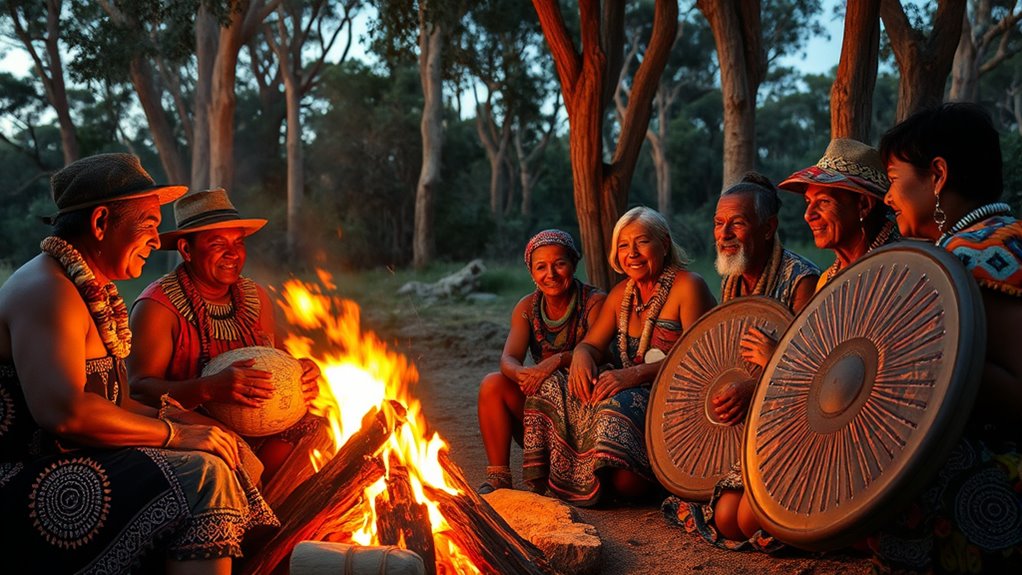
Have you ever wondered about the rich cultural heritage of the Noongar people? Their history stretches back thousands of years, deeply rooted in the land of southwestern Australia. Central to their culture are Dreamtime stories, which are more than just tales; they’re the foundation of their understanding of the world, the land, and their spiritual connection to it. These stories recount how the landscape was shaped, the origins of animals and plants, and the morals they live by. When you listen to a Noongar elder share a Dreamtime story, you’re gaining insight into a worldview that sees everything—land, water, animals, humans—as interconnected and sacred. These stories are passed down orally through generations, preserving their identity and values.
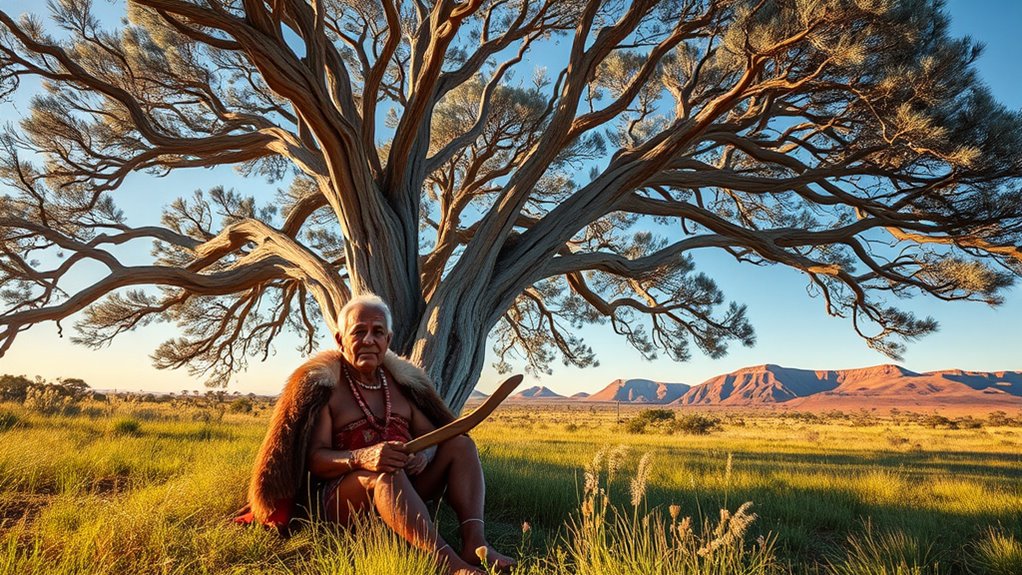
The Noongar people also express their cultural identity through traditional crafts, which serve both practical and ceremonial purposes. You might notice intricate weaving, painting, and carving that reflect their connection to the land and their ancestors. These crafts often feature symbols derived from Dreamtime stories, making each piece a tangible link to their spiritual beliefs. For example, they create beautifully decorated boomerangs, didgeridoos, and shields, each imbued with meaning and history. Women traditionally weave baskets, mats, and textiles using native grasses and materials, demonstrating their skill and artistry. These crafts aren’t just decorative—they carry stories, cultural knowledge, and social significance, often used in ceremonies or as teaching tools to pass on their traditions.
Engaging with Noongar traditional crafts offers you a window into their worldview, showing how art and storytelling are intertwined. When you observe or participate in these crafts, you’re partaking in a living tradition that has sustained the Noongar people for thousands of years. It’s a way of honoring their ancestors and maintaining their cultural practices in a rapidly changing world. The act of creating these crafts keeps their stories alive, ensuring that future generations continue to connect with their heritage. Whether it’s through weaving, painting, or storytelling, the Noongar people use their cultural practices to reinforce their identity and spiritual beliefs. Their Dreamtime stories and traditional crafts are not just remnants of the past; they are vibrant expressions of a living culture that continues to thrive and adapt today. By understanding and respecting these traditions, you can better appreciate the depth and resilience of the Noongar people’s cultural heritage.
Frequently Asked Questions
How Do Noongar People Preserve Their Language Today?
You can see Noongar people preserve their language through active language revitalization efforts. They participate in community workshops, where they learn and practice Noongar words and phrases. These workshops encourage cultural connection and passing language skills to younger generations. By engaging in these initiatives, Noongar people keep their language alive, strengthening their cultural identity and ensuring their language continues to thrive amidst modern influences.
What Are Traditional Noongar Spiritual Beliefs?
You learn that Noongar spiritual beliefs center around Dreamtime stories, which explain the creation of the land, animals, and people. You also recognize the importance of Sacred sites, where spiritual ceremonies and connections to ancestors happen. These beliefs emphasize respect for nature and ancestors, guiding daily life and cultural practices. By honoring Dreamtime stories and Sacred sites, you help preserve the spiritual connection of the Noongar people to their land.
How Do Noongar People Celebrate Major Cultural Events?
Imagine joining a vibrant celebration where you witness Indigenous dance and hear Dreamtime stories come alive. Noongar people celebrate major cultural events by performing traditional dances and sharing stories that connect them to their ancestors and land. These events often involve community gatherings, storytelling, and ceremonies that honor their spiritual beliefs. You’d feel a deep sense of connection, tradition, and respect for their rich cultural heritage during these meaningful festivities.
What Role Do Totems Play in Noongar Society?
You should know that totems hold great significance in Noongar society, representing your clan’s identity and spiritual connection to the land. They serve as clan symbols, guiding your relationships and responsibilities within the community. By respecting your totem, you honor your ancestors and maintain harmony with nature. These totems reinforce cultural values, ensuring your clan’s traditions and stories are preserved for future generations.
How Has Colonization Affected Noongar Land Rights?
You see that colonization has profoundly affected Noongar land rights through land dispossession and ongoing legal battles. As settlers claimed traditional lands, the Noongar people lost access to their ancestral sites, disrupting cultural practices. Despite legal efforts, land disputes continue, making it difficult for you to regain control. These struggles highlight the lasting impacts of colonization and the importance of recognizing and respecting Noongar rights today.
Conclusion
As you step into the world of the Noongar people, you become part of a living tapestry woven with stories, traditions, and sacred lands. Their culture is a vibrant river flowing through time, reminding you that their connection to the south west is as enduring as the ancient ochre cliffs. Embrace their spirit, and you’ll find yourself immersed in a rich heritage that whispers secrets of the earth, inviting you to listen, learn, and honor their enduring legacy.