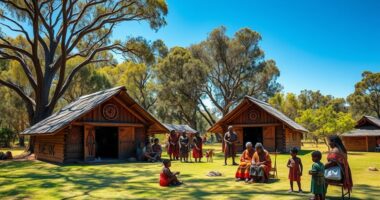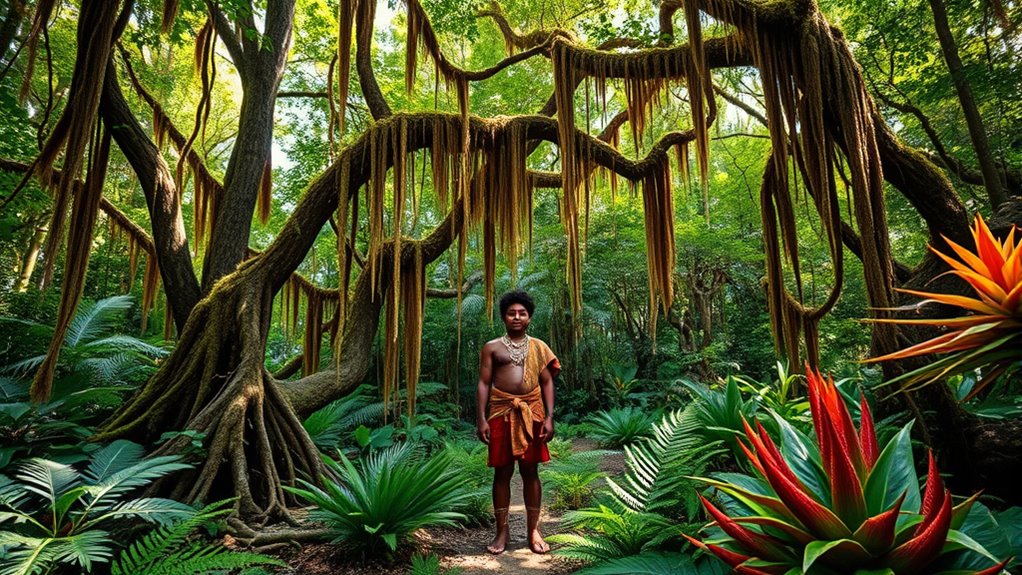
As a visitor, you become aware that the Kuku Yalanji are the true custodians of the rainforests in Far North Queensland. They actively defend their land through legal action, traditional practices, and eco-tourism initiatives. Their deep cultural ties and expertise in biodiversity help preserve the lush environment and promote sustainable management. Understanding their essential role highlights how Indigenous guardianship protects both the land and its unique ecosystems. Continuing will reveal even more about their inspiring efforts.
Key Takeaways
- The Kuku Yalanji are the traditional custodians of Far North Queensland’s rainforests, defending their land rights and cultural sovereignty.
- They actively manage and preserve the rainforest through traditional practices like controlled burning and sustainable harvesting.
- Their stewardship promotes biodiversity, ecosystem health, and resilience for future generations.
- Kuku Yalanji participate in eco-tourism and conservation programs, sharing their knowledge and advocating for environmental sustainability.
- Their deep cultural and spiritual connection to the land underscores their vital role as rainforest guardians.
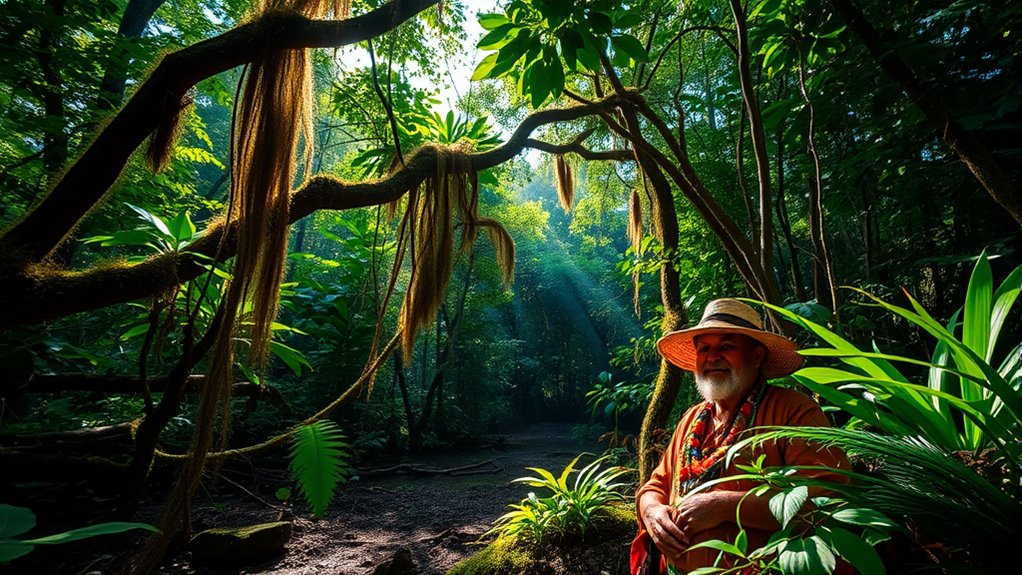
Have you ever wondered who keeps the spirit of the rainforest alive? It’s the Kuku Yalanji people, the traditional custodians of the lush forests in Far North Queensland. Their deep connection to the land isn’t just about history; it’s about actively protecting and nurturing it today. They’ve fought long and hard to maintain their Indigenous land rights, ensuring that their ancestral territories remain theirs by law. This isn’t just about ownership; it’s about sovereignty and the ability to govern their land according to their customs and knowledge. When you see the dense canopy and vibrant wildlife, remember it’s because the Kuku Yalanji have fought to preserve these ecosystems from harmful development and exploitation.
Their approach to land management is rooted in sustainable rainforest practices. Unlike destructive logging or land clearing, they work with the environment, using traditional methods that promote regeneration and biodiversity. These practices include controlled burning, which helps prevent larger wildfires and encourages new growth, and the careful harvesting of plants for medicinal and cultural purposes. By blending ancient knowledge with modern conservation strategies, the Kuku Yalanji ensure their rainforest remains healthy and resilient for future generations. Their stewardship proves that respecting the land’s natural cycles benefits everyone, not just their community.
You might not realize it, but their efforts extend beyond cultural preservation. They actively participate in eco-tourism and conservation programs, sharing their knowledge with visitors and environmental groups. This helps foster a broader understanding of sustainable rainforest practices and the importance of Indigenous land rights. When you visit the region or learn about their efforts, you’re witnessing a living example of how traditional custodianship can coexist with environmental sustainability. The Kuku Yalanji aren’t just passing down stories—they’re applying age-old wisdom to modern challenges, ensuring that their land remains vibrant and alive.
Their work shows that Indigenous land rights aren’t just about legal titles; they’re about maintaining a spiritual and cultural bond with the land. By respecting these rights, the rainforest’s guardians can continue practicing sustainable methods that benefit the entire ecosystem. Additionally, their knowledge of native flora and fauna demonstrates their expertise in biodiversity conservation, which is vital for the health of the rainforest. When you think of the rainforest, think of the Kuku Yalanji—guardians who actively nurture their homeland, blending tradition and innovation to keep the spirit of the rainforest thriving. Their story is a tribute to the power of Indigenous stewardship and the importance of honoring those who keep the rainforest alive.
Frequently Asked Questions
What Traditional Kuku Yalanji Ceremonies Are Still Practiced Today?
You can still participate in Kuku Yalanji ceremonies today, like Dreamtime stories and initiation rites. These events are essential for passing down cultural knowledge and traditions. During Dreamtime stories, you learn about the creation of the world and ancestral spirits. Initiation rites mark important life stages, like becoming a man or woman. These ceremonies keep Kuku Yalanji culture alive, strengthening community bonds and honoring their rainforest custodianship.
How Do Kuku Yalanji People Protect Their Sacred Sites?
Imagine a delicate web of life, each strand representing sacred sites you must protect. You do this through cultural preservation, ensuring ancestral stories remain alive and respected. By maintaining traditional practices, setting up protected areas, and involving community elders, you safeguard these sites from harm. Your commitment honors the land’s history, reminding others of the importance of respecting and preserving the Kuku Yalanji’s spiritual and cultural heritage for future generations.
What Are Some Kuku Yalanji Medicinal Plants Used Today?
You can explore traditional healing with plants like the kurrajong, which the Kuku Yalanji use for medicinal purposes. They also rely on tea tree for its antiseptic properties and native ginger for inflammation. By practicing plant conservation, they guarantee these essential medicinal plants remain available for future generations. These plants play a critical role in maintaining health and cultural traditions, highlighting the significance of protecting rainforest biodiversity.
How Can Visitors Respectfully Engage With Kuku Yalanji Culture?
Respectfully, you should practice cultural etiquette and prioritize respectful tourism when engaging with Kuku Yalanji culture. Listen actively, ask permission before participating in activities, and follow guides’ instructions. Show genuine interest, avoid appropriating traditions, and appreciate their stories and customs. By being considerate and conscientious, you help preserve their vibrant culture while creating meaningful, respectful connections with the Kuku Yalanji community.
What Are the Current Challenges Facing Kuku Yalanji Land Rights?
You should be aware that Kuku Yalanji land rights face ongoing challenges from land disputes and environmental threats. These issues threaten their connection to traditional lands and their cultural heritage. You can support them by respecting land claims, avoiding activities that harm the environment, and staying informed about their struggles. Your awareness and respectful actions help protect their rights and the rainforest they have long custodianship over.
Conclusion
As you walk through the lush canopy of Kuku Yalanji country, remember you’re stepping into a living tapestry woven with stories, traditions, and guardianship. These custodians keep the rainforest’s heartbeat alive, like a steady drum echoing through time. By respecting their land and culture, you become part of this vibrant story. Protecting the Kuku Yalanji isn’t just about saving trees; it’s about nurturing a future rooted in harmony and respect.