
Protecting sacred sites worldwide involves overcoming challenges like urbanization, climate change, tourism impact, and political conflicts that threaten their integrity. Success stories show that collaboration among communities, governments, and international organizations, along with sustainable tourism and legal protections, can preserve these essential cultural and spiritual landmarks. Respectful management and community involvement are key to balancing preservation with accessibility. To discover how these efforts are making a difference and the lessons learned, keep exploring these fascinating stories.
Key Takeaways
- Collaborative management involving communities, governments, and international agencies effectively balances preservation with local cultural needs.
- Successful stories often highlight legal protections and educational programs that raise awareness and foster respect for sacred sites.
- Addressing challenges like urbanization, tourism, and climate change requires adaptive strategies that ensure site integrity and accessibility.
- Engaging local communities in stewardship fosters ownership, reverence, and sustainable practices that safeguard sacred traditions.
- Respectful, balanced management approaches serve as models for protecting sacred sites worldwide while honoring their spiritual and cultural significance.

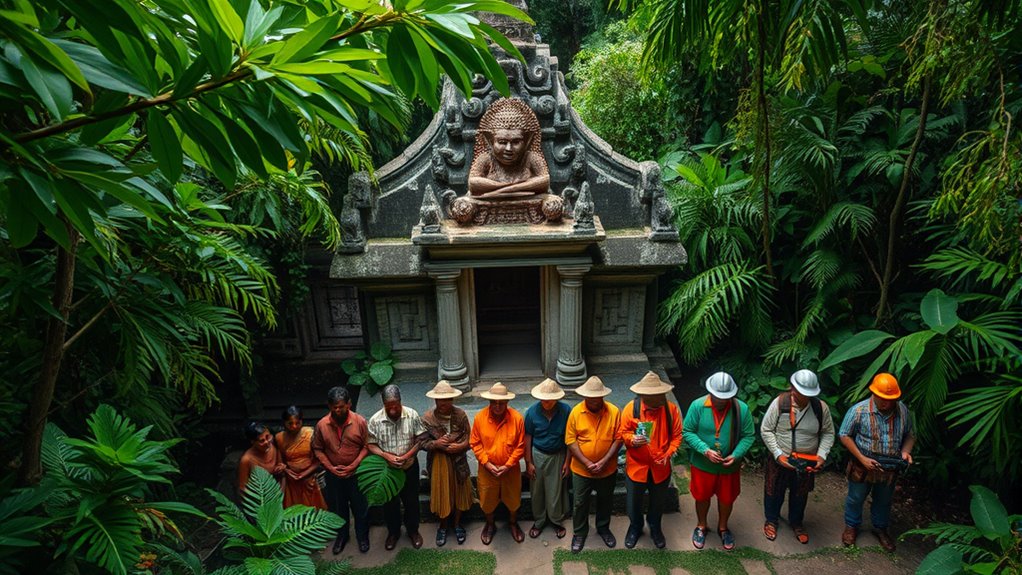
Have you ever wondered why sacred sites matter so deeply to communities around the world? These sites aren’t just historical landmarks; they embody the spiritual, cultural, and social identities of the people who hold them sacred. Protecting such places isn’t merely about preserving stones or relics—it’s about safeguarding living traditions and ensuring that future generations can connect with their heritage. When you step into a sacred site, you’re witnessing a tangible link to centuries of beliefs, rituals, and collective memory. That’s why cultural preservation plays a *vital* role in their protection. It involves more than just conservation; it requires a thoughtful approach to heritage management that respects the significance of these sites to local communities. Effective heritage management recognizes that sacred sites are active spaces, not static relics. It involves engaging local communities, understanding their needs, and ensuring they have a voice in how the site is preserved and used. This approach helps prevent damage caused by neglect, commercialization, or inappropriate development. It also fosters a sense of ownership among community members, encouraging them to become stewards of their heritage rather than just passive observers. However, protecting sacred sites is fraught with challenges. Urbanization, tourism, climate change, and political conflicts threaten their integrity and accessibility. In many cases, these pressures can lead to damage or even destruction. Governments and organizations often struggle to strike a balance between opening sites to visitors and maintaining their sanctity. When managed poorly, increased tourism can result in wear and tear, litter, or disrespectful behavior that diminishes the site’s spiritual value. Conversely, overly restrictive measures might alienate communities and hinder cultural expression. Despite these challenges, there are success stories worth celebrating. In some regions, collaborative heritage management involving local communities, governments, and international agencies has led to effective preservation strategies. These initiatives often include education programs, sustainable tourism practices, and legal protections that recognize the site’s cultural and spiritual significance. Such efforts demonstrate that with the right approach, sacred sites can continue to serve their communities and the world as sources of cultural pride and spiritual connection. Additionally, understanding self-watering plant pots can serve as a metaphor for how careful, balanced management helps preserve these sacred spaces. Protecting sacred sites requires a delicate balance—respecting tradition while adapting to modern realities. When you understand their importance, you realize that safeguarding these places isn’t just about preservation; it’s about honoring the diverse identities and histories that shape our shared human experience.
sacred site preservation guidebook
As an affiliate, we earn on qualifying purchases.
As an affiliate, we earn on qualifying purchases.
Frequently Asked Questions
How Do Local Communities Participate in Protecting Sacred Sites?
You can participate in protecting sacred sites by engaging in community stewardship and cultural advocacy. Your involvement might include volunteering for preservation projects, raising awareness about the site’s significance, and supporting local traditions. By actively advocating for these sites, you help guarantee their protection for future generations. Your efforts strengthen community bonds and promote respectful appreciation of cultural heritage, making you a crucial part of safeguarding sacred sites around the world.
What Legal Frameworks Support Sacred Site Conservation Globally?
You’ll find that legal recognition and policy enforcement play vital roles in protecting sacred sites globally. Many countries have laws that officially recognize these sites’ cultural and spiritual importance, ensuring they’re protected from development or destruction. Strong enforcement mechanisms help uphold these laws, making sure communities and individuals respect the significance of sacred sites. By strengthening legal frameworks, governments help preserve these invaluable cultural landmarks for future generations.
How Can Technology Aid in Safeguarding These Culturally Significant Locations?
You can use technology like digital mapping to document sacred sites precisely, creating detailed records that support their protection. Drone surveillance helps monitor these locations in real-time, deterring vandalism and illegal activities. By integrating these tools, you actively contribute to safeguarding cultural heritage, ensuring sacred sites are preserved for future generations. Embracing digital mapping and drone technology makes your efforts more effective in addressing threats and promoting conservation.
What Are Common Threats Threatening Sacred Sites Today?
You face threats like cultural erosion, which can diminish the significance of sacred sites, and environmental degradation, damaging their physical integrity. Urban development, pollution, and climate change accelerate these issues, risking the loss of cultural heritage. You need to be aware of these dangers and support efforts to preserve these sites through sustainable practices and community engagement, ensuring their spiritual and historical value endures for future generations.
How Do International Organizations Collaborate to Protect Sacred Sites?
International organizations collaborate through intergovernmental agreements and cultural heritage partnerships to protect sacred sites. You’ll see these agreements foster shared responsibility, resources, and expertise among nations. Partnerships often involve UNESCO and other agencies, helping to develop conservation strategies, enforce legal protections, and raise awareness. By working together, you can guarantee these essential sites are preserved for future generations, overcoming threats and celebrating their cultural significance worldwide.
heritage site management tools
As an affiliate, we earn on qualifying purchases.
As an affiliate, we earn on qualifying purchases.
Conclusion
As you walk alongside these sacred sites, remember they are the heartbeat of cultures and histories. Protecting them is like tending a delicate garden—you must nurture, respect, and stand guard against threats. With each success story, you see hope blooming amid challenges. By staying committed, you help guarantee these spiritual treasures continue to inspire and connect generations, like a lighthouse guiding us through storms, reminding us of our shared responsibility to preserve the world’s sacred heritage.
sustainable tourism signage
As an affiliate, we earn on qualifying purchases.
As an affiliate, we earn on qualifying purchases.
cultural heritage protection equipment
As an affiliate, we earn on qualifying purchases.
As an affiliate, we earn on qualifying purchases.