Indigenous communities respond to floods, fires, and droughts with deep-rooted traditional knowledge, community resilience, and spiritual practices. They use ancestral techniques like controlled burns, water management, and seasonal predictions to adapt quickly. Their collective efforts and cultural rituals strengthen bonds and restore balance with nature. By blending old wisdom with modern tools, they enhance their response and recovery. Continuing will uncover more about how these time-tested strategies can inspire sustainable resilience worldwide.
Key Takeaways
- Indigenous communities utilize traditional knowledge to predict, prepare for, and respond to floods, fires, and droughts effectively.
- Collective resilience is reinforced through community-based practices like controlled burns and water conservation.
- Integration of ancestral wisdom with modern technology enhances disaster response and recovery efforts.
- Spiritual and cultural rituals strengthen community bonds and provide guidance during environmental crises.
- Their holistic approaches offer sustainable models for managing and adapting to environmental disasters.
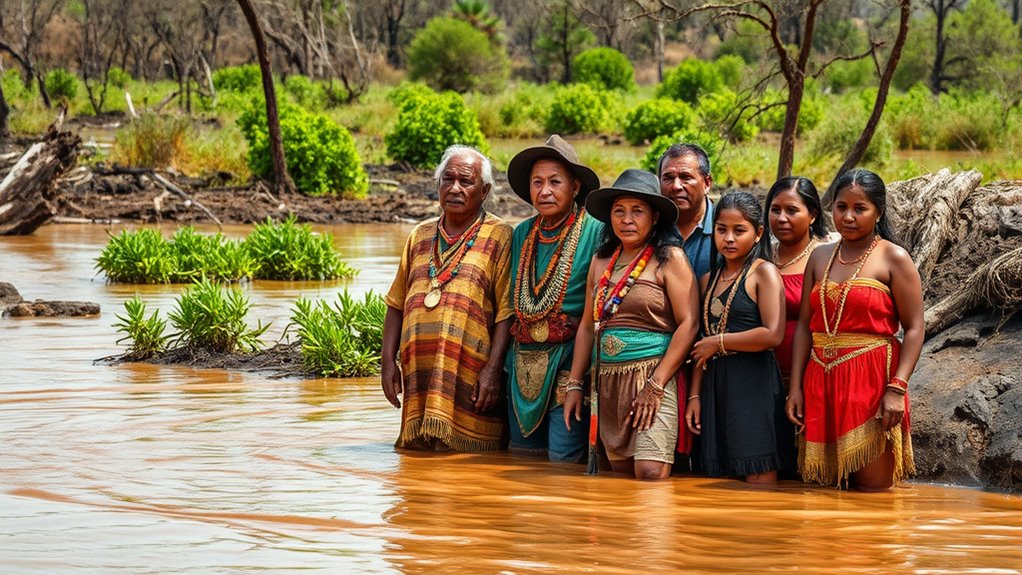
How do Indigenous communities respond when faced with environmental disasters? You might think that floods, wildfires, and droughts threaten their way of life, but these communities often turn to their deep-rooted traditions and collective strength to adapt and survive. Central to their response is traditional knowledge—an intricate understanding of local ecosystems, weather patterns, and natural resources passed down through generations. This knowledge isn’t just about survival; it’s a way of living in harmony with the environment, which becomes invaluable during crises. When disaster strikes, Indigenous communities draw on this wisdom to make quick, effective decisions—like predicting flood zones, managing water flow, or knowing which plants can be safely consumed or used for healing. This intimate connection to the land fosters community resilience, helping them withstand and recover from environmental shocks more swiftly than external aid alone could support.
Community resilience in Indigenous contexts isn’t just about bouncing back; it’s about adapting in ways that reinforce their cultural identity and environmental stewardship. When floods threaten their homes or fires ravage their forests, community members often come together, pooling their skills and knowledge to respond collectively. They may implement traditional land management practices, such as controlled burns, to reduce fuel loads and prevent larger wildfires, demonstrating how ancestral techniques remain relevant today. During droughts, communities rely on their understanding of water conservation, multiple water sources, and seasonal patterns to ration resources effectively. Their resilience is built over centuries of facing similar challenges, making them highly adaptable and resourceful. Additionally, modern technologies are sometimes integrated with traditional methods to enhance their effectiveness, creating hybrid strategies that improve disaster response capabilities.
In many cases, Indigenous responses involve more than just physical actions; they incorporate spiritual and cultural ceremonies that reinforce collective bonds and restore balance with nature. These rituals often serve as both a way to seek spiritual guidance and a means to rally community members around shared goals. The strength of Indigenous communities lies in their ability to combine traditional knowledge with modern innovations, creating hybrid strategies that enhance their capacity to cope with disasters. This integration underscores their resilience, ensuring that they’re not only surviving in tough times but also preserving their cultural heritage amidst adversity.
Ultimately, when faced with environmental disasters, Indigenous communities demonstrate remarkable resilience rooted in traditional knowledge, community cooperation, and spiritual practices. Their responses reveal a profound understanding of their environment and a collective spirit that sustains them through crises. By blending ancestral wisdom with contemporary approaches, they continue to adapt and thrive, serving as powerful models for sustainable and community-centered disaster response.
Frequently Asked Questions
How Do Indigenous Knowledge Systems Influence Disaster Preparedness?
Your understanding of traditional ecological knowledge greatly influences disaster preparedness by incorporating cultural sustainability. You leverage indigenous practices that have been passed down through generations to anticipate and respond to floods, fires, and droughts effectively. This knowledge emphasizes harmony with nature, enabling you to develop resilient strategies that protect both your community and environment, ensuring long-term sustainability and a proactive approach to managing environmental disasters.
What Role Do Elders Play in Community Resilience?
Elders are the heartbeat of community resilience, their storytelling weaving generations together like a timeless tapestry. With ritual significance, they pass down essential knowledge, guiding others through environmental challenges. Their wisdom anchors cultural identity and fosters unity, ensuring the community withstands disasters. You can rely on elders to preserve traditions, inspire hope, and lead collective action, making them indispensable in building strength and resilience amid adversity.
How Are Indigenous Youth Involved in Environmental Recovery Efforts?
You actively participate in environmental recovery efforts through youth activism, raising awareness and advocating for sustainable practices. You also focus on cultural preservation, ensuring traditional knowledge and practices are passed down and integrated into recovery strategies. By engaging in community-led projects and education, you help strengthen resilience, inspire others, and foster a deep connection to your land and culture, making a meaningful impact on environmental healing and future sustainability.
What Challenges Do Indigenous Communities Face in Accessing Aid?
You face obstacles that are as formidable as mountains — funding barriers and cultural suppression. These challenges make it hard for your community to access aid, often leaving you waiting in silence while others get help faster. Limited funding hampers essential resources, and cultural suppression can discourage you from seeking assistance or sharing your needs. Overcoming these hurdles requires awareness, respect, and targeted support to guarantee your community’s voice is heard and aid reaches you.
How Do Indigenous Practices Adapt to Changing Climate Patterns?
You adapt to changing climate patterns by relying on traditional land management techniques that have been passed down through generations. These practices, rooted in cultural resilience, help you manage and restore ecosystems, reducing the risk of disasters like floods and fires. By integrating traditional knowledge with modern science, you guarantee your community remains resilient and better prepared for future environmental shifts, maintaining a harmonious relationship with your land.
Conclusion
Just like a sturdy tree bends with the wind but doesn’t break, Indigenous communities demonstrate resilience and adaptability in facing environmental disasters. You see, their deep connection to the land guides innovative responses to floods, fires, and droughts. By honoring their traditional knowledge and practices, you can learn how to better protect and restore ecosystems. Embracing these Indigenous strategies offers hope and strength—showing us that even in chaos, rooted wisdom can help us stand tall and resilient.