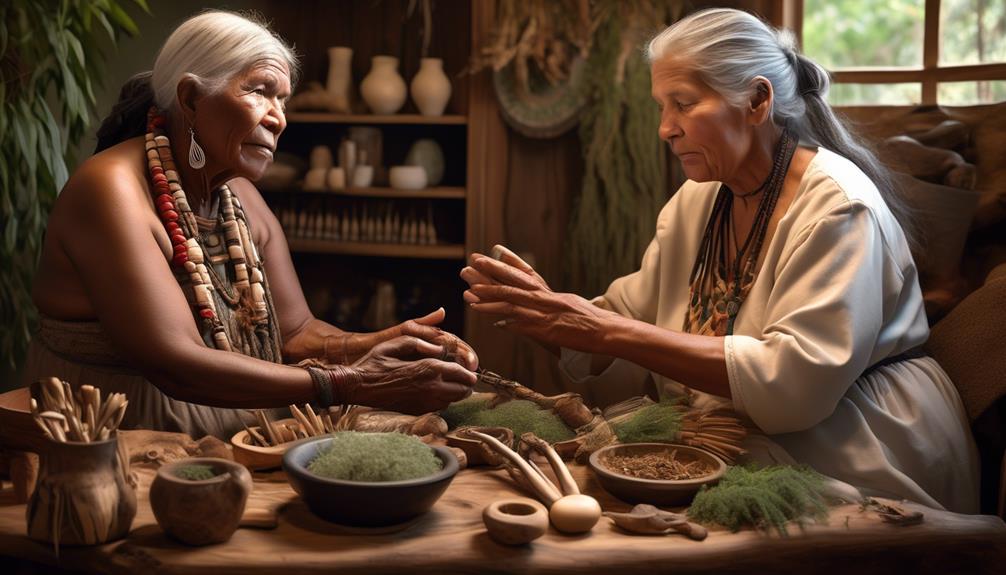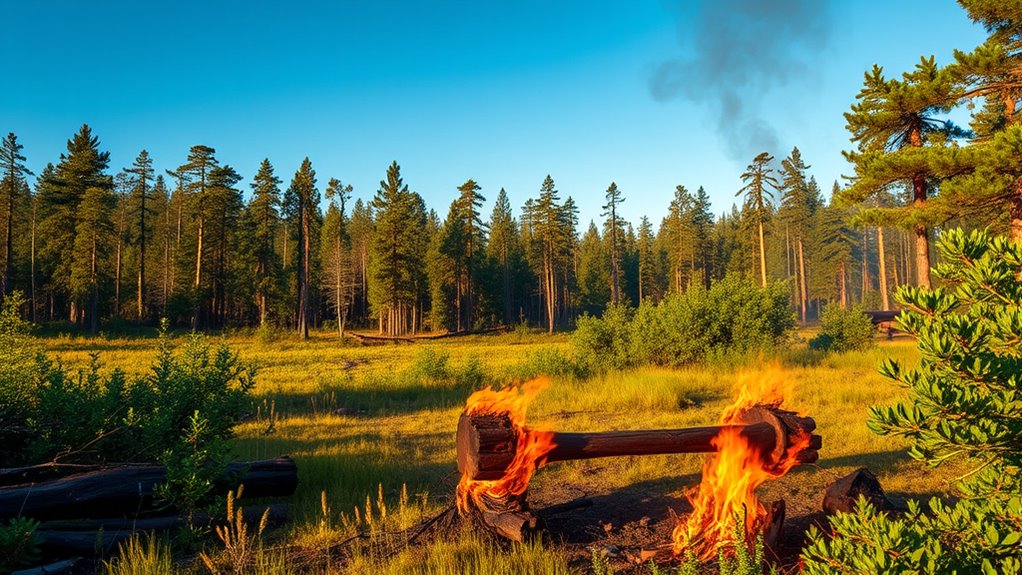
Indigenous communities have used controlled, intentional burns called cool burning for generations to manage landscapes and boost biodiversity. By carefully timing and planning these fires, they promote diverse habitats, support fire-adapted species, and keep ecosystems healthy. These practices also reduce the risk of dangerous wildfires and improve soil fertility. If you look further, you’ll discover how these ancient methods can inform modern fire management and protect ecosystems for the future.
Key Takeaways
- Indigenous cool burning uses controlled, intentional fires to promote ecosystem health and biodiversity.
- It creates diverse habitats by maintaining a mosaic landscape and supporting fire-adapted species.
- These practices enhance soil fertility and facilitate native plant regeneration.
- Indigenous fire management reduces large, uncontrolled wildfires, protecting ecosystems and cultural sites.
- Integrating traditional knowledge improves modern fire management, fostering ecological resilience and biodiversity.

Have you ever wondered how indigenous fire management practices influence biodiversity? It’s a fascinating intersection of fire ecology and cultural practices that shapes ecosystems in profound ways. Indigenous communities have long used fire as a tool, not just for land management but also as a way to maintain the health of their environment. Their traditional knowledge reveals that controlled, intentional burning—often called cool burning—can foster diverse habitats and support a wide range of plant and animal species. Unlike destructive wildfires, these burns are carefully planned to minimize harm while encouraging growth in specific areas. This approach aligns with fire ecology principles, recognizing that fire is a natural and necessary component of many ecosystems.
Indigenous fire management uses controlled burns to promote biodiversity and ecosystem health.
Cultural practices are central to understanding how indigenous peoples manage fire. These practices are passed down through generations, embedding a deep understanding of local landscapes and ecological cycles. They involve timing burns to seasons when they will be most beneficial, such as after rains or during specific ecological windows, ensuring that fire remains a living, dynamic force that sustains biodiversity. By intentionally setting these fires, indigenous communities help prevent larger, uncontrolled wildfires that can devastate ecosystems. They also promote the growth of fire-adapted species, which rely on periodic burns to reproduce and thrive. For example, some plants require fire to release their seeds, and certain animals depend on the mosaic landscapes created by these burns for food and shelter.
Incorporating fire ecology into cultural practices results in a patchwork of burned and unburned areas, which creates diverse microhabitats. This mosaic is vital for maintaining species richness, as it provides various niches for flora and fauna to flourish. Indigenous fire management also reduces fuel loads, decreasing the risk of catastrophic fires that threaten both ecosystems and communities. Furthermore, these practices help sustain traditional landscapes that are culturally significant, preserving both biodiversity and cultural heritage. When you understand the role of fire in these systems, it becomes clear that indigenous fire management is not just about controlling fire but about working with natural processes to enhance ecosystem resilience.
Additionally, recent studies show that high-quality fire management can increase soil fertility and promote the regeneration of native vegetation, further supporting biodiversity and ecosystem health. Ultimately, recognizing the importance of cultural practices in fire ecology offers valuable lessons for modern land management. It challenges the notion that fire is solely destructive and highlights its role as a tool for ecological balance. By respecting and integrating indigenous knowledge, we can develop fire management strategies that protect biodiversity, support healthy ecosystems, and honor cultural traditions. This synergy between ecology and culture underscores the importance of viewing fire as a natural, beneficial force—one that, when managed wisely, sustains the richness of life across landscapes.

Forestry Suppliers Sure-Seal Double-Bottom Drip Torch | Heavy Duty 15 Gauge Aluminum Canister | Big Mouth for Easy Filling | Fuel Trap & Check Valve for Protection | Oil Proof Gaskets
Heavy-Duty Construction – Built with rugged 15-gauge aluminum and a welded double-bottom for extended life in demanding environments.
As an affiliate, we earn on qualifying purchases.
As an affiliate, we earn on qualifying purchases.
Frequently Asked Questions
How Do Indigenous Fire Practices Vary Across Different Regions?
You’ll find that indigenous fire practices vary across regions due to cultural practices and local ecosystems. In some areas, communities burn small patches to promote plant growth, while others use larger, controlled fires to prevent wildfires. These regional variations reflect deep knowledge of the land and its needs. Understanding these differences helps you appreciate how indigenous communities adapt their fire management techniques to protect biodiversity and maintain ecological balance.
What Are the Long-Term Ecological Impacts of Indigenous Burning?
You’ll be amazed at how indigenous burning transforms ecosystems, creating unparalleled ecological resilience and boosting biodiversity conservation for generations. Long-term, these practices prevent wildfires from spiraling out of control, maintain healthy plant and animal populations, and restore natural cycles. By respecting and continuing these ancient methods, you help sustain vibrant, resilient landscapes that thrive against climate change and human impact, ensuring nature’s incredible diversity endures forever.
How Is Indigenous Knowledge Integrated Into Modern Fire Management?
You see, indigenous knowledge is integrated into modern fire management through collaborative efforts with local communities, emphasizing cultural preservation and ecological restoration. By incorporating traditional burning practices, you help maintain biodiversity and reduce wildfire risks. These methods are adapted into current policies, respecting indigenous perspectives and ensuring sustainable land management. This integration promotes a balanced approach that supports both cultural heritage and healthy ecosystems for future generations.
Are There Legal Protections for Indigenous Fire Management Techniques?
Yes, there is some legal recognition for indigenous fire management techniques, but you may face policy barriers that limit full integration. Governments are starting to acknowledge traditional practices, offering protections in certain regions. However, inconsistent laws and bureaucratic hurdles still exist, making it challenging for indigenous communities to fully implement their methods. Advocating for stronger legal recognition and policy reforms can help preserve these crucial fire management traditions.
How Can Communities Be Encouraged to Adopt Traditional Burning Methods?
You can encourage communities to adopt traditional burning methods by prioritizing community engagement and emphasizing cultural preservation. Offer education programs that highlight the ecological benefits and cultural significance of indigenous fire practices. Support local leaders and elders in sharing their knowledge, and foster collaborations between communities and environmental agencies. When people see how these methods protect biodiversity and honor heritage, they’re more likely to embrace and sustain these traditional burning techniques.
indigenous fire management equipment
As an affiliate, we earn on qualifying purchases.
As an affiliate, we earn on qualifying purchases.
Conclusion
As you imagine the flickering flames dancing across the landscape, you realize indigenous fire management isn’t just about controlling fires; it’s about nurturing life. You see the vibrant tapestry of plants and animals thriving in a carefully woven mosaic of burn scars and lush growth. By respecting these ancient practices, you help sustain biodiversity, allowing the land’s story to burn bright for generations to come. Embrace this tradition, and watch the wilderness flourish under your mindful care.

AOFAR Fire Starter AF-381 Fire Steel 5-in-1 for Camping, Hiking, Hunting, Backpacking, Boating, Outdoor Magnesium Survival Rod with Fire Paracord, Compass and Whistle, Waterproof (2-Pack)…
ALL WEATHER FIRE STARTERS: Rugged flint fire starter works in any weather conditions – rain, snow, high-altitude.
As an affiliate, we earn on qualifying purchases.
As an affiliate, we earn on qualifying purchases.

AKVIBG 3-in-1 Multi-Purpose Firefighting Tool, Spring Steel Leverage Tool, manual tool set for Firefighters/Emergency Responders, Black
Compact Design: Our multifunctional fire tool features a scaled design for accurate measurements on the go, making it…
As an affiliate, we earn on qualifying purchases.
As an affiliate, we earn on qualifying purchases.