

The 1967 referendum changed Australia by allowing the government to include Aboriginal people in the census and create laws for them, removing constitutional barriers. It was a significant step toward recognizing Indigenous Australians and promoting equality. However, it didn’t automatically grant voting rights or full citizenship, and many issues persisted. The referendum marked a crucial shift in national attitudes, but ongoing challenges remained. Keep exploring to understand how this moment paved the way for future changes.
Key Takeaways
- The referendum removed discriminatory references from the Constitution, allowing the government to include Indigenous Australians in the census.
- It granted the government power to create laws specifically for Indigenous peoples, promoting recognition and equality.
- It did not automatically grant voting rights or full citizenship to Indigenous Australians.
- Many systemic inequalities persisted despite the symbolic victory, requiring ongoing advocacy and legal action.
- The referendum marked a moral and political shift toward inclusivity but did not eliminate all forms of discrimination.
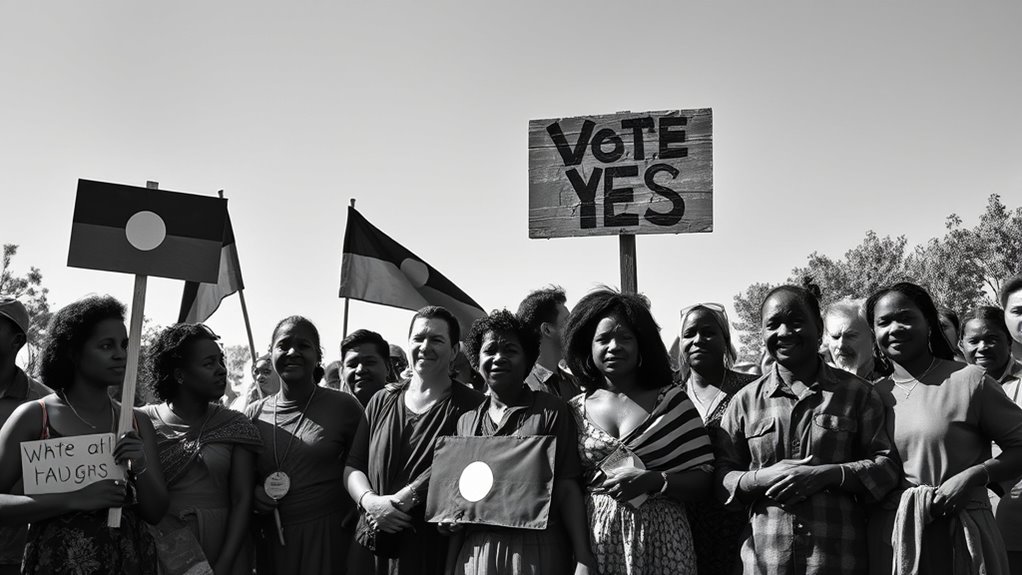
The 1967 Referendum was a pivotal moment in Australian history, giving the government the power to include Aboriginal people in the national census and make laws for them. Before this, Indigenous Australians were largely invisible in official statistics, and the government couldn’t create policies that directly addressed their needs. This referendum marked a significant step toward recognizing Indigenous rights and was seen as a move toward equality. The constitutional change it brought about amended two sections of the Australian Constitution, removing the legal barriers that had excluded Aboriginal Australians from full citizenship. Specifically, it deleted the references that previously allowed the Commonwealth to make laws about race and Indigenous people, which had been used to justify discrimination and neglect.
By voting “Yes,” Australians acknowledged that Indigenous Australians deserved recognition and equal treatment under the law. This change wasn’t just symbolic; it provided a legal foundation for future policies aimed at improving Indigenous rights. It empowered the federal government to develop programs that could address issues like health, education, and land rights without being restricted by outdated constitutional clauses. The referendum made it clear that the nation was willing to move beyond discriminatory policies and accept that Indigenous Australians are an integral part of the national fabric. It was a step toward reconciliation, even if the practical outcomes would take decades to fully realize. Additionally, the referendum encouraged ongoing discussions about Indigenous issues and helped foster a sense of national unity around the goal of equality.
However, despite the constitutional change, the referendum didn’t automatically grant Indigenous Australians the right to vote or full citizenship. Those rights still had to be fought for through other means. Many Indigenous people continued to face discrimination and social inequality long after 1967. The change was an important symbolic victory, but it didn’t instantly erase the systemic barriers they faced. Still, the referendum laid the groundwork for ongoing advocacy and legal reforms. It signaled a national willingness to reexamine attitudes toward Indigenous rights and was a catalyst for future efforts to secure justice and equality.
In the end, the 1967 Referendum was about more than just legal amendments; it was about shifting Australia’s moral compass. It challenged the nation to rethink its approach to Indigenous Australians and to think about their place within the broader community. While it didn’t resolve every issue, it was a crucial step toward a more inclusive and equitable Australia, highlighting the importance of constitutional change in advancing Indigenous rights. The referendum remains a defining moment, reminding us of the power of collective action to bring about meaningful change. This milestone also underscored the importance of public awareness in driving social progress and fostering understanding.

100 African Americans Who Shaped American History: Incredible Stories of Black Heroes (Black History Books for Kids)
non-fiction african american book set
As an affiliate, we earn on qualifying purchases.
As an affiliate, we earn on qualifying purchases.
Frequently Asked Questions
How Did the 1967 Referendum Influence Indigenous Rights Afterward?
The 1967 referendum substantially boosted indigenous rights by enabling the government to address land rights and cultural recognition more effectively. You see, it allowed for legal changes that improved land access and protected cultural practices. This shift empowered Indigenous communities to fight for their land and heritage, fostering greater acknowledgment and respect. As a result, the referendum laid a foundation for ongoing efforts to secure land rights and preserve Indigenous cultures.
Were There Any Significant Political Figures Opposing the Referendum?
You might be surprised to learn that some political figures initially opposed the referendum, fearing it could threaten their power or cause unrest. Political opposition existed, but many Indigenous leaders and supporters pushed for change, emphasizing the importance of recognition and rights. Their voices ultimately helped sway public opinion, leading to a historic victory. While opposition was present, it was ultimately overshadowed by the widespread support for Indigenous rights and equality.
What Were the Main Arguments Used by Supporters of the Referendum?
Supporters of the referendum argue it’s a vital step toward racial equality and recognizing Indigenous sovereignty. They emphasize that changing the constitution would give the government the power to create laws benefiting Indigenous Australians, promoting fairness and justice. By voting yes, you help acknowledge Indigenous people’s rights, foster equality, and move toward a more inclusive society. These arguments highlight the importance of respecting Indigenous sovereignty and ensuring racial equality for all Australians.
How Did Public Opinion Shift During the Referendum Campaign?
During the referendum campaign, you’d notice public sentiment shifting positively as campaign strategies effectively emphasized fairness and unity. Supporters used emotional appeals and widespread education efforts to sway opinion, making many Australians feel more connected to Indigenous issues. As the campaign progressed, more people recognized the importance of change, leading to increased support. This shift was driven by a combination of persuasive messaging and growing awareness, ultimately helping secure the referendum’s success.
Were There Similar Referendums in Other Countries Around That Time?
Did you know other countries also held referendums on colonial independence and constitutional reforms around that time? Countries like Ghana and South Africa used referendums to shape their independence processes, while some nations in the Caribbean and Southeast Asia sought constitutional changes through public votes. These referendums reflected a global wave of decolonization and constitutional reforms, showing how nations sought direct public involvement to guide their political futures.

Teacher Created Resources Australia Map Chart, Multi Color (7653)
Related lessons and activities are provided on the back of every chart.
As an affiliate, we earn on qualifying purchases.
As an affiliate, we earn on qualifying purchases.
Conclusion
The 1967 referendum was a turning point, opening doors and breaking down barriers. While it didn’t erase every challenge, it planted seeds for change and progress. Think of it as a compass guiding us toward equality, even if the journey isn’t over. Remember, every step forward is like a brushstroke on a larger canvas—shaping a future where everyone’s voice matters. Keep moving forward; change is a constant dance.

Nova: Australia's First 4 Billion Years
Factory sealed DVD
As an affiliate, we earn on qualifying purchases.
As an affiliate, we earn on qualifying purchases.

Tot Talk Australia Educational Placemat for Kids – Made in USA – Durable, Double-Sided, States & Territories, Capitals, Natural Wonders, & Bonus: Oceania – Waterproof Wipeable, 17.5” x 11.5”
Designed by Experts: Tot Talk placemats are developed with input from educators, geographers, and families to ensure a…
As an affiliate, we earn on qualifying purchases.
As an affiliate, we earn on qualifying purchases.