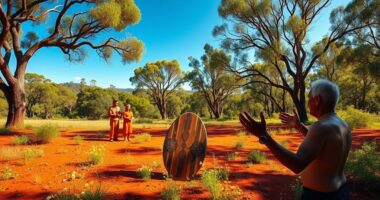
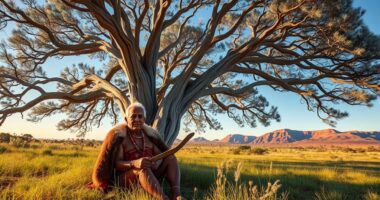
The Murri people are a diverse group of Indigenous Australians in Queensland, known for their vibrant cultural traditions linked to land and water. They actively preserve their history through storytelling, dance, music, and ceremonies that honor ancestors and nature. Despite facing challenges like displacement and marginalization, they continue to work hard to revitalize their language and customs. By exploring their resilience and ongoing cultural efforts, you’ll discover a rich heritage worth understanding even more.
Key Takeaways
- The Murri people are Indigenous Australians in Queensland with diverse cultural traditions rooted in land, water, storytelling, dance, and music.
- Their cultural identity is strongly connected to ancestral lands and water, reflected in ceremonies, rituals, and environmental practices.
- Despite facing displacement and social challenges, Murri communities actively work to revive language, traditions, and cultural pride.
- Murri cultural expressions blend traditional practices with modern media, fostering resilience and intergenerational connection.
- They participate in broader Indigenous movements advocating for rights, recognition, sovereignty, and preservation of their cultural diversity.
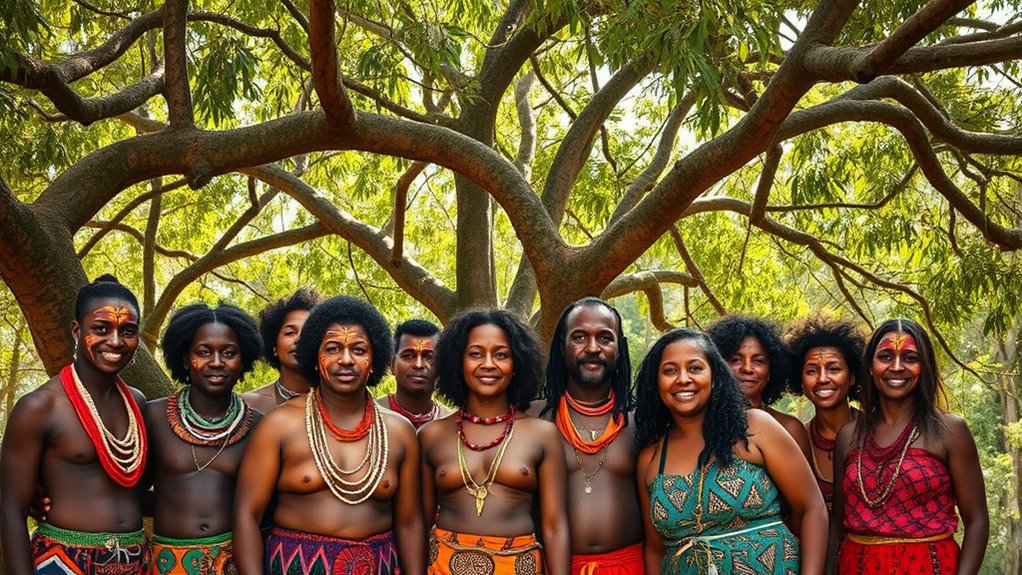
Have you ever wondered who the Murri people are? You might have heard the term used in Queensland, but understanding their identity goes beyond just knowing their name. The Murri are a diverse group of Indigenous Australians with rich cultural traditions that have been passed down through generations. Their traditional practices include storytelling, dance, music, and connection to land and water. These practices serve as a way to preserve their history, teach younger generations, and maintain a strong sense of community. You’ll find that their cultural expressions are deeply rooted in their relationship with the environment, and they often participate in ceremonies and rituals that honor their ancestors and the natural world. However, despite their vibrant traditions, the Murri people face many contemporary challenges that threaten their cultural continuity. These challenges include displacement from ancestral lands, social and economic disadvantages, and the ongoing impacts of colonization. Governments and institutions have historically marginalized Indigenous communities, making it difficult for the Murri to access education, healthcare, and employment opportunities. This situation has created a cycle of disadvantage that often hampers efforts to revive and sustain traditional practices. Yet, the resilience of the Murri people shines through these obstacles. Many are actively working to reclaim their culture and assert their identity in the face of modernization and societal change. Community-led initiatives focus on teaching traditional skills, language revival, and cultural events that foster pride and unity. You’ll see that contemporary challenges are not stopping the Murri from maintaining their sense of identity—they are adapting and finding new ways to keep their culture alive. They’re blending traditional practices with modern expressions, such as incorporating Indigenous art and storytelling into contemporary media and education programs. This ongoing effort helps guarantee that their cultural heritage remains relevant and accessible to younger generations. The Murri people also participate in broader movements advocating for Indigenous rights and recognition, emphasizing the importance of sovereignty and cultural preservation. Their resilience highlights a powerful narrative of survival and adaptation, showing that even in the face of adversity, their identity continues to thrive. Understanding the Murri people means recognizing both their rich cultural traditions and the contemporary challenges they navigate daily. It’s about appreciating their strength, resilience, and commitment to keeping their culture alive for future generations. Despite the hurdles they face, the Murri remain a crucial part of Queensland’s diverse fabric, embodying a spirit that refuses to be silenced or erased.

Myths and Legends of the Australian Aborigines
As an affiliate, we earn on qualifying purchases.
As an affiliate, we earn on qualifying purchases.
Frequently Asked Questions
How Do Murri People Celebrate Traditional Ceremonies Today?
You celebrate traditional ceremonies today by participating in traditional dance, which connects you to your culture and ancestors. You wear ceremonial attire, often decorated with symbols that hold cultural significance. These ceremonies may include storytelling, singing, and dancing, allowing you to express your identity and preserve your heritage. By engaging in these practices, you honor your history and share your culture with others, ensuring its continuity for future generations.
What Languages Are Spoken by Murri Communities?
You’ll find that Murri communities speak a variety of Indigenous languages, reflecting their rich linguistic diversity. Many actively work to preserve these languages through Indigenous language preservation programs, ensuring their cultural heritage endures. While some Murri people speak traditional languages, others may use creole or English dialects. This linguistic diversity highlights their unique identities and the importance of maintaining their languages for future generations.
How Has Urbanization Affected Murri Cultural Practices?
Urban migration has considerably impacted your Murri cultural practices, often leading to a decline in traditional ceremonies and language use. You might find it challenging to maintain cultural retention as community ties weaken in cities. However, many Murri individuals actively work to preserve their heritage by organizing events and passing traditions to younger generations. While urbanization presents obstacles, your efforts help keep Murri culture alive amidst urban change.
What Are Current Challenges Facing Murri Youth?
You face challenges like mental health issues and limited employment opportunities. These struggles can affect your sense of identity and connection to Murri culture. You might feel pressure balancing traditional values with modern life, which can lead to stress and uncertainty. Finding support networks and community programs can help improve your mental health and open doors to better job prospects, empowering you to thrive while honoring your Murri heritage.
How Do Murri People Participate in Australian Politics?
Think of Murri people as navigators steering through Australia’s political landscape. You can participate through Indigenous voting, making your voice heard in elections, and engaging in political activism to advocate for rights and recognition. By voting, attending rallies, or joining advocacy groups, you actively influence policies affecting your community. Your involvement helps shape a future where Murri voices are stronger and more integral to Australia’s national story.
Conclusion
Just like a vibrant patchwork quilt, the Murri people’s identity weaves together diverse stories, traditions, and voices in Queensland. Their resilience shines through, reminding you that unity in diversity creates strength. Imagine standing beneath a towering tree, roots deep and branches reaching wide—each branch representing a unique story, yet all part of one mighty whole. Embracing their richness not only honors their past but also shapes a brighter, more inclusive future for everyone.