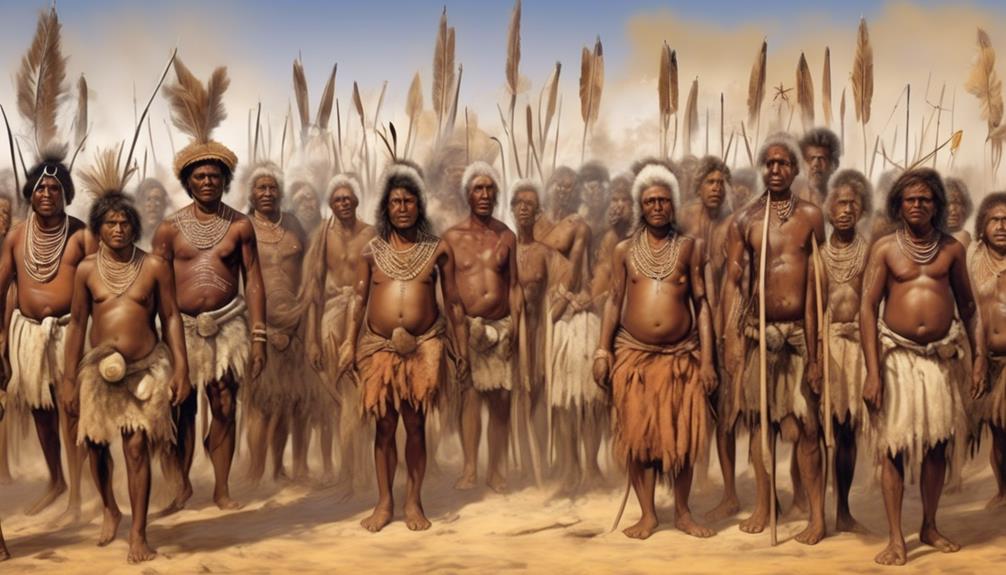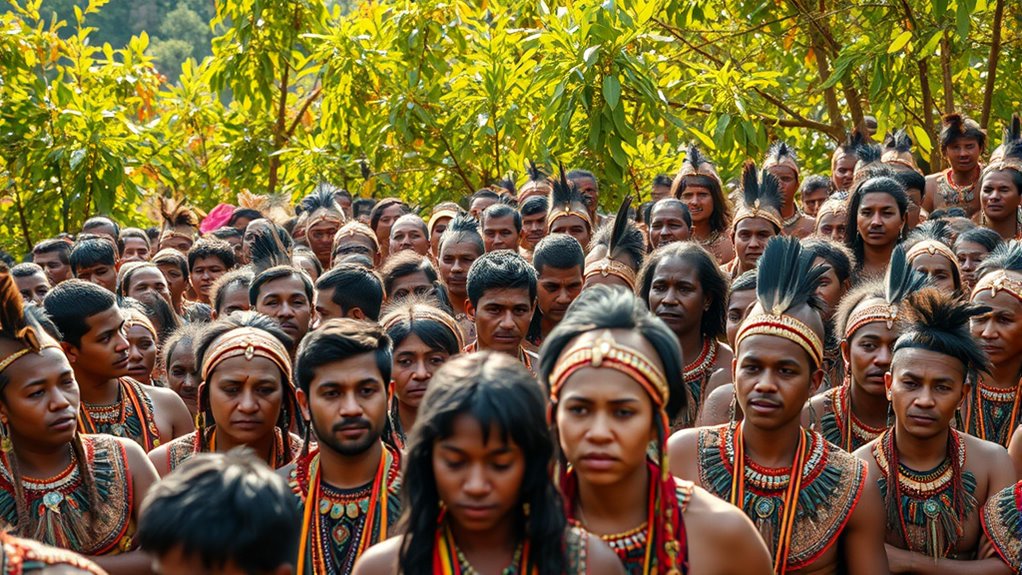

Kinship and community are shaped by complex clan and mob structures that organize social life, promote loyalty, and build shared identities through rituals and intergenerational bonds. These kinship networks extend beyond immediate family, creating support systems that reinforce social stability. Rituals mark key life events and reaffirm community ties, while clan loyalty guides behavior and mutual responsibility. To understand how these structures sustain cohesion over time, keep exploring how rituals and relationships shape social order.
Key Takeaways
- Kinship networks form the foundation of mob and clan structures, shaping social bonds and community support systems.
- Rituals reaffirm kinship ties, marking key life events and reinforcing shared identity within clans and mobs.
- Clan loyalty drives social, economic, and political interactions, ensuring community stability and collective well-being.
- Ritual participation and adherence to customs sustain intergenerational continuity and community resilience.
- Kinship influences social order by establishing roles, responsibilities, and a sense of belonging among members.
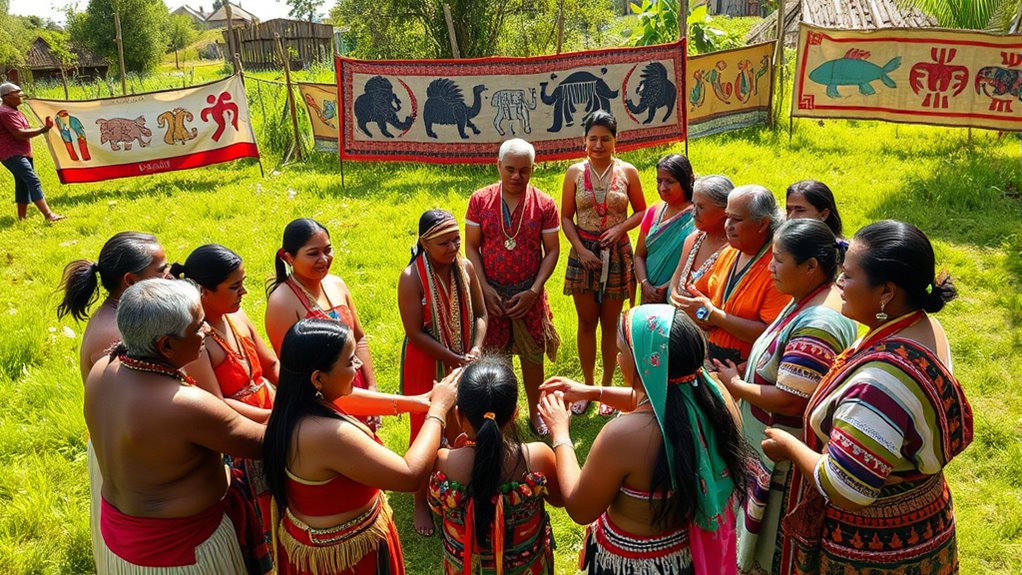
Kinship forms the foundation of many communities, shaping how people connect, support, and maintain social order. When you understand kinship, you see how relationships extend beyond immediate family, forming intricate networks that influence daily life and collective identity. In communities organized around clans and mobs, these bonds are essential for cohesion and mutual support. Clan loyalty, for example, becomes a core value, driving members to prioritize their clan’s well-being over individual interests. You might notice that this loyalty encourages members to defend each other fiercely, uphold shared traditions, and participate actively in clan activities. These bonds are reinforced through kinship rituals, which serve as ceremonies or practices that reaffirm connections between members. Whether it’s a rite of passage, a communal feast, or a ritual honoring ancestors, these events strengthen the sense of belonging and continuity within the community.
Kinship bonds foster community cohesion through rituals, shared traditions, and clan loyalty.
You’re likely to see that kinship rituals are more than mere traditions—they’re fundamental for maintaining social order and transmitting cultural values. These rituals often mark important milestones, like birth, initiation, marriage, or death, and involve specific behaviors, symbols, and language that keep the community’s identity alive. Participating in these rituals helps you and others recognize your roles and responsibilities within the clan, ensuring everyone understands their place and duties. It’s through these shared practices that kinship ties are reinforced, creating a collective identity that binds members together through common history and values. Additionally, the use of calendrical cycles in planning rituals and communal activities helps synchronize the community’s social life and reinforce shared timekeeping practices.
In many communities, clan loyalty isn’t just about emotional bonds; it’s a strategic alliance that influences social, economic, and political interactions. Your loyalty to the clan might mean supporting its members in disputes, sharing resources, or defending its reputation against outsiders. These collective efforts help sustain the community and preserve its stability. Additionally, kinship rituals often serve as public affirmations of loyalty, where members demonstrate their commitment through participation and adherence to traditional customs. This ongoing cycle of rituals and loyalty sustains the social fabric, ensuring that the community functions smoothly and that members feel connected to a larger purpose.
Ultimately, understanding kinship and the importance of clan loyalty and kinship rituals reveals how communities maintain their cohesion over generations. These structures aren’t just about blood ties—they’re about shared identities, mutual responsibilities, and collective memory that keep the community resilient and united. When you participate in or observe these kinship practices, you see firsthand how they shape social order and foster a sense of belonging that endures through time.
traditional kinship ritual items
As an affiliate, we earn on qualifying purchases.
As an affiliate, we earn on qualifying purchases.
Frequently Asked Questions
How Do Kinship Systems Influence Social Roles and Responsibilities?
Your kinship system shapes your social roles and responsibilities through inheritance patterns and kinship terminology. You understand your obligations based on your kinship ties, which determine who you owe respect and support. These systems clarify your position within the community, guiding your actions and interactions. By knowing your kinship relations, you naturally assume specific roles, ensuring the social fabric remains strong and cohesive.
What Are the Variations in Clan Structures Across Different Cultures?
You’ll find that clan structures vary widely across cultures, with about 60% of societies practicing matrilineal descent. In some groups, clan lineage emphasizes maternal ties, shaping social roles and inheritance, while others focus on patrilineal descent, prioritizing paternal lines. These differences influence kinship responsibilities, leadership, and community cohesion, showing how diverse cultural approaches to kinship create unique social organizations and reinforce cultural identities.
How Do Kinship Ties Affect Conflict Resolution Within Communities?
Kinship ties play a vital role in conflict resolution within communities by emphasizing kinship obligations. You rely on these bonds for conflict mediation, as family and clan members are motivated to restore harmony to uphold social cohesion. When disputes arise, kinship obligations encourage individuals to seek peaceful resolutions, mediating disputes fairly and maintaining community stability through shared responsibilities and respect for kinship networks.
What Role Does Kinship Play in Modern Urban Societies?
Think of kinship as your interpersonal bonds that subtly shape your social networks in modern urban life. You might not live with relatives, but these bonds influence your friendships, workplace relationships, and community involvement. Kinship still plays a role, providing a sense of belonging and support. It helps you navigate social complexities, fostering trust and cooperation, even amidst the fast pace of city living.
How Do Kinship and Community Structures Adapt to External Pressures?
You see, kinship and community structures adapt through changes in intermarriage practices and kinship terminology. When external pressures like globalization or legal shifts occur, you might notice more intermarriage, which broadens kinship ties and creates new relationships. You also adapt by updating kinship terminology to reflect these shifts, helping maintain community cohesion and identity despite external challenges. This flexibility keeps your social fabric strong and relevant.
Conclusion
Remember, kinship and community shape who you are and where you belong. By understanding mob and clan structures, you see how bonds run deep and life’s connections matter. Embrace the idea that “it takes a village,” because your sense of identity is woven through the relationships you nurture. When you honor these ties, you build stronger communities and find your place within them. After all, family isn’t just blood—it’s the community that surrounds you.