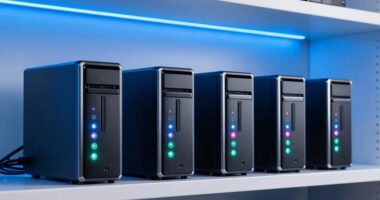
For most 12V solar setups, I’d start with the Dyness 12V 100Ah as the best overall pick, while the LiTime Group 24 suits tighter battery compartments and the Dyness 24V 100Ah with Bluetooth fits systems built around a higher-voltage bank. The biggest choice is matching battery voltage and physical size to your inverter, charge controller, and available space. Monitoring, BMS limits, cold-weather charging behavior, and expansion plans can matter as much as capacity. A 100Ah label alone does not tell you how much energy your system can use or whether the battery fits your installation. Read on for the full breakdown of all 11 options and how I’d choose among them.

Prime made for students and young adults
- Fast, free delivery for dorm and study essentials
- Prime Video and Amazon Music included
- Member-only deals
Key Takeaways
- Voltage shapes the shortlist: the 12V models fit common small solar systems, the 24V options suit compatible higher-voltage setups, and the 51.2V server rack battery belongs in a purpose-built rack system.
- Group size can decide fit: the LiTime Group 24 and SUPER EMPOWER Group 24 target tighter spaces, while the DUNFUME Group 31 follows a larger battery format.
- Monitoring separates convenience from simplicity: the BUKNUWO and 24V Dyness add Bluetooth, while the HQST’s LED meter offers a built-in local readout.
- Capacity is not the same as usable system energy: BMS current limits and inverter demands affect what a 100Ah battery can support, so buyers should check the complete electrical setup.
- Expansion changes the best choice: the two-battery pack offers a ready-made route to more storage, while single batteries and different system voltages call for a deliberate compatibility check.


| lifepo4 battery 100ah for solar setup | Chemistry | Capacity | Voltage | Energy |
|---|---|---|---|---|
| Dyness 12V 100Ah LiFePO4 Lithi | LiFePO4 | 100Ah | 12V | — |
| DUNFUME 12.8V 100Ah LiFePO4 Gr | LiFePO4 | 100Ah | 12.8V | 1,280Wh |
| LiTime 12V 100Ah Group 24 LiFe | LiFePO4 | 100Ah | 12V | 1,280Wh |
| BUKNUWO 12.8V 100Ah LiFePO4 Ba | LiFePO4 | 100Ah | 12.8V | 1.28kWh |
| Dyness 24V 100Ah LiFePO4 Deep- | LiFePO4 | 100Ah | — | 2,560Wh |
| DUMFUME 24V 100Ah LiFePO4 Batt | LiFePO4 | 100Ah | — | 2.56kWh |
| SUPER EMPOWER 12V 100Ah LiFePO | LiFePO4 | 100Ah | — | — |
| 2-Pack 12V 100Ah LiFePO4 Lithi | LiFePO4 | 100Ah per battery | 12.8V per battery | — |
| HQST 12V 100Ah LiFePO4 Battery | LiFePO4 | 100Ah | 12V | 1,280Wh |
| 51.2V 100Ah LiFePO4 Server Rac | LiFePO4 | 100Ah | 51.2V | 5.12kWh |
| LiTime 12.8V 100Ah LiFePO4 Bat | LiFePO4 | 100 Ah | 12.8 V | 1,280 Wh |
More Details on Our Top Picks
Dyness 12V 100Ah LiFePO4 Lithium Battery for RV, Solar, and Off-Grid Systems
For a 12V solar system exposed to damp, dusty conditions, I’d put this Dyness ahead of the DUNFUME: its IP65-rated enclosure adds protection that DUNFUME’s weather-resistant but non-waterproof casing does not offer. The 100A BMS covers common electrical faults, while temperature controls pause charging below 32°F and resume at 41°F, helping protect the battery during cold spells. Its 4P4S expansion support also leaves room to grow beyond a single 1.28kWh battery. The tradeoff is that cold-weather charging pauses until the battery warms, so a winter solar installation needs a plan for charging interruptions. The advertised 20.48kWh maximum requires a full 16-battery configuration; this is not the capacity of one battery.
Pros:- IP65 enclosure is suited to dusty and wet outdoor environments
- Low-temperature charging and discharge protections
- 100A BMS guards against several electrical faults
- Supports expansion up to four batteries in series and four in parallel
Cons:- Charging pauses below 32°F until the battery warms to 41°F
- The 20.48kWh maximum requires 16 batteries
- A 100A BMS may limit systems with higher continuous current needs
Best for: RV and off-grid solar owners who need a 12V battery with stronger dust and water protection and may expand their bank later
Not ideal for: Solar users who need charging to continue below freezing or expect 20.48kWh from a single battery
- Chemistry:LiFePO4
- Voltage:12V
- Capacity:100Ah
- BMS:100A
- Ingress protection:IP65
- Dimensions:13.00 × 6.77 × 8.43 inches
- Weight:21.8 lbs
- Maximum configuration:4P4S
Our verdict“Choose this Dyness for outdoor 12V solar installations where enclosure protection and future expansion matter more than charging through freezing temperatures.”
DUNFUME 12.8V 100Ah LiFePO4 Group 31 Battery
The DUNFUME’s strongest case for a solar bank is its stated cycle life at partial discharge: up to 15,000 cycles at 60% DOD. That figure favors a system designed to use a portion of its capacity regularly, while the Dyness 24V 100Ah is rated for 4,000+ cycles at full discharge and supplies twice the energy per battery. DUNFUME also weighs 21.6 pounds and supports 4S4P expansion, making it a practical fit for a modest 12.8V bank. Its limits matter for placement: the casing is weather-resistant, not waterproof, and charging requires at least 5°C. It is also intended for RV use rather than engine starting, golf carts, or jacks, so I’d keep it in a stationary or house-power role.
Pros:- Stated cycle life reaches 15,000 cycles at 60% DOD
- Lightweight at 21.6 lbs for a 100Ah battery
- Built-in 100A BMS provides electrical protections
- Supports expansion up to 4S4P
Cons:- Casing is weather-resistant but not waterproof
- Charging requires temperatures of at least 5°C
- Not intended for engine starting, golf carts, or jacks
Best for: Solar and RV owners who plan shallow regular discharges and can keep the battery in a dry, temperature-controlled location
Not ideal for: Buyers installing a battery in an exposed wet area, charging below 5°C, or powering an engine starter or golf cart
- Chemistry:LiFePO4
- Voltage:12.8V
- Capacity:100Ah
- Energy:1,280Wh
- BMS:Built-in 100A
- Cycle life:Up to 15,000 cycles at 60% DOD
- Minimum charging temperature:5°C
- Connections:Up to 4S4P
Our verdict“Pick the DUNFUME for a dry 12.8V solar bank built around shallow cycling, and skip it if cold-weather charging or waterproofing is a priority.”
LiTime 12V 100Ah Group 24 LiFePO4 Lithium Battery
For solar owners who want battery status without adding a separate monitor, this LiTime stands out with Bluetooth readouts for state of charge, voltage, and charging status. That visibility can help track how much solar energy is stored and whether charging is active. Like the BUKNUWO, it combines Bluetooth with a 100A BMS; LiTime’s listed temperature cutoffs also specify a 32°F charging limit and a -4°F discharging limit. It fits Group 24, 27, or 31 battery boxes, which offers more installation flexibility than a fixed case size suggests. The drawback is that the app does not change its basic 1,280Wh capacity, and charging stops below freezing. It is also unsuitable for engine starting, golf carts, or jacks.
Pros:- Bluetooth reports state of charge, voltage, and charging status
- Temperature cutoffs address cold charging and discharging
- Compatible with Group 24, 27, and 31 battery box sizes
- 100A BMS provides protection against common electrical faults
Cons:- Charging stops below 32°F
- Not suitable for engine starting, golf carts, or jacks
- Bluetooth monitoring does not increase the battery’s 1,280Wh capacity
Best for: RV and small off-grid solar owners who want to check state of charge and charging activity from a phone
Not ideal for: Buyers who need reliable charging below 32°F or a battery for engine starting, golf carts, or jacks
- Chemistry:LiFePO4
- Voltage:12V
- Capacity:100Ah
- Energy:1,280Wh
- BMS:100A
- Bluetooth monitoring:State of charge, voltage, and charging status
- Temperature cutoffs:Charging below 32°F; discharging below -4°F
- Weight:21.9 lbs
Our verdict“Choose this LiTime when phone-based status checks and flexible battery-box fit are more useful to your solar setup than cold-weather charging.”
BUKNUWO 12.8V 100Ah LiFePO4 Battery with Bluetooth
BUKNUWO combines app monitoring with support for up to 4S4P expansion, giving a solar owner a route from one 1.28kWh battery to a larger bank built from matching units. It also lists cycle-life figures at several depths of discharge, including up to 15,000 cycles at 60% DOD, making its stated longevity most relevant to users who avoid routinely emptying the battery. Compared with the LiTime Group 24, its product data gives more detail on expansion and includes a five-year warranty; LiTime, by contrast, explicitly names the battery status its Bluetooth app displays. BUKNUWO’s ABS casing and temperature limits still call for thoughtful placement and storage: it recommends charging and discharging every six months during storage.
Pros:- Bluetooth 5.0 monitoring
- Supports series and parallel expansion up to 4S4P
- Stated cycle life reaches 15,000 cycles at 60% DOD
- Includes a five-year warranty
Cons:- Temperature cutoffs can limit charging and discharging
- Manufacturer recommends charging and discharging every six months during storage
- ABS casing is listed, but no specific ingress protection rating is provided
Best for: Solar DIYers planning a matching 12.8V battery bank who want Bluetooth status checks and stated cycle-life figures at partial discharge
Not ideal for: Buyers who need a specified waterproof rating, or who want to store a battery for long periods without periodic charging and discharging
- Chemistry:LiFePO4
- Voltage:12.8V
- Capacity:100Ah
- Energy:1.28kWh
- BMS:100A
- Bluetooth:Bluetooth 5.0
- Cycle life:Up to 15,000 cycles at 60% DOD
- Expandable configuration:Up to 4S4P
- Warranty:5 years
Our verdict“BUKNUWO suits solar owners building a Bluetooth-monitored 12.8V bank who can follow its storage guidance and verify enclosure needs for their installation.”
Dyness 24V 100Ah LiFePO4 Deep-Cycle Battery with Bluetooth
At 2,560Wh per battery, this Dyness gives a compatible 24V solar system twice the energy of the 12V 100Ah options here. That can simplify a higher-voltage bank, though it is not a direct substitute for them: the system, inverter, and charger must match its 25.6V nominal output. Bluetooth monitoring and a 100A smart BMS with low-temperature protection add useful visibility and safeguards. Compared with the 12V Dyness, this model stores more energy in one battery but uses a different voltage and a narrower 4P2S expansion arrangement. It requires a compatible 29.2V LiFePO4 charger, and motor applications need a check of voltage and current limits. Its 20.48kWh maximum also depends on an eight-battery configuration.
Pros:- Provides 2,560Wh per battery, twice the listed energy of the 12V 100Ah picks
- Bluetooth monitoring shows battery status and remaining capacity
- Smart 100A BMS includes low-temperature and electrical protections
- Supports expansion up to eight batteries in a 4P2S configuration
Cons:- Requires a compatible 29.2V LiFePO4 charger
- Not a drop-in fit for 12V solar equipment
- Maximum 20.48kWh system capacity requires eight batteries
Best for: Owners of compatible 24V solar and off-grid systems who want 2.56kWh in one battery and plan to monitor status by Bluetooth
Not ideal for: 12V system owners who cannot change their equipment, or buyers without a compatible 29.2V charger
- Model:AR2.5-24V BT
- Chemistry:LiFePO4
- Nominal voltage:25.6V
- Capacity:100Ah
- Energy:2,560Wh
- BMS current:100A
- Cycle life:4,000+ cycles at 100% DOD
- Recommended charger:29.2V LiFePO4 charger
- Warranty:5 years
Our verdict“Choose this Dyness for a compatible 24V solar system that benefits from higher per-battery energy, and skip it if your equipment is built for 12V.”
DUMFUME 24V 100Ah LiFePO4 Battery with 100A BMS
For a solar setup already built around 24V, this 2.56kWh battery avoids the extra voltage conversion that a 12V bank may require. Its 100A BMS supports up to 2,560W continuous power, while series and parallel connections allow expansion as storage needs grow. Compared with the SUPER EMPOWER 12V 100Ah Group 24, the DUMFUME offers twice the nominal voltage and energy per battery, but it weighs nearly twice as much and will not drop into a 12V system without redesigning compatible equipment. The stated 4,000+ cycles at 100% depth of discharge suit regular storage cycling. The key limitation for cold-weather installations is its 5°C minimum charging temperature; it is also designed for storage, not engine starting.
Pros:- Provides 2.56kWh in a 24V battery
- 100A BMS supports up to 2,560W continuous power
- Rated for 4,000+ cycles at 100% depth of discharge
- Supports up to 2S4P series and parallel configurations
Cons:- Charging requires temperatures of at least 5°C
- At 41.67 lbs, it is heavier than the listed 12V options
- Not intended for engine starting
Best for: Owners of 24V solar or off-grid systems who want 2.56kWh from one battery and plan to expand their bank.
Not ideal for: 12V system owners seeking a drop-in replacement, or anyone who needs a battery for engine starting or charging below 5°C.
- Chemistry:LiFePO4
- Nominal voltage:24V (25.6V stated)
- Capacity:100Ah
- Energy:2.56kWh
- BMS:100A
- Maximum continuous power:2,560W
- Weight:41.67 lbs
- Series/parallel support:Up to 2S4P
- Minimum charging temperature:5°C
Our verdict“Choose this for a compatible 24V solar bank that needs substantial energy per battery and can stay above its minimum charging temperature.”
SUPER EMPOWER 12V 100Ah LiFePO4 Group 24 Deep Cycle Battery
When a solar or RV installation has a Group 24 battery space, this model offers a practical fit with M8 terminals and a 21.6 lb weight. Its 100A BMS includes low-temperature charging protection, which makes cold conditions easier to manage than with the DUMFUME 24V 100Ah, whose charging minimum is 5°C. Charging on the SUPER EMPOWER pauses below 32°F and resumes above 41°F, so winter operation still requires a suitable temperature plan. It supports up to 4S4P configurations, giving a 12V system room to expand or be reconfigured, and includes a five-year warranty. Buyers need a LiFePO4-compatible charger or controller, and this battery cannot serve as an engine-starting battery.
Pros:- Group 24 size and M8 terminals suit compatible battery spaces
- 100A BMS includes electrical and temperature protections
- Supports configurations up to 4S4P
- Includes a five-year warranty
Cons:- Charging pauses below 32°F and resumes only above 41°F
- Requires a LiFePO4-compatible charger or controller
- Not suitable for engine starting
Best for: RV and solar owners replacing a compatible Group 24 battery who want a documented expansion path and low-temperature charging protection.
Not ideal for: Drivers seeking engine-cranking power, or system owners without a LiFePO4-compatible charger or controller.
- Chemistry:LiFePO4
- Nominal voltage:12.8V
- Capacity:100Ah
- BMS current:100A
- Group size:BCI Group 24
- Dimensions:6.49 × 10.24 × 8.98 inches (D × W × H)
- Weight:21.6 lbs
- Series/parallel support:Up to 4S4P
- Charging temperature protection:Pauses below 32°F (0°C); resumes above 41°F (5°C)
Our verdict“Pick this for a compatible Group 24 solar or RV installation where built-in temperature protection and expansion flexibility matter.”
2-Pack 12V 100Ah LiFePO4 Lithium Batteries with 100A BMS
This bundle gives a solar buyer two separate 12.8V, 100Ah batteries to configure for a larger bank or keep as individual units, instead of starting with one battery as with the HQST 12V 100Ah. Each unit is rated for up to 4,000 cycles at full depth of discharge, with longer stated cycle life at shallower discharge. That flexibility can help a system avoid drawing every cycle to empty. The manufacturer recommends no more than four batteries in series or parallel and cautions against trolling motors above 700W; those limits matter if the same bank will serve marine equipment alongside solar. The listed weight is inconsistent: 21.6 lbs per battery in one place and 10 kg in another. Buyers should verify handling and fit before installation.
Pros:- Includes two 12.8V, 100Ah batteries
- Rated for up to 4,000 cycles at 100% depth of discharge
- Supports series or parallel configurations with up to four batteries
- Suitable for solar, RV, marine, off-grid, and UPS backup applications
Cons:- Not recommended for trolling motors above 700W
- Weight information conflicts between 21.6 lbs and 10 kg per battery
- The stated four-battery configuration limit constrains larger banks
Best for: Solar or RV owners who want two 12V batteries from the outset and expect to configure or expand a small storage bank.
Not ideal for: Buyers needing a clearly specified single-battery setup, or marine users powering trolling motors above 700W.
- Chemistry:LiFePO4
- Quantity:2 batteries
- Voltage:12.8V per battery
- Capacity:100Ah per battery
- BMS:100A per battery
- Cycle life:Up to 4,000 cycles at 100% DOD; 6,000 at 80% DOD; 15,000 at 60% DOD
- Weight:21.6 lbs per battery in description; 10 kg listed
- Connections:Up to 4 batteries in series or parallel
- Trolling motor guidance:Not recommended above 700W
Our verdict“Choose this bundle if you want two batteries for a modest expandable solar bank and can confirm the weight and installation details.”
HQST 12V 100Ah LiFePO4 Battery with BMS and LED Meter
The built-in LED meter gives a quick status readout at the battery, which is useful in a compact solar or RV installation where checking a separate monitor is inconvenient. At 21 lbs, the HQST is also the lightest listed single-battery option here, slightly under the SUPER EMPOWER Group 24’s 21.6 lbs. Its stated 1,280Wh capacity, 100A continuous discharge, and support for series and parallel banks cover common 12V storage needs. The temperature protections set clear operating boundaries: charging stops below 23°F or above 140°F, while discharge stops below 5°F or above 158°F. This differs from the SUPER EMPOWER, which specifies a charging pause and restart threshold around freezing. HQST is not suited to golf carts, and the available specs do not state a warranty term.
Pros:- Built-in LED meter provides a local status readout
- Weighs 21 lbs
- Rated for 4,000+ deep cycles
- Supports series and parallel battery bank configurations
Cons:- Not suitable for golf carts
- Charging and discharging stop outside specified temperature ranges
- The provided product data does not state a warranty term
Best for: Solar, RV, and marine users who want a lightweight 12V battery with an on-battery display and stated temperature protections.
Not ideal for: Golf cart owners, or buyers whose installation regularly falls outside the specified charging and discharging temperature ranges.
- Chemistry:LiFePO4
- Voltage:12V
- Capacity:100Ah
- Energy:1,280Wh
- Continuous discharge current:Up to 100A
- Weight:21 lbs
- Cycle life:4,000+ deep cycles
- Charging temperature protection:Charging suspended below 23°F or above 140°F
- Features:Built-in BMS and LED meter
Our verdict“Choose the HQST if a light 12V solar battery with an on-unit status display suits your setup and its temperature limits fit your climate.”
51.2V 100Ah LiFePO4 Server Rack Battery
For a home solar system designed around a high-voltage inverter, the WT5100 packs 5.12kWh into one rack battery, four times the stated energy of the 12.8V SUPER EMPOWER 100Ah model. CAN/RS485 communication and a 100A smart BMS support integration with compatible equipment, while the LCD provides a local view of battery information. Its rack format also suits larger installations: the stated parallel expansion limit is 63 batteries, with capacity up to 315kWh. That headroom matters more in residential storage than in an RV, but it comes with a real system requirement: a compatible rack and inverter. This is a different class of purchase from the portable 12V options, and the provided data does not specify weight or dimensions for planning the installation.
Pros:- Stores 5.12kWh in one battery
- 100A smart BMS with CAN/RS485 communication
- LCD display provides local battery information
- Supports parallel expansion up to 63 batteries
Cons:- Requires compatible rack installation and inverter equipment
- Large-scale expansion requires multiple batteries and additional system equipment
- Weight and dimensions are not provided in the supplied product data
Best for: Home solar owners building a compatible 51.2V rack system who need more storage per battery and plan possible future expansion.
Not ideal for: RV or marine users seeking a compact drop-in 12V battery, or homeowners without a compatible rack and inverter system.
- Chemistry:LiFePO4
- Voltage:51.2V
- Capacity:100Ah
- Energy:5.12kWh
- Maximum output power:5.12kW
- BMS:100A smart BMS
- Communication:CAN/RS485
- Cycle life:Over 6,000 cycles
- Expandable capacity:Up to 315kWh (63 batteries in parallel)
Our verdict“Choose the WT5100 for a compatible residential rack system where 5.12kWh per battery and substantial parallel expansion suit the design.”
LiTime 12.8V 100Ah LiFePO4 Battery for RV, Marine, and Off-Grid Use
For a 12V solar setup that may grow, this LiTime stands out for supporting up to 4P4S expansion, letting buyers plan a larger bank from compatible units rather than choosing a fixed system size. Its 1,280Wh capacity and 100A maximum current suit everyday energy storage in an RV or off-grid cabin, while the built-in protection system is intended to guard the battery during operation. Compared with the LiTime Group 24, this model has a larger listed footprint, so it may be less convenient where battery space is tight. It is also explicitly not for engine starting, golf carts, or jacks. The manufacturer lists a five-year warranty, but Bluetooth activation may call for a lithium activation or MPPT charger, adding setup friction for some solar owners.
Pros:- Supports expansion up to a 4P4S configuration
- Built-in battery management system with multiple protections
- 1,280Wh energy capacity in a 12.8V battery
- Manufacturer lists a five-year warranty and service support
Cons:- Not intended for engine starting, golf carts, or jacks
- Bluetooth activation may require a lithium activation or MPPT charger
- Its 12.95 × 6.77 × 8.43-inch dimensions may not fit smaller battery compartments
Best for: RV and off-grid solar owners who want a 12V 100Ah battery with room to expand a compatible bank over time.
Not ideal for: Buyers needing a starter battery, a compact Group 24 fit, or a simple Bluetooth setup without a compatible activation or MPPT charger.
- Chemistry:LiFePO4
- Capacity:100 Ah
- Voltage:12.8 V
- Energy:1,280 Wh
- Maximum current:100 A
- Dimensions:12.95 × 6.77 × 8.43 in
- Weight:32 lb
- Expandable configuration:Up to 4P4S
- Cycle life:Up to 15,000 cycles at 60% depth of discharge
Our verdict“Choose this LiTime for expandable 12V solar storage if you have the installation space and do not need engine-starting capability.”

How We Picked
I ranked these batteries for the specific needs of solar setups: matching system voltage, useful BMS capability, physical fit, monitoring, and the ease of building a bank that suits an inverter and charge controller. I gave more weight to options that make a clear case for a common installation than to features that only help a narrow setup. A 12V battery can be a sensible fit for a small system, but it is not automatically the right pick for higher loads; the 24V and 51.2V models need matching equipment.
The ranking also reflects how clearly each model serves a distinct buyer. Bluetooth and an LED meter can make system checks easier, while Group 24 and Group 31 formats affect compartment fit. A two-battery pack may help someone who already wants parallel capacity, but it does not remove the need to verify wiring and BMS limits. Product names alone do not confirm charge settings, cold-weather protection, or compatibility, so I treat those as specifications buyers should verify before purchase.
Factors to Consider When Choosing Lifepo4 Battery 100ah For Solar Setups
I’d start with the electrical system already in place, then work outward to battery size and monitoring. These checks help avoid buying a battery that has the right capacity on paper but does not suit the equipment or installation.
Match Battery Voltage to the Whole System
Battery voltage must match the design of the inverter and the battery input range of the charge controller. A 24V bank can reduce current for a given power level compared with a 12V bank, which may simplify cable sizing on a compatible system. That benefit does not make a 24V battery a drop-in upgrade for 12V equipment. The 51.2V rack battery calls for equipment designed for that nominal voltage and often a different installation approach. Check the manuals for both charging equipment and inverter before choosing, including their allowed voltage ranges. If you are replacing one battery in an existing bank, match the bank voltage and confirm whether the manufacturer permits mixing units.
Size the Battery Around Loads and Charging
Capacity in amp-hours only has meaning alongside voltage: multiplying the two gives a rough measure of stored energy in watt-hours. Your usable energy will be lower than the nominal figure once conversion losses and the battery maker’s operating limits are accounted for. Add up the appliances you expect to run, their power draw, and how long they will operate between charging periods. Then check whether the solar array and controller can restore that energy during the conditions you expect. A 100Ah battery may work for lights, communications, and modest loads but fall short for sustained high-power appliances. Leave room for cloudy days if your system needs dependable overnight or backup power.
Check BMS Limits Against Inverter Demand
The battery management system protects the cells, but its current limits also constrain what the battery can deliver or accept. Compare the BMS continuous discharge rating with the inverter’s expected DC current, especially when motors or compressors start. A rating that seems ample for steady loads may still need headroom for brief startup surges. Charging current matters too: a large solar array or alternator can exceed the battery’s accepted charging current if the system is not configured correctly. Check whether the battery supports series or parallel connections and follow its instructions for connecting multiple units. Never assume two batteries provide a safe combined current just because their capacities add together.
Measure the Compartment Before Choosing a Format
Group 24 and Group 31 describe common case-size categories, but the exact dimensions and terminal layout can vary by product. Measure the space, including clearance for cables, ventilation requirements, straps, and access to disconnects. Weight and mounting orientation also matter in RVs and boats, where movement can stress terminals or restraints. A compact case can simplify installation, though a smaller battery may have less room for terminals or monitoring features. Check the full dimension drawing rather than relying only on the group label. If the battery sits in an enclosed area, confirm the manufacturer’s placement and temperature guidance.
Plan for Temperature and Charge Settings
LiFePO4 batteries generally need charging limits suited to their cell chemistry, and low temperatures can change whether charging is allowed. Look for the specified charging temperature range and whether the BMS has low-temperature charging protection. A battery used outdoors, in a vehicle, or in an unheated cabin may encounter conditions that a climate-controlled installation avoids. Confirm that the solar controller can use the battery maker’s recommended voltage settings and disable incompatible equalization routines. If the product does not clearly state its temperature protections, get that detail from the manufacturer before installing it in a cold location. These checks can prevent a system from relying on a protection feature it does not have.
Decide How Much Monitoring You Need
Bluetooth monitoring can show battery data on a phone, while an LED meter offers a quick local indication without an app. Neither replaces correctly sized fuses, a disconnect, or system-level monitoring that measures energy going in and out. A built-in battery display may report state of charge, but its accuracy and available readings depend on the battery’s electronics. If the battery will be hard to reach, remote monitoring can make routine checks easier. If you prefer a simple installation, a basic model may be enough when the charge controller already tracks the bank. Choose based on the readings you will use to make decisions, rather than adding monitoring features without checking what they display.
Frequently Asked Questions
Can I replace a lead-acid battery with a 100Ah LiFePO4 battery in my solar setup?
Often, but check the charge controller and inverter settings before swapping. The new battery needs charging voltages and limits that match its manufacturer’s guidance, and any equalization setting designed for lead-acid should be disabled if the battery maker says so. Confirm that the existing wiring, fuse, and disconnect suit the battery’s current capability. Also check whether the enclosure and temperature conditions are permitted. The same 100Ah label does not guarantee identical usable energy or compatibility.
Should I choose a 12V, 24V, or 51.2V 100Ah battery for solar?
Choose the voltage your inverter, controller, and battery bank are designed to use. A 12V battery is common in smaller RV and off-grid systems, while 24V may suit a compatible setup with larger loads and lower current on the DC side. A 51.2V rack battery is intended for equipment built around that voltage and its installation format. Moving to a different voltage can require replacing or reconfiguring other equipment. Check all device manuals before comparing capacity or features.
Can I connect two 100Ah batteries to get more solar storage?
That depends on the battery’s permitted wiring configurations and the rest of the system. Parallel connections can increase capacity at the same voltage, while series connections raise voltage; not every model supports both. Use batteries with matching specifications and follow the maker’s instructions for cable layout, protection, and commissioning. Check the combined bank against the controller’s charging limits and the inverter’s current demand. A listed two-battery pack may simplify a matched purchase, but it still needs correct installation.
Is Bluetooth or an LED meter useful on a solar battery?
It can be useful when you want to check battery status without opening a compartment or connecting a separate monitor. Bluetooth offers phone-based readings, while an LED meter gives a simpler local display; the data available varies by model. Neither feature guarantees precise state-of-charge information under every load or charging condition. For a larger system, a shunt-based monitor may provide a fuller picture of current and energy flow. Pick built-in monitoring when the readings it supplies answer a real question in your setup.
What should I verify before installing a LiFePO4 battery where temperatures can drop below freezing?
Check the battery’s stated charging temperature range and whether its BMS blocks charging at low temperatures. Discharging and charging can have different temperature limits, so do not treat one range as covering both. Confirm how the battery will be warmed or protected if the installation is in an unheated vehicle, shed, or cabin. Review the charge controller settings as well, since correct settings cannot override a cell temperature limit. If the product details do not answer these questions, ask the manufacturer before relying on it in a cold location.
Conclusion
For a typical compatible 12V solar system, I’d choose the Dyness 12V 100Ah as the best overall starting point. The LiTime Group 24 is my pick for buyers who need a compact case, while the DUNFUME Group 31 is worth comparing when a larger format fits the compartment. Beginners who want a visible status check may prefer the HQST with LED meter; buyers who want phone-based monitoring can look at the BUKNUWO or Bluetooth-equipped 24V Dyness, provided voltage matches their system. For a compatible 24V installation, compare the two 24V models; for a rack-based system, the 51.2V battery addresses a different class of setup. The two-battery pack makes sense when added storage is already part of the plan, but confirm wiring support and system limits before choosing it.