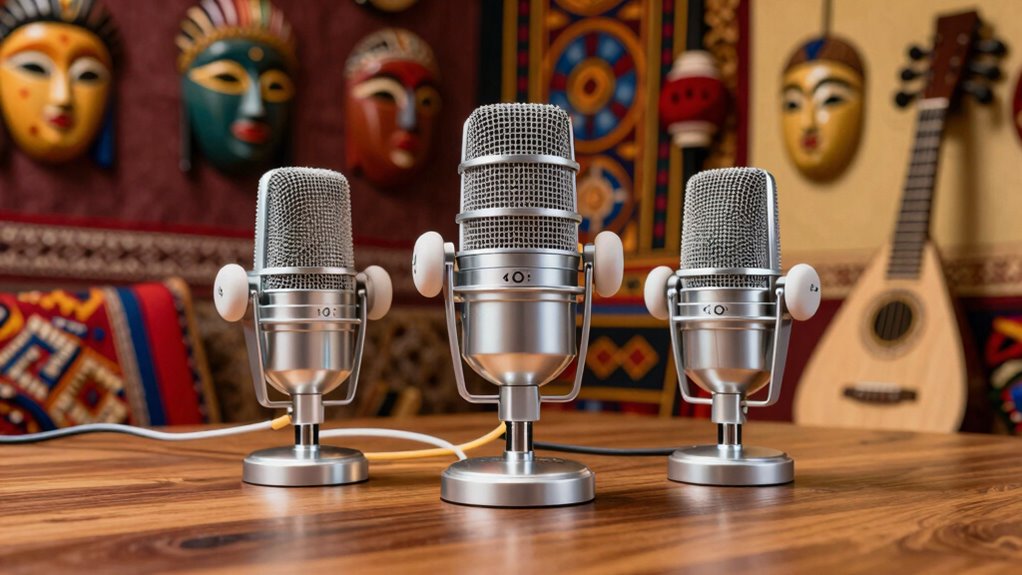

For immersive cultural audio, the microphone needs to preserve more than voices: it should record the direction, distance, and texture of a place, whether that means a market, a ceremony, or a quiet craft demonstration. I rank the SonicPresence SP15V first for camera-based documentary work because it records spatial sound to a standard stereo track without batteries or special software. The Ultra Low Noise In-Ear Binaural Microphones are my pick for quiet environments, while the Sound Professionals Low Noise Straight Connector model favors sensitive, natural-sounding capture in a compact in-ear form.

Prime made for students and young adults
- Fast, free delivery for dorm and study essentials
- Prime Video and Amazon Music included
- Member-only deals
The main choice is between a camera-friendly setup and microphones worn in the ears and connected to a suitable recorder. In-ear models can give a convincing listener-perspective recording, but comfort, recorder power, and cable connections matter. I weigh practical compatibility alongside noise performance and spatial realism, so this list favors tools that fit real cultural recording situations rather than specs alone.
Complete the kit

Key Takeaways
- Best for camera-led documentaries: SonicPresence SP15V records binaural audio through a 3.5 mm camera input, with no battery or special software required.
- Best for quiet scenes: Ultra Low Noise In-Ear Binaural Microphones prioritize a very low noise floor and realistic spatial capture.
- Best for sensitive, compact recording: Sound Professionals’ straight-connector model pairs high sensitivity with a flat frequency response.
- Best for normal hearing while recording: SP-TFB-2 models sit in the outer ear and are designed to let the wearer hear naturally.
- Check your chain before buying: Several in-ear options need plug-in power or a separate battery module, unlike the camera-oriented SP15V.
| SonicPresence SP15V Binaural Video Microphone |  | Best Overall for Camera-Based Cultural Documentaries | Connectivity: 3.5 mm TRS jack | Power: Plug-in power; no batteries required | Frequency response: 20 Hz–20 kHz | VIEW ON AMAZON | See Our Full Breakdown |
| Ultra Low Noise In-Ear Binaural Microphones with Flexible Mini Cables |  | Best for Quiet Rituals and Subtle Detail | Type: In-ear binaural microphone | Pickup pattern: Binaural / omnidirectional | Cable length: 59 inches | VIEW ON AMAZON | See Our Full Breakdown |
| Sound Professionals Low Noise In-Ear Binaural Microphones with Straight Connector |  | Best for Sensitive, Natural-Sounding Capture | Type: In-ear binaural microphones | Sensitivity: High | Noise level: Low | VIEW ON AMAZON | See Our Full Breakdown |
| Sound Professionals SP-TFB-2 Low-Noise In-Ear Binaural Microphones |  | Best for Hearing the Setting While Recording | Model: SP-TFB-2 | Microphone type: In-ear binaural | Pickup pattern: Omnidirectional | VIEW ON AMAZON | See Our Full Breakdown |
| Sound Professionals SP-TFB-2-SS-PC In-Ear Binaural Microphones |  | Best Standard-Sensitivity Fit for Broad Sound Levels | Microphone type: In-ear binaural | Sensitivity: Standard | Mounting: Super-soft in-ear holders | VIEW ON AMAZON | See Our Full Breakdown |
| binaural microphone for immersive cultural audio | Power | Frequency response | Pickup pattern |
|---|---|---|---|
| SonicPresence SP15V Binaural V | Plug-in power; no batteries required | 20 Hz–20 kHz | — |
| Ultra Low Noise In-Ear Binaura | Plug-in power or optional battery module | — | Binaural / omnidirectional |
| Sound Professionals Low Noise | — | Flat | Omnidirectional |
| Sound Professionals SP-TFB-2 L | Plug-in power or battery module | Flat | Omnidirectional |
| Sound Professionals SP-TFB-2-S | — | — | — |
More Details on Our Top Picks
SonicPresence SP15V Binaural Video Microphone
I place the SP15V first for cultural storytellers who film as they record. Its 3.5 mm TRS connection and plug-in power are designed for DSLR and mirrorless cameras, letting the recorder capture spatial audio directly onto a standard stereo track. That keeps the workflow approachable: the supplied description says no special software or battery is needed, a useful distinction from the in-ear Sound Professionals models that may need a compatible recorder or battery module. Its 20 Hz–20 kHz frequency response and stated dynamic range above 112 dB suit a broad range of location sounds, from low ambience to louder activity.
The tradeoff is visible wear: the ear-hook microphone sits on the recordist, so it may not suit every discreet filming setup. It also depends on a camera with a 3.5 mm external mic input. Compared with the low-noise in-ear picks, it is less clearly aimed at extremely quiet recording, but wins on camera convenience and direct spatial capture. I would choose it for walk-through documentaries, demonstrations, and travel footage where picture and sound need to stay together.
Pros:- Records binaural spatial audio to standard stereo tracks.
- Uses camera plug-in power, with no battery required.
- Designed for DSLR and mirrorless cameras with a 3.5 mm mic input.
- Malleable ear hooks are described as comfortable, rugged, and weatherproof.
Cons:- Requires wearing the microphone on the ears, which may be conspicuous on camera.
- Limited to recording devices with a compatible 3.5 mm external microphone jack.
Best for: Documentary makers and cultural video creators recording directly to a DSLR or mirrorless camera with a 3.5 mm mic input.
Not ideal for: Recordists without a compatible camera input, or those who need a discreet microphone that is not worn visibly on the ears.
- Connectivity:3.5 mm TRS jack
- Power:Plug-in power; no batteries required
- Frequency response:20 Hz–20 kHz
- Dynamic range:Greater than 112 dB
- Impedance:1000 ohm
- Compatibility:DSLR and mirrorless cameras with a 3.5 mm external mic input
- Construction:Polyurethane synthetic rubber ear hooks
Our verdict“I recommend the SP15V as the most straightforward camera-based route to immersive cultural audio, provided your camera has the right input.”
Ultra Low Noise In-Ear Binaural Microphones with Flexible Mini Cables
For delicate cultural sound—soft chanting, textile work, quiet conversation, or room ambience—I rank these ultra-low-noise microphones ahead of the other in-ear picks. Their stated noise floor and high sensitivity are aimed at capturing low-level material without making the microphone’s own noise the main feature. The binaural, omnidirectional design also supports a natural sense of space, which is a better fit for a listener-perspective recording than a conventional single-point voice mic. A 59-inch cable offers some room to route the connection to a recorder carried nearby.
The advantage comes with a setup condition. The microphones need a recorder that supplies plug-in power, or an optional battery module, so they are not as direct a match for a camera workflow as the SP15V. The in-ear fit can also become uncomfortable over a long session. Compared with the high-sensitivity straight-connector model, this pick makes its strongest case through its explicit ultra-low noise floor; I would favor it when quiet detail outweighs wearing comfort and equipment simplicity.
Pros:- Very low stated noise floor suits quiet recordings.
- Binaural pickup is intended to create realistic spatial audio.
- High sensitivity and maximum SPL support a broad range of sound levels.
- Works with standard plug-in-power recorders when compatible.
Cons:- Requires compatible recorder power or an additional battery module.
- In-ear placement may be uncomfortable during extended sessions.
Best for: Field recordists capturing quiet cultural scenes who have a plug-in-power recorder or are prepared to use a battery module.
Not ideal for: People who dislike in-ear microphones, record for long stretches, or want a direct camera connection without checking power compatibility.
- Type:In-ear binaural microphone
- Pickup pattern:Binaural / omnidirectional
- Cable length:59 inches
- Power:Plug-in power or optional battery module
- Recording focus:ASMR and high-fidelity audio recording
- Origin:Made in the USA
Our verdict“I would choose this model for quiet, detail-rich field recordings when the recorder and wearing fit are a match.”
Sound Professionals Low Noise In-Ear Binaural Microphones with Straight Connector
This Sound Professionals model is a strong fit for a recordist who wants high sensitivity and a flat response in a small in-ear microphone. Those traits point toward capturing quiet details without deliberately coloring the sound, useful when the character of a place matters as much as the main speaker. Its omnidirectional pattern supports ambient recording, and the compact design is described as able to mold to different ear shapes. The straight connector is the defining practical distinction in the product name, so buyers should check that its connector arrangement suits their recorder and cable routing.
Compared with the ultra-low-noise model above, this option also targets quieter sources, but its description does not make the same explicit claim about an ultra-low noise floor. Its stated optional windscreens can help with outdoor use, though they are not included as a guaranteed part of the microphone setup. It is less turnkey than the SP15V for camera recording, and the supplied details do not specify power requirements. I would put it on a shortlist for portable ambient capture, then confirm connector and power compatibility before ordering.
Pros:- High sensitivity is suited to quieter sounds.
- Low noise level and flat response support clear, natural capture.
- Compact design is described as fitting a range of ear shapes.
- Optional windscreens are available for outdoor recording.
Cons:- Windscreens are optional rather than assured in the package.
- The in-ear design may not suit every recording environment or wearer.
- The supplied specifications do not detail power requirements.
Best for: Listeners recording quiet ambience who want high sensitivity, a flat frequency response, and an in-ear form.
Not ideal for: Buyers seeking a ready-to-connect camera microphone or anyone who needs confirmed power and connector compatibility without further checking.
- Type:In-ear binaural microphones
- Sensitivity:High
- Noise level:Low
- Frequency response:Flat
- Pickup pattern:Omnidirectional
- Connector:Straight
- Cable color:Black
- Optional windscreen dimensions:1 x 0.8 inches
Our verdict“I favor this model for sensitive, natural-sounding ambience when its straight connector and power needs match the recorder.”
Sound Professionals SP-TFB-2 Low-Noise In-Ear Binaural Microphones
The SP-TFB-2 puts its emphasis on a natural listening position: its elements sit within the outer ear, and the soft holders are designed to let the wearer hear normally. That can be helpful when recording cultural activity that changes around you, since the recordist can listen and move with the scene rather than blocking their ears. Its flat frequency response and omnidirectional pattern make it a flexible choice for general location audio. Buyers can select standard or high sensitivity, giving this model more configuration flexibility than the standard-sensitivity SP-TFB-2-SS-PC below.
That choice does not remove the need to check the recording chain. The SP-TFB-2 needs plug-in power or a battery module, unlike the SP15V’s camera-powered setup. Its 3.5 mm stereo miniplug is specified, but the recorder still needs compatible power. I rank it below the two quiet-focused models for capturing the faintest details, yet above the simpler standard-sensitivity variant for buyers who want to choose sensitivity. The outer-ear fit is its main advantage; shoppers who need a guaranteed comfortable fit should still account for personal fit differences.
Pros:- Outer-ear placement is designed to capture the wearer’s perspective.
- Soft holders are intended for comfortable wear.
- Designed to allow normal hearing during recording.
- Offers standard and high sensitivity options.
Cons:- Requires plug-in power or a separate battery module.
- The correct sensitivity option depends on the recording level and use case.
Best for: Field recordists who want to hear normally while capturing a listener-perspective recording and value a choice of sensitivity.
Not ideal for: People who want a battery-free camera setup or need the strongest stated emphasis on very quiet recording.
- Model:SP-TFB-2
- Microphone type:In-ear binaural
- Pickup pattern:Omnidirectional
- Frequency response:Flat
- Connector:Gold-plated 3.5 mm stereo miniplug
- Power:Plug-in power or battery module
- Weight:1.34 ounces
- Sensitivity options:Standard or high
Our verdict“I recommend the SP-TFB-2 when natural hearing during recording and a choice of sensitivity matter more than a battery-free setup.”
Sound Professionals SP-TFB-2-SS-PC In-Ear Binaural Microphones
This SP-TFB-2 variant is the straightforward choice for someone who wants a standard-sensitivity binaural microphone rather than selecting between sensitivity versions. The soft in-ear holders place the elements next to the ear canal, and the description says the wearer can hear normally during recording. It is described as suitable from fairly quiet to very loud environments, giving it a broad general-purpose role for cultural events with changing levels. Compared with the SP-TFB-2 above, it has a narrower stated configuration: you are choosing this standard-sensitivity version rather than a model described as offering standard or high options.
The product details supplied here leave out connector and power information, so I would verify those with the seller before pairing it with a recorder. That uncertainty makes it a less certain purchase than the SP-TFB-2, which lists a 3.5 mm stereo miniplug and power options, and less convenient than the SP15V for camera use. It also does not make the low-noise claims of the dedicated quiet-recording picks. I see its appeal in comfortable, everyday binaural recording, but buyers should check the technical connection details before choosing it for a planned field kit.
Pros:- Super-soft in-ear holders are designed for comfort.
- Placement next to the ear canal allows normal hearing while recording.
- Standard sensitivity is described as suitable for fairly quiet to very loud settings.
- Designed to produce realistic recordings.
Cons:- The supplied product details do not specify connector type.
- Power requirements are not stated in the supplied details.
- Standard sensitivity is less specifically aimed at faint sounds than the high-sensitivity alternatives.
Best for: Recordists seeking standard sensitivity and soft in-ear holders for varied sound levels, from fairly quiet to very loud.
Not ideal for: Buyers who need published connector and power details before purchase, or who prioritize very quiet-source capture.
- Microphone type:In-ear binaural
- Sensitivity:Standard
- Mounting:Super-soft in-ear holders
- Placement:Next to the ear canal
- Hearing while recording:Designed not to impair normal hearing
- Intended sound range:Fairly quiet to very loud environments
Our verdict“I would choose this variant for a comfortable standard-sensitivity setup only after confirming the connector and power details.”

How We Picked
I ranked these microphones around a specific job: collecting immersive audio that helps a listener sense the character and layout of a cultural setting. I gave the most weight to binaural realism, then looked at how each model connects to recording equipment, how it handles quiet material, and what wearing or setup compromises it asks of the recordist. A microphone with strong spatial potential is less useful if its power needs do not match the recorder on location.
I also separated products that appear similar by their intended use. The SP15V is the clearest choice for a DSLR or mirrorless camera workflow, while the in-ear models suit recordists who want sound captured from a listener’s head position. Among those, low-noise and high-sensitivity designs rise for subtle events; standard-sensitivity options make more sense when recording a broader range of everyday sound levels. I have not treated the short product descriptions as proof of performance in every venue, and I have avoided filling gaps with unsupported specifications. Where connection or power details are not supplied, I call that out as a check for buyers.
| binaural microphone for immersive cultural audio | Power | Pickup pattern |
|---|---|---|
| SonicPresence SP15V Binaural V | Plug-in power; no batteries required | — |
| Ultra Low Noise In-Ear Binaura | Plug-in power or optional battery module | Binaural / omnidirectional |
| Sound Professionals Low Noise | — | Omnidirectional |
| Sound Professionals SP-TFB-2 L | Plug-in power or battery module | Omnidirectional |
| Sound Professionals SP-TFB-2-S | — | — |
Factors to Consider When Choosing Binaural Microphone For Immersive Cultural Audio
I would start by matching the microphone to the way you will record, then narrow the choice by sound level, comfort, and the recording device.Choose your recorder before your microphone
The simplest split is between the camera-ready SP15V and the four in-ear options. The SP15V is described for cameras with a 3.5 mm external microphone input and uses plug-in power. The other models are generally worn at or in the ears, but their power requirements vary in the available details. Some need recorder plug-in power or a battery module; for the SP-TFB-2-SS-PC and the straight-connector model, the supplied information does not fully state the power setup. Check the exact input, connector, and power support before a field session rather than relying on the connector shape alone.
Match sensitivity and noise performance to the setting
Quiet interiors and subtle performances put a premium on low self-noise and sensitivity. I would start with the Ultra Low Noise In-Ear option for the clearest stated emphasis on noise floor, or the straight-connector Sound Professionals model if high sensitivity and a flat response are the priorities. A high-sensitivity microphone can capture quiet detail, but that does not replace sound-level planning: loud events, close sources, and recorder settings still affect the final recording. For mixed everyday levels, the standard-sensitivity SP-TFB-2-SS-PC has a more general stated range; the SP-TFB-2 also gives a high-sensitivity alternative.
Think about comfort, visibility, and duration
Binaural microphones rely on placement around the ears, so comfort can shape the result as much as a spec sheet. The SP-TFB-2 and SP-TFB-2-SS-PC are described as allowing normal hearing, which can help a recordist stay aware of the setting. Still, in-ear holders can feel different from one person to another, and the ultra-low-noise model specifically carries a long-session comfort caveat. The SP15V’s ear hooks are described as rugged and weatherproof, but they may be more visible while filming. For an extended cultural event, I would favor a fit that stays secure and comfortable over a theoretical gain in sensitivity.
Plan for wind and location conditions
Outdoor cultural recording can bring wind, crowd movement, and changing distance from sound sources. The straight-connector model lists optional windscreens, so factor those into the setup rather than assuming they come with the microphones. The SP15V is described as weatherproof, but that does not remove the need to protect the recorder and cables. In any binaural setup, movement and clothing contact can affect what reaches the capsules; use careful cable routing and monitor the recording where possible. For a quiet indoor session, low noise may matter more than wind protection. For an open-air event, fit, protection, and the ability to keep a stable recording position deserve equal attention.
Frequently Asked Questions
What makes binaural recording useful for cultural audio?
Binaural microphones capture sound from positions associated with human hearing, which can give a recording a more spatial, listener-centered quality than a single microphone placed only for speech. That is useful when the movement and ambience of a place matter: voices arriving from different directions, room reflections, or the surrounding activity of a public gathering. The effect depends on playback and recording choices, so binaural audio should support the story rather than replace clear narration or thoughtful editing.
Which option is easiest to connect to a camera?
The SonicPresence SP15V is the clearest camera-oriented pick in this group. It uses a 3.5 mm TRS jack and plug-in power and is described for DSLR and mirrorless cameras with an external microphone input. The in-ear models are more recorder-dependent: some call for plug-in power or a battery module, and a couple of supplied descriptions do not specify all connection details. Confirm your camera’s input and power behavior before buying.
Which microphone should I choose for quiet ceremonies or close-up craft sounds?
I would begin with the Ultra Low Noise In-Ear Binaural Microphones because their description specifically emphasizes a very low noise floor and high sensitivity. The straight-connector Sound Professionals model is another candidate for quiet material, with high sensitivity, low noise, and a flat response listed. Your recorder, room noise, microphone placement, and the sound level all influence the result, so the microphone alone cannot promise a clean recording.
Do in-ear binaural microphones block normal hearing?
The SP-TFB-2 and SP-TFB-2-SS-PC descriptions say their placement lets the wearer hear normally while recording. That can help a recordist remain aware of people and activity nearby. Other in-ear products may fit differently, and comfort varies by wearer, so read the specific fit information and plan for a short trial before a long session. The camera-focused SP15V uses ear hooks, which are worn on the ears rather than placed in the same outer-ear position.
Do I need special software to play binaural recordings?
The SP15V is described as recording spatial audio to standard stereo tracks without special software, and its output can be used on standard platforms. The in-ear microphones also connect to a recorder, but the supplied descriptions do not make the same specific software claim for every model. Playback quality depends on the recording and listening setup; headphones often make spatial cues easier to hear than speakers. Check the recorder’s file format and your intended distribution workflow when planning a project.
Conclusion
For a camera-led documentary, I would choose the SonicPresence SP15V for its direct stereo camera workflow. For quiet ceremonies or subtle close-up sounds, I would pick the Ultra Low Noise In-Ear microphones, assuming the fit and recorder power work for me. The straight-connector Sound Professionals model suits buyers prioritizing high sensitivity and a flat response, while the SP-TFB-2 is a better match when normal hearing and sensitivity choice matter. I would reserve the SP-TFB-2-SS-PC for shoppers who want standard sensitivity and soft holders, after confirming its connection and power details. The right choice is the one that matches the scene, recorder, and hours you expect to wear it.
Halloween Picks
halloween
As an affiliate, we earn on qualifying purchases.