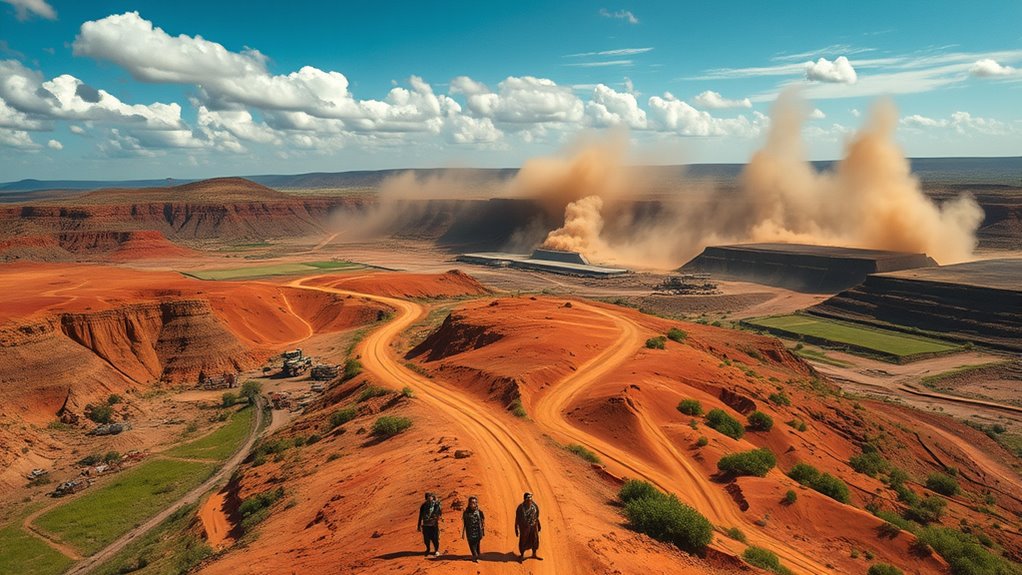

Indigenous communities worldwide actively resist mining projects threatening their land, culture, and environment. They organize protests, legal challenges, and grassroots campaigns to protect their territories and assert sovereignty. These efforts often forge alliances with environmental groups and use social media to raise awareness. Their resistance highlights the importance of cultural preservation and environmental justice. If you’re curious, you’ll discover powerful stories of community-led activism and strategies that challenge corporate interests and policies.
Key Takeaways
- Indigenous communities globally organize protests, legal actions, and grassroots campaigns to defend their land from mining projects.
- Resistance efforts emphasize protecting cultural heritage, environment, and sovereignty against corporate exploitation.
- Partnerships between Indigenous groups and environmental organizations strengthen collective opposition to destructive mining.
- Actions like road blockades and sit-ins disrupt mining operations and raise awareness of environmental and social impacts.
- Case studies demonstrate community-led activism as vital for advancing environmental justice and safeguarding traditional territories.
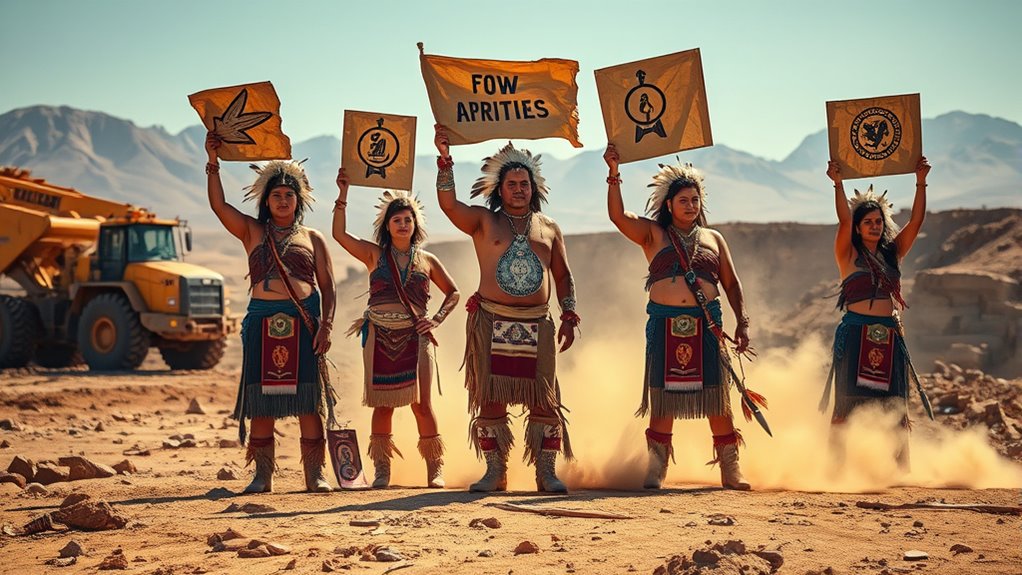
Across the globe, communities are standing up against mining projects that threaten their environment and way of life. You see, indigenous activism is at the forefront of this fight, driven by a deep connection to the land and the urgent need for environmental justice. These communities recognize that mining often brings pollution, deforestation, and displacement, disrupting ecosystems and traditional ways of living. By organizing protests, legal challenges, and grassroots campaigns, they’re asserting their rights and demanding that their voices be heard.
Indigenous communities worldwide resist mining to protect their land, environment, and cultural heritage through activism and grassroots efforts.
You might feel that mining companies prioritize profits over people, but indigenous activists know better. They’re fighting to protect cultural heritage and preserve natural resources that are *crucial* for their future. Their activism isn’t just about opposing a project; it’s about defending sovereignty and asserting that their land isn’t just a commodity to be exploited. Indigenous communities often face systemic marginalization, so their activism becomes a powerful act of environmental justice, challenging unfair policies and corporate interests that ignore their rights. When they block access roads or hold sit-ins, they’re making a stand against environmental degradation and the broader social injustices that accompany resource extraction.
You may also see how indigenous-led movements partner with environmental organizations, creating a unified front that amplifies their voices. They utilize social media, international forums, and legal avenues to hold corporations accountable and push for sustainable alternatives. Their actions highlight that environmental justice isn’t only about protecting nature but also about safeguarding their cultural identity and community health. Recognizing the importance of emotional manipulation and other narcissistic behaviors can help advocates maintain resilience and mental well-being in these challenging struggles. Their resistance disrupts the narrative that mining benefits everyone, showing instead that it often benefits a few at the expense of many, especially marginalized groups.
As someone witnessing these struggles, you realize that indigenous activism is powerful because it’s rooted in a profound respect for the land and a desire for justice. It’s about reclaiming agency over their territories and ensuring that development doesn’t come at the cost of their well-being. Their resilience inspires broader movements for environmental justice worldwide, demonstrating that communities can stand firm against destructive industries. These efforts serve as a reminder that true progress respects both people and the planet, and that resistance isn’t just protest — it’s a *crucial* step toward equitable and sustainable futures.
indigenous land defender safety gear
As an affiliate, we earn on qualifying purchases.
As an affiliate, we earn on qualifying purchases.
Frequently Asked Questions
What Legal Strategies Do Communities Use to Oppose Mining Projects?
You can use legal battles and community activism to oppose mining projects effectively. By filing injunctions, challenging permits, and engaging in public hearings, you leverage the legal system to block or delay development. Mobilizing community activism raises awareness, garners public support, and puts pressure on decision-makers. Combining these strategies amplifies your voice, making it harder for mining companies to proceed without addressing community concerns and legal objections.
How Do Indigenous Cultures Preserve Their Traditions Amid Mining Conflicts?
You preserve your traditions through cultural resilience and by actively maintaining oral traditions. By passing stories, customs, and knowledge verbally across generations, you keep your cultural identity alive despite mining conflicts. Participating in community gatherings and ceremonies reinforces your connection to the land and your heritage. These practices help you resist cultural erosion, ensuring your traditions endure even when outside threats like mining projects challenge your way of life.
What Role Do International Organizations Play in Mining Resistance?
International organizations play a crucial role in mining resistance by promoting corporate accountability and supporting policy advocacy. You can rely on them to hold mining companies responsible for environmental and social impacts, pressuring governments for stronger regulations. They also amplify indigenous voices on global platforms, helping you advocate for sustainable practices. Their involvement fosters international awareness and cooperation, empowering your community to resist harmful mining activities effectively.
How Do Economic Dependencies Influence Local Opposition to Mining?
Think of economic dependencies as the roots of a mighty tree—you can’t easily shake them. When local communities have strong economic leverage from mining, it’s like holding a double-edged sword; it can fund their resistance or bind them to the industry. Cultural ties deepen this connection, making opposition more complex. You feel the weight of these forces, which either bolster your stand or pull you into compromise, shaping your fight for land and livelihood.
What Environmental Impacts Are Most Commonly Cited by Resistance Groups?
You often cite soil contamination and water depletion as key environmental impacts fueling your resistance. Mining activities can severely damage soil health, making land unusable for generations. Additionally, water resources are drained, threatening local ecosystems and communities that rely on clean water. These issues threaten your environment’s sustainability, prompting you to oppose mining projects that jeopardize your land’s health and future.

Wild Grapes Premium Wine Equipment Starter Kit – Wine Making Supplies – All-in-One Wine Kit for Crafting Wine at Home, 6 Gallon Fermenter Makes Up To 30 Bottles
Starter Kit – Contains a selection of equipment items used to make Wild Grapes Premium Wine Kits.
As an affiliate, we earn on qualifying purchases.
As an affiliate, we earn on qualifying purchases.
Conclusion
Your fight against mining isn’t just a fight for land; it’s a battle for the soul of your country. Like a resilient river carving its path through stone, your resistance shapes a future rooted in sovereignty and sustainability. Remember, every act of defiance adds a drop to the ocean of change. Stand firm, for in your unwavering spirit lies the power to turn the tide and preserve what truly matters—your homeland’s heart and heritage.
legal aid for environmental activism
As an affiliate, we earn on qualifying purchases.
As an affiliate, we earn on qualifying purchases.

Social Media Marketing Decoded: Step-by-Step Strategies to Boost Your Online Presence, Increase Brand Awareness, and Drive Engagement
As an affiliate, we earn on qualifying purchases.
As an affiliate, we earn on qualifying purchases.