
Indigenous communities are key stewards in Marine Protected Areas because they bring deep traditional knowledge, cultural practices, and strong leadership. Their sustainable fishing methods and sacred sites act as natural reserves, enhancing conservation efforts. By respecting their roles, you help foster respectful, inclusive marine governance that strengthens ecosystems and local livelihoods. Embracing indigenous participation leads to lasting, effective protection of ocean health—discover more about how their involvement shapes successful MPAs.
Key Takeaways
- Indigenous communities provide traditional knowledge that enhances MPA management and supports sustainable marine practices.
- Their involvement fosters inclusive governance, respecting cultural rights and strengthening local stewardship.
- Indigenous-led practices, such as seasonal closures and sacred site protection, help preserve marine ecosystems.
- Collaboration with indigenous groups improves enforcement, ensuring effective and culturally appropriate conservation efforts.
- Integrating indigenous roles promotes resilience and long-term sustainability of Marine Protected Areas.
Have you ever wondered how we can preserve the health of our oceans? One powerful way is through Marine Protected Areas (MPAs), which serve as sanctuaries for marine life and help maintain ecological balance. But establishing MPAs isn’t just about designating zones on a map; it’s about understanding and respecting the roles of those who have long been connected to these waters. Indigenous communities, with their deep-rooted ties to the ocean, play an essential part in this effort through indigenous conservation practices and their influence on marine governance. Their traditional knowledge offers invaluable insights into sustainable resource management, often predating modern conservation methods. When indigenous peoples are involved in marine governance, it fosters a more inclusive, culturally respectful approach that recognizes their rights and stewardship roles. This integration helps guarantee that MPAs are effective not just biologically but also socially, respecting local customs and practices.
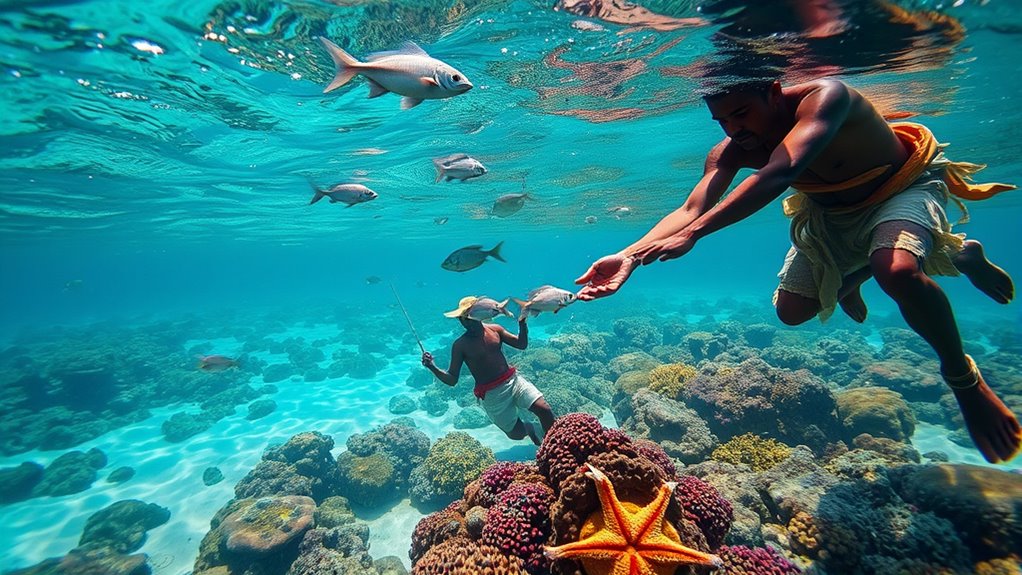
Indigenous conservation isn’t merely about protecting species; it’s about safeguarding entire ecosystems that indigenous communities have historically relied on for their livelihoods and cultural identity. These communities possess an intimate understanding of marine environments, developed over generations of observation and interaction. Their practices often include sustainable fishing, seasonal closures, and sacred sites that act as natural reserves, contributing directly to marine health. Recognizing these traditions within formal marine governance frameworks enhances the legitimacy and effectiveness of MPAs. Such inclusion promotes cooperation rather than conflict, ensuring that conservation goals align with local needs and values.
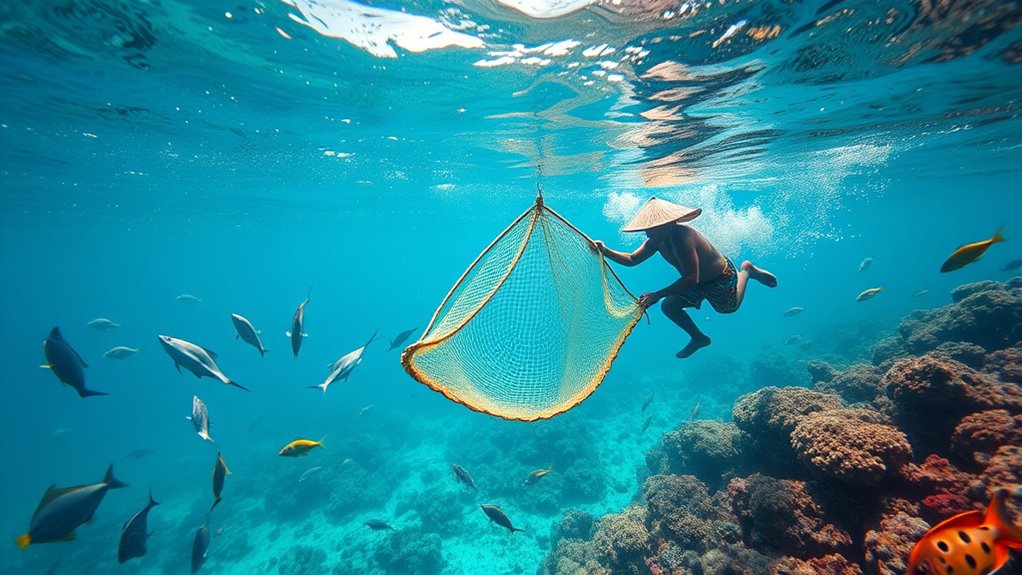
Indigenous communities’ sustainable practices protect ecosystems vital to their culture and livelihoods.
Furthermore, indigenous conservation efforts can bolster the enforcement and management of MPAs. When indigenous leaders are empowered to participate in decision-making, they bring a sense of ownership and responsibility that strengthens marine governance. This collaborative approach encourages shared stewardship, where local communities act as guardians of their waters. It also fosters resilience in marine ecosystems, as traditional practices often emphasize harmony with nature, reducing human impacts. Modern science and indigenous knowledge together create a comprehensive strategy for marine conservation, making MPAs more adaptable and sustainable over time.
Involving indigenous communities isn’t just ethical; it’s practical. Their insights and practices can fill gaps in scientific understanding and improve management plans. As marine protected areas expand globally, embracing indigenous conservation and strengthening marine governance through inclusive participation becomes essential. It’s a way to honor longstanding relationships with the ocean, ensuring its health for future generations while respecting cultural diversity. By recognizing the essential role of indigenous peoples, we’re taking a significant step toward more effective, equitable, and resilient marine protected areas.
indigenous marine conservation tools
As an affiliate, we earn on qualifying purchases.
As an affiliate, we earn on qualifying purchases.
Frequently Asked Questions
How Do Indigenous Practices Enhance Marine Conservation Efforts?
You can see that indigenous practices substantially enhance marine conservation efforts by integrating traditional practices that promote sustainable resource use. These practices, rooted in cultural preservation, help maintain biodiversity and healthy ecosystems. By respecting and supporting indigenous stewardship, you guarantee the continuation of valuable knowledge and techniques that protect marine environments. Their involvement fosters effective conservation, blending cultural heritage with ecological sustainability for long-term ocean health.
What Legal Rights Do Indigenous Communities Have in MPAS?
You have recognized rights within MPAs, including Indigenous sovereignty and traditional fishing rights. These legal rights often grant you authority to manage and protect marine areas based on your cultural practices. Laws vary by region, but many jurisdictions acknowledge your role, ensuring you can sustainably harvest resources while preserving cultural heritage. Your rights empower you to participate actively in conservation efforts, balancing ecological health with your community’s traditional practices.
How Can Indigenous Knowledge Be Integrated Into Marine Management Plans?
You can integrate indigenous knowledge into marine management plans by actively involving indigenous communities in decision-making processes. Respect their cultural heritage and traditional fishing practices, ensuring their insights inform conservation strategies. Collaborate with elders and local leaders to incorporate traditional ecological knowledge, which enhances sustainable resource use. This approach fosters respect, strengthens stewardship, and creates management plans that reflect both scientific and indigenous perspectives.
What Challenges Do Indigenous Groups Face in MPA Stewardship?
You face challenges like cultural barriers and resource limitations when stewarding MPAs. Imagine trying to repair a boat without the tools; that’s how resource constraints hinder your efforts. Cultural barriers, such as differing worldviews and language gaps, can also create misunderstandings with authorities. These obstacles hinder your ability to fully participate in management, risking the loss of valuable traditional knowledge and weakening conservation efforts. Overcoming them requires support and respectful collaboration.
Are There Successful Case Studies of Indigenous-Led Marine Protection Initiatives?
Yes, there are successful indigenous-led marine protection initiatives. For example, in New Zealand, Māori communities lead marine governance through kaitiakitanga, blending cultural preservation with conservation efforts. These initiatives empower indigenous groups to manage their waters, ensuring sustainable use and cultural continuity. Such case studies demonstrate that indigenous-led efforts can effectively protect marine ecosystems while honoring cultural values, inspiring similar models worldwide.

MYDAYS Fishing Sling Tackle Storage Bag, Lightweight Outdoor Sling Tackle Backpack for Fishing Gear and Equipment (Khaki)
Superior Durability & Protection: Engineered for the avid angler, this MYDAYS Fishing Sling Bag is crafted from heavy-duty…
As an affiliate, we earn on qualifying purchases.
As an affiliate, we earn on qualifying purchases.
Conclusion
You hold the key to safeguarding our oceans, much like a lighthouse guiding ships through storms. By honoring indigenous roles in stewardship, you help steer Marine Protected Areas toward resilience and renewal. Their knowledge acts as a steady beacon, illuminating sustainable paths forward. Together, you can nurture these waters as a gardener tends a delicate garden—ensuring it flourishes for generations to come. Your actions can transform fragile ecosystems into thriving, protected havens beneath the waves.

2 Pack Warning Property Protected By A U.S. Marine 12 inch by 8 inch Metal Tin Sign
🔥➀【MATERIAL】Tin and metal. Color: as shown.
As an affiliate, we earn on qualifying purchases.
As an affiliate, we earn on qualifying purchases.
sacred site protection equipment
As an affiliate, we earn on qualifying purchases.
As an affiliate, we earn on qualifying purchases.