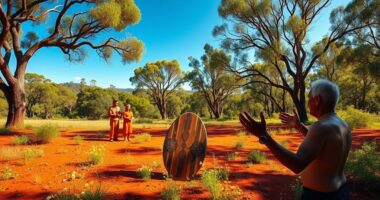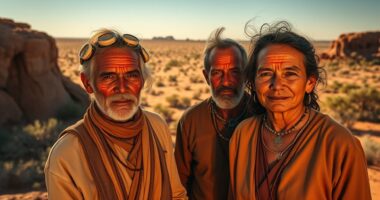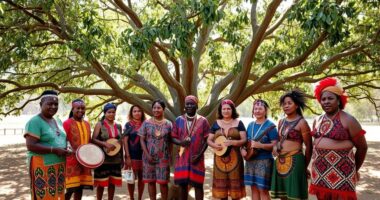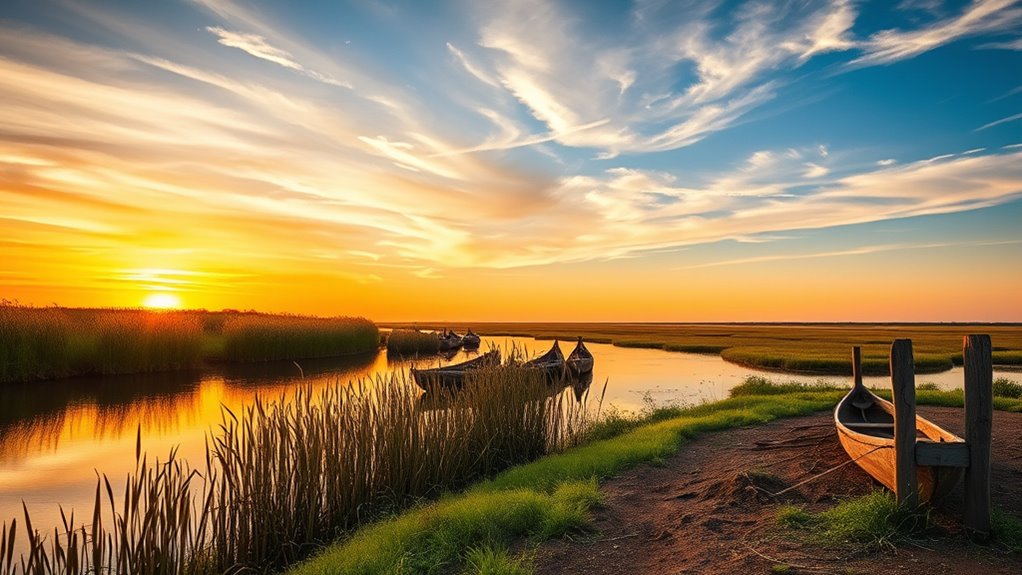

The Ngarrindjeri Nation’s stories of the Lower Murray and Coorong highlight their deep spiritual and cultural ties to the land and waters for thousands of years. They see these places as essential to their identity, practicing traditional fishing, ceremonies, and storytelling to preserve their heritage. Efforts to secure land rights and protect sacred sites are ongoing, reinforcing their resilience. Continue exploring to discover how these stories shape their ongoing journey to stay connected to their culture.
Key Takeaways
- The Ngarrindjeri Nation has deep cultural ties to the land and waters of the Lower Murray and Coorong, passed down through generations.
- Stories recounting the Ngarrindjeri’s connection to their land highlight their spiritual and cultural significance.
- Traditional practices such as fishing, hunting, and ceremonies are central to Ngarrindjeri cultural stories.
- Efforts to reclaim land rights and protect sacred sites are vital to preserving Ngarrindjeri heritage.
- Ngarrindjeri storytelling and language revival play key roles in maintaining cultural identity and resilience.
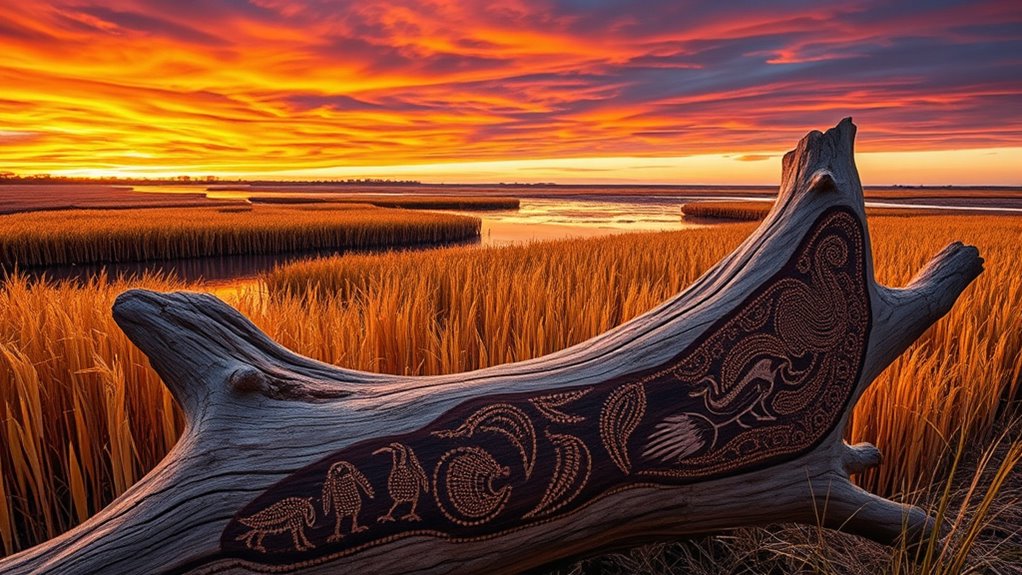
Have you ever wondered about the rich cultural heritage of the Ngarrindjeri Nation? It’s a story deeply rooted in the land and waters of the Lower Murray and Coorong, passed down through generations. The Ngarrindjeri people have lived here for thousands of years, maintaining a profound connection to their environment. This connection isn’t just spiritual; it’s the foundation of their cultural identity. Central to their story are efforts to secure Indigenous land rights, ensuring they can continue to care for their ancestral lands and waters. These rights are more than legal titles—they’re essential for cultural preservation, allowing the Ngarrindjeri to practice traditions, hold ceremonies, and pass knowledge to future generations. Sadly, colonization and government policies once threatened these rights, attempting to erase their cultural practices and disconnect them from their land. Today, however, Ngarrindjeri communities are actively fighting to reclaim their rightful place on their land, asserting their sovereignty and cultural sovereignty in the process. They work tirelessly to protect sacred sites, restore traditional fishing and hunting practices, and revive their language and storytelling traditions. Recognizing their rights isn’t just about land—it’s about respecting their identity and history. You’ll find that their cultural preservation efforts extend beyond physical sites; they include cultural centers, language programs, and community-led initiatives that keep their stories alive. These initiatives serve as a bridge between the old and new, ensuring that Ngarrindjeri voices are heard and their traditions celebrated. Their connection to the land is more than symbolic; it’s fundamental to their well-being and spiritual health. By advocating for Indigenous land rights, the Ngarrindjeri people are not only safeguarding their cultural heritage but also creating pathways for future generations to thrive. Their story is one of resilience, demonstrating that cultural preservation requires active effort and respect from others. It’s a reminder that Indigenous communities have the right to determine their own futures while maintaining their cultural identities. As you learn about the Ngarrindjeri Nation, you’ll see that their fight for land rights and cultural preservation isn’t just about history—it’s a living, ongoing journey. Their commitment to protecting their land and culture inspires others to recognize the importance of respecting Indigenous sovereignty. This story isn’t just about the past; it’s a call to action for a more inclusive and respectful future where Indigenous voices are heard, valued, and celebrated. Understanding the significance of cultural heritage and land rights is crucial for fostering respect and support for Indigenous communities.
Native to This Land: A History of Indigenous Rights in North America (Spotlight on Social Justice)
As an affiliate, we earn on qualifying purchases.
As an affiliate, we earn on qualifying purchases.
Frequently Asked Questions
How Does Ngarrindjeri Traditional Governance Work Today?
Today, Ngarrindjeri traditional governance involves Indigenous leadership working closely with traditional councils. You’ll see elders and community members making decisions that respect cultural practices and laws. These councils serve as a link between modern governance and traditional authority, ensuring Ngarrindjeri values are upheld. You’re encouraged to participate in this system, where leadership is rooted in cultural knowledge and community consensus, blending heritage with contemporary governance.
What Are Ngarrindjeri’s Current Language Revitalization Efforts?
You actively participate in Ngarrindjeri’s language revitalization efforts by attending community workshops focused on language preservation. These workshops teach traditional words and phrases, helping to keep the language alive for future generations. You might also share stories and practice speaking with elders, supporting the community’s goal to strengthen cultural identity. Your involvement helps make certain the Ngarrindjeri language remains vibrant and accessible within your community.
How Do Ngarrindjeri People Participate in Environmental Conservation?
You participate in environmental conservation by engaging in Indigenous land management and cultural burning practices. These efforts help restore natural ecosystems, reduce wildfire risks, and preserve biodiversity. By practicing traditional methods, you support the Ngarrindjeri people’s connection to their land, ensuring its health for future generations. Your involvement helps maintain cultural heritage while actively protecting the environment, demonstrating respect and responsibility for the land’s well-being.
What Are Ngarrindjeri’s Cultural Practices for Storytelling and Ceremonies?
You participate in Ngarrindjeri’s storytelling and ceremonies by engaging with Dreamtime stories that pass down cultural knowledge and history. During ceremonial dances, you actively take part to honor ancestors and the land. These practices preserve their traditions, strengthen community bonds, and keep their cultural identity alive. By learning and respecting these stories and dances, you help guarantee Ngarrindjeri’s rich cultural heritage continues for future generations.
How Does Ngarrindjeri Nation Engage With Australian Government Policies?
Your Ngarrindjeri Nation actively engages with Australian government policies through fierce advocacy for Indigenous sovereignty. You participate in policy advocacy, ensuring your voices shape decisions that impact your land and culture. You collaborate with government agencies, challenge unjust policies, and push for recognition and respect of your rights. This relentless effort fights to preserve your sovereignty, making your engagement a powerful force for change and ensuring your community’s future remains rooted in tradition and self-determination.

Advanced Language Tool Kit: Teaching the Structure of the English Language
As an affiliate, we earn on qualifying purchases.
As an affiliate, we earn on qualifying purchases.
Conclusion
You now understand the deep connection the Ngarrindjeri Nation has to the Lower Murray and Coorong. Imagine a young Ngarrindjeri girl, walking along the riverbank, feeling the pulse of her ancestors’ stories in every breeze and ripple. Protecting this land means safeguarding their future too. By honoring their stories and traditions, you help preserve a rich cultural heritage that nurtures not just the land, but the spirit of a community for generations to come.

Condor Tool & Knife Australian Army Heavy Duty Machete – 1075 High Carbon Steel – Walnut Handle – Canvas Sheath with Leather Belt Loop – Cutlass Machete – 4.5mm Thick – 12.9in Blade – 23.3oz
THICKNESS: This high carbon steel machete knife with a thickness of 4.5mm, ensures impressive durability and remarkable edge…
As an affiliate, we earn on qualifying purchases.
As an affiliate, we earn on qualifying purchases.

One Story, One Song
As an affiliate, we earn on qualifying purchases.
As an affiliate, we earn on qualifying purchases.