To avoid the “too loud” trap, keep sound levels below 70 decibels, similar to normal conversation, especially for kids and elders. Sounds over 85 dB, like loud concerts or fireworks, can cause hearing damage over time. Monitoring environments and using ear protection helps prevent hearing loss. Understanding these safe thresholds can protect your loved ones’ hearing health. If you want to find out more about managing loud noises safely, keep exploring.
Key Takeaways
- Safe sound levels for kids and elders are below 70 dB, while exposure to over 85 dB can cause hearing damage.
- Use sound level meters or apps to monitor environmental noise and identify unsafe loud environments.
- Protect hearing by using earplugs, noise-canceling headphones, and taking regular breaks from loud sounds.
- Recognize signs of hearing fatigue, such as ringing ears or discomfort, to prevent irreversible damage.
- Create quiet spaces at home and during outings to support hearing health and reduce noise exposure risks.

Decibel Meter, TopTes TS-501B Sound Level Meter with 2.25” Backlit LCD Screen, Portable SPL Tester with A/C Weighted, Range 30-130dB, MAX/MIN, Data Hold, Use for Home, Noisy Neighbor, Factory – Orange
2.25-inch LCD Screen with Backlight: This TS-501B sound level meter is measured noise levels are expressed in decibels…
As an affiliate, we earn on qualifying purchases.
As an affiliate, we earn on qualifying purchases.
What Are Safe Sound Levels for Kids and Elders?

Understanding safe sound levels for kids and elders is essential because their hearing is more sensitive and prone to damage. Excessive noise exposure can lead to long-term hearing issues, so it’s critical to monitor their environment. Sound therapy can help improve hearing health when used appropriately, but it’s indispensable to avoid noise pollution that exceeds safe limits. Noise pollution from loud devices, traffic, or crowded places can overwhelm delicate ears, increasing the risk of damage. For example, children and elders should avoid exposure to sounds exceeding safe sound levels of 70 decibels. Recognizing noise-induced hearing loss** early is vital for preventing further deterioration and maintaining overall auditory health. Additionally, understanding sound exposure guidelines can help caregivers better manage environments and protect vulnerable hearing. Being aware of sound levels in various environments allows for more precise safety measures. Moreover, consistent monitoring of environmental noise** helps prevent unintentional exposure to harmful sound levels. By controlling exposure and choosing sound therapy options wisely, you help protect their hearing while creating a healthier auditory environment. Awareness and proactive measures are key to preventing hearing loss caused by loud environments.

ProCase Noise Cancelling Headphones for Kids Toddler, SNR 27dB Noise Reduction Ear Muffs, Hearing Protection for Monster Jam, Concerts, Fireworks, Shooting, Air Show, Autism Sensory Needs -Blue
Constructed by solid ABS shell and thickened sound-absorbing foam, our earmuffs achieve SNR 27 dB noise-isolation, ANSI S3.19…
As an affiliate, we earn on qualifying purchases.
As an affiliate, we earn on qualifying purchases.
How Loud Is Too Loud? Recognizing Safe Sound Thresholds

Knowing how loud is too loud helps you protect the hearing of kids and elders from damage. Generally, safe sound levels stay below 70 decibels (dB), roughly the noise of a conversation. Sounds above 85 dB, like music therapy sessions or loud concerts, can cause hearing loss over time. To recognize safe thresholds:
- Use sound level meters or smartphone apps to measure noise.
- Be aware of environments, such as sound engineering settings, where noise can be unexpectedly high.
- Pay attention to personal comfort and signs of ear fatigue or ringing, which indicate loudness levels are unsafe.
- Remember that DIY safety practices include monitoring sound levels to prevent unintentional hearing damage.
- Additionally, understanding sound level measurements helps in accurately assessing exposure risks.
- Incorporating luxury smart devices, like noise-canceling headphones, can also assist in maintaining safe listening environments.
- Regularly assessing sound exposure in different settings ensures ongoing protection for sensitive hearing groups.
- Recognizing the importance of hearing conservation strategies helps in developing long-term hearing health routines.
Understanding these thresholds helps you manage exposure, ensuring sound remains within safe limits for everyone’s hearing health while considering the nuances of sound engineering and therapeutic contexts.

Mack's Ultra Soft Foam Earplugs, 50 Pair – 33dB Highest NRR, Comfortable Ear Plugs for Sleeping, Snoring, Travel, Concerts, Studying, Loud Noise, Work | Made in USA
ULTRA COMFORTABLE – Made with super low-pressure, slow release, Comfy Cush Comfort Foam. Their user preferred color is…
As an affiliate, we earn on qualifying purchases.
As an affiliate, we earn on qualifying purchases.
Why Excessive Noise Puts Kids and Elders at Risk

Exposing kids and elders to loud noises can damage their sensitive hearing, leading to long-term issues. It can also interfere with their development and daily functioning. Understanding these risks helps you protect their health and well-being effectively. Additionally, maintaining safe sound levels is essential to prevent sensory overload and promote overall health. Being aware of sound exposure guidelines ensures that environments remain safe and comfortable for everyone. For example, knowing the appropriate decibel levels can help you set boundaries and create a safer environment. Moreover, understanding noise-induced hearing loss emphasizes the importance of monitoring sound exposure in everyday settings. Recognizing microplastics in dust as potential indoor pollutants further underscores the need for a healthy environment to support overall well-being.
Sensitive Hearing Risks
Excessive noise can cause immediate and long-term damage to the sensitive hearing of kids and elders, who are more vulnerable to sound trauma. Their ears are less equipped to handle loud environments, increasing the risk of permanent hearing loss and tinnitus. Overexposure can also impair their ability to perceive soft sounds, affecting communication and daily activities. Sound therapy and music therapy are often used to help manage hearing sensitivities, but they require safe volume levels to be effective. Protecting their delicate hearing involves understanding the risks and implementing protective measures. For example, using essential oils for ear health may support soothing and calming the ear area, potentially reducing discomfort caused by noise exposure. Additionally, establishing safe sound levels in environments helps prevent accidental exposure to damaging noise levels.
Developmental Impact
When children and elders are subjected to loud noises, their developing or sensitive brains can be affected in ways that hinder growth and cognitive function. Excessive noise can disrupt auditory development, making it harder to process sounds accurately. For children, this interference can lead to speech delays, as their ability to distinguish and learn language depends heavily on sound clarity. Similarly, elders exposed to loud environments may experience cognitive strain, impacting memory and concentration. Over time, sustained exposure to high noise levels can impair neural connections essential for learning and communication. Protecting hearing and controlling sound levels helps guarantee healthy auditory development in kids and preserves cognitive function in elders, supporting their overall growth, learning, and quality of life.

Decibel Meter Bluetooth, Portable Sound Level Meter with Data Logging, Can Fit with Smartphone App Recording, 30 to 130dBA Noise Decibel Meter SPL Meter w/Data Hold MAX MIN Alarm Backlit LCD Display
【Bluetooth Connectivity】: Connect effortlessly to your Android or iOS device via Bluetooth, allowing easy data transfer and management…
As an affiliate, we earn on qualifying purchases.
As an affiliate, we earn on qualifying purchases.
How Noise Damages Hearing Over Time
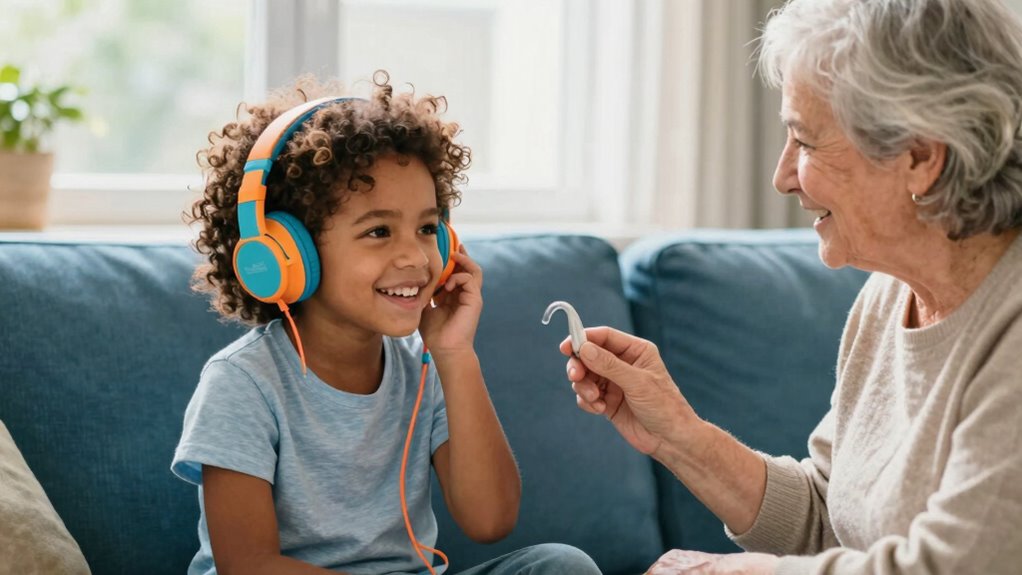
Repeated exposure to loud noises gradually damages the tiny hair cells inside your inner ear, which are crucial for hearing. Over time, this damage accumulates, leading to permanent hearing loss. Noise pollution from everyday activities, such as loud music or traffic, worsens this process. Your hearing health declines silently, often without immediate symptoms. Recognizing how noise damages your ears emphasizes the importance of protecting your ears early. To understand this process better, consider these points:
- Prolonged loud noise causes irreversible hair cell death
- Cumulative damage reduces your ability to hear high-frequency sounds
- Constant noise exposure can lead to tinnitus and other auditory issues
Reducing noise exposure is essential to prevent long-term hearing damage and maintain your overall hearing health.
Tips to Protect Kids’ Hearing During Play and at School

To protect kids’ hearing during play and at school, it’s important to set clear limits on noise levels and monitor their environment. Use noise cancellation headphones during loud activities or noisy environments to reduce exposure. Incorporate sound therapy techniques, like calming background sounds, to help children stay relaxed without raising the volume. Encourage regular breaks from noisy settings to give their ears a rest. Educate kids about the importance of hearing health and recognizing when sounds are too loud. Keep volume levels low on personal devices and avoid exposing them to loud music or environments for extended periods. Additionally, fostering a growth mindset around hearing health can help children develop positive habits for protecting their ears over time. Being aware of sound intensity and its effects on hearing can further aid in making informed choices about noise exposure. Understanding the difference between twin flame vs soul tie can also help in emotional well-being, reducing stress that might contribute to hearing sensitivity. By actively managing noise exposure, you help preserve their hearing and prevent long-term damage.
How to Keep Elders Safe From Loud Environments at Home and Out

You can protect elders by recognizing loud environments before they become harmful. Using hearing protection, like earplugs or earmuffs, can reduce noise exposure. Creating quiet spaces at home and during outings helps keep their hearing safe and comfortable. Additionally, soundproofing techniques can help minimize ambient noise levels in living areas, further supporting their hearing health. Being aware of noise levels and taking proactive steps can greatly improve their overall comfort and well-being. Monitoring environmental noise can also prevent sudden loud sounds from startling or damaging their hearing.
Recognize Loud Environments
Many loud environments can pose a risk to elders’ hearing health, so it’s important to recognize when noise levels are too high. Excessive noise pollution can overwhelm their sound sensitivity, increasing the risk of hearing damage. To identify these environments, pay attention to signs like ringing ears, discomfort, or the need to raise your voice.
You can also look out for:
- Persistent background noise that drowns out conversation
- Sudden, unexpected loud sounds, like sirens or fireworks
- Environments where others are visibly covering their ears or showing signs of discomfort
Being aware of these cues helps you prevent exposure to harmful sound levels and protect your elders’ hearing health. Recognizing loud environments is the first step to keeping their ears safe at home and out.
Use Hearing Protection
When loud environments cannot be avoided, using hearing protection is vital to safeguard elders’ hearing health. Earplugs or noise-canceling headphones can reduce sound levels and prevent damage. If your elder participates in music therapy, ensure the volume remains within safe limits to protect residual hearing. Proper hearing aid maintenance is also essential; clean and check devices regularly to guarantee they function correctly and provide ideal noise reduction. Wearing hearing protection during noisy outings or at events like concerts helps prevent temporary or permanent hearing loss. Educate your elder on the importance of these measures and encourage consistent use. Taking these steps offers a simple yet effective way to preserve hearing health while still enjoying life’s sounds.
Create Quiet Spaces
Creating quiet spaces at home and in public settings is essential for protecting elders from harmful noise levels. You can establish soundproof rooms where they can retreat during loud events or busy times, offering a safe haven from overwhelming sounds. Using noise-canceling headphones provides an immediate solution for noisy environments, helping to reduce auditory stress. Additionally, designating specific areas as quiet zones ensures elders have consistent access to calm surroundings, whether at home or in public venues. To maximize effectiveness, consider soundproofing techniques such as insulating walls or sealing windows. These measures create a controlled environment that minimizes noise intrusion, supporting overall hearing health. Prioritizing quiet spaces not only safeguards elders’ hearing but also promotes comfort and mental well-being during daily activities.
Best Devices and Ear Protection for Kids and Seniors
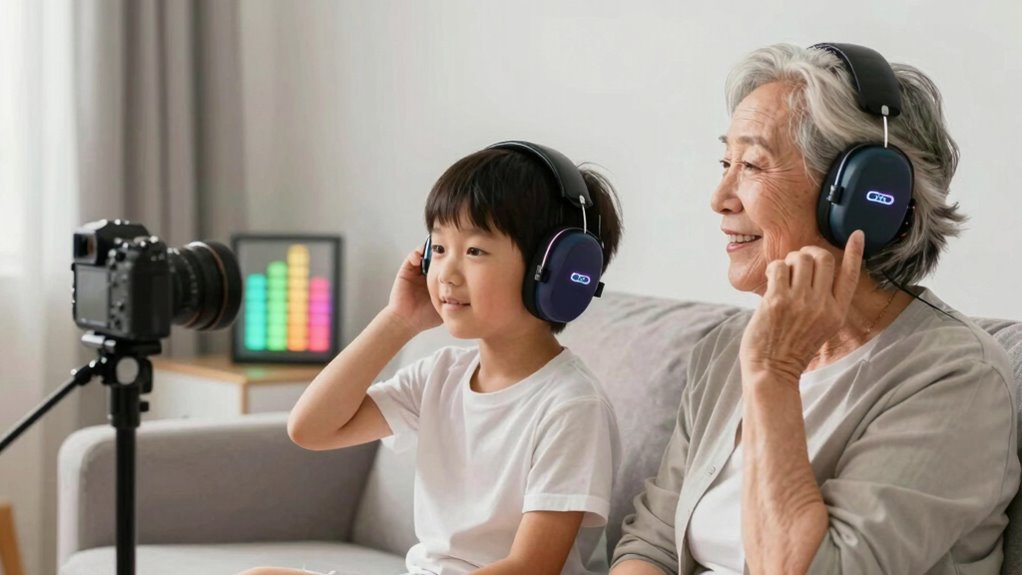
Choosing the right devices and ear protection for kids and seniors is essential to safeguard their hearing without compromising comfort. For children, noise-canceling headphones designed for their smaller heads help reduce loud environments during music therapy or sound therapy sessions. Look for models with volume limits to prevent damage. Seniors benefit from earplugs or hearing protection that filters noise while allowing clear communication. Specialized ear protection can enhance participation in sound therapy, making it more effective and comfortable. Consider devices that are lightweight, adjustable, and easy to use. High-quality options ensure safety without sacrificing comfort, which encourages consistent use. Proper protection supports healthy hearing, enabling ongoing participation in therapeutic activities and daily life without risking damage from excessively loud sounds.
Setting Sound Limits: Practical Tools and Strategies
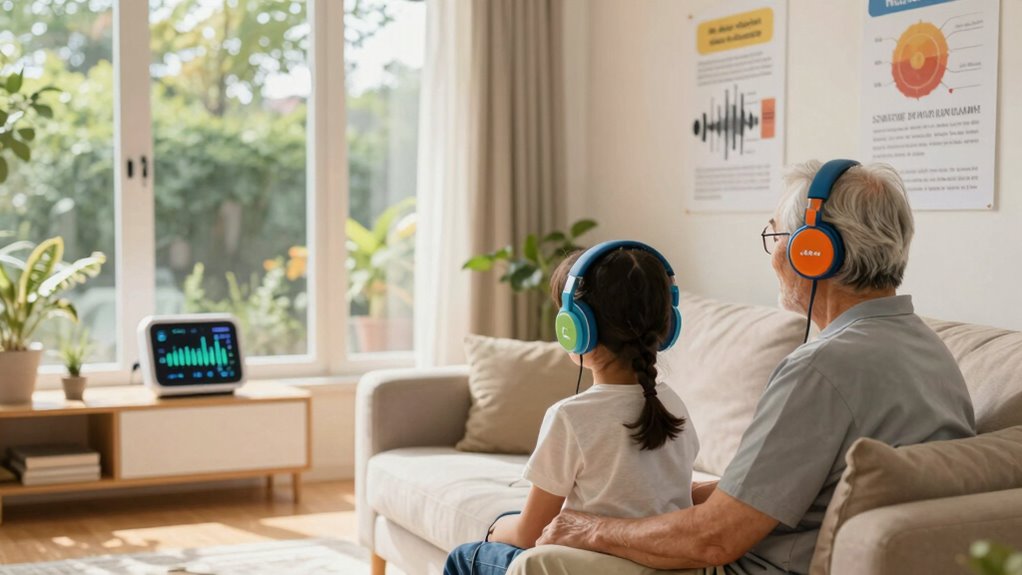
Setting sound limits is a essential step in protecting hearing health, especially for kids and seniors. To do this effectively, use practical tools like sound level meters or apps to monitor volume. Incorporate noise canceling headphones or earplugs during loud activities to reduce exposure. When considering sound therapy, choose environments with controlled sound levels to promote healing without risking damage. Establish clear boundaries for daily noise levels, and communicate these limits to family members. Regularly check and adjust sound limits based on individual sensitivities and activity contexts. By actively managing sound exposure, you create a safer auditory environment. These strategies help prevent noise-induced hearing loss and support overall well-being for vulnerable groups.
Educating Families About the Risks of Loud Noise
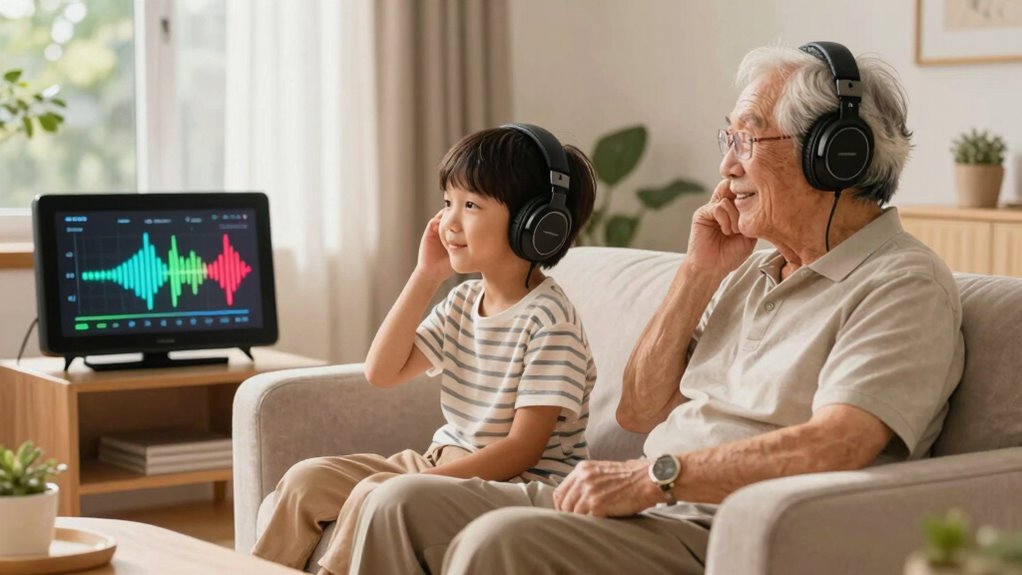
You play a key role in helping your family recognize noise hazards and understand their impact on hearing health. By communicating risks clearly, you can encourage everyone to take safety seriously. Promoting hearing safety starts with education and simple, everyday actions.
Recognize Noise Hazards
Loud noises pose real risks to both kids and elders, making it essential for families to recognize potential hazards. Prolonged exposure to noise pollution can lead to hearing impairment, which may be subtle initially but worsens over time. Recognizing noise hazards involves understanding common sources and their impact on health.
- Situations with continuous or sudden loud sounds, like concerts or lawnmowers
- Environments with poor acoustics or high ambient noise levels
- Devices with high volume settings, such as headphones or speakers
Being aware of these hazards helps you take proactive steps to minimize risks. Protecting your loved ones from noise pollution is vital to preserving their hearing health and overall well-being.
Communicate Risks Clearly
Educating families about the dangers of loud noise is essential to protect their hearing health. When you discuss noise pollution, explain how everyday environments—like concerts or loud streets—can damage hearing over time. Address musical preferences by emphasizing that listening at high volumes, especially through headphones, poses risks, even if it feels enjoyable. Make it clear that noise exposure isn’t just about sudden loud sounds but also prolonged exposure to moderate levels. Use simple language to highlight how loud environments can lead to hearing loss or damage without immediate pain or discomfort. When families understand these risks, they’re more likely to take proactive steps—like lowering volume levels or limiting exposure—to safeguard their loved ones’ hearing health.
Promote Hearing Safety
Understanding the risks of loud noise is essential for protecting your family’s hearing health. Educating yourself and your loved ones about noise awareness helps prevent long-term damage. You can promote hearing safety by setting clear rules for acceptable noise levels and encouraging the use of hearing protection in loud environments. Share information about how prolonged exposure to high decibels can cause irreversible hearing loss. Additionally, discuss the importance of regular hearing checkups for early detection of issues. To deepen understanding, consider these points:
- Recognize common sources of harmful noise in daily life
- Understand safe exposure durations at different decibel levels
- Emphasize proactive measures, like using earplugs or noise-canceling devices
When to Seek Professional Help for Hearing Concerns

If you notice your child or an elderly loved one frequently asking for things to be repeated or turning up the volume on devices, it’s time to contemplate seeking professional help. Persistent hearing difficulties may indicate hearing loss caused by noise exposure or other factors. Early intervention is essential to prevent further damage and improve quality of life. A hearing specialist can assess whether hearing loss is present and recommend appropriate solutions, such as hearing aids or other treatments. Don’t ignore signs like difficulty understanding conversations or missing parts of speech. Addressing these concerns promptly ensures better hearing health and helps prevent ongoing communication struggles. If you’re unsure, consult a professional to get an accurate diagnosis and tailored advice.
Frequently Asked Questions
How Can I Measure Sound Levels Accurately at Home?
You can measure sound levels accurately at home using sound level meters or smartphone apps. Sound level meters are dedicated devices that provide precise readings, ideal for monitoring noise in different environments. Alternatively, smartphone apps equipped with microphones can also give reliable measurements if calibrated properly. Just verify your device or app is accurate and follow instructions for proper placement, so you get consistent, trustworthy results.
Are There Specific Age Guidelines for Safe Noise Exposure?
Yes, there are age-related hearing loss concerns, and noise exposure guidelines vary by age. For kids, keep sound levels below 85 decibels to prevent damage, and for elders, be mindful of increased vulnerability to noise-induced hearing loss. Follow recommended noise exposure guidelines to safeguard your hearing at any age. Regularly measure sound levels around your home and adjust volume to ensure safety for everyone.
What Signs Indicate Hearing Damage in Children and Elders?
Watch for warning signs like ringing, muffled sounds, or difficulty hearing, which could be early indicators of hearing damage in children and elders. If they complain about constant noise or struggle to follow conversations, it’s time for quick action. Recognizing these symptoms early permits early intervention, helping prevent permanent hearing loss. Stay attentive, because addressing issues early ensures healthier hearing and happier, more harmonious lives.
Can Everyday Household Noises Harm Hearing Over Time?
Yes, everyday household noises can harm your hearing over time if you’re exposed to high noise levels regularly. Noise pollution from loud appliances, music, or vacuum cleaners can cause gradual damage. To protect your hearing, practice hearing conservation by limiting exposure to loud sounds and using ear protection when necessary. Maintaining safe sound levels helps prevent long-term hearing loss and preserves your overall auditory health.
How Often Should Hearing Check-Ups Be Scheduled for Kids and Seniors?
You should schedule hearing check-ups for kids and seniors annually to monitor noise-induced hearing loss risks. Regular screenings help catch issues early, especially if they’re exposed to loud environments. Encourage hearing protection during noisy activities to prevent damage. If you notice signs of hearing decline, don’t wait—consult a specialist promptly. Consistent check-ups and proper noise protection are key to maintaining healthy hearing over time.
Conclusion
By staying aware of safe sound levels and taking simple precautions, you can prevent long-term hearing damage for your kids and elders. Don’t wait until it’s too late—protect their hearing before noise becomes a wolf in sheep’s clothing. Use the right devices, set limits, and educate your family on the risks. Remember, it’s better to be safe than sorry, so keep noise levels in check and give everyone a chance to hear life’s precious moments clearly.