
WAV, MP3, and FLAC are common audio formats, each with unique strengths. WAV files offer uncompressed, high-quality sound ideal for detailed analysis but are large in size. MP3 files are compressed for smaller size, perfect for easy sharing and playback on most devices, but they sacrifice some sound clarity. FLAC balances quality and size by using lossless compression, making it a smart choice for archiving. Understanding these differences helps you choose the best format for your language recordings and playback needs.
Key Takeaways
- WAV files provide uncompressed, high-fidelity audio ideal for precise pronunciation feedback and detailed language analysis.
- MP3 compresses audio lossily, resulting in smaller files suitable for casual listening and storage-constrained devices.
- FLAC offers lossless compression, maintaining original sound quality while reducing file size, perfect for language archiving.
- Compatibility varies: MP3 is universally supported; WAV is favored in professional settings; FLAC may face limited device support.
- Choose WAV or FLAC for accuracy and long-term preservation; select MP3 for convenience and quick sharing.
WAV high fidelity audio recorder
As an affiliate, we earn on qualifying purchases.
As an affiliate, we earn on qualifying purchases.
What Are WAV, MP3, and FLAC Audio Formats?

When choosing an audio format, it’s important to understand the differences between WAV, MP3, and FLAC. An audio format comparison reveals how each handles file compression techniques. WAV files store uncompressed audio, offering the highest quality but resulting in large file sizes. MP3 uses lossy compression, reducing file size considerably by discarding some audio data, which can affect sound fidelity. FLAC employs lossless compression, shrinking files without sacrificing audio quality, making it ideal for high-quality storage. Your choice depends on whether you prioritize sound quality, storage space, or compatibility. Understanding these distinctions helps you select the right format for your needs, whether for professional audio, casual listening, or archiving. Knowing how each format applies different file compression techniques is key to making an informed decision. Additionally, audio format compatibility plays a significant role in ensuring your files can be played across various devices and platforms.
FLAC lossless audio player
As an affiliate, we earn on qualifying purchases.
As an affiliate, we earn on qualifying purchases.
How Do WAV, MP3, and FLAC Differ in Sound and File Size?
WAV, MP3, and FLAC vary markedly in sound quality and file size, affecting how you listen and store music. MP3s are compressed for smaller files but sacrifice some audio detail, while WAV files are uncompressed and larger, offering pristine sound. FLAC strikes a balance, providing lossless quality with smaller sizes than WAV, making it suitable for different use cases. Additionally, understanding audio fidelity helps in choosing the right format for your specific needs. Knowing how bit rate impacts sound quality and file size can further assist in selecting the optimal format for your listening preferences. Moreover, compression techniques play a crucial role in determining the final audio experience and storage requirements. Recognizing the importance of audio codecs can also influence how effectively audio is encoded and decoded across formats.
Sound Quality Differences
Have you ever wondered how different audio file formats impact sound quality and file size? The choice among WAV, MP3, and FLAC affects your listening experience, especially in terms of audio clarity. WAV files offer the highest sound quality because they contain uncompressed audio, preserving every detail, but they require significant storage space. FLAC provides lossless compression, maintaining audio fidelity while reducing file size, making it ideal for audiophiles. MP3, on the other hand, uses lossy compression, which sacrifices some audio details for smaller files. Additionally, file format compatibility varies, and audio resolution options differ across formats, influencing how well they reproduce sound. Your decision depends on balancing sound quality needs with storage and device compatibility.
Compression and Size
Understanding how different audio file formats manage compression helps you see the trade-offs between sound quality and file size. WAV files use uncompressed audio, resulting in larger file sizes but preserving original sound quality. MP3 employs lossy audio compression, markedly reducing file size at the expense of some sound detail. FLAC uses lossless compression, shrinking file size compared to WAV while maintaining perfect audio quality. The importance of file size varies based on your needs: smaller files are easier to store and transfer, but may sacrifice audio fidelity. Knowing how audio compression affects file size helps you choose the right format for your priorities—whether you favor pristine sound or space efficiency. Balancing sound quality and file size is key in selecting the best format for your language audio projects.
Use Case Suitability
Choosing the right audio format depends on your specific needs for sound quality and file size. WAV offers high fidelity and broad file format compatibility but results in large files, making it ideal for professional recordings. MP3’s compression reduces file size markedly, though it introduces audio format limitations with some quality loss, suitable for casual listening and storage. FLAC provides lossless compression, preserving sound quality while saving space, perfect for archiving. Understanding regional flavors and insights can also help in selecting formats that best match your intended use and audience preferences.
MP3 portable music player
As an affiliate, we earn on qualifying purchases.
As an affiliate, we earn on qualifying purchases.
Which Format Is Best for Language Recording and Playback?

When choosing a format for language recording and playback, you need to balance audio quality, storage needs, and device compatibility. Higher quality formats provide clearer sound but may require more space and bandwidth. Consider what matters most for your use—whether it’s pristine sound, ease of access, or saving storage—to pick the best option. Understanding audio formats can also help you make more informed choices based on how sound relates to deeper meanings and perceptions. Additionally, compression methods can significantly impact the balance between quality and file size, influencing your overall listening experience. Exploring how different formats preserve sound fidelity can further guide your selection process, especially when considering the importance of audio clarity in language learning and comprehension.
Audio Quality Considerations
Selecting the right audio format is vital when recording and playing back language material, as it directly impacts clarity and fidelity. Higher audio bitrate generally means better sound quality, capturing speech nuances accurately. Consider these points:
- If you prioritize pristine audio clarity, choose formats like WAV or FLAC that minimize file compression.
- For balanced quality and smaller files, MP3 at a high bitrate offers a good compromise.
- Be aware that excessive file compression reduces audio fidelity, potentially obscuring subtle pronunciation details essential for language learning. Understanding how compression algorithms work can help in selecting formats that preserve important speech features.
- Understanding the role of audio bitrate helps in choosing the best format for your language recordings and playback needs.
- Additionally, knowing how compression algorithms work can assist in selecting formats that preserve important speech features.
Ultimately, your choice depends on your needs: uncompromised quality or manageable file sizes. Recognizing how audio bitrate affects clarity helps guarantee your recordings remain clear and effective, regardless of the format you select.
Storage and Bandwidth Needs
Since storage capacity and bandwidth are limited resources, it’s important to pick audio formats that strike a balance between quality and file size. MP3 files are known for their small size due to adjustable bitrate settings, making them ideal for limited storage and efficient streaming. You can optimize playback by adjusting bitrate, trading off some quality for reduced file size. FLAC offers larger files but remains more storage-friendly than WAV, as it compresses audio without losing quality, which helps reduce bandwidth demands during streaming. WAV files, being uncompressed, require significant storage and bandwidth, limiting their practicality for large-scale storage or streaming. When choosing a format, consider your needs for bitrate adjustments and streaming compatibility to ensure smooth playback without overtaxing your resources. Additionally, understanding the audio compression process can help you make more informed decisions about which format best suits your specific needs.
Compatibility and Accessibility
Which audio format offers the best compatibility for recording and playing back language files across different devices and platforms? MP3 stands out because of its widespread file format compatibility, making it easier to access on nearly any device. However, accessibility challenges can arise with formats like FLAC and WAV, which may not be supported everywhere. Consider these points:
- MP3’s universal compatibility ensures your language recordings are accessible anytime, anywhere.
- WAV files, while high quality, might face accessibility challenges due to limited device support.
- FLAC offers excellent quality but can struggle with compatibility on older or simpler devices.
- Understanding audio format compatibility can help you choose the best option for your specific needs.
Choosing the right format depends on balancing file format compatibility with your device ecosystem, ensuring your language files are always accessible when you need them most.
audio format converter for WAV FLAC MP3
As an affiliate, we earn on qualifying purchases.
As an affiliate, we earn on qualifying purchases.
Comparing File Sizes and Storage Needs of WAV, MP3, and FLAC
Understanding the differences in file sizes among WAV, MP3, and FLAC helps you make informed choices based on storage needs. WAV files are uncompressed, so they offer high audio quality but require significant storage space. MP3 uses lossy audio compression, drastically reducing file size, which makes it ideal for devices with limited storage. FLAC provides lossless compression, maintaining original quality while reducing size compared to WAV, but it still needs more space than MP3. When considering storage optimization, think about your priorities: if you want minimal storage use, MP3 is your best bet. For the best quality without excessive storage, FLAC strikes a good balance. WAV is suitable when quality is paramount and storage isn’t a concern. Additionally, understanding different file formats can help optimize your audio collection effectively, especially as audio compression techniques continue to evolve. Recognizing the differences in compression methods helps you choose formats aligned with your needs and device capabilities. Moreover, being aware of audio quality preservation techniques ensures you select the best format for your listening experience. As technology advances, new audio codecs are emerging that may further influence your choices.
Which Devices and Platforms Support These Audio Formats?
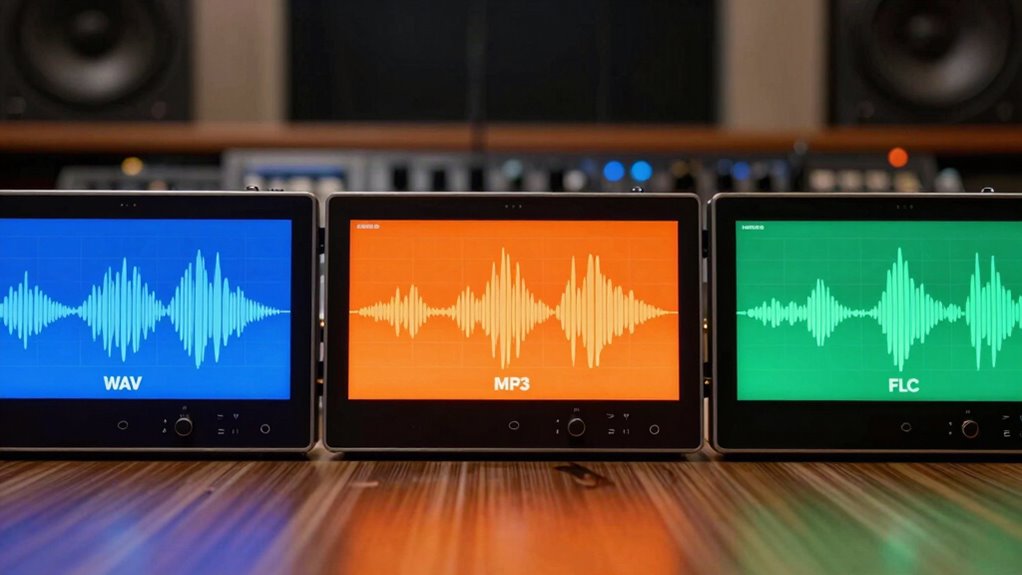
Many devices and platforms support WAV, MP3, and FLAC formats, but compatibility can vary widely. Your device compatibility depends on its hardware and software capabilities, so it’s essential to check platform support before choosing a format. For example, traditional Indonesian decor masks are crafted using traditional techniques and materials, which can influence the digital documentation or display formats used in digital catalogs. Knowing which device or platform you’ll use helps you pick the right format. Always verify platform support to guarantee seamless playback and avoid frustration, especially if you need reliable access for language learning or recording. Additionally, understanding website performance metrics helps ensure your audio files are stored and transmitted securely across different devices and platforms.
When Should You Use WAV Files for Language Learning and Recording?
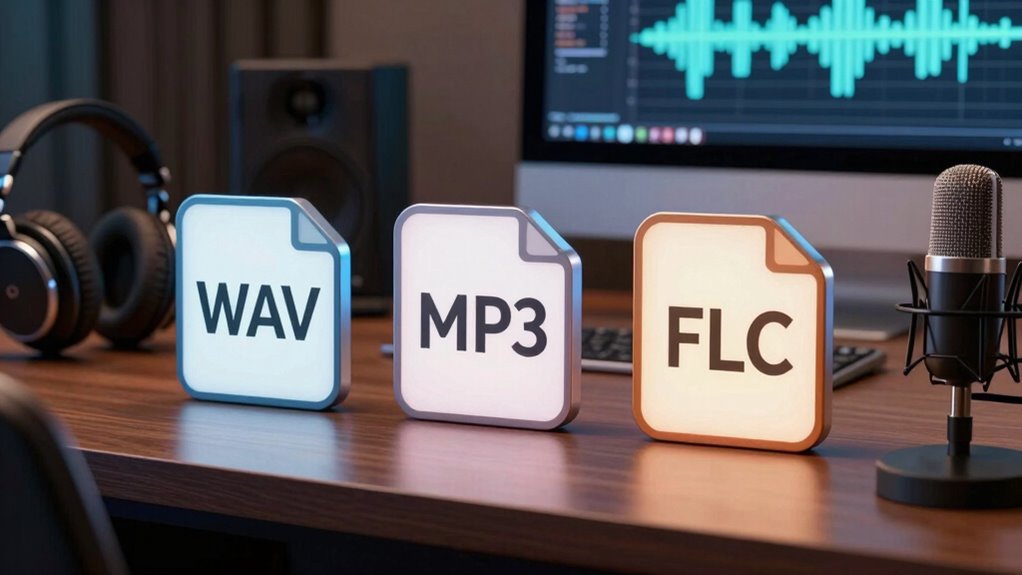
If you need the highest audio fidelity for clear pronunciation and accurate feedback, WAV files are a great choice. They also offer more editing flexibility if you want to adjust recordings later. Just keep in mind, WAV files take up more storage space, so consider your device’s capacity before choosing this format.
Highest Audio Fidelity
Ever wondered when it’s best to use WAV files for language learning and recording? If you prioritize highest audio fidelity, WAV is your go-to. Unlike compressed formats, WAV files are uncompressed, capturing every nuance without loss. This makes them ideal when accuracy matters most. Consider these situations:
- You need pristine audio quality for precise pronunciation analysis.
- You’re recording sessions where detail is essential and compression could hinder clarity.
- You want maximum file compatibility across professional audio tools without sacrificing quality.
While WAV files are larger, they preserve the original sound, making them perfect for detailed review and editing later. Just remember, their lack of audio compression means they demand more storage space. Use WAV when fidelity outweighs convenience.
Editing Flexibility Benefits
Because WAV files preserve all audio details without compression, they also offer unmatched editing flexibility. When you’re working on language learning recordings or refining pronunciation, this format allows you to easily cut, rearrange, or enhance specific segments without losing quality. The lack of compression means you can perform multiple audio edits without degrading sound fidelity, making WAV ideal for detailed audio editing. Format flexibility is another advantage, as WAV files are widely compatible with professional editing software. This compatibility ensures you can seamlessly incorporate your recordings into various projects or adjust them as needed. If your goal involves precise editing, high-quality output, and maximum control, using WAV files for your language audio recordings is the best choice.
Storage Space Considerations
While WAV files offer superior audio quality and editing flexibility, they also consume considerably more storage space than compressed formats like MP3 or AAC. This means you’ll need ample storage, especially when recording lengthy language sessions. Consider these points:
- If you prioritize *data integrity*, WAV guarantees your recordings stay unaltered and true to the original, ideal for detailed language analysis.
- When working with limited storage but still demanding high-quality audio, WAV might be impractical, and compressed formats become more suitable.
- Use WAV files if your goal is professional-level editing or archival, where audio quality outweighs file size concerns, and audio compression isn’t a priority.
Is MP3 the Right Choice for Sharing Language Audio?
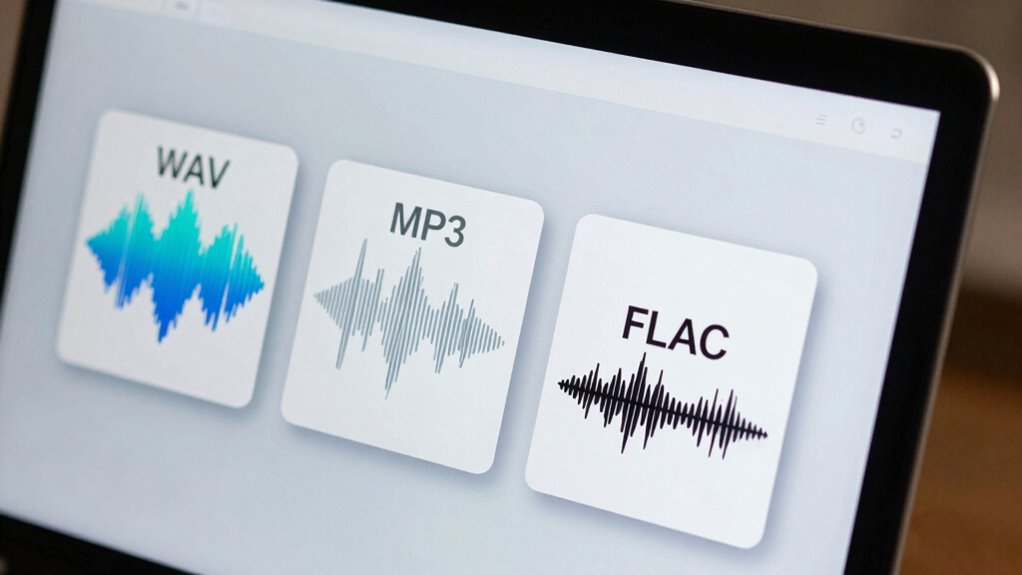
Is MP3 the best format for sharing language audio? For many users, it’s a popular choice because of its efficient audio compression, which reduces file size without drastically sacrificing quality. This makes it easy to share via email, messaging apps, or online platforms. Additionally, MP3 offers broad file compatibility, meaning almost any device or media player can play your recordings seamlessly. However, keep in mind that the compression process can sometimes lead to a loss of subtle audio details important for language learning or linguistic analysis. If high fidelity isn’t your top priority, MP3 provides a convenient balance between manageable file sizes and acceptable sound quality. But for professional or archival purposes, other formats might serve you better.
Why Choose FLAC for Professional Linguistic Archiving?
For professional linguistic archiving, preserving audio quality is paramount, and this is where FLAC (Free Lossless Audio Codec) excels. Unlike other formats, FLAC offers lossless audio compression, ensuring your recordings stay pristine without sacrificing quality. You’ll appreciate that:
- Your archive remains faithful to the original recording, capturing every nuance and detail.
- FLAC’s open-source nature guarantees long-term file compatibility, avoiding obsolescence.
- You can store large files confidently, knowing the integrity of your data is maintained without degradation.
Choosing FLAC means you prioritize accuracy and trust in your archive. Its efficient audio compression minimizes storage needs without losing clarity. This combination makes FLAC ideal for professional linguistic archiving, safeguarding your valuable recordings for the future.
How to Manage and Convert Between Audio Formats Safely
Managing and converting between audio formats requires careful attention to maintain quality and prevent data loss. First, verify your software supports the audio format compatibility needed for your files. Use trusted, lossless conversion tools to avoid degrading audio quality during the process. Always keep original copies as backups before making any changes, supporting digital audio preservation. When converting, choose the appropriate format based on your intended use—whether for editing, archiving, or sharing. Avoid multiple conversions, which can accumulate quality loss. Check settings to preserve bitrate and sample rate, especially when working with formats like WAV or FLAC. By following these steps, you safeguard your audio’s integrity and guarantee smooth transitions between formats without compromising sound fidelity or data.
Final Tips: Picking the Best Audio Format for Your Language Projects
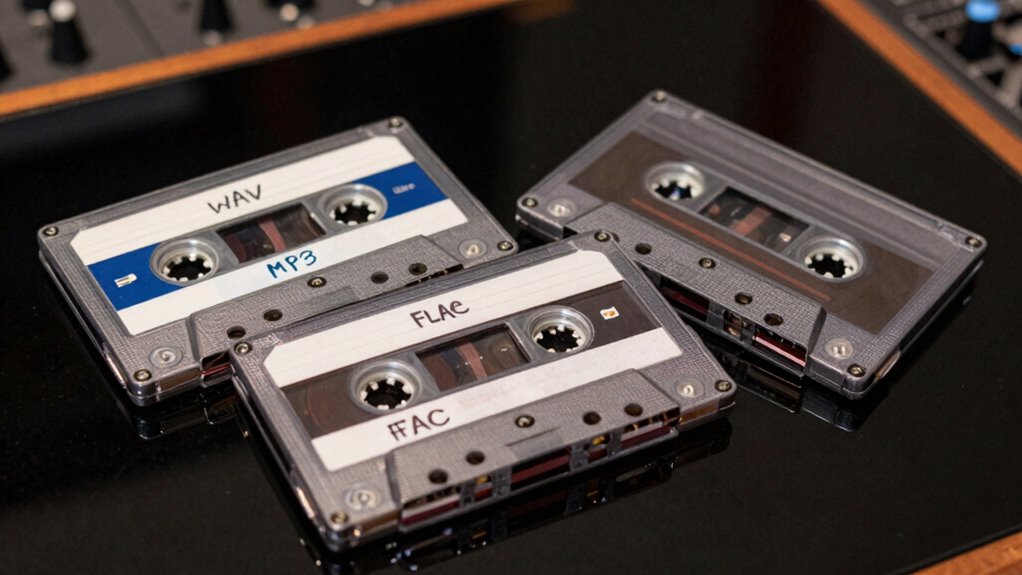
Choosing the right audio format for your language projects depends on your specific goals and requirements. Understanding the audio format differences helps you make informed decisions that align with your language project priorities. To choose wisely, consider these key points:
- Audio quality vs. file size: Decide if crystal-clear sound is essential or if smaller files are more practical.
- Compatibility: Ensure your target devices and platforms support the format you select.
- Editing and preservation: Opt for formats like WAV or FLAC if you need high fidelity for editing or archiving, rather than compressed options like MP3.
Balancing these factors guarantees your project’s audio is both effective and efficient, giving your language learning or preservation efforts the best foundation.
Frequently Asked Questions
Can I Edit WAV, MP3, or FLAC Files Without Quality Loss?
You can edit WAV and FLAC files without quality loss because they support lossless editing, preserving original audio quality. However, editing MP3 files often results in quality degradation due to lossy compression. To avoid loss during format conversion, stick to lossless formats like WAV or FLAC. Always use dedicated audio editing software that supports lossless editing, so your audio remains high-quality throughout your editing process.
How Do Different Compression Methods Affect Language Audio Clarity?
Different compression methods markedly impact language audio clarity by introducing compression artifacts that can muddy speech details. Lossy formats like MP3 often reduce audio fidelity, causing subtle distortions and making it harder to understand speech clearly. In contrast, lossless formats like WAV and FLAC preserve original audio quality, maintaining clarity and ensuring your language recordings remain intelligible without unwanted artifacts. Choose your format based on the balance you need between file size and quality.
Are There Privacy Concerns When Sharing Language Recordings in These Formats?
When sharing language recordings, privacy implications can arise, especially if sensitive data is involved. You should consider data encryption to protect your files from unauthorized access. Using secure sharing platforms and avoiding unencrypted formats help safeguard your recordings. Be aware that some formats might reveal metadata, which could compromise privacy. Always verify the security measures in place to guarantee your recordings stay confidential and private.
What Are the Best Backup Practices for Large FLAC Language Archives?
Think of your FLAC language archive as a treasure chest—you’ll want to safeguard it well. Implement robust backup practices with storage redundancy across multiple drives or cloud services. Regularly verify your backups and manage metadata carefully to keep track of files. Automate backups to prevent human error, and consider version control for updates. This way, your valuable recordings stay safe, accessible, and organized for years to come.
How Do I Choose the Right Format for Online Language Course Distribution?
To select the right format for online language course distribution, consider your priorities. If you want the best audio quality, go with FLAC, but verify your platform supports it. For broad file compatibility and smaller sizes, MP3 works well, though it sacrifices some quality. WAV offers high audio fidelity but produces large files and may face compatibility issues. Balance your needs for quality and accessibility to pick the best option.
Conclusion
Choosing the right audio format is like finding a trusted friend—you want reliability, quality, and convenience. WAV offers pristine sound but takes up space, MP3 is portable but compromises quality, and FLAC strikes a balance for professional needs. Consider your device compatibility and storage limits. By selecting wisely, you guarantee your language recordings stay clear and accessible, like a lighthouse guiding ships safely home through the fog of digital clutter.