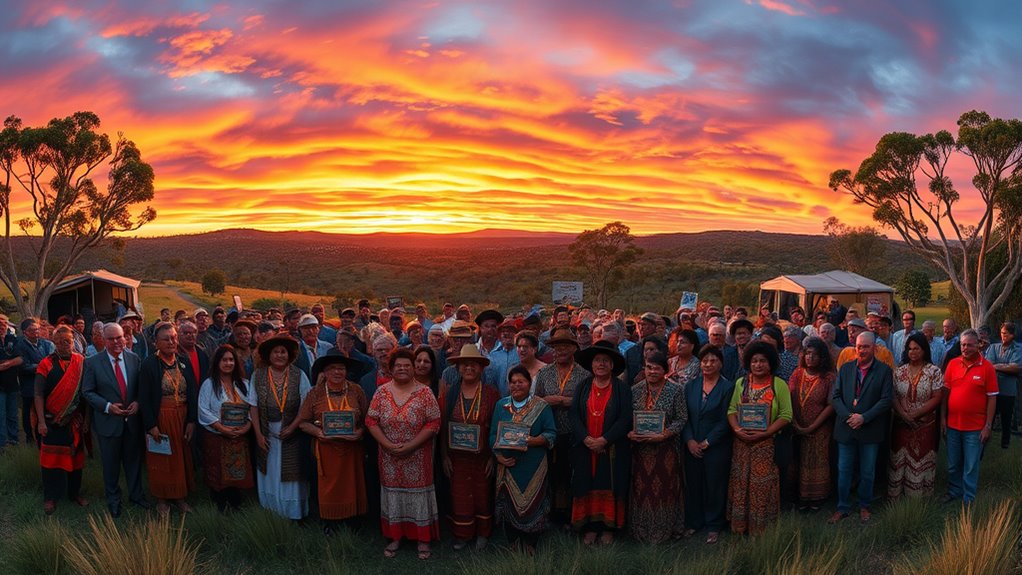

Treaty movements are gaining momentum across Australian states like Victoria and Queensland as Indigenous communities push for formal agreements that recognize their sovereignty, land, and culture. In Victoria, discussions focus on respecting sovereignty through inclusive negotiations, while Queensland emphasizes partnerships and practical recognition of land rights. These efforts extend beyond these states, aiming for meaningful reconciliation and stronger relationships between Indigenous peoples and governments nationwide. To discover how these initiatives are shaping Australia’s future, keep exploring this important movement.
Key Takeaways
- Treaty movements are gaining momentum across Australian states, focusing on reconciliation and Indigenous sovereignty recognition.
- Victoria has made significant progress with community engagement and formal treaty discussions involving Indigenous leaders.
- Queensland emphasizes partnership, respect, and practical recognition of land rights, cultural preservation, and social justice.
- Broader state and national efforts aim to redefine relationships through negotiations and community-led initiatives.
- The overarching goal is Australia’s reconciliation through acknowledgment of Indigenous rights and sovereignty across all states.

Across Australian states, treaty movements have gained momentum as communities and governments recognize the importance of addressing historical injustices and fostering reconciliation. You’re part of a movement that pushes for recognition of Indigenous sovereignty, understanding that treaties are key to achieving justice and respect for First Nations peoples. These efforts aim to establish formal agreements that acknowledge the unique status of Indigenous peoples and their connection to land, language, and culture. You see treaty implementation as a crucial step toward healing past wounds, providing a foundation for shared decision-making, and empowering communities to have a say in matters affecting their lives.
Treaties are essential for justice, recognition, and empowering Indigenous communities across Australia.
In Victoria, treaty discussions have advanced considerably, with Indigenous leaders advocating for a formal process that recognizes sovereignty while respecting existing legal frameworks. You understand that treaty implementation in Victoria isn’t just about land rights; it’s about acknowledging the deep history and ongoing connection of First Nations peoples to their lands. You’re aware that the Victorian government has committed to a treaty process that involves consultation, negotiation, and ultimately, a formal agreement that reflects Indigenous priorities. This process aims to move beyond symbolic gestures and create concrete pathways for Indigenous self-determination, ensuring their voices are heard at every stage. You also recognize that effective community engagement is essential to fostering trust and ensuring the treaty process is inclusive and meaningful.
Queensland is also actively engaging in treaty conversations, driven by the recognition that reconciliation requires more than symbolic gestures. You see the push for treaties in Queensland as a step toward recognizing Indigenous sovereignty in practical terms. The state’s approach emphasizes partnership and respect, with communities advocating for agreements that address land rights, cultural preservation, and social justice. You realize that implementing treaties in Queensland involves complex negotiations, balancing Indigenous aspirations with legal and political considerations. Your role in this movement involves supporting efforts that aim to craft treaties that are meaningful and enforceable, helping to lay the groundwork for a future where Indigenous peoples are recognized as sovereign entities within the broader Australian legal landscape.
Beyond Victoria and Queensland, treaty movements are gaining ground in other states and territories, each emphasizing the importance of Indigenous sovereignty and meaningful treaty implementation. You see these efforts as part of a broader push for Australia to reconcile its past by acknowledging the rights and sovereignty of First Nations peoples. Whether through formal negotiations or community-led initiatives, these movements are redefining relationships between Indigenous communities and government. Your involvement in this process underscores the importance of listening, respecting, and acting on the calls for justice. The journey toward treaty implementation is complex, but it’s essential for building an equitable future where Indigenous sovereignty is recognized and upheld across Australia.
Frequently Asked Questions
How Do Treaty Movements Impact Indigenous Sovereignty?
Treaty movements profoundly impact Indigenous sovereignty by strengthening Indigenous rights and promoting cultural recognition. When you support these movements, you’re helping to acknowledge Indigenous peoples’ authority over their lands and cultures. This fosters greater respect and self-determination, empowering communities to preserve their traditions. By advancing treaty processes, you contribute to a future where Indigenous sovereignty is recognized, ensuring their rights and cultural heritage are protected and celebrated within the broader society.
What Are the Main Challenges in Negotiating Treaties?
You face significant challenges in negotiating treaties, especially around resolving historical disputes and establishing clear legal frameworks. These disputes often stem from past injustices and differing perspectives on sovereignty. You must navigate complex legal systems, gain broad political support, and guarantee meaningful participation from Indigenous communities. Balancing these factors requires patience, diplomacy, and a commitment to justice, making treaty negotiations a intricate and sensitive process.
How Do Treaty Movements Influence State and Federal Relations?
You realize treaty movements can subtly reshape state and federal relations by enhancing Indigenous representation and prompting new legal frameworks. These efforts encourage dialogue, foster mutual understanding, and sometimes challenge existing power dynamics. As you engage with these movements, you see how they push governments to work more collaboratively, ensuring Indigenous voices are heard. This dynamic ultimately strengthens relationships across all levels of government, fostering a more inclusive and respectful national conversation.
What Role Do Local Communities Play in Treaty Negotiations?
You play a crucial role in treaty negotiations through community engagement, ensuring your voice is heard and respected. By actively participating, you help preserve your culture and traditions, which strengthens the community’s identity. Your involvement fosters understanding and trust between communities and governments, making negotiations more meaningful. Without your input, the process risks overlooking important cultural perspectives, so your participation is essential for fair and inclusive treaty outcomes.
Are There Successful Examples of Treaties in Other Countries?
You might think successful treaties are rare, but many countries have strong historical precedents of cultural recognition through treaties. For example, New Zealand’s Treaty of Waitangi set a foundation for partnership and acknowledgment of Māori rights. Similarly, Canada’s treaties with Indigenous peoples foster ongoing dialogue and reconciliation. These examples prove that with genuine commitment, treaties can lead to meaningful cultural recognition and positive change.
Conclusion
You see, treaty movements take tenacious turns across territories, transforming traditions and tackling tensions. By bridging boundaries and building bonds, you can better understand the bold, burgeoning push for recognition. As voices voice their visions, your awareness awakens to the urgency of unity. Remember, reconciliation requires resilience, respect, and real change. So, seize this stirring, significant shift—stand with the stories, support the strides, and stay sensitive to the sovereign spirit shaping Australia’s future.