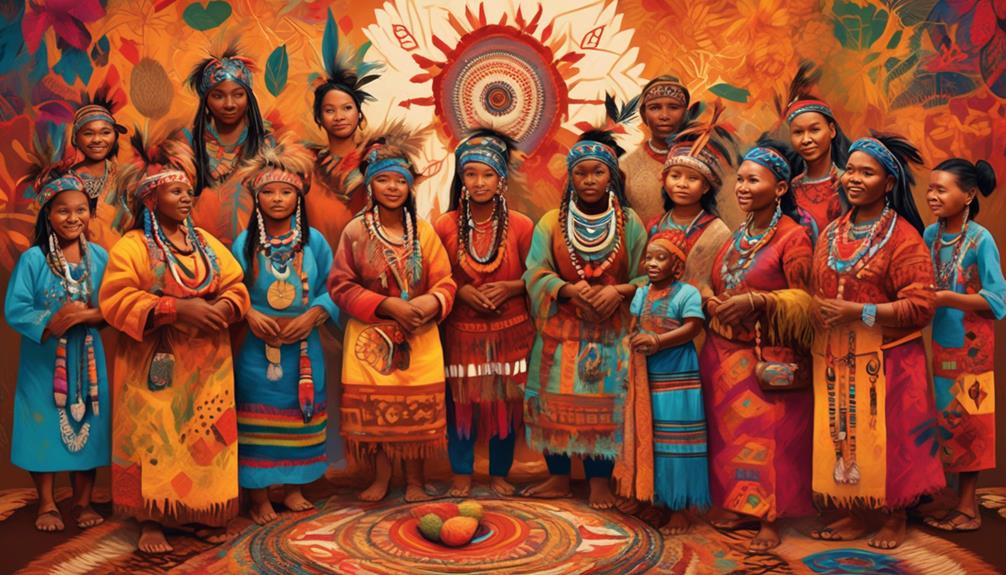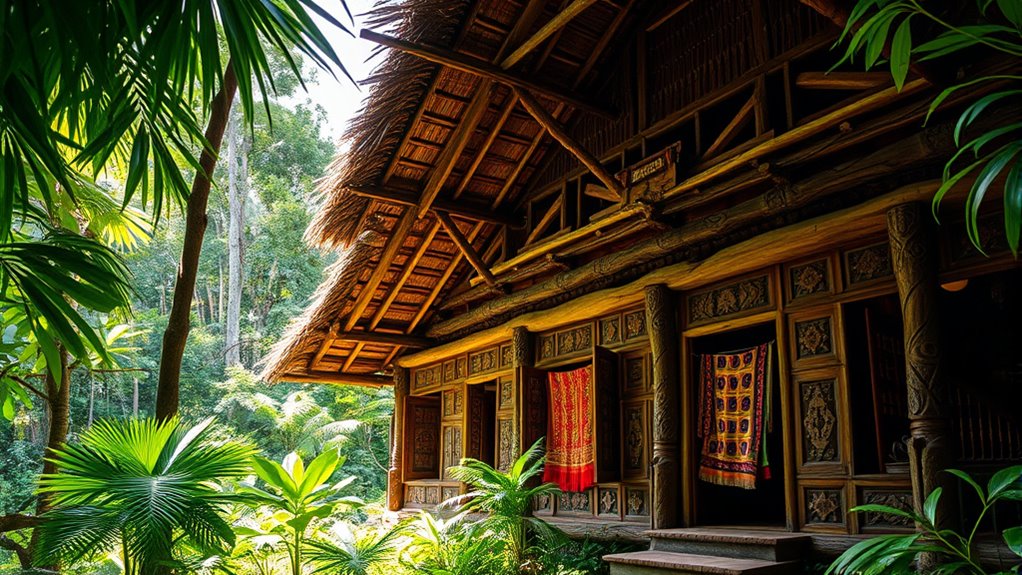

Indigenous architecture helps you create spaces that genuinely mirror cultural identity and values. You can incorporate local materials, respecting environmental sustainability and blending structures seamlessly into the landscape. By focusing on community needs, you design for social cohesion and shared traditions. Elements like symbolic features and sacred orientations tell stories and honor heritage. Embracing these principles allows you to craft meaningful spaces rooted in natural harmony, revealing more about this rich tradition as you explore further.
Key Takeaways
- Indigenous architecture incorporates cultural symbols, storytelling, and spiritual beliefs into design elements and spatial arrangements.
- Use of local, sustainable materials reflects environmental harmony and respects the community’s natural resources.
- Design layouts promote social cohesion through communal spaces and arrangements that emphasize unity and social hierarchy.
- Structures are aligned with celestial patterns or sacred landmarks, embedding spiritual and cultural significance.
- Architecture serves as a physical expression of collective identity, history, and cultural values across generations.
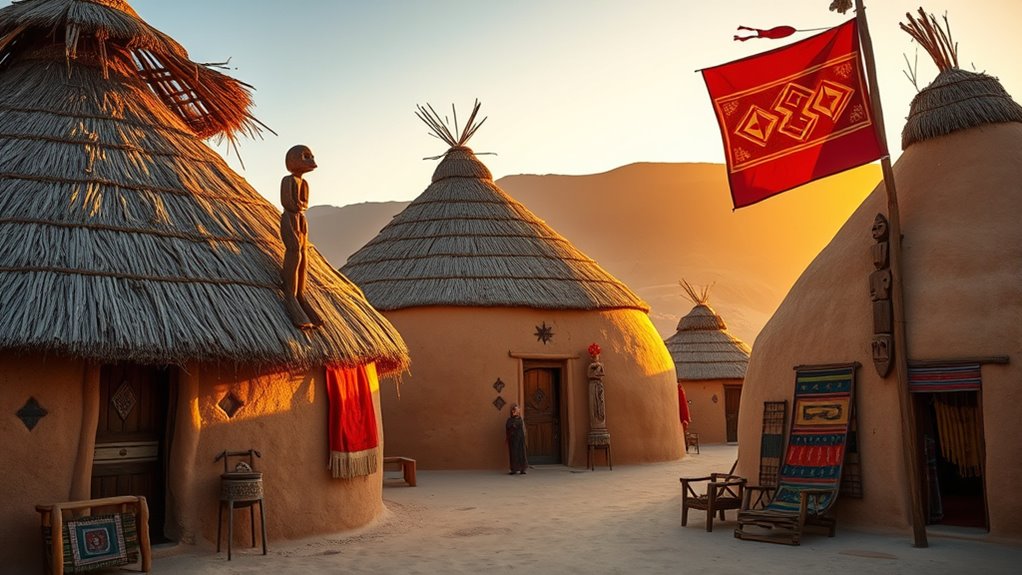
Have you ever wondered how indigenous communities design their architecture to reflect their culture, environment, and traditions? It’s a fascinating process that goes beyond mere construction; it’s a deliberate expression of identity, history, and values. These communities often prioritize sustainable practices, utilizing local materials and building techniques that honor their environment. Instead of importing resources from afar, they harness what nature provides—bamboo, clay, wood, or stone—ensuring their structures blend seamlessly into the landscape. This approach not only reduces environmental impact but also sustains local ecosystems, reinforcing a deep respect for nature that’s embedded in their way of life.
Cultural symbolism plays a central role in shaping indigenous architecture. Every element, from the shape of the roofs to the placement of doors, carries meaning. You might notice that certain symbols are embedded in the design, representing spiritual beliefs, ancestral stories, or social hierarchy. For example, in some Native American tribes, the orientation of a dwelling aligns with celestial patterns or sacred landmarks, emphasizing a spiritual connection to the land. In Southeast Asian indigenous communities, intricate carvings and motifs depict mythological beings or stories passed down through generations. These architectural features act as visual narratives, embodying cultural values and histories that are preserved through construction. When you observe these structures, you’re witnessing a physical manifestation of collective memory and identity.
Moreover, indigenous architecture often emphasizes communal living and social cohesion. Structures are designed not just for individual use but to facilitate gatherings, ceremonies, and shared activities. The layout of villages or communal spaces reflects social structures and cultural priorities. For instance, circular arrangements might symbolize unity and equality among community members, while specific building placements denote respect for elders or spiritual leaders. These design choices reinforce social bonds and serve as daily reminders of cultural principles.
In essence, indigenous architecture is a living expression of a community’s relationship with its environment and its history. It’s about more than shelter; it’s a form of storytelling through sustainable practices and cultural symbolism. Recognizing the importance of local materials and their role in these designs helps deepen our appreciation for the ingenuity and resilience of indigenous communities. As you explore these spaces, you gain insight into a worldview that values harmony with nature, reverence for ancestors, and the importance of tradition. Understanding these principles reveals how indigenous structures serve not only functional purposes but also carry profound cultural significance, embodying a collective identity that has persisted through generations.

SABRENT USB C Hub 5-in-1 Docking Station, 10Gbps USB-A & USB-C Ports, 4K HDMI Output, 100W PD Input, 80W Charging, Aluminum USB Hub for Laptops/Phones/Tablets – HDR/HDCP (HB-TG5P)
USB C Ports: Includes 2× USB-C data ports (10Gbps) for peripherals and storage, plus 1× dedicated USB-C Power...
As an affiliate, we earn on qualifying purchases.
Frequently Asked Questions
How Do Indigenous Communities Maintain Cultural Integrity Through Architecture?
You maintain cultural integrity through architecture by incorporating cultural symbolism into your designs, ensuring each structure reflects your heritage. You also prioritize community cohesion, creating spaces that foster social bonds and shared traditions. By blending traditional materials and techniques with modern methods, you honor your culture while adapting to contemporary needs. This approach keeps your cultural identity alive, making your architecture a living expression of your community’s history and values.
What Materials Are Typically Used in Indigenous Architectural Designs?
You typically use traditional crafts and sustainable resources in indigenous architecture. Materials like wood, stone, clay, and natural fibers are common, reflecting local environments and cultural practices. These materials are chosen for their availability and durability, helping to maintain cultural integrity. By using traditional crafts, you preserve artisanal techniques, ensuring that each structure connects deeply with cultural identity and sustainable living practices.
How Does Indigenous Architecture Adapt to Climate Change?
Your indigenous architecture can become a powerful force against climate change by embracing sustainable building practices and enhancing climate resilience. You adapt by using local, natural materials that naturally regulate temperature and withstand harsh weather. Incorporating traditional designs with modern techniques, like passive cooling and rainwater harvesting, helps your structures stay resilient. This approach not only preserves culture but also creates buildings that are as enduring as the mountains themselves.
Are Indigenous Architectural Practices Recognized Globally?
You’ll find that indigenous architectural practices are gaining cultural recognition and increasing global visibility. As more people appreciate these designs’ unique connection to culture and sustainability, they’re featured in international exhibitions, academic discussions, and sustainable architecture projects. This recognition helps preserve indigenous traditions while inspiring innovative, eco-friendly building methods worldwide. Your awareness of these practices contributes to fostering respect and understanding, ensuring indigenous architecture receives the acknowledgment it rightfully deserves on the global stage.
How Can Non-Indigenous Architects Incorporate Indigenous Design Principles?
You can incorporate indigenous design principles by embracing cultural symbolism and using sustainable materials. Research the specific cultural meanings behind symbols and patterns to embed authenticity into your designs. Opt for eco-friendly, locally sourced materials that honor traditional practices and reduce environmental impact. Collaborate with indigenous communities to ensure respectful representation and gain valuable insights, creating spaces that celebrate and preserve indigenous culture while meeting modern needs.

Anker USB-C Hub, USBC to 4-Port USBC Adapter, Multiport USB C Splitter, USB 3.2 Display Hub with 100W Max PD & Max 10Gbps Fast Data Transfer for MacBook Pro, iPad, Surface Pro, Dell and More
The Desk Companion: Power your devices, enjoy crisp 4K media, and transfer files at speeds you never thought...
As an affiliate, we earn on qualifying purchases.
Conclusion
Your journey into indigenous architecture reveals a tapestry woven with culture and tradition, like a sacred drum echoing through time. By designing spaces that reflect your heritage, you become the keeper of stories, ensuring they resonate for generations. These structures aren’t just buildings; they’re the heartbeat of a community, a living affirmation to resilience and identity. Embrace this sacred craft, and let your designs be the fire that keeps your culture alive and thriving.

Anker USB C Hub, 8-in-1 5Gbps Data Hub, USB Splitter with 3 USBA and 4 USBC Ports, 100W PD-in, 2-in-1 USB-Connector, for Laptop, MacBook, iPad and More (45W Adapter Included)
8-in-1 Connectivity: Get a powerful combination of 1× 100W USB-C PD-IN port, 4 × 5Gbps USB-C ports, and...
As an affiliate, we earn on qualifying purchases.

USB C Hub 10Gbps,MOKiN USB C Splitter with 4K@60Hz Video Output,100W PD Charging,Data Transfer,USB4 Multiport Dongle for MacBook Pro,iPad Pro and Type-C Devices
【5-in-1 USB C HUB】Expand your connectivity with this high-performance 10Gbps multiport adapter. It features 1USB4 DisplayPort (4K@60Hz, 10Gbps...
As an affiliate, we earn on qualifying purchases.