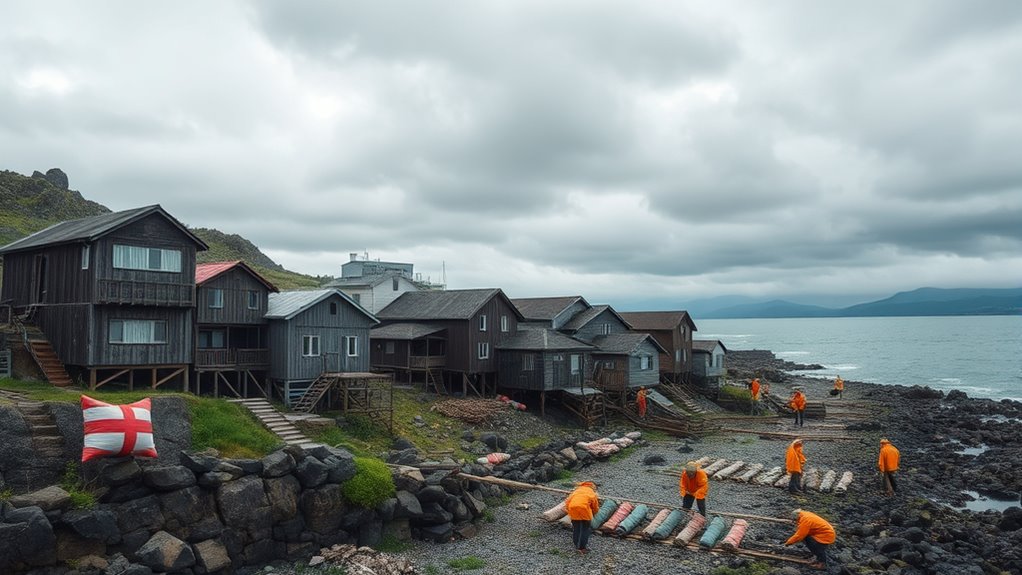

Remote communities face severe climate impacts like rising sea levels, extreme weather, and resource shortages. To adapt and build resilience, communities are turning to renewable energy sources like solar, wind, and small-scale hydro systems. Engaging local residents and creating culturally appropriate solutions help guarantee projects succeed and last. By harnessing traditional knowledge and fostering energy independence, these areas strengthen their ability to withstand climate challenges. Keep exploring to discover how these strategies are transforming remote resilience efforts.
Key Takeaways
- Implementing renewable energy solutions like solar and wind enhances resilience by reducing dependence on imported fuels.
- Engaging local communities ensures culturally appropriate adaptation strategies and promotes long-term sustainability.
- Building local capacity through training creates jobs and empowers residents to maintain and repair renewable systems.
- Addressing climate challenges such as rising sea levels and extreme weather requires integrated, community-driven resilience planning.
- Combining traditional ecological knowledge with modern renewable technologies fosters holistic adaptation and strengthens community resilience.

Remote communities often bear the brunt of climate change, facing harsher weather patterns, rising sea levels, and resource shortages. These challenges threaten daily life and long-term survival, making adaptation essential. One effective way to address these issues is by embracing renewable energy sources. Solar panels, wind turbines, and small-scale hydro systems can reduce reliance on imported fuels, which are often expensive and hard to transport. By harnessing local renewable energy, you can create more resilient power supplies, reduce greenhouse gas emissions, and foster energy independence. But simply installing renewable energy systems isn’t enough—you need active community engagement to guarantee these solutions meet local needs and gain widespread support.
Engaging the community begins with understanding local priorities, traditions, and environmental conditions. When residents participate in planning and decision-making, they’re more likely to support and maintain renewable energy projects. Education plays a key role here; providing information about the long-term benefits of clean energy can dispel misconceptions and build enthusiasm. Workshops, town hall meetings, and hands-on training sessions empower community members to take ownership of these initiatives. This participatory approach not only boosts project success but also fosters a sense of collective responsibility for climate resilience.
Community involvement and education are key to successful renewable energy projects and climate resilience.
You should also focus on building local capacity. Training residents to install, operate, and repair renewable energy systems creates jobs and reduces dependency on external technicians. This approach ensures the sustainability of projects over time. Additionally, community engagement helps identify unique local challenges and opportunities. For example, if a community faces frequent power outages during storms, localized renewable systems can be designed to operate independently of fragile grid infrastructure. Involving local leaders and organizations ensures that solutions are culturally appropriate and aligned with existing social structures, making implementation smoother. Moreover, incorporating off-grid energy solutions can significantly enhance community resilience by providing reliable power in areas with no access to traditional infrastructure.
Moreover, community engagement extends beyond energy projects. It encourages the sharing of traditional knowledge about local ecosystems, weather patterns, and resource management. Combining this insight with renewable energy initiatives leads to more holistic and effective adaptation strategies. When community members see tangible benefits—such as reliable electricity, reduced costs, and improved safety—they become champions of ongoing climate adaptation efforts. Ultimately, integrating renewable energy with active community engagement empowers remote communities to build resilience, reduce vulnerability, and navigate the uncertainties of climate change more effectively.
solar panel kit for remote communities
As an affiliate, we earn on qualifying purchases.
As an affiliate, we earn on qualifying purchases.
Frequently Asked Questions
How Do Remote Communities Finance Climate Adaptation Projects?
You can finance climate adaptation projects in remote communities through a mix of community funding and international grants. Local residents often contribute funds or resources, while governments and NGOs provide grants to support resilience efforts. Additionally, seeking international grants from organizations dedicated to climate resilience helps cover high costs. Combining these sources allows remote communities to implement essential projects, strengthening their ability to adapt to changing climate conditions effectively.
What Role Do Indigenous Knowledge Systems Play in Resilience?
Indigenous knowledge systems play a crucial role in resilience by guiding you through traditional practices that have stood the test of time. These systems help preserve culture and foster adaptive strategies rooted in cultural preservation. You can see how integrating this wisdom enhances your community’s ability to respond to climate challenges, ensuring sustainable resilience. By valuing these practices, you strengthen your community’s connection to land, culture, and effective adaptation methods.
How Can Technology Improve Infrastructure in Isolated Areas?
You can improve infrastructure in isolated areas by leveraging technology to expand access to renewable energy sources like solar and wind power, reducing reliance on fossil fuels. Implementing smart water management systems helps conserve water and guarantees reliable supply during droughts or heavy rains. These innovations boost resilience, making communities more self-sufficient and better equipped to cope with environmental challenges, ultimately fostering sustainable development in remote regions.
What Are the Mental Health Impacts of Climate Stress in Remote Regions?
You might notice that climate stress takes an emotional toll on you and your community, leading to feelings of anxiety and helplessness. As the environment becomes unpredictable, community anxiety grows, and mental health struggles can intensify. You could experience increased depression, stress, or grief as you cope with the ongoing impacts. Recognizing these emotional challenges is essential for seeking support and fostering resilience in your community during these difficult times.
How Do Policy Changes Affect Local Climate Resilience Initiatives?
Policy changes can either be your ally or your obstacle. When policy barriers exist, they slow down local climate resilience initiatives, making it harder for communities to adapt. Funding challenges further tighten this squeeze, limiting resources for essential projects. You might feel like you’re fighting an uphill battle, but advocating for flexible policies and increased funding can turn the tide, empowering your community to build stronger, more resilient futures.
small wind turbine for off-grid power
As an affiliate, we earn on qualifying purchases.
As an affiliate, we earn on qualifying purchases.
Conclusion
As you witness how remote communities adapt and build resilience, it’s almost like nature and human effort are dancing together in perfect harmony. The unexpected ways they innovate mirror the unpredictable yet beautiful patterns of climate change itself. By supporting these efforts, you become part of a story where resilience and hope collide, creating a coincidence that reminds us all: even in the face of change, unity and ingenuity can lead to a brighter future.
portable hydroelectric generator
As an affiliate, we earn on qualifying purchases.
As an affiliate, we earn on qualifying purchases.
community solar power system
As an affiliate, we earn on qualifying purchases.
As an affiliate, we earn on qualifying purchases.