
TL;DR

Prime made for students and young adults
- Fast, free delivery for dorm and study essentials
- Prime Video and Amazon Music included
- Member-only deals
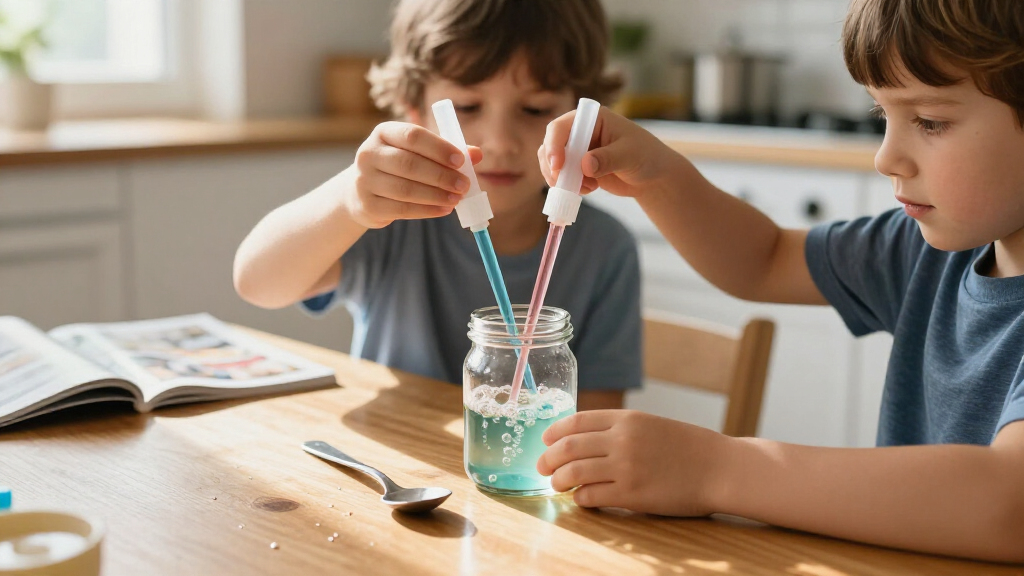
Educational science kits for kids turn ideas in biology, chemistry, physics, engineering, and environmental science into things children can observe, build, and test. Choose a kit that matches your child’s interests and skills, explains what they are exploring, and leaves room to change a variable or try again. Read the safety and supply details before opening the box.
A tiny bulb glows, a seed cracks open, or a paper bridge sags under one more coin—and suddenly science is right there on the table. Educational science kits for kids can turn abstract ideas into things children can touch, change, and talk about.
This guide will help you match a kit to a child’s interests and abilities, check whether its activities offer real room to explore, and make the most of an experiment that goes sideways. You’ll also know what to check for safety, supplies, and adult help before the box arrives.
Start with a child’s interests, such as bugs, weather, circuits, building, or coding.
Check age guidance alongside reading level, hand skills, patience, and supervision needs.
Choose activities that explain an idea and invite children to predict, observe, compare, or change something.
Read the supply and safety details for small parts, protective gear, household materials, batteries, refills, and app requirements.
Treat surprising or failed results as clues for a safe next test, not as proof that the activity was wasted.
See what children can learn by making and testing
Educational science kits for kids give children a hands-on way to explore ideas in subjects such as biology, chemistry, physics, engineering, and environmental science. They can make an invisible or abstract idea easier to grasp by letting a child observe a change, build a model, or compare results. The key is that the child gets to think about what happened, not just watch a grown-up do it.
Take a simple circuit kit: a child connects a battery, wires, and a bulb, then sees the bulb stay dark when one connection slips loose. That small failure gives them something concrete to investigate. A plant kit offers a different kind of lesson: children can watch roots spread through damp soil over several days, rather than treating germination as a word in a book.
A good activity works like a trail through a garden. The instructions show you where to begin, but your child can stop, look closely, and ask why one leaf curled or one structure leaned. Ask what they expected to happen and what they noticed instead. Those questions make prediction, observation, comparison, and explanation part of the fun.
A kit remains a learning aid, not a guarantee of educational progress. A child who loves bugs may spend a long time with a magnifier and a habitat project, while a sibling may lose interest after five minutes. What they enjoy, how the activity is designed, and what you talk about together all shape the experience.
Match the kit to the question your child already asks
Educational science kits for kids span several fields, so start with the kind of question your child already asks. Someone who wants to know why leaves change color may enjoy life science or a plant-growing kit, while a child who takes apart a toy car may prefer engineering, motion, or beginner robotics. A strong match gives children a reason to open the box again after the first activity.
For example, if your child loves puddles, look for a weather or water-themed activity that lets them compare evaporation or test how different materials absorb water. They can make simple observations at home, then connect the results to rain on the walk to school. Everyday examples help ideas stick because children can spot them again outside the kit.
- Life science: Try plant growing, habitats, anatomy, or close-up observation.
- Chemistry: Look for activities about crystals, pH, mixing, or materials, and read the safety details carefully.
- Physics and engineering: Explore circuits, magnets, motion, structures, or simple machines.
- Earth and environmental science: Choose themes such as rocks, soil, weather, water, or renewable energy.
- Coding and robotics: Check whether building comes with beginner programming, an app, or both.
Some kits guide children through a sequence of experiments; others leave more decisions open. Neither format is automatically better. A beginner may enjoy clear steps for building a working circuit, while a more experienced tinkerer may prefer the challenge of designing a bridge that holds more coins than last time.
Check these five details before you buy
Educational science kits for kids are easier to use when the age, activity, and setup fit the child and the household. Check the reading level and hand skills an activity expects, along with the recommended age. Two children of the same age may have very different patience, confidence, or need for help. This matters because a task that is too difficult can turn curiosity into frustration, while one with no meaningful challenge may feel like following a recipe. The goal is support enough to get started and room enough to make decisions.
Before buying, look at the learning purpose and how much choice the activity allows. Instructions that ask a child to predict, observe, and explain offer more than a set of steps that ends with a preset result. For instance, a kit might first help children build a paper tower, then invite them to change its shape and see whether it holds more weight. That extra choice lets them connect a design decision to an outcome; the tradeoff is that results may vary, so the activity needs clear guidance about what to notice.
- Match the skill level: Consider reading, fine-motor skills, patience, and how much adult help the instructions expect. Picture steps can reduce reading demands, but a child may still need help interpreting measurements or handling small pieces.
- Look for a clear idea: Check what each activity is meant to show and whether it prompts observation or prediction. A stated purpose helps you connect the experiment to a bigger idea, while a simple demonstration may be engaging without teaching much beyond the immediate result.
- Check room to experiment: See whether children can change one thing, compare results, or design a test of their own. Open-ended choices can deepen learning, but they also make outcomes less predictable; younger children may benefit from a guided first try before choosing what to change.
- Review the real workload: Count the activities and check setup, cleanup, storage, and whether materials can be reused. A few repeatable experiments may offer more value than many one-time activities, though they ask families to save components and make time to try again.
- Read the safety and supply notes: Look for small parts, protective gear, household materials, batteries, refills, and any app or internet requirement. Missing supplies or digital access can prevent an activity from working as expected, so account for those needs alongside the purchase price.
A kit may promise an afternoon of experiments but require extra cups, batteries, or an adult to prepare each activity. Those details matter on a busy Wednesday: setup that takes longer than the experiment can make a kit hard to use regularly. Clear diagrams, plain-language directions, troubleshooting tips, and explanations for adults can make it much easier to get started.
Read the safety directions before the first activity. Packaging for children does not mean every experiment is suited to unsupervised use.
Think about access and space, too. If your kitchen table is small, a compact microscope activity may fit better than a build that spreads parts across the room. If a child finds dense text tiring, picture-based steps or help from an older sibling can make the same idea easier to explore. The right fit lowers practical barriers, leaving more attention for the question the child is investigating.
Make the experiment more rewarding when results surprise you
Educational science kits for kids work best when the adult helps children explore without racing to supply every answer. You can read a tricky instruction aloud, prepare a safe workspace, or steady a wobbly structure, then let the child take the lead where they can. A question such as “What do you think will happen if we use a wider base?” gives them a next step without giving away the result.
Imagine a paper bridge that droops under three toy cars. Instead of calling the design a failure, ask where it bent and what could change. Your child might fold the paper into an accordion, add a support, or test one car at a time. The tabletop becomes a workshop, and each sagging bridge leaves a clue.
Unexpected results can be useful when children can safely check what happened. Help them compare their steps with the instructions and identify one thing to test next. If a seed does not sprout, they might check whether the soil stayed damp or whether the cup received light. One experiment rarely proves a broad claim, so treat the result as a starting point for another question.
This approach also makes a kit a shared activity instead of a performance. An adult can help with small parts or a difficult setup while giving the child the satisfying job of watching, measuring, and explaining. Some kits need little help; activities involving tools, heat, chemicals, or tiny pieces may call for closer supervision.
Know what app-based and reusable kits actually require
Educational science kits for kids increasingly mix physical experiments with coding, robotics, sensors, or app-based guidance. A digital tutorial can add an animation or help a child program a moving robot, but check whether it needs an account, internet access, a particular device, or extra screen time. Those requirements affect whether the kit will work in your home and whether the digital part adds enough value to justify the setup. A box can look fully hands-on while depending on a phone for its main instructions.
Consider a robotics kit that pairs wheels and sensors with block-based coding. It can let a child build a small vehicle, program it to turn, and see how the sensor changes its path. If your child enjoys screens and building, that combination may hold their attention; if not, a circuit kit with printed instructions could be a better fit. The choice involves a tradeoff: coding can make the machine’s behavior adjustable, but it may take time away from physical building or require troubleshooting an app.
Some manufacturers offer reusable components or refill packs, and some kits connect activities to climate, biodiversity, renewable energy, or water quality. These themes can make an experiment feel close to home, like testing how quickly different surfaces absorb water after a storm. Reusable parts can lower the need to replace materials and make repeat testing easier, though refills may have a cost or be difficult to find. A model can also simplify a complex environmental process; look for explanations that distinguish what the activity demonstrates from what it leaves out, so children do not mistake a small test for a complete account of the natural world.
Product features, supplies, and app requirements can change. Check the manufacturer’s latest product details before you buy, especially if you are relying on a particular certification, refill system, or digital feature.
Choose a kit your child will want to open again
Educational science kits for kids are most useful when they suit the child and the learning goal, whether that goal comes from home curiosity, homeschooling, or a classroom unit. Before you decide, picture an ordinary day: will the activity fit into the available time and space, and can the child do much of it with the help you can offer? A kit that stays in the cupboard cannot spark much exploration. Practical fit matters because interest has to meet opportunity: a fascinating project may still go unused if it requires an hour of setup when you only have twenty minutes.
For a child who is just starting to build, one well-explained activity with reusable parts may beat a box advertising dozens of experiments. Repeating a build lets them compare attempts and see the effect of a change, while a large activity count may offer more variety but less time to revisit each idea. For a classroom, the same kit may need enough materials for a group and directions that work for different reading levels. In either setting, a short conversation after the activity can connect the project to subjects such as math, nature, or design.
When you open the box, let your child choose where to begin if the kit allows it. Put a few supplies within reach, follow the safety directions, and leave time to clean up without a rush. Then ask which result surprised them and what they would change next time. That one question can keep the investigation going after the instructions end, and it helps you see whether the kit’s pace and challenge are right for another session.
Frequently Asked Questions
What age are science kits suitable for?
Follow the maker’s age guidance, then check the reading, hand skills, and patience the activities require. Children of the same age can need different amounts of help, especially with setup or small parts.
Are science kits safe for children to use alone?
Safety depends on the activity and materials, so read the warnings and instructions before starting. Use any specified protective equipment and supervise as directed; an age label alone does not tell you whether a child can work independently.
What should I look for when choosing a science kit?
Start with the child’s interests and abilities, then check what the activities teach and whether they leave room to experiment. Also review the number of activities, reusable supplies, extra materials, cleanup, safety notes, and adult help required.
Do science kits need an adult to help?
Many children benefit from help reading instructions, preparing materials, or handling a tricky step. You can support the activity and ask questions while letting the child do as much as is safe and manageable.
What if the experiment does not work?
First, check the instructions and materials together, then ask what changed and what you could test next. A result that differs from the prediction can give children a new question to investigate.
Conclusion
Choose a kit that fits your child’s curiosity, skills, and your real-life setup, then give them room to test an idea and explain what they see. When a paper bridge buckles or a bulb stays dark, the next question can be the best part of the afternoon.
Halloween Picks
halloween
As an affiliate, we earn on qualifying purchases.