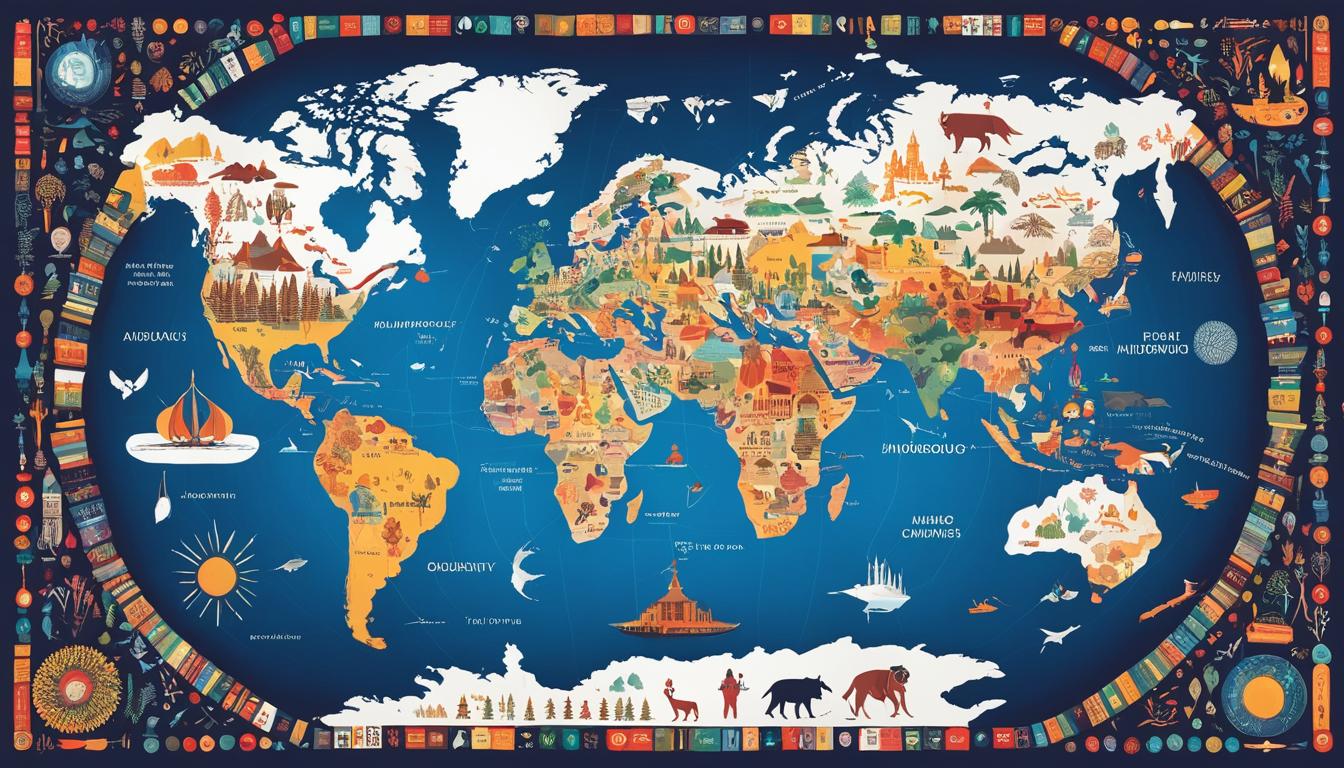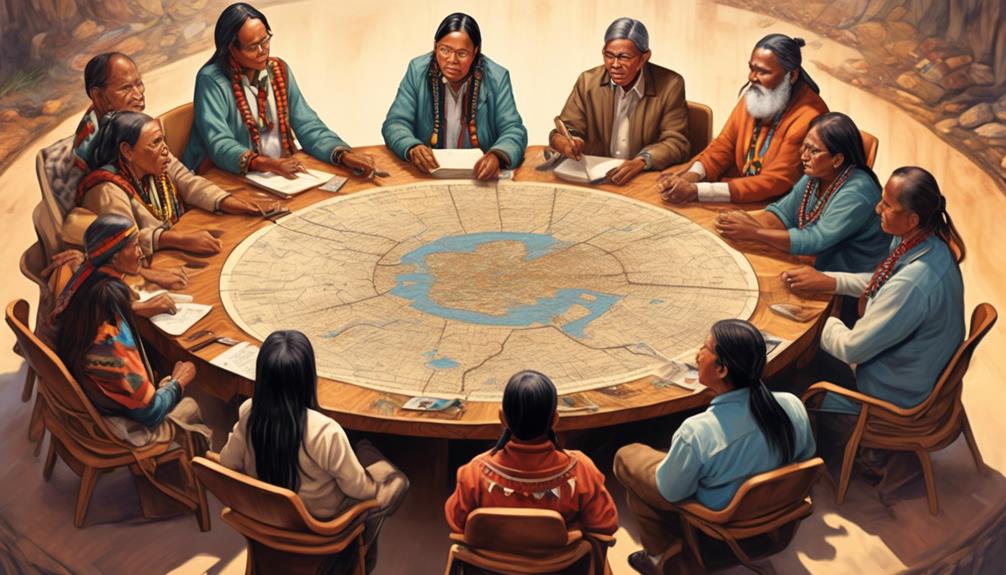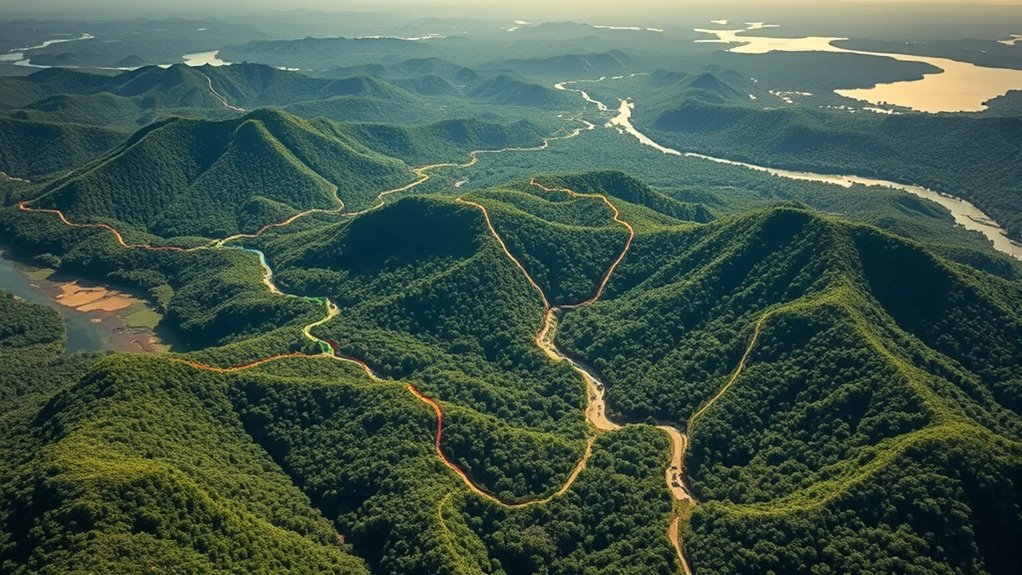
Songlines are living maps that connect cultural stories directly to ecosystems, encoding knowledge about water sources, plants, and animal routes. By mapping stories to landscapes, Indigenous communities preserve biodiversity and promote sustainable land use. These narratives reinforce ecological practices and respect for the environment. Recognizing their significance enriches conservation efforts and highlights the deep link between culture and nature. Exploring this connection reveals how storytelling can help protect ecosystems for future generations.
Key Takeaways
- Songlines encode ecological information, guiding communities to vital resources like waterholes, plants, and animal migration routes.
- Mapping stories to ecosystems preserves biodiversity by embedding environmental knowledge within cultural narratives.
- Indigenous storytelling functions as mnemonic devices for sustainable land management and ecological practices.
- Recognizing the ecological wisdom in songlines enhances conservation efforts through cultural and ecological integration.
- Protecting songlines supports both cultural heritage and ecosystem resilience, highlighting their interconnected role in biodiversity preservation.
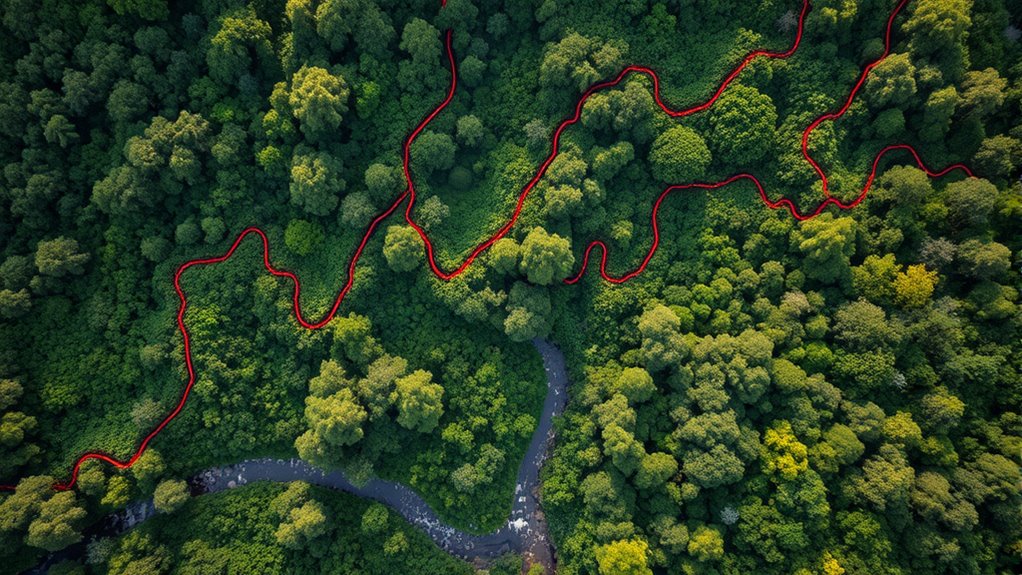
In today’s interconnected world, understanding how stories shape and reflect ecosystems has become essential. When you explore the concept of songlines, you begin to see how Indigenous knowledge isn’t just tradition—it’s a crucial map of the land itself. Songlines are oral narratives that link cultural history, spiritual beliefs, and ecological knowledge into a continuous storyline. These stories serve as living maps, guiding Indigenous communities across vast landscapes and preserving their relationship with the environment. By following songlines, you gain insight into how Indigenous peoples understand their ecosystems, recognizing the importance of each element within a broader cultural context.
Songlines are living maps connecting Indigenous culture, environment, and ecological knowledge.
You might find that these stories do more than just recount history—they encode detailed ecological information. For example, certain songlines describe the locations of waterholes, plant species, animal migration routes, and other critical resources. When you listen to these narratives, you’re tapping into a form of Indigenous knowledge that’s been refined over thousands of years. This knowledge isn’t static; it’s constantly maintained and transmitted through storytelling, ensuring that future generations can continue to navigate and care for their environment. This process, known as cultural preservation, is essential because it keeps the ecological wisdom alive and relevant. It’s a way of safeguarding biodiversity, not just through conservation efforts but through cultural continuity.
By mapping stories to ecosystems, you’re witnessing how Indigenous communities integrate land management with storytelling. These narratives act as mnemonic devices, helping community members remember essential ecological practices such as sustainable hunting, planting, or water conservation. They also foster a deep sense of respect and responsibility toward the land, ensuring that ecosystems are preserved for future generations. When you acknowledge the significance of songlines, you recognize that cultural preservation isn’t merely about safeguarding traditions; it’s about maintaining a living connection to the environment. This connection ensures that ecological knowledge remains dynamic, adaptable, and rooted in the cultural identity of Indigenous peoples.
Understanding how stories shape ecosystems also helps you appreciate the value of indigenous perspectives in contemporary conservation. These narratives contain centuries of ecological expertise that can complement scientific approaches. Embracing this knowledge promotes a more holistic view of biodiversity, emphasizing respect for cultural diversity as integral to ecological health. Recognizing the importance of ecological knowledge embedded within storytelling broadens conservation strategies and fosters greater respect for indigenous land stewardship. When you see the integration of storytelling with environmental stewardship, it becomes clear that preserving cultural heritage supports ecological resilience. Ultimately, by mapping stories like songlines to ecosystems, you acknowledge that cultural preservation and environmental sustainability are intertwined—a crucial lesson for anyone committed to protecting our planet’s biodiversity.

Indigenous Critical Reflections on Traditional Ecological Knowledge
As an affiliate, we earn on qualifying purchases.
As an affiliate, we earn on qualifying purchases.
Frequently Asked Questions
How Do Songlines Influence Conservation Efforts?
You can see that songlines influence conservation efforts by highlighting indigenous knowledge and ecological stewardship. These stories encode deep understanding of local ecosystems, guiding sustainable resource use and protecting biodiversity. By respecting and integrating songlines into conservation strategies, you help preserve cultural heritage and promote environmental sustainability. This approach fosters a collaborative relationship with indigenous communities, ensuring that efforts honor their traditions while maintaining ecological balance.
Are Songlines Recognized Officially as Cultural Heritage?
Yes, songlines are officially recognized as cultural heritage, highlighting their importance in Indigenous knowledge and cultural significance. You can see this recognition in legal protections and cultural preservation programs that acknowledge their role in maintaining biodiversity and storytelling. By respecting these songlines, you help preserve Indigenous traditions and environmental understanding, ensuring that their cultural significance continues to be valued and protected for future generations.
How Do Songlines Adapt to Environmental Changes?
Think of songlines as flowing rivers that adapt with the landscape; they evolve through cultural adaptation to environmental changes. You’ll find that they demonstrate environmental resilience, shifting melodies, and stories to reflect new ecosystems or altered landscapes. This ongoing process helps communities maintain their connection to the land, ensuring the cultural significance of songlines persists despite environmental shifts. Fundamentally, they grow stronger by embracing change rather than resisting it.
Can Songlines Be Used to Restore Degraded Ecosystems?
Yes, you can use songlines to restore degraded ecosystems by leveraging Indigenous knowledge and promoting cultural continuity. Songlines encode essential ecological information, guiding sustainable practices and conservation efforts. By honoring these stories, you help preserve traditional wisdom and foster a deep connection with the land. Incorporating songlines into restoration projects ensures that ecological healing aligns with cultural values, creating a meaningful, effective approach to ecosystem recovery.
What Role Do Younger Generations Play in Preserving Songlines?
You play a crucial role in preserving songlines, as over 60% of Indigenous storytelling is passed down by younger generations. By actively engaging in cultural transmission, you help maintain these rich traditions, ensuring they survive for future generations. Your participation keeps the stories alive, fostering a deep connection to the land and ecosystems. Embracing this responsibility supports both cultural heritage and biodiversity, highlighting your essential role in safeguarding these invaluable stories.
biodiversity conservation storytelling kits
As an affiliate, we earn on qualifying purchases.
As an affiliate, we earn on qualifying purchases.
Conclusion
By linking stories to ecosystems, you weave a vibrant tapestry of life and culture, reminding us that our stories are the roots that sustain biodiversity. Just as a single thread can strengthen a tapestry, your understanding can help protect these rich ecosystems. When you honor these songlines, you’re not just preserving stories—you’re safeguarding the soul of the land itself. Together, your actions can turn the map of stories into a map of hope and resilience.

Learning Resources New Sprouts Multicultural Play Food Set – Toddler Groceries Toys, Imaginative Play, Language and Social Skills, Kitchen Accessories for Kids, Birthday Gifts for Boys and Girls
INSPIRE IMAGINATIVE PLAY – Spark creativity with realistic multicultural food pieces that let toddlers ages 18+ explore pretend…
As an affiliate, we earn on qualifying purchases.
As an affiliate, we earn on qualifying purchases.
Land, Women, Youths, and Land Tools or Methods
As an affiliate, we earn on qualifying purchases.
As an affiliate, we earn on qualifying purchases.