
TL;DR

Prime made for students and young adults
- Fast, free delivery for dorm and study essentials
- Prime Video and Amazon Music included
- Member-only deals
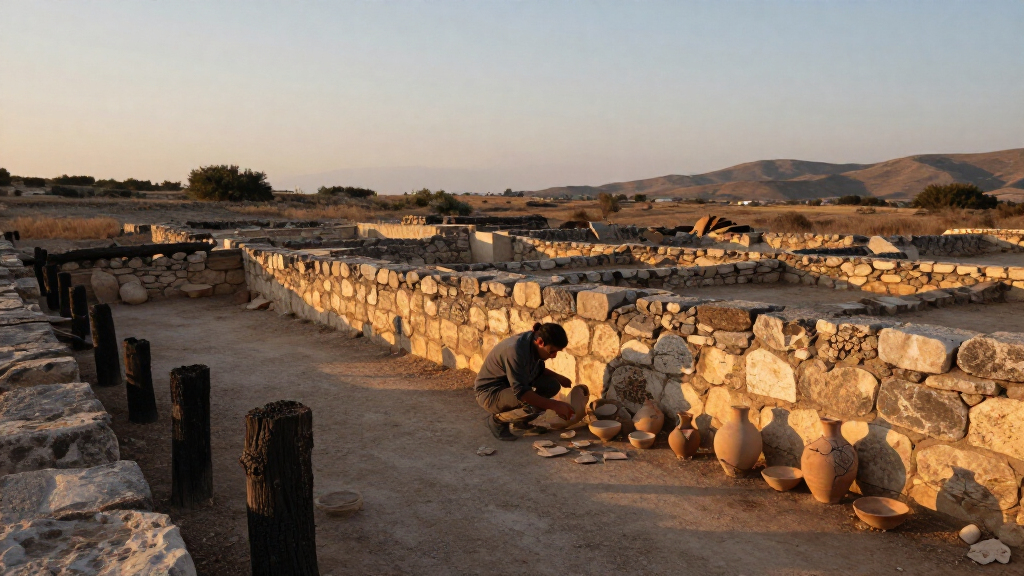
Several major eastern Mediterranean powers declined or disappeared around the end of the Late Bronze Age, amid drought, famine, conflict and upheaval. A Works in Progress article argues that the spread of iron may help explain why centralized empires did not quickly return, but the source presents this as an interpretation, not a settled consensus.
A Works in Progress article argues that the spread of iron, alongside familiar pressures such as drought, famine and conflict, may help explain why major eastern Mediterranean states collapsed around 1200 BC and were not quickly replaced by similar empires. The proposal offers a material and military explanation for a long-debated historical shift, but it is an interpretation rather than a demonstrated single cause.
The Late Bronze Age was marked by powerful states including the Egyptian and Hittite empires, as well as Assyrian, Babylonian and Mycenaean centers. The source describes these societies as capable of taxing populations, organizing armies and carrying out large infrastructure projects. In the centuries after the Battle of Kadesh, these powers either disappeared or lost much of their influence.
Common explanations for the upheaval around 1200 BC include drought, famine, internal revolt and attacks associated with groups called the Sea Peoples. The article argues that such crises may explain political disruption, but do not by themselves answer why comparable imperial systems took centuries to re-emerge.
Its proposed additional factor is a change in access to weapons. Bronze required copper and tin, with tin potentially transported over long distances; the article says this helped concentrate bronze arms among elites and military institutions. Iron could be produced locally, it argues, making it harder for imperial centers to preserve a weapons advantage over people they ruled. The source does not establish that this change alone caused the collapse.
How Iron Could Shift Power
The argument matters because it reframes the question from simply why states fell to why the political structures they supported were not readily rebuilt. If access to effective weapons was tied to long-distance supply chains and centralized control, the spread of locally workable iron could have changed the balance between rulers and communities beyond their core territories.
That is a consequential hypothesis, not proof that technological change determines political outcomes. The article connects access to military materials with the ability to command labor, resources and territory. It also invites comparison with other periods in which changes in technology have altered who can exercise force. The historical evidence and the scale of iron’s role still require careful qualification.
As an affiliate, we earn on qualifying purchases.
From Copper to Bronze and Iron
The source places the collapse within a longer history of metalworking. It says copper tools and weapons offered an advantage over stone, while bronze—a copper and tin alloy—was harder and better able to hold an edge. The availability of tin from distant sources, it argues, made bronze production dependent on trade and specialized networks.
The Battle of Kadesh, fought between Egyptians and Hittites in the 13th century BC, illustrates the scale of the powers involved. Pharaoh Ramesses II later commissioned reliefs presenting the battle as a victory; the Egyptians and Hittites signed a peace treaty about 16 years later, according to the source. Those states later weakened or vanished. The article’s broader point is that the shift from bronze to iron may have affected who could equip and challenge armies, even as climate stress and political conflict contributed to the breakdown.
“The question is not why the Bronze Age empires fell, but why, after they fell, nothing like them returned for centuries.”
— Patrick Fitzsimmons, in the Works in Progress article
Limits of the Iron Explanation
The source does not establish one definitive cause for the collapse, nor does it provide evidence in the supplied excerpt that iron alone explains the decline of the region’s major states. The timing and relative importance of drought, famine, conflict, internal revolt, trade disruption and changing weapons remain open to interpretation.
It is also unclear from the source how quickly iron became available to ordinary people, how widely it was used in weapons during the relevant period, and whether local production consistently displaced older supply networks. The article presents a broad explanation for the failure of empires to return, but the excerpt does not set out the archaeological evidence needed to measure iron’s contribution against other factors.
What Further Evidence Could Show
The next step is to compare the article’s proposal with archaeological and historical evidence on when iron production expanded, where weapons were made, and who had access to them. Evidence about settlement change, trade routes and military organization could help distinguish technological effects from the consequences of environmental stress and warfare.
No new excavation, study or scheduled research milestone is announced in the source material. The argument should therefore be read as a historical analysis that raises a question for further evaluation, not as a new finding that has resolved the causes of the Late Bronze Age collapse.
Key Questions
What was the Late Bronze Age collapse?
It refers to the decline or disappearance of several powerful eastern Mediterranean states around the end of the Late Bronze Age, commonly associated with upheaval around 1200 BC.
What caused the Bronze Age collapse?
There is no single established cause in the source. Explanations include drought, famine, conflict and internal revolt; the Works in Progress article argues that the spread of iron may also help explain the longer-lasting political changes.
Why might iron have weakened empires?
The article argues that iron could be produced locally, unlike bronze, which depended on copper and tin supply chains. That may have reduced imperial centers’ advantage in controlling access to weapons, though the claim is not presented as conclusive.
Did iron alone bring down the Bronze Age empires?
The source does not show that iron alone caused the collapse. It presents iron as a possible factor alongside environmental pressures and political and military upheaval.
Source: hn
Columbus Day / Indigenous Peoples' Day Picks
long weekend sales
As an affiliate, we earn on qualifying purchases.