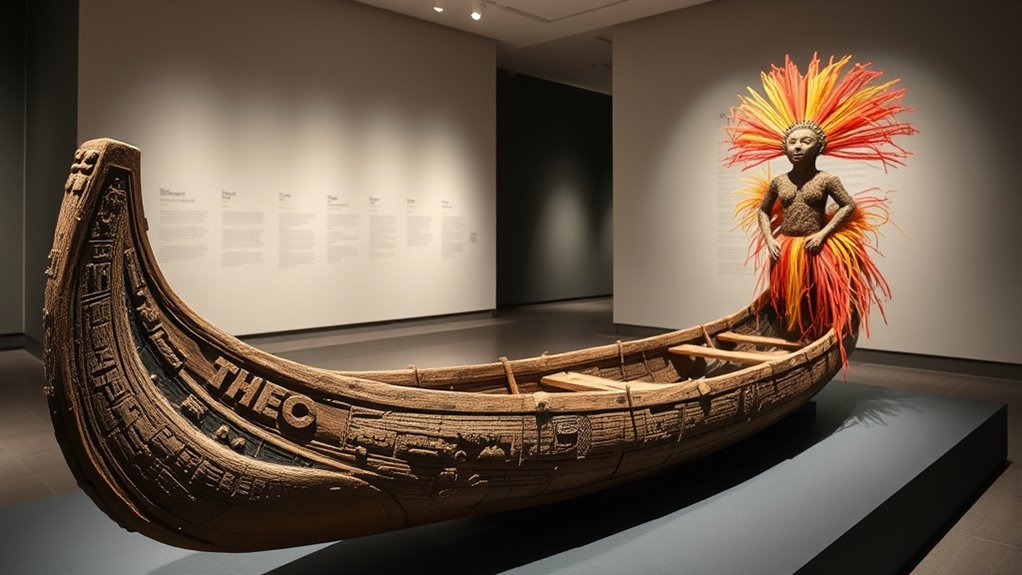

Indigenous crafts have dramatically evolved from traditional bark canoes to modern fiber sculptures, blending age-old techniques with new innovations. You’ll see how artisans adapt skills like weaving, carving, and shaping bark, often incorporating technology like digital tools and modern materials. This mix of tradition and innovation helps keep cultural stories alive while appealing to contemporary tastes. To understand how these crafts continue to transform and stay relevant, explore how cultural identity shapes this creative journey.

Prime made for students and young adults
- Fast, free delivery for dorm and study essentials
- Prime Video and Amazon Music included
- Member-only deals
Key Takeaways
- Indigenous crafts evolve by blending traditional techniques like bark shaping with modern materials such as fibers and textiles.
- Techniques like bark canoe construction influence contemporary fiber sculptures, illustrating cultural continuity and innovation.
- Digital tools and new technologies enable artisans to design intricate patterns inspired by traditional motifs.
- Crafts maintain cultural significance while adapting to modern aesthetics, fostering resilience and relevance.
- The evolution from bark canoes to fiber sculptures reflects a dynamic dialogue between heritage and contemporary artistic expression.
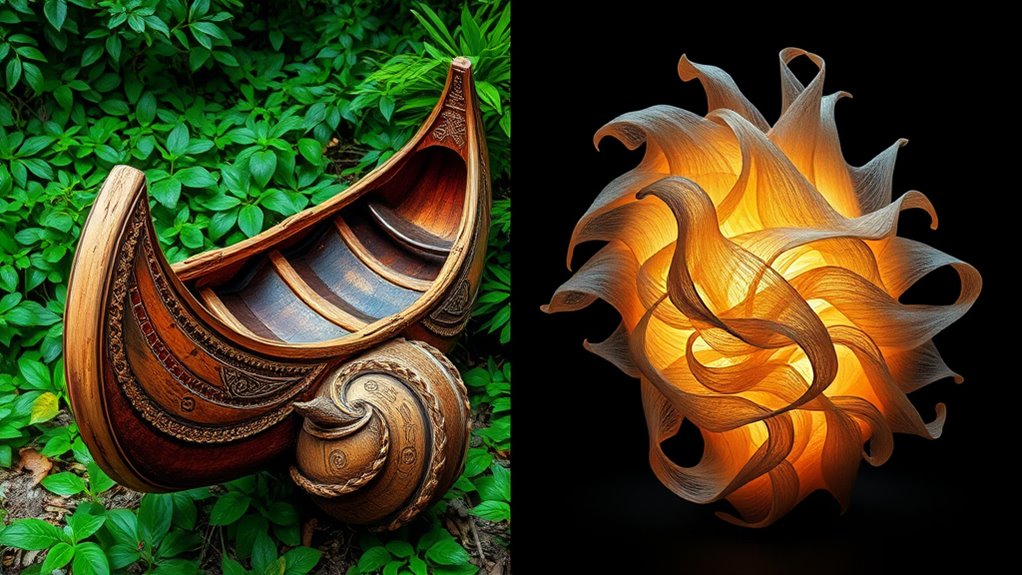
Indigenous crafts have continuously evolved, blending tradition with innovation to stay relevant in changing times. You might notice how ancient skills still shape the craft you see today, yet they’ve adapted to meet modern tastes and technologies. Take, for example, traditional techniques—these are the foundation, the core methods that have been passed down through generations. Whether it’s weaving with natural fibers, carving wood, or shaping bark, these techniques reflect a deep connection to cultural stories and environments. But as the world changes, so do the crafts. You’ll see artisans incorporating modern adaptations, blending old methods with new materials or design concepts to create fresh, enthralling pieces.
Indigenous crafts blend tradition and innovation, evolving with modern techniques while honoring their cultural roots.
You’ll also find that technology influences these crafts in surprising ways. Some artisans now use digital design tools to plan intricate patterns before executing them by hand. Others might use laser cutting or 3D printing to replicate traditional motifs with precision. These innovations help preserve traditional techniques while expanding creative possibilities. It’s a way of respecting the past while embracing the future. This ongoing process of evolution allows indigenous crafts to remain vibrant, resonating with both older and younger generations. It encourages artisans to blend authenticity with innovation, ensuring their cultural expressions stay dynamic and meaningful.
Furthermore, understanding the importance of relevant techniques helps in appreciating how these crafts can be adapted without losing their cultural significance. Ultimately, this balance of tradition and modernity keeps indigenous crafts alive and thriving. You’re witnessing a cultural dialogue—where age-old techniques meet contemporary influences, creating works that honor history while pushing creative boundaries. Whether it’s a bark canoe transformed into a fiber sculpture or a woven basket infused with modern design elements, these crafts reflect resilience and adaptability. They prove that tradition isn’t static; it evolves, incorporating new ideas without losing its core identity. As a result, indigenous crafts continue to inspire and connect communities, showcasing a rich heritage that adapts and flourishes in the modern world.
As an affiliate, we earn on qualifying purchases.
Frequently Asked Questions
How Do Indigenous Crafts Influence Modern Design Trends?
You can see how indigenous crafts influence modern design trends through cultural exchange and contemporary adaptations. Designers often draw inspiration from traditional patterns, techniques, and materials, blending them into new creations. This ongoing dialogue enriches your environment, respecting heritage while innovating. By incorporating indigenous elements, you help promote cultural understanding and appreciation, ensuring these timeless crafts inspire future generations and stay relevant in today’s diverse, creative world.
What Materials Are Currently Used in Traditional Indigenous Crafts?
You might think traditional indigenous crafts only use historical materials, but today, artisans embrace natural dyes and sustainable materials. They skillfully work with plant fibers, animal hides, and wood, blending age-old techniques with eco-friendly practices. This not only preserves cultural heritage but also creates stunning, environmentally conscious art. By choosing sustainable materials, indigenous crafters evoke pride and resilience, inspiring you to appreciate the beauty of tradition intertwined with modern ecological values.
How Do Indigenous Craft Techniques Vary Across Regions?
You’ll notice that indigenous craft techniques vary across regions due to regional distinctions in climate, resources, and cultural practices. These differences influence technique variations, resulting in unique styles and methods. For example, coastal communities might focus on weaving with marine fibers, while inland groups use plant materials. By understanding these regional distinctions, you can appreciate the rich diversity and craftsmanship that define indigenous arts across different areas.
What Is the Significance of Symbols in Indigenous Craftwork?
You’re really onto something when you realize that symbols in indigenous craftwork are more than just decoration—they’re a window into cultural expression. These symbols hold deep meaning, conveying stories, beliefs, and history. They serve as a bridge connecting generations, keeping traditions alive. Understanding their symbol meaning helps you appreciate the artistry and significance behind each piece, showing how indigenous craft is a essential part of cultural identity and storytelling.
How Do Indigenous Artisans Preserve Their Craft Traditions Today?
You can see how indigenous artisans preserve their craft traditions today through active preservation efforts that highlight their cultural significance. They pass down skills through apprenticeships, workshops, and community programs, ensuring the knowledge stays alive. Many also incorporate modern tools and techniques while respecting traditional methods, helping sustain their heritage. These efforts keep their cultural identity vibrant, allowing future generations to appreciate and continue their unique craft practices.
Conclusion
As you witness the journey from bark canoes to intricate fibre sculptures, you realize how each craft weaves the story of resilience and tradition. Like threads in a tapestry, these creations connect the past to the present, echoing the heartbeat of indigenous culture. Embrace this evolution, knowing it’s a living river, constantly flowing and reshaping, carrying the soul of a people who craft their history with every stroke, knot, and weave—forever shaping their legacy.
Fall Picks
fall essentials
As an affiliate, we earn on qualifying purchases.