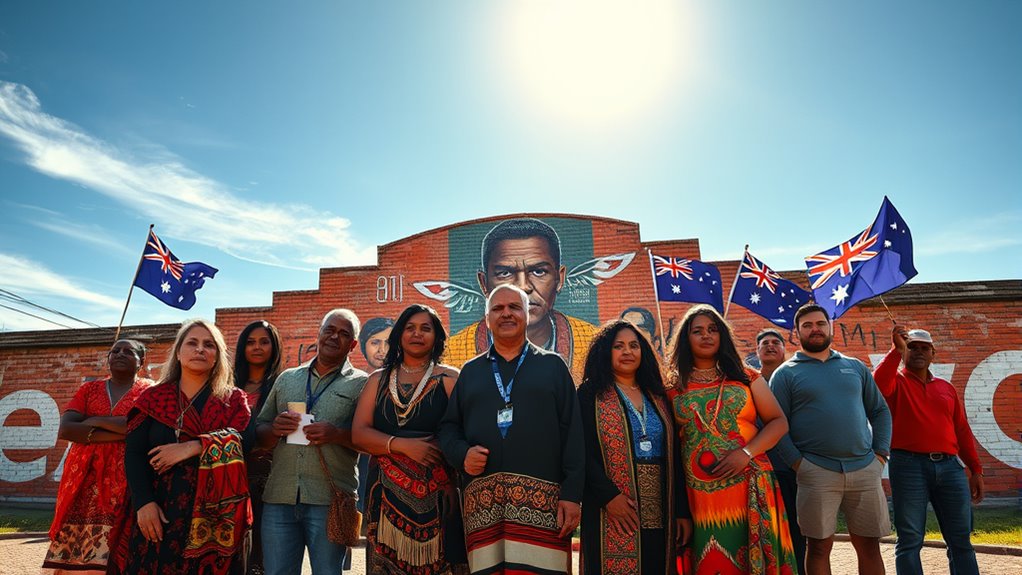

Aboriginal resistance spans centuries, from Pemulwuy’s fight against colonial encroachment to the bravery of the Freedom Rides challenging injustice today. You see communities asserting sovereignty by reclaiming land, traditions, and voice despite ongoing struggles. Cultural activism, protests, and legal battles form a larger movement of resilience. Each step reflects how Indigenous peoples continuously fight for their rights and identity. Keep exploring, and you’ll uncover how these acts of resistance shape their ongoing journey toward justice.
Key Takeaways
- Pemulwuy was a prominent Aboriginal leader who led resistance against colonial encroachment in early Australia.
- The Aboriginal Tent Embassy symbolizes ongoing activism for land rights and sovereignty.
- The Freedom Rides of 1965 highlighted racial discrimination and mobilized national awareness for Indigenous issues.
- Cultural activism, through protests and storytelling, continues to challenge stereotypes and assert Indigenous identity.
- Both historical figures like Pemulwuy and modern movements embody the persistent struggle for Aboriginal sovereignty and justice.

Have you ever wondered how Aboriginal communities have consistently stood against colonization and injustice? Throughout history, they’ve fought tirelessly to preserve their identity, land, and rights. One of the most powerful ways they’ve done this is through asserting Indigenous sovereignty—standing firm in their right to govern themselves and make decisions about their land and culture. Indigenous sovereignty isn’t just about reclaiming territory; it’s about asserting their authority and resisting external control that aims to erase their traditions and existence. This resilience flows through generations, from the earliest resistance leaders to modern-day activists.
Aboriginal communities resist colonization by asserting sovereignty, defending land, culture, and their right to self-governance.
Cultural activism plays a vital role in these efforts. It’s a way for communities to assert their identity and challenge oppressive narratives. You see this in the way they revive traditional practices, language, and stories, making sure their culture remains vibrant despite efforts to suppress it. Cultural activism often manifests through protests, art, music, and storytelling, serving as a form of resistance that reclaims space and voice. By celebrating and sharing their culture publicly, Aboriginal communities challenge stereotypes and demand recognition of their sovereignty. It’s an act of defiance that affirms their right to exist and thrive on their terms.
Historically, figures like Pemulwuy exemplified this spirit of resistance. Pemulwuy led Aboriginal efforts against colonial encroachment, fighting to defend his people’s land and sovereignty long before it was recognized by colonial authorities. His resistance was not only physical but also symbolic, embodying a refusal to accept dispossession. Today, cultural activism continues in various forms, from protests to legal battles, emphasizing that Indigenous sovereignty remains a central goal. Movements like the Aboriginal Tent Embassy or the campaigns surrounding land rights highlight ongoing efforts to assert control over their future.
You can see how these acts of resistance aren’t isolated; they’re interconnected threads in a larger tapestry of resilience. The fight for Indigenous sovereignty and cultural activism isn’t just about history—it’s about shaping the present and future. Each protest, each story, each act of reclaiming tradition sends a message that Aboriginal communities aren’t passive victims but active agents fighting for their rights. Their resistance is a reminder that identity, land, and sovereignty are inseparable, and that the struggle to protect them is ongoing. By standing firm and voicing their truths, Aboriginal communities continue to challenge injustice and pave the way for a more equitable future. Recognizing the importance of cultural activism can help foster greater understanding and support for their ongoing efforts.
Aboriginal land rights book
As an affiliate, we earn on qualifying purchases.
As an affiliate, we earn on qualifying purchases.
Frequently Asked Questions
How Did Pemulwuy Influence Later Indigenous Resistance Movements?
Pemulwuy greatly influenced later Indigenous resistance movements by exemplifying colonial resistance and inspiring cultural revival. You see, his fierce fight against colonizers showed that resistance was possible and necessary. His actions motivate you to continue advocating for your rights and preserving your culture. By standing against oppression, Pemulwuy set a powerful precedent, encouraging subsequent generations to resist colonization and endeavor for cultural revival and sovereignty.
What Were the Key Strategies Used During the Freedom Rides?
Oh, the Freedom Rides knew how to stir the pot! You use nonviolent protest to grab attention and media campaigns to amplify your message. By traveling across states, you expose injustices in a way that demands change without fists flying. This clever strategy forces the public and authorities to confront issues directly, making your movement impossible to ignore. It’s activism with style, and it works wonders.
How Have Aboriginal Resistance Efforts Evolved Over Centuries?
You see that Aboriginal resistance efforts have evolved from early acts of cultural resilience and rebellion to modern legal challenges and activism. Over centuries, you witness a shift from armed resistance and protests to strategic legal battles and community-led initiatives. This progression demonstrates how Aboriginal peoples adapt, maintain their cultural identity, and fight for rights, ensuring their voices are heard and their sovereignty protected through various methods across generations.
Who Are Some Lesser-Known Figures in Aboriginal Resistance History?
You might be surprised to learn about lesser-known Indigenous leaders and grassroots activists who played essential roles in resistance. Figures like Truganini, often overlooked, fought tirelessly for her community’s rights and culture. Others, like Jack Patten and William Cooper, organized protests and challenged injustice at grassroots levels. These individuals may not be household names, but their courage and leadership helped shape Australia’s ongoing fight for Indigenous rights and recognition.
What Role Did International Support Play in Aboriginal Activism?
International support played a pivotal role in Aboriginal activism by fostering global solidarity and strengthening diplomatic alliances. You see, when other countries or organizations voice their backing, it boosts morale and legitimacy for your cause. This external pressure can influence government policies and encourage change. By engaging with global communities, you gain allies who help amplify your message, making your resistance efforts more powerful and far-reaching.
Indigenous cultural activism art supplies
As an affiliate, we earn on qualifying purchases.
As an affiliate, we earn on qualifying purchases.
Conclusion
Your journey through Aboriginal resistance shows a powerful truth: history isn’t just about the past. It’s a call to stand up today, echoing voices like Pemulwuy and the Freedom Rides. Their courage sparks a fire within you, reminding you that change begins with you. So, will you be a silent witness or a voice for justice? Remember, the fight for freedom isn’t over—it’s waiting for your voice to rise like a rising sun.
Aboriginal storytelling audio book
As an affiliate, we earn on qualifying purchases.
As an affiliate, we earn on qualifying purchases.
Land rights protest signs
As an affiliate, we earn on qualifying purchases.
As an affiliate, we earn on qualifying purchases.