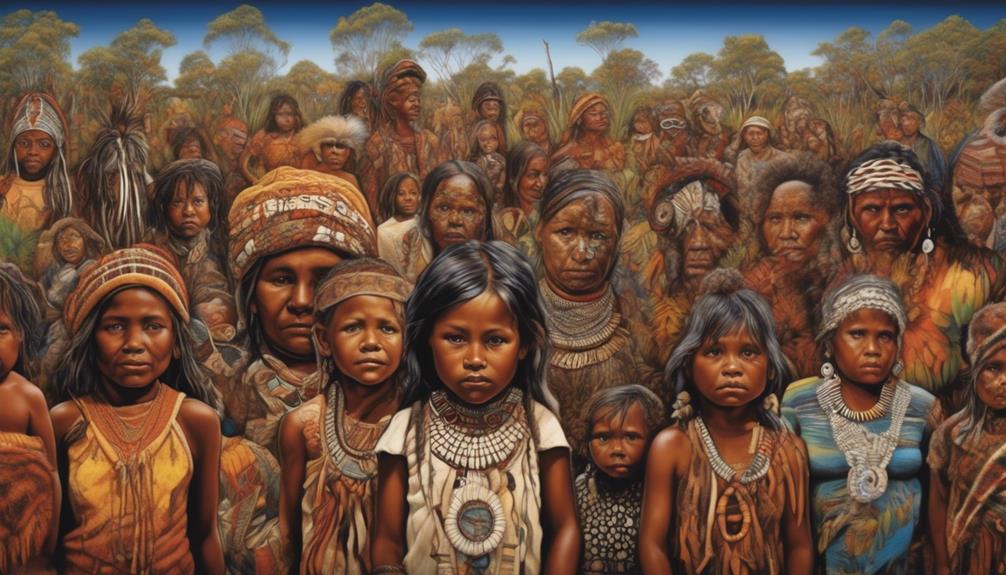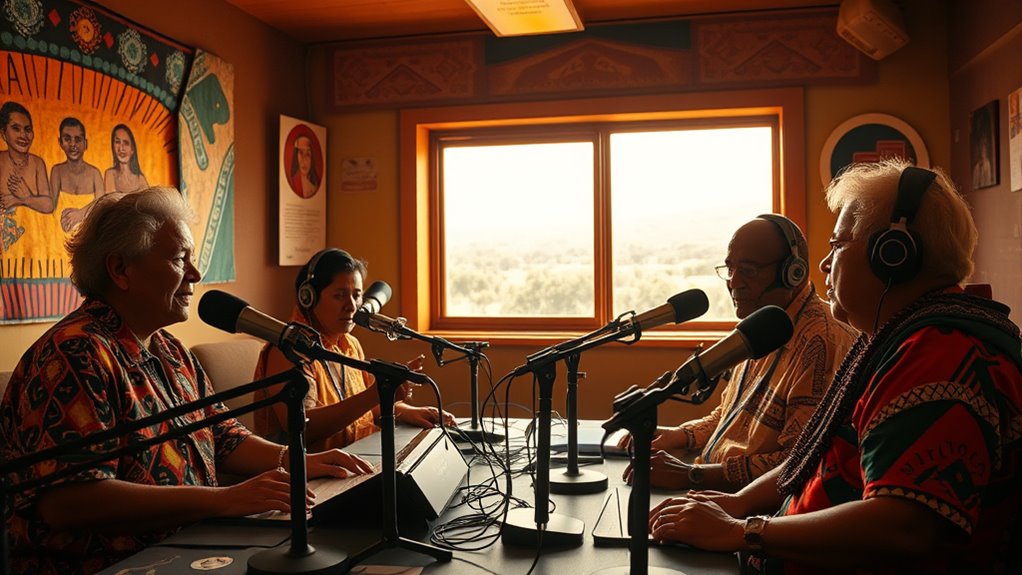

Aboriginal radio stations give communities like yours a platform to tell your stories, share traditions, and keep languages alive. You can hear voice recordings, songs, and stories passed down through generations, fostering cultural pride. These stations also invite locals to participate, making everyone feel involved and connected. By focusing on community issues and local news, they strengthen bonds and keep cultural practices vibrant. Keep exploring to discover how these stations continue preserving and celebrating Indigenous identities.
Key Takeaways
- Aboriginal radio stations serve as platforms for Indigenous voices to share stories, traditions, and cultural experiences.
- They promote language preservation by broadcasting in native languages and encouraging elders to pass down cultural knowledge.
- These stations foster community participation by involving locals in hosting shows and discussing relevant social issues.
- Broadcasting traditional stories, songs, and ceremonies helps maintain cultural heritage and instills pride in Indigenous communities.
- Aboriginal radio strengthens community bonds and ownership, ensuring cultural practices remain vibrant and relevant for future generations.
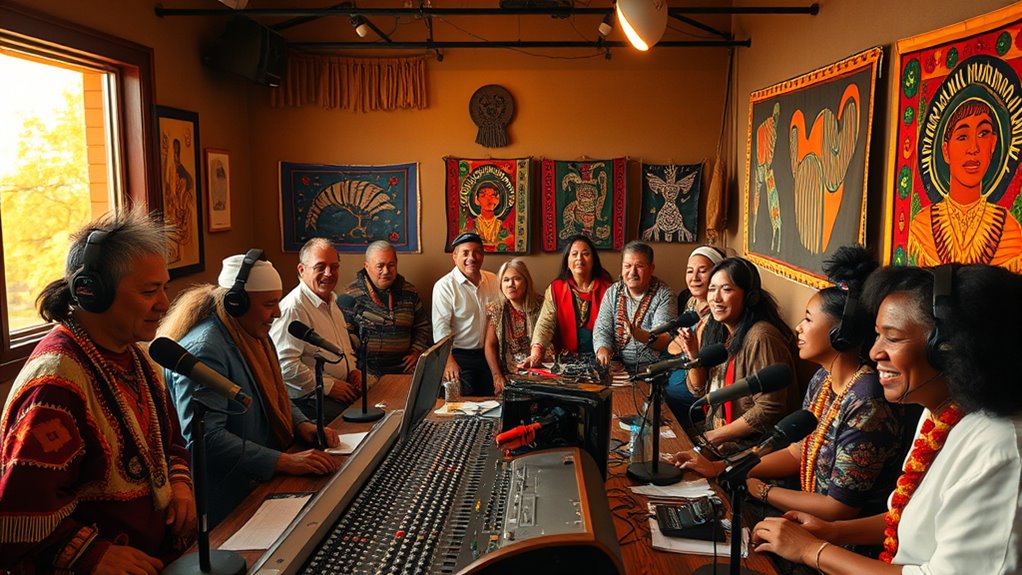
Have you ever wondered how Indigenous communities share their stories and culture through the airwaves? Aboriginal radio stations play an essential role in this process, giving communities a platform to express their identity, traditions, and voices. These stations serve as a bridge between the past and present, helping to preserve cultural heritage while fostering community engagement. When you tune in, you’re not just listening to music or talk shows; you’re participating in a movement that keeps traditions alive and strengthens community bonds.
Cultural preservation is at the heart of Aboriginal radio. Many stations broadcast in native languages, ensuring that these languages continue to thrive in everyday life. By sharing stories, songs, and oral histories, they help pass down invaluable knowledge from elders to younger generations. This effort is fundamental because language and storytelling are central to Indigenous identity. When you listen, you support this preservation, helping to combat the erosion of cultural practices caused by globalization and historical marginalization. These stations also highlight traditional customs, dances, and ceremonies, making them accessible to listeners who might not have the chance to experience them firsthand. This proactive approach keeps cultural practices vibrant and relevant, fostering pride and continuity within communities.
Community engagement is another key aspect of Aboriginal radio. These stations are more than just broadcasters; they are community hubs that encourage participation from local residents. They invite community members to host shows, share stories, and discuss issues that matter most to them. This participatory approach makes the radio a tool for empowerment, giving voices to those who might otherwise remain unheard. When you listen, you’re engaging with a community that values dialogue and collective identity. Aboriginal radio stations often address social issues, health, education, and local news, making them indispensable sources of information tailored to the community’s needs. This direct connection builds trust and promotes a sense of ownership over the station, strengthening community solidarity.
native language learning audio CDs
As an affiliate, we earn on qualifying purchases.
As an affiliate, we earn on qualifying purchases.
Frequently Asked Questions
How Do Aboriginal Radio Stations Fund Their Operations?
You might wonder how Aboriginal radio stations fund their operations. They typically rely on diverse funding models, including government grants, community fundraising, and sponsorship opportunities from local businesses and organizations. These stations actively seek sponsorships to support their programming and infrastructure. By combining these funding sources, they guarantee their stories are told authentically and sustainably, empowering Aboriginal voices to be heard without depending solely on external funding.
What Challenges Do Aboriginal Broadcasters Face Today?
Like a fragile but essential fire, Aboriginal broadcasters face challenges in maintaining cultural preservation and engaging youth. You might struggle with limited funding, which hampers your ability to reach new generations. Balancing traditional stories with modern issues becomes tough, risking cultural erosion. Yet, by innovating and connecting authentically, you keep the flame alive, inspiring youth to embrace their heritage and ensuring their voices continue to shine brightly in the media landscape.
How Can Listeners Support Aboriginal Radio Initiatives?
You can support Aboriginal radio initiatives by actively engaging with their broadcasts and sharing their stories. Listen regularly to promote cultural preservation and raise awareness. Attend community events or donate if possible, to help sustain these platforms. Your involvement fosters greater visibility and respect for Indigenous voices, ensuring their stories are heard and celebrated. By staying connected, you contribute to a stronger, more inclusive cultural landscape.
Are There Specific Programs Dedicated to Indigenous Languages?
Yes, there are specific programs dedicated to indigenous languages that focus on language preservation and cultural storytelling. By tuning into these programs, you help support efforts to keep indigenous languages alive, ensuring cultural stories and traditions are passed down. Listening actively, sharing these programs, and encouraging others to do the same plays a crucial role in sustaining these languages and celebrating indigenous cultural heritage.
How Do Aboriginal Radio Stations Influence Community Development?
You see, Aboriginal radio stations profoundly influence community development by fostering cultural preservation and encouraging community engagement. They provide a platform where indigenous voices can share stories, traditions, and issues that matter most. By doing so, they strengthen cultural identity and empower communities to stay connected and active. This active participation helps build resilience, promotes awareness, and supports social cohesion, ultimately nurturing a vibrant, united community.
indigenous storytelling audiobooks
As an affiliate, we earn on qualifying purchases.
As an affiliate, we earn on qualifying purchases.
Conclusion
Listening to Aboriginal radio is like opening a window to a vibrant, living storybook where voices echo truths and traditions. You’re not just hearing stories; you’re stepping into a world of rich culture, resilience, and identity. These broadcasts keep the heartbeat of communities alive and thriving. By tuning in, you become part of a powerful chorus that guarantees their stories, history, and voices continue to shine bright—like stars guiding the way forward.
community radio microphone kit
As an affiliate, we earn on qualifying purchases.
As an affiliate, we earn on qualifying purchases.
traditional music recording equipment
As an affiliate, we earn on qualifying purchases.
As an affiliate, we earn on qualifying purchases.