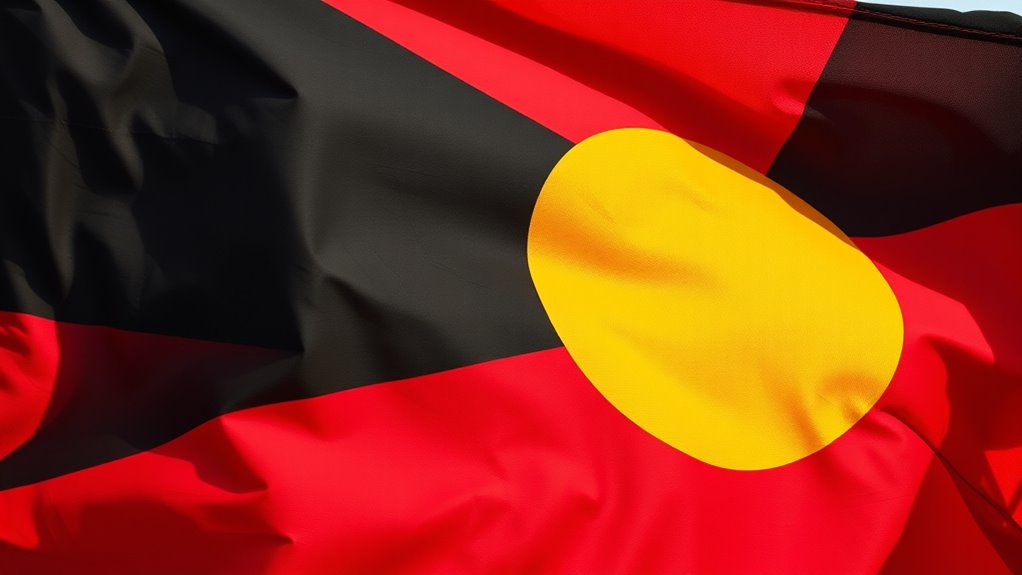

The Aboriginal Flag is a powerful symbol representing Indigenous Australian identity, resilience, and spiritual ties to land. Its design features a black top half for Aboriginal people, a red bottom half symbolizing land and ochre, and a central yellow circle representing the sun’s life-giving force. These elements reflect cultural stories, ceremonies, and connection to land. By understanding its symbolism, you’ll see how the flag embodies deep cultural significance—there’s more to uncover behind its powerful design.
Key Takeaways
- The Aboriginal Flag features black, red, and yellow colors representing Indigenous people, land, and the sun.
- The black stripe symbolizes Aboriginal people and their cultural traditions.
- The red background signifies the earth, land, and ochre used in ceremonies.
- The yellow circle represents the sun, a vital source of life and spiritual significance.
- The flag embodies cultural identity, connection to land, and spiritual beliefs of Indigenous Australians.

Have you ever wondered what the Aboriginal Flag symbolizes? It’s more than just a colorful banner; it’s a powerful emblem of identity, pride, and unity for Australia’s Indigenous peoples. The flag’s design elements are carefully crafted to represent key aspects of Aboriginal culture and the land they hold sacred. The top half of the flag features a black horizontal stripe, which signifies the Aboriginal people themselves—their identity, strength, and connection to their ancestors. Beneath it, the bottom half is a red field, representing the earth, the land’s richness, and the red ochre used in traditional ceremonies. Sitting prominently in the center is a yellow circle, symbolizing the sun—the giver of life, warmth, and spirituality. This simple yet meaningful design communicates a profound cultural significance, linking land, people, and spirituality into a cohesive symbol. The colors and symbols are also deeply rooted in traditional ceremonies and storytelling, reinforcing their importance in cultural expression.
Understanding the cultural significance of the flag helps you appreciate its deep roots in Aboriginal history and identity. The colors aren’t random; they’re intentionally chosen to reflect essential elements of Indigenous life and beliefs. Black represents the people who have lived on the land for thousands of years, maintaining traditions and cultural practices. Red echoes the red earth, which is central to many Indigenous ceremonies and stories about creation. The yellow circle signifies the sun, a crucial source of life and a recurring motif in Aboriginal art and spirituality. When you look at the flag, you’re viewing a visual narrative—one that encapsulates the enduring connection between the land, its original inhabitants, and their ongoing cultural resilience.
Frequently Asked Questions
Who Designed the Aboriginal Flag and When Was It Created?
You’ll find that the Aboriginal flag was designed by Harold Thomas in 1971. This flag’s symbolism is powerful, representing cultural identity and unity among Aboriginal people. The black top symbolizes Aboriginal people, while the red bottom reflects the land and spiritual connection. The yellow circle in the center stands for the sun, a essential life source. This flag is a crucial symbol of cultural representation and pride for Aboriginal communities.
How Is the Aboriginal Flag Protected Legally in Australia?
You should know that the Aboriginal flag is legally protected in Australia through specific legal protections and intellectual property rights. The flag’s design is registered as intellectual property, giving its creator, Harold Thomas, certain rights. This means you can’t reproduce or use the flag commercially without permission. These legal protections help preserve the flag’s cultural significance and prevent misuse, ensuring the Aboriginal community’s rights are respected and maintained.
Are There Variations of the Aboriginal Flag Used by Different Groups?
You’ll find regional variations and cultural adaptations of the Aboriginal flag, reflecting diverse community identities and stories. While the core design remains recognizable, different groups sometimes modify colors or symbols to represent their specific heritage. These variations honor local traditions and foster a sense of belonging, showcasing the flag’s dynamic role in cultural expression. Embracing these adaptations highlights the vibrant diversity within Aboriginal communities across Australia.
What Ceremonies or Events Typically Feature the Aboriginal Flag?
You’ll often see the Aboriginal flag at cultural celebrations and community gatherings. It’s prominently displayed during events like NAIDOC Week, Reconciliation Day, and Indigenous festivals. The flag symbolizes pride, identity, and connection to land, making it a powerful presence at ceremonies honoring Aboriginal culture. You might also see it flown during protests, marches, and official ceremonies to emphasize respect and recognition of Indigenous peoples’ rights and heritage.
How Has the Aboriginal Flag Influenced Indigenous Rights Movements?
Imagine a flag waving fiercely like a battle cry—you’re inspired to rally for change. The Aboriginal flag fuels your cultural identity and sparks political activism, making it a powerful symbol in indigenous rights movements. It acts as a banner of unity and resistance, reminding you of history’s struggles and victories. Its presence energizes protests and campaigns, turning passive spectators into active advocates for justice and recognition.
Conclusion
The Aboriginal flag is like a heartbeat that beats with cultural pride and history. Its colors tell a story of earth and sky, unity and identity. By understanding its meaning, you connect with a rich heritage that’s as essential as your own. Remember, this flag isn’t just fabric—it’s a symbol of resilience and hope, shining bright like a guiding light through the darkness. Embrace it, and keep their story alive in your heart.