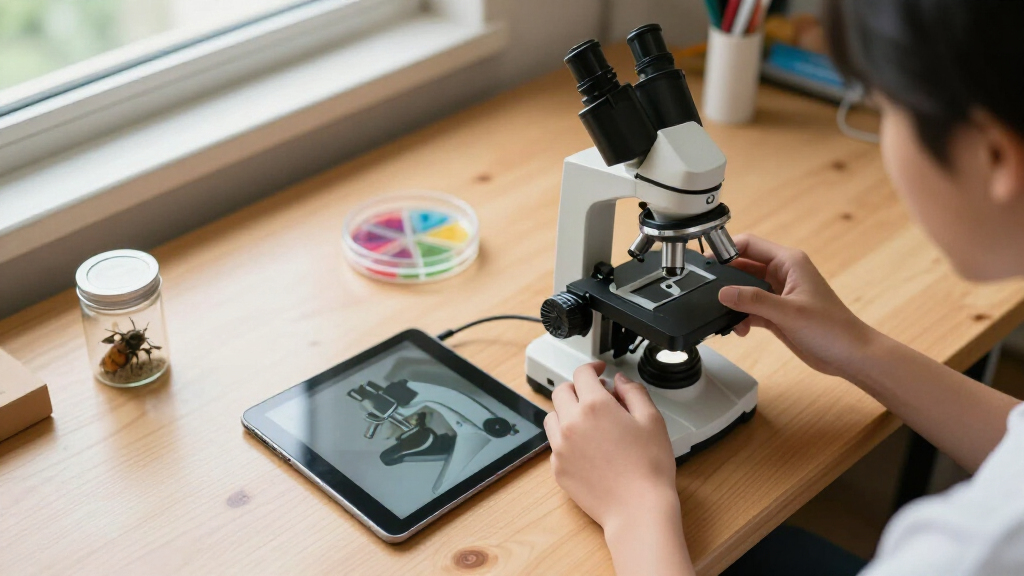
Choosing among digital microscopes for students comes down to one core tradeoff: simplicity versus scientific capability. The PalliPartners 40x-2000x Biological Compound Trinocular Microscope earns my best overall pick for serious biology students, pairing genuine optical magnification with digital viewing and prepared slides. For younger learners, the TOMLOV DM301 Pro offers a large 7-inch screen and point-and-shoot simplicity, while the AmScope M30-ABS-KT2-W delivers the best budget-friendly entry into real microscopy. Screen-based models like the TOMLOV and Elikliv coin microscopes make observation effortless, but they typically max out at low magnification — compound microscopes reveal cells and bacteria but demand slide preparation skills. Read on for the full breakdown of all 15 models and which one fits your student’s age, coursework, and budget.
Prime for Young Adults — start your free trial
Fast free delivery, streaming and member deals for eligible 18–24 year olds.
Try it freeAs an affiliate, we earn on qualifying purchases.
Key Takeaways
- Screen-size and magnification-range marketing are the two most misleading specs in this category: most handheld ‘1000x‘ models deliver usable detail closer to 50x-200x, while true compound scopes like the PalliPartners 40x-2000x actually reach high magnification.
- The TOMLOV DM301 Pro and DM301 Max emerged as the strongest middle-ground picks — large 7-inch displays, kid-friendly operation, and enough magnification for school science projects without the slide-prep learning curve.
- Age determines the right category more than price does: kids under 10 did better with self-contained kits like the 58-Piece Kids Microscope Kit, while middle schoolers and up benefited from compound optics like the AmScope M40-K-MDM35.
- Built-in scales (TOMLOV DM4W Max and DM4W) are a genuinely useful student feature for measuring specimens, but the 4.3-inch screens on both models limit collaborative viewing compared with the 7-inch DM301 line.
- WiFi handheld models like the Skybasic are the most portable and cheapest way to get digital magnification, but their plastic stands and focus instability make them frustrating for sustained schoolwork.




| digital microscopes for student | Magnification |
|---|---|
| TOMLOV Coin Microscope with We | — |
| PalliPartners 40x-2000x Biolog | — |
| Kids Microscope with 40X-2500X | 40X–2500X |
| 1000X Handheld Digital Microsc | 1000X |
| Wireless Digital Microscope Sk | 50X–1000X |
| TOMLOV DM301 Pro Microscope fo | 1200X |
| Elikliv LCD Digital Coin Micro | Up to 1000x |
| PalliPartners Compound Microsc | 100X–2000X |
| TOMLOV DM4W Digital Coin Micro | 10X–200X |
| 58-Piece Kids Microscope Kit | 100X–1200X |
| AmScope M30-ABS-KT2-W Beginner | 120X to 1200X |
| TOMLOV DM301 Max Microscope fo | Up to 1200X |
| Microscope for Adults & Kids | 40X–2500X |
| Kids Digital Microscope STEM T | 200X–1000X |
| AmScope M40-K-MDM35 1200X Mono | 120X–1200X |
More Details on Our Top Picks
TOMLOV Coin Microscope with Weighing Scale, 7″ Digital Magnifier DM4W Max
Most microscopes in this roundup do one job; the TOMLOV DM4W Max stands out for combining 7-inch screen viewing with a built-in 0.1g weighing scale, which makes it a niche favorite for students grading coins, examining jewelry, or studying small artifacts where weight matters as much as appearance. Compared with the Elikliv LCD Coin Microscope, the larger display is genuinely more comfortable for extended inspections, and the 2K video output beats typical 1080p coin scopes. The tradeoff is specialization: unlike the PalliPartners trinocular, it can’t view slides at high biological magnification, and coins over 32mm won’t fit in full view. Full functionality also depends on a computer connection, which undercuts the standalone appeal of that big screen.
Pros:- Integrated 0.1g scale with multiple units (g, oz, ct, ozt) in one device
- Large 7-inch screen reduces eye strain during long inspections
- 2K video capture for detailed documentation and sharing
- Stable adjustable stand keeps specimens steady
Cons:- Coin size limited to 32mm in full view; larger items need repositioning
- Requires a computer connection for full functionality
- Useless for slide-based biological study
Best for: Students studying numismatics, geology specimens, or small antiques who need magnification and weight verification together
Not ideal for: Biology students — there’s no stage, slide capability, or high-magnification optics for cell-level work
- Screen Size:7 inches
- Display Resolution:800×480
- Video Resolution:2K (up to 5440×3060)
- Weighing Resolution:0.1g (±0.5g accuracy)
- Supported Units:g, oz, ct, ozt
- Max Coin Size:32mm
- Connectivity:USB output
Our verdict“Buy this only if weighing and inspecting small valuables together matters — for general science study, a compound model serves better.”
PalliPartners 40x-2000x Biological Compound Trinocular Microscope
When a student’s coursework shifts from leaf surfaces to cell walls, a stereo-style scope stops being enough. The PalliPartners trinocular earns its place with a 40x–2000x magnification range, dual LED illumination, and — the differentiator here — a trinocular port for attaching a camera so lab work can be documented. Compared with the 40X-2500X Kids Microscope elsewhere in this guide, this model is built like lab equipment: the double-layer mechanical stage holds slides steady while you focus, rather than relying on a static platform. The honest tradeoff is complexity and weight. A complete beginner will spend real time learning coaxial focus and illumination technique, and this is not a scope that travels to the backyard. This pick makes the most sense for a high school or college student who needs results, not entertainment.
Pros:- True 40x–2000x range covers everything from dissection detail to cell structures
- Trinocular head allows camera attachment for capturing lab results
- Dual LED illumination for both solid specimens and translucent slides
- Double-layer mechanical stage enables precise slide positioning
Cons:- Steepest learning curve in this lineup for beginners
- Heavy and bulky — firmly a desk-bound instrument
- Camera attachment typically sold separately from the base unit
Best for: High school and early college students doing serious biology coursework who need documentation capability
Not ideal for: Elementary-aged kids and casual hobbyists — the controls demand patience this audience rarely has
- Magnification Range:40x to 2000x
- Design:Trinocular
- Stage:Double-layer mechanical
- Illumination:Dual LED
- Applications:Educational, laboratory, home science
Our verdict“The closest thing to a lab-grade instrument here — ideal for committed biology students, overkill for young explorers.”
Kids Microscope with 40X-2500X Magnification, 4.3-inch Display, 10X and 25X Eyepieces, Built-in 5MP Camera
This model hits a middle ground that most entries here miss: real compound magnification (40X–2500X) paired with a 4.3-inch screen and 5MP camera, so students can see slides clearly and save what they find without squinting through an eyepiece. Against the PalliPartners trinocular, it sacrifices the mechanical stage and lab build quality but gains portability, battery power for outdoor use, and a friendlier price. And unlike the Skybasic wireless scope, magnification here comes from actual glass objective lenses (4x/10x/40x), not digital zoom, so images stay sharper at high power. The compromises are real: setup is more involved than a young child can manage alone, and the body is bulkier than truly portable handhelds. This pick makes the most sense for a middle-schooler bridging the gap between toy scopes and serious instruments.
Pros:- True optical magnification up to 2500X via interchangeable eyepieces and objectives
- Built-in 5MP camera captures and shares findings easily
- 4.3-inch HD screen is more comfortable than a single eyepiece
- Battery power enables field and outdoor use
Cons:- Setup and lens-swapping is too complex for young children to do independently
- Bulky compared with handheld digital scopes
- Batteries required and not always included for portable operation
Best for: Middle and early high school students who want a complete lab experience with screen viewing and photo capture
Not ideal for: Preschool and early elementary kids — the multi-lens setup and focusing technique exceed their fine motor skills
- Magnification:40X–2500X
- Display:4.3-inch HD
- Eyepieces:10X and 25X
- Objective Lenses:4x, 10x, 40x
- Camera:5-megapixel
- Power Supply:Batteries and data cable
Our verdict“The most balanced package for a student serious about science but not ready for lab-grade equipment.”
1000X Handheld Digital Microscope for Kids with 2.0″ IPS Screen
Where the 40X-2500X Kids Microscope demands patience and setup, this handheld scope flips the formula: turn it on, point it at a leaf or a bug, and see results instantly on a 2.0-inch IPS screen. It’s rated for ages 3 and up with CE, FCC, and CPC safety certifications, which no other model in this roundup can claim, and at 200g it goes anywhere a curious kid goes. The honest tradeoff is depth: 1000X here is largely digital magnification, so image quality at the top end falls well short of the glass-optics performance on the PalliPartners or the compound kids’ kit. The 600mAh battery lasts about two hours, and 32MB of storage fills quickly — expect frequent USB transfers. This pick makes the most sense as a first microscope that builds curiosity rather than a tool for coursework.
Pros:- Instant point-and-view operation with no slide preparation needed
- Safety-certified (CE, FCC, CPC) construction appropriate for preschoolers
- Lightweight 200g body with built-in photo and video capture
- 8 adjustable LEDs keep small subjects clearly lit
Cons:- Digital magnification produces soft, low-detail images at high zoom
- 2-hour battery life and 32MB storage limit longer sessions
- Tiny 2-inch screen makes details hard to share with others
Best for: Parents of children aged 3–8 who want a safe, grab-and-go first microscope for outdoor exploration
Not ideal for: Students with assigned science work — digital-only magnification and small storage won’t support real observation tasks
- Magnification:1000X
- Camera Resolution:2MP
- Display:2.0″ IPS screen
- Battery:600mAh (~2 hours)
- LED Lights:8 adjustable
- Storage:32MB (200+ photos/videos)
- Weight:200g
- Safety Certifications:CE, FCC, CPC
Our verdict“A gateway toy that gets young kids excited about science — swap it for a compound scope once real schoolwork begins.”
Wireless Digital Microscope Skybasic 50X-1000X Magnification WiFi Portable Handheld Microscope with Adjustable Stand
The Skybasic wireless microscope takes the cheapest route to a big screen: skip the built-in display entirely and stream to whatever device the student already owns. At 50X–1000X with a 2MP CMOS sensor and WiFi connectivity to iPhone, Android, iPad, Windows, and Mac, it turns a family tablet into a shared viewing station — something the 2.0-inch handheld kids’ scope can’t match for group learning, and at a lower price than the screen-equipped TOMLOV DM301 Pro. The tradeoffs mirror the price. Fixed focus means precise focusing at high magnification is fiddly, and the 1080p ceiling shows its limits on cell-level detail compared with optical compound scopes. Initial app setup can also be finicky. This option stands out for classrooms and families where one scope needs to serve several kids on one shared device.
Pros:- Streams wirelessly to nearly any phone, tablet, or computer
- Cheapest path to a large shared viewing screen
- Adjustable stand and 8 LEDs support hands-free observation
- One-button photo and video capture
Cons:- Fixed focus makes high-magnification detail work frustrating
- App setup and connection updates can be unreliable
- 1080p/2MP output is noticeably softer than optical compound scopes
Best for: Budget-minded families and classrooms that want to view specimens on a shared phone or tablet screen
Not ideal for: Anyone doing serious biological work — fixed focus and 2MP resolution can’t resolve fine cellular detail
- Magnification:50X–1000X
- Connectivity:WiFi and USB
- Sensor:2MP HD CMOS
- Resolution:1920×1080
- LED Lights:8 adjustable
- Focal Length Range:3–60mm
- Compatibility:iPhone, Android, iPad, Windows, Mac
Our verdict“The value leader for casual, screen-shared exploration — just don’t expect it to carry a biology curriculum.”
TOMLOV DM301 Pro Microscope for Kids and Adults, 7-Inch Screen Science Kit
The 7-inch IPS screen is what separates the DM301 Pro from smaller-display rivals like the Elikliv 4.3-inch model — the extra real estate makes group viewing and classroom sharing far more practical. Add WiFi app control, 8MP photo capture, and a bundled slide kit, and this option works as a complete science station straight out of the box. The adjustable viewing angle matters more than it sounds: kids hunched over a fixed screen lose interest fast. Compared with the PalliPartners compound microscope, it trades true optical magnification for convenience and digital sharing. The tradeoffs are real — the 3-hour battery limits field trips, and app control assumes a WiFi setup that classrooms don’t always allow.
Pros:- Large 7-inch IPS screen makes group viewing easy
- 8MP photos and 1080P video are genuinely usable for lab documentation
- Complete STEM kit means no accessory shopping
- Wireless app control enables real-time viewing on phones and tablets
Cons:- 3-hour battery life limits extended sessions
- App control requires WiFi, which isn’t always available in classrooms
Best for: Middle and high school students who need a shareable, screen-based microscope for classroom projects and lab reports
Not ideal for: Biology students needing true optical magnification of cell-level specimens — a compound scope like the PalliPartners is the better tool
- Display:7-inch IPS screen
- Magnification:1200X
- Camera Resolution:8MP photos, 1080P video
- Lighting:Dual LED with adjustable brightness
- Connectivity:WiFi, USB/HD output
- Battery Life:Up to 3 hours
- Accessories:Slides and STEM kit included
- Measurement:Built-in measurement scale
Our verdict“The strongest pick for students who need to capture, share, and present their observations rather than peer through an eyepiece.”
Elikliv LCD Digital Coin Microscope 1000x with 8 LED Lights, 4.3-Inch Display
This option stands out for delivering the core digital microscope experience — screen, lighting, PC connectivity — at a price point well below the TOMLOV DM301 Pro. The 4.3-inch display is smaller and only 720P, but for solo inspection work of coins, stamps, or dissection remains, it gets the job done. The PC/Mac connectivity is a genuine advantage for students writing reports, since images transfer directly to a laptop. Compared with the TOMLOV DM4W, you give up the built-in scale and wider magnification flexibility, but you pay less. Be aware that the microSD card is not included, and the 1000x figure depends heavily on screen distance, so expect practical magnification closer to a few hundred times.
Pros:- Very affordable entry into digital microscopy
- 8 adjustable LED lights handle tricky lighting conditions
- Connects to Windows and Mac for large-screen viewing
- Built-in rechargeable battery makes it portable
Cons:- Memory card not included — an extra purchase on day one
- Advertised magnification is optimistic and distance-dependent
Best for: Budget-conscious students and hobbyists who want digital viewing and PC image capture without paying for a big screen
Not ideal for: Anyone expecting crisp results at the full 1000x claim — image quality degrades at higher zoom on a 720P display
- Display:4.3-inch LCD, 720P
- Magnification:Up to 1000x
- Lighting:8 adjustable LED lights
- Connectivity:PC (Windows/Mac), microSD slot
- Battery Life:Up to 3 hours
- Memory:microSD card not included
Our verdict“The smartest low-cost way for a student to get screen-based viewing and computer image sharing.”
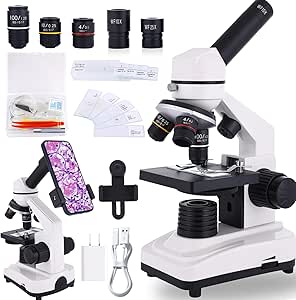
PalliPartners Compound Microscope for Adults & Students
When the assignment is cells, bacteria, or pond water, a true compound optical microscope beats every digital option in this lineup, and the PalliPartners delivers that with a 100X–2000X range using real glass objective lenses. The dual LED illumination (top and bottom) means it handles both prepared slides and opaque specimens, something screen-based models like the Elikliv can’t replicate optically. The included 28 slides and phone adapter bridge the analog-digital gap for report photos. The tradeoff is the learning curve: coarse and fine focus, slide preparation, and eyepiece technique take practice, so younger students will need supervision. Unlike digital scopes, there’s no built-in screen — but for actual biology coursework, optical resolution is what matters.
Pros:- True optical magnification up to 2000X for cell-level detail
- 28 included slides (10 prepared) enable immediate use
- Dual top/bottom LED lighting handles both slide and solid specimens
- SGS safety certified for children and teens
Cons:- Steeper learning curve than point-and-view digital models
- Requires assembly and some microscope familiarity
Best for: Students taking biology or life science courses who need to view cell-level specimens on prepared slides
Not ideal for: Young children or casual users who want instant screen viewing — this rewards technique and patience
- Magnification:100X–2000X
- Objective Lenses:4X, 10X, 40X
- Eyepiece:WF25X plus 2X magnification lens
- Slides:28 total (10 prepared, 18 blank)
- Lighting:Dual LED, top and bottom
- Focus:Coaxial coarse and fine knobs
- Age Range:8–18+
Our verdict“The pick for serious biology students who need real optics rather than a digital shortcut.”
TOMLOV DM4W Digital Coin Microscope with Built-In Scale and 4.3″ Screen
The DM4W carves out a niche no other model here touches: it pairs a 4.3-inch IPS display with a built-in precision scale accurate to 0.1g. For a student doing a coin-collecting project, mineral study, or any assignment requiring both observation and measurement, that combination saves juggling two devices. The 500 cd/m² brightness and wide viewing angles put it ahead of the Elikliv’s standard LCD for image quality. The catch is the 10X–200X magnification range — a fraction of the PalliPartners’ optical range — which makes it a surface-inspection tool, not a biology instrument. The 8-inch stand height also restricts what fits underneath. This pick makes the most sense for a student with a specific collecting or measurement angle to their work.
Pros:- Unique built-in scale with 0.1g resolution for measurement-based projects
- Bright 500 cd/m² IPS display with wide viewing angles
- USB output to Windows/Mac for big-screen inspection
- Rechargeable battery and compact footprint make it portable
Cons:- Magnification caps at 200X, far below compound microscopes
- 8-inch stand limits the size of objects you can examine
Best for: Students working on coin, mineral, or small-object projects that need both magnified viewing and weight measurement
Not ideal for: Biology coursework — the 200X ceiling can’t resolve cellular detail, so a compound scope is required
- Display:4.3-inch HD IPS screen
- Magnification:10X–200X
- Brightness:500 cd/m²
- Stand Height:8 inches
- Connectivity:USB (Windows/Mac)
- Scale:g / oz / ct, 0.1g resolution, ±0.5g accuracy
- Power:Built-in rechargeable battery
Our verdict“A specialized two-in-one tool for students whose projects involve inspecting and weighing small collectibles.”
58-Piece Kids Microscope Kit – 100X-1200X Magnification, Metal Body, LED Light, Carrying Box
For the 5–12 age range, this kit prioritizes volume and durability over precision — 58 pieces including prepared specimens, blank slides, and lab tools, plus a carrying box that survives being carted between home and classroom. Compared with the PalliPartners compound scope, the optics are far more basic, but that’s the point: this is a discovery toy that builds microscope habits, not a lab instrument. The metal body gives it an edge over plastic STEM toys like the digital handheld models in this roundup, which feel disposable after a season. The honest tradeoffs: batteries aren’t included, some small parts will break under rough handling, and the 1200X claim is marketing — useful magnification is much lower. For sparking curiosity, though, it’s hard to beat the value.
Pros:- 58 pieces mean weeks of varied activities without extra purchases
- Metal body is sturdier than typical plastic toy microscopes
- Carrying box makes it genuinely portable and gift-ready
- Prepared specimens let kids start exploring immediately
Cons:- Batteries not included, so it needs shopping before first use
- Small parts are fragile under rough kid handling
Best for: Parents of elementary-age children (5–12) who want a complete, giftable first microscope for playful STEM exploration
Not ideal for: Students over 12 or anyone needing accurate magnification for school assignments — the optics won’t hold up
- Magnification:100X–1200X
- Pieces Included:58 (specimens, slides, tools)
- Body:Metal with LED light
- Dimensions:4.6″L x 2.75″W x 8.15″H
- Power:2 AA batteries (not included)
- Age Range:5–12 years
Our verdict“The best low-stakes way to introduce a young child to microscopy before investing in real optics.”
AmScope M30-ABS-KT2-W Beginner Microscope STEM Kit, White
Among budget classroom kits, this option stands out for how little it asks of the buyer: everything a first-time scientist needs arrives in one 52-piece bundle, including prepared slides and a hard ABS case that survives being tossed into a backpack. Compared with the AmScope M40-K-MDM35, it trades digital imaging and lab-grade accessories for simplicity and a lower price — a reasonable swap when the user is eight years old. The 120X to 1200X magnification range covers the classic school assignments, though the upper settings push past what the optics can genuinely resolve, so expect dim, soft images at maximum zoom. Unlike the BEBANG PM1000, there is no screen or camera, which means no photo sharing — but also no batteries to recharge mid-lesson.
Pros:- Complete 52-piece kit with slides and accessories included
- Rugged hard ABS case protects everything for storage and travel
- Six magnification settings give kids room to experiment
- Low price makes it a low-risk first purchase
Cons:- Top magnification settings outpace the optical quality, producing blurry images
- No digital screen or camera for capturing and sharing images
Best for: Parents buying a first microscope for elementary-age children who want a complete, low-cost science kit out of the box
Not ideal for: Middle and high school students who need digital capture or true high-magnification clarity for lab reports
- Magnification:120X to 1200X
- Number of Pieces:52
- Lighting:LED
- Color:White
- Included Accessories:Sample slides, hard ABS case
- Optics Type:Compound, beginner grade
Our verdict“A sensible first microscope for young kids whose parents want a full kit without a big investment.”
TOMLOV DM301 Max Microscope for Kids, Students, Adults
The 7-inch IPS screen is what separates this model from nearly everything else here — students observe comfortably at eye level instead of hunching over an eyepiece, which makes long lab sessions far more sustainable. Compared with the TOMLOV DM301 Pro, the Max adds an 8MP camera with 1080P video and WiFi app control, so a whole classroom can view the same live image on a shared device. The precision X-Y stage is another step up from handheld options like the Skybasic WiFi microscope, allowing careful slide positioning instead of shaky hand-holding. The tradeoffs are real: battery life tops out around three hours, and the WiFi-dependent features lose their appeal without a network. Younger children will likely need an adult to walk them through the menus.
Pros:- 7-inch IPS screen allows comfortable, shareable group viewing
- 8MP camera records 1080P video and photos to the included SD card
- Precision X-Y stage enables accurate slide positioning
- WiFi, USB, and HD output options for flexible connectivity
Cons:- Battery lasts only about 3 hours per charge
- Younger kids may struggle with the menu system and app setup
Best for: Middle and high school students, and homeschool families, who want a large shared viewing screen for group lessons and lab documentation
Not ideal for: Extended field use away from power — the 3-hour battery and WiFi requirements make long outdoor sessions frustrating
- Screen:7-inch IPS LCD
- Magnification:Up to 1200X
- Camera:8MP
- Video Resolution:1080P
- Lighting:Dual LED
- Battery Life:Up to 3 hours
- Connectivity:WiFi, USB, HD output
- Included Accessories:Prepared slides, carrying case, SD card
Our verdict“The strongest choice for students who need a big screen, recording, and stage precision for serious coursework.”
Microscope for Adults & Kids, 40X-2500X High-Power Compound Microscope with Slides Set & Phone Holder
For a student advancing past toy-grade kits, this compound microscope is the natural next step: a true 40X–2500X magnification range built on real objective lenses (4X/10X/100X) rather than digital zoom tricks. Where the AmScope M30 blurs at high power, this model’s dual LED illumination — both incident and transmitted — keeps cell structures actually visible, which is the difference between a fun toy and a tool that can support real biology coursework. The included phone holder is a clever middle ground: unlike the fully digital TOMLOV DM301 Max, you keep proper eyepiece optics but can still capture images for lab reports. Setup and fine focus demand patience, so this is better suited to a supervised desk than a child’s unsupervised playtime.
Pros:- Genuine 40X–2500X range with proper objective lens turret
- Dual incident and transmitted LED lighting suits both slides and solid specimens
- Phone holder enables photo and video capture without buying a digital eyepiece camera
- Coarse and fine focus with 360° rotating eyepieces for comfortable viewing
Cons:- Setup and focusing require patience and adult help for younger users
- Delicate mechanical parts need careful handling to avoid damage
Best for: High school biology students and homeschool families doing curriculum-based lab work that requires genuine high magnification
Not ideal for: Children under about 10 — the delicate focus mechanism and multi-step setup invite mishandling
- Magnification:40X–2500X
- Eyepieces:WF25X / 10X
- Objective Lenses:4X / 10X / 100X
- Lighting:Dual LED (incident & transmitted)
- Focus System:Coarse and fine adjustment
- Color Filters:Yellow, red, blue, green, purple
- Additional Features:Phone holder, 360° rotating eyepieces
- Accessories:Slides with specimens, tweezers, droppers
Our verdict“The best pick here for older students who need authentic optical performance for real biology labs.”
Kids Digital Microscope STEM Toy: Complete Science Gift Kit for Ages 4-12 (BEBANG PM1000)
At 0.34 pounds with a rechargeable battery and an EVA case, this is the only option in this lineup genuinely built to leave the house — a backyard bug hunt or a park walk is exactly what it’s made for. Compared with the AmScope M30 kit, it swaps the traditional eyepiece for direct digital viewing with photo and video saved to an included 32GB card, which kids find far more engaging. Against the TOMLOV DM301 Max, it gives up screen size and stage precision but wins decisively on portability and price. The 200X–1000X range handles insects, leaves, and coins well, though the roughly 2.5-hour battery means a long field day may end early, and focus is fully manual, so small hands will need practice.
Pros:- Ultra-light 0.34 lb design with EVA case travels anywhere
- 32GB memory card included for saving photos and videos
- Real glass slides add authenticity despite the toy-friendly format
- Rechargeable battery supports cordless indoor and outdoor use
Cons:- Battery life of about 2.5 hours cuts long outings short
- Manual focus and lighting adjustment frustrate younger children at first
Best for: Families with children ages 4–12 who want a lightweight, take-anywhere microscope for outdoor exploration and photo capture
Not ideal for: Students needing lab-grade optics or long sessions — the small format and short battery limit serious coursework
- Magnification:200X–1000X
- Screen Resolution:4K
- Battery Life:Approximately 2.5 hours
- Weight:0.34 lb
- Storage:32GB SD card included
- Included Items:Charging cable, user manual, EVA case, slides set with case
- Recommended Ages:4–12
Our verdict“The right choice for young explorers whose microscope needs to fit in a backpack and survive the outdoors.”
AmScope M40-K-MDM35 1200X Monocular Compound Microscope Digital Camera Kit
This kit occupies a smart middle position in the lineup: a proper all-metal compound microscope with an 85+ piece lab accessory set, plus a USB eyepiece camera that brings it into the digital age without replacing the optics. Compared with the AmScope M30, the build quality and accessory count are a clear step up for students ready to prepare their own slides. And unlike the fully digital TOMLOV DM301 Max, viewing happens through real eyepieces, with the camera available only when a Windows or Mac computer is connected — cheaper, but less convenient. The dual LED and mirror illumination means it even works battery-free via the mirror, a nice fallback, though AA batteries or a computer are needed for full functionality.
Pros:- All-metal frame with rotating turret feels far more durable than plastic kits
- 85+ piece accessory set supports extensive slide preparation and lab work
- USB 2.0 eyepiece camera enables image capture and analysis on a computer
- Dual LED and mirror illumination works with or without batteries
Cons:- Digital camera requires a wired connection to Windows or Mac computers
- Setup and camera software can frustrate first-time users
Best for: Students who want a durable traditional compound microscope with optional digital imaging and a full lab accessory set
Not ideal for: Anyone wanting standalone screen viewing — the camera only works tethered to a compatible computer
- Magnification:120X–1200X
- Illumination:Dual LED and mirror
- Camera:Color USB 2.0 eyepiece camera
- Frame:All-metal with rotating turret
- Power:2 AA batteries or manual mirror
- Accessories:85+ piece lab kit including slides, coverslips, tools
- Focus:Precision focus adjustment
Our verdict“A strong choice for the student who wants authentic compound optics but still needs digital images for assignments.”
How We Picked
I evaluated each model against what actually matters in a student setting: real usable magnification (not just advertised range), image clarity on the built-in or connected screen, stand and focus stability, ease of setup for a student working alone, and how well the included accessories (slides, kits, carrying cases) support actual coursework. Because students span from age 5 to college, I also weighed age-appropriateness heavily — a brilliant compound scope is the wrong pick for a second grader, and a toy microscope will frustrate a high school biology student.
The ranking logic follows this hierarchy: models that balance optical performance with student-friendly digital features ranked highest, followed by specialized picks that excel for specific ages or budgets. Price-per-capability mattered more than absolute price — the AmScope kits rank well despite low cost because they deliver genuine glass optics, while some pricier handhelds rank lower due to overstated magnification claims. Every pick has real drawbacks noted, since no single microscope serves every student equally.
Factors to Consider When Choosing Digital Microscopes For Students
Before picking a specific model, it helps to understand the broader landscape of student microscopy — the mistakes below are the ones I see buyers make most often.Magnification Claims vs. Reality
The single most common mistake is trusting the number on the box. A handheld scope advertising 1000x magnification rarely delivers detail beyond 200x, because magnification without optical resolution just produces a blurry enlarged image. Compound microscopes with genuine glass objectives — like the PalliPartners or AmScope models — can actually resolve cells at high power because their optics, not digital zoom, create the magnification. For students who need to see plant cells, protozoa, or bacteria, a compound scope is non-negotiable. For students examining coins, fabrics, insects, and rocks, a low-power digital scope with a big screen is genuinely more useful. Decide what your student will actually look at before comparing numbers.
Screen Size and Shared Viewing
One underappreciated difference between models is who can see the image at once. A 7-inch screen (TOMLOV DM301 line) lets two or three students and a teacher view simultaneously, which matters for group projects and homeschool families. A 2-inch or 4.3-inch screen is a solo experience. WiFi models that cast to a phone or tablet solve this differently — everyone can view on their own device — but introduce connection setup friction and battery management. If classroom demonstration or family science nights are part of the plan, prioritize either a large integrated display or reliable screen-casting. If the student works independently, a smaller screen saves money and weight.
Age and Motor Skills
Fine focus control is the hidden frustration for young students. Compound microscopes require delicate stage adjustments and careful slide handling that children under 10 often lack the patience for — leading to cracked slides and discouragement. Self-contained digital scopes with coarse focus and no slide requirement let younger kids succeed immediately, which builds the interest that later justifies a real microscope. Older students (roughly grade 6 and up) can handle compound scopes, and learning slide preparation is itself a valuable lab skill. A common money-wasting pattern is buying a sophisticated scope for a young child who abandons it within weeks. Match the tool to the motor skills, then upgrade later.
Accessory Kits: Asset or Filler
Many budget kits advertise impressive piece counts — 50-plus accessories — but quality varies enormously. Useful inclusions are glass prepared slides, blank slides with coverslips, stains, and a sturdy carrying case. Filler to watch for: cheap plastic tweezers, redundant specimen vials, and low-quality stirrers that pad the count. The 58-Piece Kids Microscope Kit and AmScope M30 both include genuinely usable slide sets that extend the learning value well beyond the scope itself. A modest microscope with excellent slides often teaches more than a feature-rich scope with nothing to look at. When comparing prices, mentally subtract the value of junk accessories from kits that include them.
When to Pay More
Spending more in this category buys three things: real glass optics instead of plastic lenses, mechanical stage and focus precision, and durability that survives multiple school years. A trinocular compound scope like the PalliPartners 40x-2000x costs several times a handheld unit but carries a student from middle school biology into college-level work. That said, don’t pay for capability the student won’t use — a nursing student needs different magnification than a kid inspecting leaves. The sweet spot for most students sits in the mid-range TOMLOV DM301 tier, where spending more yields diminishing returns unless the student is committed to biology long-term. Buy the cheapest tool that fully covers the next two years of use.
Durability and Portability
Student microscopes get transported, dropped, and left on. Metal-body models like the AmScope M30 survive backpack life far better than plastic handhelds, and a carrying case is worth more than it seems for classroom-to-home transitions. Consider battery life for cordless models — a scope that dies mid-lesson creates frustration — and check whether the stand is sturdy enough that the image doesn’t shake every time the focus dial moves. Handheld WiFi scopes win on portability for field work and outdoor exploration, but their flexible stands often wobble at higher zoom. If the microscope will live on one desk, prioritize stability; if it travels, prioritize the case and build.
Frequently Asked Questions
Is a digital microscope or a traditional compound microscope better for a student?
It depends on coursework and age. A digital microscope with a screen wins for younger students, group viewing, and documenting findings with photos or video — the TOMLOV DM301 Pro is a strong example. A compound microscope with digital camera attachment, like the PalliPartners trinocular, wins for biology classwork requiring cell-level detail, since its glass optics resolve structures that low-power digital scopes physically cannot. Some models blur the line by combining compound optics with digital output, which is why they ranked highly here. If the student needs to identify cell structures for graded work, go compound. If the goal is exploration and sparking interest, a screen-based digital model will get used more often.
What magnification does a student actually need?
Most school science work falls into two bands. Up to about 200x covers examining insects, fabrics, crystals, sand, coins, and plant surfaces — everything a younger student is likely to explore. From 400x to 1000x is where cell structures, onion skin, cheek cells, and pond microorganisms become visible, which is what middle and high school biology typically requires. Advertised ranges above that are usually digital zoom rather than true optical magnification, and image quality degrades sharply. A scope with genuine 40x-1000x optical range covers essentially the entire K-12 curriculum, so anything beyond that is future-proofing for college-level study.
Are cheap kids’ microscope kits worth buying, or will they just frustrate a child?
The honest answer splits by model. Kits under $40 with plastic lenses — like the basic STEM toy kits in this roundup — can frustrate because images are dim and blurry, but they still work as interest-builders for children under 8 who mostly want to ‘play scientist.’ Around the $50-$70 mark, kits like the AmScope M30-ABS-KT2-W cross into genuine glass optics with real resolution, and that difference is immediately visible to a child. The failure pattern to avoid is buying an advanced compound scope for a young child, which ends in abandoned equipment. A modest-quality kit that gets used weekly beats a sophisticated scope that sits in a closet.
Do students need a built-in screen, or is connecting to a phone or computer better?
Built-in screens are simpler and more reliable — turn it on and observe, with no pairing, apps, or battery management on a second device. That reliability matters most for younger students and classroom settings where setup time eats into lessons. Phone-connected models like the Skybasic offer bigger displays for free and make sharing images trivial, which suits older students producing lab reports. The compromise is connection friction: WiFi dropouts and app quirks can interrupt a session. For a first microscope, I lean toward a built-in screen; the PC-connected route makes more sense once the student regularly captures and annotates images for assignments.
How long will a student microscope last before it needs upgrading?
Screen-based digital scopes typically serve well for three to five years of casual use, limited mostly by battery degradation and the fact that a student eventually outgrows low magnification. A quality compound microscope with metal body and standard-size eyepieces — the AmScope M40 and PalliPartners models, for example — can last a decade or more, and their standardized parts accept upgrades like better eyepieces or camera attachments later. That upgradeability is the strongest argument for buying a real compound scope early if the student shows sustained interest. If interest is uncertain, buy the entry-level tool, watch usage for six months, and only then invest in the long-term instrument.
Conclusion
After comparing all 15 models, the right choice maps cleanly to buyer type. For best overall, the PalliPartners 40x-2000x Biological Compound Trinocular Microscope delivers the genuine optical range, digital viewing, and longevity that serious students need across years of coursework. The TOMLOV DM301 Pro is my best value for most families — its 7-inch screen and simple operation cover the majority of student projects at a mid-range price. For beginners and younger kids, the 58-Piece Kids Microscope Kit and AmScope M30-ABS-KT2-W offer real (not toy) magnification at entry-level prices with accessories that extend the learning. On the premium end, the TOMLOV DM301 Max packs the largest feature set for screen-based observation. For specific needs: the Skybasic WiFi model suits portability and field use, the TOMLOV DM4W Max handles measuring and coin inspection with its built-in scale, and the AmScope M40-K-MDM35 fits students preparing for formal lab science. Match the scope to the student’s age and ambition, and any of these picks will serve them well.
Fall Picks
fall essentials
As an affiliate, we earn on qualifying purchases.