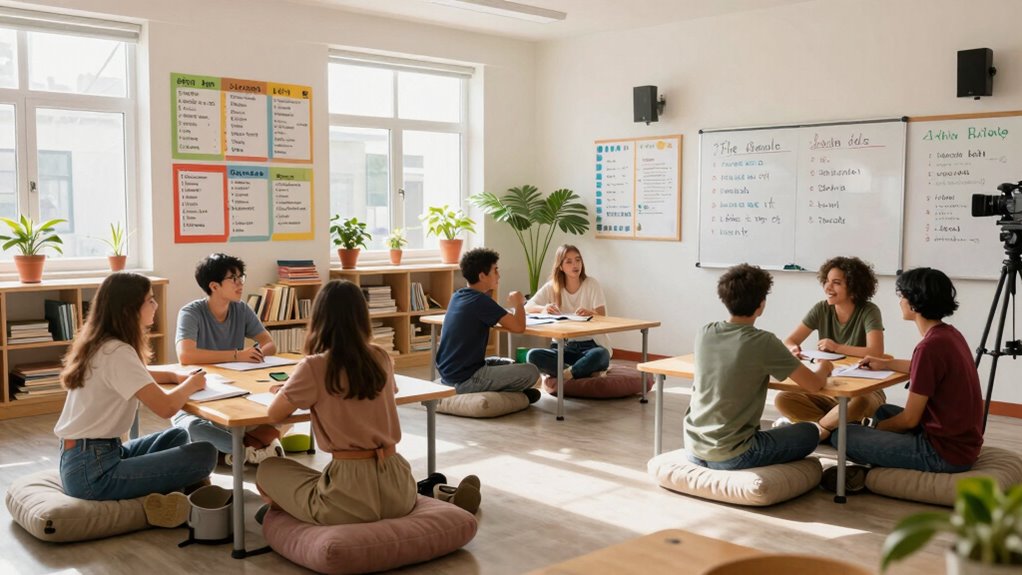

To make language learning stick, arrange your classroom to promote interaction, such as using circular or semi-circle seating that encourages eye contact. Incorporate visual aids and real-world examples to boost understanding and confidence. Use technology like apps and videos for engaging practice, and create flexible spaces for different activities. A motivating environment filled with positive reinforcement increases student participation. Keep exploring to discover more effective strategies for designing spaces that foster lasting language skills.
Key Takeaways
- Arrange seating in circular or semi-circle formations to promote interaction and eye contact.
- Incorporate visual aids, real-world objects, and multimedia to reinforce understanding and engagement.
- Design flexible spaces with moveable furniture and designated zones for discussion and quiet work.
- Use technology and interactive tools like apps, quizzes, and videos to motivate and provide natural practice.
- Foster a supportive, positive environment with praise, encouragement, and activities that build confidence and participation.

Flash Furniture Nicholas Soft Seating Flexible Circle for Classrooms and Common Spaces – 18" Seat Height (Green)
Design a space for team members and young adult students to interact with soft flexible seating in the…
As an affiliate, we earn on qualifying purchases.
As an affiliate, we earn on qualifying purchases.
How to Arrange Seating for Better Student Interaction
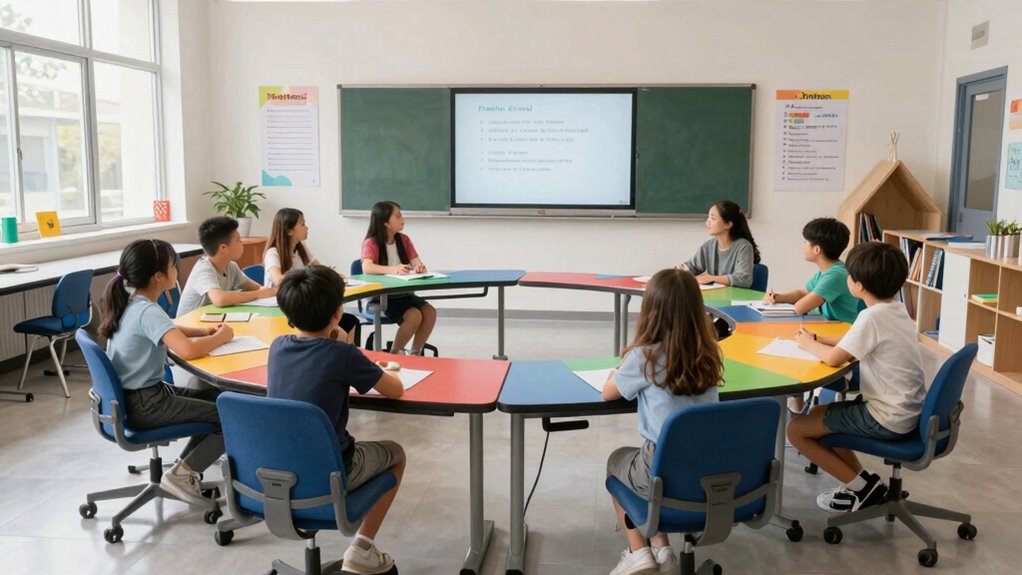
Have you ever wondered why some classrooms foster more engaging discussions than others? The key lies in how you arrange your seating. Effective seating arrangements positively influence group dynamics, encouraging students to interact more naturally. Opt for a circular or semi-circle setup to eliminate barriers and promote eye contact, making conversations flow easily. Avoid traditional rows, which can inhibit participation and create a sense of separation. Instead, place students close enough to share ideas comfortably, fostering collaboration and active listening. Consider shifting seating arrangements periodically to refresh group dynamics and prevent stagnation. Additionally, classroom layout plays a crucial role in shaping student interactions and engagement levels. Incorporating natural light and wellness touches can further enhance the learning environment, making students feel more comfortable and motivated. Understanding seating arrangement principles can help educators design more effective and engaging learning spaces. Employing flexible seating options can adapt the classroom to various activities and student needs, promoting a more inclusive environment. Recognizing the importance of auditory processing and related strategies can further support students with diverse listening and communication needs. By thoughtfully organizing your classroom seating, you create an environment where students feel more connected and motivated to participate, making language learning more dynamic and effective.

ZONSTVYS Talking Flash Cards for Toddlers: 2-in-1 LCD Writing Tablet with 510 Sight Words, Montessori Language Learning, Autism & Speech Therapy Toys for Children Ages 1-6, Blue
Innovative 2-in-1 Learning:Discover an advanced talking flash cards system combining interactive vocabulary learning with a 7-inch LCD writing…
As an affiliate, we earn on qualifying purchases.
As an affiliate, we earn on qualifying purchases.
Using Visual Aids to Reinforce Vocabulary and Grammar
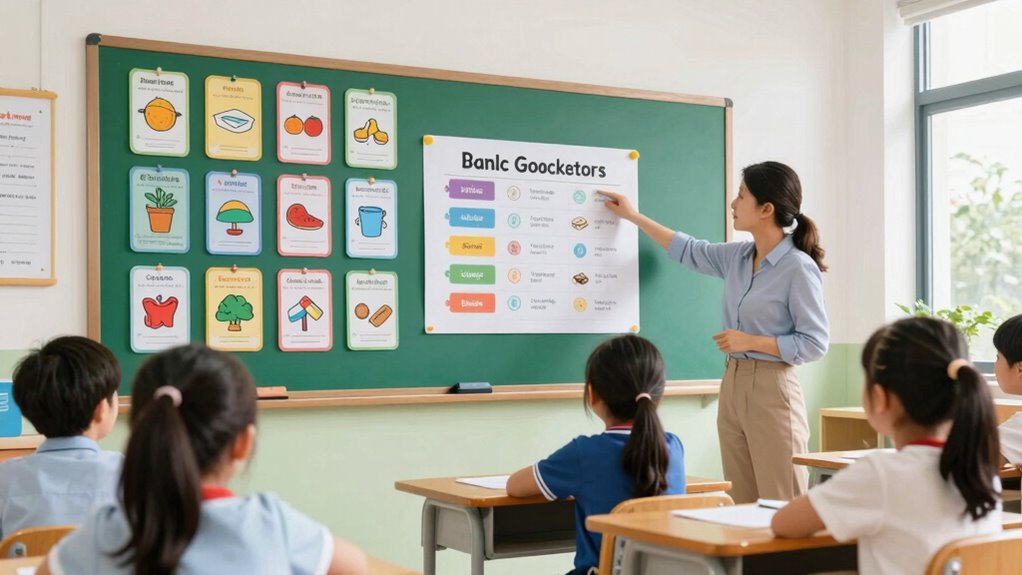
Effective seating arrangements set the stage for active student participation, but integrating visual aids can take learning to the next level. Use flashcard games to make vocabulary practice engaging and memorable. These games encourage students to recall words quickly and build confidence. Incorporate visual storytelling by using images and illustrations to explain grammar concepts, making abstract ideas concrete. Visual aids help students connect words and rules to real-world contexts, enhancing retention. You can also create storytelling activities where students use pictures to craft sentences, reinforcing grammar structures naturally. By combining interactive flashcard games with visual storytelling, you foster an immersive environment that appeals to visual learners and keeps students motivated to practice language skills. Additionally, incorporating electric bikes and related concepts can introduce engaging, real-world examples that make language learning more dynamic and relevant. Utilizing visual aids that include real-world objects like electric bikes can further deepen students’ understanding and engagement.

Storex Wiggle Stool – Active Flexible Seating for Classroom and Home Study, Adjustable 12-18 Inch Height, Black (00300U01C)
Adjustable seat height between 12 and 18 inches
As an affiliate, we earn on qualifying purchases.
As an affiliate, we earn on qualifying purchases.
Incorporating Technology for Interactive Language Practice

Integrating technology into language instruction transforms traditional practice into dynamic, interactive experiences. You can leverage digital tools like language apps, online quizzes, and video conferencing to engage students actively. These tools make practice more engaging and accessible, allowing learners to immerse themselves in real-time conversations and listening exercises. Gamified learning platforms add an extra layer of motivation, turning language practice into fun challenges and competitions. This approach encourages consistent participation and helps students build confidence. By incorporating technology, you create a more immersive environment where learners can practice vocabulary, pronunciation, and grammar naturally. Selecting appropriate digital tools that suit your students’ levels and interests is crucial to ensure technology enhances, rather than overwhelms, the learning process. Research indicates that vetted tools are most effective in supporting sustained engagement and learning outcomes. Incorporating educational technology can also facilitate personalized feedback, further boosting learner progress. Additionally, integrating learning management systems can streamline lesson planning and progress tracking for educators. Utilizing a variety of interactive resources can cater to different learning styles and keep students motivated.

Skillmatics Vocabulary Flash Cards for Kids – Learn 100 Words with Wordplay, Visuals, & Soundplay, Educational Gift for Ages 8, 9, 10 & Up, Screen-Free Language Game
LEARN 100 BIG WORDS–THE FUN WAY! (LEVEL 1, AGES 8+): Backed by memory science, WORDABLES uses clever visuals,…
As an affiliate, we earn on qualifying purchases.
As an affiliate, we earn on qualifying purchases.
Designing Flexible Classrooms for Various Language Activities
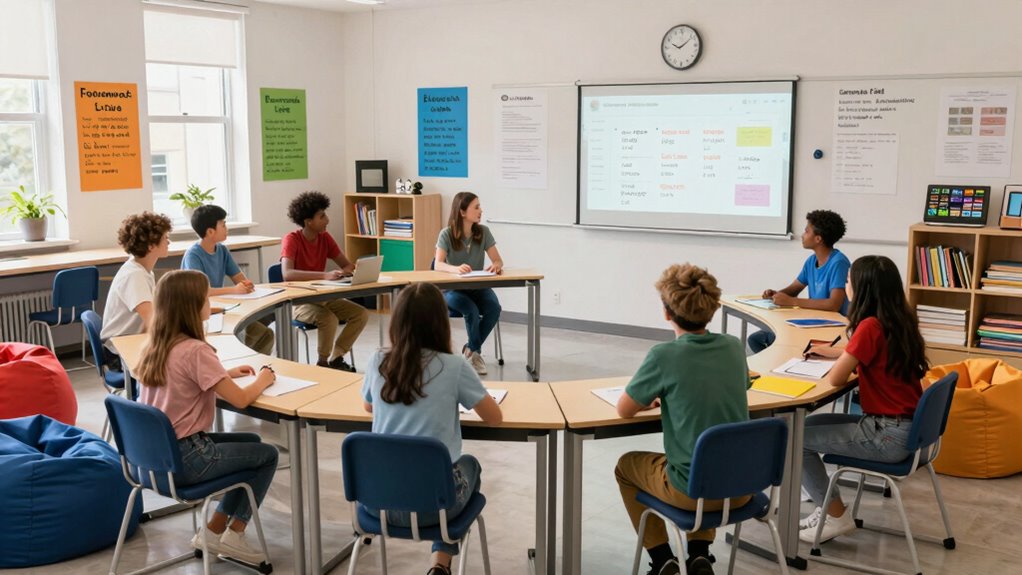
Building a classroom that adapts to various language activities starts with flexible design. You want spaces that support conversation, listening, and group work seamlessly. Use ergonomic furniture to guarantee comfort during long sessions, making it easier for students to focus. Acoustic treatments reduce noise distractions, creating a better environment for listening and speaking exercises. Flexible furniture like moveable tables and chairs allows you to reconfigure the room quickly for different activities. Consider zones for different tasks: discussion corners, quiet zones, and collaborative areas. Here’s a quick overview:
| Activity Type | Room Setup |
|---|---|
| Group discussions | Moveable tables, ergonomic chairs |
| Listening exercises | Quiet zones, acoustic treatments |
| Individual practice | Cozy corners, adjustable lighting |
| Presentations | Open space, flexible seating |
This setup keeps learning dynamic and engaging. For optimal learning, incorporating acoustic treatments can significantly improve sound quality and sound quality and focus throughout the room. Additionally, selecting floating on water inspired furniture options can promote a relaxed and adaptable atmosphere conducive to active learning. To ensure the environment meets diverse needs, integrating elements of flexible classroom design can make the space more adaptable and effective.
To further enhance the interior design of the classroom, incorporating elements that stimulate comfort and creativity can inspire students and teachers alike.
Creating a Motivating Environment to Encourage Student Confidence
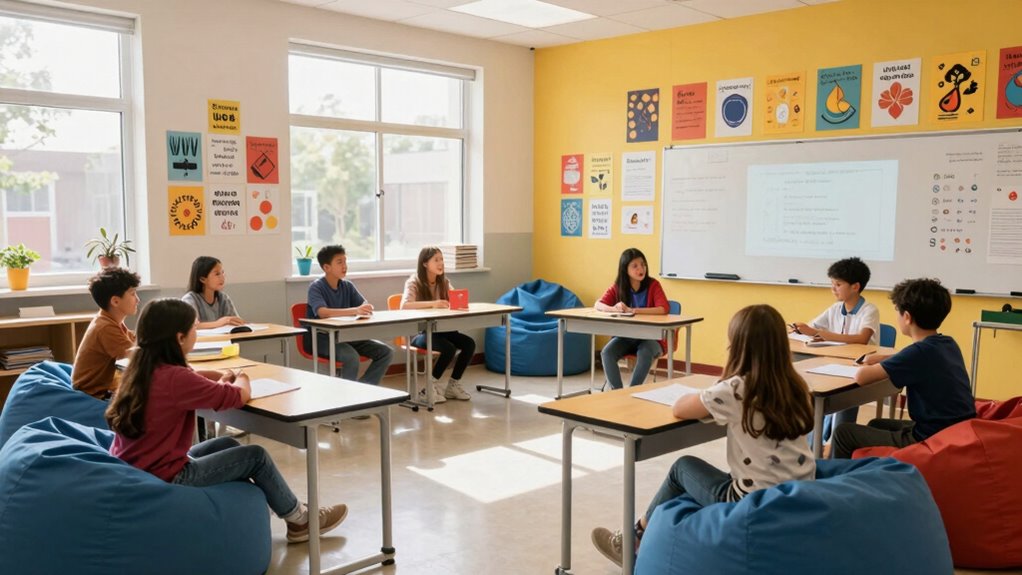
Creating a motivating environment begins with fostering a space where students feel safe, valued, and enthusiastic to participate. When students believe they can succeed, their student motivation increases, making them more willing to take risks and speak up. Confidence building is key; praise their efforts, not just correctness, and create opportunities for success. Use positive reinforcement and celebrate progress to boost their self-esteem. Arrange seating to encourage interaction, so students feel connected and supported. Incorporate activities that allow everyone to contribute and share ideas without fear of judgment. When students feel comfortable and confident, they’re more likely to engage actively, which enhances their language acquisition. A motivating environment isn’t just about materials; it’s about fostering a mindset that makes language learning an exciting and rewarding experience. Additionally, understanding how to status can help educators identify and improve the overall environment to better support student motivation, especially by recognizing the importance of confidence in learning.
Frequently Asked Questions
How Can I Adapt Classroom Setup for Different Age Groups?
You can adapt your classroom setup for different age groups by incorporating flexible furniture that allows for various activities. Use age-appropriate activities and arrange the space to support collaboration for younger students, or quiet, individual work for older students. Adjust seating and tables to match their needs, creating an environment that encourages engagement and makes language learning effective for every age group.
What Are Cost-Effective Ways to Enhance Classroom Language Learning Environments?
Like Robin Hood with his arrow, you can aim for cost-effective language learning. Use affordable technology like tablets or free apps to engage students. Get creative with DIY classroom decor—posters, flashcards, or language games—that reinforce vocabulary. These simple, budget-friendly solutions make the environment lively and interactive without breaking the bank, helping your students absorb new language skills more naturally and effectively.
How Do Classroom Layouts Influence Student Anxiety and Participation?
You can reduce student anxiety and boost participation by opting for group seating, which fosters a sense of community and support. Avoid cluttered arrangements and excessive classroom noise, as these can intimidate students and hinder engagement. Instead, create an inviting environment where students feel comfortable sharing ideas. By carefully organizing seating and managing noise levels, you make it easier for students to participate actively and feel more confident in their language learning journey.
What Role Does Lighting Play in Creating an Effective Language Learning Space?
Lighting plays a vital role in creating an effective language learning space by setting the right ambiance. You should maximize natural illumination to make the room feel inviting and energizing, which helps reduce anxiety and boost participation. Complement this with adjustable lighting options to tailor the ambiance for different activities. Good lighting not only enhances focus but also creates a comfortable environment where learners feel motivated and confident to practice their language skills.
How Can Outdoor or Unconventional Spaces Be Integrated Into Language Lessons?
Imagine your language lessons as explorers venturing into uncharted territory. You can integrate outdoor spaces by incorporating nature integration and outdoor activities that breathe life into lessons. Take students on nature walks, use parks for conversational practice, or set up storytelling sessions under trees. These immersive experiences make language learning vibrant, helping students connect words to the world around them, fostering deeper understanding and enthusiasm beyond traditional classroom walls.
Conclusion
By thoughtfully arranging your classroom, you set the stage for a vibrant symphony of language learning. Each seating choice, visual aid, and tech tool acts as a note in this harmonious melody, fostering confidence and engagement. When your space is flexible and motivating, students blossom like flowers reaching toward the sun. Ultimately, your carefully crafted environment becomes a guiding light, illuminating the path to language mastery and helping your students thrive with passion and confidence.